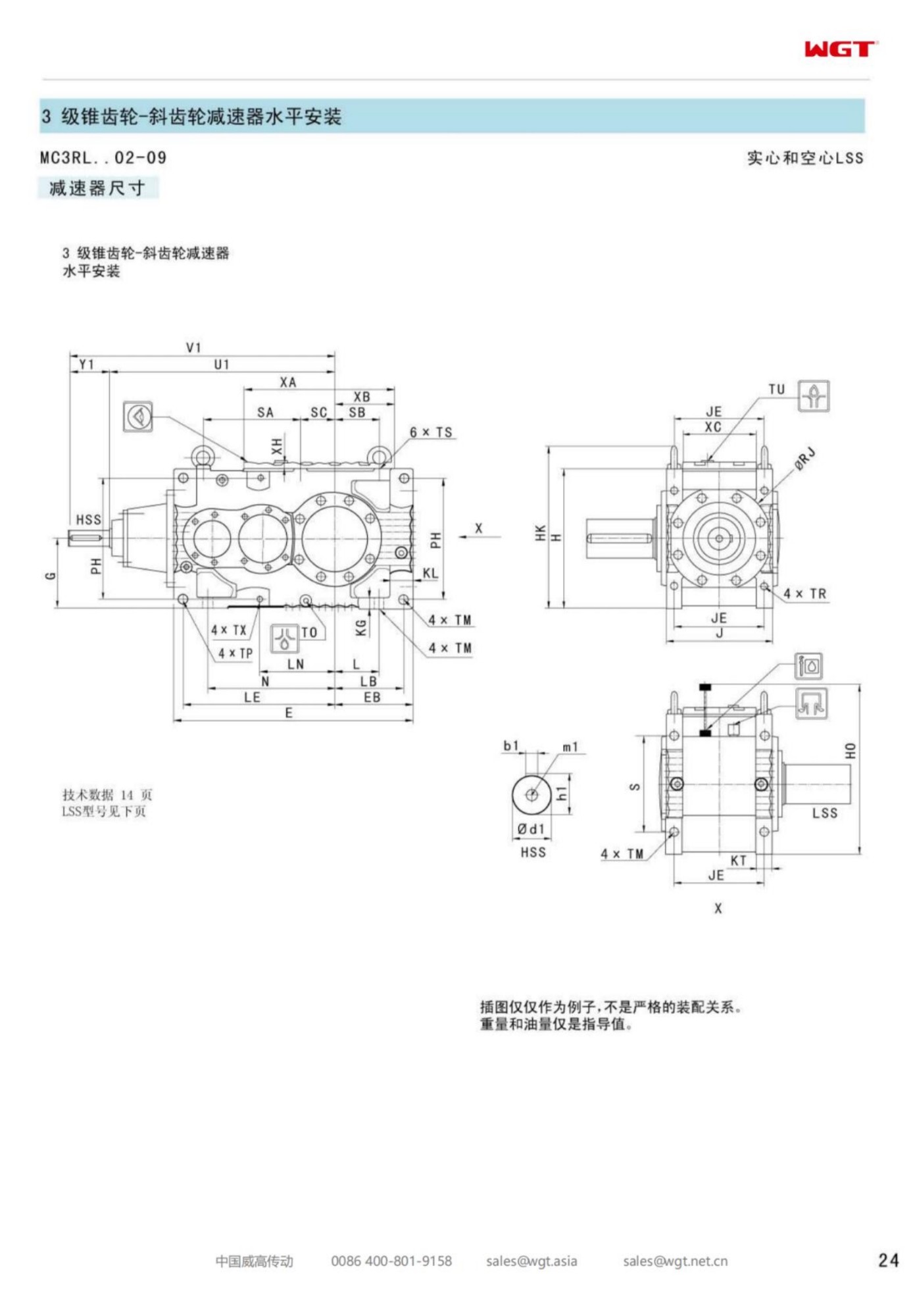
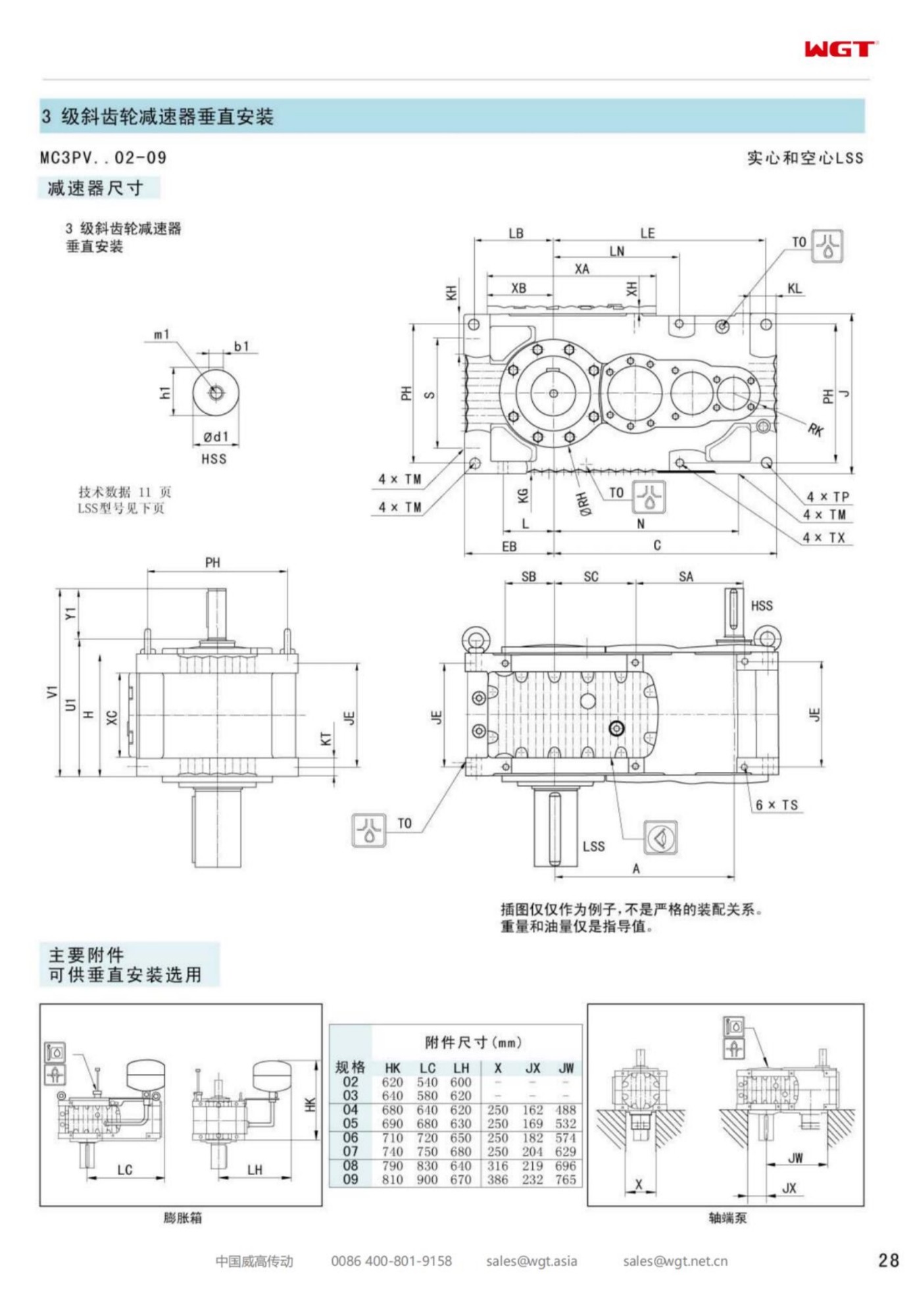
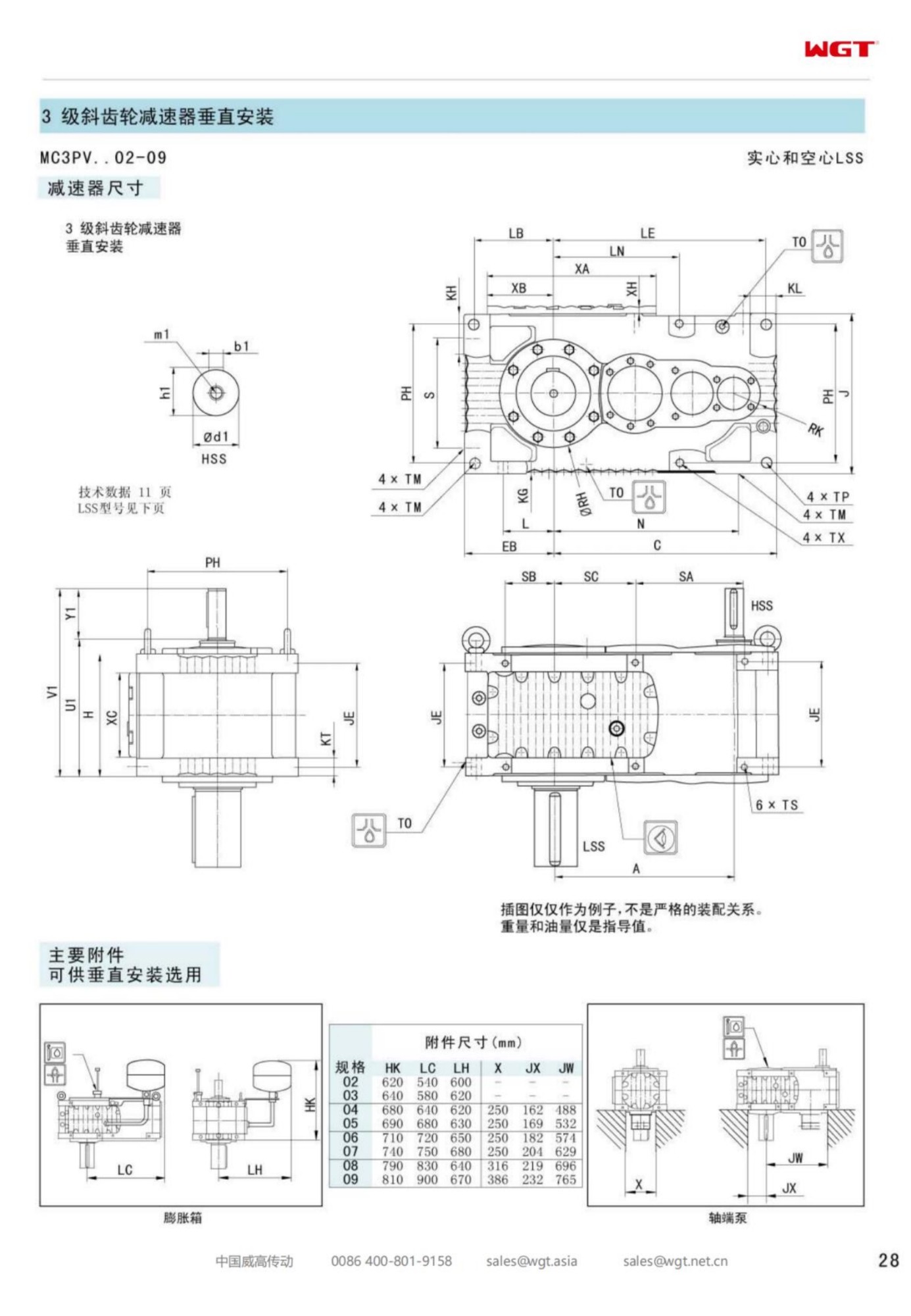
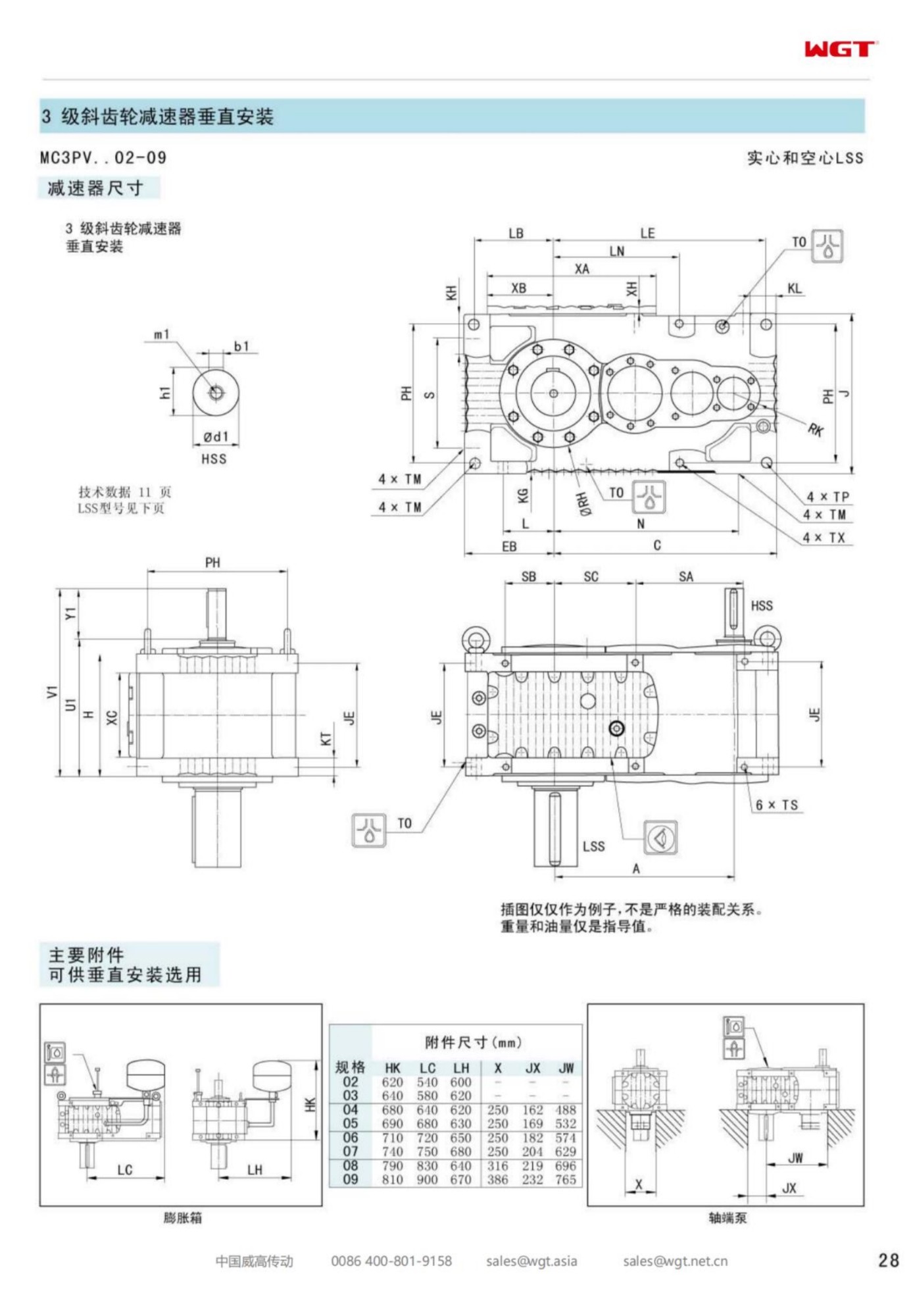
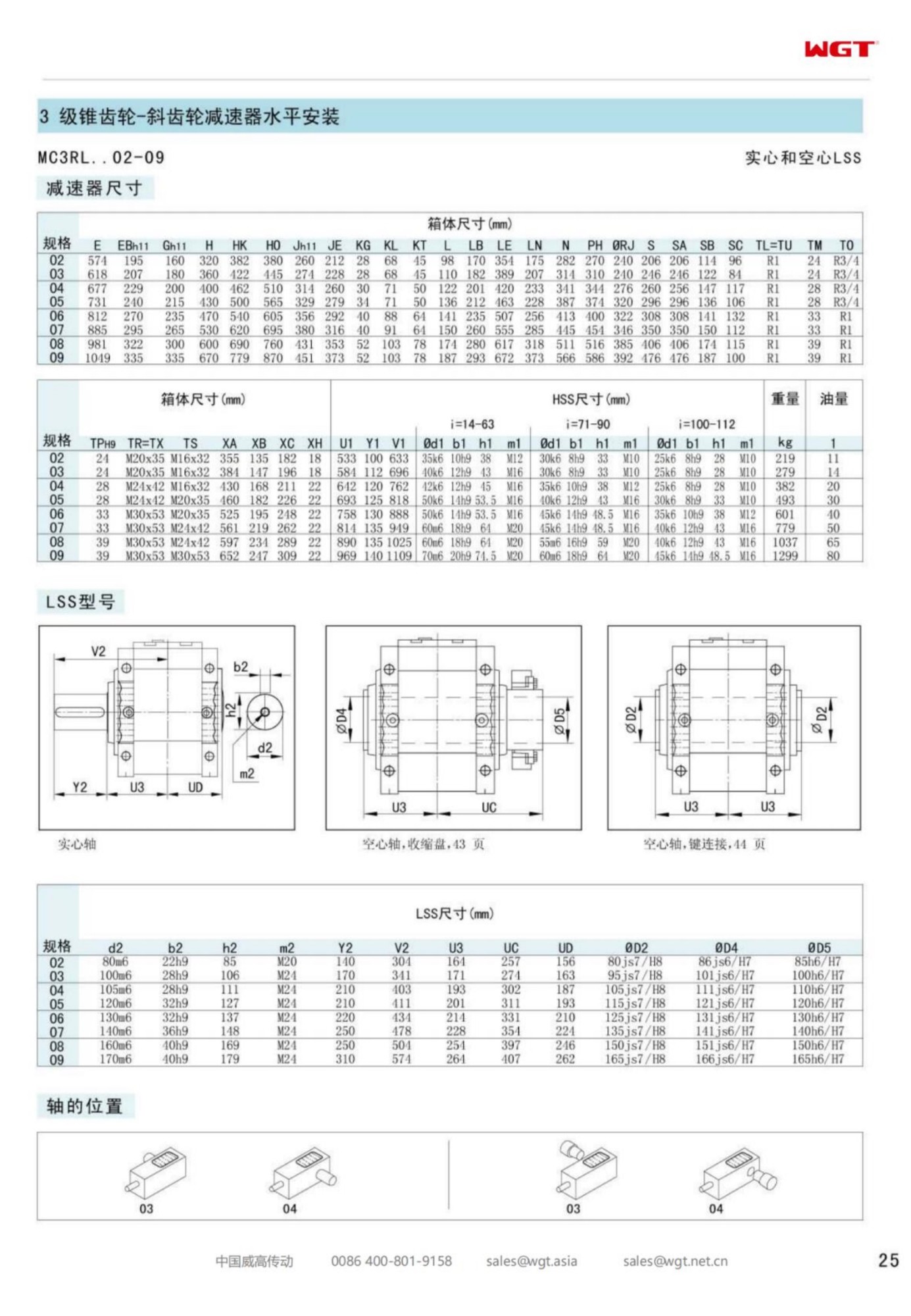
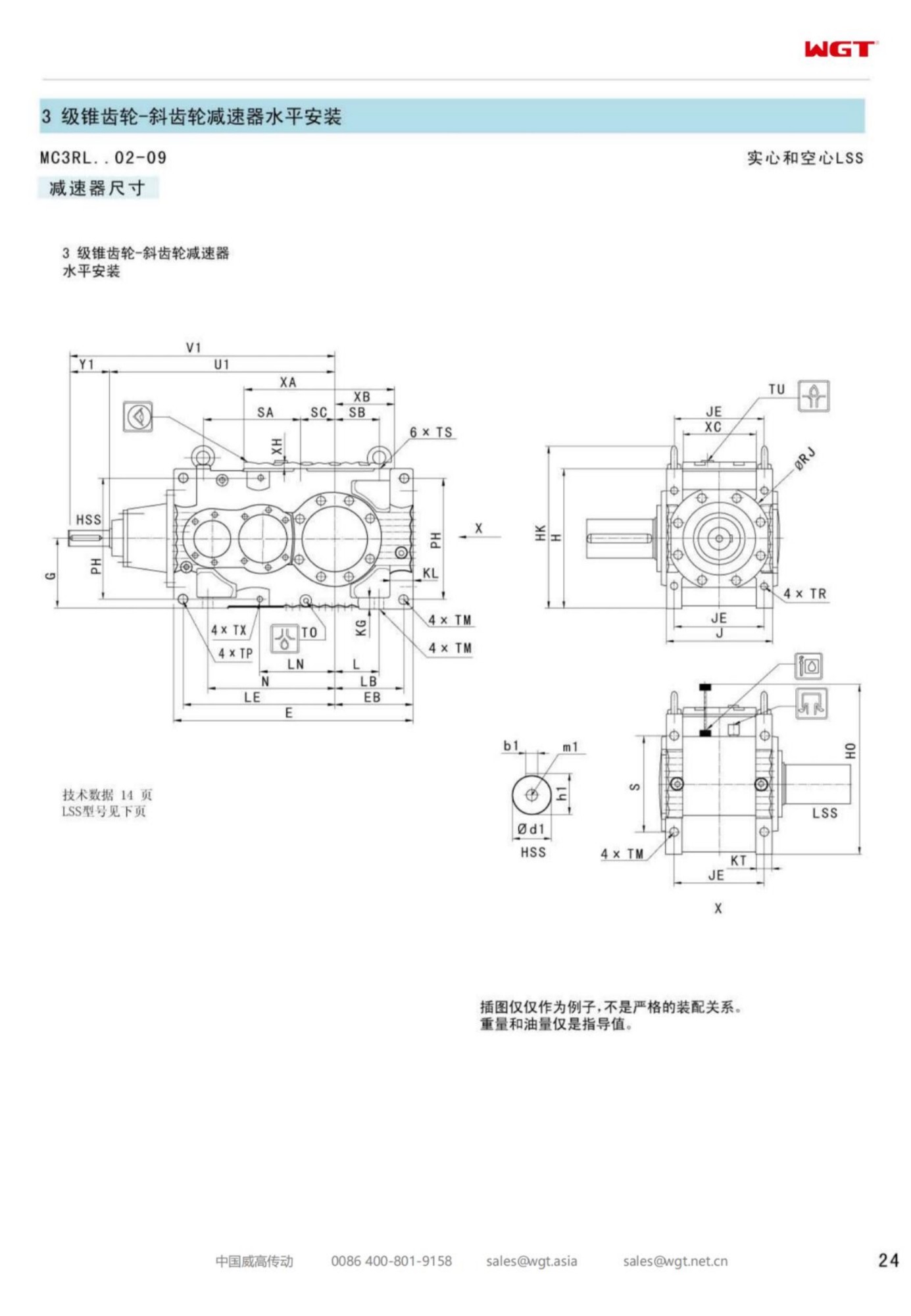
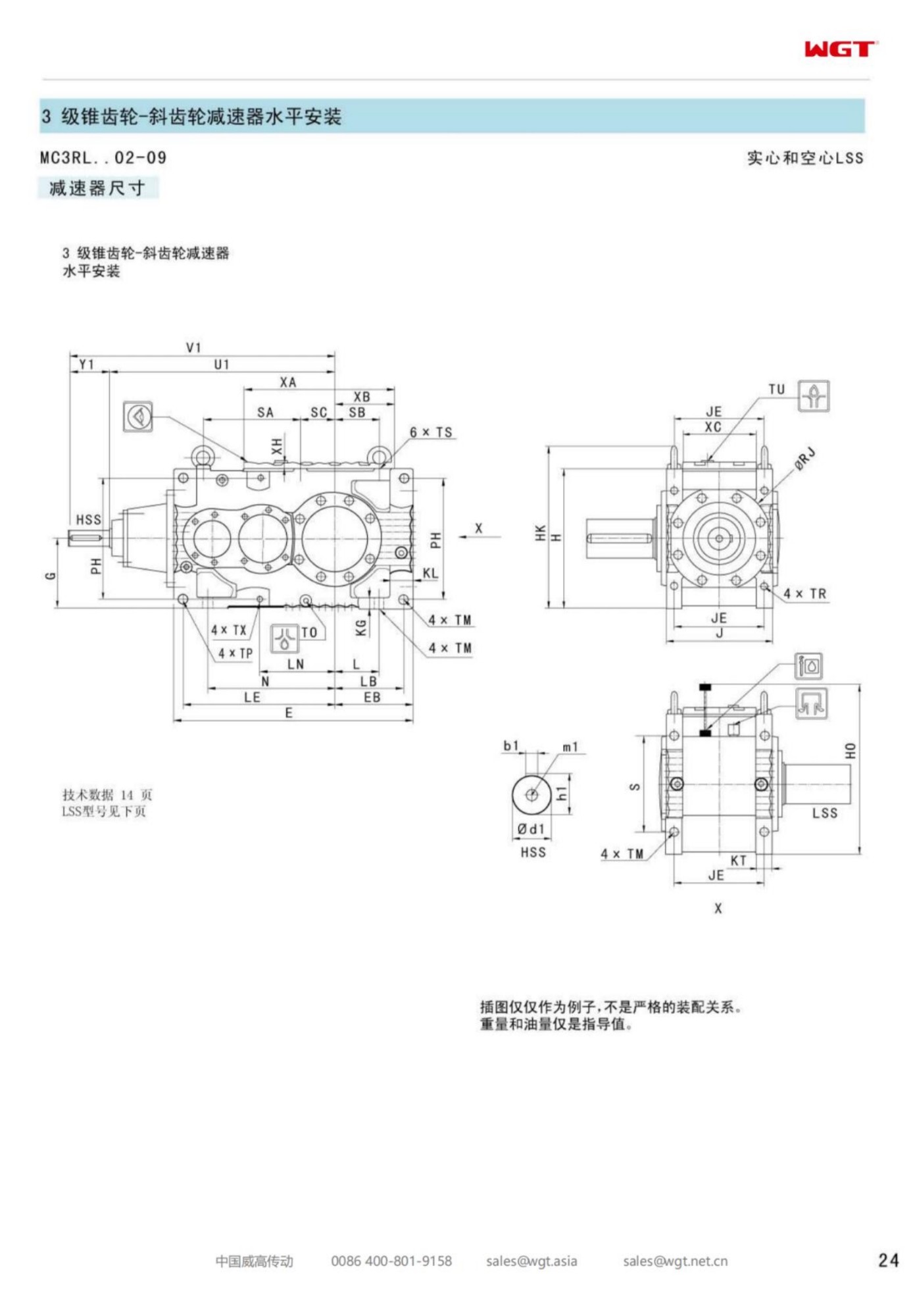
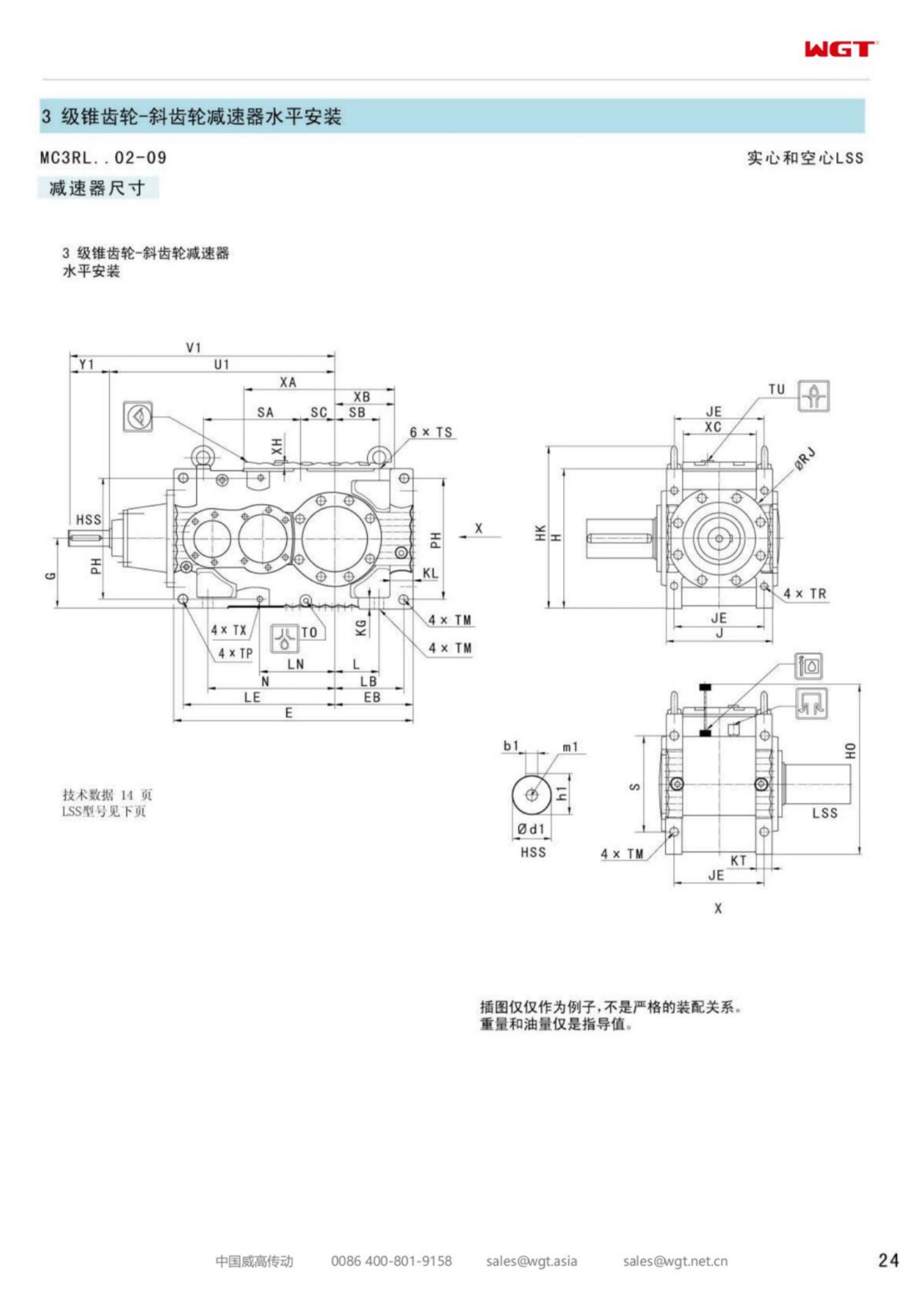
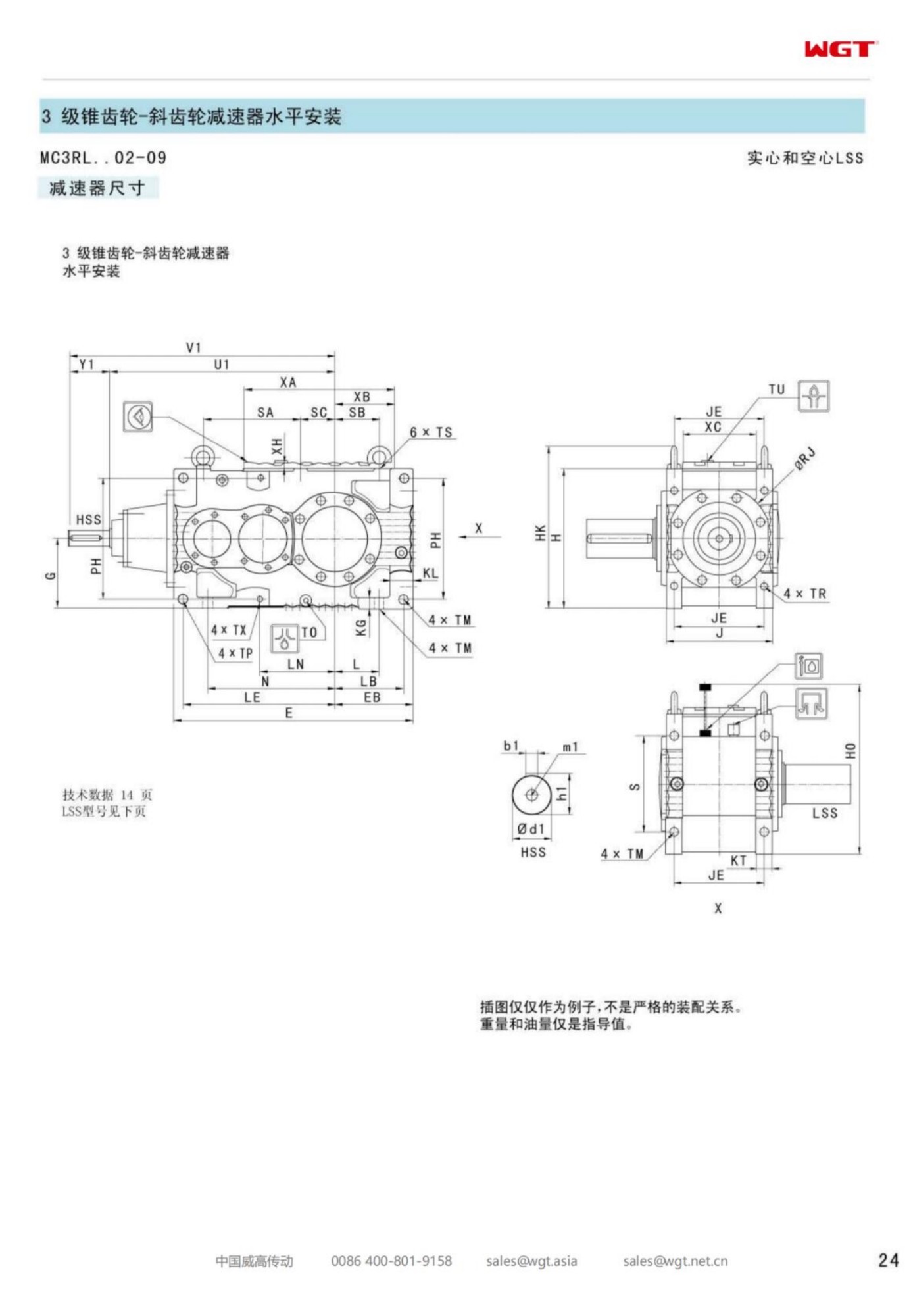
Return fines at a sinter plant are the fraction of the bed that never made good clinker, and the plant sends them back through the mix to be tried again. They come off the hot screen warm enough to warm the air above them, sharp enough to dress a chute liner in a season, and heavy enough that the return belt is usually the hardest-working conveyor on the strand. The MC3RLST09 right-angle gear unit drives that belt: three stages, a level output at a right angle to the motor, a keyed solid shaft, and a torque arm on the bay structure.
What follows is the drive seen from the sinter bay: the heat, the abrasion, the restart that sizes everything, and the figures the strand team should send.
Fines That Have Already Been Through the Fire
Return fines are not a raw material in the ordinary sense. They have been through ignition, they carry the hardness of a partially sintered cake, and they arrive at the conveyor as a spread of sharp-edged granules that behaves like a very coarse abrasive cloth.
Everything downstream of the first chute knows this. Liners, skirts and belt covers are chosen for it, and the gearbox specification should be chosen on the same page rather than on a generic bulk-duty sheet.
Nine Characters That Fix the Mounting
The type string reads in one breath and answers a week of layout questions.
| MC | Industrial gear unit family for continuous plant duty |
| 3 | Three stages of reduction in one housing |
| R | Right-angle build, motor set at ninety degrees to the output |
| L | Level output axis, running along the machine |
| S | Solid output shaft, keyed to the driven shaft |
| T | Torque-arm reaction, no baseplate required |
| 09 | Ninth frame of the three-stage band |
In one line: a three-stage industrial unit, right-angled, with a level output, a solid keyed shaft, reaction taken by a torque arm, ninth frame.
Layout in a Crowded Sinter Bay
The space under a hot screen is contested: chute work, ducting, structural bracing and the walkways the screen crew needs all share it. An inline drive would claim a lane the bay does not have to give.
A right-angle unit sits along the belt with its motor parallel to the casing, and the bevel stage that buys the turn shares the same oil volume as the helical reductions. One housing, one breather, one oil service in a position nobody enjoys visiting.
Reaction Into the Bay Structure, Not the Machine
The screen and its chutes move with thermal growth, and a drive bolted to the screen structure inherits that movement as a load. A torque arm on the bay structure separates the two: the reaction lands on steel that does not grow, and the machine is free to expand toward the cooler.
The bracket wants a node, not a span. A reaction line through the stiffest point of a bay column is a quiet bracket for twenty years; the same line through a mid-span floor beam is a cracked weld inside two.
Radiant Heat and What It Does to Oil
Fines off a hot screen raise the local air temperature well above the bay average, and a case hung beside the chute lives in that air. Oil life halves for every sustained ten degrees of extra sump temperature, and nobody re-lifes a gearbox in a sinter bay on schedule.
A sheet heat shield between chute and case, synthetic oil, and a sump size chosen on the real local ambient are three cheap lines in a specification that repay themselves for the life of the strand.
Abrasion at Sinter Hardness
Sintered fines carry enough hardness to machine the surfaces they can reach. A shaft seal lip, a breather thread, a bare machined face under a loose cover bolt - each is a place where the dust does quiet, permanent work.
The countermeasures are the usual discipline, applied early: labyrinth or double-lip sealing at the output, a breather out of the dust path, and a case finish that assumes grit will be leaning on it for decades.
The Heaviest Belt in the Plant
Return fines are dense, the belt is wide, and the strand team runs it at full width because the fines do not stop. The running pull is therefore higher than any other conveyor of the same length on the site, and the frame follows the pull rather than the motor nameplate.
The ninth frame exists for exactly this tier of duty: long, wide, heavily loaded belts whose drives must hold alignment under a load most machines never see.
Solid Output at the Head Sprocket
The head sprocket of the return belt sits in take-up saddles that are adjusted from the tail, and the drive should neither fight that adjustment nor sit in its way. A keyed solid output with a short spacer coupling reaches the stub shaft cleanly and leaves the take-up to the crew who own it.
The alternative - a bore over the shaft end - would move the case over the bearing and into the chute shadow, which is the hottest and dustiest seat on the machine.
The Restart That Sizes the Drive
A return belt tripped full is the heaviest single event in the conveyor's life. Fines settle quickly, the bed packs, and the next start asks for torque closer to breaking a bond than to running a belt.
That condition, not the clean running figure, belongs in the sizing conversation. Three stages share it across more tooth contacts, a controlled start repeats it politely, and the arm stop takes what is left.
Dust, Water and the Sinter Bay Atmosphere
The bay sees dust in the air and water on the floor, from quench sprays and wash-down alike. A case that stands in that mix wants its breather piped to clean air, its drains reachable without removing guards, and its fasteners chosen for an atmosphere that is not kind to ordinary steel.
None of these lines is expensive on a new order. All of them are expensive to retro-fit on a machine that has already begun to rust from the cover bolts in.
Numbers From the Sinter Plant Floor
The useful enquiry carries the head shaft diameter and keyway, belt speed and width, the density and temperature of the fines at the drive, the local ambient beside the chute, motor frame and speed, the restart practice after a trip, and a drawing of the bracket position on the bay steel.
A photograph from the walkway, with the chute and the structural members in frame, answers the layout question at a glance and saves a site visit.
Frame Nine and the Top of the Band
The ninth frame closes the three-stage right-angle band for this family: the tier where wide, dense, hot duties settle when the arithmetic is done honestly rather than hopefully.
Above it the plant leaves this family altogether and moves into heavy industrial series with their own drawings. Inside the band, frame nine is the quiet answer to the strand's hardest conveyor.
Return fines, hot and sharp, on the heaviest belt in the sinter bay - three stages carry them back to the mix:
- Sinter return fines conveyor under a hot screen
- Fines transfer belt to the sinter plant blend bunker
- Mill scale conveyor at a hot strip mill
- Coke breeze transfer along a sinter strand
- Cold return fines belt to the mix house
- Baghouse dust transfer at a sinter plant
The M3 Series at a Glance
| Model | Centre distance | Output | Typical duty |
|---|
| M3PSF50 | size 50 | solid shaft, foot | conveyors, feeders |
| M3PSF60 | size 60 | solid shaft, foot | crushers, mixers |
| M3PSF70 | size 70 | solid shaft, foot | ball mills, shredders |
| M3PSF80 | size 80 | solid shaft, foot | kilns, heavy conveyors |
| M3PSF90 | size 90 | solid shaft, foot | mill and kiln drives |
| M3RSF50 | size 50 | solid shaft, foot, right-angle | inclined conveyors, elevators |
| M3RSF60 | size 60 | solid shaft, foot, right-angle | screw classifiers, feeders |
| M3RHF70 | size 70 | hollow shaft, foot, right-angle | agitators, drum drives |
| M3PHT80 | size 80 | hollow shaft, torque arm, parallel | shaft-mounted conveyors |
| M3RHT90 | size 90 | hollow shaft, torque arm, right-angle | heavy shaft-mounted drives |
All frames in the table belong to one industrial family. P = helical parallel-shaft, R = bevel-helical right-angle; the low-speed shaft is solid (S) or hollow (H), mounted on feet (F) or a torque arm (T).
Selection Example: Sinter return fines conveyor under a hot screen
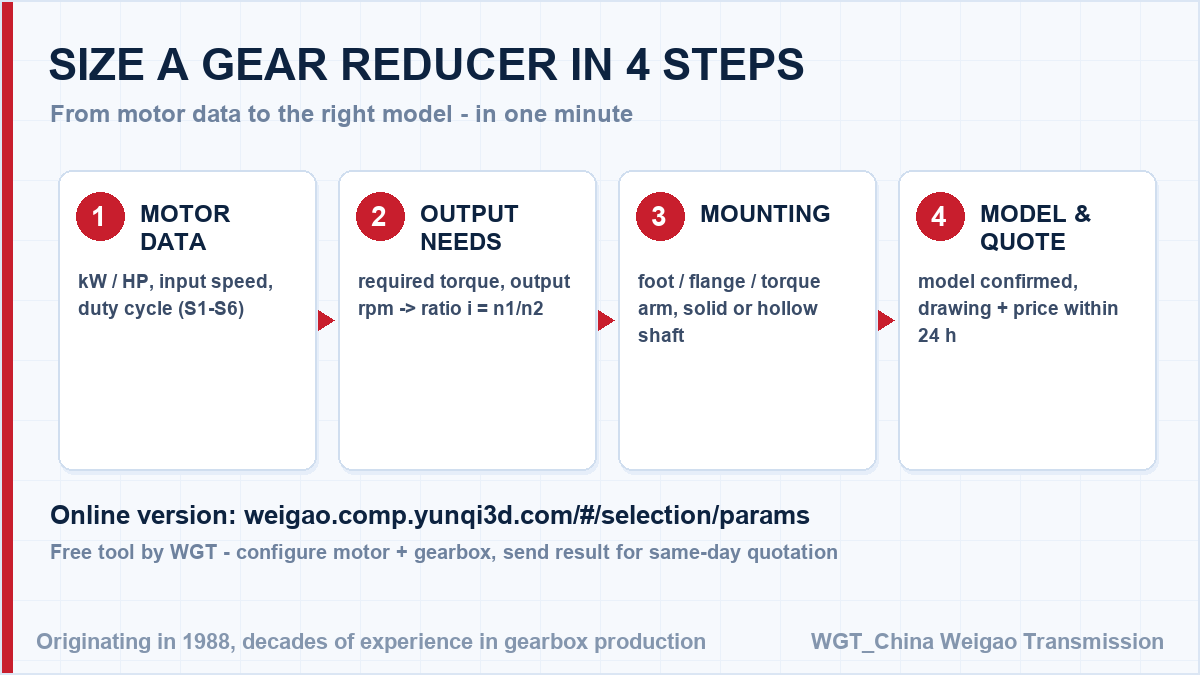
Take a 45 kW motor at 1480 rpm driving the return belt head sprocket at 18 rpm. The ratio follows directly: 1480 / 18 = 82.2, so a ratio near i=82 comes from the three-stage right-angle band, and the frame is sized on a belt tripped full and packed with hot fines rather than on the running bed. In this case frame nine sits along the belt with its reaction taken by an arm on the bay steel instead of the growing screen structure, keys a solid output at the head sprocket, and carries a heat shield and synthetic oil for the radiant load beside the chute. That single division gives the catalogue ratio; the service factor for your duty class is then applied to the torque, and the frame size follows.
![how to size a industrial helical gearbox in four steps]()
Sizing flow: motor speed, target output speed, torque, service factor.
Where This Series Works in Practice
Cold-store conveyor
A cold-store operator uses reducers on freezer-room conveyors. Low-temperature synthetic oil and moisture-resistant seals keep the units running below -20 deg C ambient.
Bakery spiral cooler
A bakery equipment builder fits units to spiral cooler drives. The compact right-angle layout fits under the spiral cage, and food-grade lubrication was specified for the hygienic area.
Technical Questions, Answered
Can the reducer be supplied with a brake motor or an IEC motor flange?
Yes. We supply the reducer as a bare unit with an IEC standard input flange, and you can bolt on any IEC or NEMA motor - including a brake motor. The flange dimensions follow the common IEC pattern, so existing motors drop straight on.
What is the service factor and how is it applied?
The service factor is a multiplier applied to your required torque to cover shocks and duty class - typically 1.0 for uniform duty, 1.25 for moderate shocks, 1.5 or more for heavy shock loads. Send us the driven machine and duty and we will apply the correct factor.
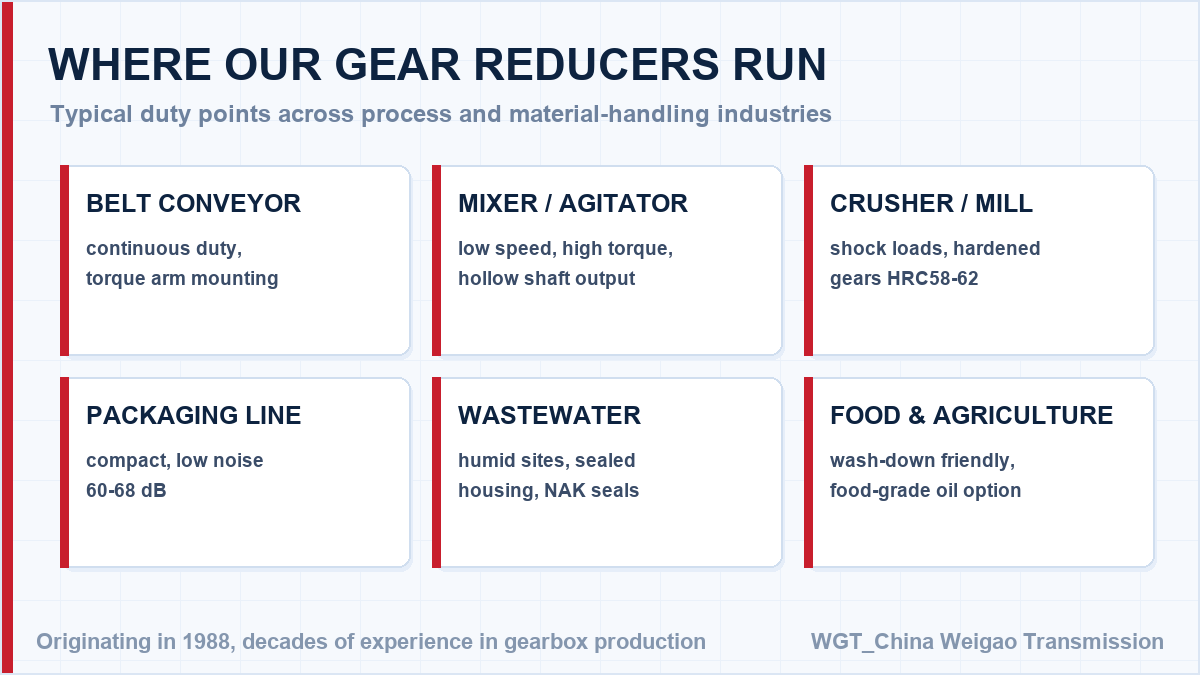
![industrial helical gear reducer application fields]()
Common application areas for right-angle industrial helical drives.
Design Review, Datasheet and Price - Same Day
Planning a new machine? Skip the back-and-forth: configure your drive in the WGT Motor & Gearbox Online Selection System and send us the result for a same-day quotation.
Send the interface drawing or the frame dimensions you need to match, and we return a 2D drawing and 3D STEP model with the quotation, so your design review is not held up waiting on the supplier. Looking for a speed reducer for cement plant? Tell us the duty point and we will confirm the model in writing.