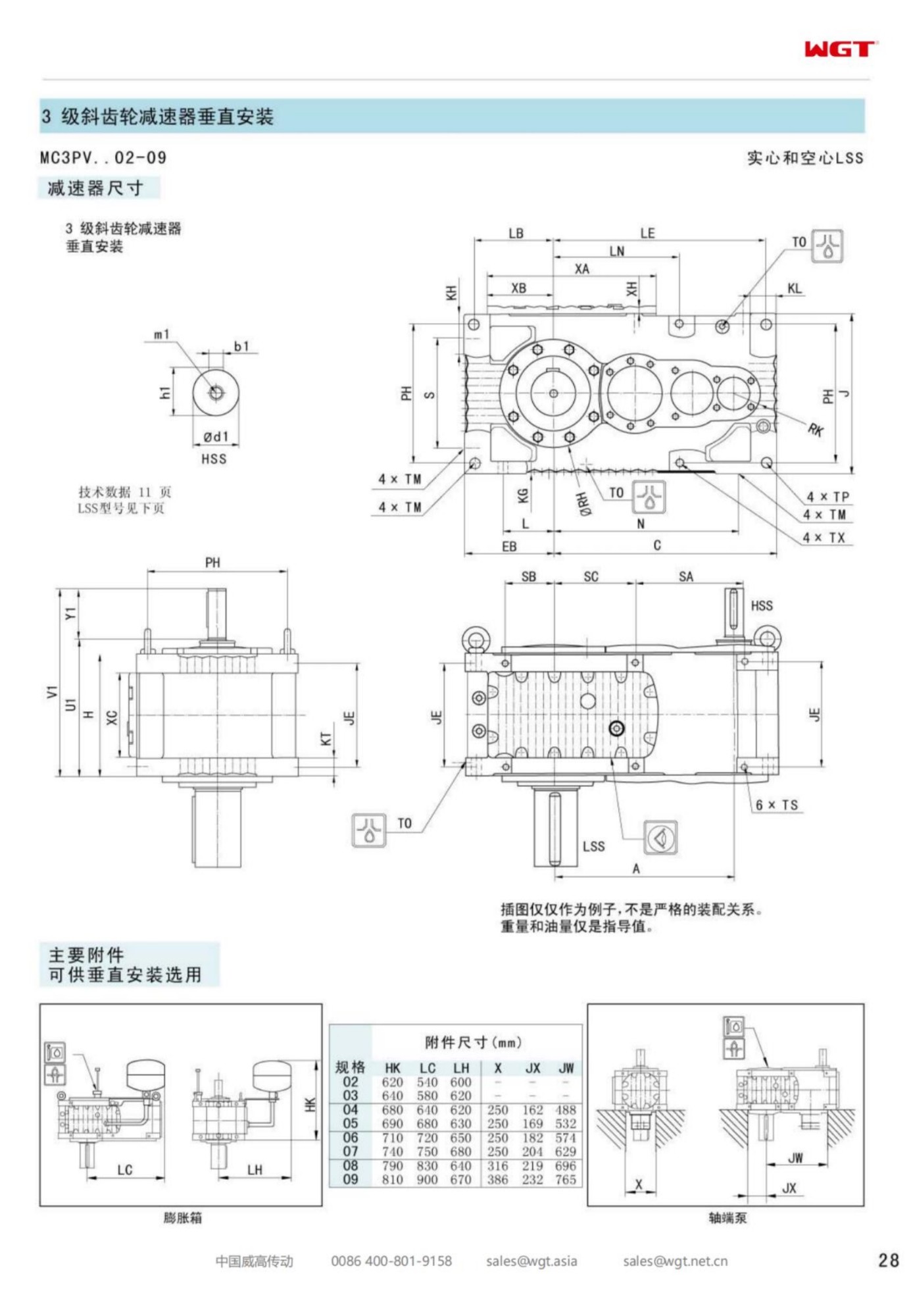
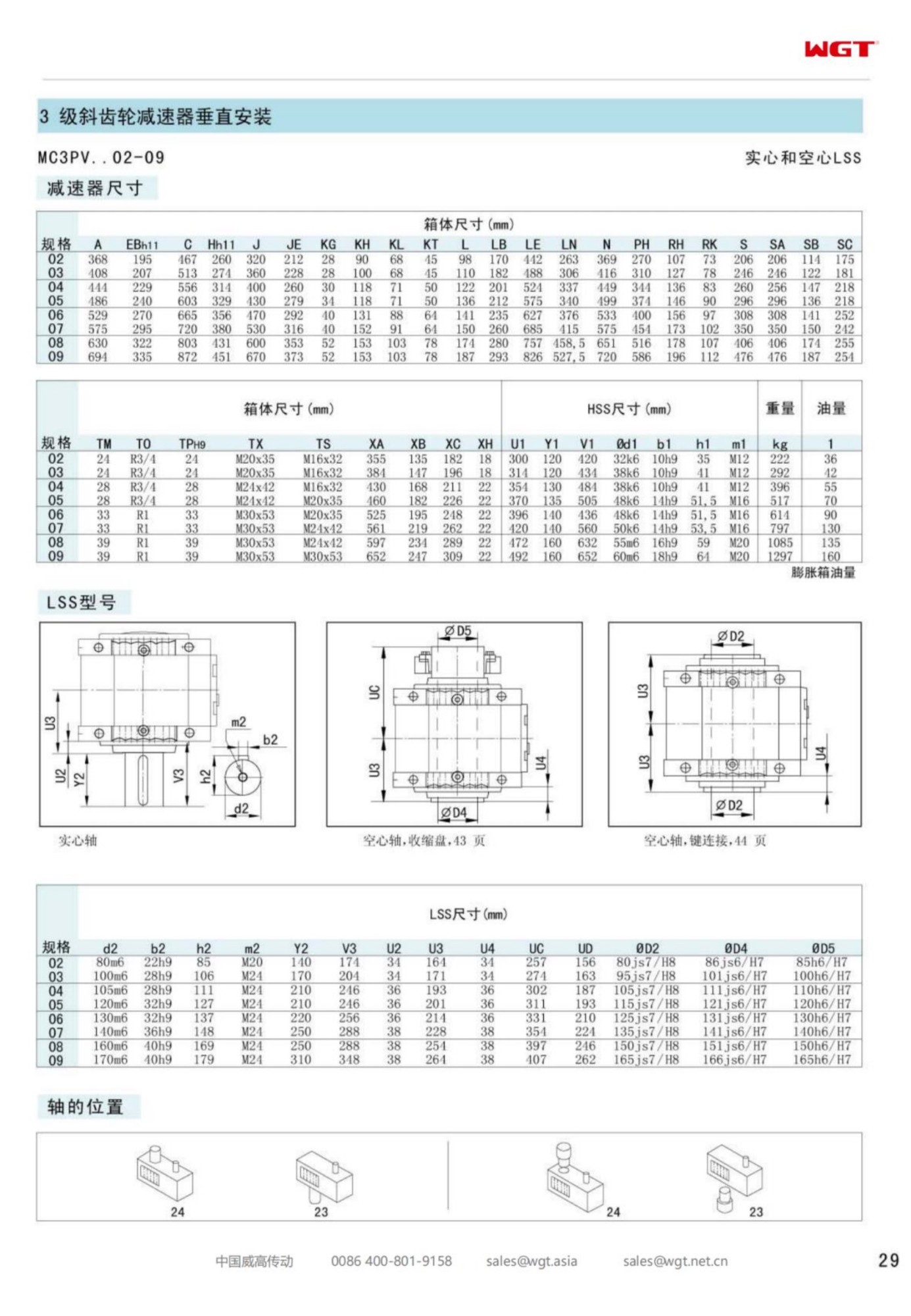
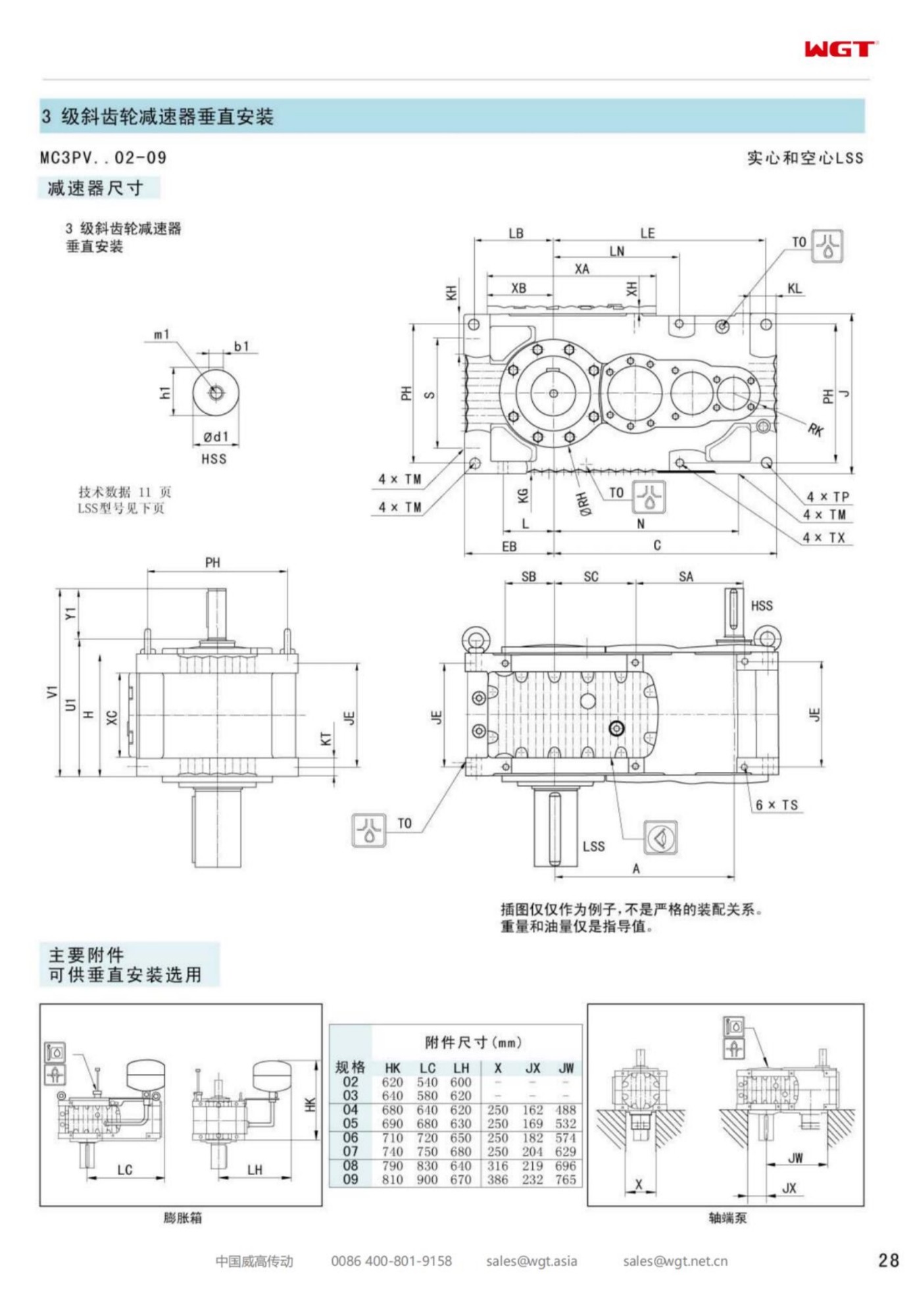
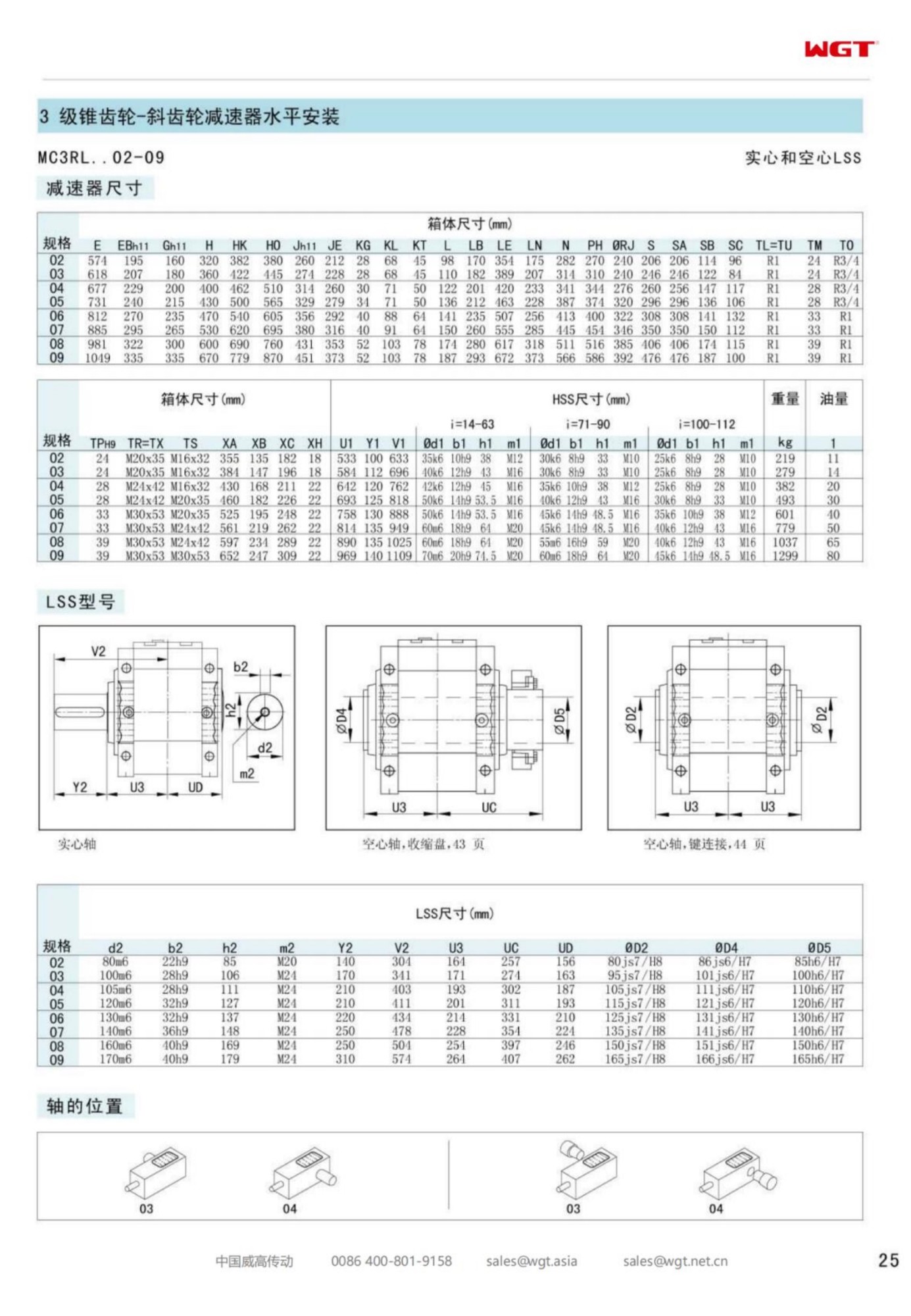
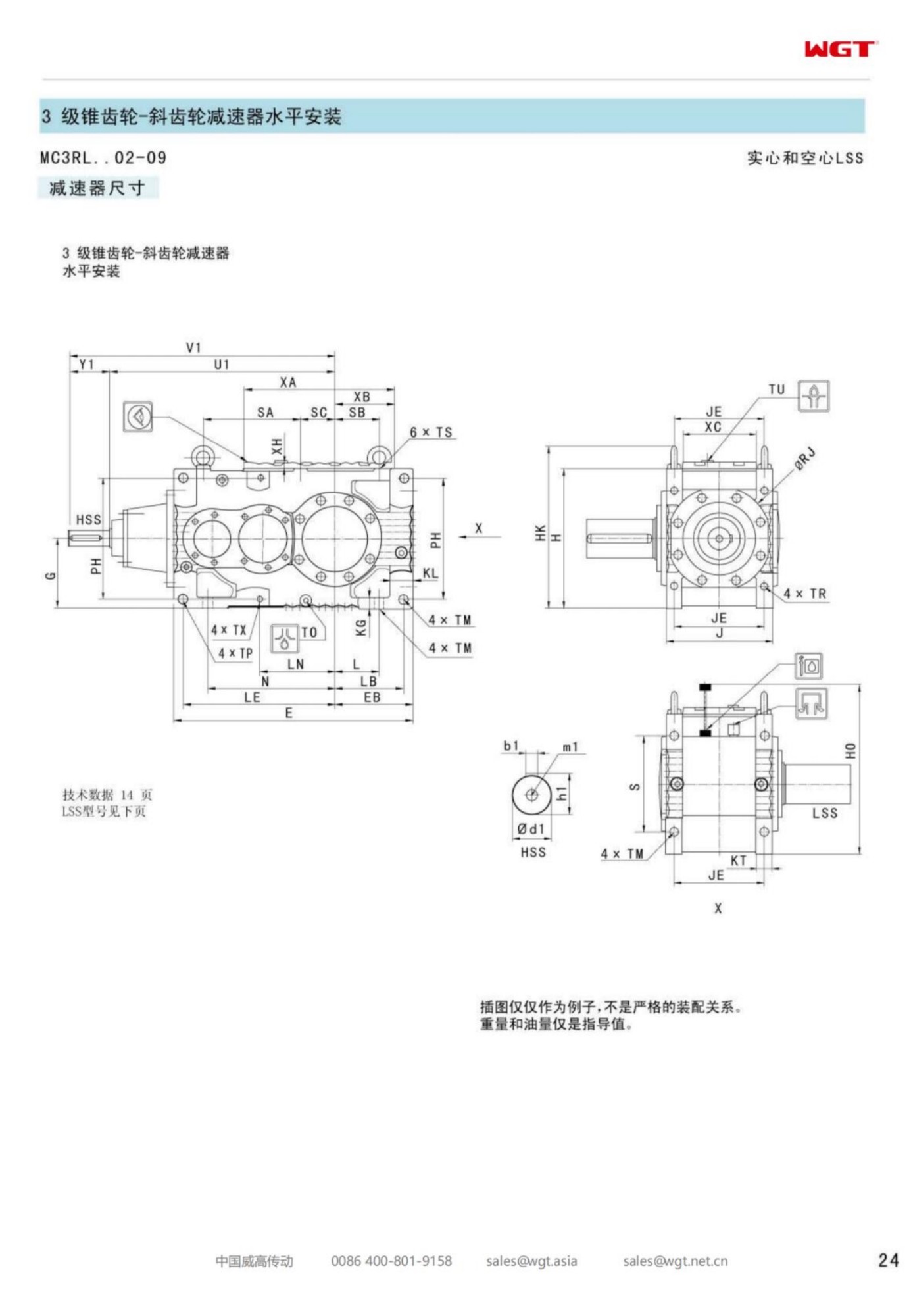
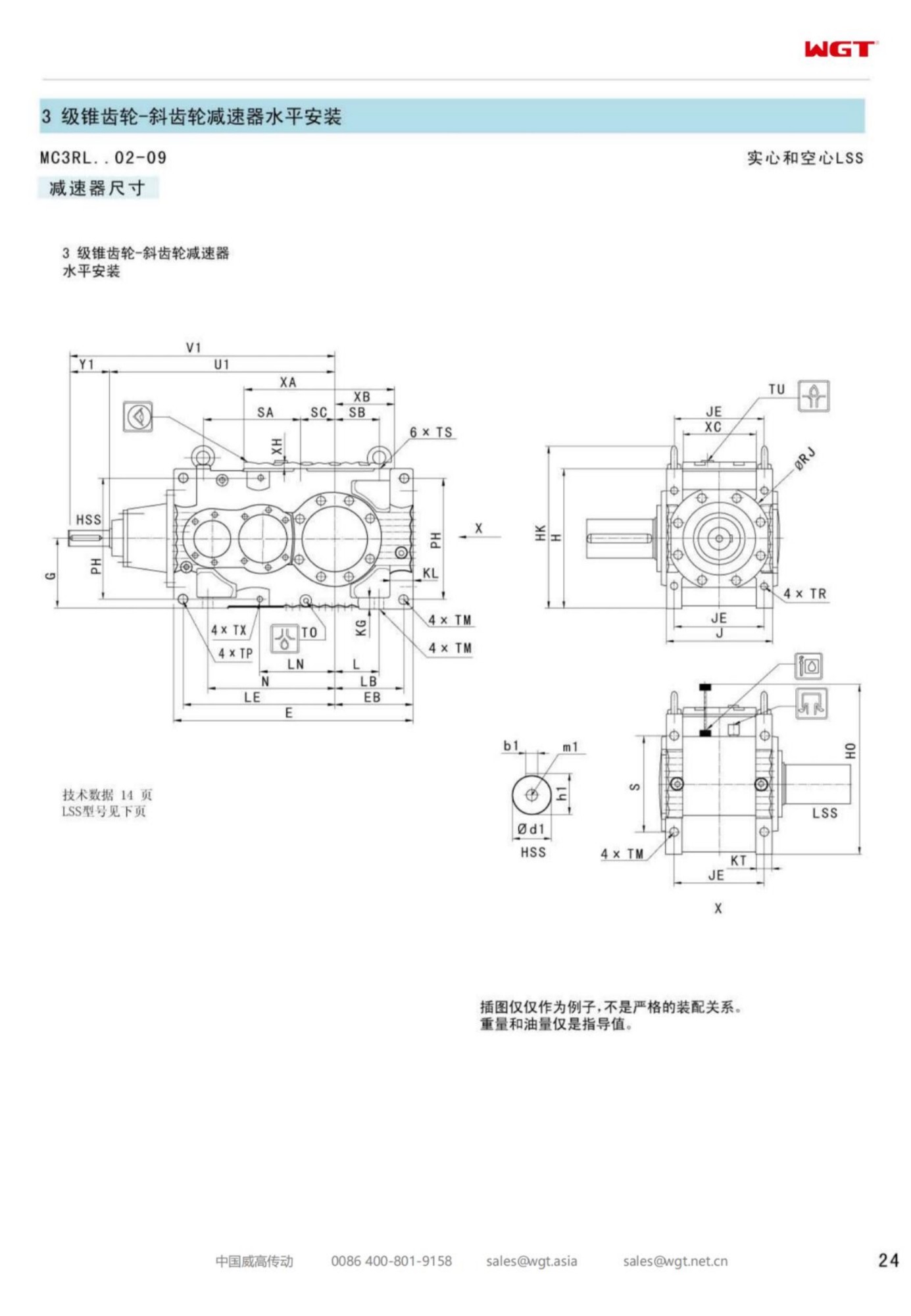
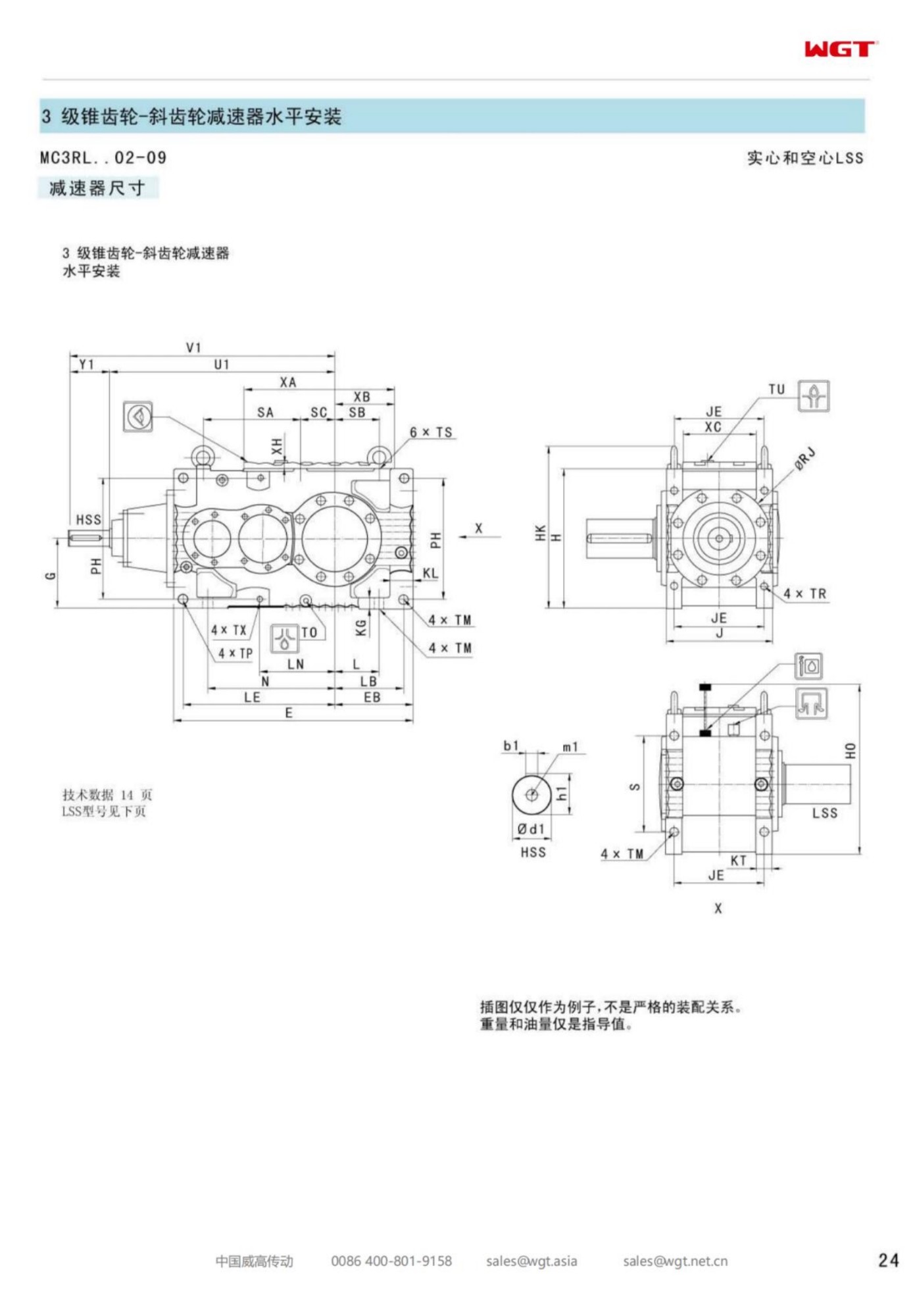
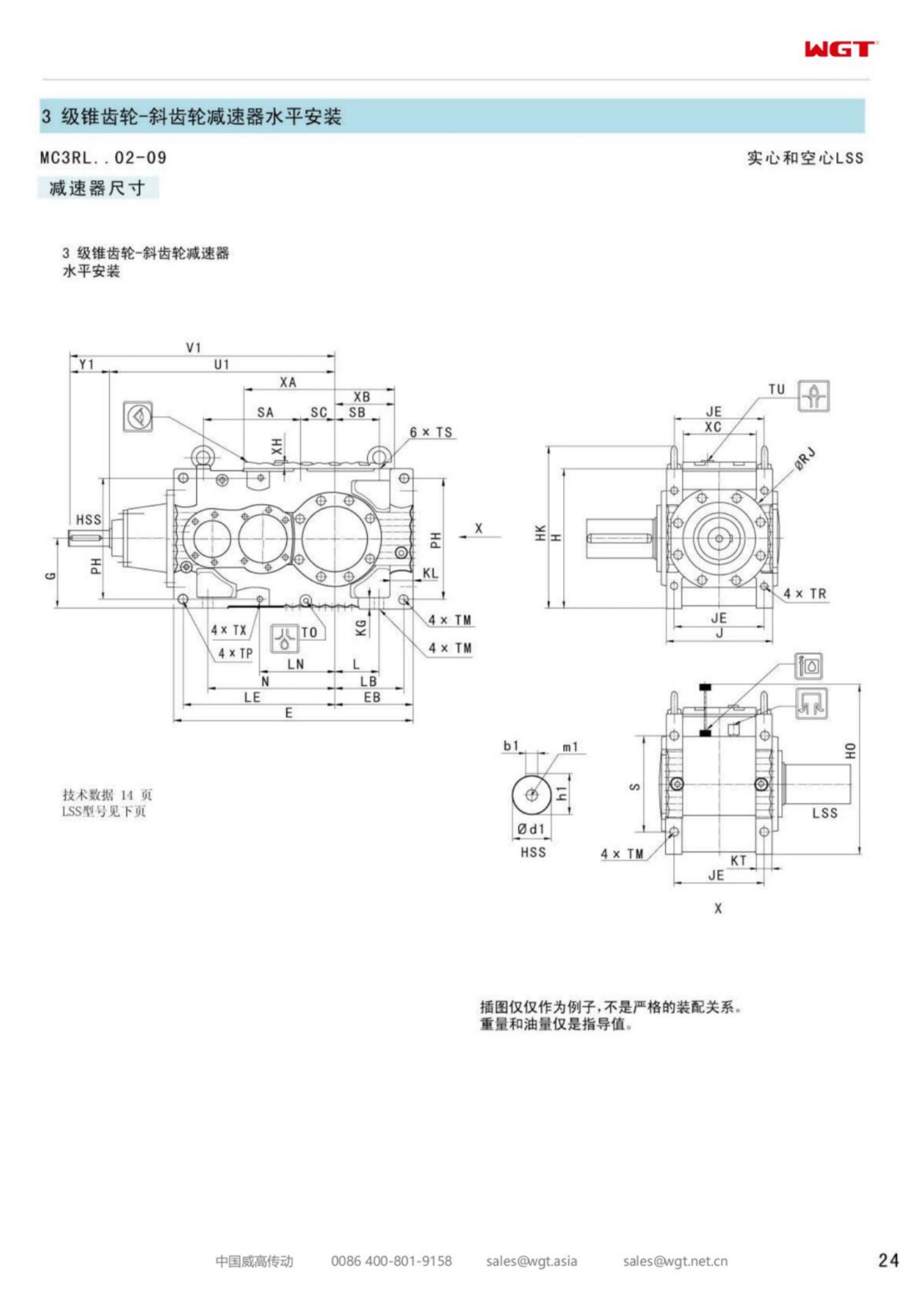
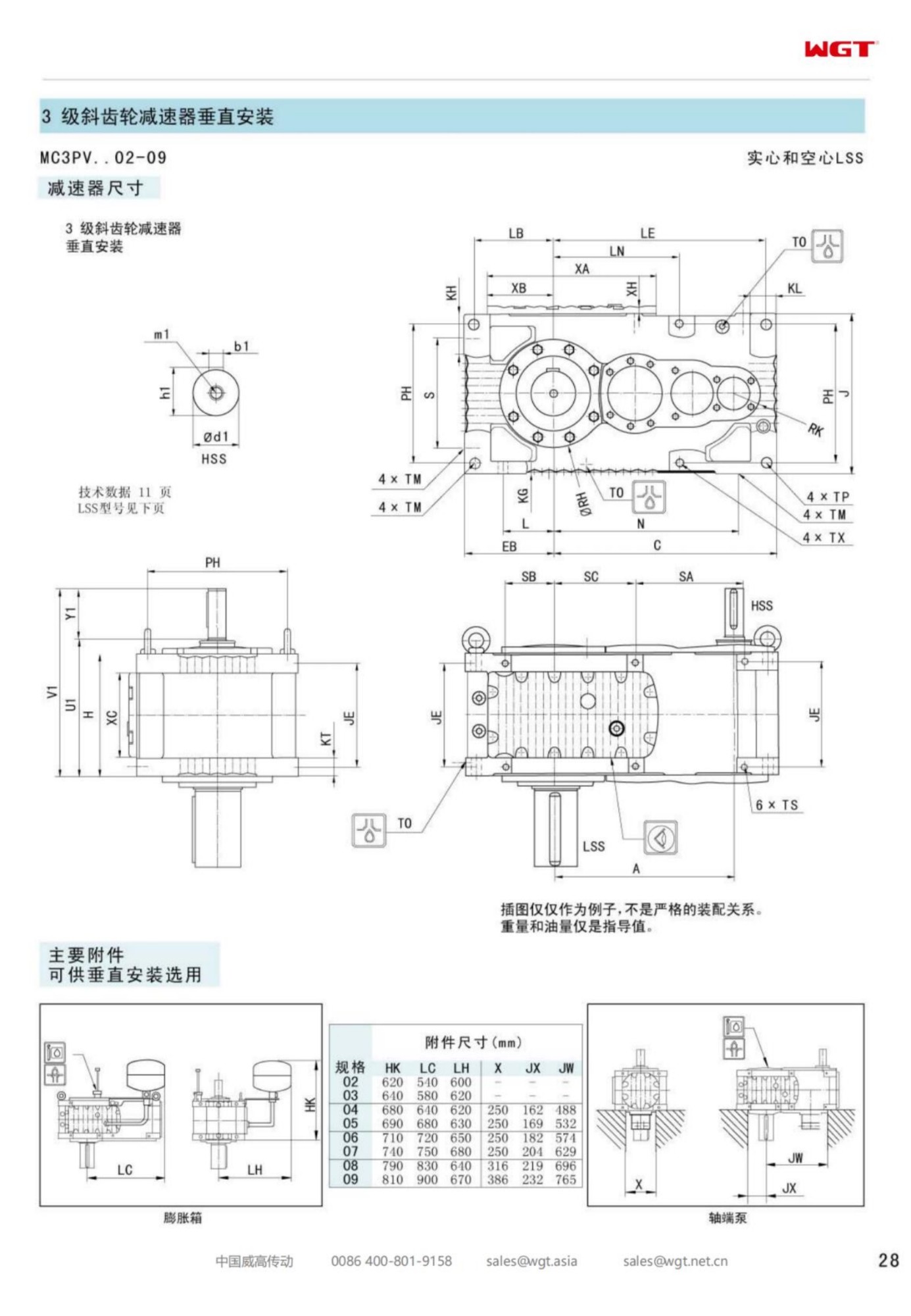
Bitumen is stored hot, and it punishes a tank that lets it stratify. Left still, the heavy fractions settle and a skin forms on the surface that costs more to deal with than the mixer would have; the tank farm answer is a slow paddle turning day and night. The MC3PVHF04 vertical hollow shaft gearbox is the drive for that paddle: three helical stages in an upright case standing over the tank, a hollow bore through which the agitator shaft passes, footed pads landed on the tank roof or bridge.
What follows is the drive as the terminal sees it: heat from below, weather from above, and the specification that keeps both honest.
Bitumen Punishes Stratification
A storage tank that stands still does not merely cool; it sorts. Heavy fractions drift down, a stiffened surface layer forms, and the first pump that tries to draw from the tank meets a consistency the pipeline was never quoted for.
Agitation prevents the sorting at a cost of a few kilowatts, and the economics are settled the first winter: one seized line or one off-spec load costs more than a season of mixing.
The Designation and What It Commits To
Seven characters settle the mounting question before the drawings start.
| MC | Industrial gear unit family built for continuous plant duty |
| 3 | Three helical reductions inside one upright case |
| P | Parallel-shaft layout, input and output on parallel axes |
| V | Vertical build, output axis pointing down into the vessel |
| H | Hollow output bore, the process shaft passes through it |
| F | Footed reaction pads, bolted to the vessel bridge or plate |
| 04 | Fourth frame of the vertical hollow band |
Read as one line: three-stage industrial unit, parallel-shaft, vertical, hollow output bore, footed pads, fourth frame of the vertical hollow band.
A Drive Over a Hundred and Fifty Degree Product
The product never touches the gearbox, but its heat shapes everything around the case: the roof steel is warm, the air over the tank is warm, and the convection column from the manway carries an oily warmth past whatever stands in it.
The case therefore lives in an ambient well above the site's weather, and its oil selection is argued from that local figure rather than from the meteorological one. Terminals that record the roof-deck temperature in summer buy the right oil the first time.
Load Paths on a Heated Bridge
Tank roofs and their bridges grow with heat, and they grow differently through a day than the drive's own case does. A rigid bolted arrangement turns that differential into a small permanent stress; a pad arrangement with slotted holes where the drawing allows it turns the same differential into a thermal breath nobody notices.
The reaction couple still needs real bolts and real bearing area. The discipline is to allow movement in the thermal direction and stiffness in the reaction direction - both, not either.
Warm Steel, Aging Oil, Hardening Seals
Oil life halves with every sustained ten degrees, and a case over a bitumen tank lives with that arithmetic every day of summer. Seal lips age the same way, hardening from the product side of the schedule.
Synthetic oil, a sump sized for the real ambient and a seal material chosen for continuous warmth are three specification lines that decide whether the drive's first decade is quiet. None of them shows on a price comparison, and all of them show on the maintenance ledger.
Viscosity Swings and the Torque Curve
Bitumen's viscosity moves with temperature faster than most products move with anything. A tank that cools overnight after a heater trip restarts into a paddle load many times stiffer than the afternoon's, and the drive sees it as a torque step, not a curve.
The sizing conversation uses the cold-restart viscosity, not the storage temperature on the datasheet. Three stages share that step across more tooth contacts, and the controlled start makes the second and third attempts unnecessary.
Three Stages for a Paddle That Never Stops
Storage agitation is a continuous duty: slow paddle, steady torque, months between stops. Deep ratio from a four-pole motor sits in the three-stage band, where each mesh carries a modest share and the heat the train generates stays low enough for the warm roof-deck air to carry away.
The fourth frame is the tier where large storage tanks and blender vessels of terminals usually settle once paddle diameter and shaft length have spoken.
The Bore Fit on a Hot Agitator Shaft
The agitator shaft grows with the tank, and the bore fit must tolerate that growth without letting the shaft rattle in the bore when everything is at temperature. Bore, key and shaft finish are therefore a three-way agreement made before order, checked against the real shaft and re-checked at the first full-temperature inspection.
Terminals that pull the shaft for seal service should expect a clean bore if the surface finish was right at order time and a galled one if it was not. The finish is the cheapest insurance on the whole order.
Keeping Grit Out of the Case
Tank farms are dusty in a particular way: aggregate dust from the loading spurs, product mist at the fill points, and grit carried on the wind across the bund. The gearbox breather is the door all of it would prefer.
A breather piped to clean air below the roof deck, labyrinth sealing at the bore, and a case finish that shrugs off aggregate dust are the standing defences. They are lines on an order, not items to be arranged after the first oil change.
Starting After a Long Hold
Tanks are held full but unheated for weeks at a time in some terminals, and the first start afterwards is the duty the drive will remember. The surface layer has stiffened, the paddle enters it at speed, and the torque peak arrives before the product has warmed.
The terminal's practice on warming before starting belongs on the enquiry. Where the practice is "start it and see", the service factor should be argued from that honesty rather than from the manual's ideal.
Terminal Practice and the Enquiry
The order that draws one clean quotation carries the agitator shaft diameter, finish and material; paddle torque at storage and cold-restart viscosity; the roof or bridge drawing with pad positions; the recorded summer roof-deck temperature; motor frame and speed; and the wash-down or dust practice of the bund.
A photograph of the pad area with the roof steel in frame answers the layout question that drawings so often leave open.
Frame Four on the Tank Farm
The fourth frame is the working middle of the vertical hollow band: large storage tanks, blender vessels, and the duties where paddle torque and shaft length have pushed past what the lower frames carry comfortably.
Smaller day tanks sit two frames down; refinery-scale vessels move up the band. The frame is chosen by the paddle and the shaft, and the motor's nameplate merely follows their argument.
Bitumen held hot against stratification - three stages turn the paddle over the tank:
- Storage tank agitator at a bitumen terminal
- Blender paddle in a modified bitumen plant
- Asphalt binder tank mixer at a coating plant
- Tank circulation mixer at a roofing felt works
- Decanter feed tank agitation at a refinery bitumen unit
- Emulsion plant base bitumen storage agitation
Questions We Hear Most Often
Can I get a CAD drawing or 3D model for my design review?
Yes. Send us the model and ratio and we provide a 2D dimension drawing and a 3D STEP model for your review, usually the same working day. Drawings follow the layout of the original series so they drop into your existing assembly.
What is the recommended oil change interval?
The housing is lubricated for life under normal duty and normal ambient. In hot, humid or continuous service, change the oil after the first 400 running hours and then every 4000 hours, or once a year, whichever comes first.
What paint finish and corrosion protection is applied?
Housings are shot-blasted and finished with a two-component industrial paint in RAL colours, giving good protection for indoor and sheltered outdoor duty. For aggressive or coastal sites, ask for the heavy-duty coating option.
Choosing the Right Frame Size
| Model | Centre distance | Output | Typical duty |
|---|
| M3PSF50 | size 50 | solid shaft, foot | conveyors, feeders |
| M3PSF60 | size 60 | solid shaft, foot | crushers, mixers |
| M3PSF70 | size 70 | solid shaft, foot | ball mills, shredders |
| M3PSF80 | size 80 | solid shaft, foot | kilns, heavy conveyors |
| M3PSF90 | size 90 | solid shaft, foot | mill and kiln drives |
| M3RSF50 | size 50 | solid shaft, foot, right-angle | inclined conveyors, elevators |
| M3RSF60 | size 60 | solid shaft, foot, right-angle | screw classifiers, feeders |
| M3RHF70 | size 70 | hollow shaft, foot, right-angle | agitators, drum drives |
| M3PHT80 | size 80 | hollow shaft, torque arm, parallel | shaft-mounted conveyors |
| M3RHT90 | size 90 | hollow shaft, torque arm, right-angle | heavy shaft-mounted drives |
One family, two layouts. Choose P for a coaxial-in / parallel-out drive train, R when the motor must turn 90 degrees; then pick the shaft type and mounting style that the machine interface needs.
Selection Example: Storage tank agitator at a bitumen terminal
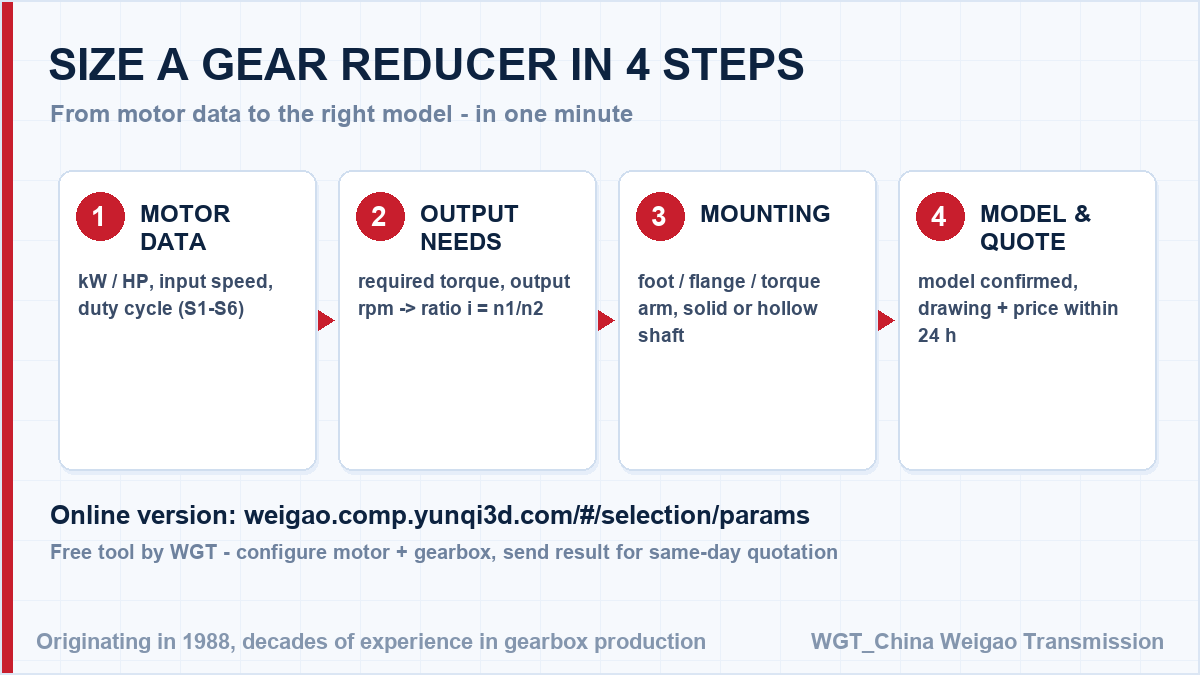
Take a 7.5 kW motor at 1450 rpm turning the storage paddle at 21 rpm. The ratio follows directly: 1450 / 21 = 69, so a ratio near i=69 is taken from the three-stage vertical band, and the frame is checked against a cold restart after a heater trip, when the viscosity has climbed far past its storage figure. In this case frame four lands on the tank roof steel with slotted pads that let the heated structure breathe while the reaction couple stays bolted, and its oil grade is argued from the summer roof-deck temperature rather than the site weather. It always comes down to those three figures. Send them over and we confirm the frame, ratio and service factor in writing.
![online gearbox selection system workflow]()
Selection workflow used by our engineers for every quotation.
Real-World Duty Points
Steel mill transfer car
A rolling mill drives its slab transfer cars with industrial gear units mounted on torque arms. Reversing duty every few minutes is handled without complaint, and the hollow-shaft connection keeps the wheel axles free of couplings.
Rotary dryer drive
A minerals processor powers a rotary dryer with a large foot-mounted gear unit. Slow rotation with high torque is the natural duty band, and the housing stays within its temperature limits without auxiliary cooling.
![right angle gearbox duty points overview]()
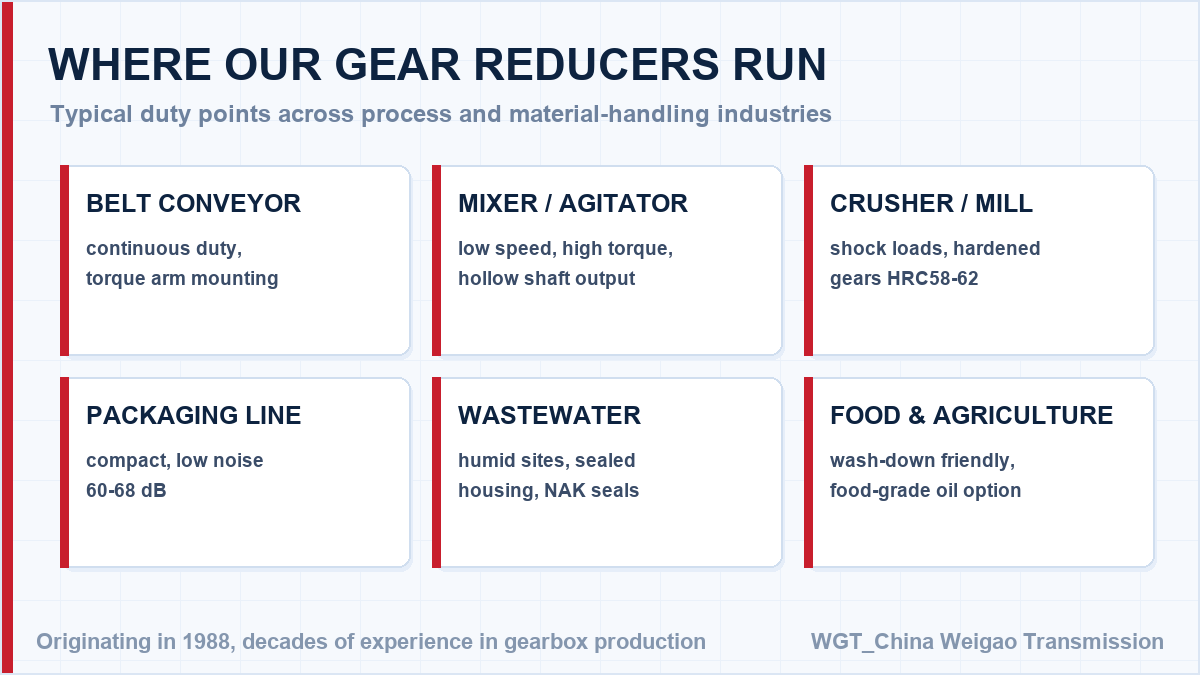
An overview of the duty points this series is built for.
Sample Units Available for Performance Testing
Validating before you commit? Use the WGT Motor & Gearbox Online Selection System to turn your motor data into a model number, and we will quote that exact unit within the day.
Sample units can be supplied for bench or field testing so your team can confirm noise, temperature rise and backlash before a production order. Tell us the test conditions and we will prepare the documentation. Looking for a gearbox for mixer and agitator? Tell us the duty point and we will confirm the model in writing.