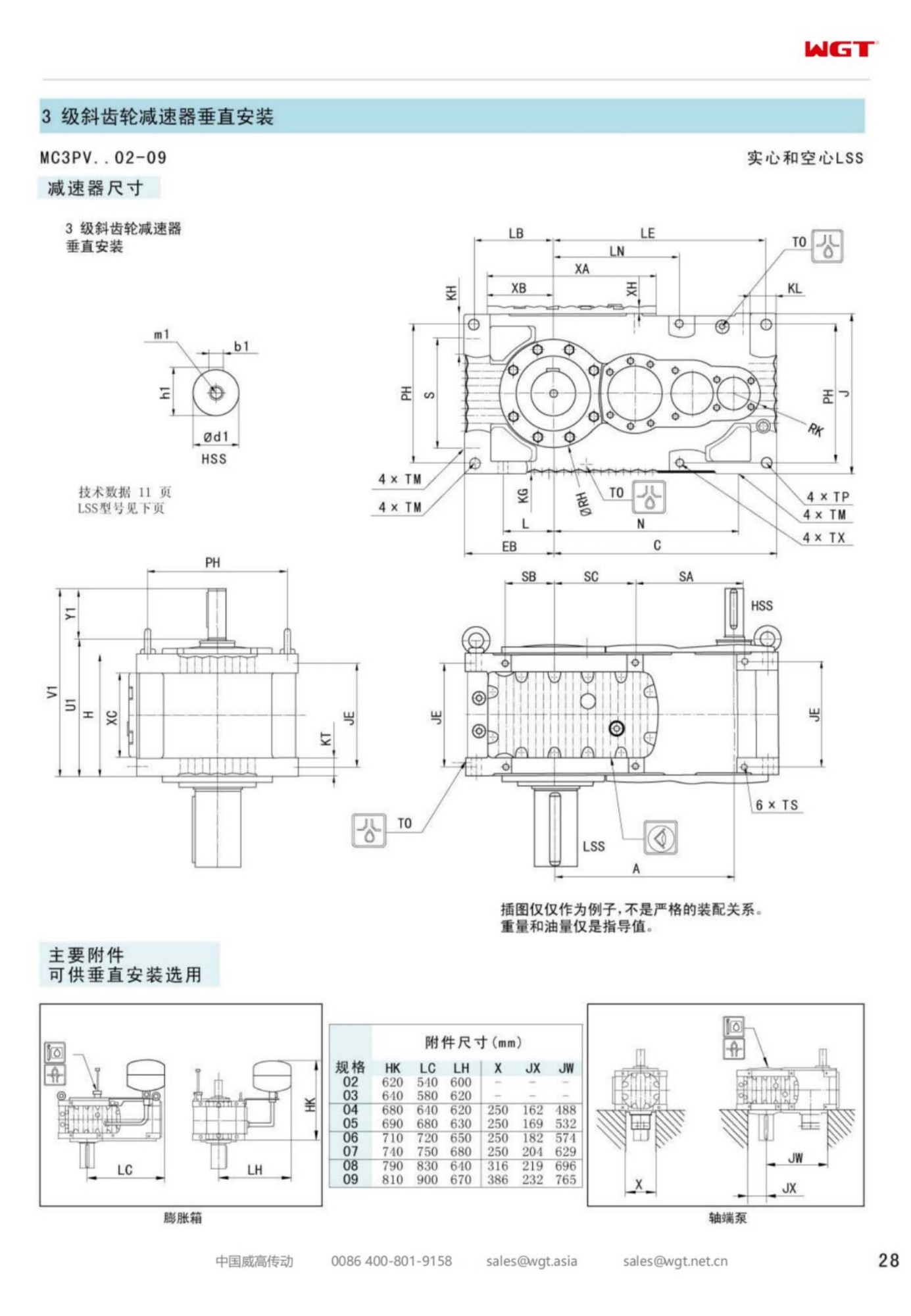
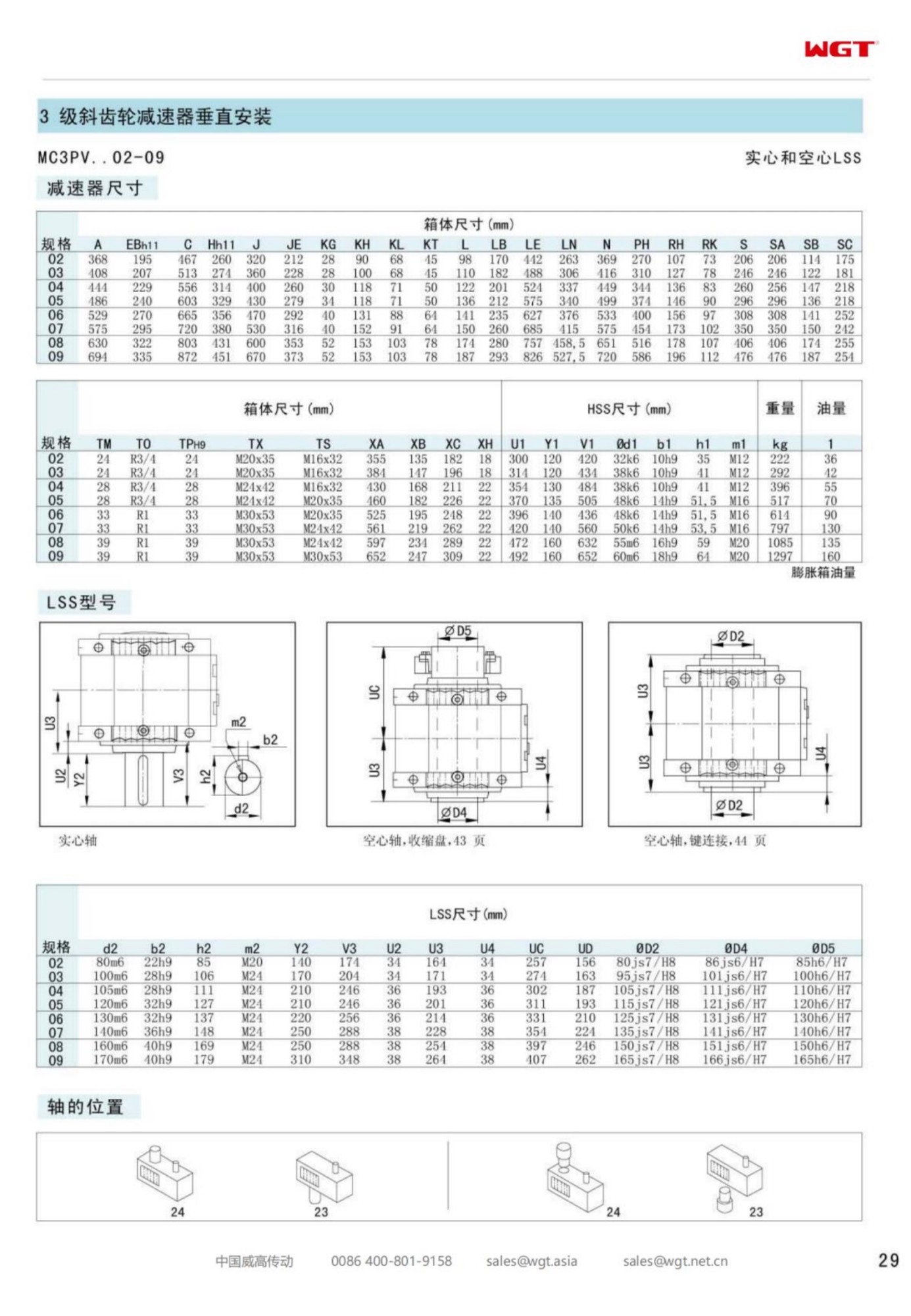
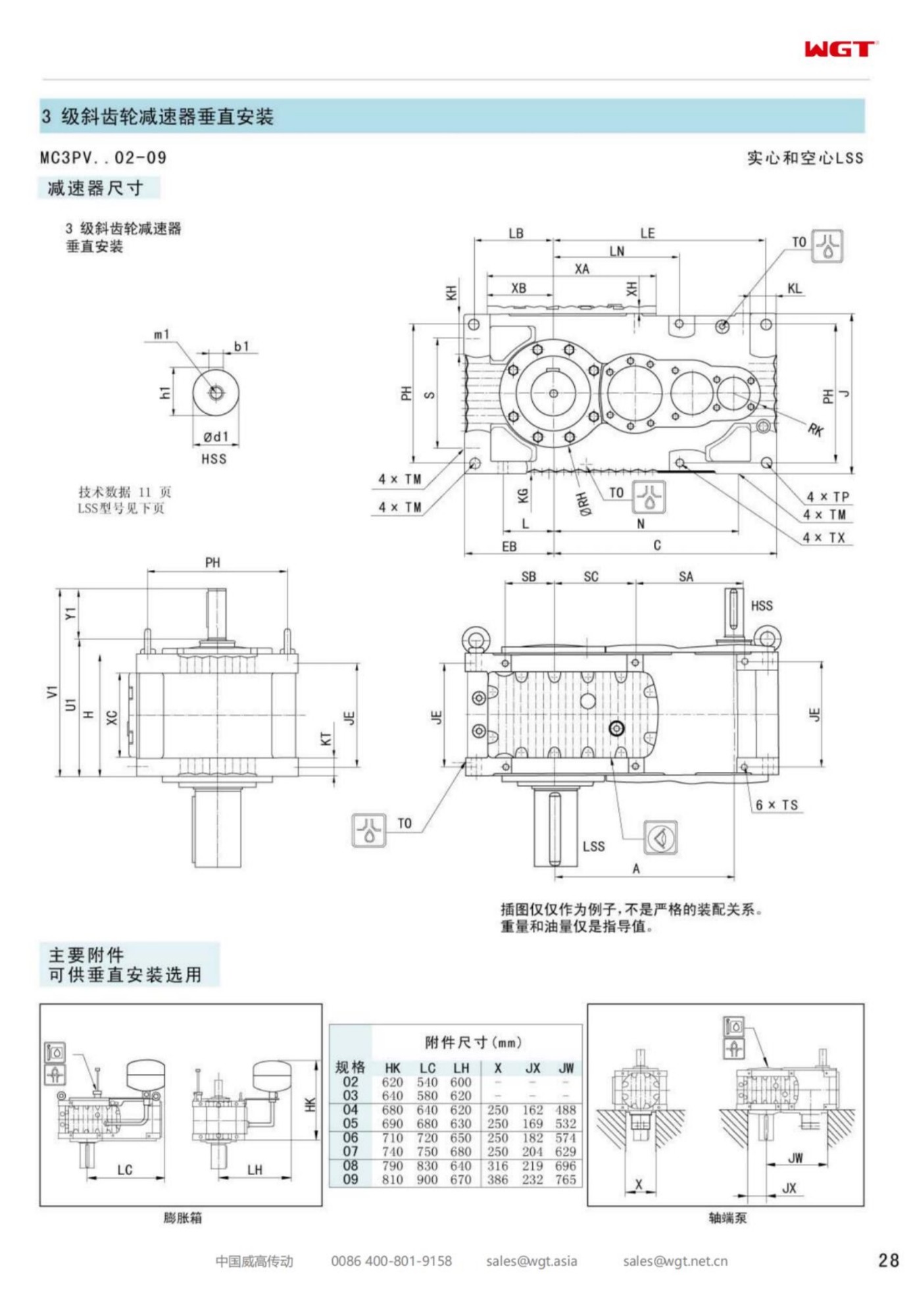
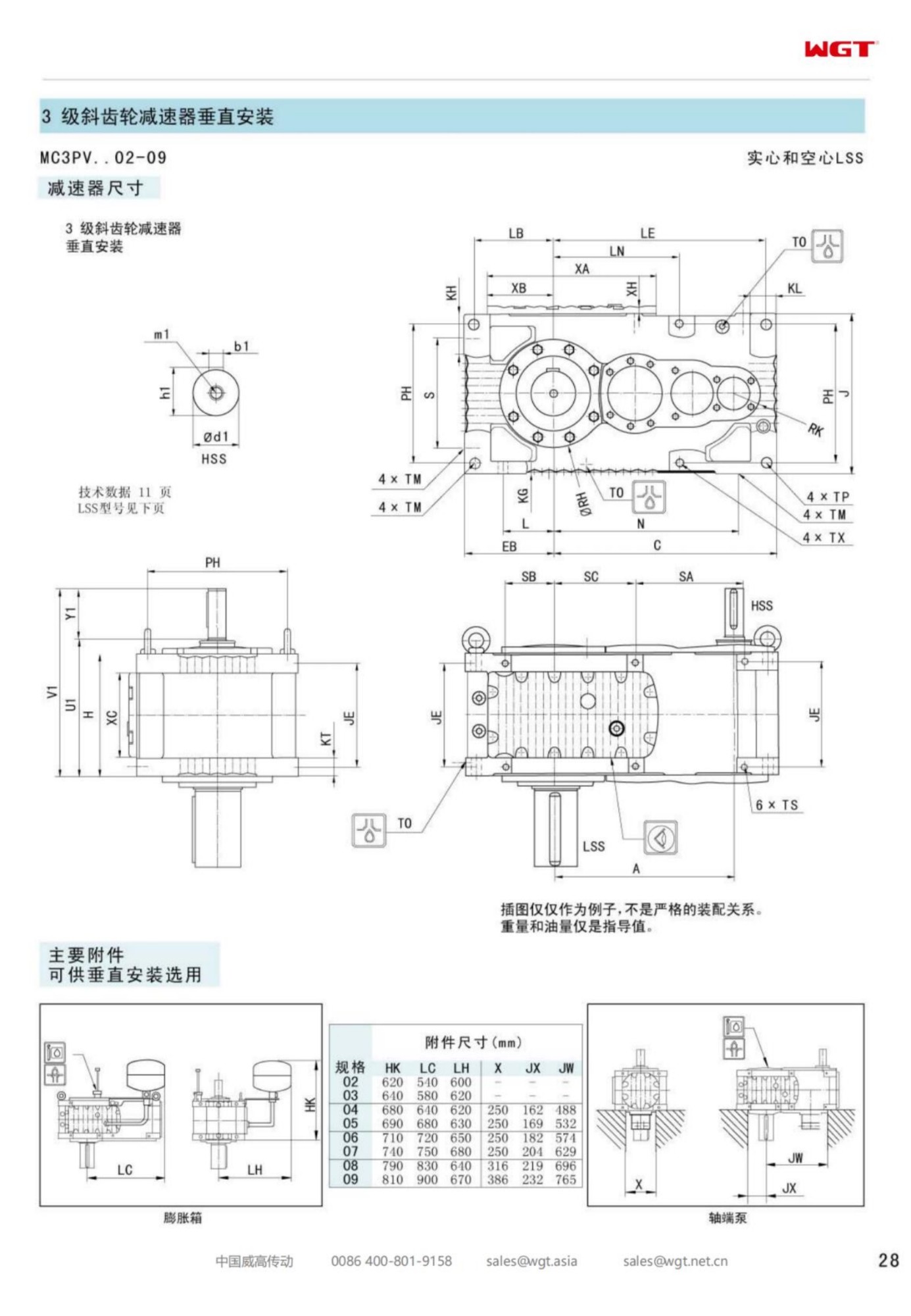
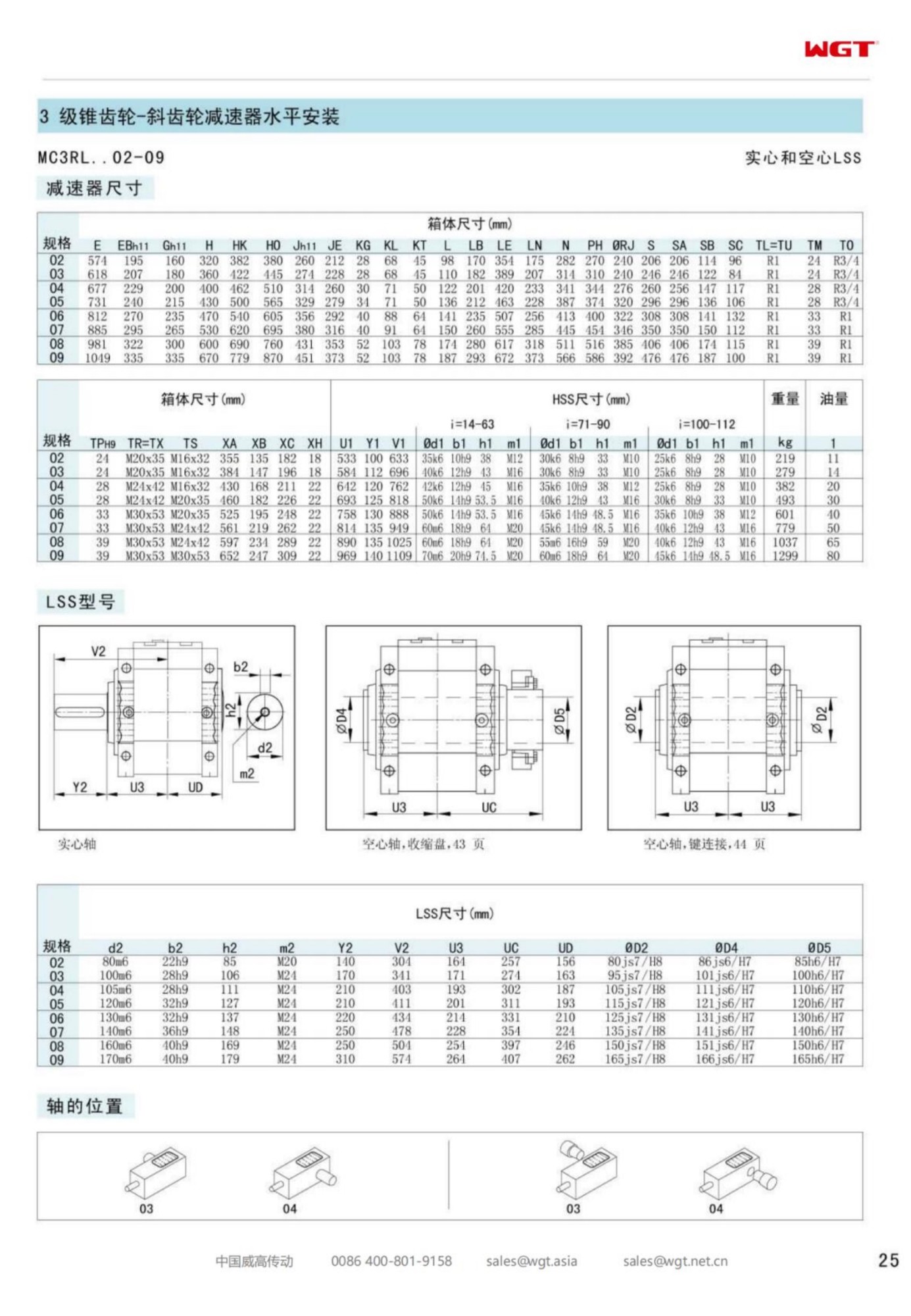
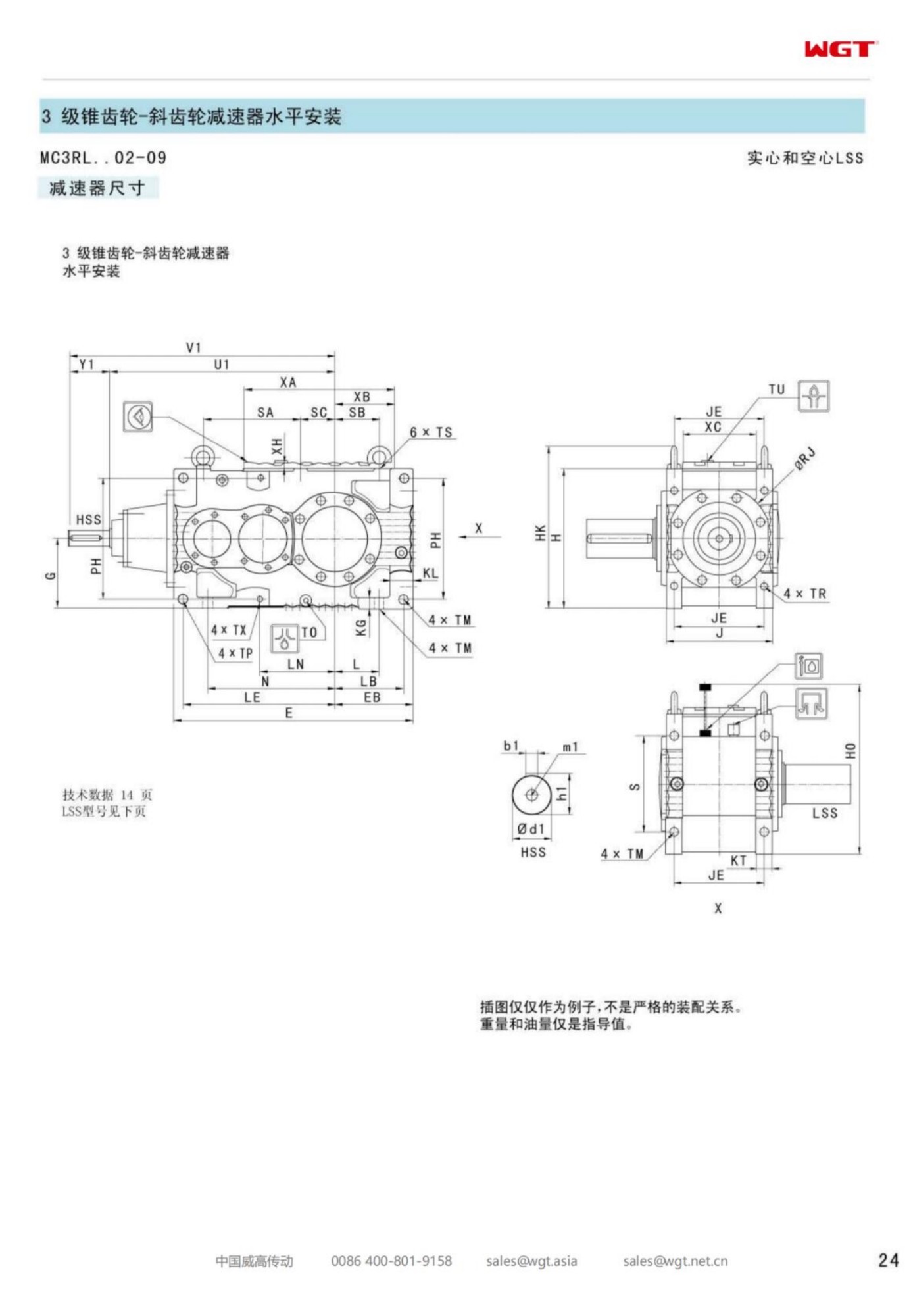
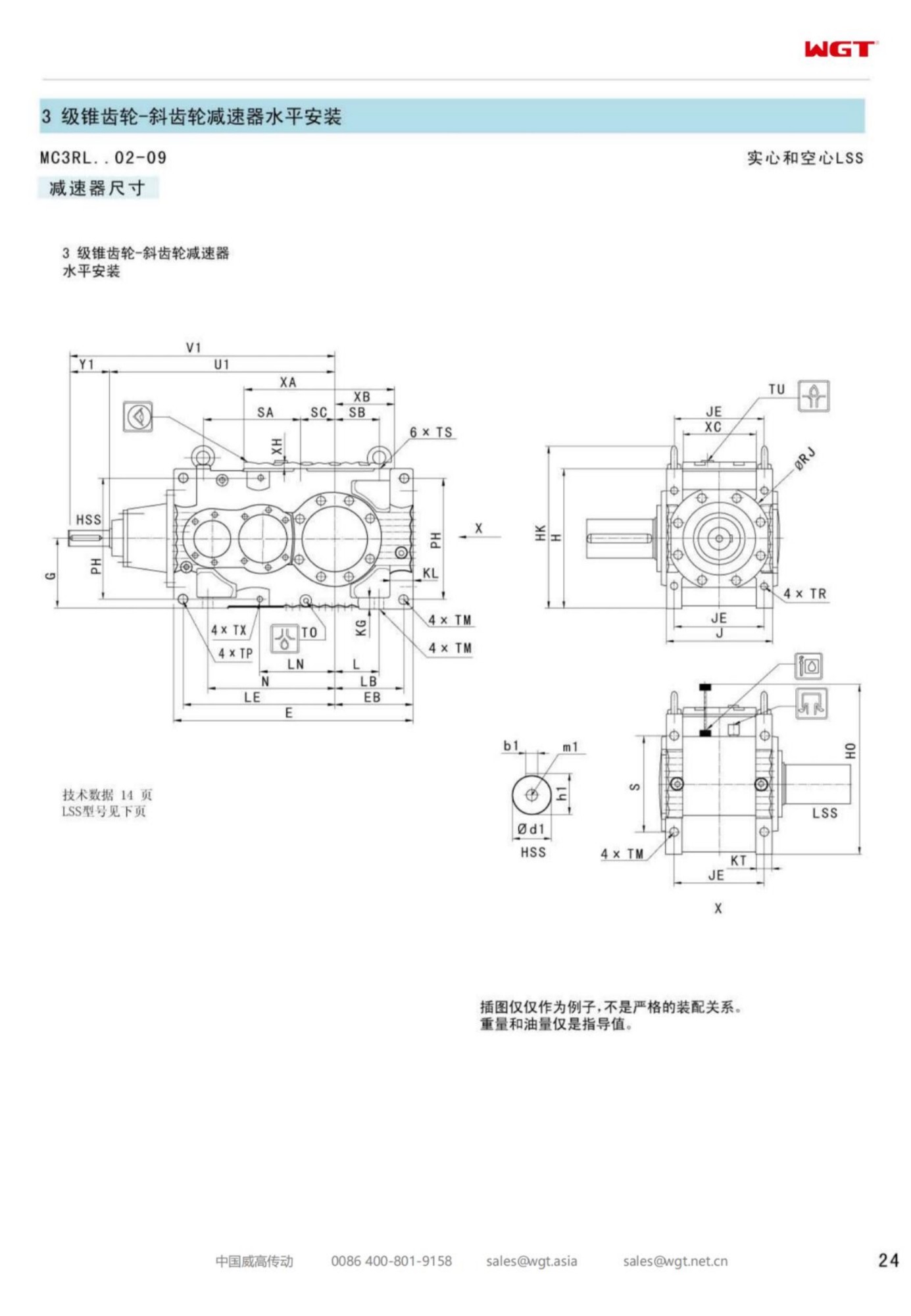
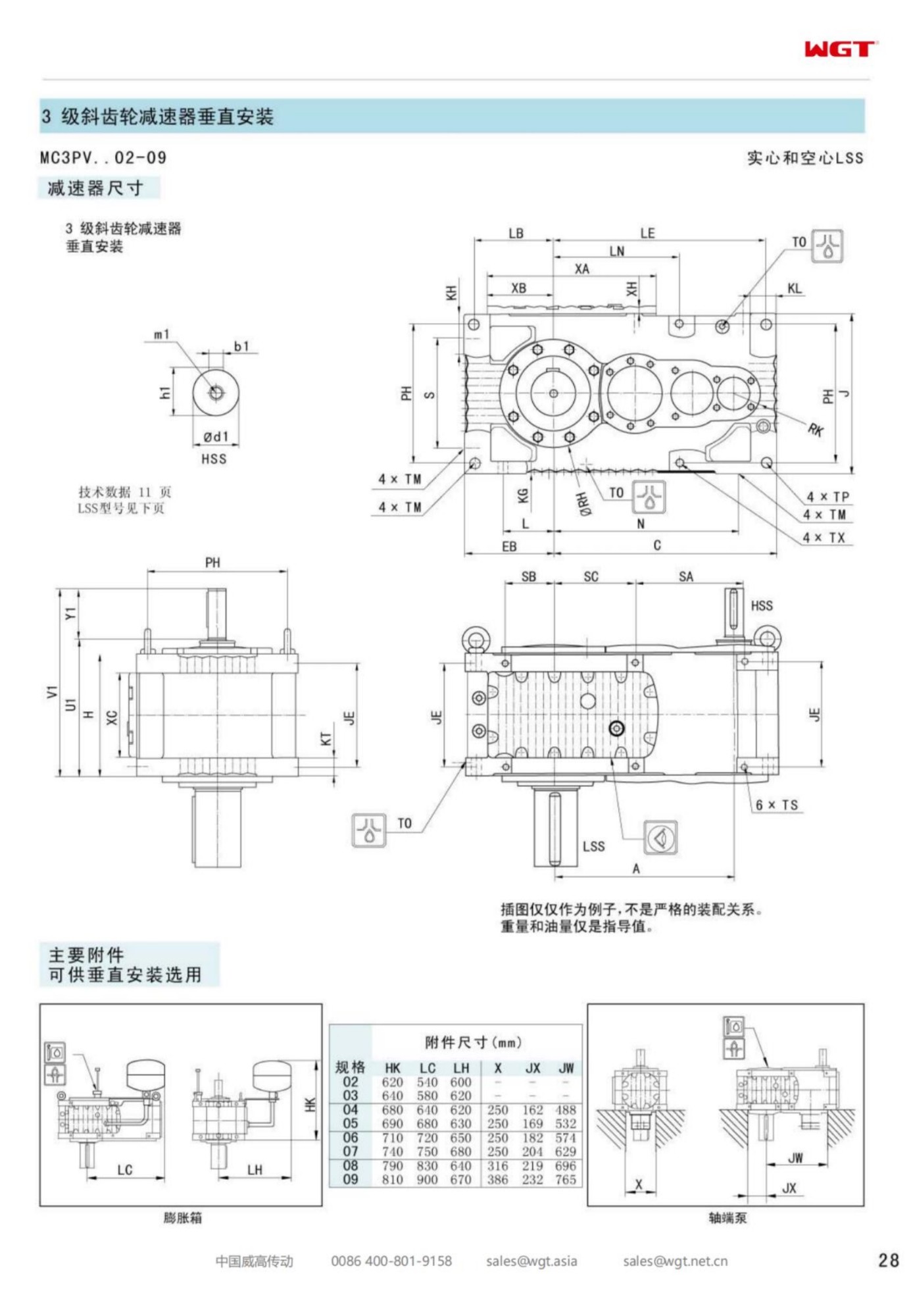
Wet-process phosphoric acid is made in a tank that industry calls the attack tank, and the name is fair: sulphuric acid meets phosphate rock in a slurry that attacks everything in reach, while gypsum crystals grow around the agitator and abrasion never rests. The MC3PVHF03 vertical hollow shaft gearbox turns the agitator of that tank: three helical stages in an upright case hung over the liquid, a hollow bore through which the agitator shaft passes, footed pads on the tank bridge.
The notes below cover the drive the way the acid plant sees it: chemistry at the case, load paths on the bridge, and the specification that keeps both vendors honest.
The Tank Where Acid Is Born
The attack tank is the hottest, most aggressive room in the acid plant. Fluoride vapours rise off the slurry, sulphuric acid mists hang above the freeboard, and the spray that escapes the agitator seal lands on whatever is above it first - which is usually the gearbox.
A case specified for a generic chemical plant will hold up in easier service; over an attack tank it needs a finish and a fastener set chosen on purpose, and a breather that never draws from the mist layer.
Reading the Designation One Letter at a Time
The type string is short and every letter commits the mounting.
| MC | Industrial gear unit family built for continuous plant duty |
| 3 | Three helical reductions inside one upright case |
| P | Parallel-shaft layout, input and output on parallel axes |
| V | Vertical build, output axis pointing down into the vessel |
| H | Hollow output bore, the process shaft passes through it |
| F | Footed reaction pads, bolted to the vessel bridge or plate |
| 03 | Third frame of the vertical hollow band |
As one sentence: three-stage industrial unit, parallel-shaft, vertical, hollow output bore, footed reaction pads, third frame of the vertical hollow band.
Overhead Drive on an Attack Tank
Attack tank agitators are almost universally overhead, because a bottom-entry seal in boiling acid slurry is a maintenance story no plant wants to own twice. Overhead means the gearbox stands in the mist but out of the liquid, and every service task happens on the bridge with the tank running.
The third frame is where medium attack tanks and the smaller digestion vessels of a phosphate complex usually land: paddle torques well above a fermenter's, shafts long enough to need real stiffness, cases still manageable by the bridge crane.
The Bore Carries the Agitator, the Pads Carry the Case
Two load paths meet at the gearbox and they must not be confused. The agitator's weight and hydraulic thrust pass through the bore into the gearbox's lower bearing; the case's own weight and the reaction couple pass through the pads into the bridge.
Plants that stiffen the bridge but leave the pad seating local do the first half of the job. The pads must bear squarely on steel that does not oil-can, or the reaction couple becomes a slow rotation of the case, visible first as a misaligned breather and later as a cracked pad weld.
Fluoride Vapour and Case Protection
Fluoride chemistry is unfriendly to paint, to fastener plating and to any exposed machined surface. The vapour concentrates under the tank roof and drifts to the coolest steel, which on a still day is the gearbox cover.
A finish specified for fluoride service, coated fasteners, and a breather piped out of the roof space are three lines that cost little on the order and decide what the case looks like at the first acid plant shutdown worth the name.
Crystals, Gypsum and Bore Wear
Gypsum crystals ride the slurry splash and settle into every horizontal surface, and the shaft-bore interface is the one they like best. A shaft withdrawn for seal or bearing service arrives with a crystal crust that must come off before the bore will accept it again.
The discipline is written at order time: bore and key dimensioned to the real shaft, a surface finish that sheds crystal, and a re-greasing or purging habit on the bore that the acid plant actually keeps between outages.
Three Stages Against a Thick Slurry
Attack tank slurry is dense and its density swings with rock grade and wash practice. The agitator turns slowly, the torque is large and lumpy, and the ratio from a four-pole motor sits deep enough that three stages make the case shorter and every mesh easier loaded than two would.
Three meshes also share the shock of a rock slug or a compacted slab of settled gypsum reaching the paddle after an upset, which is the event that writes the real duty cycle.
Oil, Temperature and a Case That Never Cools
The air over an attack tank is warm day and night, and the case runs warm with it. Oil chosen for a nominal plant ambient will run a grade hotter in that roof space than its datasheet assumed, and oil life follows temperature with unsentimental arithmetic.
Synthetic oil, a slightly larger sump and a note on the drawing of the real local ambient are the three cheapest ways to make the first oil change a scheduled event rather than a discovery.
Steady Bearings and What They Take Off the Gearbox
Long agitator shafts over wide tanks usually carry a steady bearing near the tank floor, and its health is the gearbox's business by proxy. A steady bearing that wears lets the shaft's lower end wander, and the wander arrives at the bore as a rotating side load the gearbox was never asked to carry.
The steady bearing belongs on the same maintenance schedule as the gearbox oil, and the two inspections should be written next to each other on the plant's sheet. Neither is expensive; the consequences of skipping both land in the same outage.
Sealing Against Acid Mist
Above the slurry the enemy is mist, not immersion. Mist finds the output-side bore clearance, the breather and any cover joint whose gasket has taken a set, and it works quietly because the flow is convection, not spray.
Labyrinth arrangements at the bore, a breather that draws from clean air, and gaskets specified for the chemistry keep the case's interior a place where oil lives rather than where acid condenses.
Sizing an Attack Tank Agitator
The agitator vendor supplies the torque at design density, and the plant supplies the fouling story: rock grade swings, crystal settling after an upset, and the restart condition after a stoppage. The gearbox frame follows those three, not the motor's nameplate.
One figure the plant should never omit is the density at restart. A tank that settled overnight restarts into a slurry the density meter will not read until the paddle has been turning for an hour.
Frame Three on the Acid Line
The third frame covers the mid-size attack tanks and retention vessels of an ordinary acid plant: enough case for a fouled restart, short enough to hang between the tank roof steel, and light enough for the bridge crane everyone already trusts.
Larger trains move up the vertical band into the fourth and fifth frames, and the choice is settled by paddle torque and shaft length rather than by the motor's kilowatts.
Sulphuric mist, fluoride vapour and a slurry that grows crystals - three stages hold the attack tank paddle:
- Attack tank agitator at a wet-process phosphoric acid plant
- Slurry mixer at a phosphate beneficiation plant
- Retention tank mixer on a wet-process acid line
- Filter feed tank agitator at an acid plant
- Gypsum slurry agitation at a hemihydrate plant
- Digestion slurry mixer at a phosphate complex
Model Range and Centre Distances
| Model | Centre distance | Output | Typical duty |
|---|
| M3PSF50 | size 50 | solid shaft, foot | conveyors, feeders |
| M3PSF60 | size 60 | solid shaft, foot | crushers, mixers |
| M3PSF70 | size 70 | solid shaft, foot | ball mills, shredders |
| M3PSF80 | size 80 | solid shaft, foot | kilns, heavy conveyors |
| M3PSF90 | size 90 | solid shaft, foot | mill and kiln drives |
| M3RSF50 | size 50 | solid shaft, foot, right-angle | inclined conveyors, elevators |
| M3RSF60 | size 60 | solid shaft, foot, right-angle | screw classifiers, feeders |
| M3RHF70 | size 70 | hollow shaft, foot, right-angle | agitators, drum drives |
| M3PHT80 | size 80 | hollow shaft, torque arm, parallel | shaft-mounted conveyors |
| M3RHT90 | size 90 | hollow shaft, torque arm, right-angle | heavy shaft-mounted drives |
Frame sizes in this series follow a widely used industrial dimension ladder: foundations, couplings and guards of the existing installation are reused as they are.
Proven Installations
Overland conveyor system
A mining company drives a two-kilometre overland conveyor with heavy-duty helical gear units at the head station. Continuous 24-hour duty, frequent starts under full load and minimal maintenance windows were all part of the specification.
Cement plant bucket elevator
A cement works renewed the gear units on its bucket elevators during a kiln shutdown. The new units bolted onto the old foundations without modification, and the elevator was back in service within the planned window.
![gearbox applications in quarry food and water plants]()
Conveyor, mixer, crusher and wastewater duties share the same gear family.
Selection Example: Attack tank agitator at a wet-process phosphoric acid plant
Take an 18.5 kW motor at 1470 rpm turning the attack tank paddle at 24 rpm. The ratio follows directly: 1470 / 24 = 61.3, so a ratio near i=61 comes from the three-stage vertical band, and the frame is argued on restart density after the tank has settled overnight rather than on the datasheet slurry. In this case frame three stands in the acid mist on pads that bear squarely on the tank bridge, carries a finish and fastener set chosen for fluoride vapour, and takes a bore and key agreed against the real agitator shaft. Motor speed over target speed gives the ratio; the driven machine decides the service factor, and the two together decide the model.
![industrial gear unit sizing procedure diagram]()
The four inputs the online selector asks for.
Request the Datasheet and Dimension Drawing
Need documentation for approval? Work out the ratio, torque and frame size yourself with the WGT Motor & Gearbox Online Selection System, then send the result - we confirm it in writing.
We issue complete technical files on request: dimension drawing, rating table, test record format and material certificates, in English and ready for your engineering or purchasing approval package. Looking for a gear reducer for screw conveyor? Tell us the duty point and we will confirm the model in writing.
FAQ: Selection, Mounting and Maintenance
Do you offer food-grade or washdown versions?
We can supply food-grade lubricant, FKM (Viton) oil seals and stainless fasteners for washdown areas. These units are common in bakeries, dairies and packaging halls where hygiene and moisture are daily concerns.
How do I install the unit on an inclined conveyor?
Mount the unit with the output shaft horizontal or as recommended for your mounting position, and choose the anti-run-back option so the loaded belt cannot drive the gearbox backwards when power is cut. Tell us the incline angle when you order.