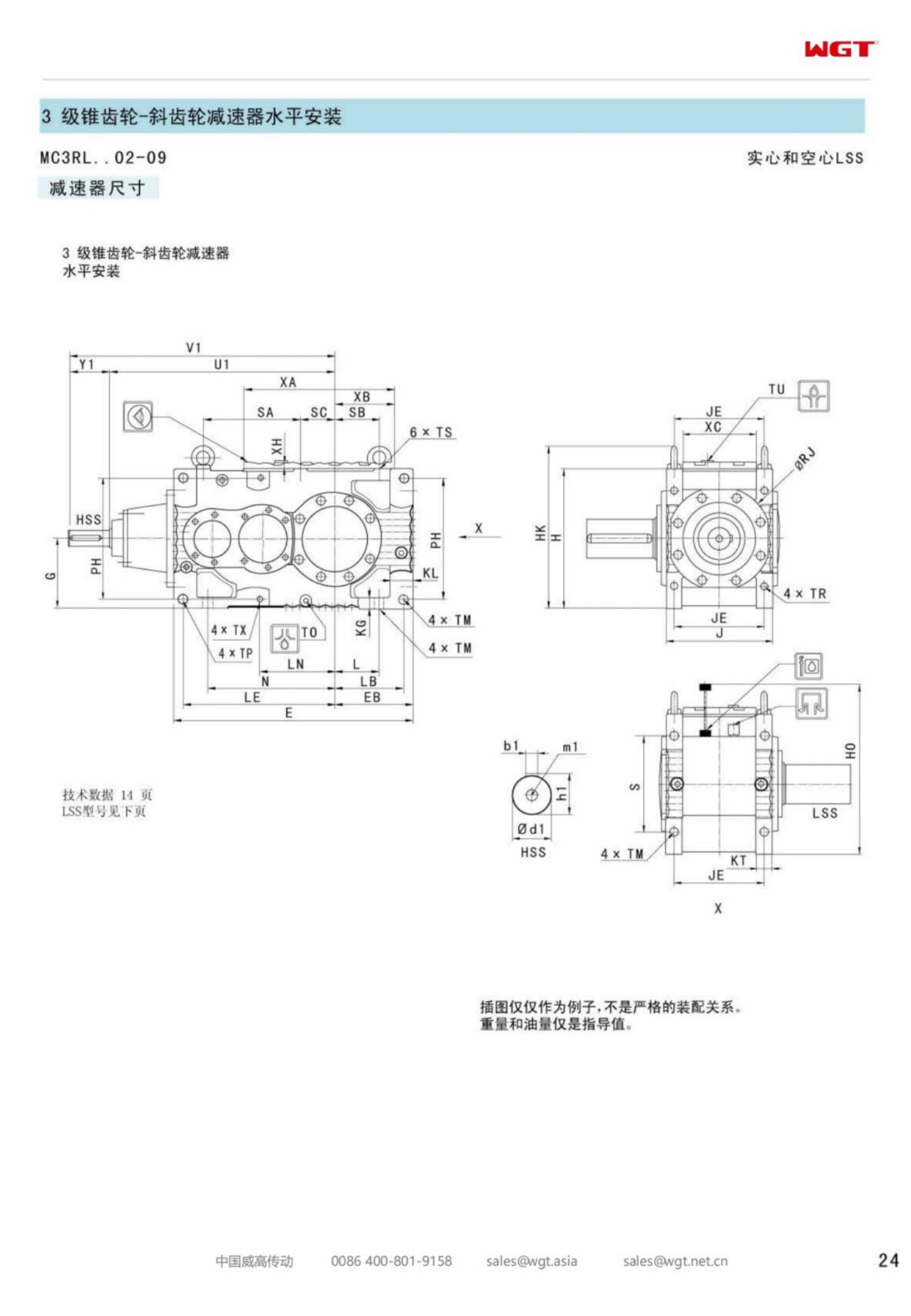
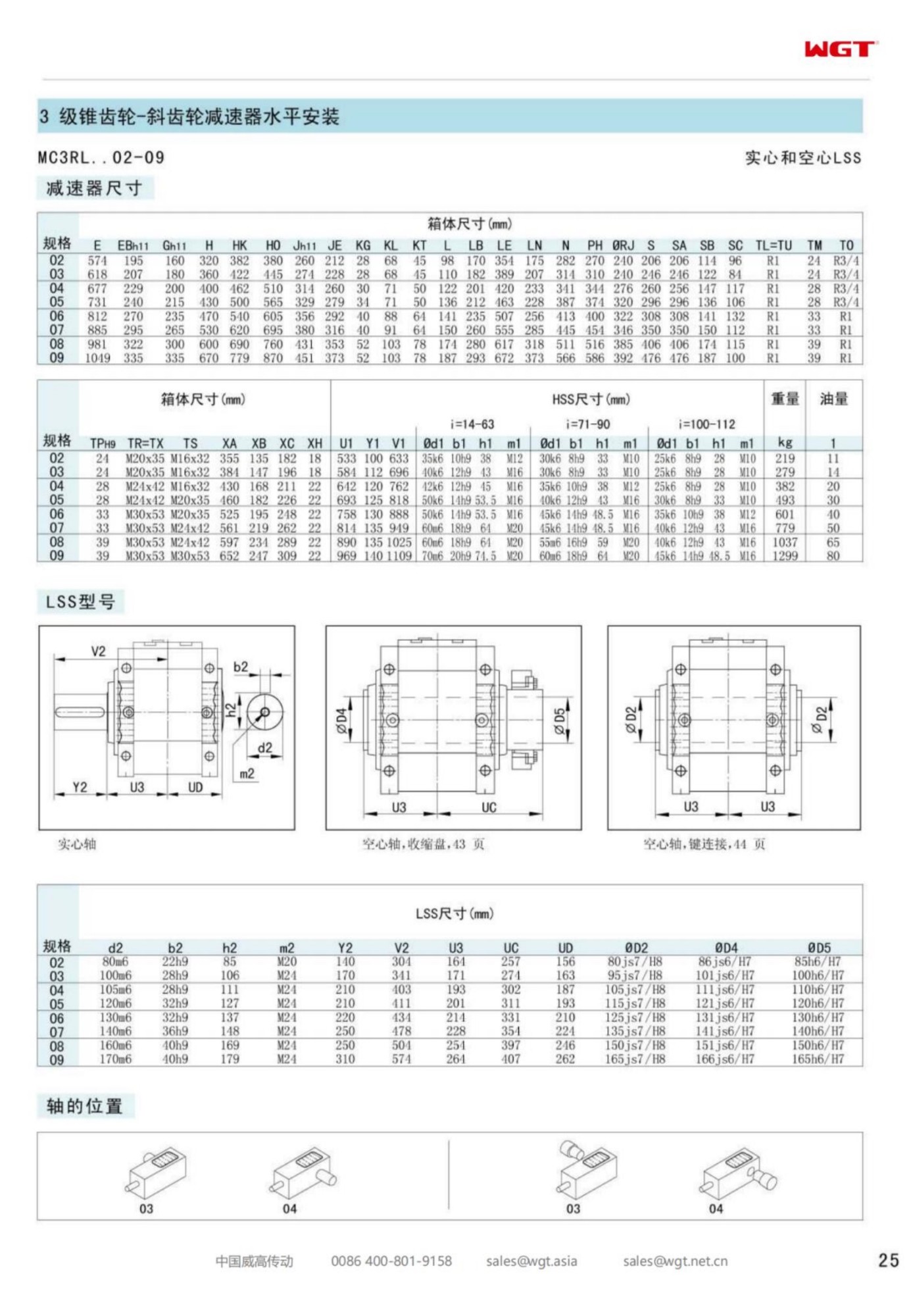
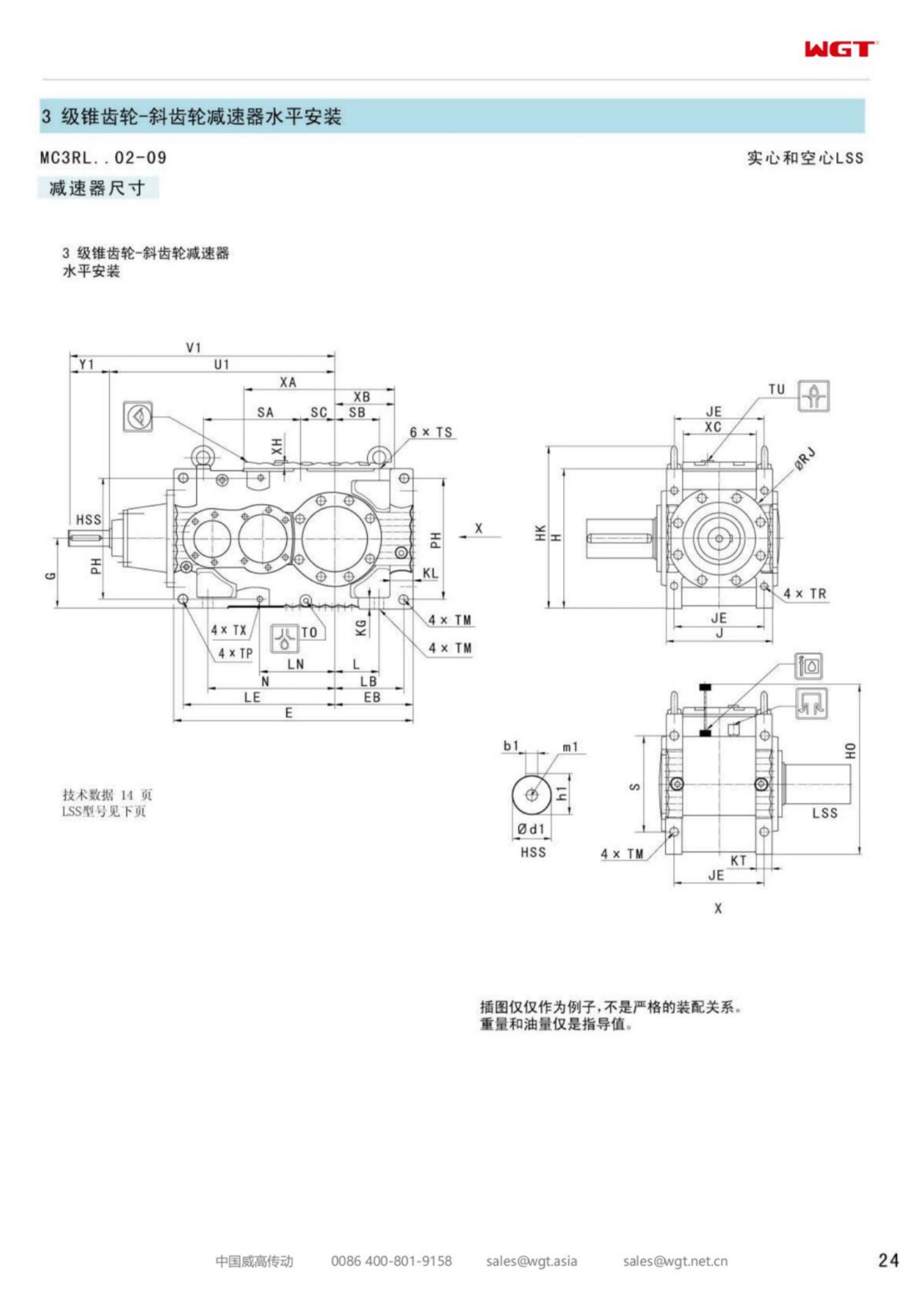
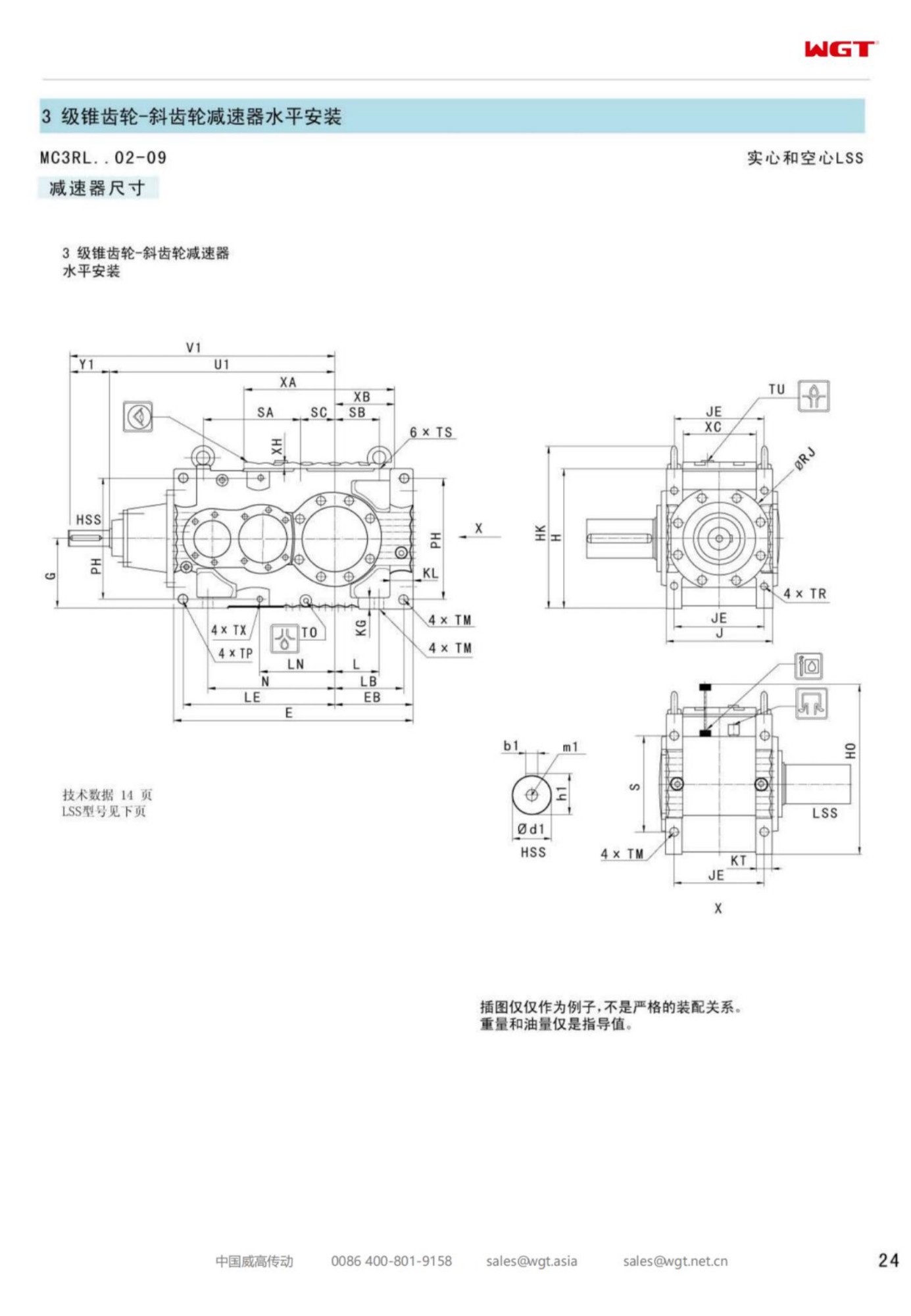
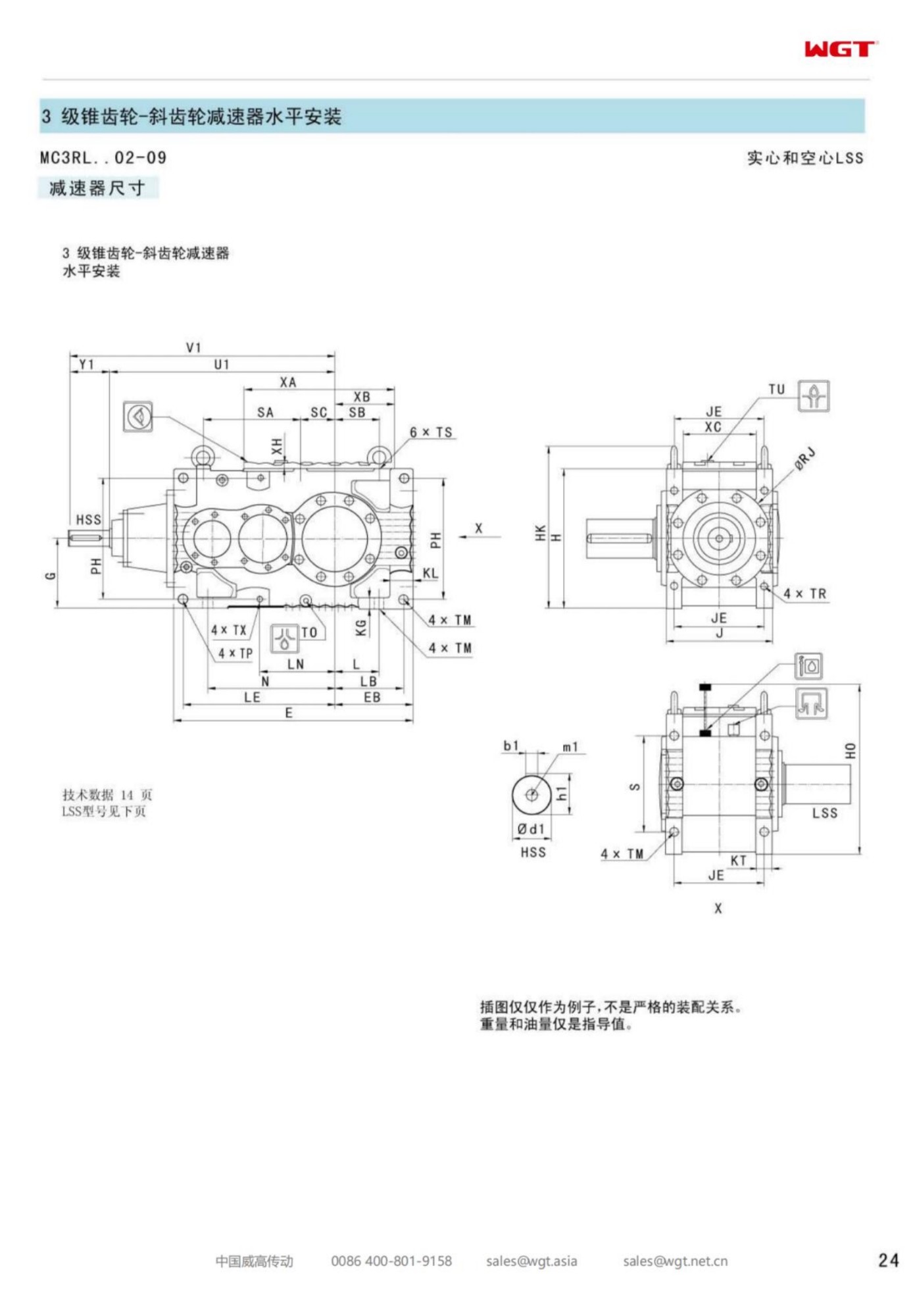
Salt is a mild chemical that behaves like an aggressive one, because it does not stay where it is put. It draws water from the air, it creeps into every thread and crevice, and it turns a workshop atmosphere into a chloride environment that eats cadmium plating and ordinary fasteners within a year. The MC3RLST06 right-angle gear unit drives the conveyors and elevators that move it: three stages, level output at ninety degrees to the motor, keyed shaft, torque arm on the refinery steelwork.
What follows covers the layout, the corrosion case, the caking and bridging that decides restart torque, and the specification a salt refinery should write.
Salt Finds Every Fastener
Bulk salt arrives at a refinery as rock salt, solar salt or vacuum salt, and the difference matters: rock salt brings clay and grit, solar salt brings magnesium salts that are more hygroscopic than sodium chloride itself, and vacuum salt is pure enough to flow like sand until the humidity rises.
All three share one property that decides a gear case's life: they hold moisture against steel and they do it in the places a painter cannot reach.
Decoding the MC3RLST06 Designation
The string is short and every character earns its place.
| MC | Industrial gear unit family for continuous plant duty |
| 3 | Three stages of reduction in one housing |
| R | Right-angle build, motor set at ninety degrees to the output |
| L | Level output axis, running along the machine |
| S | Solid output shaft, keyed to the driven shaft |
| T | Torque-arm reaction, no baseplate required |
| 06 | Sixth frame of the three-stage band |
Read aloud: three stages, right angle, level output, solid keyed shaft, torque-arm mounting, sixth frame. Nothing about the mounting is left to the installation drawing.
Why Refineries Use a Right-Angle Layout
Salt plants are built as a vertical stack: intake, washing, drying, screening and storage, with conveyors threading between levels. The head of each conveyor is close to a wall, a stair or a chute, and the space along the belt is where people walk.
A right-angle build keeps the motor out of that walking line, and the bevel set does the turn inside the same oil volume as the helical stages, so the layout costs no additional lubrication point in a plant where every point is a maintenance task.
Torque Arm Instead of a Grouted Base
Grouting a baseplate in a salt plant is an act of optimism. The floor is washed, the grout is attacked, and within a few years the plinth is a loose block under a drive that is still trying to transmit torque.
An arm bolted to the structural steel avoids the grout entirely, and it lets the drive be lifted out for cleaning without breaking a bond that would have to be re-made. On a plant that washes down weekly, that is the difference between a planned job and a permanent leak.
Chloride Attack and the Paint System
A standard industrial paint system on shot-blasted steel will hold for years in a dry plant and for months in a salt refinery. The failure is not usually the topcoat but the edges and welds, where the film is thinnest and the salt settles first.
What helps: a system with a specified dry film thickness at edges, stainless or coated fasteners, a breather of corrosion-resistant construction, and a case arranged so that water runs off rather than standing in a recess around a cover bolt.
Deliquescence: The Product That Turns to Brine
Above roughly seventy-five percent relative humidity, sodium chloride begins to absorb water and dissolve in what it has absorbed. The result is a brine film on every surface in the building, and a brine film on a shaft is a seal running in salt water.
The seal arrangement should assume liquid rather than dust: a lip running on a corrosion-resistant sleeve, protected from direct spray, with a drain that lets the case breathe without drawing brine in.
Three Stages for a Slow Salt Belt
Salt conveyors and elevator boot screws run slowly to limit degradation of the crystal, so the head shaft turns at a low speed and the ratio from a four-pole motor lands in the three-stage band. Two stages would need a wheel pair large enough to change the case envelope.
The third mesh also spreads the restart torque of a caked belt, which is the load case that decides whether the drive survives a wet weekend.
Keyed Output and a Corrosion-Resistant Coupling
A keyed solid output on a short head shaft is the normal connection, and the coupling is where corrosion shows first: a standard cast iron coupling will seize on its key within a season in a refinery.
Specifying the coupling for the environment at the same time as the gearbox is a small discipline that saves a large argument later, when the drive cannot be removed because the coupling has become one piece with the shaft.
Caking, Bridging and the Load at Restart
Salt that has absorbed moisture sets when it dries, and a belt that stopped full can set into a slab. Restart torque under that condition is not the running torque with a factor applied; it is a different load case, closer to breaking a bond than to moving a bulk solid.
The service factor carries part of it, and the control philosophy carries the rest: a controlled start that can be repeated, rather than a jog that stalls and trips.
Wash-Down Routines and Breather Placement
Refineries wash conveyors and floors on a schedule, and a hose does not respect a breather. A breather at the top of the case will take water from a spray directed upward, and once water is in the oil the failure sequence is quick and expensive.
A breather piped to a high dry point, or a cap that is fitted before washing, are both simple; the second depends on a person remembering, and the first does not.
A Specification Sheet for a Salt Refinery
What to send: head shaft diameter and keyway, belt or screw speed, throughput, the salt type and its moisture, the wash-down frequency, the ambient and humidity, motor frame and speed, and the finish standard the plant already uses on its structures.
Quoting the plant's existing finish standard is worth more than a page of description, because it tells the supplier what has actually survived there.
Frame Six in a Bulk Salt Line
The sixth frame sits in the middle of the band and covers the main transfer conveyors of a refinery of ordinary size: enough case for a set belt, enough mass to hold alignment on a washed floor, and small enough to be handled by the plant's own crane.
Intake conveyors and the elevator boot screws usually sit one or two frames below, where the run is shorter and the product is broken rather than set.
Salt, brine and a hose every weekend - three stages survive a refinery atmosphere:
- Salt transfer conveyor at a vacuum salt refinery
- Rock salt intake belt at a bulk terminal
- Soda ash conveyor at a chemical works
- Salt elevator boot screw at a refinery
- De-icing salt loading belt at a port store
- Salt screening conveyor at a food grade plant
Selection Example: Salt transfer conveyor at a vacuum salt refinery
Take a 15 kW motor at 1470 rpm turning the head pulley at 42 rpm. The ratio follows directly: 1470 / 42 = 35, so a ratio near i=35 is drawn from the three-stage right-angle band, and the frame is checked against a belt that set into a slab over a wet weekend rather than against the dry running load. In this case frame six holds its reaction on refinery steelwork through an arm instead of a grouted plinth that wash-down would attack, keys a solid output to the head shaft through a coupling specified for chloride service, and carries a finish and fasteners chosen for a building where the air turns to brine. That is the whole calculation. If your duty involves heavy starting, frequent reversing or many stops per hour, tell us and we raise the service factor.
Which Frame Size Do You Need?
| Model | Centre distance | Output | Typical duty |
|---|
| M3PSF50 | size 50 | solid shaft, foot | conveyors, feeders |
| M3PSF60 | size 60 | solid shaft, foot | crushers, mixers |
| M3PSF70 | size 70 | solid shaft, foot | ball mills, shredders |
| M3PSF80 | size 80 | solid shaft, foot | kilns, heavy conveyors |
| M3PSF90 | size 90 | solid shaft, foot | mill and kiln drives |
| M3RSF50 | size 50 | solid shaft, foot, right-angle | inclined conveyors, elevators |
| M3RSF60 | size 60 | solid shaft, foot, right-angle | screw classifiers, feeders |
| M3RHF70 | size 70 | hollow shaft, foot, right-angle | agitators, drum drives |
| M3PHT80 | size 80 | hollow shaft, torque arm, parallel | shaft-mounted conveyors |
| M3RHT90 | size 90 | hollow shaft, torque arm, right-angle | heavy shaft-mounted drives |
Foot-mounted frames are listed below; torque-arm (T), hollow-shaft (H) and vertical (V) variants are available across the size range. Ask for the outline drawing to check the interface before ordering.
Answers to Common Questions
What documentation comes with an industrial gear unit?
Every shipment carries an installation manual, a dimension drawing, the nameplate data and a bench test record covering noise, temperature rise and backlash. Material certificates for shafts and gearing are available on request.
How is the unit transported and lifted on site?
Units ship in export wooden crates with lifting points on the housing clearly marked. On site, lift only from these points with the specified slings - lifting from shafts or covers is expressly forbidden in the manual.
What tooth quality and grinding finish do you apply?
Gearing is case-hardened and profile-ground to international accuracy grades, with crowning and end relief applied to avoid edge loading. This is what keeps noise and vibration stable over years of continuous duty.
![gearbox sizing steps for engineers]()
Four steps from your application data to a firm model number.
Case Notes from the Field
Pet-food extruder feeder
A pet-food plant chose reducers for the feeder screws ahead of its extruders. Steady torque at variable output speed keeps the kibble size consistent, and washdown sealing protects the unit during sanitation shifts.
Ceramic tile press feeder
A ceramic tile producer fitted reducers to press feeders. The dusty environment is handled by sealed housings, and the stable low-speed output stops the tile blanks shifting before pressing.
![industrial gear unit application overview]()
A cross-section of the installations we supply every month.
Tell Us the Torque, We Confirm the Model
Not sure where to start? Try the WGT Motor & Gearbox Online Selection System, then send the result sheet - we return a complete datasheet, drawing and price the same day.
A photo of the nameplate, the motor power and the output speed you need are enough to start. We confirm the frame size, ratio and mounting style and return a written quotation the same day. Looking for a gearbox for steel mill? Tell us the duty point and we will confirm the model in writing.