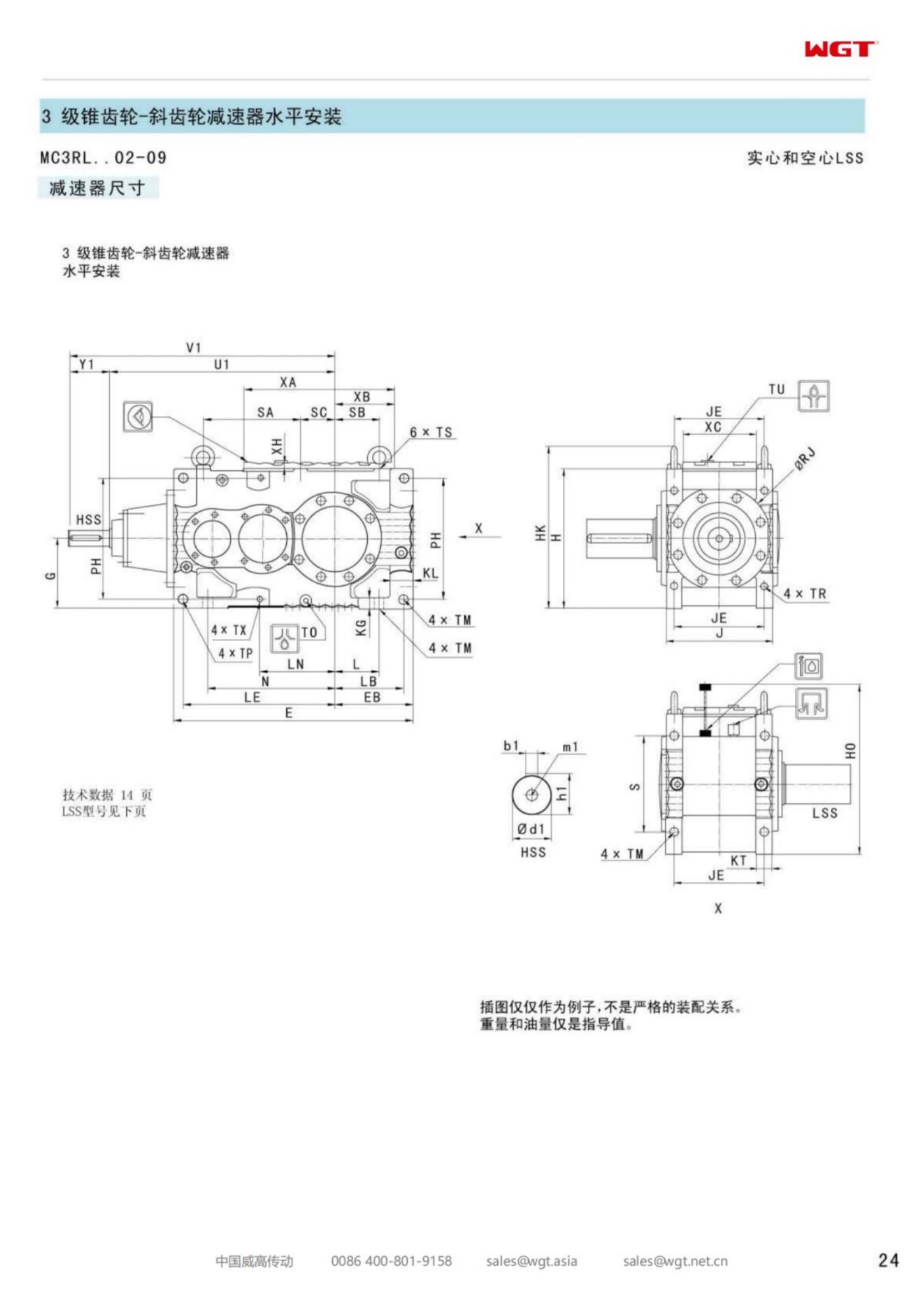
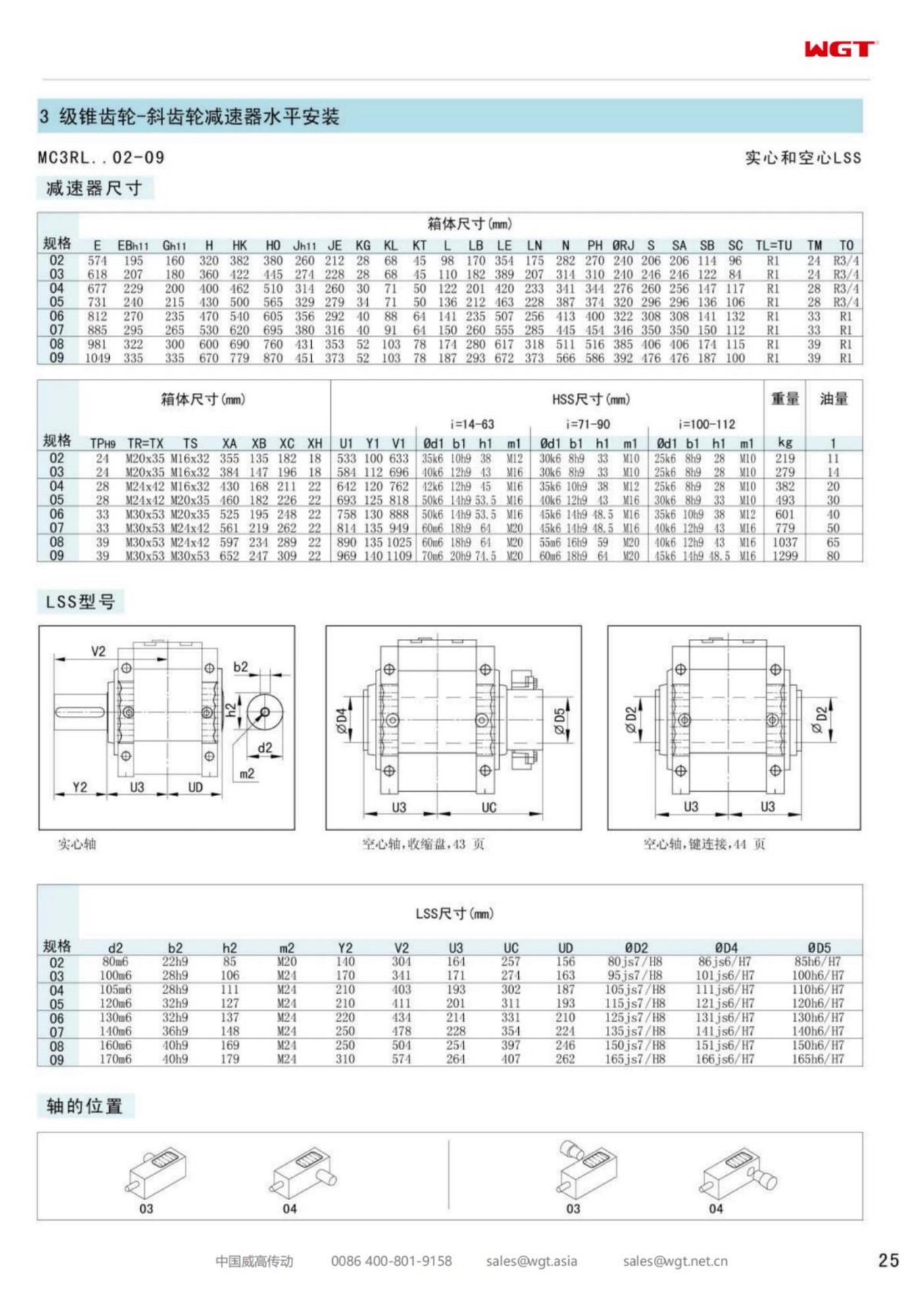
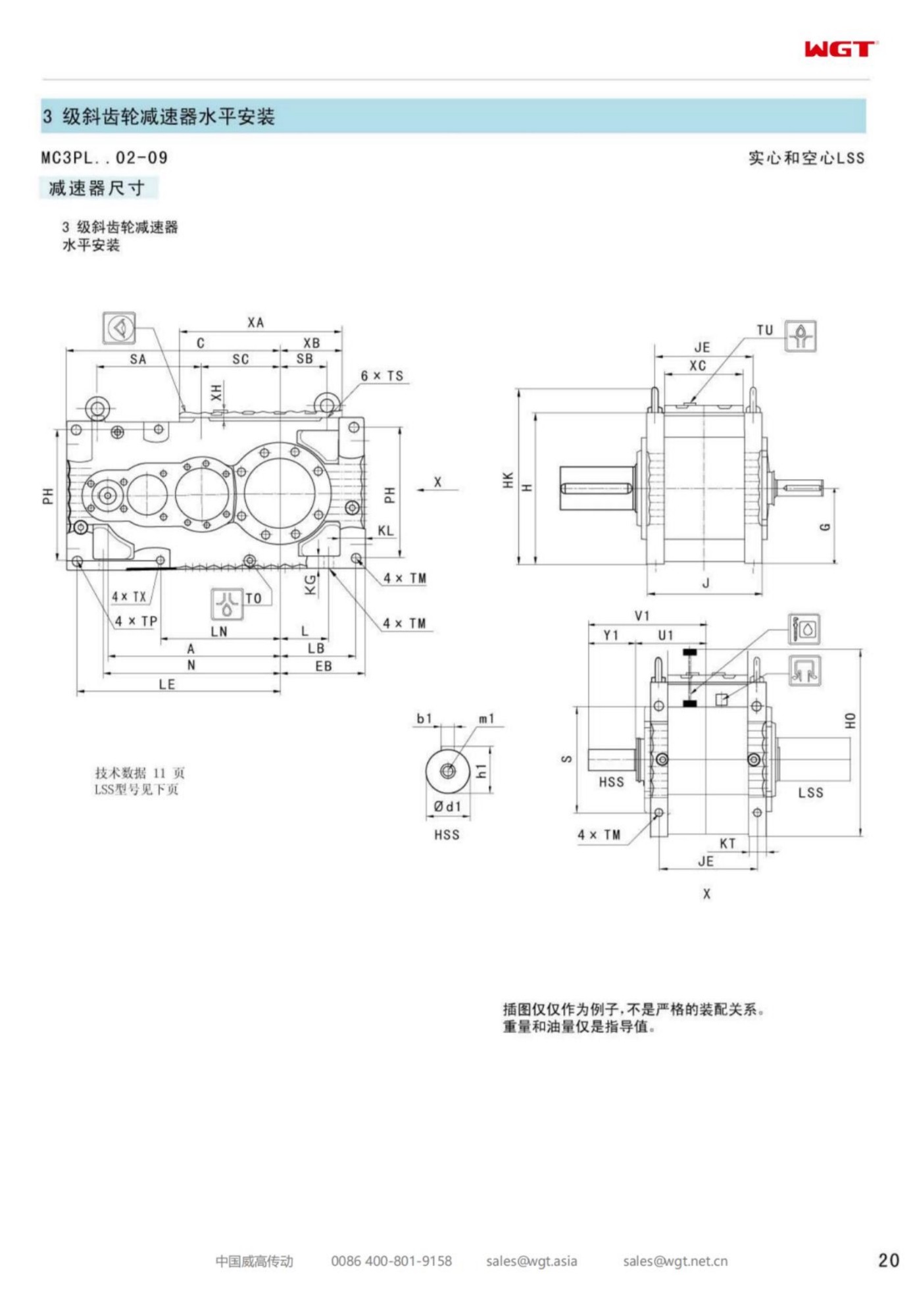
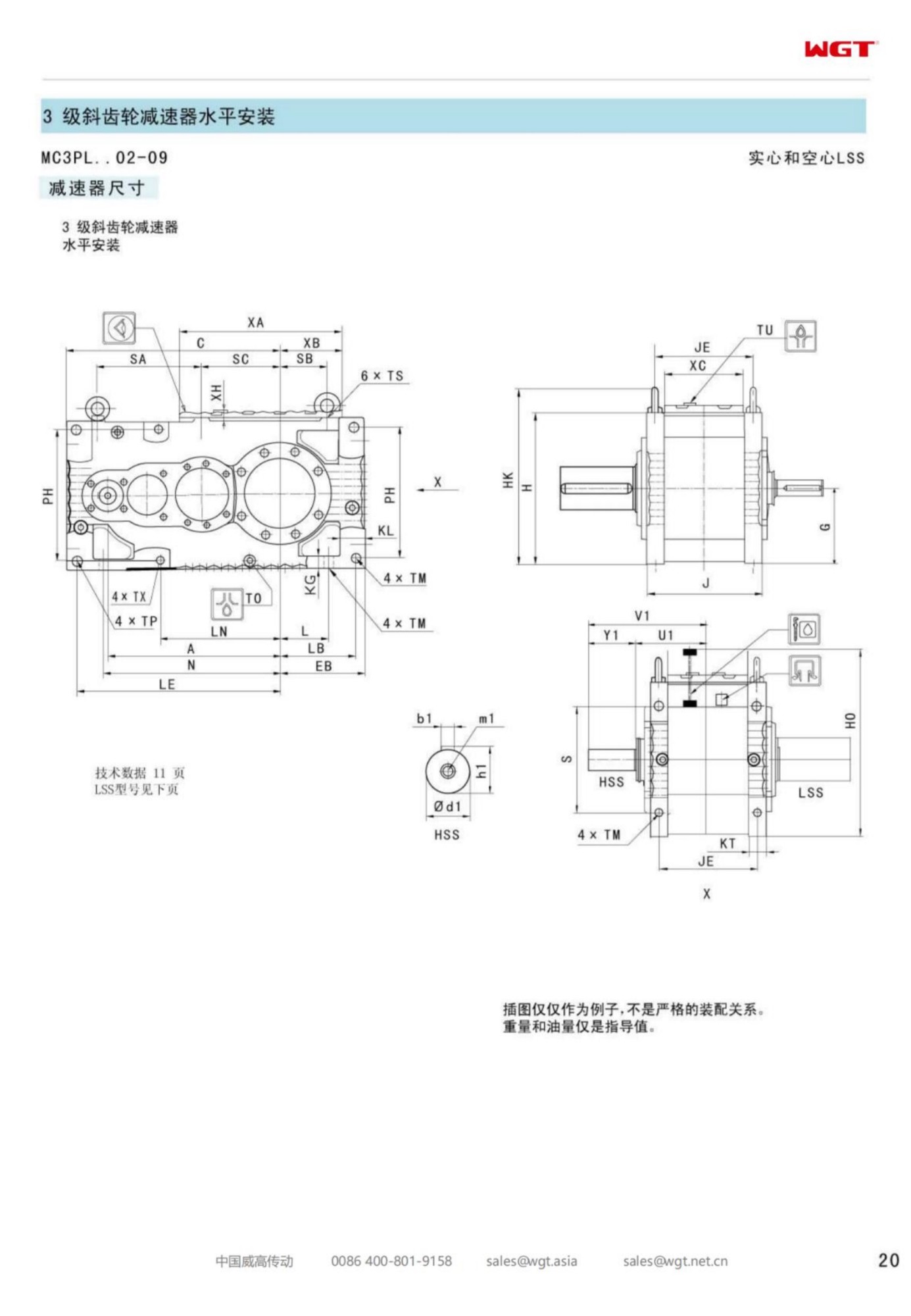
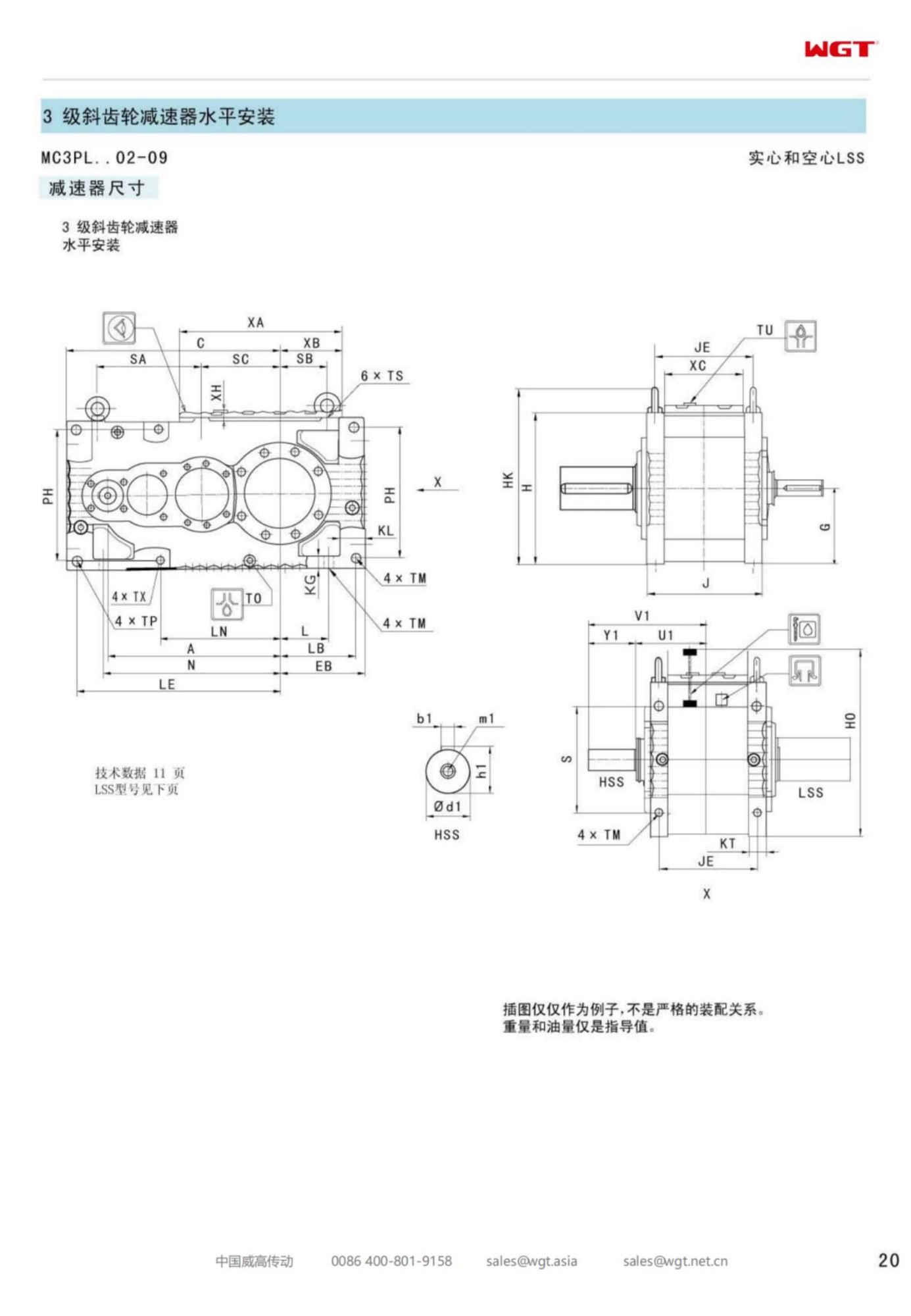
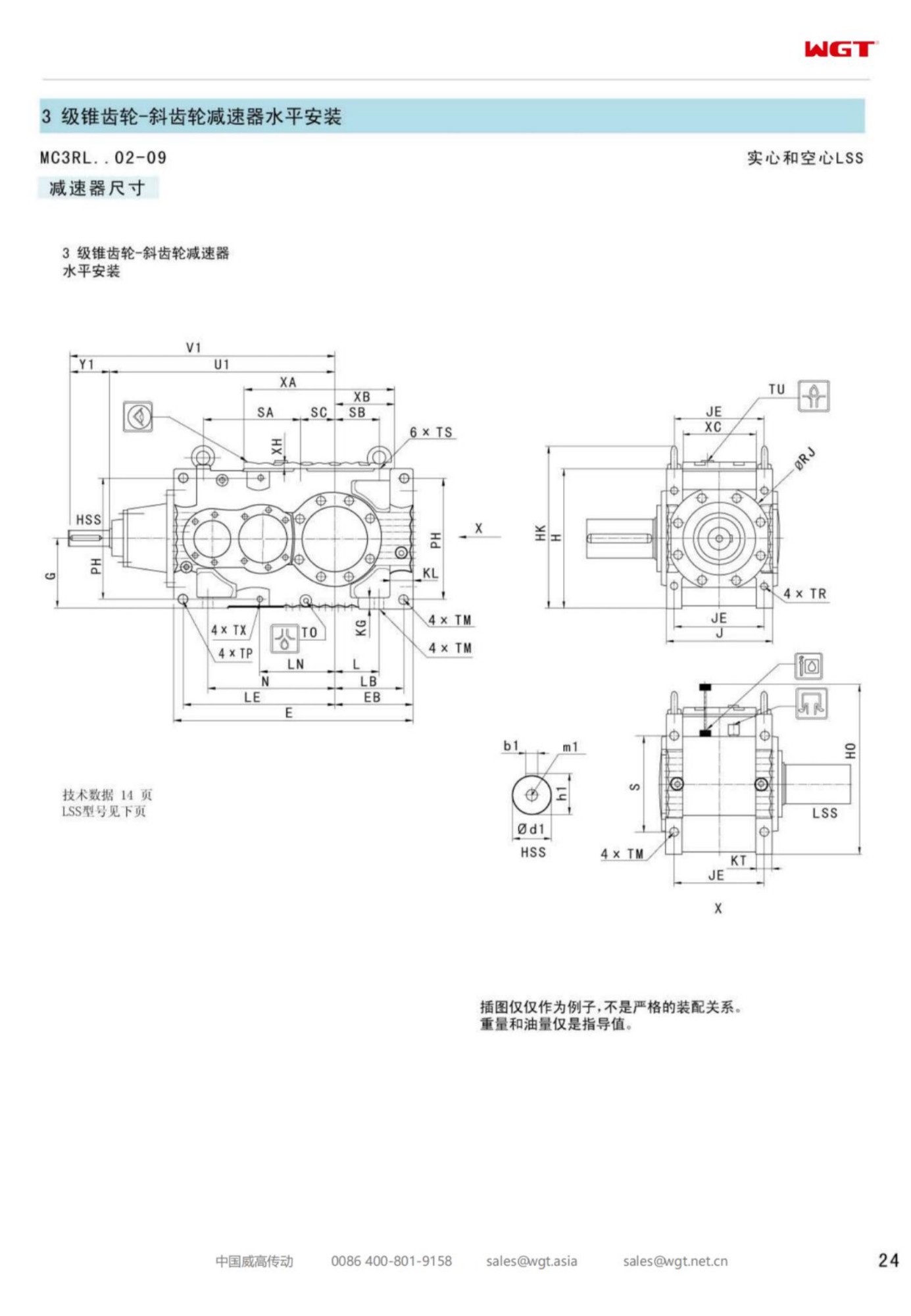
Bagasse leaves the last mill at around fifty degrees, at close to half its own weight in water, and with enough free sugar left in it to glaze every surface it touches. The conveyor that carries it to the boiler house runs at a crawl and takes a bed whose depth changes with the cane and the season. The MC3RLST02 right-angle solid shaft gearbox is the drive for that conveyor: three stages, a level output at ninety degrees to the motor, a keyed shaft, and a torque arm that lands the reaction in the mill's own steel.
What follows is for the engineers who keep a cane train running: the mounting logic, the residue problem, the duty cycle across a crushing season, and the figures worth putting in front of a supplier.
Bagasse Arrives Hot, Wet and Sticky
Bagasse is fibre, pith and water with a little residual sucrose, and none of those three helps a gear case. The water keeps the atmosphere above the belt near saturation; the heat drives condensation onto any surface cooler than the bed; the sugar dries to a film that binds dust and then re-wets itself out of the air overnight.
A drive in that position is judged on two counts at once: whether it can hold torque at a crawl, and whether it still turns freely after a weekend standing under a pile of it.
What the MC3RLST02 Code Settles
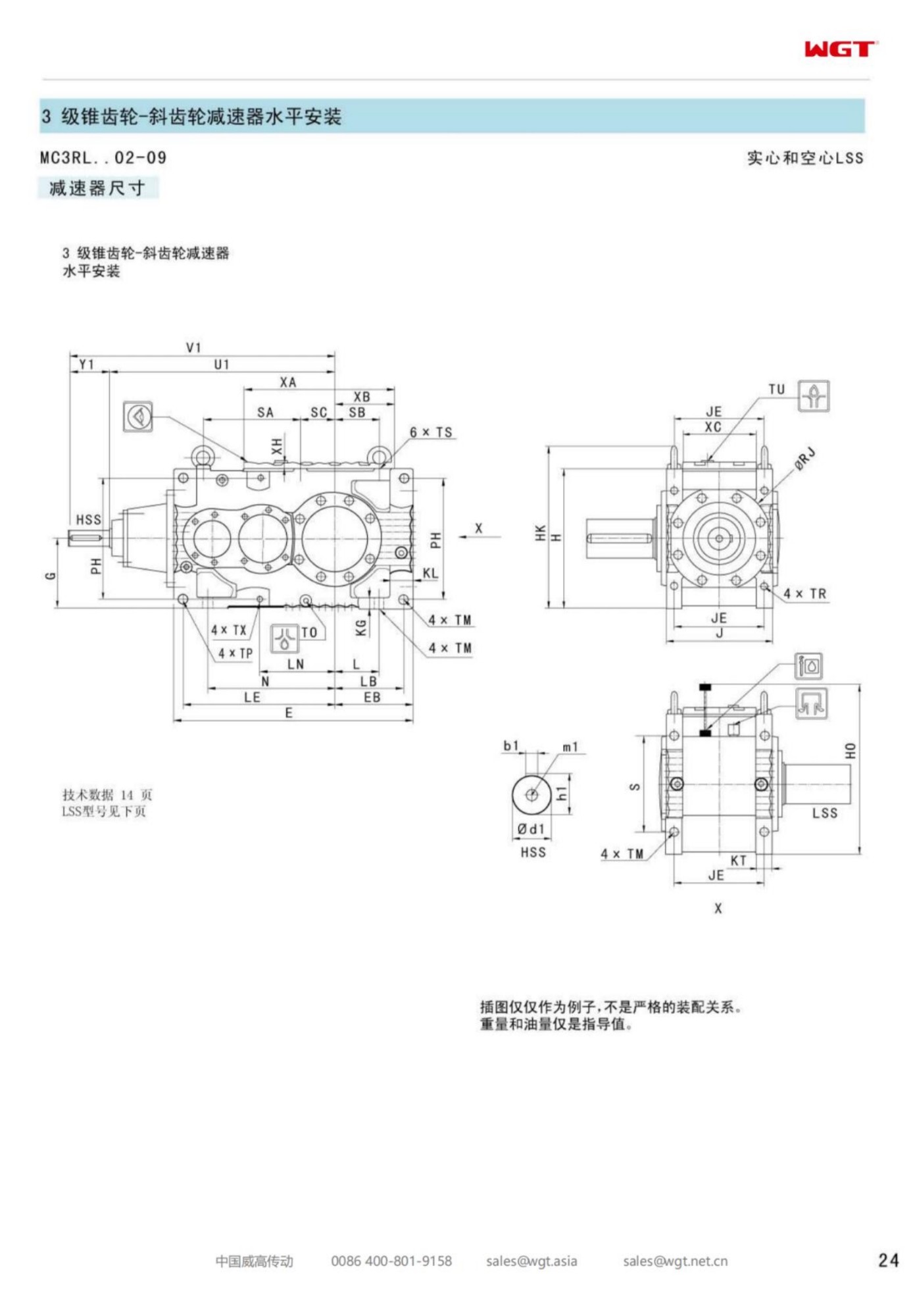
The designation is a mounting decision spelled out in seven positions.
| MC | Industrial gear unit family for continuous plant duty |
| 3 | Three stages of reduction in one housing |
| R | Right-angle build, motor set at ninety degrees to the output |
| L | Level output axis, running along the machine |
| S | Solid output shaft, keyed to the driven shaft |
| T | Torque-arm reaction, no baseplate required |
| 02 | Second frame of the three-stage band |
Read as one sentence: a three-stage industrial unit, right-angled, level output, solid keyed shaft, torque-arm reaction, second frame of the band.
A Right Angle That Keeps the Motor Off the Belt
A bagasse conveyor runs along a gallery with a walkway on one side and the belt on the other, and the space behind it is rarely empty: steam lines, a wash main and the mill's own bracing share it. A right-angle build puts the motor and its fan parallel to the gallery wall instead of across it, which is often the difference between a motor that can be changed inside a shift and one that needs a pipe fitter first.
The same layout shortens the drive train. The bevel set turns the axis once, in the same housing as the helical reductions, so nothing protrudes into the walkway that a person could catch a sleeve on.
The Arm Bolts to the Mill's Own Steel
A torque arm is a stay rather than a mount. It resists the reaction couple about the output axis and does nothing else, which suits a gallery where the steel is already there and already stiff in the direction the reaction acts. A grouted plinth built out from that steel would be a second structure, and a second structure moves differently from the first.
The bracket deserves more thought than the arm. It must be stiff along the line of the reaction and clear in every other direction, so that a conveyor frame growing with heat can slide without loading the arm or the output bearing.
Sucrose Residue and the Case That Never Dries
Sugar is hygroscopic, and a film of it on a gear case behaves like a wick. The surface looks dry at the end of a shift and is wet again by the middle of the night, and a paint system chosen for a general industrial atmosphere will chalk and then rust under that treatment within a season or two.
The countermeasures are unglamorous: a finish specified for a sugar mill rather than a workshop, a breather taken to a clean point clear of the discharge, and a drain plug that can be opened without dismantling the guard.
Why Bagasse Demands a Third Reduction
Boiler feed conveyors on a cane train move slowly, sometimes in single digits of metres per minute, so the head shaft turns at a handful of revolutions per minute. From a four-pole motor that lands deep in the three-stage band, where three meshes share the reduction and no single pair of wheels has to be built oversized.
The second reason is the load. Bagasse is light per cubic metre but a mill can carry a deep bed, and a belt stopped full restarts against that bed. Three stages spread the resulting torque across more tooth contacts than two, which is what keeps a shock from turning into a tooth failure.
Solid Output on a Boiler Feed Head Shaft
The head shaft of a bagasse conveyor ends in a plummer block with a keyed stub, and a solid output with a keyed coupling is the honest fit. It can be shimmed and checked in place, changed without pulling the shaft, and it leaves the bearing arrangement exactly as the mill designed it.
Passing a bore over the same stub is possible in this family, but there is nothing to buy: the head end is accessible, the shaft is short, and the arm already carries the reaction that a bore would otherwise hand to the shaft.
Cane Season and the Duty Cycle Nobody Writes Down
A cane train runs three shifts for months and then stands idle for months. Neither state appears in a paper duty cycle, which usually assumes a steady year. The season sets the thermal duty; the idle months set the corrosion duty, and both of them decide how the drive is specified.
That is worth saying at order time, because it changes two choices: the service factor, which has to reflect a mill that will not stop for a bearing, and the storage treatment, which decides whether the first week of the next campaign is spent freeing a seized breather.
Bearing Seals Against Wash-Down Water
Mills hose the gallery at the end of a shift, and a hose aimed at a gear case finds the breather before it finds anything else. A breather that stands proud of the case top, or one piped to a high point, is a cheap defence that costs nothing to specify.
The output seal meets the same water from the other side. A lip running on a shaft that is wet for part of the day needs its lip protected from direct spray, which is normally a simple deflector rather than an exotic seal.
Torque From Mill Throughput, Not From a Nameplate
The motor nameplate gives a rating; the conveyor gives a duty. The figure that sizes the case is the torque at the head shaft with a full bed of wet heavy cane, multiplied by the service factor the mill's own history justifies.
Throughput in tonnes of cane per hour, belt speed, belt width and incline convert into that torque. Two of those numbers are on the mill's daily sheet already, and the third is a tape measure and five minutes.
What a Sugar Mill Should Put on the Enquiry
The useful first message carries the head shaft diameter and keyway, belt speed and width, incline, throughput in tonnes per hour, motor frame and speed, the steam and wash conditions in the gallery, and a photograph of the drive end.
With those in hand the quotation comes back with one frame and one ratio rather than a range that has to be narrowed by three more rounds of messages.
Frame Two in a Cane Train
The second frame is where small bagasse conveyors and the return belts of a cane train usually land: enough case for a full belt at start-up, small enough to fit the gallery, and light enough that the arm bracket can be a welded fabrication rather than a casting.
Above it the third and fourth frames take the main boiler feed belts, where the bed is deeper and the run is longer.
Bagasse that arrives hot, wet and sweetened with its own residue - three stages keep the boiler belt turning:
- Bagasse conveyor from the last mill to the boiler house
- Pith and fines belt at a cane diffuser
- Return bagasse conveyor under a boiler feed chute
- Cane yard trash conveyor at a sugar mill
- Molasses-month wash-down conveyor at a distillery
- Fibre reject belt at a cane sugar refinery
Questions We Hear Most Often
What is the difference between foot and torque-arm mounting?
Foot mounting bolts the housing to a foundation and suits most fixed installations. A torque-arm lets the housing swing on the driven shaft, so no base frame is needed - common on shaft-mounted conveyors where the reaction rod absorbs the torque.
Should I choose a solid or hollow output shaft?
A solid shaft with a keyed coupling is the flexible, conventional choice. A hollow shaft takes the driven shaft directly with a key or shrink disc, removing one coupling and one alignment step; it is preferred where space or alignment access is limited.
How do I match the gear unit to my existing foundation?
Send the nameplate or the outline drawing of the unit being replaced. Frame dimensions follow the common industry dimension ladder, so foot holes, shaft heights and flange bolt circles normally match without redrilling foundations.
Choosing the Right Frame Size
| Model | Centre distance | Output | Typical duty |
|---|
| M3PSF50 | size 50 | solid shaft, foot | conveyors, feeders |
| M3PSF60 | size 60 | solid shaft, foot | crushers, mixers |
| M3PSF70 | size 70 | solid shaft, foot | ball mills, shredders |
| M3PSF80 | size 80 | solid shaft, foot | kilns, heavy conveyors |
| M3PSF90 | size 90 | solid shaft, foot | mill and kiln drives |
| M3RSF50 | size 50 | solid shaft, foot, right-angle | inclined conveyors, elevators |
| M3RSF60 | size 60 | solid shaft, foot, right-angle | screw classifiers, feeders |
| M3RHF70 | size 70 | hollow shaft, foot, right-angle | agitators, drum drives |
| M3PHT80 | size 80 | hollow shaft, torque arm, parallel | shaft-mounted conveyors |
| M3RHT90 | size 90 | hollow shaft, torque arm, right-angle | heavy shaft-mounted drives |
One family, two layouts. Choose P for a coaxial-in / parallel-out drive train, R when the motor must turn 90 degrees; then pick the shaft type and mounting style that the machine interface needs.
Selection Example: Bagasse conveyor feeding a boiler house at a cane sugar mill
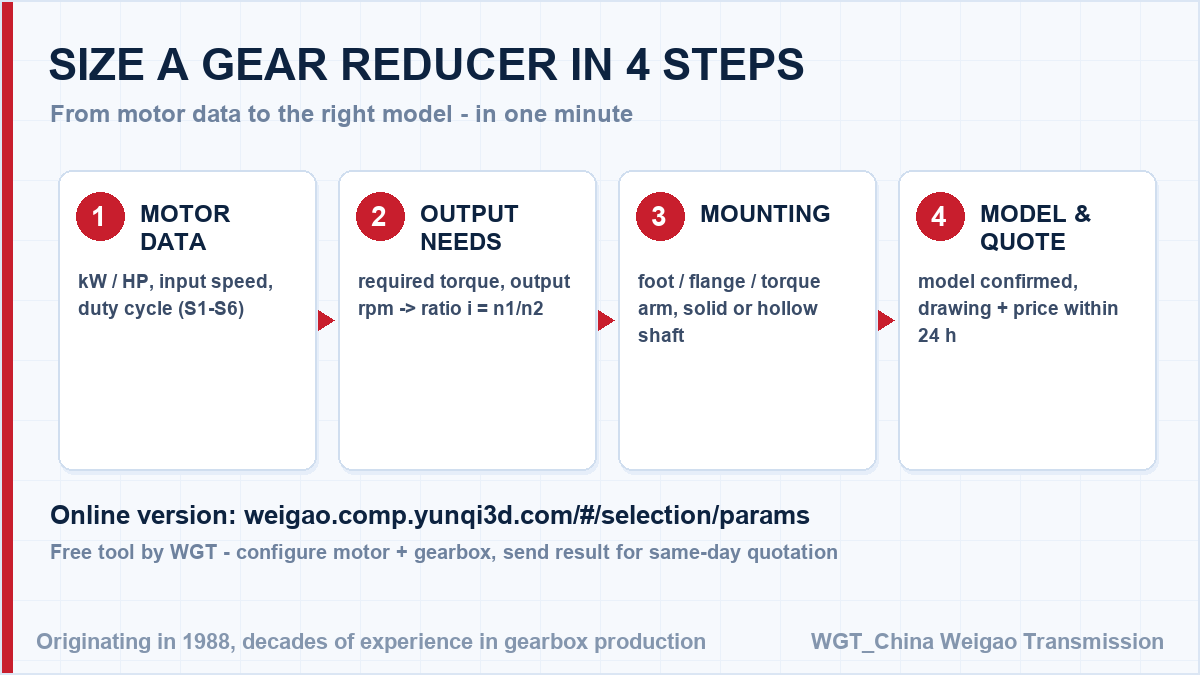
Take an 11 kW motor at 1470 rpm turning the conveyor head shaft at 12 rpm. The ratio follows directly: 1470 / 12 = 122.5, so a ratio near i=122 is taken from the three-stage right-angle band, and the frame is confirmed against a belt stopped full of wet bagasse rather than against the running pull. In this case frame two turns the boiler feed belt from a level output set ninety degrees to the motor in a narrow gallery, keys a solid output to the head shaft through a spacer coupling, and carries a finish chosen for sugar residue that never fully dries. It always comes down to those three figures. Send them over and we confirm the frame, ratio and service factor in writing.
![online gearbox selection system workflow]()
Selection workflow used by our engineers for every quotation.
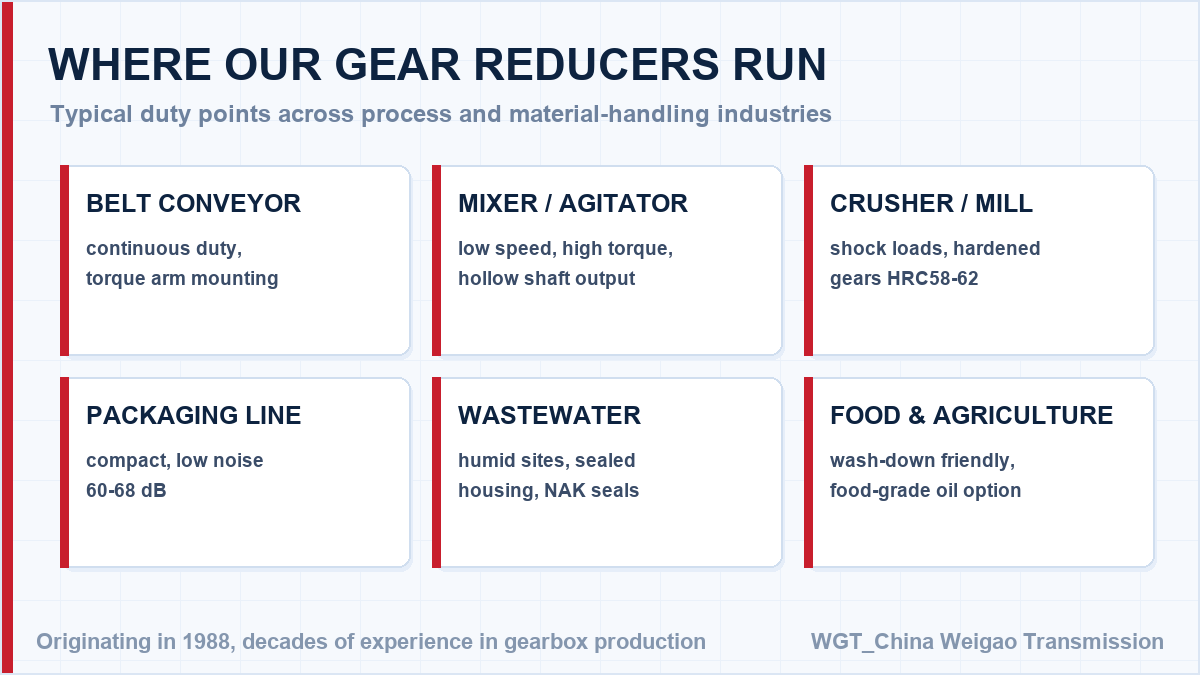
Real-World Duty Points
Dust-extraction fan bank
An environmental-equipment plant uses reducers on the rotary valve feeders of its dust-extraction systems. Compact size, quiet running and food-grade oil options made the approval easy.
Steel mill run-out table
On the run-out table of a small steel mill, units handle the repeated starts and stops of hot billet handling. The 42CrMo output shafts tolerate the thermal cycling, and torque-arm mounting keeps the drive clear of the roller frames.
![right angle gearbox duty points overview]()
An overview of the duty points this series is built for.
Get the Selection Checked - Free of Charge
Already picked a model? Use the WGT Motor & Gearbox Online Selection System to turn your motor data into a model number, and we will quote that exact unit within the day.
Send us your calculated model and duty point. We cross-check the ratio, torque and service factor independently and confirm or flag the difference - a free second pair of engineer eyes. Looking for a gearbox for crusher? Tell us the duty point and we will confirm the model in writing.