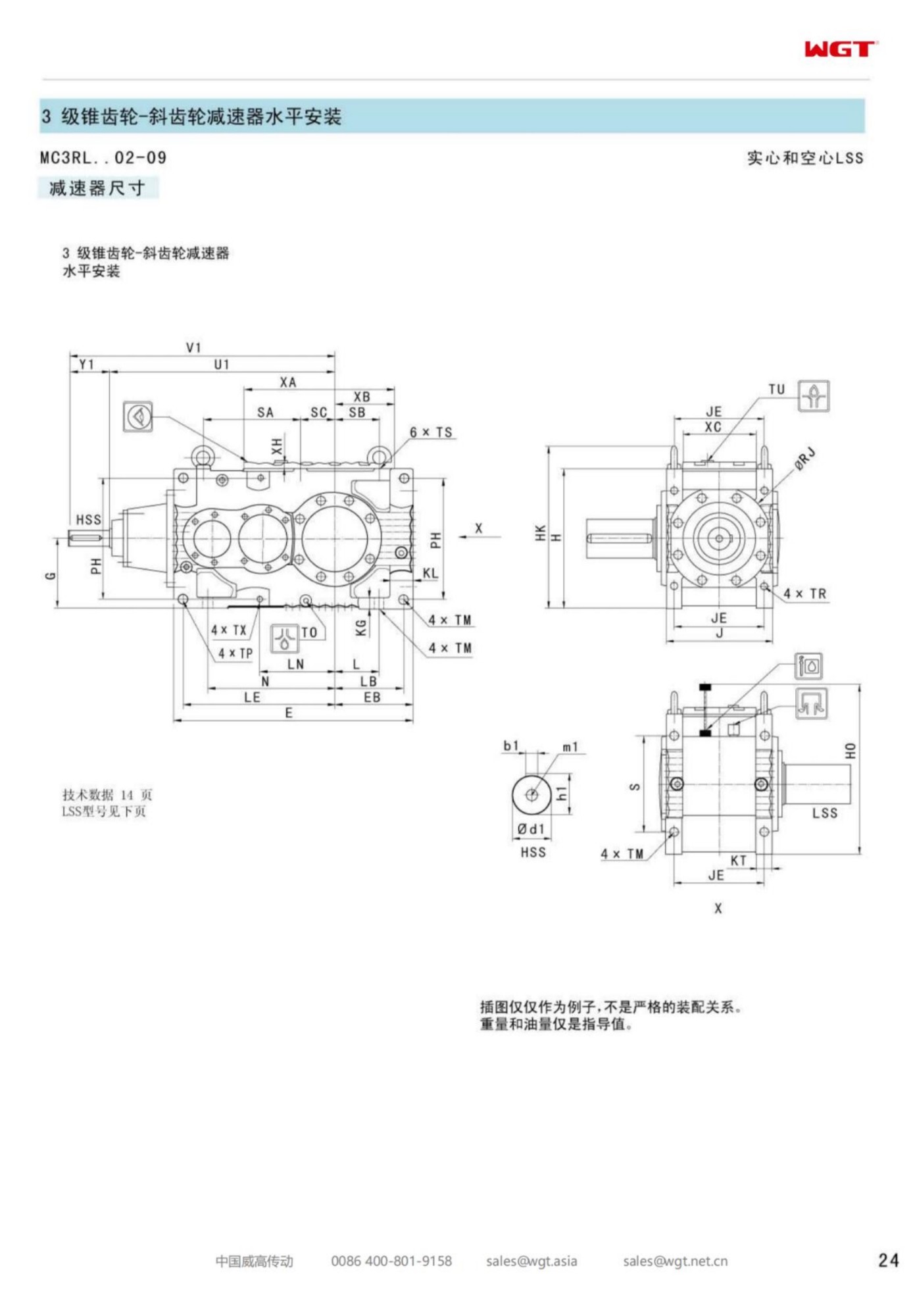
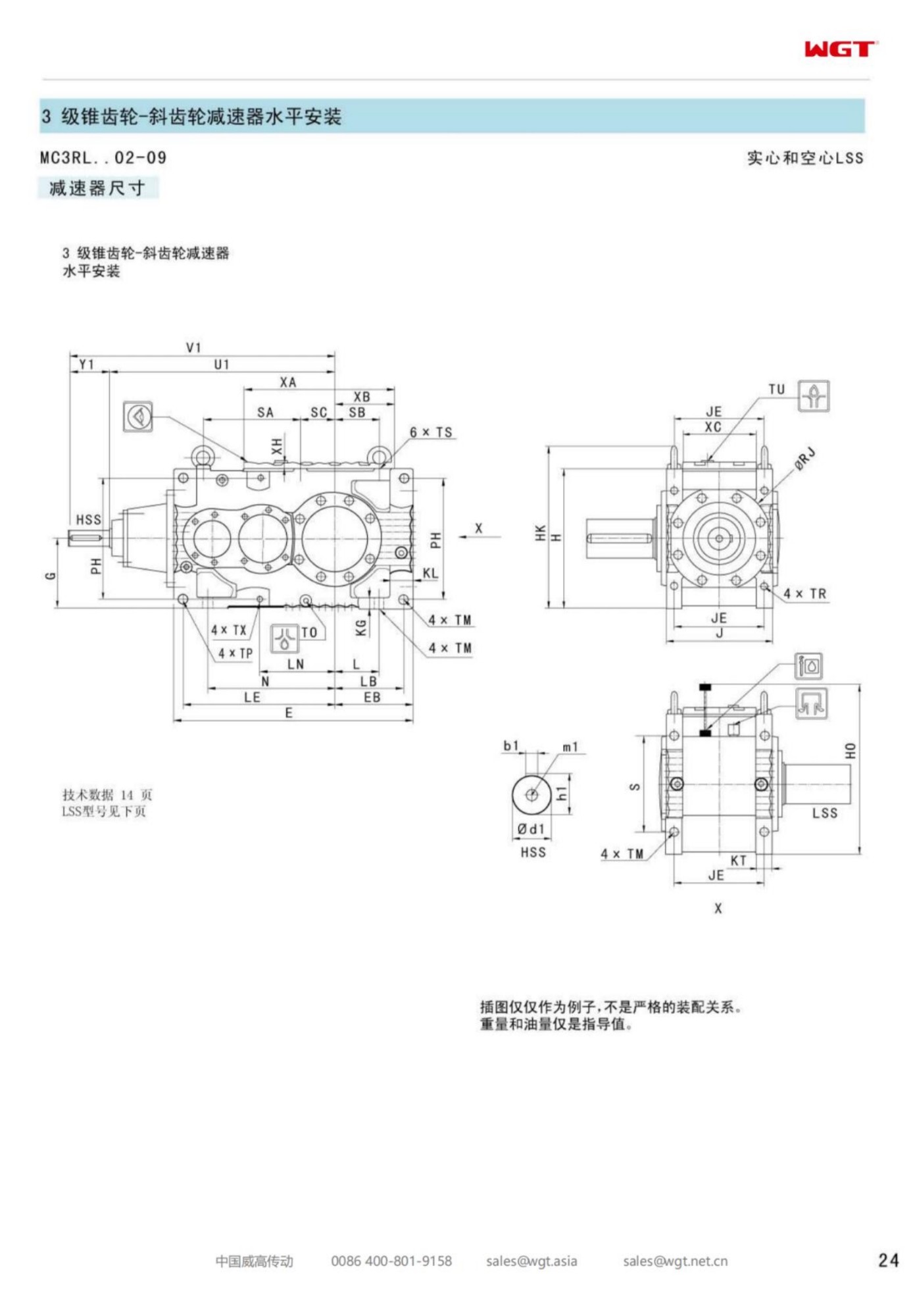
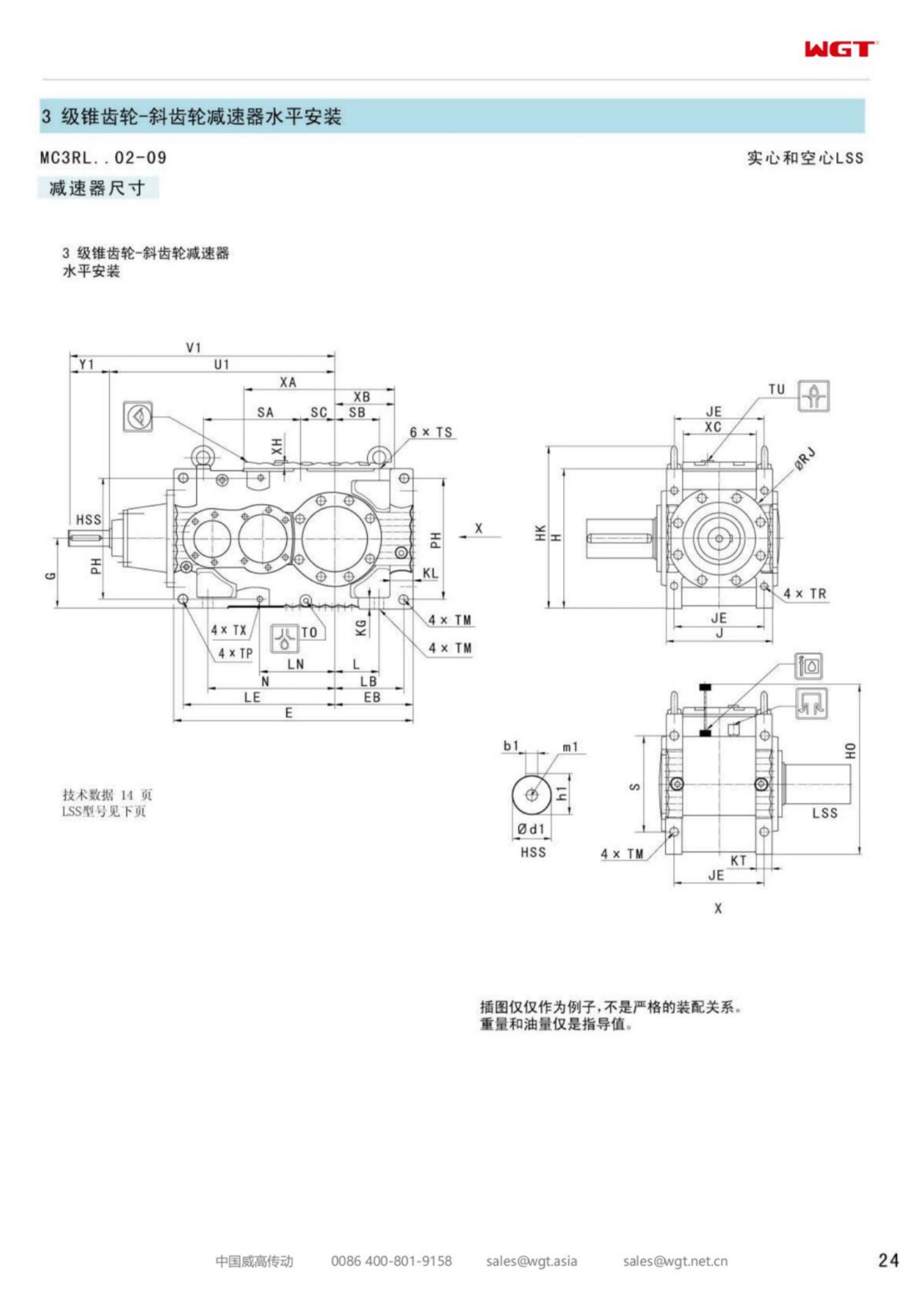
Foundry sand comes back from shakeout as a mixture of grain, burnt binder, fines and the occasional piece of metal that was not a casting. It is warm, it is black, and it is abrasive in a way that finds every gap in a machine within a shift. The MC3RLST04 right-angle solid shaft gearbox drives the belt that carries it back to the reclamation line: three stages, level output turned ninety degrees from the motor, keyed shaft, torque arm on the sand plant frame.
The notes below are about layout, dust, tramp metal and the vibration that comes with a shakeout, plus the figures worth sending when a foundry asks for a price.
Old Sand Comes Back With Metal in It
Reclaimed sand is not a clean bulk material. It carries chaplets, sprues, bits of runner bar and the odd core wire, and a magnet does not always get them before the belt does. A drive that is sized only for the tonnage will meet those pieces as torque spikes rather than as contamination.
The same sand is hot when it arrives from shakeout and cool by the time it reaches the mixer, so the drive sees a thermal swing across the line that no single ambient figure describes.
Reading MC3RLST04 Position by Position
Seven characters, seven answers.
| MC | Industrial gear unit family for continuous plant duty |
| 3 | Three stages of reduction in one housing |
| R | Right-angle build, motor set at ninety degrees to the output |
| L | Level output axis, running along the machine |
| S | Solid output shaft, keyed to the driven shaft |
| T | Torque-arm reaction, no baseplate required |
| 04 | Fourth frame of the three-stage band |
Spoken plainly: a three-stage unit, right-angled, with a level output, a solid keyed shaft, and the reaction taken by an arm rather than a base, in the fourth frame.
Why a Foundry Drive Sits at Right Angles
Sand plants are dense. Belt, elevator, cooler and mixer are packed into a bay where the structural steel is shared with the shakeout and the dust collection ducting, and the space at the head of a conveyor is usually occupied by something else.
A right-angle build lets the motor sit alongside the belt instead of projecting into the aisle, and it lets the whole drive be removed towards the wall rather than towards the walkway. In a plant where maintenance happens during a pattern change, that geometry is worth more than a small efficiency gain.
Reaction Into the Sand Plant Frame
The sand plant frame is a welded structure carrying screens and hoppers, and it moves. A drive bolted rigidly to it takes that movement as a load on its feet; a drive held by an arm takes it as a small rotation about the output axis, which the arm is designed to resist.
The arm bracket should be on a node of the frame, not mid-span of a member chosen because it was convenient. The reaction is steady but large, and a bracket on a flexible member will fatigue the weld it is attached with.
Dust That Is Finer Than the Seal Gap
Bentonite and burnt binder fines are measured in microns, and a micron-scale particle needs no pressure to migrate. It travels on air movement and settles wherever velocity drops, which includes the space behind a lip seal.
The practical answer is a sealing arrangement with a grease-purgeable gap rather than a single lip, a breather away from the dust source, and a maintenance habit of greasing the output bearing at the interval the plant actually keeps rather than the one on the drawing.
Scrap, Runners and the Occasional Bolt
Tramp metal arrives as an event, not a trend. A runner bar that drops onto a moving belt and jams under a skirt is a torque peak with a rise time in milliseconds, and the drive absorbs it through the coupling, the gears and the arm bracket in that order.
Three stages help because the peak is shared across more tooth contacts, but the coupling and the arm stop are what decide whether the event is survivable. Both are cheap to specify generously and expensive to renew after a jam.
Three Stages Behind a Mulling Drum
Reclamation lines run slowly: a muller, a cooler or a belt after a lump breaker all sit in the single digits to low tens of revolutions per minute, and a four-pole motor needs three reductions to get there without an oversized wheel pair.
The three-stage case is also shorter than a two-stage case of the same ratio, which matters when the drive has to fit between a belt and a wall in a bay that was laid out before the line was bought.
Keyed Output and a Coupling That Forgives
A keyed solid output onto a short head shaft with a spacer coupling is the arrangement that lets a foundry change a drive without cutting the belt. The coupling absorbs the small misalignment the frame gives and the arm takes the rest.
A rigidly clamped coupling removes the arm's freedom and hands the reaction to the shaft and the bearing instead. That is a common field error and it is worth stating in the installation notes rather than assuming it will be read.
Shakeout Vibration and Loose Fasteners
Shakeout equipment puts low-frequency vibration into the same steel the drive bracket stands on. Fasteners that would stay tight on a static frame will walk on one that shakes, and the first symptom is usually an arm that has shifted a few millimetres from where it was set.
Preloaded bolts, a positive stop on the arm, and a check of the stop gap at every pattern change cost almost nothing and prevent the slow drift that ends with a drive hanging on its coupling.
Motor Choice in a Hot Sand Plant
Ambient around a sand plant in summer is well above the figure on a standard motor's rating plate, and a motor selected on nominal output will run hot. The thermal margin belongs to the motor, but the gear case inherits the consequences through the oil temperature it shares.
Choosing the motor with an altitude and ambient allowance, and telling the gearbox supplier what that ambient is, keeps the two selections consistent.
A Data Sheet From a Foundry Engineer
What is needed: head shaft diameter and keyway, belt or screw speed, throughput, the temperature of the sand at the drive, the ambient in the bay, motor frame and speed, whether tramp metal protection exists upstream, and the plant's maintenance interval for greasing.
A photograph of the drive position, showing what is on either side of it, settles the layout question in one glance.
Frame Four on a Reclamation Line
The fourth frame is the middle of the band and the usual answer for a reclamation belt of ordinary length: enough case for a jammed start, small enough to hang beside the frame, and stiff enough that the arm bracket is a plate rather than a fabrication.
Long lines with a cooler and a muller in series tend to move up a frame, and the decision is made on the worst event the plant has actually seen.
Sand that comes back with metal in it and dust that finds every gap - three stages hold the line:
- Reclaimed sand belt at a foundry sand plant
- Shakeout to reclaimer transfer conveyor
- Moulding sand return belt at a jobbing foundry
- Sand cooler discharge conveyor
- Coresand reclamation feed belt
- Muller feed conveyor at a grey iron foundry
Available Frames and Their Typical Duty
| Model | Centre distance | Output | Typical duty |
|---|
| M3PSF50 | size 50 | solid shaft, foot | conveyors, feeders |
| M3PSF60 | size 60 | solid shaft, foot | crushers, mixers |
| M3PSF70 | size 70 | solid shaft, foot | ball mills, shredders |
| M3PSF80 | size 80 | solid shaft, foot | kilns, heavy conveyors |
| M3PSF90 | size 90 | solid shaft, foot | mill and kiln drives |
| M3RSF50 | size 50 | solid shaft, foot, right-angle | inclined conveyors, elevators |
| M3RSF60 | size 60 | solid shaft, foot, right-angle | screw classifiers, feeders |
| M3RHF70 | size 70 | hollow shaft, foot, right-angle | agitators, drum drives |
| M3PHT80 | size 80 | hollow shaft, torque arm, parallel | shaft-mounted conveyors |
| M3RHT90 | size 90 | hollow shaft, torque arm, right-angle | heavy shaft-mounted drives |
Note that PSF and RSF frames of the same size share the mounting footprint; the R build simply inserts a bevel stage, so switching layout rarely forces a foundation change.
Questions and Answers
Can the unit be rebuilt instead of replaced?
Yes. Bearings, seals and gear sets are available as spare internals, and the horizontally split housing allows inspection and reassembly on site. Many operators overhaul units during annual shutdowns instead of buying new.
What ambient and altitude limits apply?
The standard build suits -10 to +40 degrees C at altitudes below 1,000 m with the supplied oil grade. Colder sites get synthetic oil and heaters; high altitudes or hot climates may call for the next frame size or forced cooling.
Do you supply the unit with an electric motor fitted?
We deliver the bare gear unit with an input suitable for your motor, or as a complete motor-gearbox assembly aligned and tested at the works. For upgrade projects many customers keep the existing motor and order the unit alone.
Installation Examples
Mining slurry pump drive
At a mineral processing site, hollow-shaft reducers drive slurry pump agitators. The hollow bore takes the pump shaft with no coupling, so a pump change-out no longer means re-aligning a separate drive.
Palm oil mill fruit elevator
A palm oil mill powers its fruit elevator with reducers. The humid, oily atmosphere is handled by FKM seals, and the compact frame fits between the steriliser and the threshing drum.
![gear box application map for industry]()
From quarries to food plants - one right-angle drive concept.
Selection Example: Reclaimed sand belt at a foundry sand plant
Take an 18.5 kW motor at 1470 rpm turning the belt head pulley at 31 rpm. The ratio follows directly: 1470 / 31 = 47.4, so a ratio near i=47 is drawn from the three-stage right-angle band, and the service factor is argued on a runner bar jamming under a skirt rather than on the tonnage returned from shakeout. In this case frame four sets its motor alongside the belt instead of into the aisle, reacts through an arm bolted to a node of the sand plant frame, keys a solid output to the head shaft, and specifies a purgeable output seal for binder fines measured in microns. The ratio is the easy part. The service factor for the shock level is what makes the selection safe, and we check that for you at no charge.
![how to choose a speed reducer model]()
Ratio first, then torque, then frame size: the standard selection route.
Size It, Quote It, Ship It
One minute, one model. The WGT Motor & Gearbox Online Selection System covers motor power, ratio and mounting on one screen - enter your numbers and see the model immediately.
Give us the driven machine, the required output speed and the daily running hours, and we return a confirmed model number with torque margin and a firm price - no obligation, no charge for the selection work. Looking for a gearbox for packaging machine? Tell us the duty point and we will confirm the model in writing.