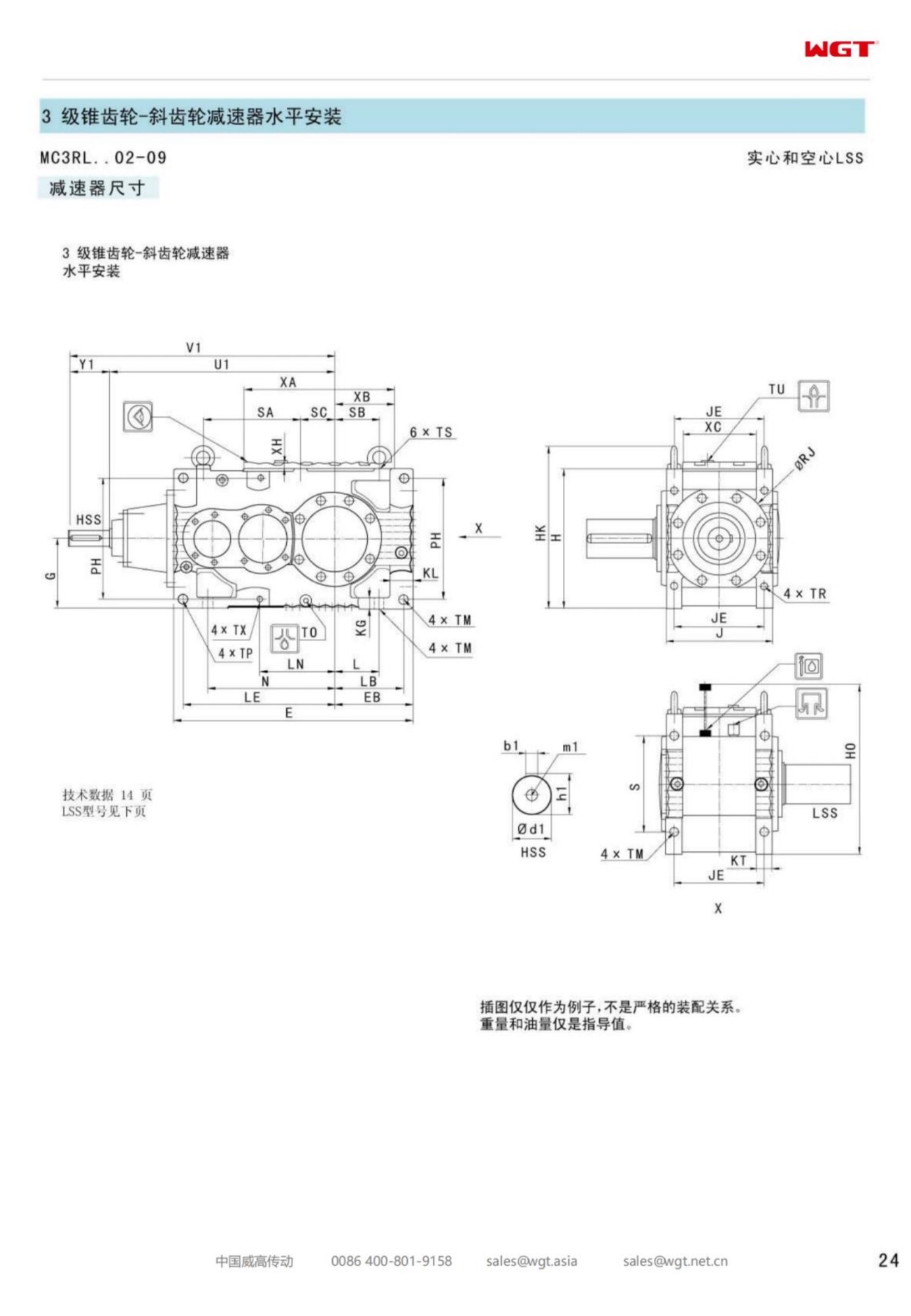
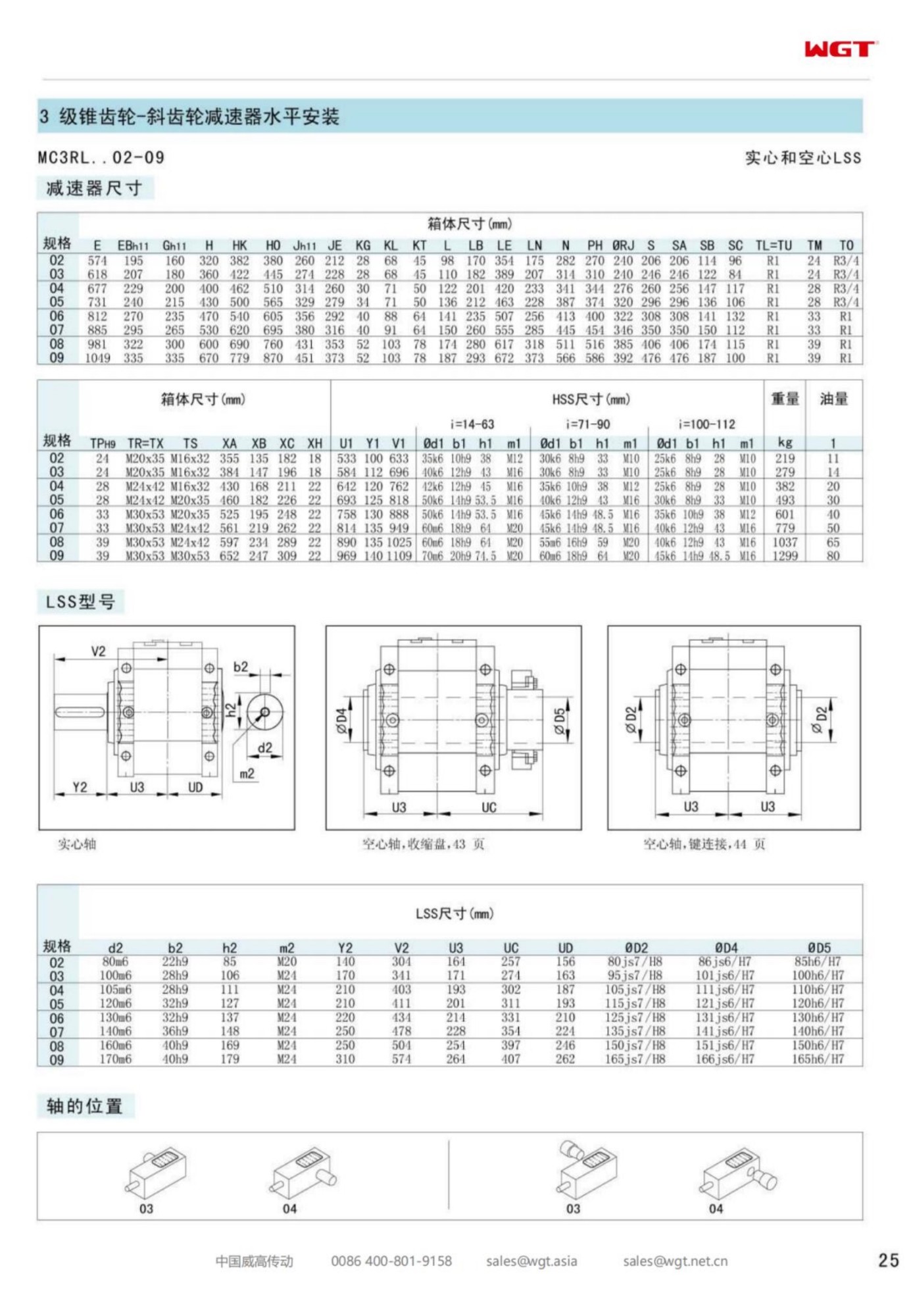
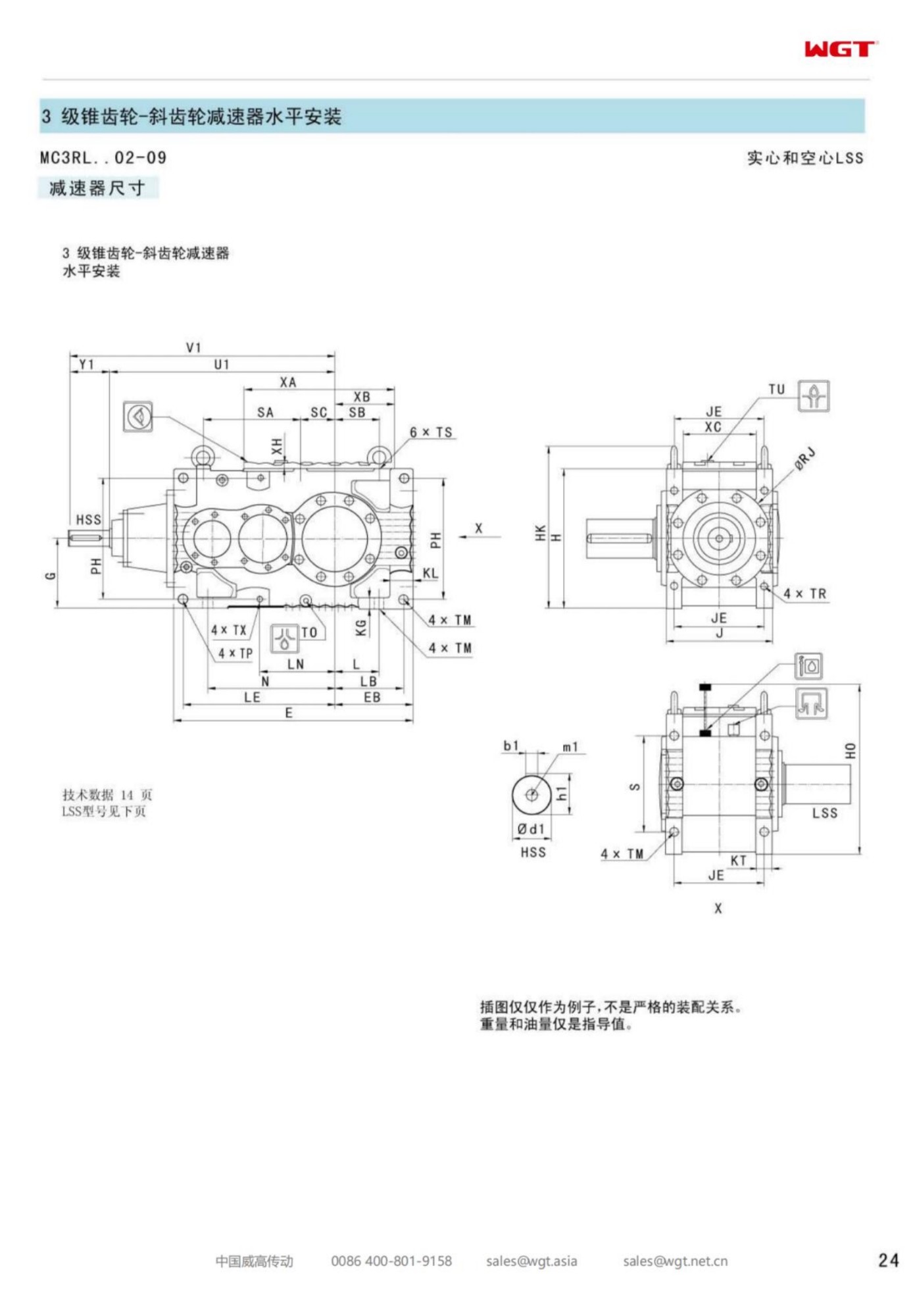
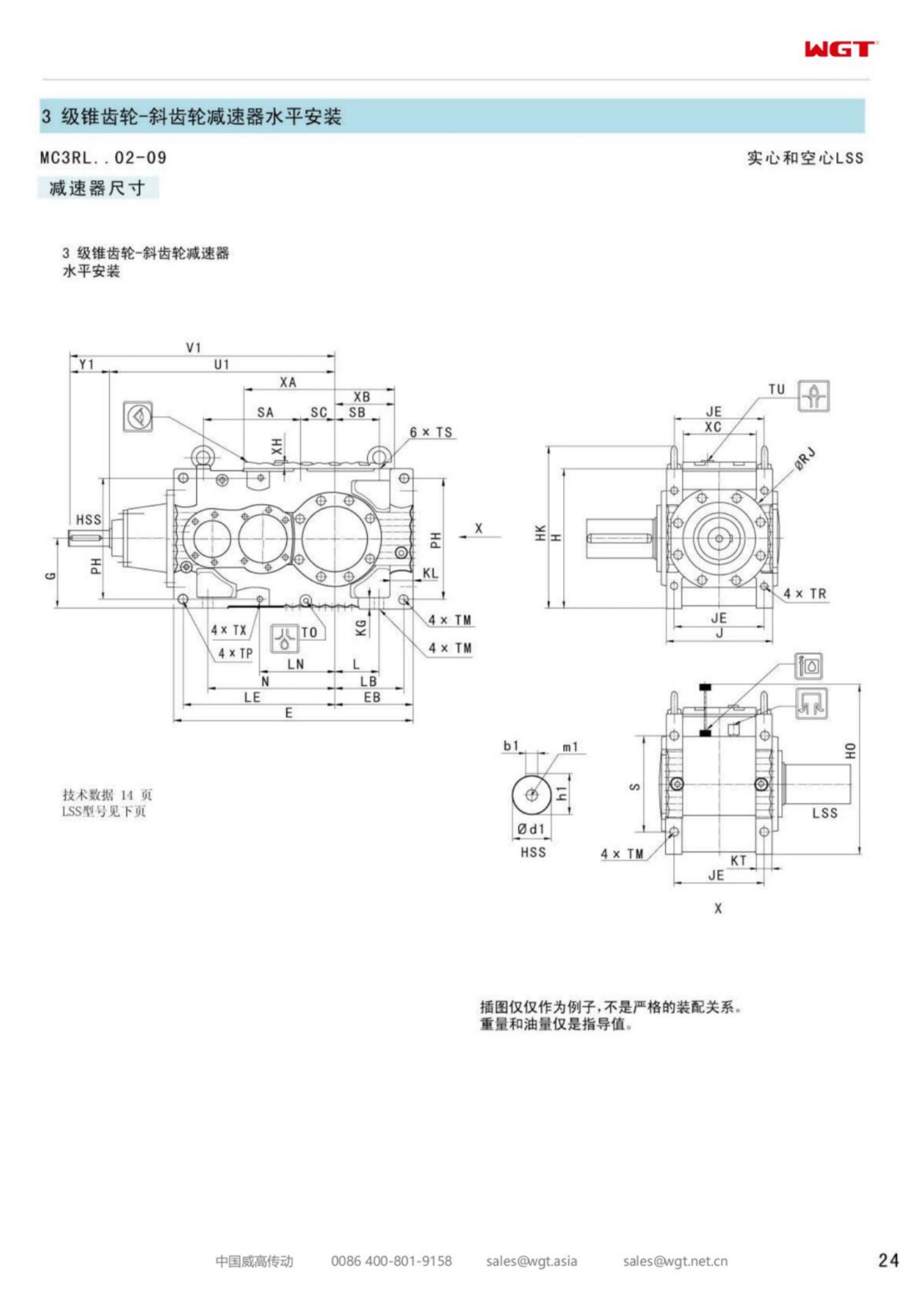
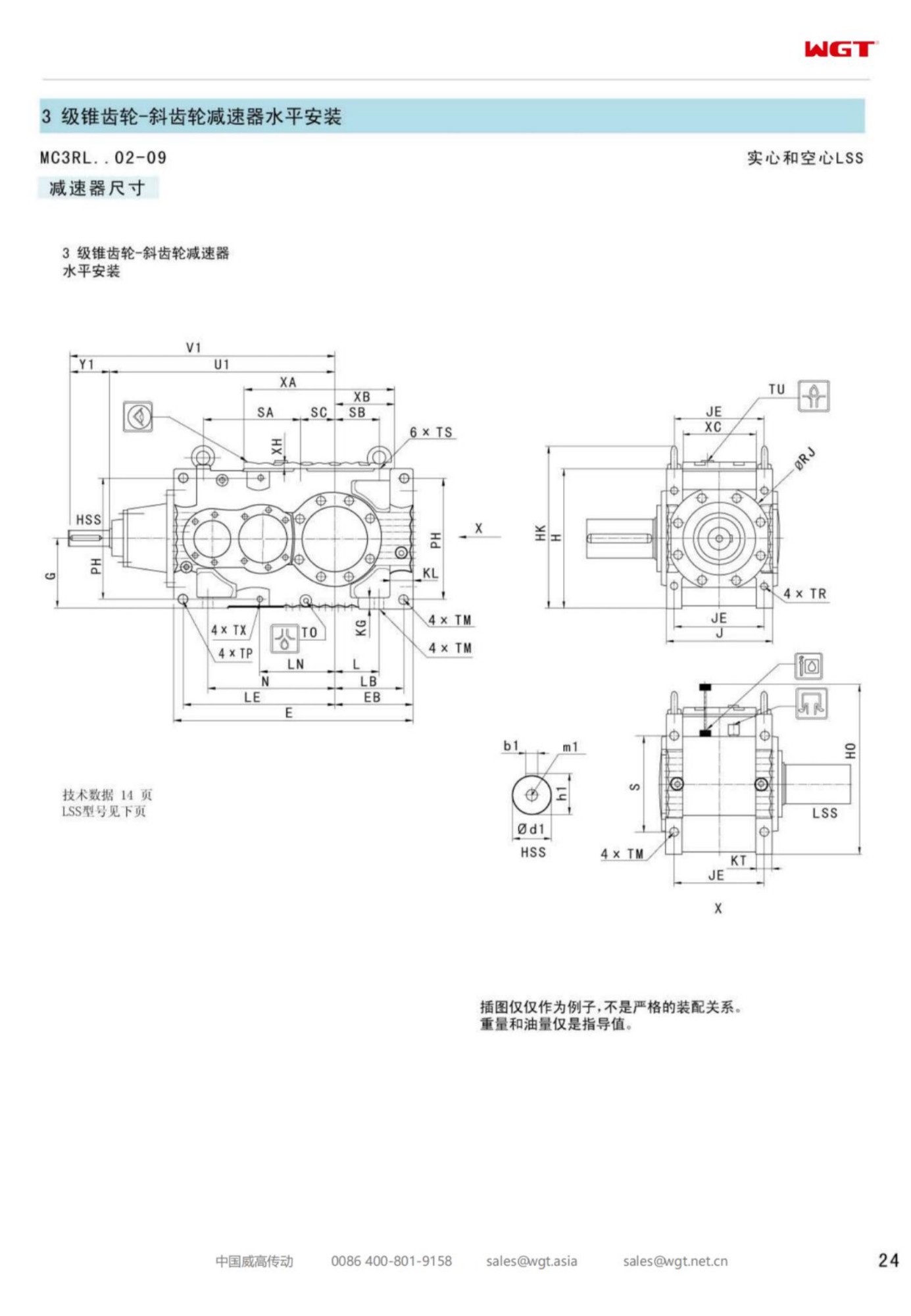
Clinker leaves the cooler hot enough to cook the paint off a gear case bolted too close to it, and it reaches the drag chain as a mix of lumps, grit and dust. The chain creeps, the casing runs warm, and the machine is designed to be ignored for a year at a time. The MC3RLST03 right-angle gear unit drives that chain: three stages in one housing, a level output at a right angle to the motor, a keyed solid shaft, and a torque arm landed on the conveyor casing.
These notes cover the layout, the abrasion and heat case, the restart torque of a loaded chain, and the numbers a cement works should send with an enquiry.
Clinker Leaves the Cooler at Two Hundred Degrees
Nothing about a drag chain under a cooler is comfortable. The casing radiates, the product arrives as sharp-edged lumps, and the dust that settles on a cover is the same material that wears through a chute in a season.
Heat and abrasion are usually specified separately, but here they act together: heat softens the paint that would otherwise resist the dust, and the dust then grinds the softened film away until bare steel is exposed to both.
Decoding MC3RLST03
Each position in the code closes a question that would otherwise need a drawing.
| MC | Industrial gear unit family for continuous plant duty |
| 3 | Three stages of reduction in one housing |
| R | Right-angle build, motor set at ninety degrees to the output |
| L | Level output axis, running along the machine |
| S | Solid output shaft, keyed to the driven shaft |
| T | Torque-arm reaction, no baseplate required |
| 03 | Third frame of the three-stage band |
In one line: three stages, right-angled, level output, solid keyed shaft, torque-arm reaction, third frame. An engineer reading that knows how the unit attaches before the datasheet arrives.
Four Metres of Chain Between Drive and Discharge
A drag chain is long and low, and its head sprocket sits at the discharge end where the casing turns up. The drive has to be beside the casing rather than above it, because above it is where the hot gas and the dust plume go. A right-angle build with a level output matches that geometry without a plinth or a jackshaft.
The bevel set is what buys the turn. It sits in the same oil volume as the helical stages, so the layout costs one gear mesh and no extra lubrication point.
Solid Shaft Keyed to the Drag Head Sprocket
The head shaft of a drag chain carries two sprockets and their take-up, and it is normally supported in bearings outside the casing. A keyed solid output couples to that shaft through a short spacer coupling, which allows the sprocket to be adjusted without disturbing the drive and lets the chain be re-tensioned from the tail end alone.
A hollow bore would put the drive over the shaft end and force the bearing to be moved outboard, which on a hot casing is a change nobody wants to make during a shutdown.
Abrasion Is a Clearance Problem
Clinker dust does not attack steel evenly. It works into the gaps where two surfaces nearly touch, and it wears them until the gap is large enough to admit more. Seals, breathers and shaft passages all lose the argument in that order.
What can be done at specification is limited but real: a breather positioned out of the dust plume, a labyrinth or double-lip arrangement on the output, and a case finish that does not rely on a single thin coat over shot-blasted steel.
Thermal Growth From the Kiln End
The casing grows towards the cooler and the drive sits on the same steel. Growth of a few millimetres across a four-metre machine is normal, and it arrives at the coupling as an axial movement rather than a torque.
The torque arm tolerates that movement by design, provided the bracket it lands on is clear in the axial direction. A bracket built as a cradle converts the growth into a side load on the output bearing, and that is the failure mode to design out at the drawing stage rather than find at commissioning.
Three Stages for a Chain That Creeps
Drag chain speeds are measured in tenths of a metre per second, so the head sprocket turns slowly and the ratio from a four-pole motor is deep. Two stages would need an oversized wheel pair; three stages deliver the reduction in a case short enough to fit alongside the casing.
The third mesh also helps with shock. A chain that has run dry, or that picks up a lump wedged between flight and casing, transmits a torque peak that a two-stage train feels in one tooth contact and a three-stage train shares across more.
Arm Bracket on the Conveyor Casing
Welding a bracket to a hot casing is a decision with consequences: the weld must be made before the refractory and the wear liners go in, and it must not sit where the casing expands against a fixed support.
The usual compromise is a bracket on the conveyor's structural frame rather than on the plate casing itself, positioned so the arm reaction line passes through the frame's stiffest member. That keeps the heat path away from the weld and the load path short.
Lubricant Life Above a Hot Casing
Oil life roughly halves for every ten degrees of sustained temperature rise, and a case sitting above a hot casing sees that rise whether or not the gears generate it. Synthetic oil and a larger oil volume both buy back life, but neither fixes a case that is being heated from outside.
A heat shield between casing and drive is crude and effective, and it is much cheaper than the oil it saves over a campaign.
Sizing on Clinker Fines and Start-Up Torque
The running load of a drag chain is modest. The load that sizes the drive is the start with the chain buried in fines, which is exactly the condition after a cooler upset. That figure can be several times the running torque, and it is the one to quote.
Bed depth, chain speed, trough width and the density of the material give the running pull. The start-up factor comes from the plant's own experience, and a works that has never had a buried chain should still assume it will.
The Numbers a Cement Works Should Send
The enquiry that gets a straight answer carries the head shaft diameter and keyway, chain speed, trough width and length, the material temperature at the drive end, the motor frame and speed, the ambient around the drive, and the plant's practice on start-up after a stop.
A section drawing of the casing at the drive end saves a week. So does a note saying whether the bracket already exists or has to be designed.
Frame Three Under a Cooler
The third frame is a common landing point for clinker drag chains of moderate length: enough case for a buried start, compact enough to hang beside a casing, and stiff enough that the arm bracket does not need to be a weldment with its own drawing.
Longer machines and deeper troughs move up the band, and the choice is made on start-up torque rather than on the motor rating.
Clinker off a cooler, sharp and dusty, on a chain that creeps - three stages carry it without complaint:
- Clinker drag chain under a grate cooler
- Clinker transfer conveyor to a silo battery
- Cement mill feed drag chain
- Kiln dust return conveyor at a cement works
- Clinker reclaimer belt at a grinding station
- By-pass dust drag at a preheater tower
Selection Example: Clinker drag chain under a grate cooler at a cement works
Take a 22 kW motor at 1475 rpm driving the head sprocket at 5.5 rpm. The ratio follows directly: 1475 / 5.5 = 268, so a ratio near i=268 comes from the three-stage right-angle band, and the frame is sized on a chain buried in clinker fines after a cooler upset rather than on the conveyor throughput. In this case frame three hangs beside a hot casing with its reaction taken by an arm on the conveyor frame, keys a solid output to the head shaft so the chain can be re-tensioned from the tail, and carries a heat shield and a synthetic lubricant for the radiant load above it. Work through the same three steps - speed, output speed, torque - and the model number falls out; we verify it against the duty class before quoting.
![gear reducer ratio calculation steps]()
From duty point to model number - the same four steps every time.
Applications in Industry
Cement plant clinker belt
A cement plant drives its clinker transport belt with reducers in dusty, high-ambient conditions. Sealed housings and a 40 deg C maximum temperature rise let the units sit close to the kiln without extra cooling.
Paper mill pulp agitator
A paper mill uses reducers on pulp chest agitators. Continuous 24-hour duty is handled by lifetime lubrication, and the low backlash keeps the agitator steady when the stock consistency changes.
![gear reducer industries served - WGT]()
Industry map: the sectors where the M3 series is most common.
Buyer Questions and Answers
What ratio range does an industrial gear unit cover?
The range spans from low single-digit reductions to very high ratios by combining stage counts: two-stage builds for the lower band and up to five-stage builds for the highest reductions, with intermediate ratios available between catalogue steps on request.
Which lubrication system does the unit use?
Small and medium frames run on splash lubrication with mineral or synthetic oil. Larger frames or high ambient temperatures can be ordered with forced-feed circulation and cooling coils; the lubricant grade is stated on the nameplate and in the manual.
M3 Series Model Overview
| Model | Centre distance | Output | Typical duty |
|---|
| M3PSF50 | size 50 | solid shaft, foot | conveyors, feeders |
| M3PSF60 | size 60 | solid shaft, foot | crushers, mixers |
| M3PSF70 | size 70 | solid shaft, foot | ball mills, shredders |
| M3PSF80 | size 80 | solid shaft, foot | kilns, heavy conveyors |
| M3PSF90 | size 90 | solid shaft, foot | mill and kiln drives |
| M3RSF50 | size 50 | solid shaft, foot, right-angle | inclined conveyors, elevators |
| M3RSF60 | size 60 | solid shaft, foot, right-angle | screw classifiers, feeders |
| M3RHF70 | size 70 | hollow shaft, foot, right-angle | agitators, drum drives |
| M3PHT80 | size 80 | hollow shaft, torque arm, parallel | shaft-mounted conveyors |
| M3RHT90 | size 90 | hollow shaft, torque arm, right-angle | heavy shaft-mounted drives |
The series is sized for continuous heavy duty rather than by motor power alone: the required torque with the service factor decides the frame, and the stage count (2 to 5) decides the ratio band.
Get Your Drawing and Quotation within 24 Hours
Ready to size your drive? Run your duty point through the WGT Motor & Gearbox Online Selection System first: it saves a round of emails and gets you to a firm price faster.
Or simply send your motor data (kW, speed, duty) and driven-machine details through the inquiry button - we reply with a completed datasheet, dimension drawing and factory price the same working day. Looking for a reducer for woodworking machine? Tell us the duty point and we will confirm the model in writing.