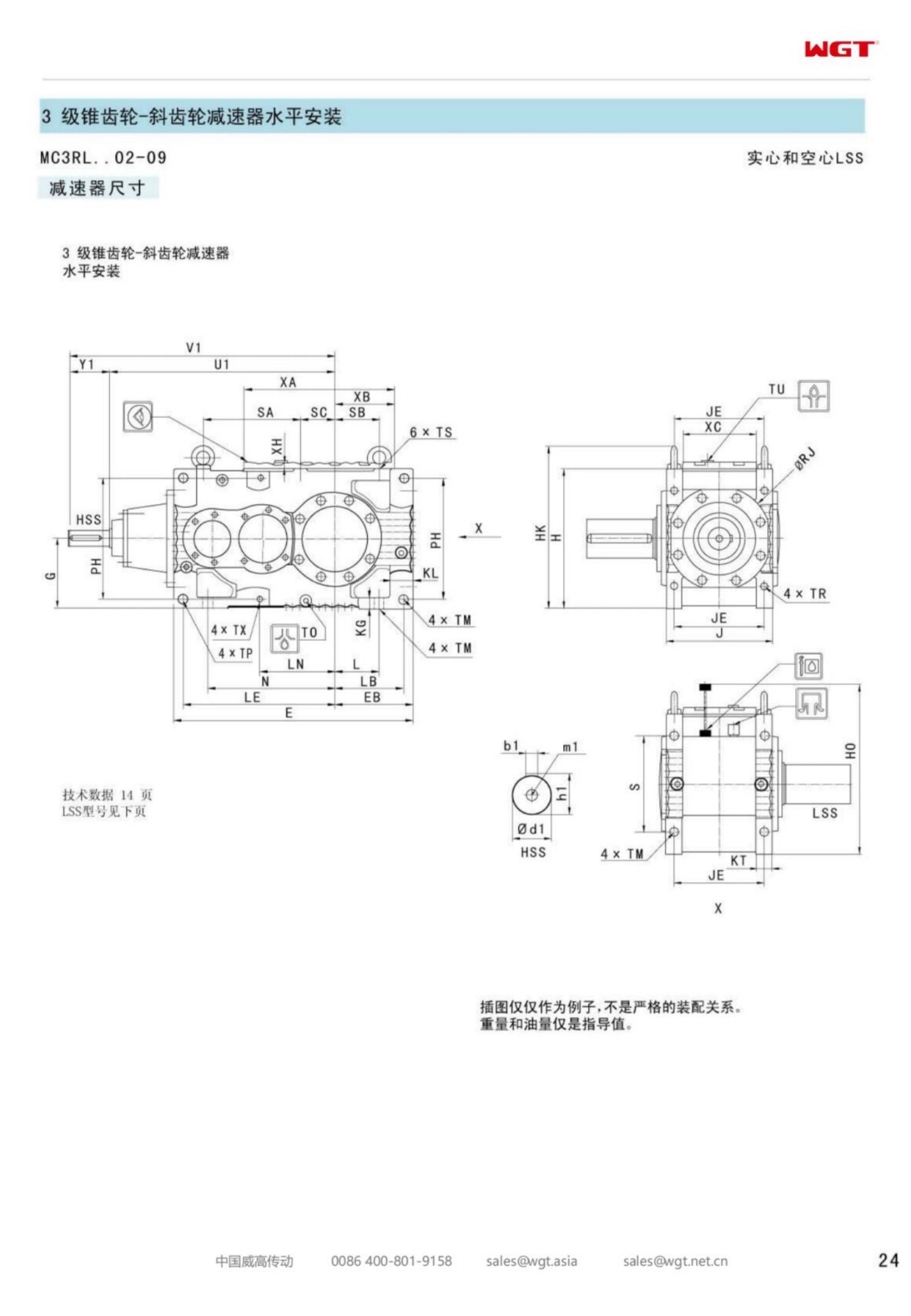
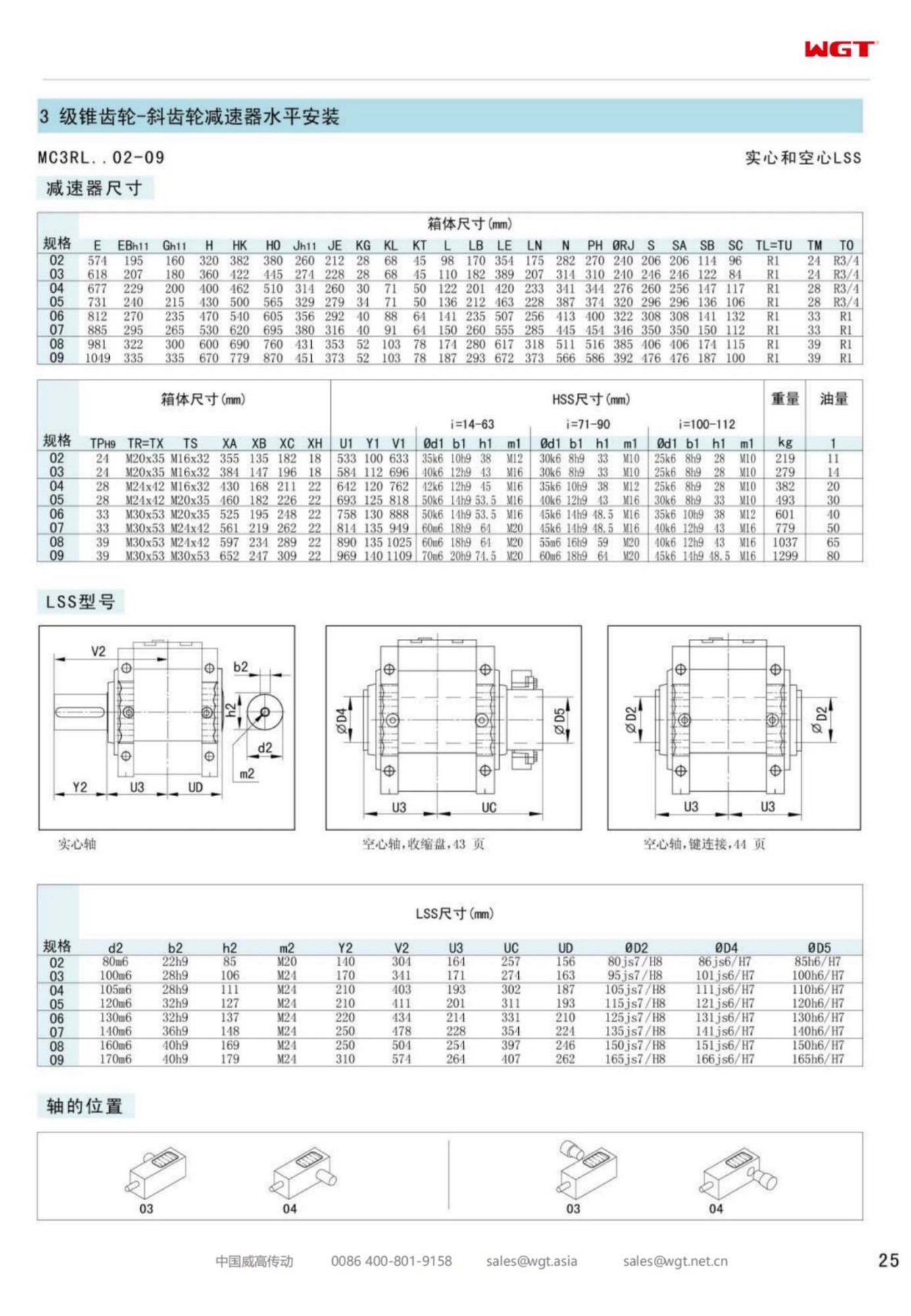
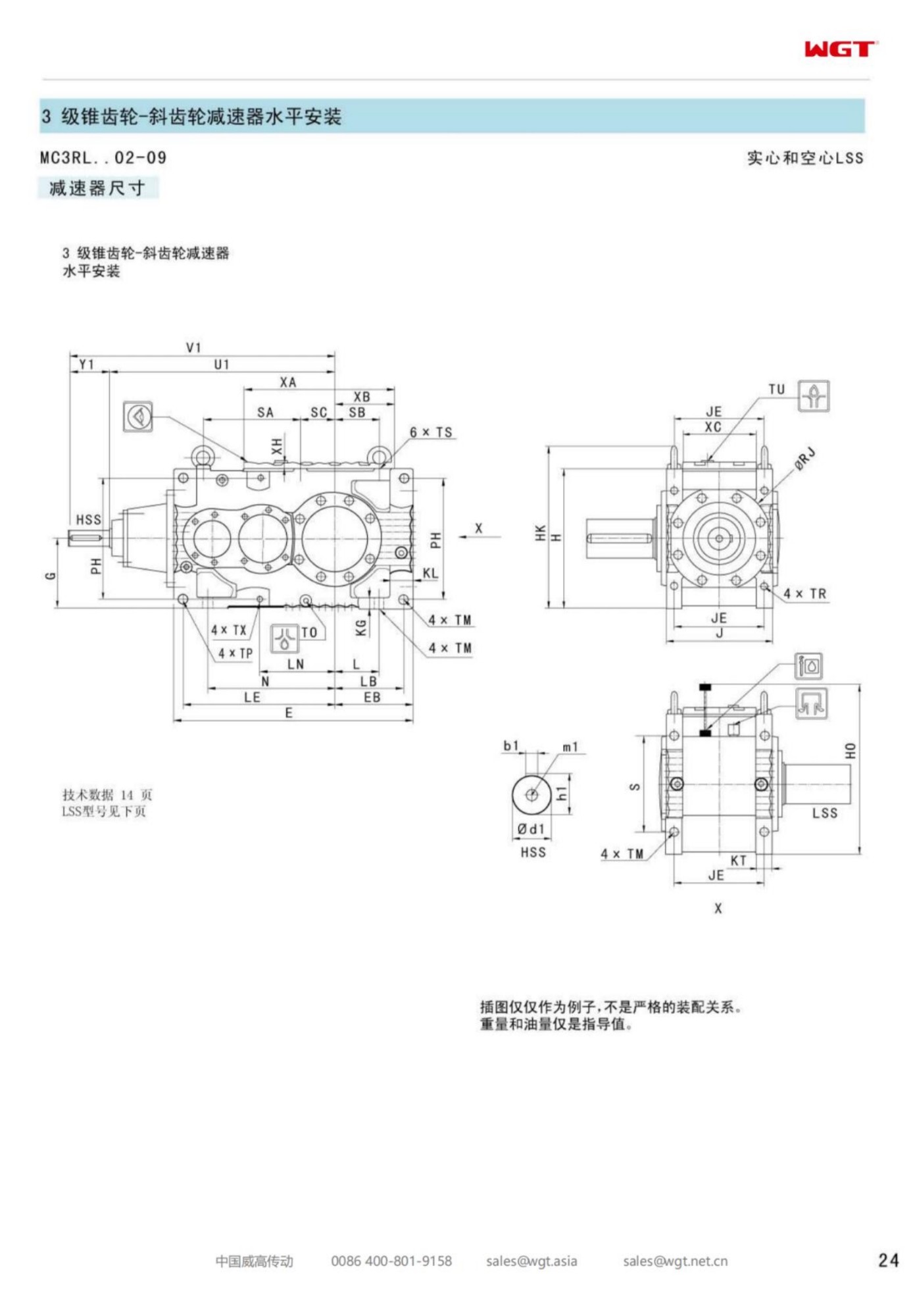
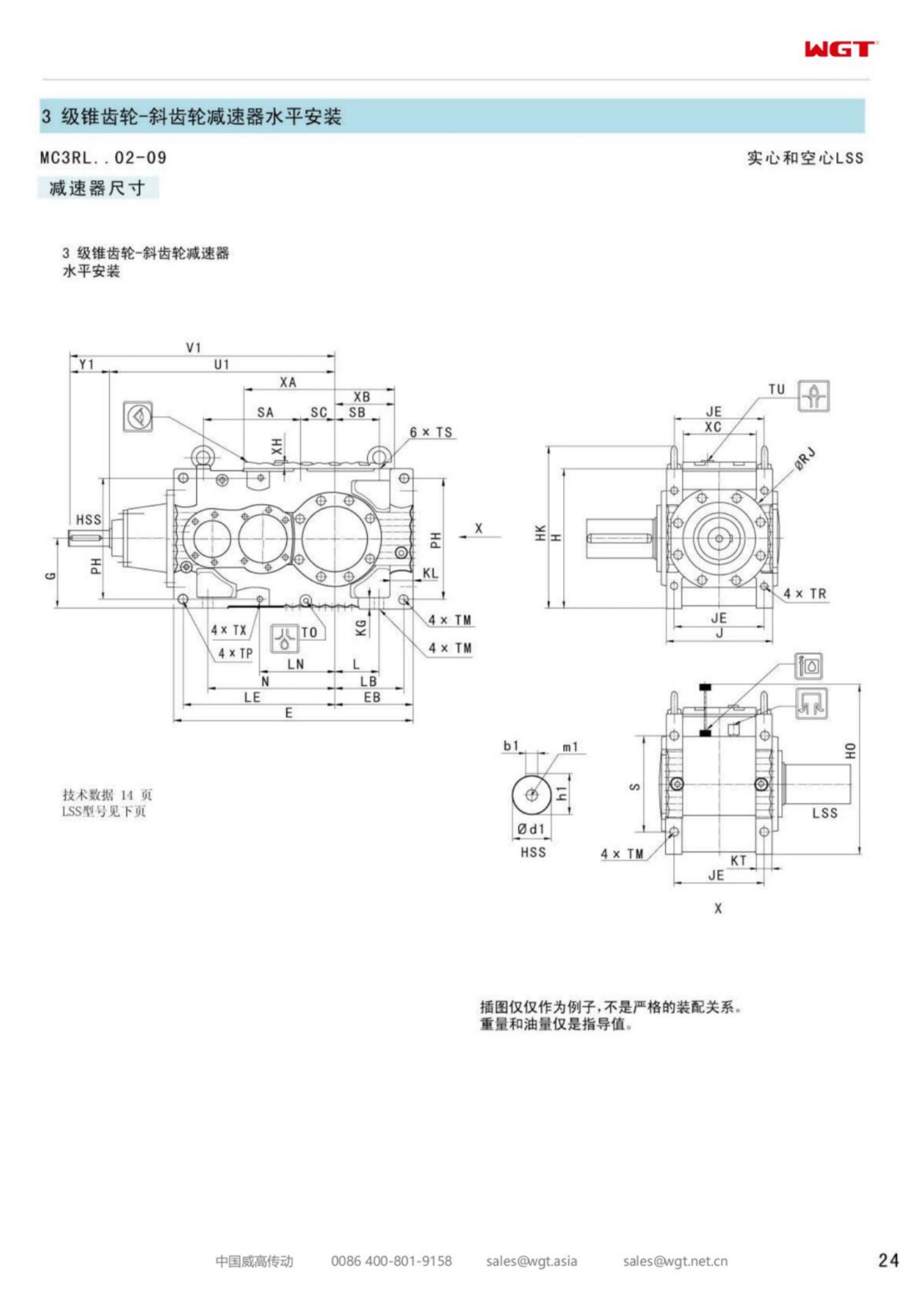
Cullet is the only bulk material in a glass plant that is harder than the equipment handling it. It arrives as shards with edges that will cut a belt in a season and a dust that will grind a shaft seal in a month, and it is often hot when it arrives from the lehr. The MC3RLST07 right-angle solid shaft gearbox drives the belt that takes it back to the batch house: three stages, a level output turned ninety degrees from the motor, a keyed shaft, and a torque arm on the batch house steelwork.
These notes cover the layout beside a mixer, the abrasion case, the heat in returned cullet, and the figures a glass plant should provide before a frame is chosen.
Cullet Cuts, and It Cuts Everything
A glass shard is a cutting edge with mass behind it. On a conveyor it works between the belt and the skirt, between the skirt and the chute, and between a shaft and its seal, and it does so continuously rather than occasionally.
The dust is the second problem. Glass dust is harder than the paint on a gear case and finer than the gap in a lip seal, so it removes the protection and then enters the joint it was protecting.
The MC3RLST07 Code Read Aloud
Seven characters that answer the questions a layout drawing would otherwise have to.
| MC | Industrial gear unit family for continuous plant duty |
| 3 | Three stages of reduction in one housing |
| R | Right-angle build, motor set at ninety degrees to the output |
| L | Level output axis, running along the machine |
| S | Solid output shaft, keyed to the driven shaft |
| T | Torque-arm reaction, no baseplate required |
| 07 | Seventh frame of the three-stage band |
In words: a three-stage industrial unit, right-angled, with a level output, a solid keyed shaft, reaction by torque arm, in the seventh frame.
Right Angle Beside a Batch House Mixer
The batch house is the densest part of a glass plant: weigh hoppers above, a mixer in the middle, and conveyors threading between them at angles that were set by the building rather than by the process. A right-angle drive lets the motor sit in the gap beside the mixer instead of projecting into the maintenance aisle.
It also keeps the motor away from the hot cullet return, which is where a fan-cooled motor's life is decided.
An Arm on the Batch House Steelwork
Batch house steel carries hoppers that are weighed, so it is stiff and it is instrumented. A drive bolted rigidly to it adds a load path that the structural engineer never analysed; a drive held by an arm adds a couple that the arm is designed to resist.
The bracket should be on a column or a major beam rather than on a hopper support, and it should be positioned so the arm reaction passes through the member rather than across it.
Glass Dust and the Clearance It Eats
Every pair of surfaces that nearly touch is a grinding site once glass dust is present. That includes the gap behind a lip seal, the clearance between a shaft and its end cover, and the space under a breather cap.
Specification can only do part of the work: a purgeable seal arrangement, a breather taken to a clean point, and a case finish that tolerates abrasive dust. The rest is a maintenance interval that the plant will actually keep.
Hot Cullet Straight From the Lehr
Cullet returned from a lehr or a forehearth can arrive warm enough to soften paint and to raise the air temperature around the drive by twenty degrees above the aisle. Neither is a problem on its own; together they change the oil's working temperature.
A heat shield between the return chute and the drive, and an oil chosen for the resulting sump temperature rather than for the plant ambient, are the two measures that cost least.
Three Stages Behind a Weigh Hopper
Batch house conveyors and mixers run slowly to avoid segregation, so the ratio from a four-pole motor is deep and the three-stage band is the natural home. The case is also short, which is what allows it to fit between a hopper leg and a wall.
Three meshes share the shock of a shard wedged under a skirt, and on a line where that happens weekly the sharing is what keeps tooth life predictable.
Solid Output on a Cullet Belt Head Pulley
The head pulley shaft of a cullet belt is short and ends in a bearing housing close to the chute. A keyed solid output with a spacer coupling lets the drive stand clear of that chute, and it lets the pulley be changed without disturbing the gearbox.
A hollow bore would put the drive directly over the bearing, in the dustiest position on the machine, which is the opposite of what an abrasive duty wants.
Contamination: Ceramics, Stones and Metal
Cullet from a municipal stream carries ceramics, stones and the occasional piece of aluminium, and a metal detector does not catch a stone. Each of those is a harder or tougher inclusion than the glass around it, and each arrives at the drive as a torque event.
The coupling and the arm stop are what make those events survivable. Both are cheap to specify generously and neither is easy to renew in a batch house.
Start-Up After a Furnace Repair
A furnace repair stops the batch house for days, and the cullet in the system sets where it lies. The first start afterwards is the heaviest the drive will see in the campaign, and it happens at a moment when the plant is watching.
Sizing on that condition rather than on the running load is the difference between a drive that starts and one that trips the plant's protection and delays the repair.
Numbers a Glass Plant Should Provide
What to send: head pulley shaft diameter and keyway, belt speed and width, throughput in tonnes per hour, the cullet temperature at the drive, the ambient in the batch house, motor frame and speed, and the plant's practice on starting a set belt.
A photograph of the drive position, with the chute and the hopper leg in frame, answers the layout question faster than a description.
Frame Seven in the Batch House
The seventh frame is the upper middle of the band and covers the main cullet return belts of a container plant: enough case for a set belt at the end of a repair, and enough mass that the arm bracket is not the weakest element in the reaction path.
Smaller return belts and the belts under the mixers sit two or three frames lower, where the run is short and the cullet is already broken.
Cullet that cuts and a dust that grinds - three stages keep the batch house fed:
- Cullet return belt at a container glass plant
- Batch house cullet conveyor feeding a mixer
- Cullet transfer belt from a lehr end
- Recycled glass intake conveyor at a bottle plant
- Cullet storage retrieval belt at a batch house
- Furnace return cullet conveyor at a float line
Full Frame Range of the M3 Series
| Model | Centre distance | Output | Typical duty |
|---|
| M3PSF50 | size 50 | solid shaft, foot | conveyors, feeders |
| M3PSF60 | size 60 | solid shaft, foot | crushers, mixers |
| M3PSF70 | size 70 | solid shaft, foot | ball mills, shredders |
| M3PSF80 | size 80 | solid shaft, foot | kilns, heavy conveyors |
| M3PSF90 | size 90 | solid shaft, foot | mill and kiln drives |
| M3RSF50 | size 50 | solid shaft, foot, right-angle | inclined conveyors, elevators |
| M3RSF60 | size 60 | solid shaft, foot, right-angle | screw classifiers, feeders |
| M3RHF70 | size 70 | hollow shaft, foot, right-angle | agitators, drum drives |
| M3PHT80 | size 80 | hollow shaft, torque arm, parallel | shaft-mounted conveyors |
| M3RHT90 | size 90 | hollow shaft, torque arm, right-angle | heavy shaft-mounted drives |
Every frame in the table can be ordered with alternative shaft and mounting styles. If you are matching an existing installation, send the nameplate details and we confirm the equivalent frame in writing.
Installation Snapshots
Glass batch charger
A float-glass line drives its batch charger with units. Abrasive raw material demands a robust drive, and the case-hardened gears show minimal wear after years of continuous operation.
Battery slurry mixer
A battery materials plant uses reducers on slurry mixers. High shear loads are absorbed by the 42CrMo shafts, and the 94-96% efficiency keeps motor sizing and running cost down.
Selection Example: Cullet return belt at a container glass batch house
Take an 11 kW motor at 1465 rpm turning the head pulley at 38 rpm. The ratio follows directly: 1465 / 38 = 38.5, so a ratio near i=38.5 comes out of the three-stage right-angle band, and the frame is sized on the first start after a furnace repair, when the cullet in the system has set, rather than on the steady return rate. In this case frame seven sits in the gap beside the mixer with its motor clear of the hot cullet chute, reacts through an arm on a batch house column, keys a solid output to the pulley shaft, and specifies a purgeable seal and a heat shield for glass dust and radiant heat together. Use the same method for any frame in the series, then confirm the service factor with us - it is the one number buyers most often get wrong.
![speed reducer selection process diagram]()
The selection path we follow when checking your enquiry.
Technical Q&A
Can existing motors, couplings and guards be reused?
In most upgrade projects yes: because input and output interfaces follow the common industry dimensions, the existing motor, coupling and guard usually bolt straight on. Send the old nameplate and we confirm before you order.
What happens if my duty changes after installation?
Send us the new duty point. A revised torque and service-factor calculation is free of charge, and the answer is usually one of three: the unit is fine, add an oil change interval, or plan a frame change at the next shutdown.
![speed reducer use cases across sectors]()
Typical installation environments for this gearbox family.
Your Selection, Cross-Checked by an Engineer
Send the numbers, get the model. One screen in the WGT Motor & Gearbox Online Selection System is usually enough to pin down the frame size; we confirm the service factor afterwards.
Every enquiry is checked by an engineer against the rating tables before it is quoted, so the unit we recommend carries a real torque margin - not just a catalogue guess. Spare-unit and OEM volumes are both welcome. Looking for a gear reducer for textile machinery? Tell us the duty point and we will confirm the model in writing.