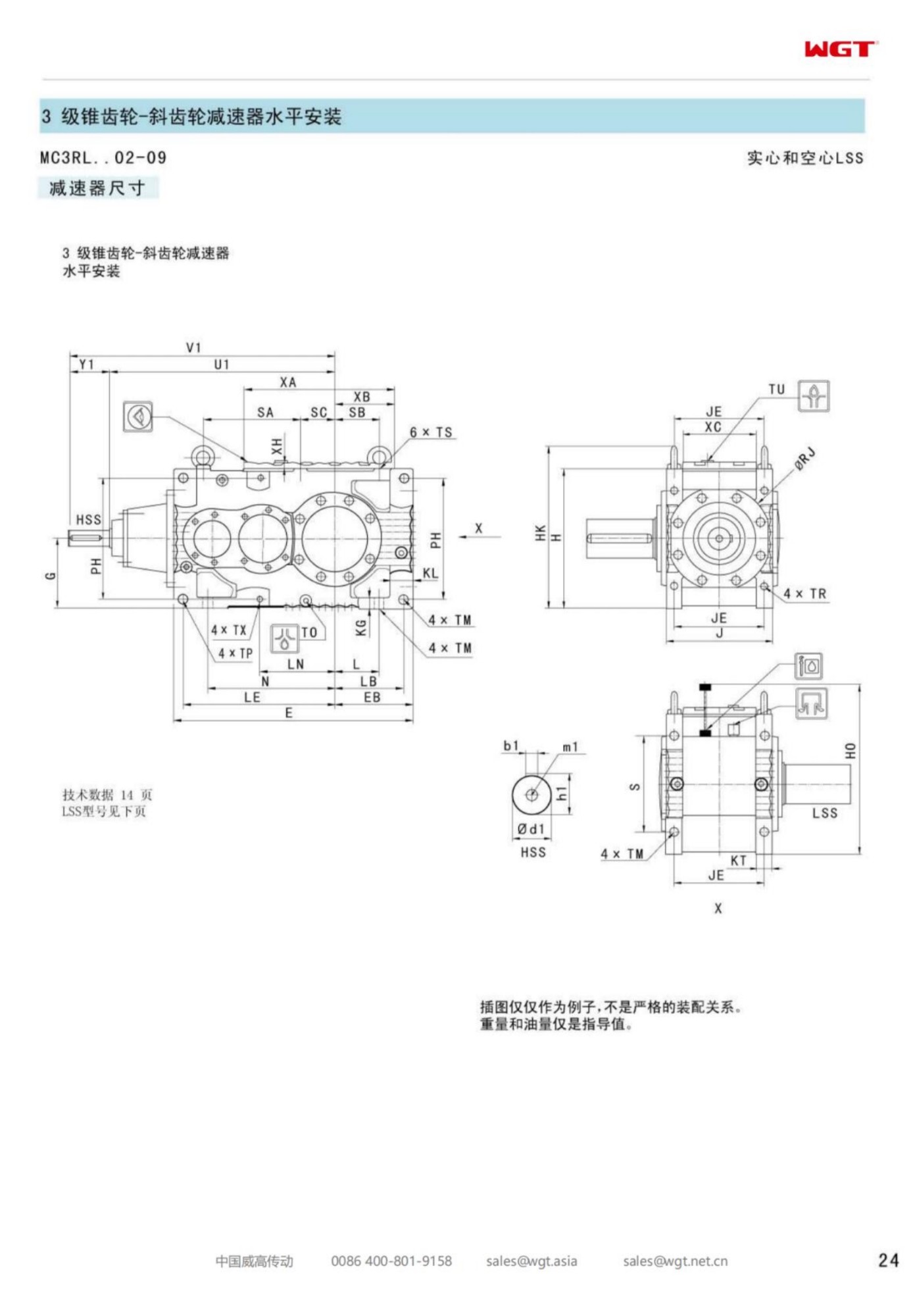
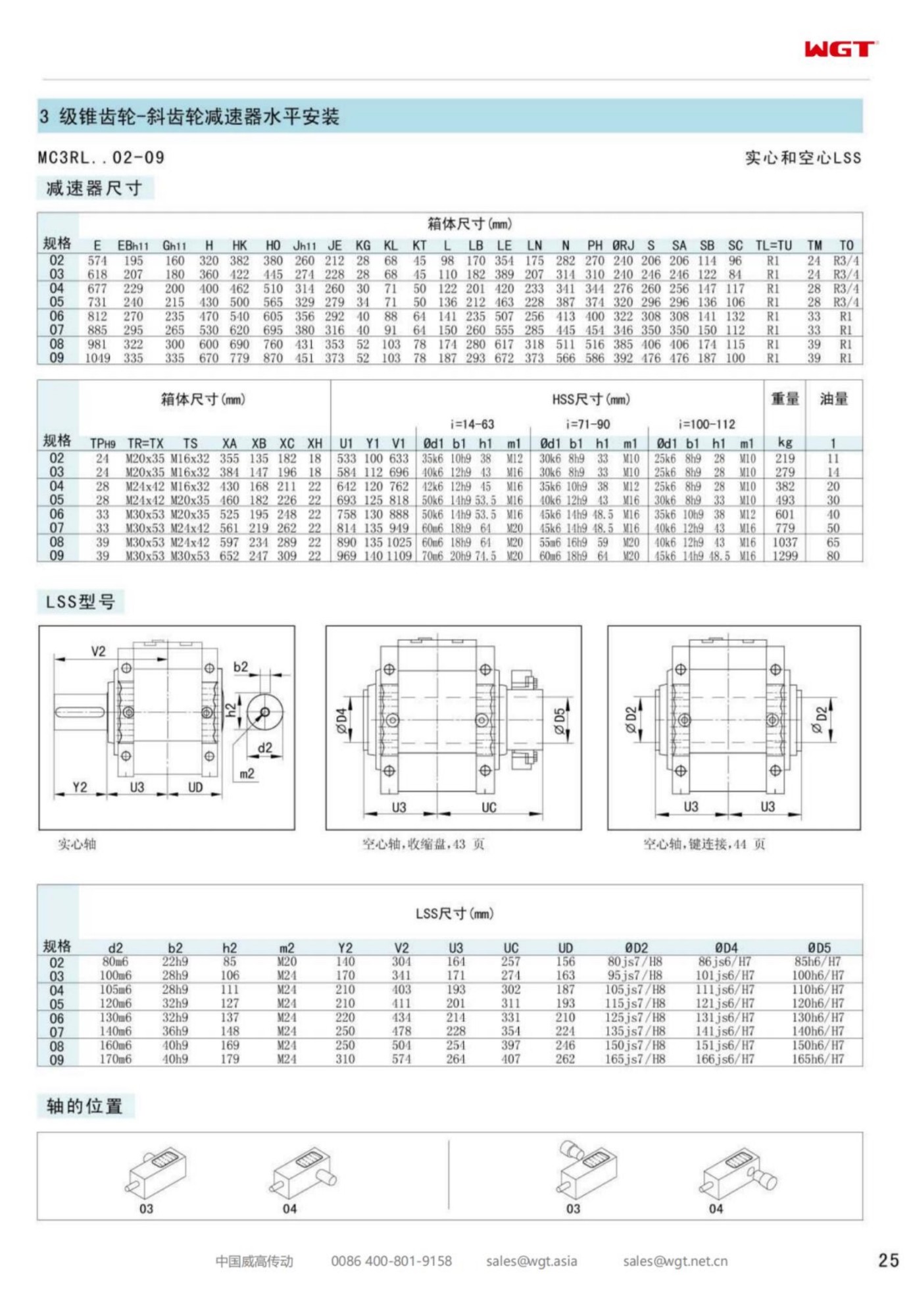
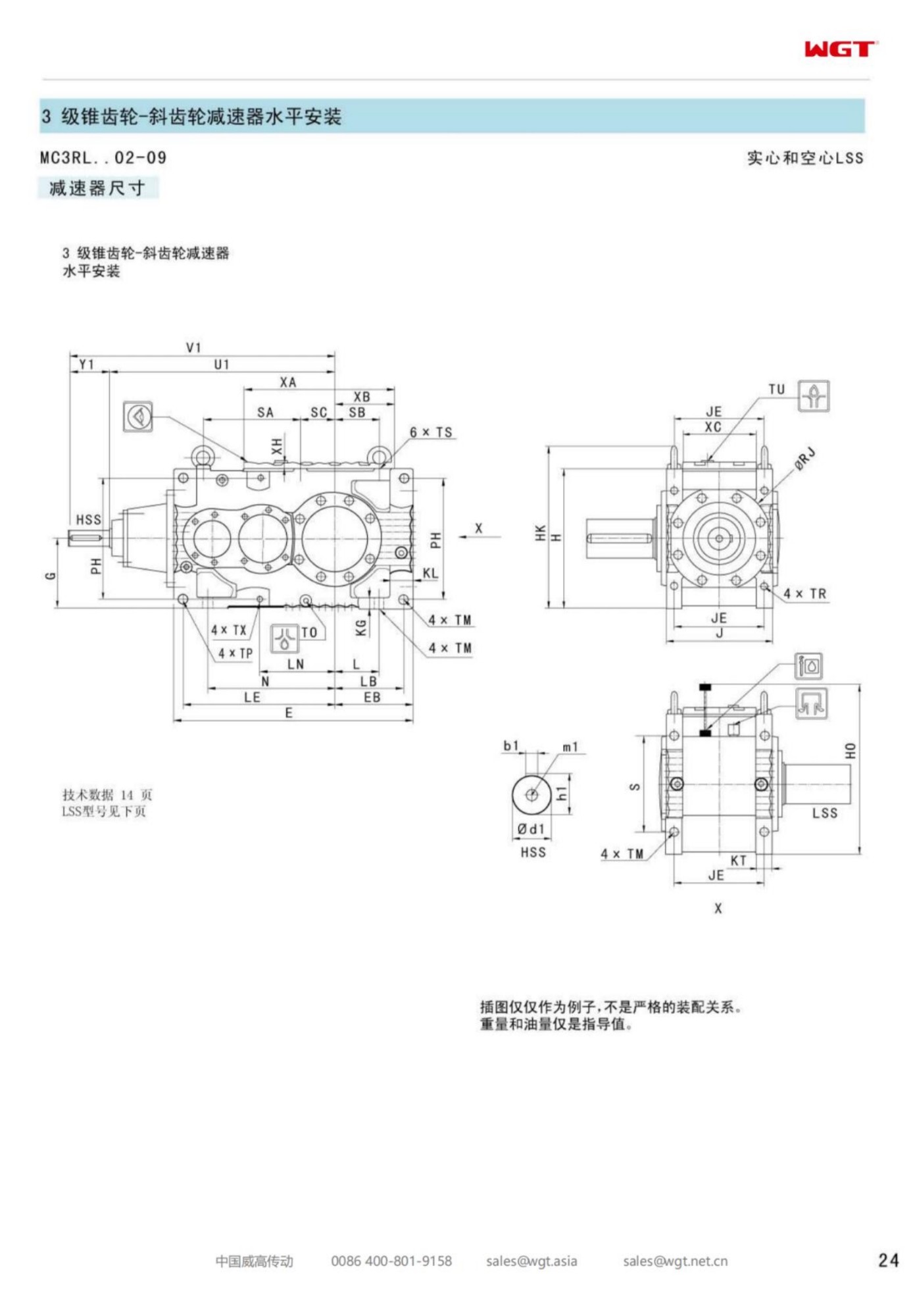
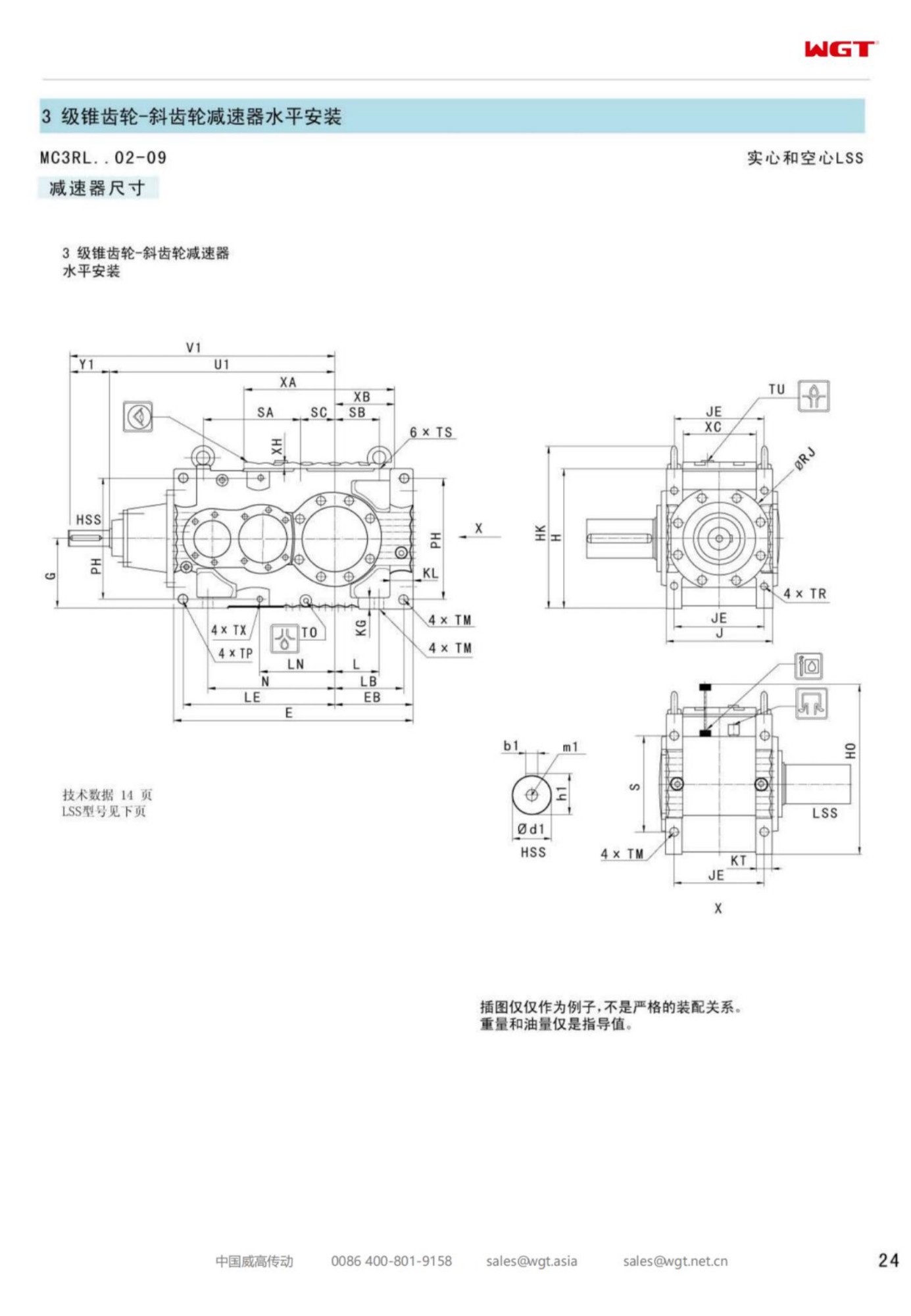
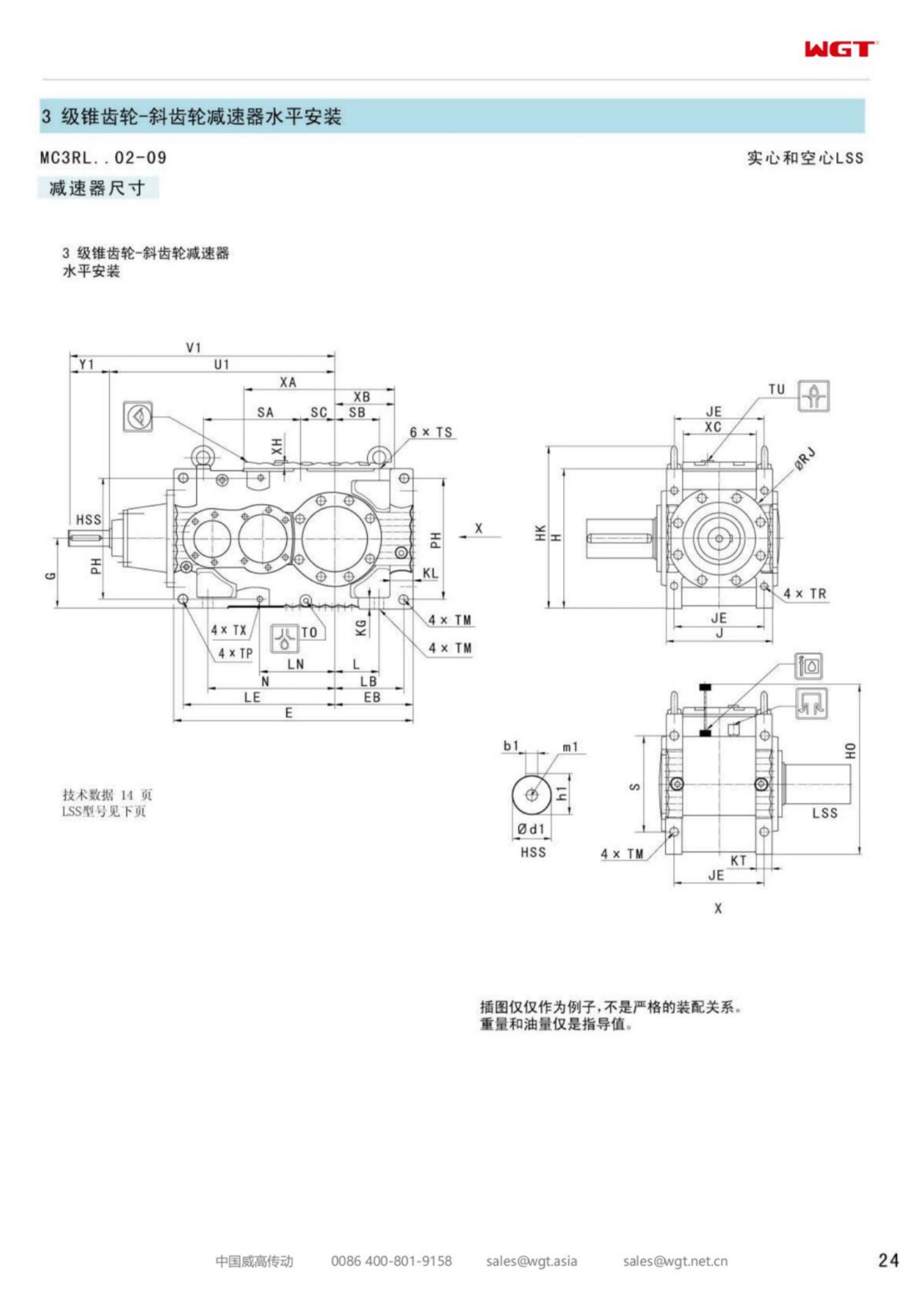
A sweep auger works in a place nobody stands: the floor of a flat bottom silo, under a cone of grain that is still flowing somewhere above it. It turns slowly, it is often buried when it starts, and the only person who sees it during a run is looking down a manhole. The MC3RLST05 right-angle gearbox is the drive for that auger: three stages, a level output at right angles to the motor, a keyed shaft, and a torque arm that reacts against the silo floor structure.
These notes cover the confined-space layout, the grain dust question, the buried restart, and what a terminal should send with an enquiry.
A Sweep Auger Works Where Nobody Stands
Clearing the last few hundred tonnes from a flat bottom bin is the slowest and least rewarding job in a terminal. The auger crawls around the floor, takes grain into a central pit, and does it with a motor that is usually tucked into a recess beside the discharge.
Because nobody watches it, the drive has to be honest about its own condition: no oil sight glass that needs a person to read it, no breather that clogs quietly, and no arm that drifts out of adjustment between inspections.
Reading MC3RLST05 One Letter at a Time
The code is a specification in shorthand.
| MC | Industrial gear unit family for continuous plant duty |
| 3 | Three stages of reduction in one housing |
| R | Right-angle build, motor set at ninety degrees to the output |
| L | Level output axis, running along the machine |
| S | Solid output shaft, keyed to the driven shaft |
| T | Torque-arm reaction, no baseplate required |
| 05 | Fifth frame of the three-stage band |
As a sentence: three-stage industrial unit, right-angle, level output, solid keyed shaft, torque-arm reaction, fifth frame.
Right Angle to Fit Under a Silo Cone
The floor of a flat bottom silo is a disc of concrete with an aeration channel and a discharge pit at the centre, and the headroom under the cone is measured in centimetres once the sweep is in place. A right-angle build puts the motor alongside the auger rather than in line with it, which is the only arrangement that fits without a recess deep enough to weaken the slab.
The level output then runs parallel to the floor, so the auger shaft is reached with a short coupling and the drive can be lifted out through the same hatch that the auger came in through.
The Arm Takes the Reaction, Not the Weight
Inside a silo there is nothing to bolt a baseplate to except a floor that is already busy with aeration ducting. A torque arm is the answer: the shaft carries the drive's weight through the auger's own bearing, and the arm resists only the reaction couple.
That is also what makes the drive removable. Two bolts on the arm, one coupling, and the unit lifts clear, which in a confined space is worth more than any efficiency figure.
Grain Dust in a Confined Space
Grain dust is combustible, and a silo is the place where that matters most. The drive's contribution is small but not zero: a hot surface, a spark from a rubbing part, or a failed bearing running to destruction.
Specifying a surface temperature limit and keeping the breather and any exposed rotating part inside a guard are the practical controls. The electrical side is a separate question, and it should be asked in the same conversation so the two answers agree.
Solid Output Onto a Flight Shaft
The sweep's flight shaft is a tube with welded flights, supported at one end by the drive and at the other by a hanger bearing. A keyed solid output with a short coupling is the standard connection and it lets the flight be renewed without touching the gearbox.
On a hollow bore the drive would sit over the tube, and the hanger bearing would have to move. On a floor where nothing can be moved, the solid shaft is not a preference but a constraint.
Three Stages at Sweep Speed
A sweep turns at a few revolutions per minute, sometimes less than five. From a four-pole motor that ratio cannot be reached in two stages without a wheel pair larger than the silo recess will take, so three stages do the work in a case that fits.
The three-stage case also has more tooth contact to share a buried start, which is the load case that actually sizes the drive.
Running Buried and Restarting Buried
An auger that stops with grain above it is not stopped by a switch but by a load. The restart torque is the full-flight torque plus the friction of grain on the trough, and on a wet or compacted product it can be several times the running figure.
The service factor carries that, and so does the control philosophy: a drive that is allowed to try a restart and then wait is a drive that survives, while one that is repeatedly jogged into a buried flight is one that will eventually strip a tooth.
Level Output Along a Concrete Floor
Because the output is level, the drive sits low and the oil level in the case stays where the manufacturer intended. A vertical output in the same position would put the sump at the wrong end of the housing and the upper bearing out of the oil.
That is a small point that decides a large argument: level output, low mounting, and no separate oil pump on a machine that nobody will service on schedule.
Cleaning, Fumigation and Wash-Down
Silos are cleaned between grades and fumigated between seasons, and both routines involve chemicals that a painted case was not necessarily chosen for. Fumigant vapour finds the breather, and wash water finds the output seal.
A breather that can be capped during fumigation, and a finish that survives a caustic wash, are worth writing into the order rather than discovering after the first clean-out.
What to Send With a Sweep Auger Enquiry
The useful message carries the flight shaft diameter and keyway, the sweep diameter and speed, the silo diameter and the height of product normally left, the motor frame and speed, the electrical classification of the space, and a sketch of the recess at the discharge pit.
The height of product left in the bin is the number most often missing and the one that decides the start-up torque.
Frame Five Under a Flat Bottom Bin
The fifth frame covers the sweep augers of medium and large flat bottom bins: enough case for a buried start on a full floor, small enough to pass through a standard hatch, and light enough for two people to handle on a rope.
Small bins use the lower frames, and the choice is made on silo diameter and the product's angle of repose rather than on the motor size.
An auger buried in grain under a cone nobody can see - three stages get it started again:
- Sweep auger drive at a flat bottom grain silo
- Bin unloader flight conveyor at a feed mill
- Floor auger at a maize storage silo
- Silo discharge sweep at a port terminal
- Under-bin reclaim auger at a flour mill
- Flat store sweep conveyor at a maltings
How Customers Use This Unit
Stacker-reclaimer travel drive
A bulk terminal drives the travel gear of a stacker-reclaimer with units. Long-travel duty with frequent direction changes is smoothed by the ground gearing, and backlash stays within 20 arcmin over the full rail length.
Automatic parking system
A parking equipment manufacturer uses reducers on its puzzle-type car stackers. The hollow shaft takes the drive axle directly, and the quiet 60-68 dB operation suits installations inside residential buildings.
What Engineers Ask Us
How is the gear unit protected against dust and moisture?
Housings are gasket-sealed with labyrinth or lip seals at both shafts as standard. Dusty plants, washdown areas and outdoor installations are covered by coating and sealing options specified together with the order.
What inspection access does the housing provide?
The horizontally split housing opens along the shaft centreline, so gearing and bearings can be examined without removing the unit from its foundation. Covers give access to the oil galleries and bearing seats during service.
Model Table: Frames, Shafts and Duty
| Model | Centre distance | Output | Typical duty |
|---|
| M3PSF50 | size 50 | solid shaft, foot | conveyors, feeders |
| M3PSF60 | size 60 | solid shaft, foot | crushers, mixers |
| M3PSF70 | size 70 | solid shaft, foot | ball mills, shredders |
| M3PSF80 | size 80 | solid shaft, foot | kilns, heavy conveyors |
| M3PSF90 | size 90 | solid shaft, foot | mill and kiln drives |
| M3RSF50 | size 50 | solid shaft, foot, right-angle | inclined conveyors, elevators |
| M3RSF60 | size 60 | solid shaft, foot, right-angle | screw classifiers, feeders |
| M3RHF70 | size 70 | hollow shaft, foot, right-angle | agitators, drum drives |
| M3PHT80 | size 80 | hollow shaft, torque arm, parallel | shaft-mounted conveyors |
| M3RHT90 | size 90 | hollow shaft, torque arm, right-angle | heavy shaft-mounted drives |
Larger size numbers mean higher torque capacity and larger shafts. Because interfaces follow the common industrial dimensions, a size-for-size change is the normal upgrade route for these industrial units.
Selection Example: Sweep auger in a flat bottom grain silo
Take a 7.5 kW motor at 1450 rpm turning the sweep flight at 4.5 rpm. The ratio follows directly: 1450 / 4.5 = 322, so a ratio near i=322 is taken from the three-stage right-angle band, and the frame is confirmed against a start with the flight buried under the product left in the bin rather than against the clean-floor sweep. In this case frame five fits the recess beside the discharge pit with a level output along the slab, keys a solid output to the flight shaft so the screw can be changed without moving the drive, and is arranged for a capped breather during fumigation. Note that the ratio comes from speeds alone, while the frame size depends on torque and service factor - never size a unit on ratio only.
![industrial helical gearbox selection chart]()
A quick visual of the selection sequence for a industrial helical unit.
![M3 series gear reducer installation examples]()
Application coverage of the the M3 series.
From Duty Point to Delivery in One Working Day
Stop guessing the ratio. Prefer to check the figures yourself? The WGT Motor & Gearbox Online Selection System gives you the model, torque margin and ratio before you ask us.
Tell us what the machine does and how hard it works; we calculate the ratio, apply the service factor and send back the drawing and quotation within one working day, including sea-freight and air-freight options. Looking for a gear motor for car wash system? Tell us the duty point and we will confirm the model in writing.