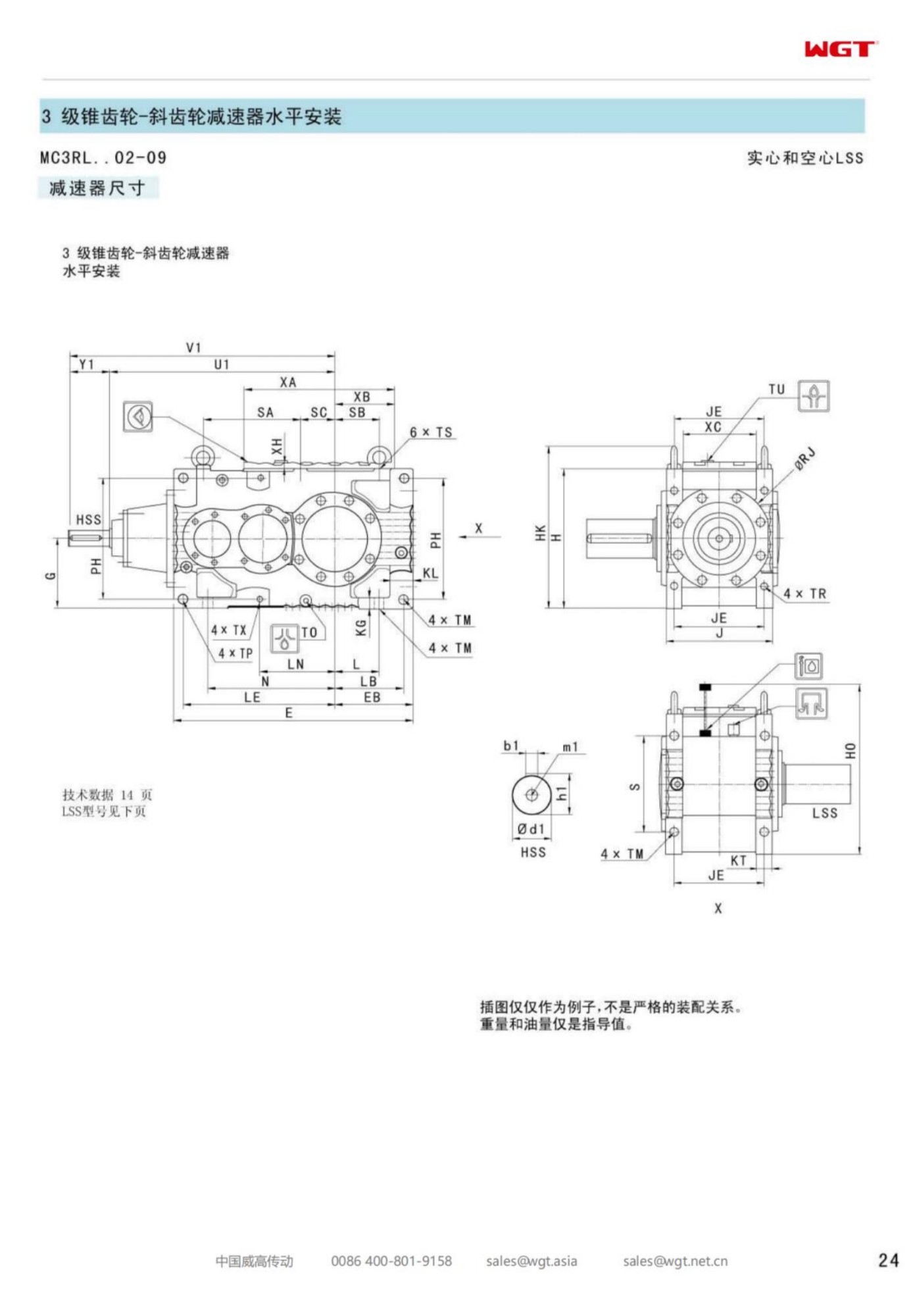
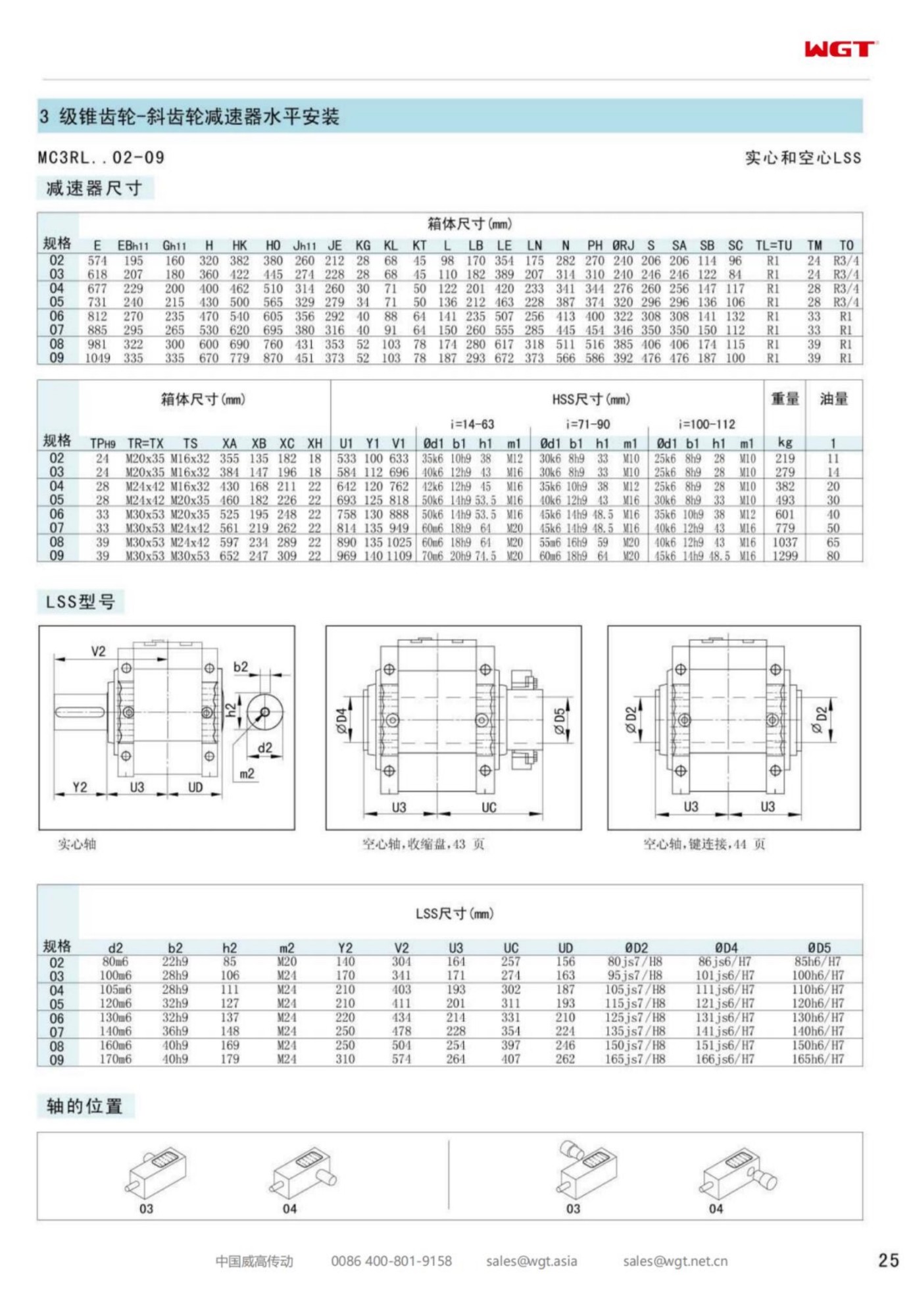
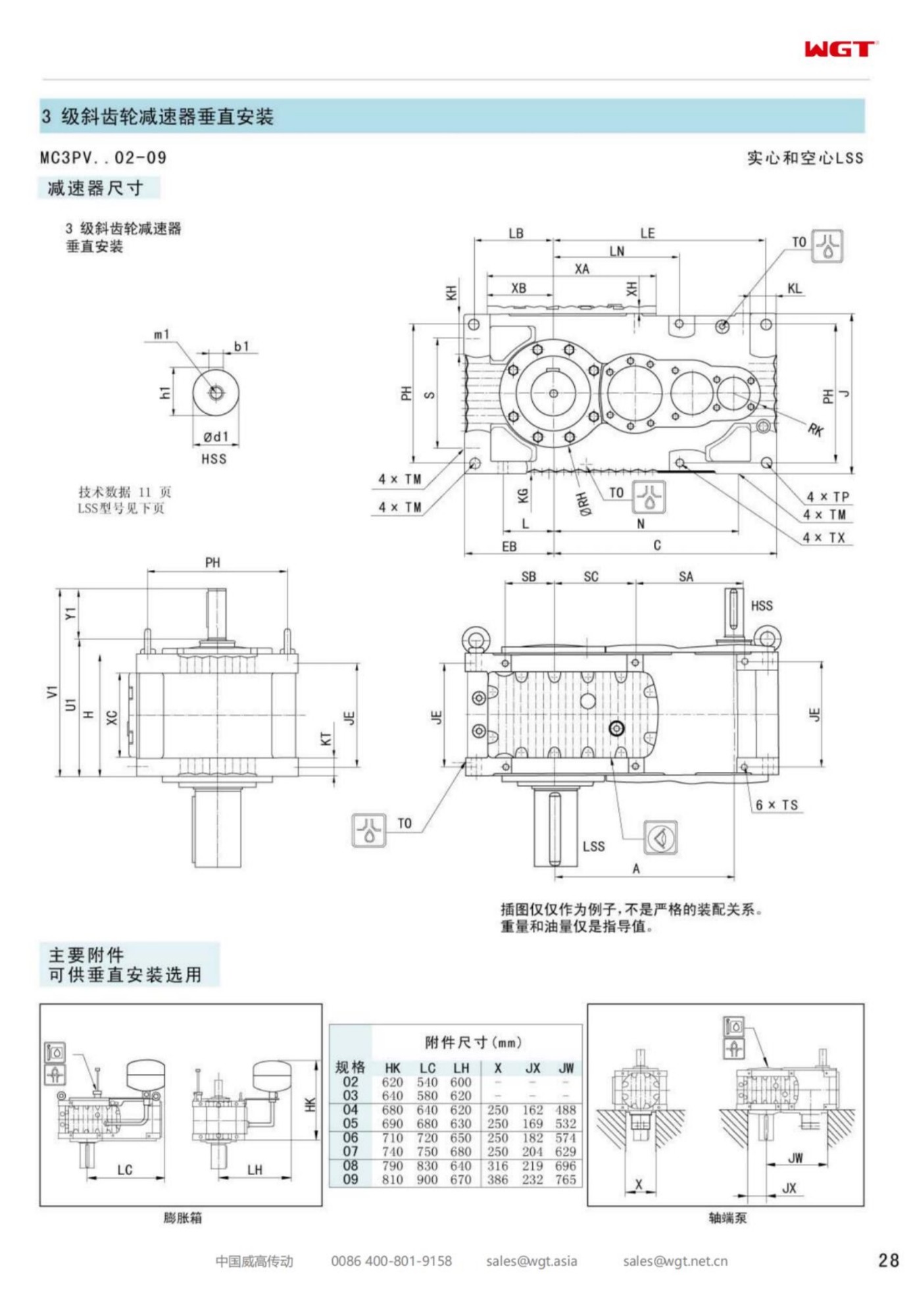
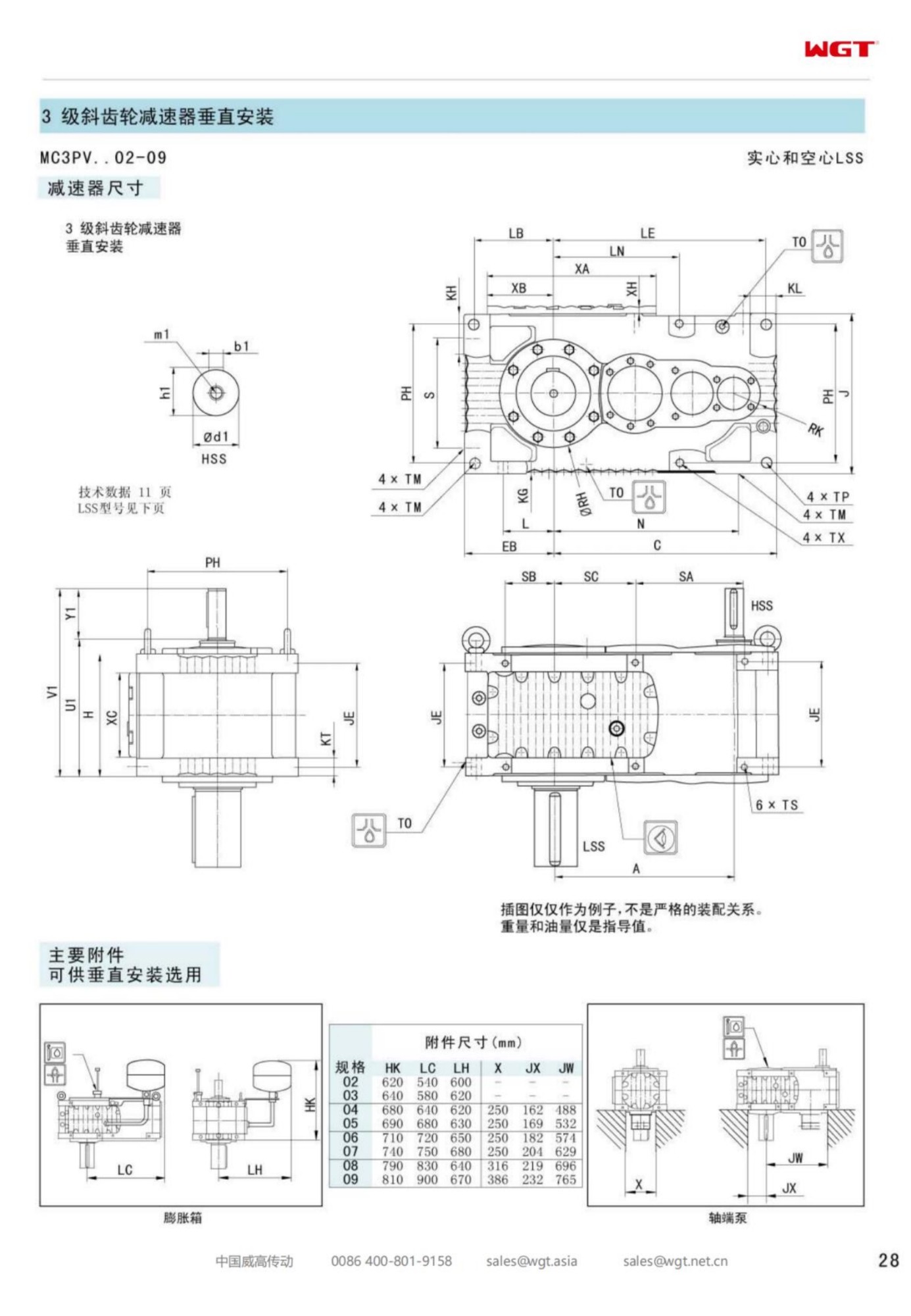
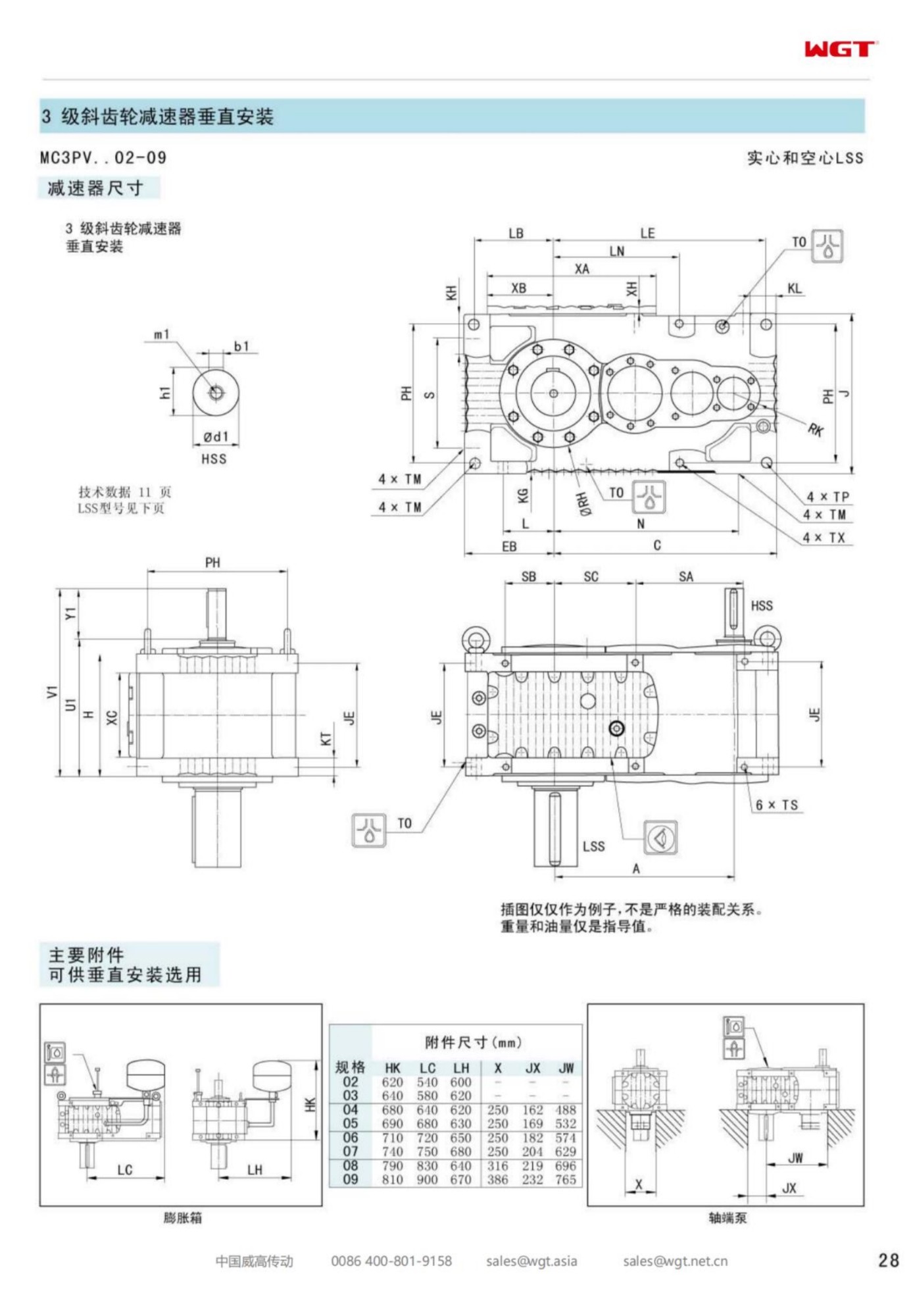
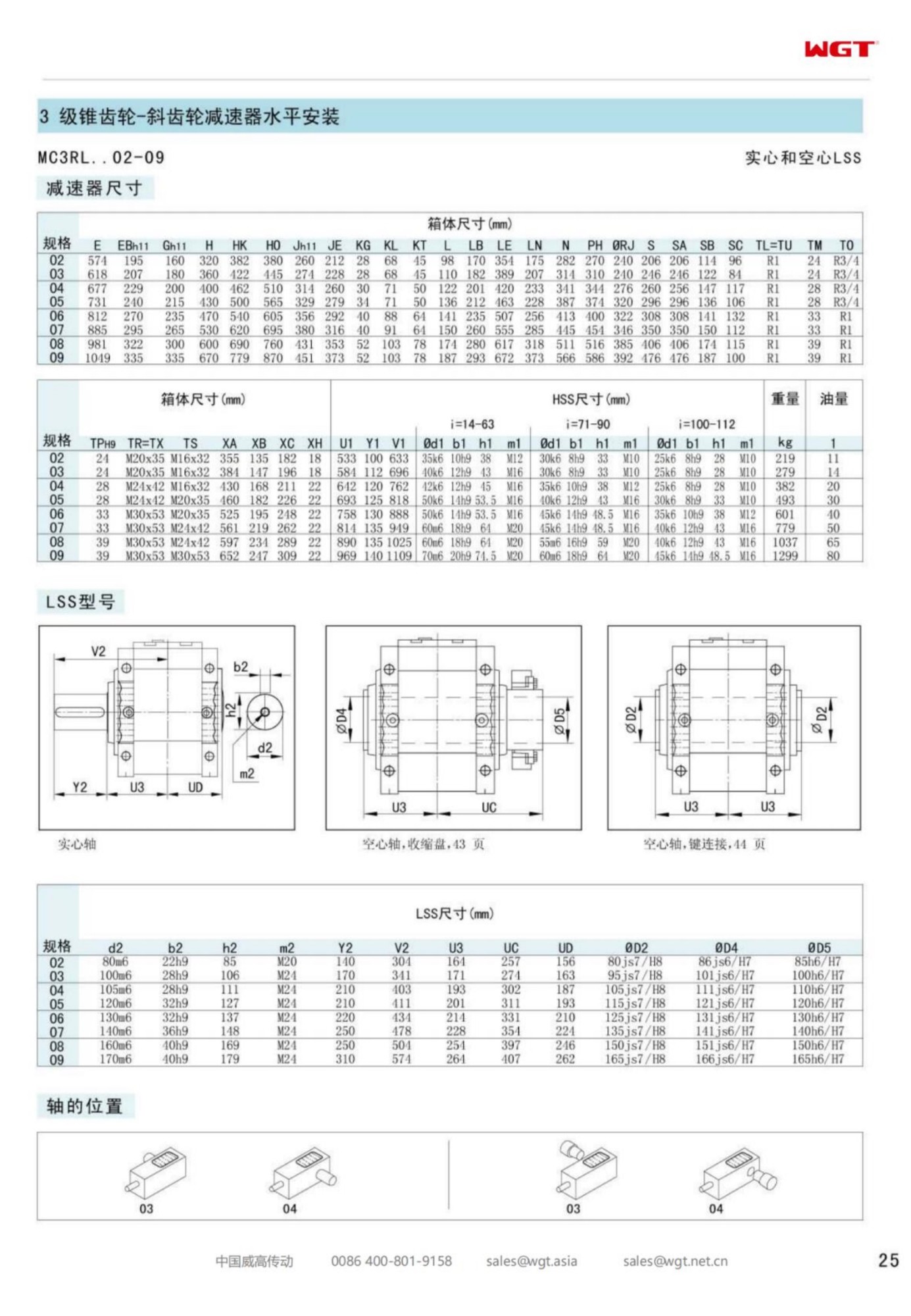
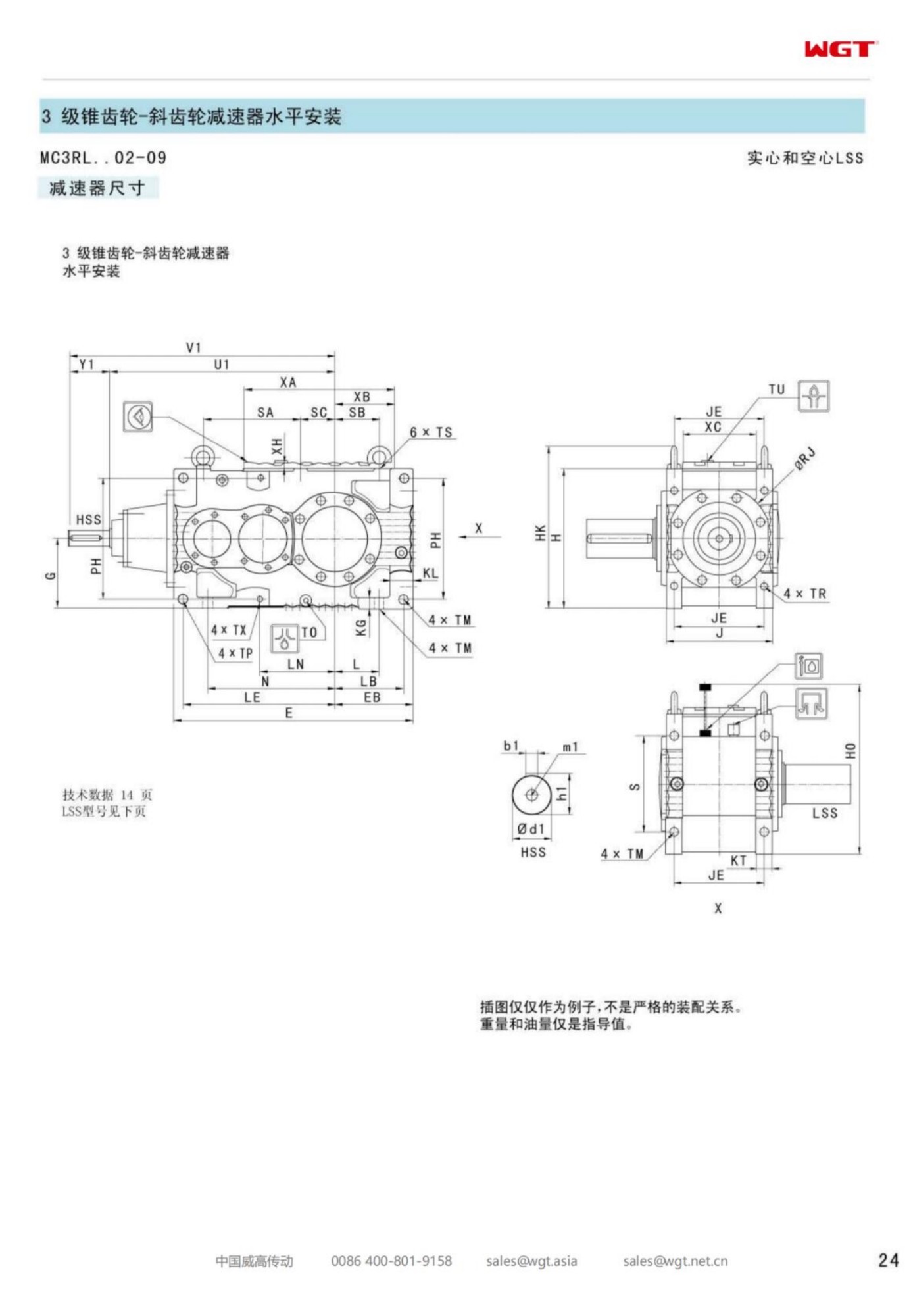
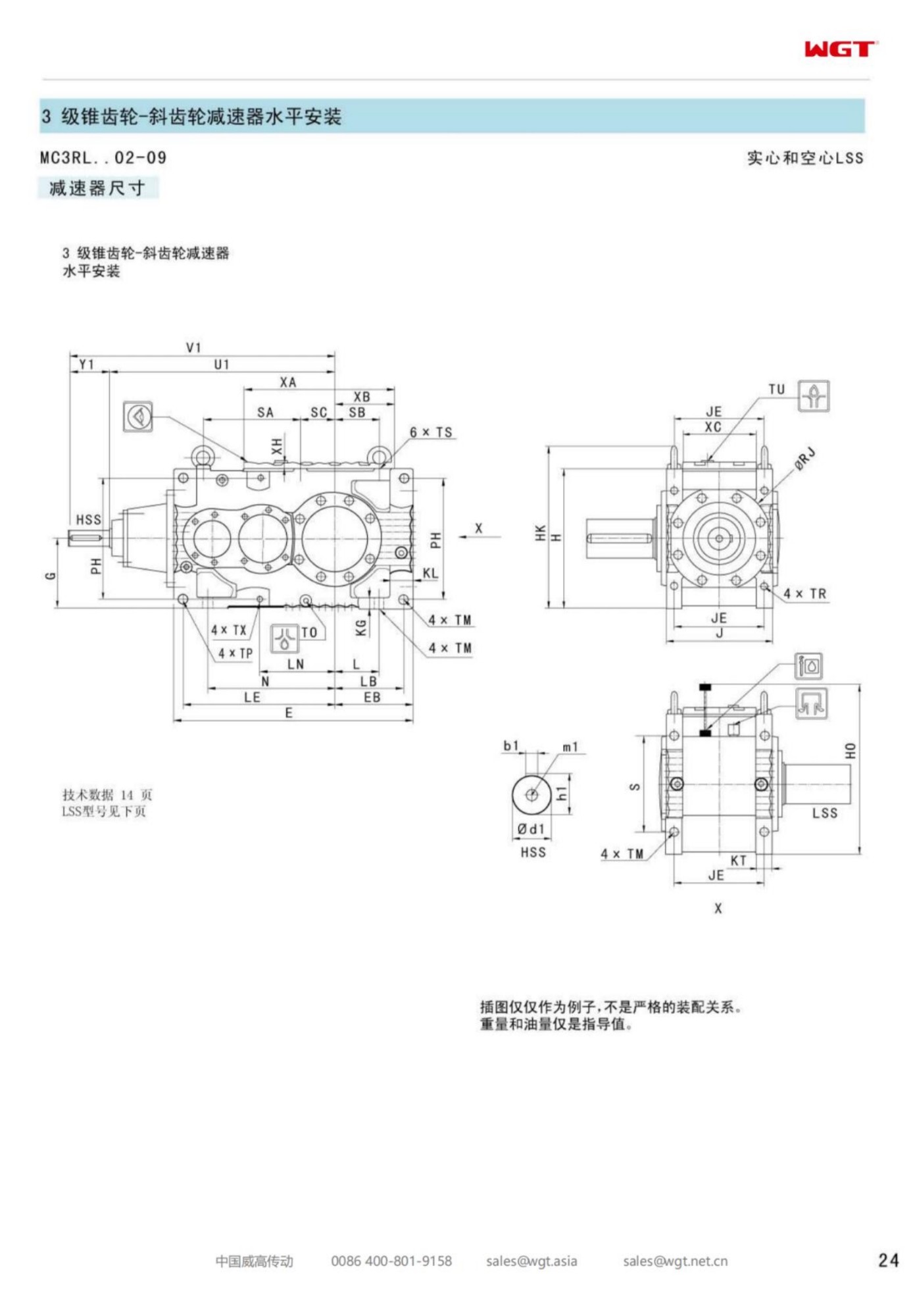
Wood chips arrive at a pulp mill by the shipload and leave the woodroom in a controlled stream toward the digester house, and very little about that journey is gentle. A chip is a wedge with a grain to it, bark comes through as fibrous string, silt from the log yard settles in every trough, and the reclaim belt under the chip pile runs when everything else has stopped. The MC3RLST08 right-angle solid shaft gearbox is the drive specified for that kind of belt: three stages, a level output at ninety degrees to the motor, a keyed shaft, and a torque arm landed on the reclaim structure.
The notes below follow the drive through a working shift: the material, the layout, the incline that fixes the ratio, and the figures a mill should put on the enquiry.
Chips That Bite Back
Fresh chip is abrasive only in moderation, but a reclaim belt sees the fraction nobody wanted: flattened knots, bark string, grit washed off the log yard, and the odd stone that rode in with a shipment. None of it is large, and all of it finds the gaps between a skirt and a belt.
The drive inherits the result as torque texture. A clean belt asks for a steady pull; a reclaim belt asks for a pull with grit in it, and the specification should assume the grit arrives.
The Type String, Position by Position
Seven characters carry the mounting decision a drawing would otherwise have to settle.
| MC | Industrial gear unit family for continuous plant duty |
| 3 | Three stages of reduction in one housing |
| R | Right-angle build, motor set at ninety degrees to the output |
| L | Level output axis, running along the machine |
| S | Solid output shaft, keyed to the driven shaft |
| T | Torque-arm reaction, no baseplate required |
| 08 | Eighth frame of the three-stage band |
Said plainly: a three-stage industrial unit, right-angled, level output, solid keyed shaft, torque-arm reaction, eighth frame of the band.
Room to Swing a Motor in the Reclaim Hall
A reclaim tunnel or woodroom hall is planned around the pile, and whatever width is left over belongs to the belt, the walkway and the services. An inline drive would put a motor and its fan across that leftover width and straight into the traffic between the pile and the screen.
The right-angle build turns the motor parallel to the belt line. The bevel set does the turn inside the same housing and the same oil as the helical stages, so the compact plan costs no extra lubrication point in a building where access is already rationed.
The Reaction Line Into the Tunnel Steel
A torque arm turns the drive's reaction into a pull on a bracket, and the bracket decides whether that pull is carried or argued with. On a reclaim tunnel the honest bracket is a welded seat on the tunnel frame, stiff along the line of reaction and free everywhere else.
The common fault is a bracket that looks strong in the drawing but sits mid-span on a member that flexes with belt load. The arm then pumps with every pass of the belt, and the weld around the seat fatigues long before the gearing does.
Bark Grit, Silt and the Shaft Seal
Log-yard silt is a grinding paste that forms wherever water and bark fines settle, and the tail end of a reclaim belt is where they both settle. A lip seal running in that paste wears a groove in weeks, and a groove becomes a leak that never really closes again.
The specification answer is modest and effective: a purgeable seal arrangement on the output, a breather piped clear of the dust ladder, and a wash-down habit that does not aim the hose at the case.
A Long Incline Decides the Ratio
Reclaim belts that climb from the tunnel to the silo top often carry more height than length in their load, and the head shaft turns slowly as a result. From a four-pole motor that duty sits deep in the three-stage band, where no single wheel pair has to be stretched to make the number.
The same three meshes give the start something to share. A belt that stops on the incline holds by friction alone, and the next start is against a settled, packed bed - exactly the load a third mesh was bought for.
Three Stages and a Belt Stopped Full
The load that sizes a reclaim drive is rarely the tonnage on the daily sheet. It is the start with the belt loaded end to end after a trip, with chips settled against the skirts and the take-up already tight.
Three stages spread that event across more tooth contacts than two would, and the coupling and arm stop finish the job the gears begin. Generous in those two places, the drive treats a full restart as an ordinary event rather than a gamble.
A Keyed Stub at the Reclaim Head Shaft
The head shaft of a reclaim belt ends where the structure is busiest, and a keyed solid output with a spacer coupling keeps the drive out of the busiest inch. The coupling takes the small misalignment the structure gives; the shaft stays exactly as the mill built it.
A bore over that same stub would plant the case directly above the bearing and the worst of the silt. The solid shaft is the tidy answer, and it lets the belt be changed without disturbing the drive at all.
Restarting Under a Full Reclaim Hopper
Some reclaim belts feed from a hopper gate that opens onto the belt, and the gate does not always close cleanly on a trip. The first start afterwards is against a wedge of chips taller than the running bed, and that torque can dwarf everything else in the duty cycle.
If the gate is interlocked, say so on the enquiry. If it is not, the service factor and the start philosophy should both be argued from the jam condition, not from the average.
Dust Extraction, Breathers and Housekeeping
Woodrooms extract dust for good reasons, and the extract that cleans the air also gives the dust a direction. A gear case breather in that airflow becomes a filter nobody scheduled, and it clogs at the worst possible moment - in the middle of a long reclaim run.
A breather piped to still air, or a case whose breather sits outside the plume, costs nothing to arrange on a new install and an afternoon to fix on an old one.
What a Pulp Mill Should Send With the Enquiry
The message that gets one frame and one ratio back carries the head shaft diameter and keyway, belt speed and width, the incline, throughput, the motor frame and speed, the silt and wash conditions at the drive position, and a photograph of where the case has to live.
A note on restart practice - gate interlocked or not, and how often the belt trips full - settles the service factor argument before it starts.
Frame Eight in the Chip Line
The eighth frame is the upper reach of the band, and it is where long incline belts and heavy reclaim duty settle: enough case for a jammed restart with the structure already loaded, compact enough to hang in a tunnel bay.
Short level transfer belts below the silo sit a frame or two down; the digester feed meters above it move into dedicated metering drives. Frame eight is the workhorse between them.
Chips by the thousand tonnes, bark grit and a long incline - three stages keep the reclaim belt climbing:
- Chip reclaim conveyor under a pulp mill woodroom
- Transfer belt from the chip screen to the silo top
- Bark and screening rejects conveyor at a mill
- Sawdust collection belt at a sawmill complex
- Chip bin discharger feed belt
- Wood room reclaim drag toward the digester house
Selection Example: Chip reclaim conveyor in a pulp mill woodroom
Take a 30 kW motor at 1475 rpm turning the reclaim head shaft at 14 rpm. The ratio follows directly: 1475 / 14 = 105.4, so a ratio near i=105 is taken from the three-stage right-angle band, and the frame is confirmed against a restart with the belt loaded on a long incline rather than against the clean running pull. In this case frame eight hangs in the reclaim tunnel with its motor parallel to the belt line, keys a solid output to the head shaft through a spacer coupling, and carries a purgeable output seal for bark grit and log-yard silt. The same three numbers - motor speed, target output speed, required torque - are all you need; our engineers (or the online selector below) cross-check the service factor for your duty cycle.
![gear reducer selection flow chart - ratio and frame size]()
Figure: from motor data to a confirmed gearbox model in four steps.
Common Models in the M3 Series
| Model | Centre distance | Output | Typical duty |
|---|
| M3PSF50 | size 50 | solid shaft, foot | conveyors, feeders |
| M3PSF60 | size 60 | solid shaft, foot | crushers, mixers |
| M3PSF70 | size 70 | solid shaft, foot | ball mills, shredders |
| M3PSF80 | size 80 | solid shaft, foot | kilns, heavy conveyors |
| M3PSF90 | size 90 | solid shaft, foot | mill and kiln drives |
| M3RSF50 | size 50 | solid shaft, foot, right-angle | inclined conveyors, elevators |
| M3RSF60 | size 60 | solid shaft, foot, right-angle | screw classifiers, feeders |
| M3RHF70 | size 70 | hollow shaft, foot, right-angle | agitators, drum drives |
| M3PHT80 | size 80 | hollow shaft, torque arm, parallel | shaft-mounted conveyors |
| M3RHT90 | size 90 | hollow shaft, torque arm, right-angle | heavy shaft-mounted drives |
The table below shows the M3 industrial range: P builds are all-helical on parallel axes, R builds add a bevel input stage for a right-angle drive; S / H describe the low-speed shaft and F / T the mounting.
Application Cases
Asphalt plant aggregate feeder
An asphalt plant powers its aggregate feeders with reducers in outdoor, dusty conditions. The cast-iron housing and standard paint finish have come through several winters without refurbishment.
Fertiliser granulator drum
A fertiliser producer drives granulator drums with gear units. The slow, high-torque rotation needed to tumble the granules is a natural fit, and the torque-arm option avoids a heavy base frame.
![industrial gearbox applications - conveyor mixer crusher wastewater]()
Figure: typical industries that use the WGT S-series gear reducers.
Frequently Asked Questions
Which lubricating oil should be used?
GB L-CKC220~460 or Shell Omala 220~460 as supplied. Under normal duty the housing is lubricated for life; in hot or continuous-duty environments an oil change after the first 400 hours and then every 4000 hours is recommended.
What warranty and documentation come with the gearbox?
A one-year warranty covers material and workmanship. Each unit ships with a test record (noise, temperature rise, backlash), a dimension drawing and an installation manual.
How do I calculate the ratio I need?
Divide motor speed by the target output speed (i = n1/n2), then check the required torque against the rating table with your service factor. The online selector below does this automatically.
Fast Quotation for OEM and Repeat Orders
Buying one unit or one hundred? Not sure which model fits? Try our online WGT Motor & Gearbox Online Selection System to match motor power, ratio and mounting in one minute.
Single units ship on the same production route as batch orders, with no minimum-order surcharge. For OEM programmes we hold framework pricing and reserve capacity for your scheduled call-offs. Looking for a gearbox for agricultural machine? Tell us the duty point and we will confirm the model in writing.