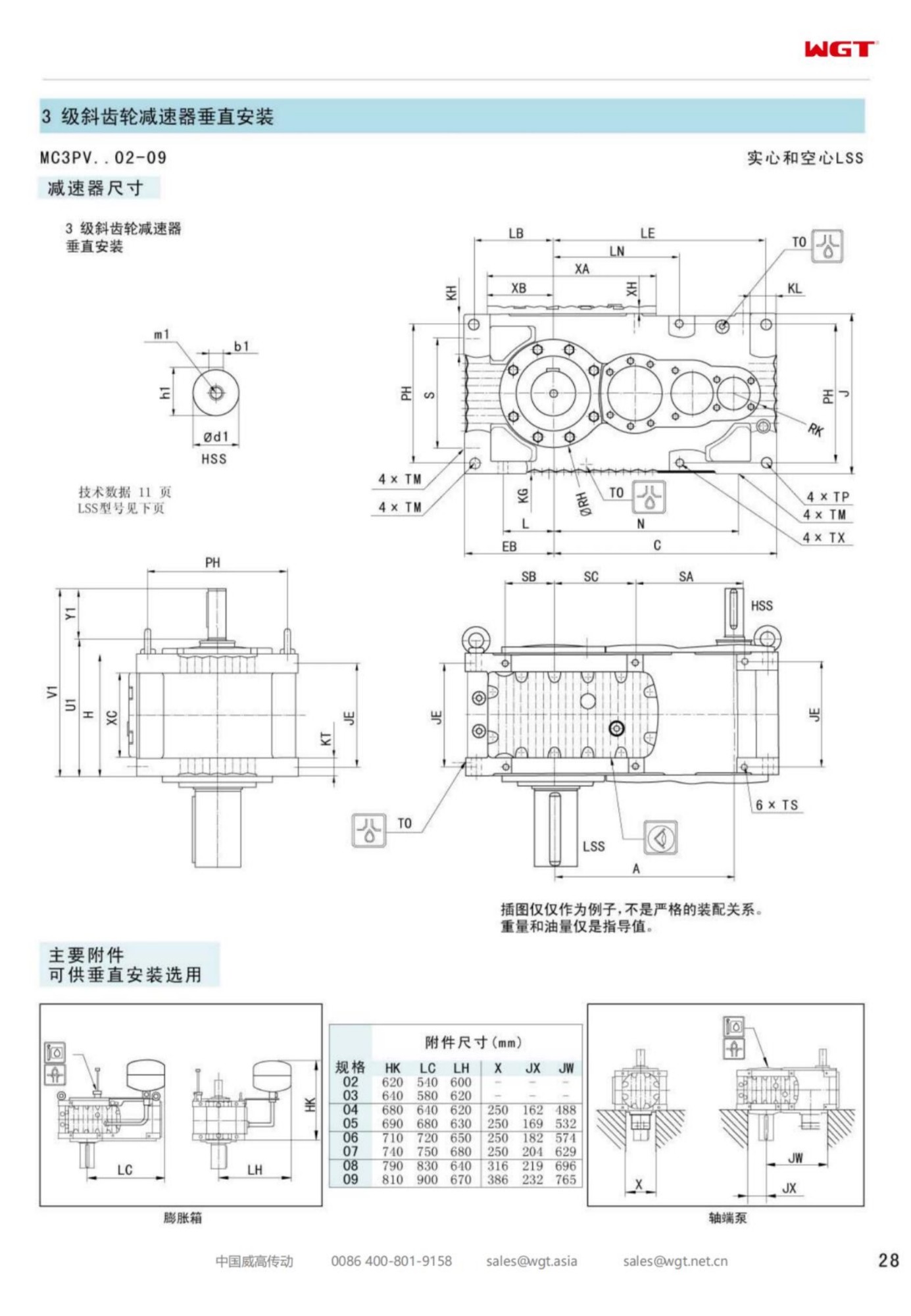
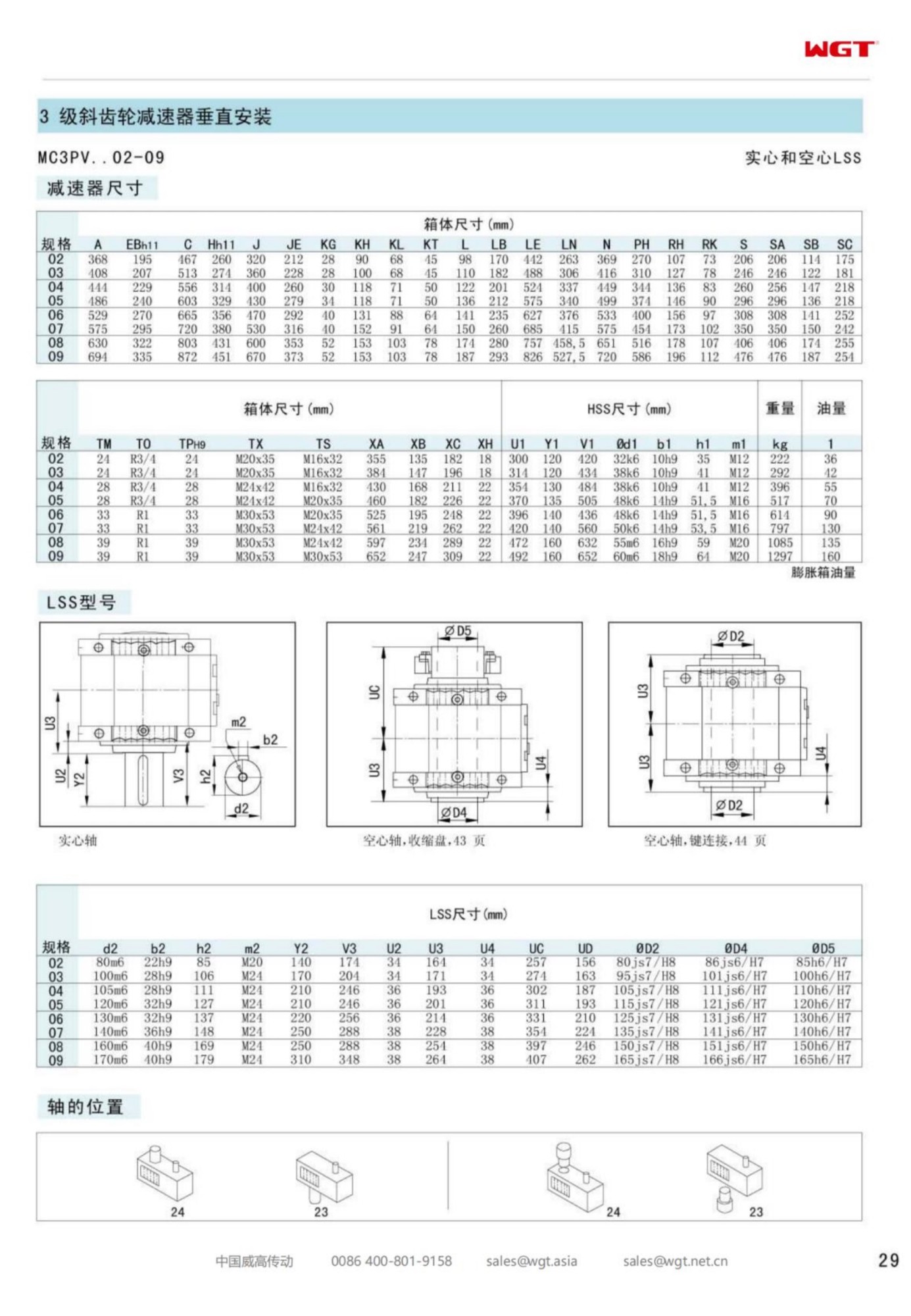
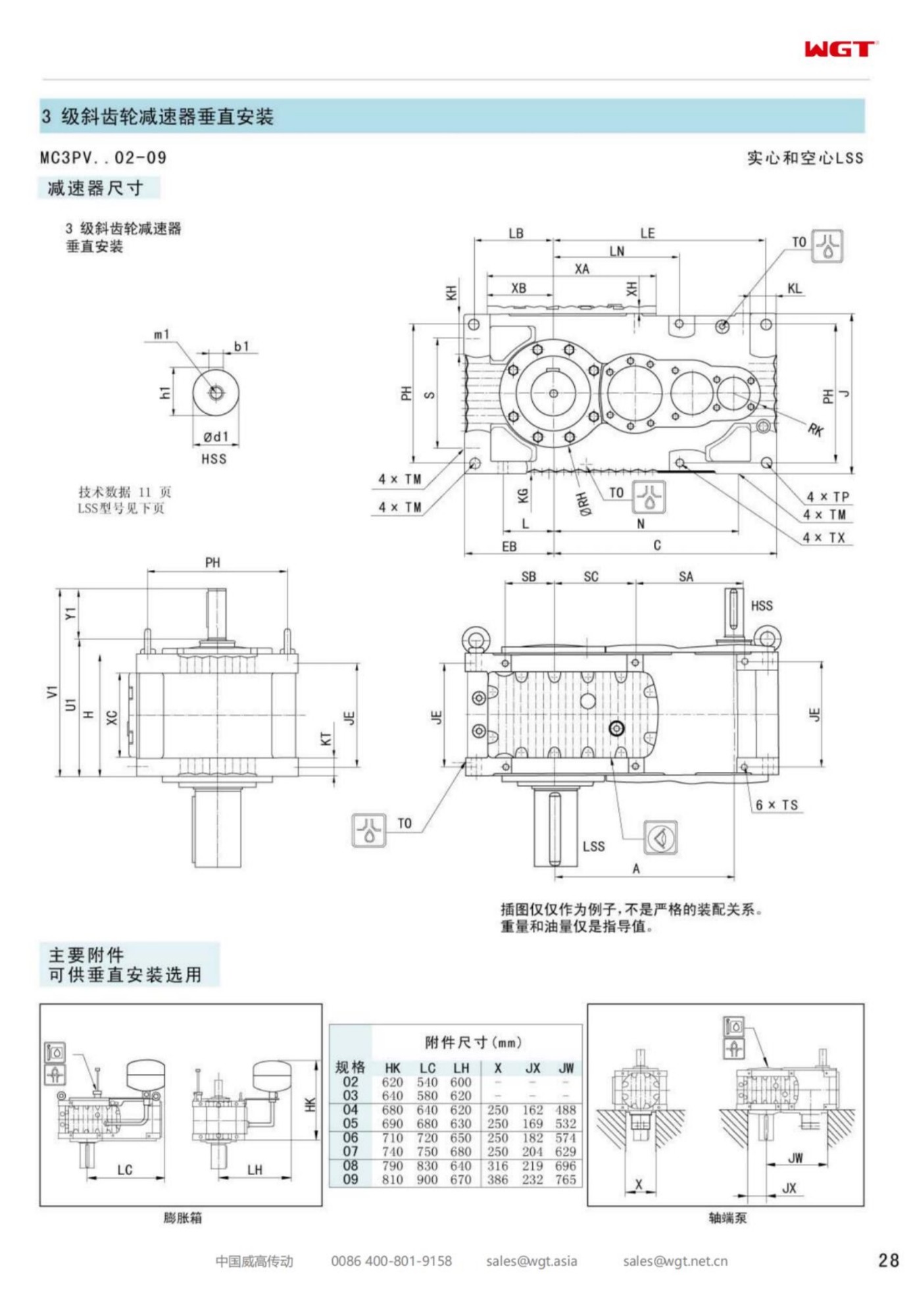
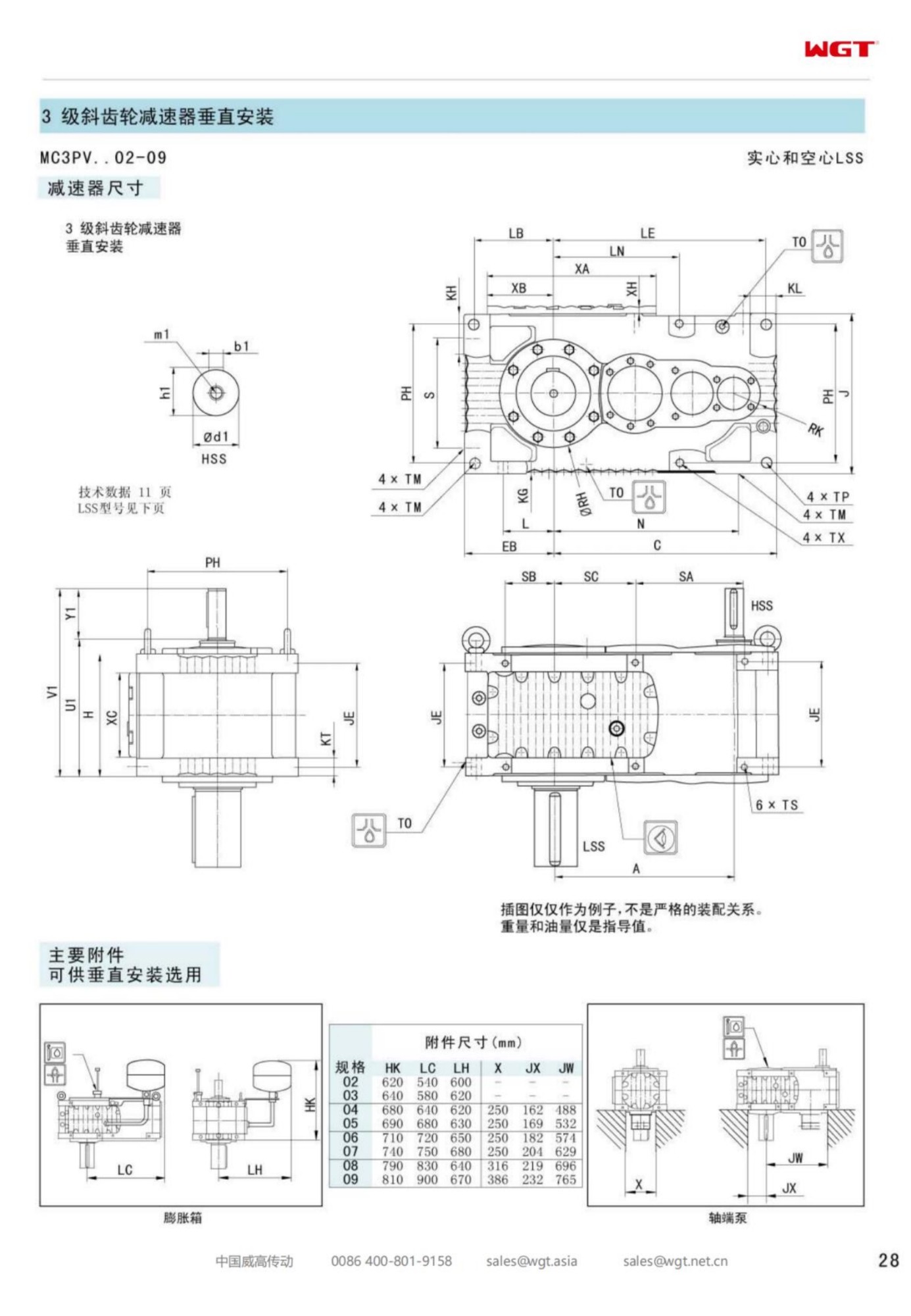
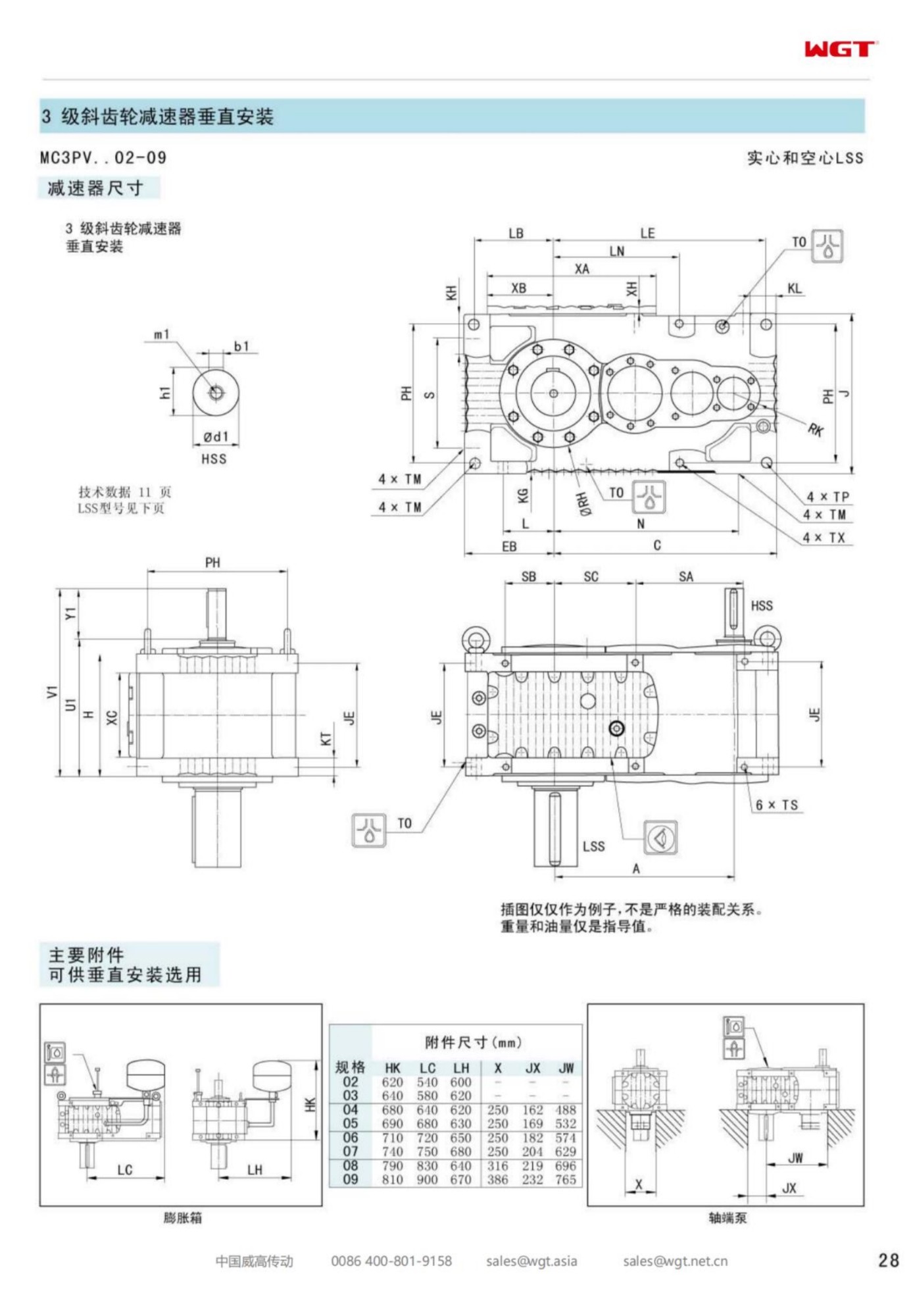
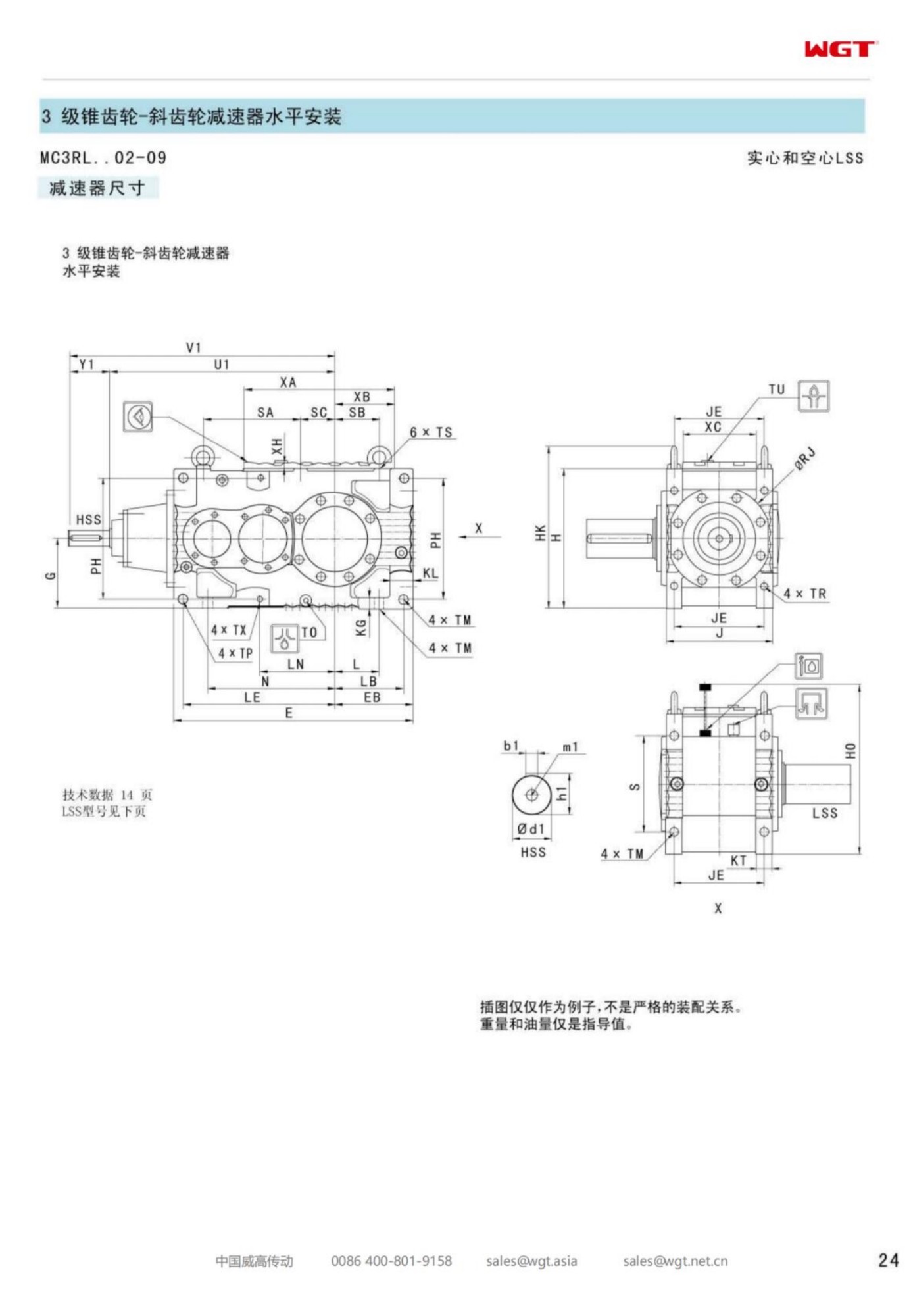
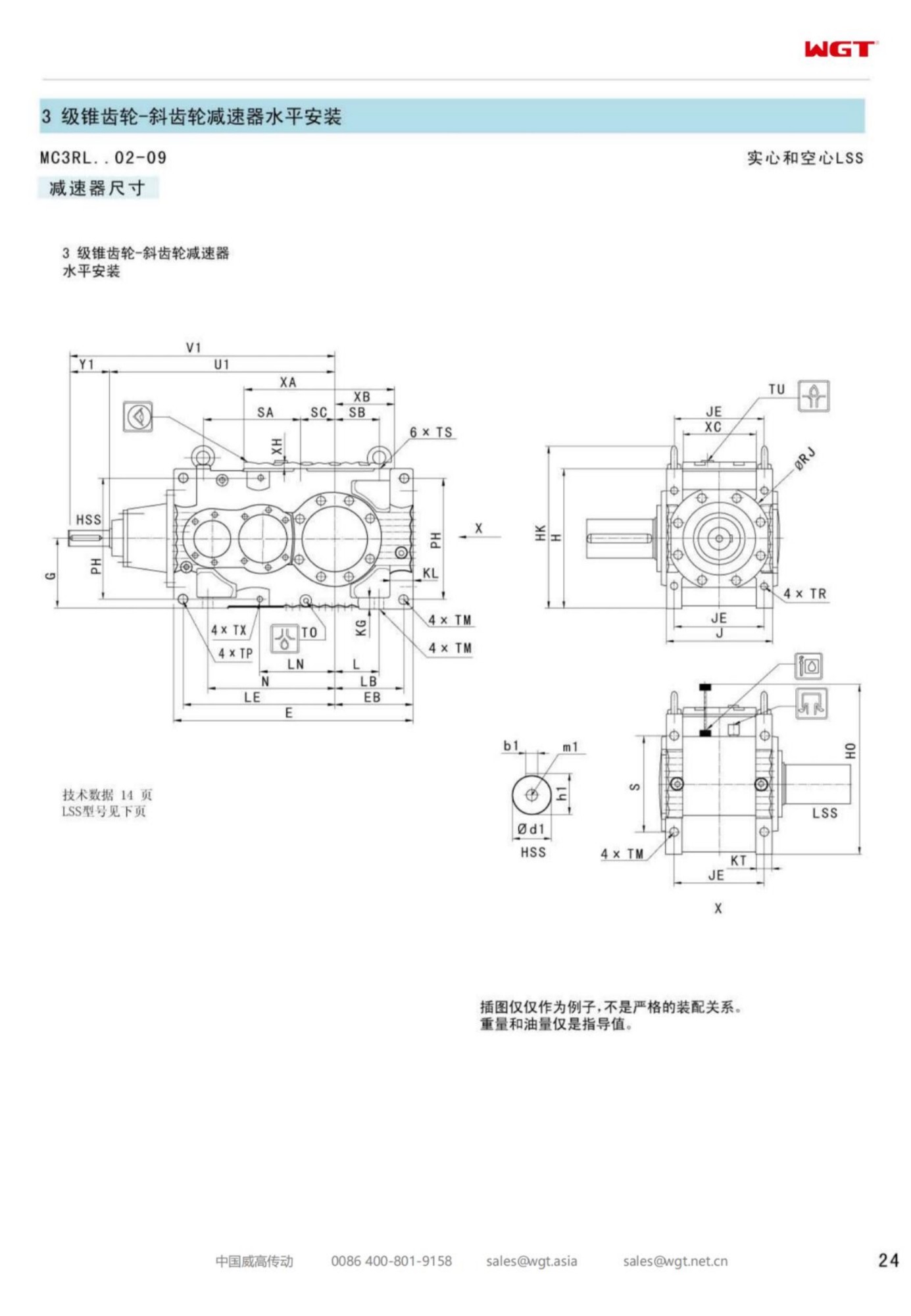
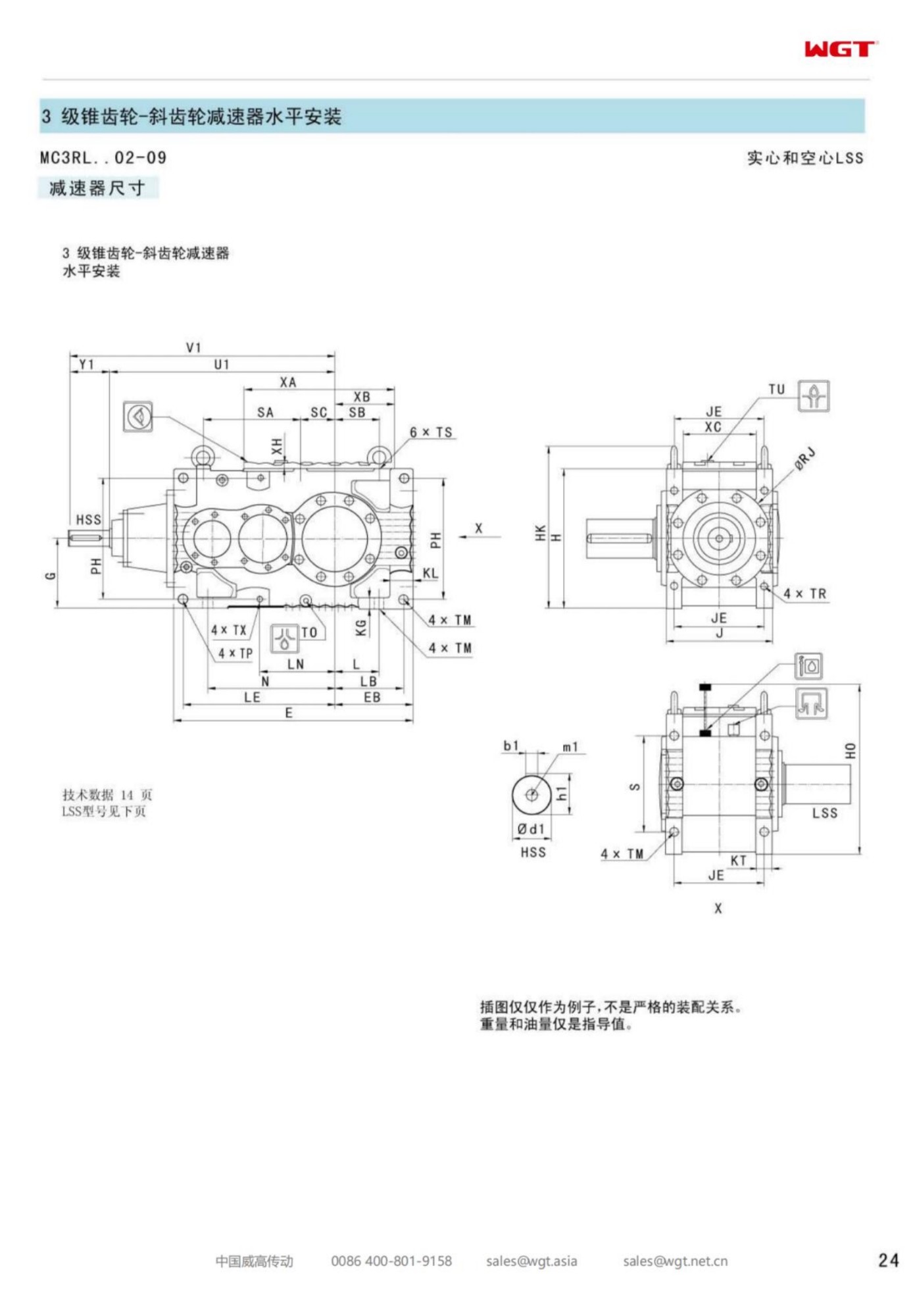
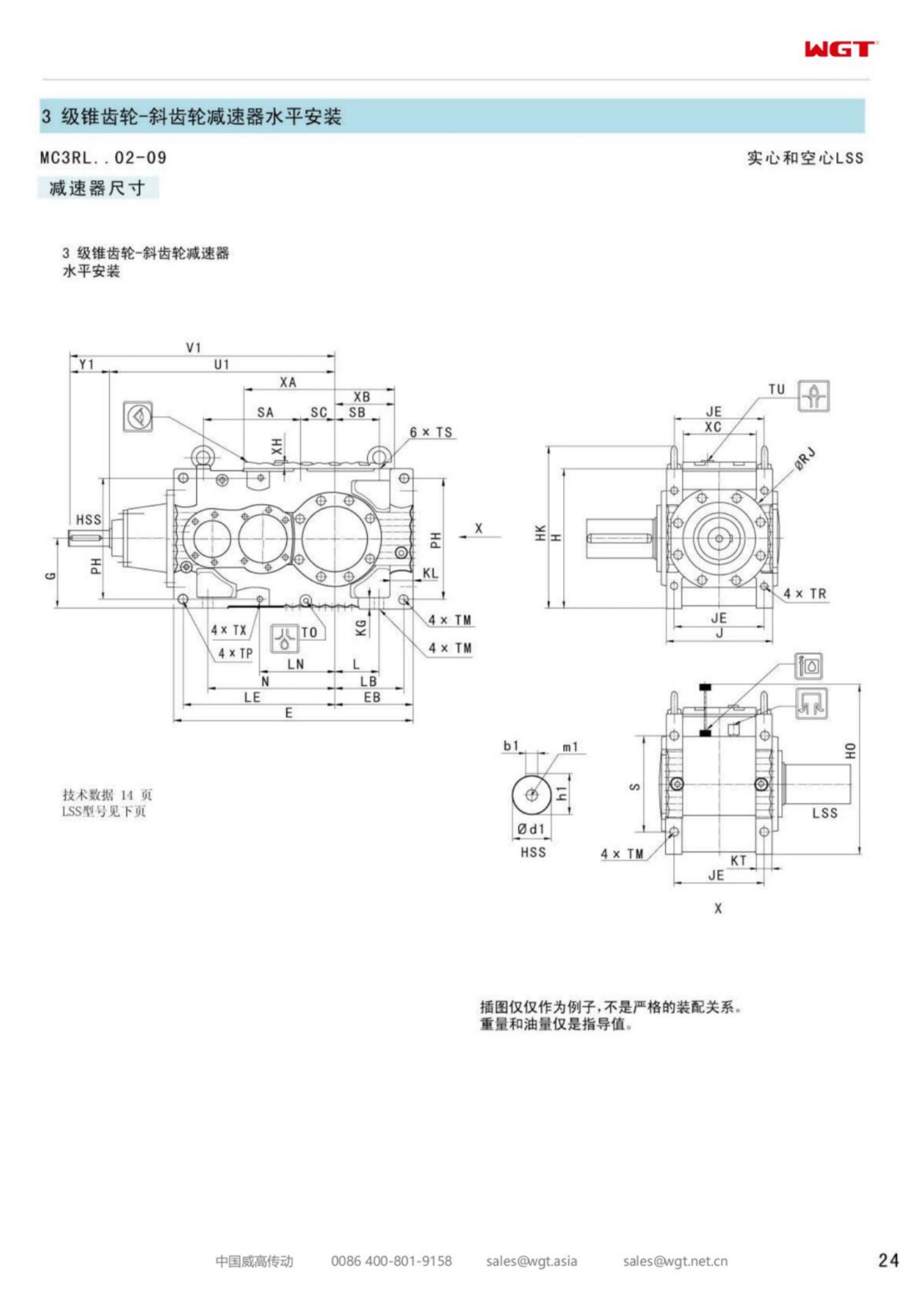
A wet flue gas desulphurisation absorber is a tank built around a hostile idea: spray a limestone slurry through flue gas, catch the sulphur, and grow gypsum in the same vessel. Everything in that tank is either dissolving, crystallising or being eroded, and the agitator that keeps the slurry from settling lives in the middle of it. The MC3PVHF02 vertical hollow shaft gearbox drives that agitator from above: three helical stages in an upright case, a hollow bore through which the agitator shaft passes, and footed pads landed on the vessel deck.
These notes walk the drive from the vessel deck down to the paddle: the mounting logic, the chemistry that reaches the gearbox, and what the FGD package should put on the order.
A Slurry That Eats Everything It Touches
Absorber slurry is sulphite and sulphate chemistry with chloride in the water and gypsum crystals doing the abrading. It finds welds, threads and every surface where the protection is thin, and it never stops working because the plant never stops.
The gearbox does not stand in the slurry, but it stands in the vapour above it, and the vapour carries the same chemistry to breathers, fasteners and cover joints. The case is specified for the atmosphere the tank makes, not for the weather outside.
What the Type String Fixes
Seven characters, seven commitments about how the drive meets the vessel.
| MC | Industrial gear unit family built for continuous plant duty |
| 3 | Three helical reductions inside one upright case |
| P | Parallel-shaft layout, input and output on parallel axes |
| V | Vertical build, output axis pointing down into the vessel |
| H | Hollow output bore, the process shaft passes through it |
| F | Footed reaction pads, bolted to the vessel bridge or plate |
| 02 | Second frame of the vertical hollow band |
Spoken aloud: a three-stage industrial unit, parallel-shaft, vertical, hollow output bore, footed pads, second frame of the vertical hollow band.
Why the Drive Sits Above the Absorber, Not Beside It
A side-entry agitator puts a seal below the liquid line and a gearbox in the slurry's reach; the whole industry has stories about what that seal does when it weeps. An overhead arrangement inverts the problem: the only thing below the deck is the shaft, and the seal that matters is at the vessel penetration where it can be seen and serviced.
The vertical build also shortens the torque path. The gearbox grips the shaft directly, so there is no coupling to align, no bedplate to grout, and no alignment figure to argue about at commissioning.
Load Paths From Paddle to Bridge
A hanging drive sends its weight and its reaction to the vessel deck through four small feet, and the deck panel under them decides whether those loads are carried or debated. A stiff plate over a structural member makes the case a quiet neighbour; a plate over an opening makes it a drum.
The reaction couple from the agitator also tries to rotate the case about the shaft axis, and the pads resist it. Bolted properly to a stiff deck with the pads bearing squarely, the drive holds position for years; bolted to a flexible plate, it walks a little every season.
Chloride, Scaling and the Bore Fit
Gypsum scales on everything, and the agitator shaft is not exempt. The bore and key see that scale from the inside: a shaft pulled for seal service returns with a crust, and the fit that slid easily at installation wants help the second time.
The practical answers are an anti-seize and a surface finish agreed at order time, plus a bore dimension checked against the actual shaft, not the drawing's hope. Both cost minutes at the works and days in the outage.
Three Stages for Deep Vessel Agitation
Absorber agitators run slow, because fast paddles in crystal-laden slurry polish the crystals and waste power. Slow paddle, deep ratio: from a four-pole motor the duty sits squarely in the three-stage band, where the reduction is shared and the case stays short enough to hang between the spray headers.
The second frame of the vertical band is where mid-size absorbers and slurry day tanks land once the paddle torque and the shaft length have had their say.
Keeping Oil Where It Belongs in an Upright Case
A vertical case puts its lower bearings at the bottom of the oil story, and the arrangement must keep those bearings fed without letting the top run dry or the bottom seal swim. The manufacturer's internal baffling does that; the installer's job is simply not to defeat it with an off-level mounting.
Level is checked with the pads shimmed under real load, and it is re-checked after the first thermal cycle of the vessel. A case two degrees out of level will say so within a year, in oil on the deck.
Seals Against Slurry Vapour and Wash Water
Above the slurry the atmosphere is warm, wet and acidic; below the deck the wash water arrives on schedule. The case sees both, and its breather is the door both would use.
A breather piped to clean air, a case finish specified for the vapour, and output-side sealing arranged for the shaft that passes through the bore are the three lines that decide whether the drive looks new or looks tired at the first major outage.
The Bore, the Key and the Shaft Tolerance
The hollow bore is the interface, and the interface is where vertical hollow drives succeed or disappoint. The bore diameter, the key section and the shaft's finish must agree with each other, and the agreement must be checked with the actual shaft, because the agitator vendor and the gearbox vendor each drew half of it.
One dimensioned sketch, agreed by both vendors before order, is the whole discipline. It prevents the outage conversation that begins with the words "the shaft is a little under".
Sizing on Slurry Density and Paddle Torque
Slurry is heavier than water by a factor the plant knows precisely, and the paddle torque follows that factor. The sizing conversation starts with the agitator vendor's torque figure at design density, not with the motor's nameplate, and the service factor is argued from fouling and crystal settling rather than from averages.
Absorbers also start against settled solids after every outage. A drive sized for the clean tank only is a drive that redoes its sizing conversation during commissioning, in front of the owner.
Access, Lifting and Vessel Top Housekeeping
The deck of an absorber is a busy place: spray headers, wash lines, instrumentation and the manways the outage crew needs. The drive has to arrive in pieces the deck crane can place, and to come off again without cutting anything that belongs to the vessel.
Lifting lugs on the case, a pad layout that leaves the manway clear, and a shaft that can pass through the bore during erection are worth as much to the schedule as any efficiency figure.
What an FGD Package Should Specify
The order that goes smoothly carries the agitator shaft diameter, surface finish and material; the paddle torque at design and fouled density; the vessel deck drawing with the pad position; the chloride level and the wash-down practice; motor frame and speed; and the site's ambient for the oil selection.
Send the sketch of the shaft-bore interface with the rest. It is the one page both vendors will read first.
Limestone slurry, chloride and gypsum crystals - three stages turn the agitator above the absorber:
- Absorber agitator at a wet flue gas desulphurisation scrubber
- Limestone slurry hold tank mixer at a power station
- Gypsum dewatering feed tank agitator
- Oxidation zone mixing in an absorber vessel
- Limestone slurry day tank agitation
- Waste water slurry mixer at a flue gas plant
Field Applications
Airport baggage conveyor
An airport baggage-handling integrator uses reducers on check-in conveyors. Thousands of start-stop cycles a day are absorbed without overheating, and the low noise level matters in a public terminal.
Quarry primary crusher
A quarry operator fits industrial gear units on its primary jaw crusher feeders. The shock of rock dumped straight from the haul truck is covered by the service factor, and the cast-iron housing shrugs off years of dust and vibration.
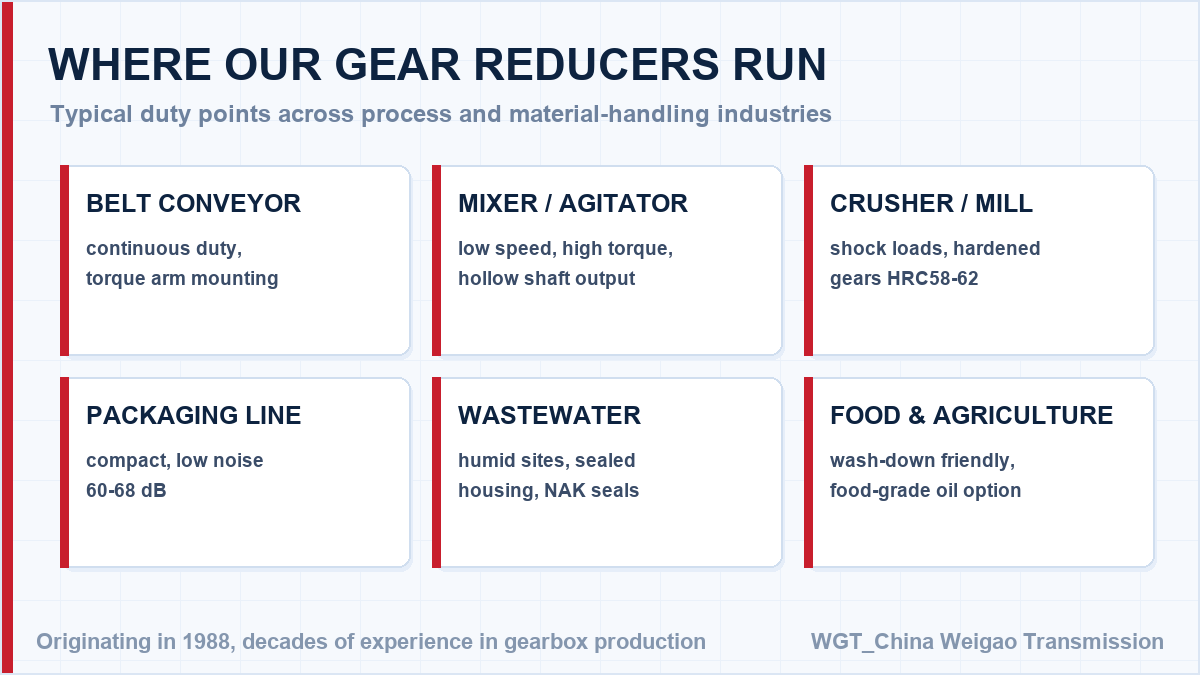
![where gear reducers are used in industry]()
Where these units are installed across industry.
Selection Example: Absorber agitator at a wet flue gas desulphurisation scrubber
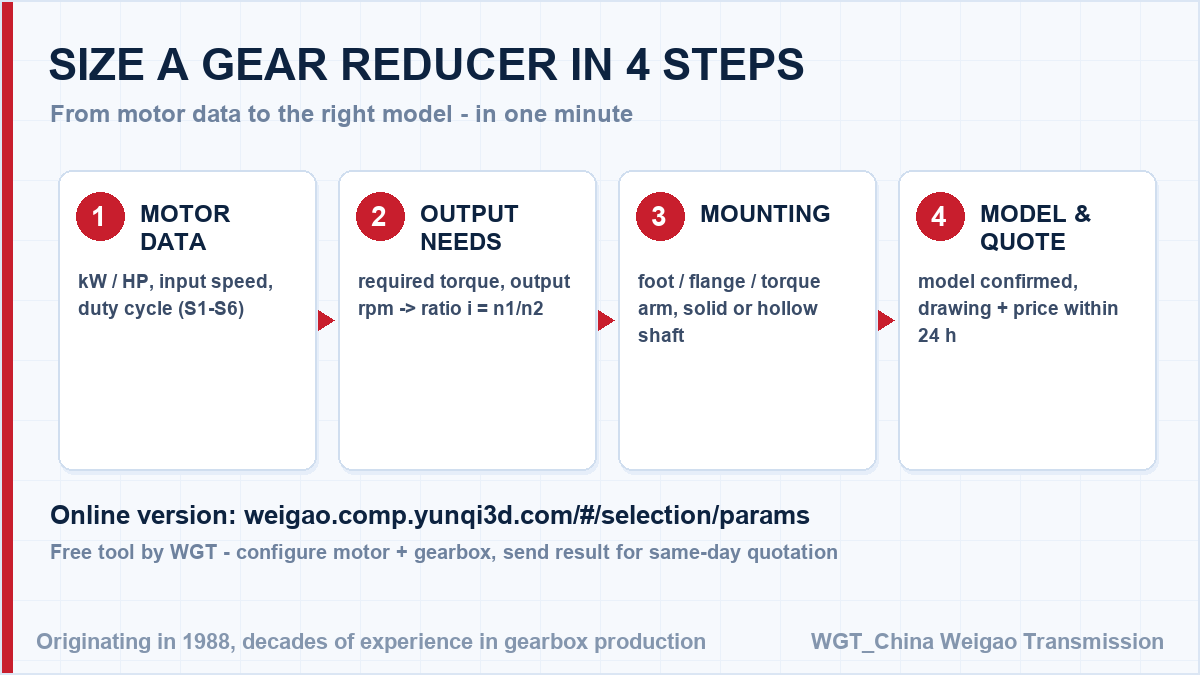
Take a 15 kW motor at 1465 rpm turning the absorber paddle at 28 rpm. The ratio follows directly: 1465 / 28 = 52.3, so a ratio near i=52 is drawn from the three-stage vertical band, and the frame is confirmed against a start with gypsum settled after an outage rather than against the running slurry torque. In this case frame two hangs over the vessel on footed pads bolted to a stiff deck panel, passes the agitator shaft through a dimensioned hollow bore, and specifies a breather piped clear of the chloride vapour layer. Once the ratio is fixed, check the required output torque against the rating table with the service factor applied - that is what decides the frame, not the ratio alone.
![gearbox selection guide: speed, torque, service factor]()
How a ratio and a frame size are determined, step by step.
Frame Sizes and Typical Duties
| Model | Centre distance | Output | Typical duty |
|---|
| M3PSF50 | size 50 | solid shaft, foot | conveyors, feeders |
| M3PSF60 | size 60 | solid shaft, foot | crushers, mixers |
| M3PSF70 | size 70 | solid shaft, foot | ball mills, shredders |
| M3PSF80 | size 80 | solid shaft, foot | kilns, heavy conveyors |
| M3PSF90 | size 90 | solid shaft, foot | mill and kiln drives |
| M3RSF50 | size 50 | solid shaft, foot, right-angle | inclined conveyors, elevators |
| M3RSF60 | size 60 | solid shaft, foot, right-angle | screw classifiers, feeders |
| M3RHF70 | size 70 | hollow shaft, foot, right-angle | agitators, drum drives |
| M3PHT80 | size 80 | hollow shaft, torque arm, parallel | shaft-mounted conveyors |
| M3RHT90 | size 90 | hollow shaft, torque arm, right-angle | heavy shaft-mounted drives |
The size number is the key dimension that steps up torque capacity through the range: 50 to 90 in horizontal builds, 10 to 90 in vertical builds. Gearing philosophy is shared across the family.
Gearbox Selection Support from the Factory Floor
Talk to the people who build it. Engineers can size the unit themselves in the WGT Motor & Gearbox Online Selection System - input speed, torque and duty, get the model instantly.
Our technical team sits beside the assembly line, not in a call centre. Describe the application in your own words - we will tell you honestly whether this series is right, or point you to a better frame or a different series. Looking for a gearbox for belt conveyor? Tell us the duty point and we will confirm the model in writing.
Common Questions from Buyers
What are the delivery lead times and shipping terms?
Standard lead time is 5-10 weeks ex-works, with popular ratios often available sooner. We quote EXW, FOB NINGBO / SHANGHAI or CIF, and urgent units can be air-freighted within 72 hours of payment.
What materials are used for the gears and shafts?
Gears are 20CrMnTi alloy steel, case-carburised to HRC58-62 over a tough HRC33-40 core. Input and output shafts are 42CrMo, quenched and tempered to HRC25-30. The housing is cast iron at HBS190-240.
Why does low backlash matter, and what is the limit?
Backlash is the small free rotation between input and output. We hold it within 20 arcmin - tight enough for indexing tables, positioning drives and reversing applications, without the cost of a precision servo gearbox.