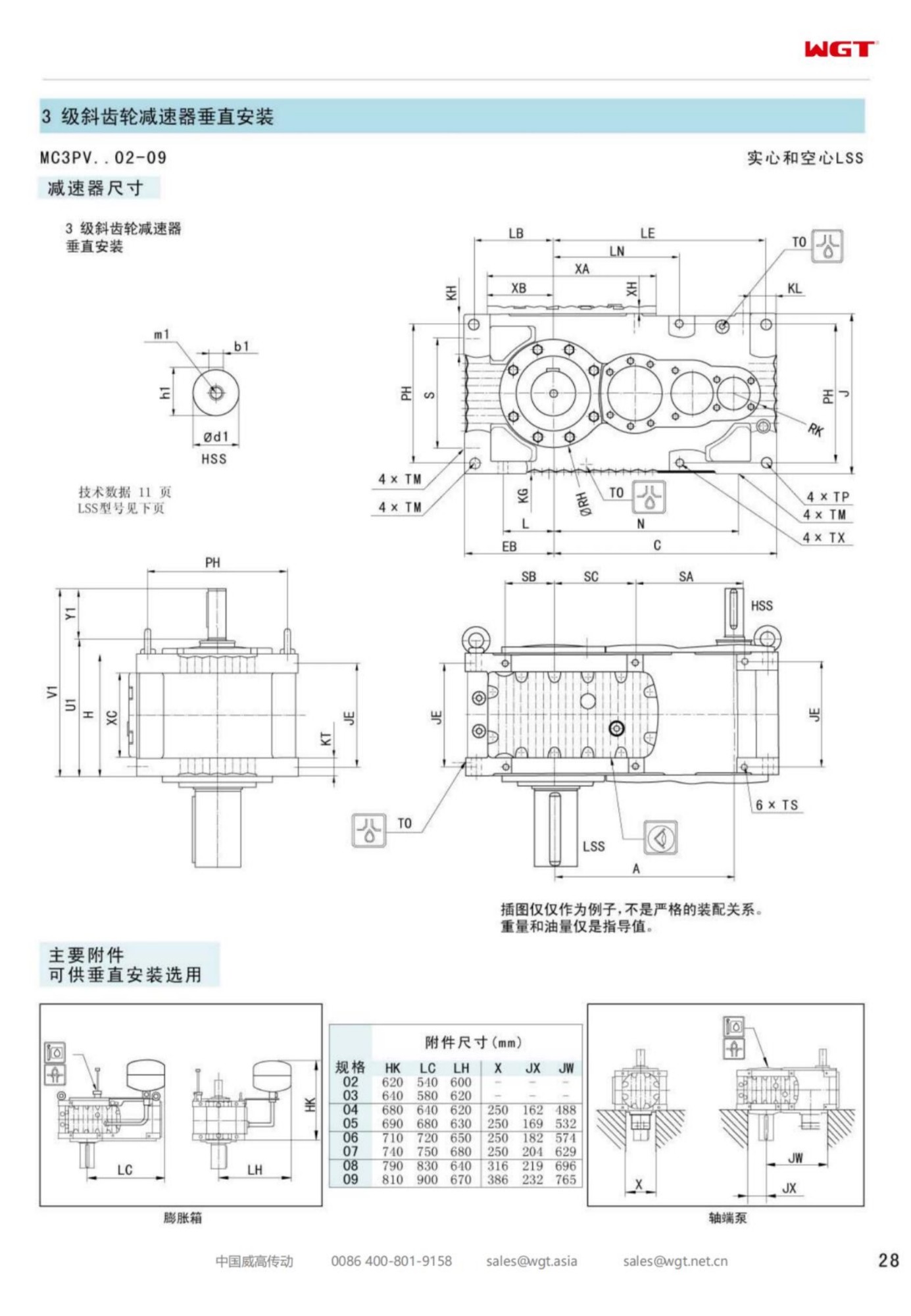
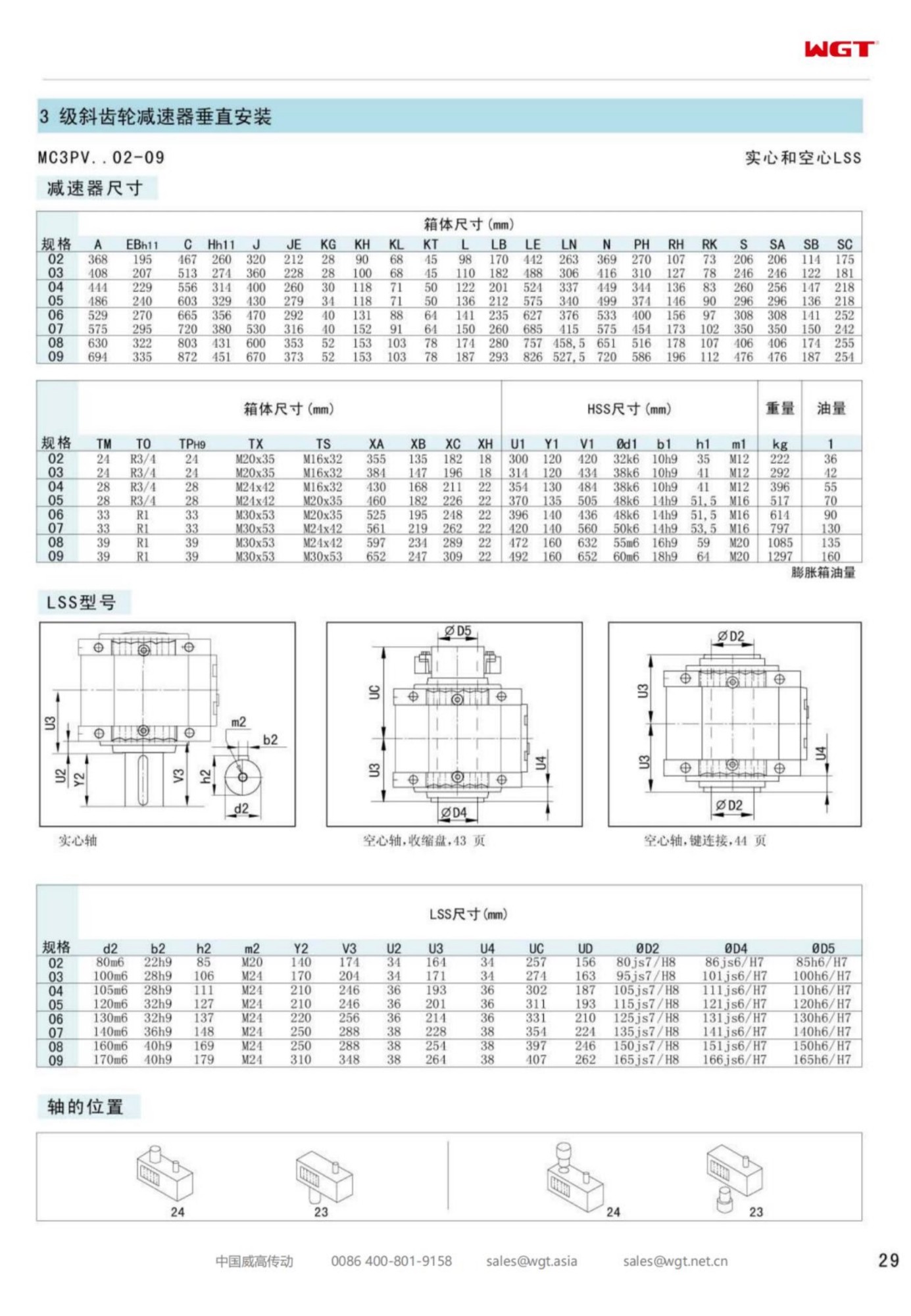
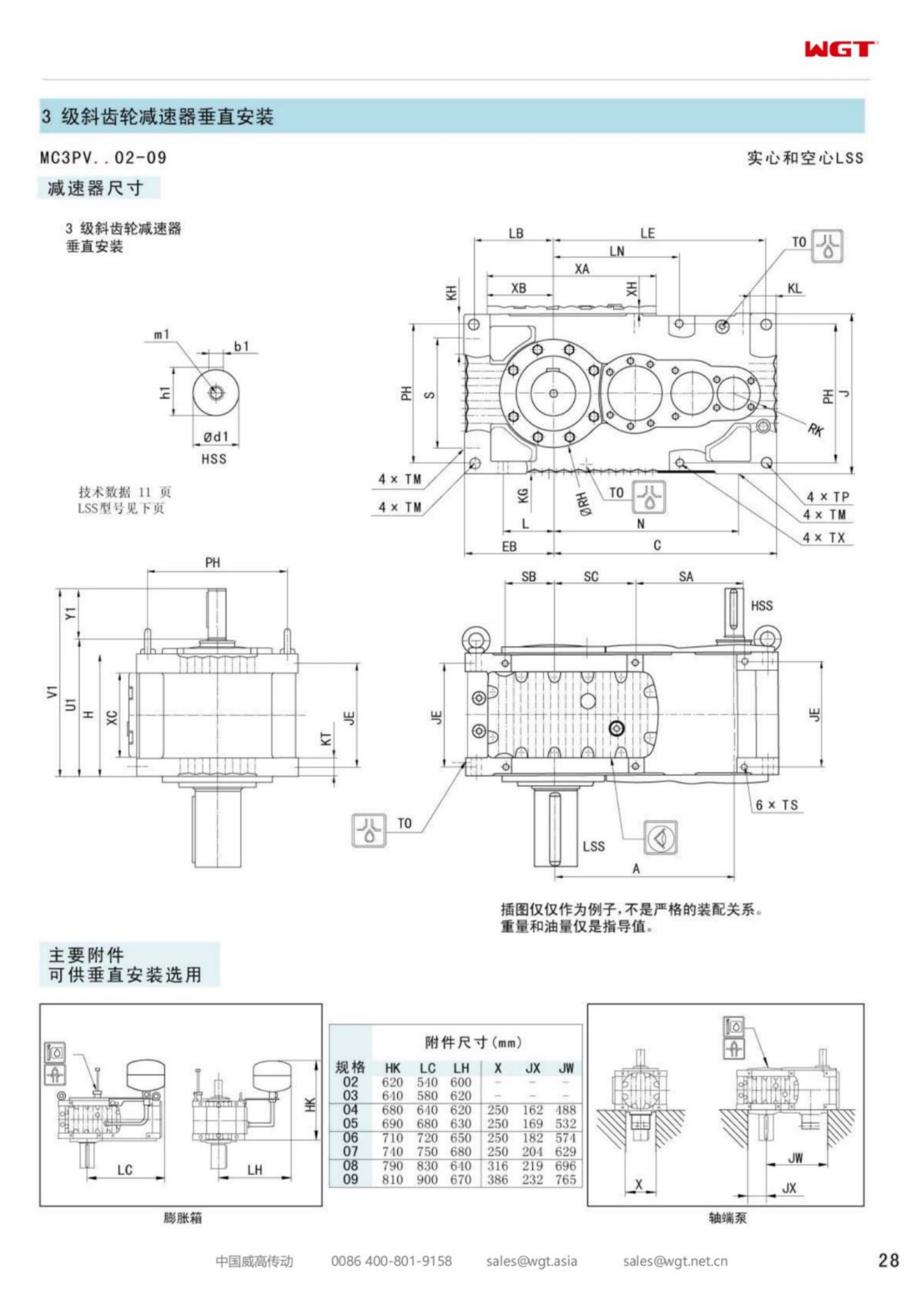
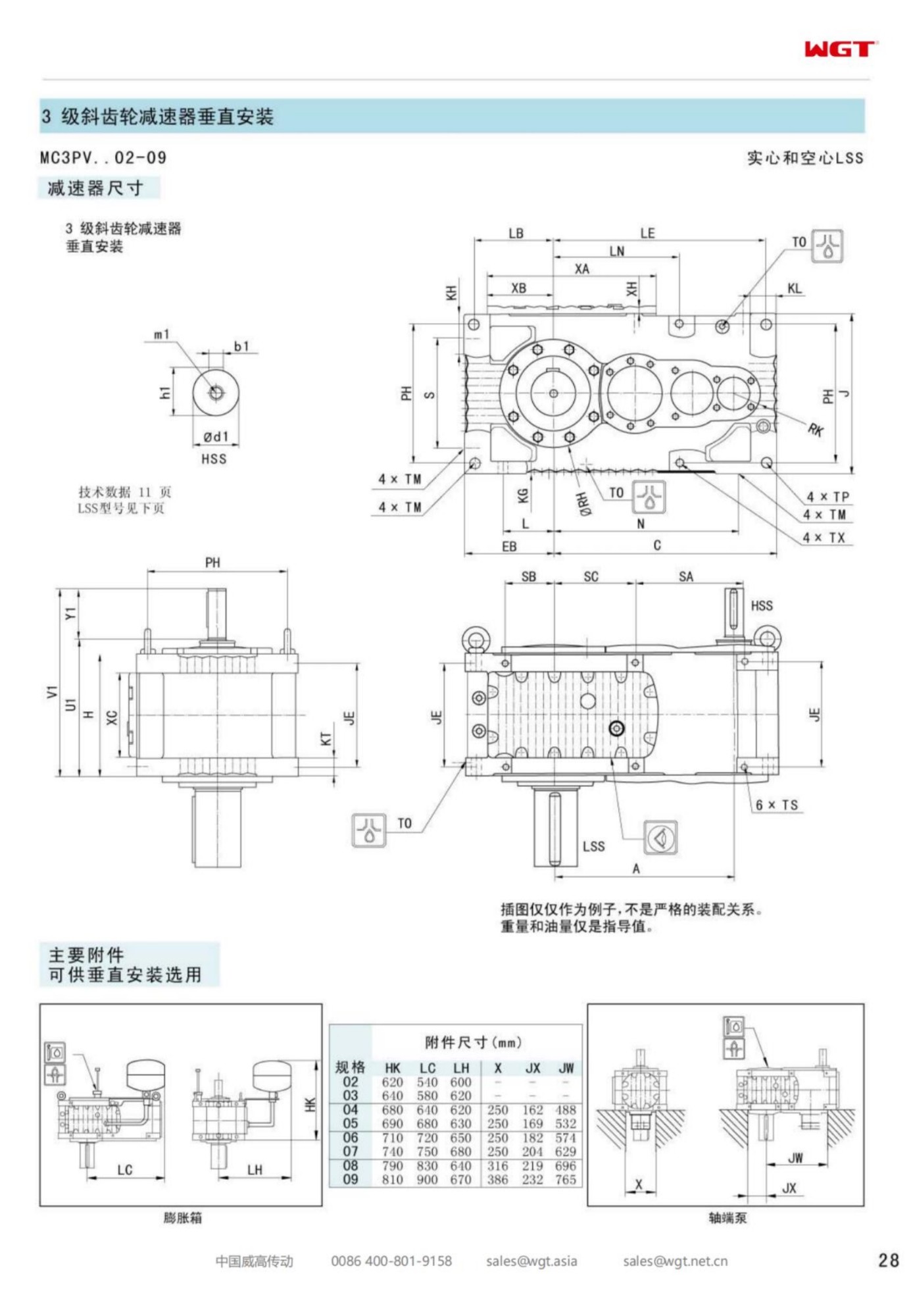
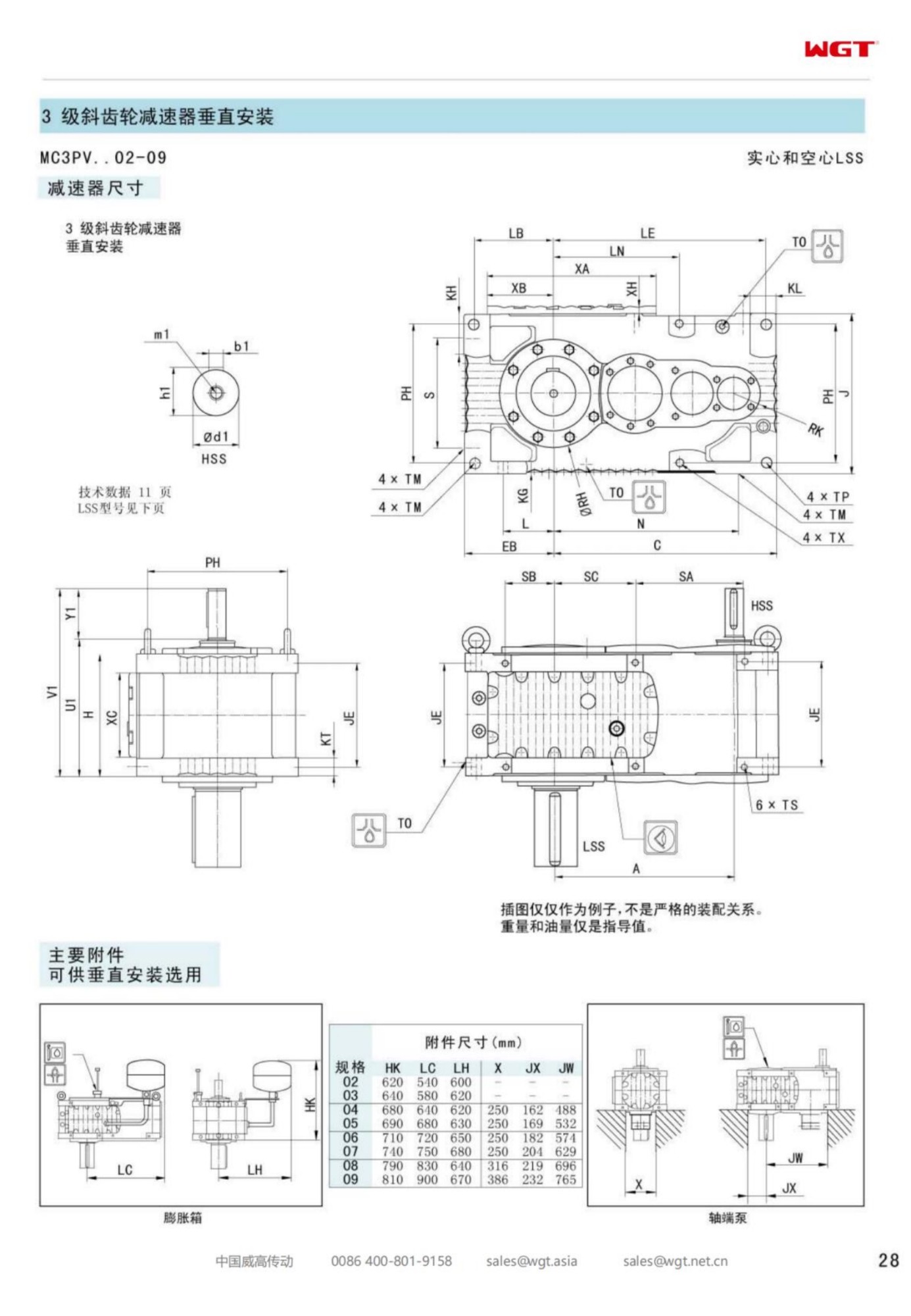
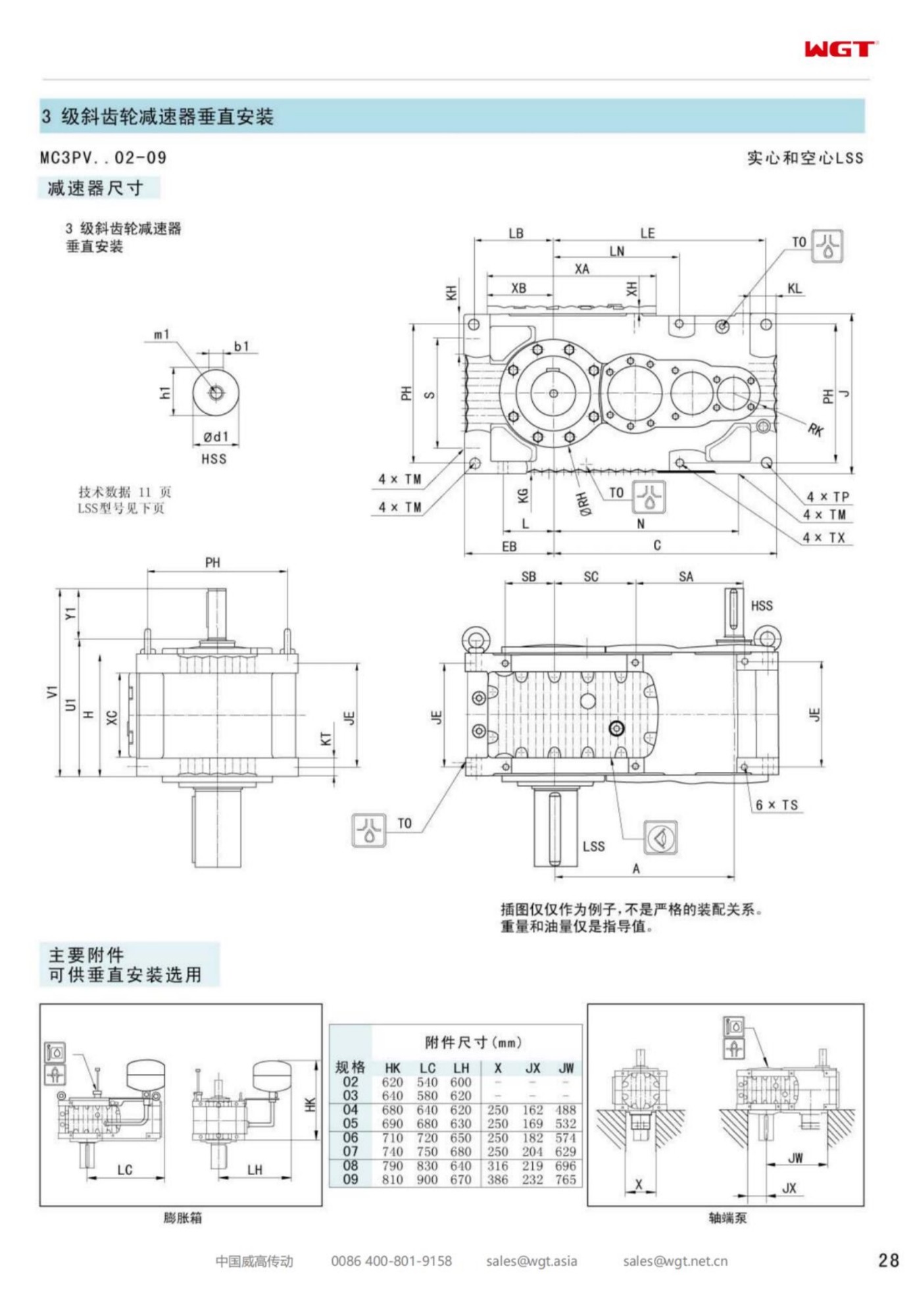
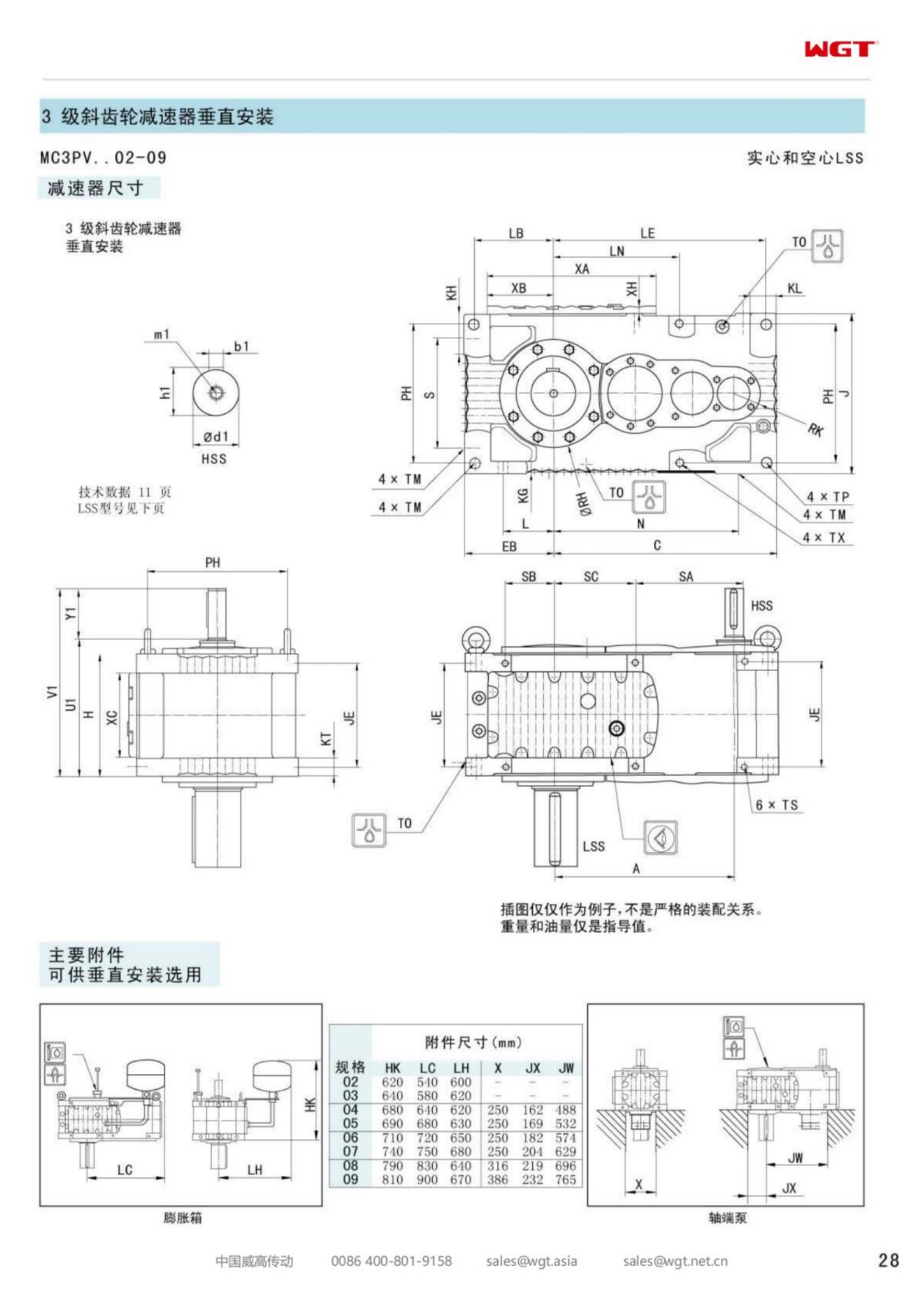
Paint is not made in a single vessel. The pigment is dispersed first into a paste so heavy it hardly pours, and only then is that paste folded into resin, filler and solvent in the let-down tank, where the batch is thinned to the consistency the filling line can handle. The MC3PVST06 vertical solid shaft gearbox drives the sweep blade in that tank: three helical reductions in an upright case, a keyed solid output coupled to the agitator shaft, and a torque arm taking the reaction into the tank steel rather than into the floor.
What follows looks at the drive from the paint hall side: the two viscosities one unit has to cover, the solvent that hangs in the air above the batch, the skin that dries on every shaft, and the figures a coatings plant should put on an enquiry.
Where Resin, Paste and Solvent Are Brought Together
Let-down is a mixing duty with a split personality. At the start of the batch the tank holds a heavy pigment paste that has to be broken down and wetted out by the incoming resin without leaving lumps against the wall or on the bottom. At the end of the batch the same tank holds a liquid thin enough to strain, and the agitator must circulate it without whipping air into it.
The two ends of that curve pull in opposite directions. A blade aggressive enough to fold paste quickly will, at the thin end, pull a vortex and entrain foam that takes hours to clear. A gentle sweep that is kind to the finished paint struggles at the thick end. The practical answer on most let-down tanks is a large slow sweep working the whole tank volume, which is exactly the duty a vertical solid shaft unit with a torque arm was built for.
Reading the Designation as a Build Sheet
Every choice that matters mechanically is already written in the type code, before any outline drawing is opened.
| MC | Industrial gear unit family built for continuous plant duty |
| 3 | Three helical reductions inside one upright case |
| P | Parallel-shaft layout, input and output on parallel axes |
| V | Vertical build, output axis pointing down into the tank |
| S | Solid output shaft, keyed and coupled to the agitator |
| T | Torque-arm reaction, no baseplate and no floor drilling |
Read in sequence: an industrial unit of the MC family, three helical stages, parallel shafts, vertical mounting with the output facing down, a solid keyed shaft, torque-arm reaction, sixth frame of the band.
A Drive Hung From the Tank, Not Bolted to the Floor
Paint halls are crowded. Pipes run at three levels, drains cross the floor, and each tank sits inside a bund that has to stay clear. Drilling anchor holes through a bund to seat a gearbox is the kind of decision that gets raised in an audit long after the installation is finished.
Hanging the drive instead removes that argument. The case is carried on the tank-top mounting, the agitator shaft takes the axial arrangement agreed on the drawing, and the reaction torque goes into an arm bolted to a beam or to the tank shell. Nothing penetrates the bund, nothing has to be shimmed to a sloping floor, and the drive can be lifted off for seal work without a baseplate coming with it.
Solvent Vapour in the Air Above the Batch
Above a let-down tank the air carries solvent, and it stays there. The vapour layer is warm, heavier than air in many cases, and it sits exactly where the motor, the terminal box and the breather are mounted.
Three specification lines decide how that ends. The motor enclosure and zone rating have to match the plant's own area assessment rather than a guess at order stage. The case finish and fastener plating decide whether the unit looks serviceable after three years or is streaked with rust after one. And the breather position decides whether the case breathes vapour-laden air in and out with every temperature swing, which is how moisture finds its way into oil that was clean at commissioning.
Pigment That Settles Overnight
Titanium dioxide and the heavier extenders settle whenever a batch stands still. A tank that is filled on Friday and emptied on Monday holds, at the bottom, a layer far denser than anything the running duty ever produces.
Starting in that layer is the hardest thing the drive will ever do. Breakaway torque on a settled pigment bed can be several times the running torque, and it arrives as a shock in the first seconds rather than as a steady load. Two things follow. The frame is normally chosen with restart in mind, not just running power. And the agitator is usually built with a sweep blade running close to the bottom dish, so that the settled layer is disturbed by a slow large-diameter movement instead of being attacked by a small fast impeller buried in it.
Three Reductions Between Motor and Sweep
A let-down sweep turns slowly. Figures in the range of twenty to sixty revolutions per minute are ordinary, which from a four-pole motor at about 1450 rpm asks for a ratio somewhere between twenty-five and seventy.
Three helical stages reach that band with each mesh carrying a comfortable share of the load, and they do it in an upright case that stands over the tank rather than beside it. Efficiency is the quieter argument: a helical mesh loses roughly one to two percent per stage to sliding and churning, so a three-stage train still delivers the great majority of the motor's power to the blade. In a hall where the motor is already working in a solvent-laden atmosphere, every point of loss shows up twice - once on the electricity bill and once as heat in a room nobody wants warmer.
Seal Faces Against Resin Skin and Wash Water
The output seal on a paint agitator lives between two enemies. Above it, resin and paste dry into a skin on the rotating shaft, and that skin is abrasive once it cures. Below and around it, the wash-down hose arrives at the end of every batch with water and detergent.
A protected seal entry with a drip lip, a shaft surface that sheds product rather than collecting it, and a wipe-down of the exposed shaft at each batch change keep both of those away from the lip. It is a five-minute routine that decides whether the seal lasts a campaign or a quarter, and it belongs in the operating instruction rather than in someone's memory.
Cable entries belong on the same list. Glands facing away from the wash direction, a terminal box lid that seals properly, and covers that shed water instead of holding it are small choices at order stage and large ones at the first annual shutdown.
Reaction Torque Into a Steel Mezzanine
The torque arm does a simple job with a simple relationship behind it. Reaction force at the arm end equals torque divided by arm length, so doubling the arm length halves the load on the bolt group and on the beam it bites into.
That matters on a paint mezzanine, where the steel is usually sized for walkway loads and pipe hangers, not for a gearbox twisting against it. Telling the gearbox supplier the beam section and the arm length available at enquiry stage lets the two be matched on paper. Finding out afterwards that the arm lands on a handrail post is a site modification nobody enjoys.
Sizing on Paste Viscosity, Not Finished Paint
Finished paint is thin. A let-down batch at the thick end, before the last solvent addition, can be a hundred times more viscous than the product that leaves in a pail, and the agitator power draw follows viscosity closely at a given speed.
An enquiry that quotes only the finished product invites a drive sized on the easy half of the batch. The figure that belongs on the datasheet is the apparent viscosity at the heaviest stage the recipe allows, together with the specific gravity at that stage - because a tank full of dense paste weighs considerably more than the same tank full of thin enamel, and the shaft, coupling and bearings all feel that difference.
What a Coatings Plant Puts on the Enquiry
A workable enquiry carries the tank diameter and straight-side height, the dish or cone at the bottom, the blade type and diameter, the output speed wanted, the viscosity and specific gravity at the heaviest stage, the shaft length and diameter at the coupling, the beam or shell available for the torque arm, the solvent exposure and the wash-down routine as it is actually practised.
Two more lines save a round of questions: whether the tank is also used for dispersion, which raises the power requirement sharply, and whether batches are ever left standing over a weekend, which raises the restart requirement just as sharply. Neither is visible from a tank drawing, and both change the frame that should be quoted.
Oil Care in a Room That Smells of Solvent
An upright unit over a paint tank runs in warm air carrying solvent, and its oil sees that air every time the case breathes. Mineral oil in such a room ages faster than the same oil in a machine shop, and the first sign is usually a rise in acid value long before anything is felt through the blade.
Synthetic oil, a breather that limits the exchange of humid air, and a level check tied to the plant's cleaning rounds cover most of the risk. An oil sample once a year, taken after the unit has run and before it has cooled, tells the maintenance planner more about the gear train than any amount of listening at the case.
Frame Six as Batch Sizes Climb
The sixth frame of the vertical band sits where let-down tanks have grown past the small-batch size but still fit under a normal hall roof: a few cubic metres of paste and resin, a sweep several hundred millimetres across, a shaft long enough to need a steady arrangement rather than a stub.
Chosen on the heaviest paste rather than the finished paint, hung on a torque arm into steel that was checked for the load, and sealed against both resin skin and wash water, it becomes the part of the batch plant that nobody discusses in the morning meeting - which is the best result a gearbox can have.
Let-down sweeps that must fold paste into resin, batch after batch:
- Let-down tank agitator at a decorative paint plant
- Resin and pigment paste thinning tank mixer at a coatings works
- Batch enamel make-down tank agitator at an industrial paint factory
- Filler dispersion holding tank mixer at a paint manufacturer
- Water-based emulsion paint blending tank agitator at a coatings plant
- Primer make-up tank mixer at a marine paint works
Model Range and Centre Distances
| Model | Centre distance | Output | Typical duty |
|---|
| M3PSF50 | size 50 | solid shaft, foot | conveyors, feeders |
| M3PSF60 | size 60 | solid shaft, foot | crushers, mixers |
| M3PSF70 | size 70 | solid shaft, foot | ball mills, shredders |
| M3PSF80 | size 80 | solid shaft, foot | kilns, heavy conveyors |
| M3PSF90 | size 90 | solid shaft, foot | mill and kiln drives |
| M3RSF50 | size 50 | solid shaft, foot, right-angle | inclined conveyors, elevators |
| M3RSF60 | size 60 | solid shaft, foot, right-angle | screw classifiers, feeders |
| M3RHF70 | size 70 | hollow shaft, foot, right-angle | agitators, drum drives |
| M3PHT80 | size 80 | hollow shaft, torque arm, parallel | shaft-mounted conveyors |
| M3RHT90 | size 90 | hollow shaft, torque arm, right-angle | heavy shaft-mounted drives |
Frame sizes in this series follow a widely used industrial dimension ladder: foundations, couplings and guards of the existing installation are reused as they are.
Proven Installations
Dust-extraction fan bank
An environmental-equipment plant uses reducers on the rotary valve feeders of its dust-extraction systems. Compact size, quiet running and food-grade oil options made the approval easy.
Steel mill run-out table
On the run-out table of a small steel mill, units handle the repeated starts and stops of hot billet handling. The 42CrMo output shafts tolerate the thermal cycling, and torque-arm mounting keeps the drive clear of the roller frames.
![gearbox applications in quarry food and water plants]()
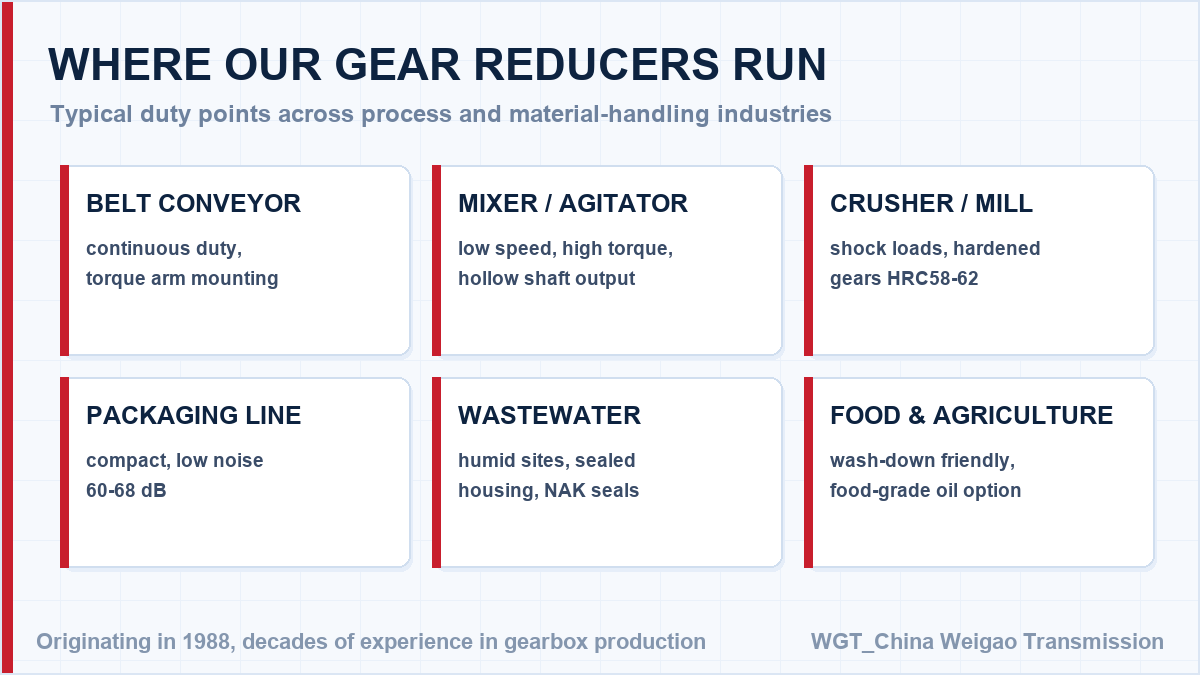
Conveyor, mixer, crusher and wastewater duties share the same gear family.
Selection Example: Let-down tank agitator at a coatings plant
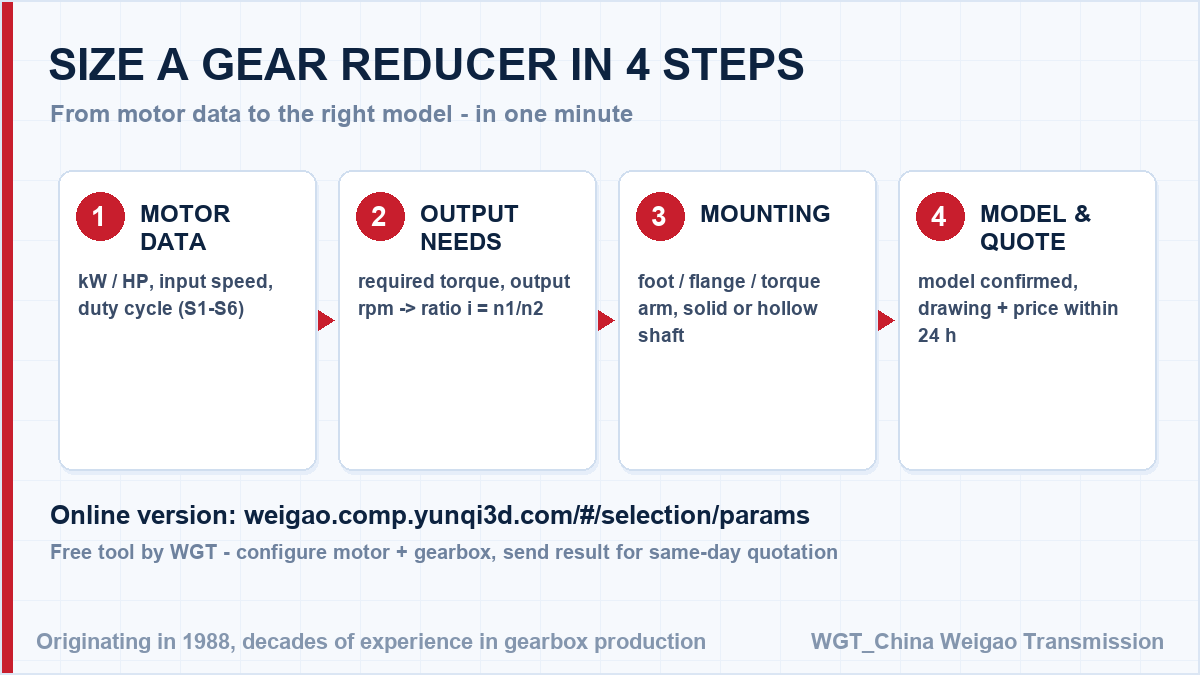
Take a 7.5 kW motor at 1450 rpm turning the sweep blade at 36 rpm. The ratio follows directly: 1450 / 36 = 40.3, so a ratio near i=40 comes from the three-stage vertical band, and the frame is sized on the breakaway torque of a settled pigment bed rather than on the thin finished paint. In this case frame six hangs its reaction on a torque arm bolted to the mezzanine steel, drives the sweep through a keyed solid output and a guarded spacer coupling, and protects the output seal against both resin skin drying on the shaft and the wash-down hose at batch change. Motor speed over target speed gives the ratio; the driven machine decides the service factor, and the two together decide the model.
![industrial gear unit sizing procedure diagram]()
The four inputs the online selector asks for.
Drive Down? Ask About Priority Builds
A drive is down right now? Work out the ratio, torque and frame size yourself with the WGT Motor & Gearbox Online Selection System, then send the result - we confirm it in writing.
Priority builds slot into the next production run, and urgent units can be air-freighted within days of payment. Describe the failure and the machine - we tell you honestly what is possible. Looking for a gear reducer for textile machinery? Tell us the duty point and we will confirm the model in writing.
FAQ: Selection, Mounting and Maintenance
Do you supply the unit with an electric motor fitted?
We deliver the bare gear unit with an input suitable for your motor, or as a complete motor-gearbox assembly aligned and tested at the works. For upgrade projects many customers keep the existing motor and order the unit alone.
How is the gear unit protected against dust and moisture?
Housings are gasket-sealed with labyrinth or lip seals at both shafts as standard. Dusty plants, washdown areas and outdoor installations are covered by coating and sealing options specified together with the order.