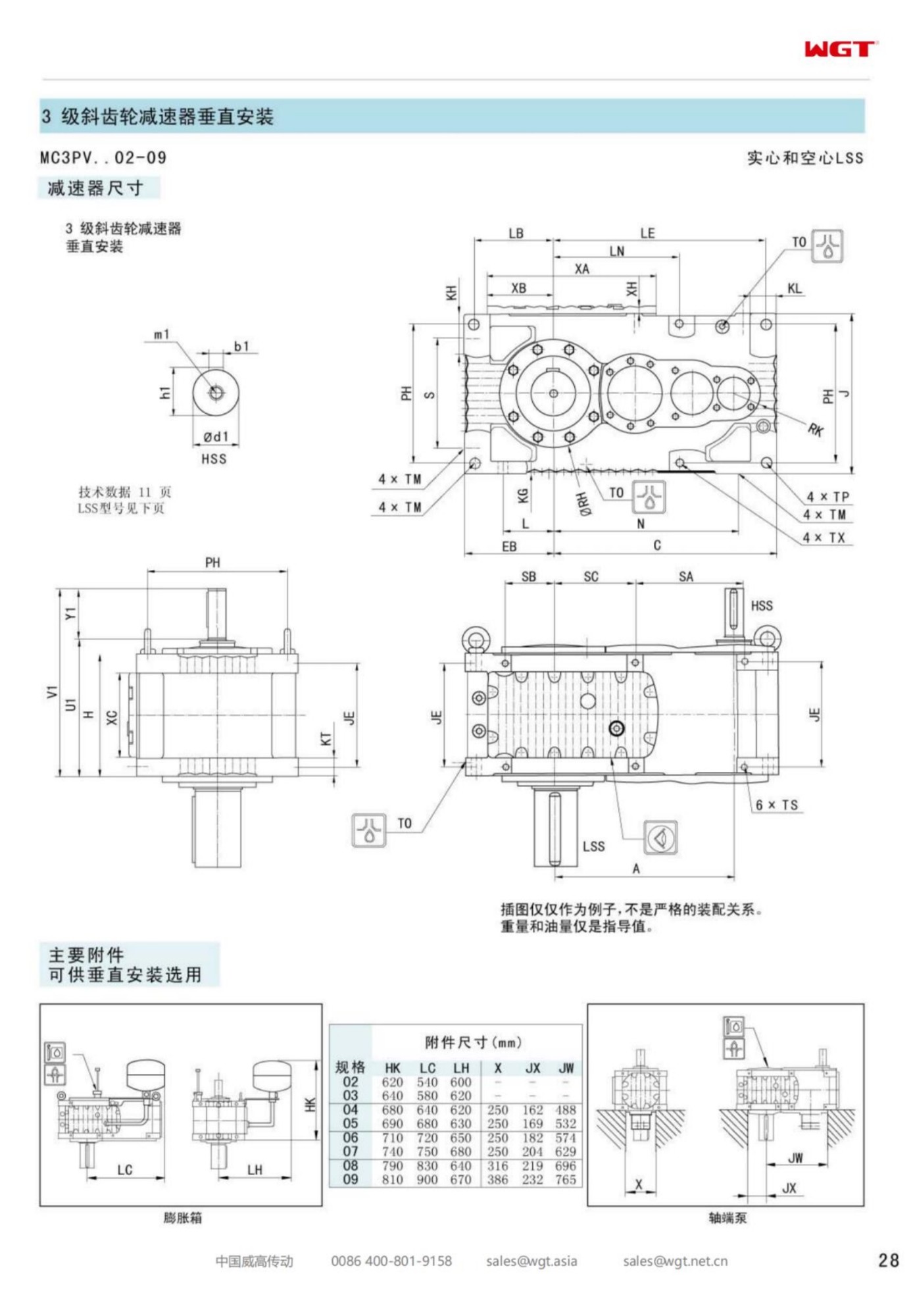
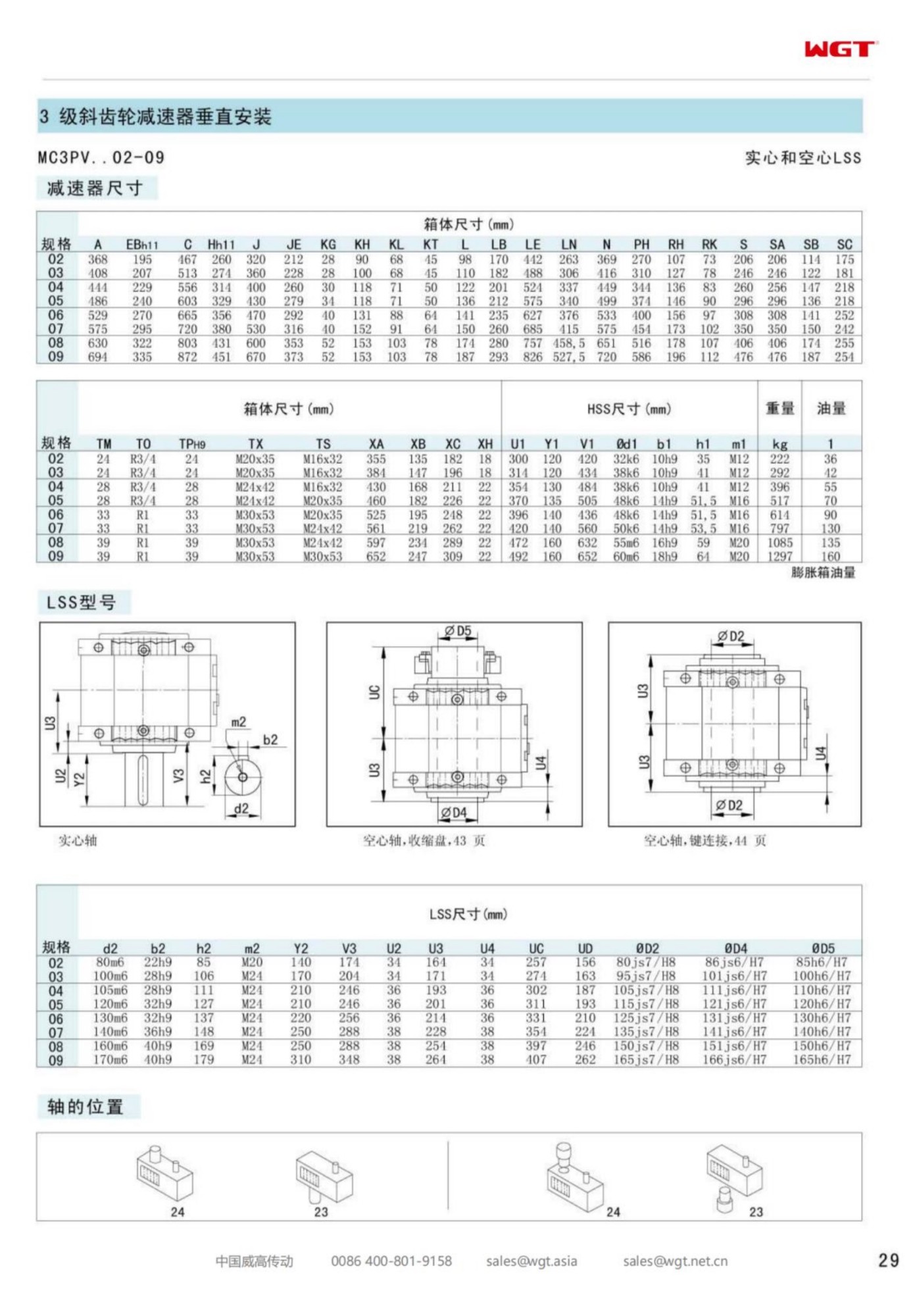
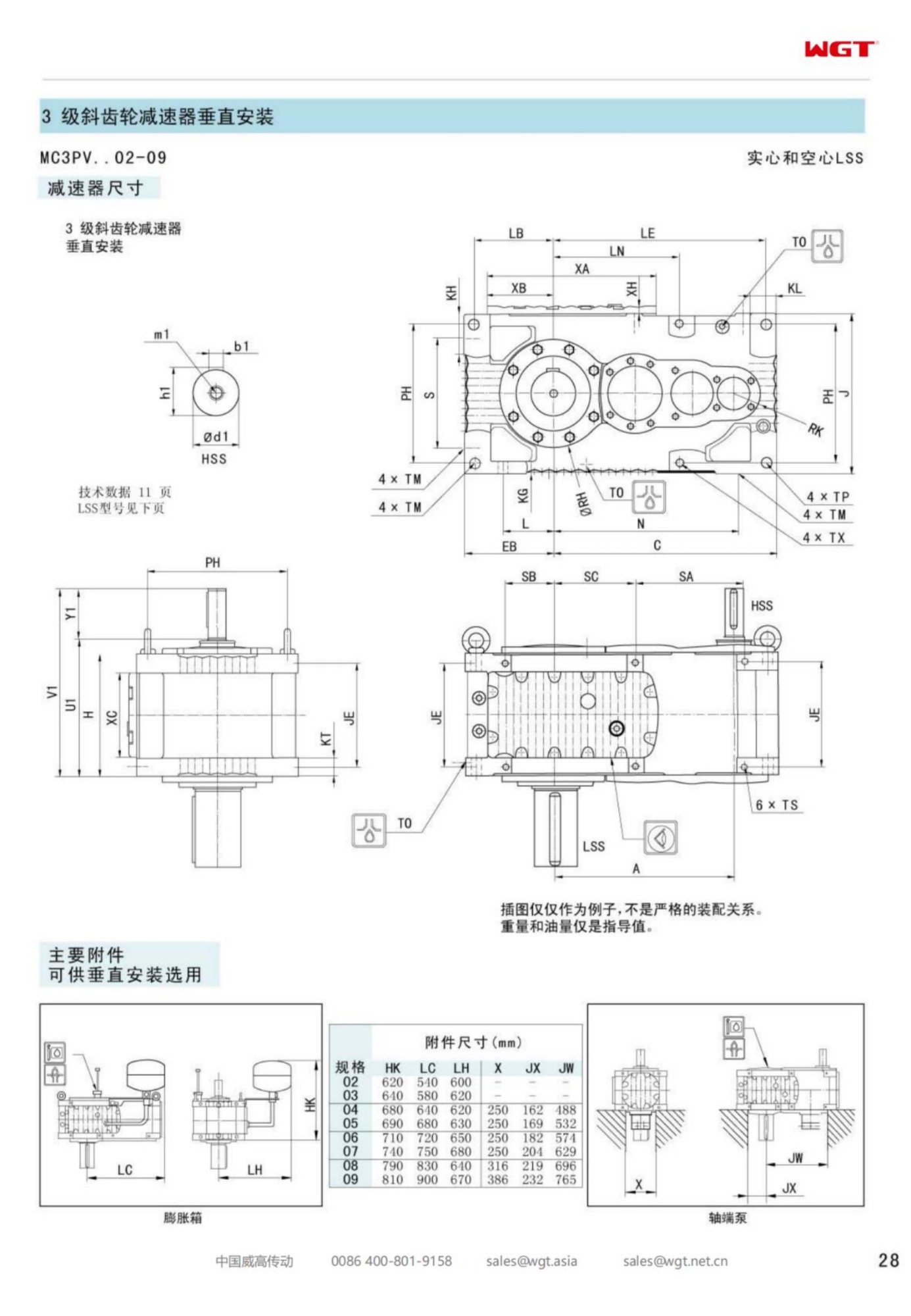
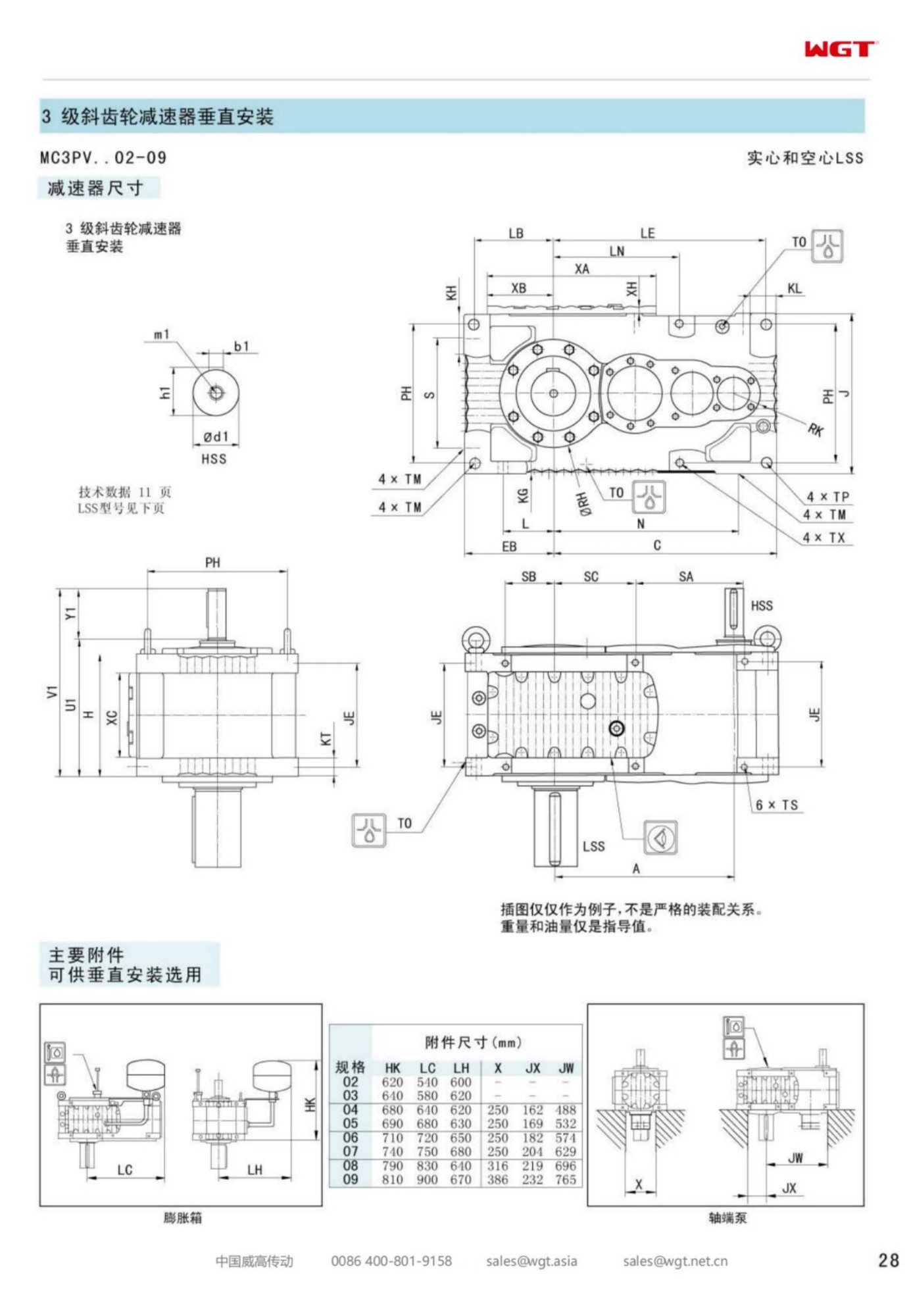
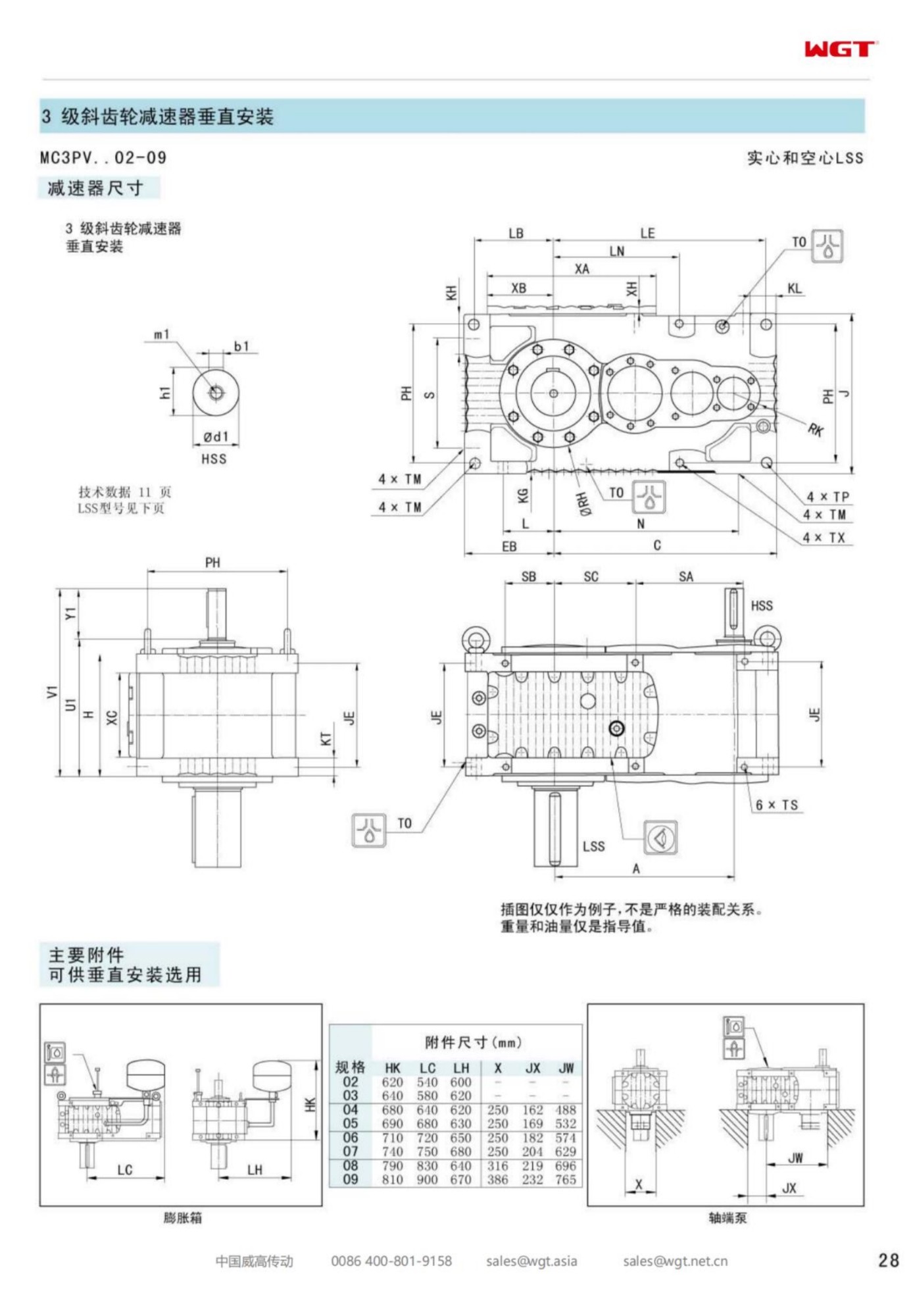
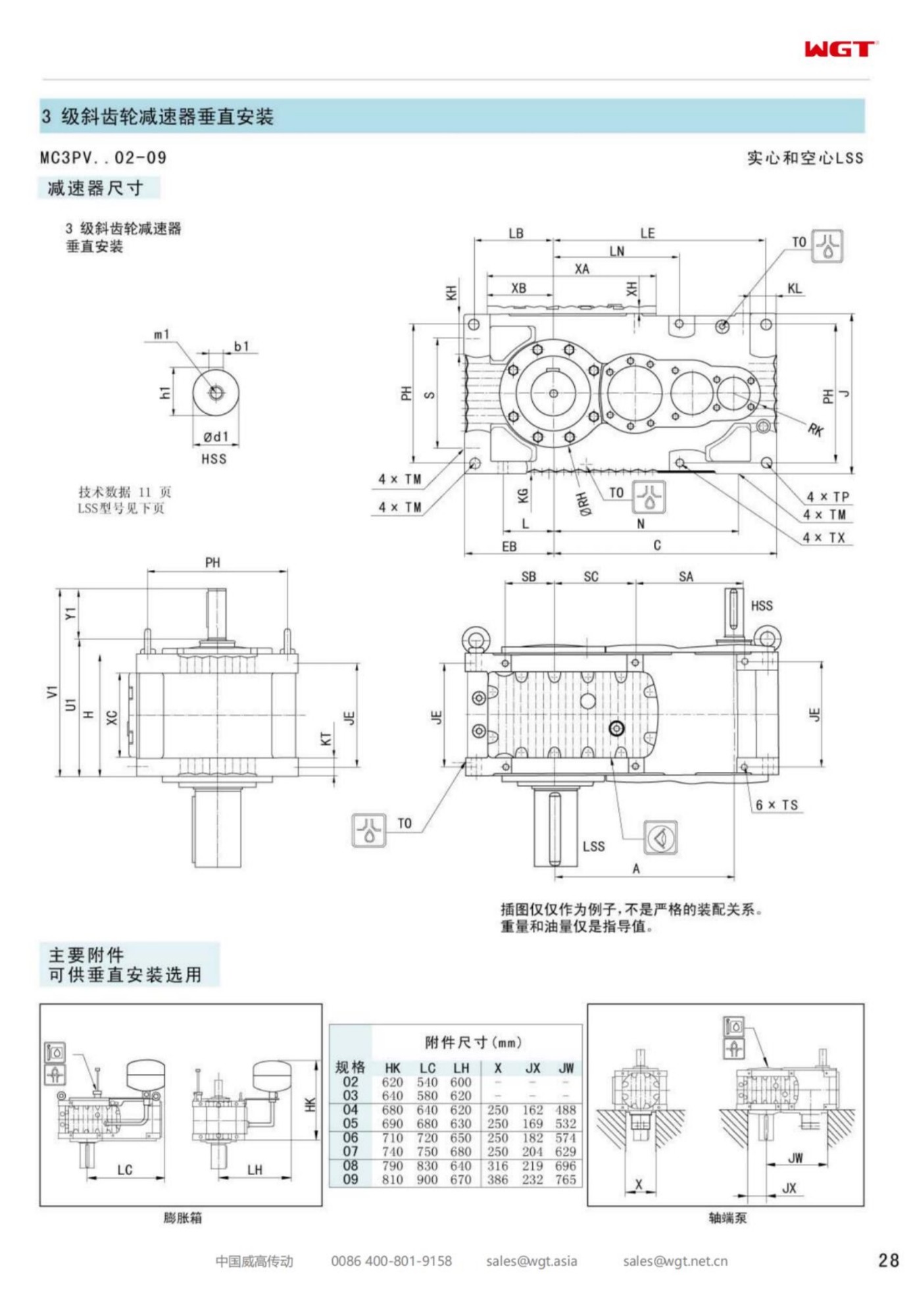
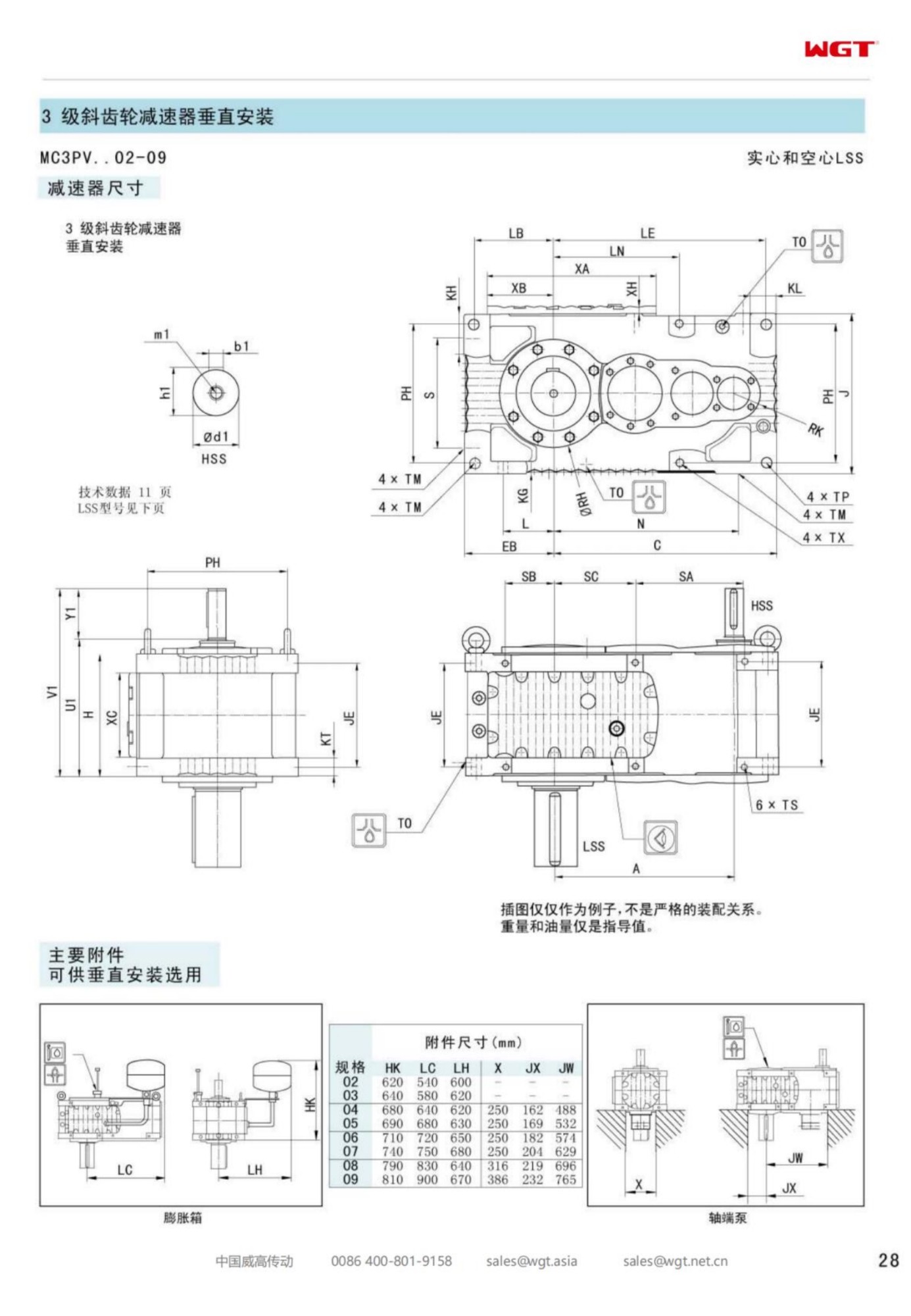
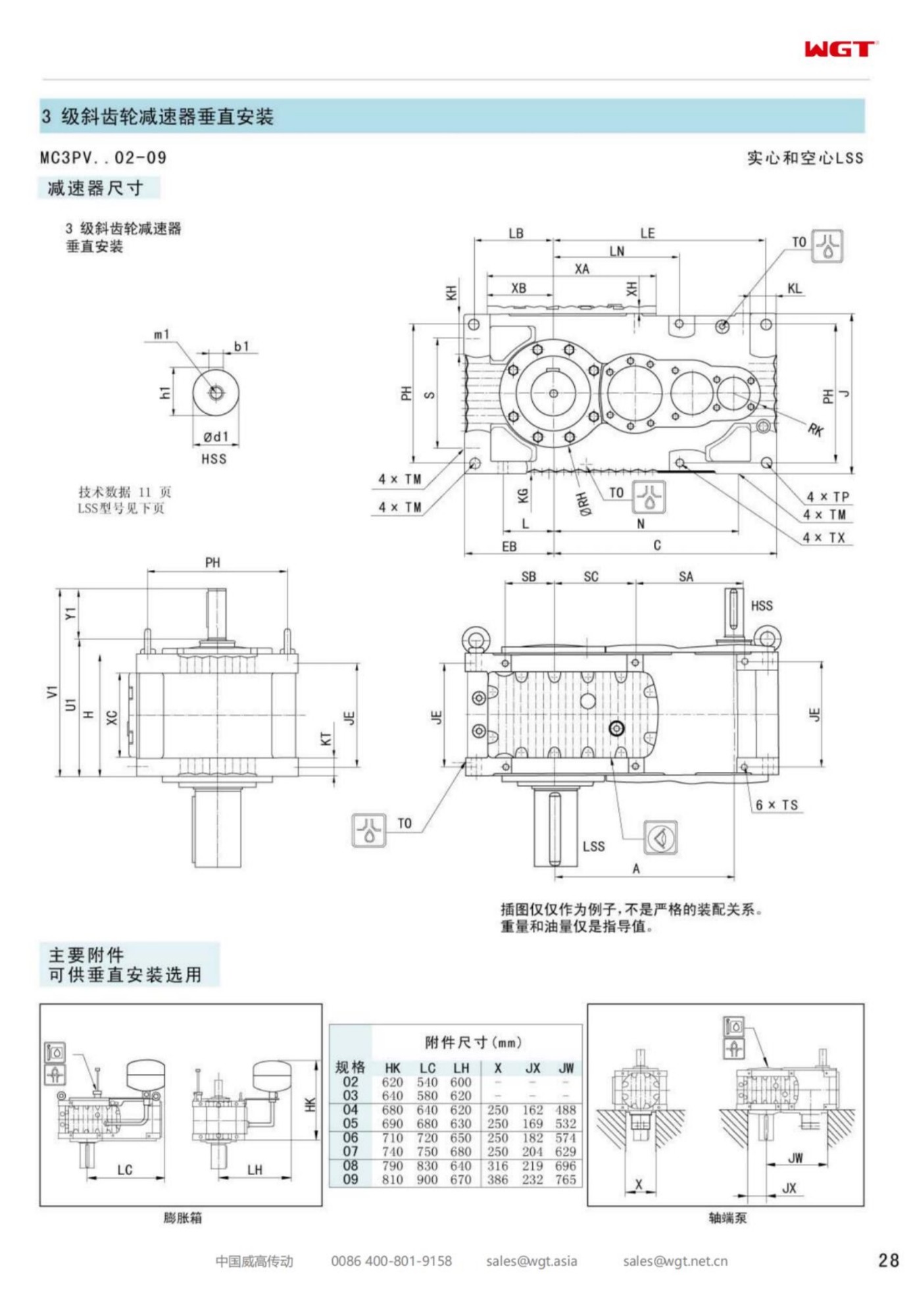
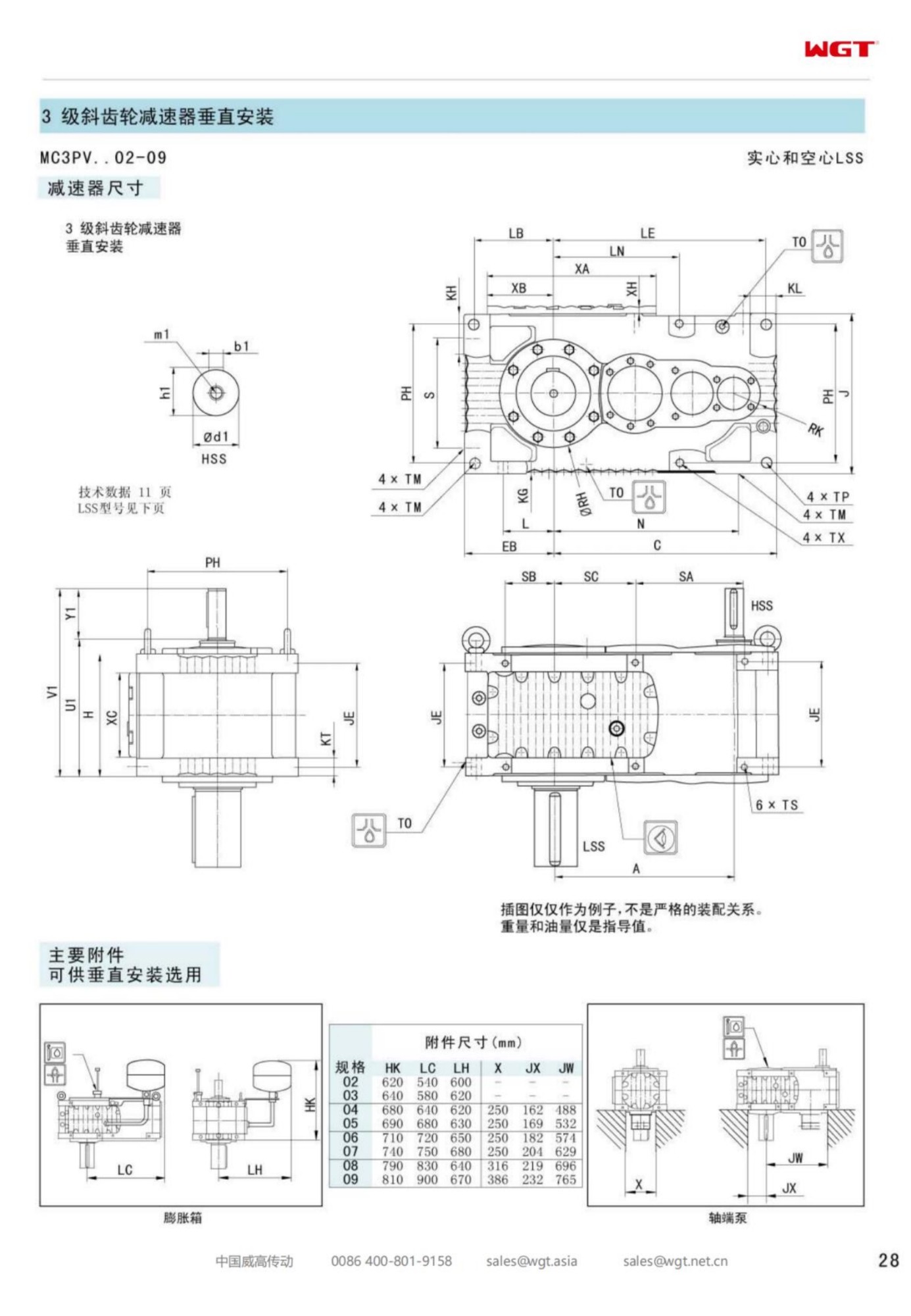
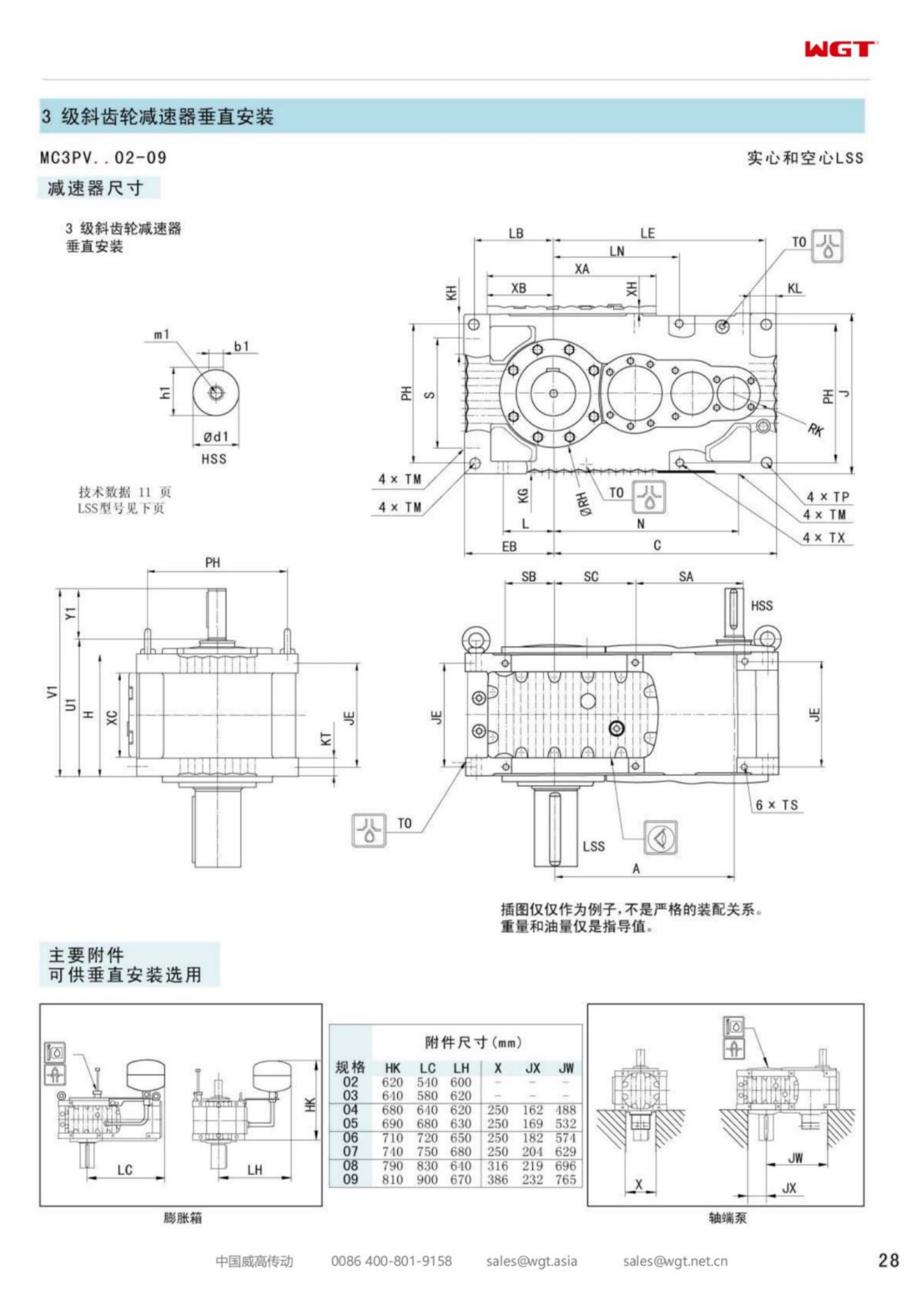
A dye house lives and dies by the strength of its stock solutions. Every shade the plant ships starts in the same place: powder or liquid dye measured into a small tank, water and assistant added, and the whole thing stirred until the colour goes into solution completely, with no specks left to land on fabric as defects. The MC3PVST05 vertical solid shaft gearbox turns the agitator in that tank: three helical stages in an upright case, a keyed solid output coupled to the agitator shaft, and a torque arm carrying the reaction into the tank structure.
These notes describe the drive as a dye kitchen sees it: the liquids it stirs, the steam and chemicals it lives with, and the figures a colour kitchen should put on an enquiry.
A Tank Where Colour Must Fully Dissolve
Dye that has not dissolved is not merely wasted. Undissolved particles pass into the feed system, settle on the first metres of fabric, and leave specks and shade deviation that no finishing step can hide. The agitator in the dissolving tank is therefore a quality instrument as much as a piece of equipment.
The duty is not violent. What the recipe needs is turnover: every particle of dye brought through the region of highest shear near the impeller, repeatedly, until nothing is left floating. A slow, steady, well-positioned agitator achieves that where a fast one only circulates the already-dissolved part.
The Type Code, Read as a Mounting Plan
The designation answers the mechanical questions before any drawing is opened.
| MC | Industrial gear unit family built for continuous plant duty |
| 3 | Three helical reductions inside one upright case |
| P | Parallel-shaft layout, input and output on parallel axes |
| V | Vertical build, output axis pointing down into the tank |
| S | Solid output shaft, keyed and coupled to the agitator |
| T | Torque-arm reaction, no baseplate and no floor drilling |
Read together: three-stage industrial unit, parallel shafts, vertical, solid keyed output, torque-arm reaction, fifth frame of the band.
Torque Arm on Existing Steel
A dye kitchen is usually a crowded room. Tanks sit close together, floors carry drains and cable trays, and nobody wants to drill new anchor holes to install one more drive. The torque arm is the answer to that constraint.
The case hangs from its mounting, the agitator shaft carries the weight arrangement agreed on the drawing, and the reaction torque is taken by an arm bolted to a nearby beam or tank shell. The floor keeps its drainage, the installation keeps its schedule, and the drive keeps its position without shimming exercises.
What Undissolved Dye Does Downstream
When a batch goes forward with specks in it, the cost is not one dyeing. The lot is stripped and re-dyed, the machine loses its slot in the schedule, and the shade kitchen loses the afternoon trying to reproduce the fault. One bad stock solution can consume a week of production.
That is why dye houses specify the dissolving agitator conservatively. The mixer that is barely adequate on the gentlest recipe will be found wanting on the densest reactive dye in the book, and the frame chosen with margin never becomes the bottleneck of the colour kitchen.
Three Stages for a Slow, Stirred Mix
Dissolving tanks turn in the tens of revolutions, not hundreds. A three-stage helical train reaches that output speed from a standard four-pole motor while keeping every mesh inside its comfortable load range, in an upright case that occupies little tank-top area.
There is also a running-cost argument. Helical gearing has no sliding contact in the mesh, so the drive wastes little of the motor's power as heat - and in a room that is already warm from steam, an efficient gearbox is one less heat source over the tank.
Steam, Humidity and Heat Over the Tank
Dissolving is done with hot water, and sometimes with live steam. The air above the tank is humid, warm and moving, and everything mounted there spends its life in that layer: motor, case, coupling and fasteners.
Motor insulation class, case finish and fastener grade are the three specification lines that decide whether the drive still looks serviceable after five years or has grown rust streaks after one. The steam should also be piped so that it never vents directly at the drive - a detail worth checking on the general arrangement before the unit is ordered.
Alkali, Salt and Dye Powder at the Seals
The chemistry over a dye tank is mild by refinery standards and hostile by gearbox standards. Reactive dyes are alkaline, exhaust recipes carry salt in serious quantities, and dye powder drifts as a fine dust wherever it is handled.
Each of those finds the output seal first. Salt crystallises in the seal lip as it dries, alkali attacks some elastomers, and dye powder packs into any gap it can reach. A protected seal entry with a drain, and a wipe-down routine for the shaft below the drive, keep that combination out of the lower bearing.
Then there is the hose. Colour kitchens change recipes constantly, and between a deep navy and a bright turquoise the tank is rinsed, the shaft is wiped, and the area under the drive is washed down with everything else. Cable entries facing away from the wash direction, a breather above the splash line, and covers that shed water rather than hold it are small decisions at order stage that decide the maintenance load for years.
Sizing on the Strongest Recipe
The viscosity of a dissolving tank is not one number. It is the number the recipe book allows at full strength, before dilution, on the day the plant runs its heaviest shade - and the agitator has to start in it, not merely run through the diluted version.
A selection built on the strongest recipe with an agreed service factor covers every batch in the book. One built on the average will pass its commissioning and fail quietly a season later, when the strongest recipe meets a cold tank and a motor already at its limit.
Coupling and Alignment Under a Guard
The solid output carries the agitator shaft through a keyed coupling, and because the drive sits above an open tank, that coupling belongs inside a guard by regulation as much as by good sense.
The practical question is access. A spacer arrangement that lets the guard come off and the coupling be inspected without lifting the drive is worth asking for explicitly, because the alternative is an alignment check that never happens - until a worn coupling announces itself as vibration in the tank structure.
Lubrication Where Steam Never Stops
A dye kitchen runs long campaigns. The air stays warm and wet through them, and a gearbox standing in that air works hotter than the same case in a dry machine hall - the oil sees the difference before anything else does.
Oil chosen for the real ambient, a breather that keeps humid air out of the case, and a level check scheduled with the colour kitchen's cleaning rounds keep the train fed without making oil care a project. Synthetic oil usually pays for itself in rooms like these.
What a Colour Kitchen Should Send
A useful enquiry carries the tank volume and geometry, the dye types and the salt loads the recipes use, the impeller type and diameter, the output speed wanted, the shaft length and diameter, the beam or shell the torque arm will bolt to, and the wash-down routine as it is actually practised.
It also helps to know whether the plant dissolves in one concentrated tank and dilutes downstream, or makes each batch at working strength. The first duty is far more viscous than the second, and the answer moves the frame selection more than any other single line.
Frame Five on the Dye House Floor
The fifth frame of the vertical band sits in the middle of the range, where stock tanks are big enough to need a real drive but small enough that the whole unit should still be lifted out by one crane pass.
Chosen on the strongest recipe, hung on a torque arm into real steel, and sealed for salt, alkali and steam, it is the kind of drive a colour kitchen stops noticing - which, in a room where every batch is checked by eye, is exactly what equipment should be.
Dye powders that must go into solution completely, batch after batch:
- Dye dissolving tank agitator at a textile dyeing mill
- Stock colour makedown tank mixer at a dye house
- Reactive dye dissolution tank agitator at a fabric mill
- Print paste mixing tank agitator at a textile printing works
- Pad liquor make-up tank mixer on a continuous dye range
- Chemical dosing tank mixer at a yarn dyeing plant
Field Applications
Grain terminal elevators
A grain terminal powers its bucket elevators with gear reducers. The anti-run-back option holds the loaded buckets during power cuts, and standard interface dimensions meant the old foundations were reused as they were.
Pallet lift in a warehouse
A logistics integrator selected units for pallet lifts. The hollow output bore carries the lift screw directly, and one year of three-shift operation has passed without a single seal replacement.
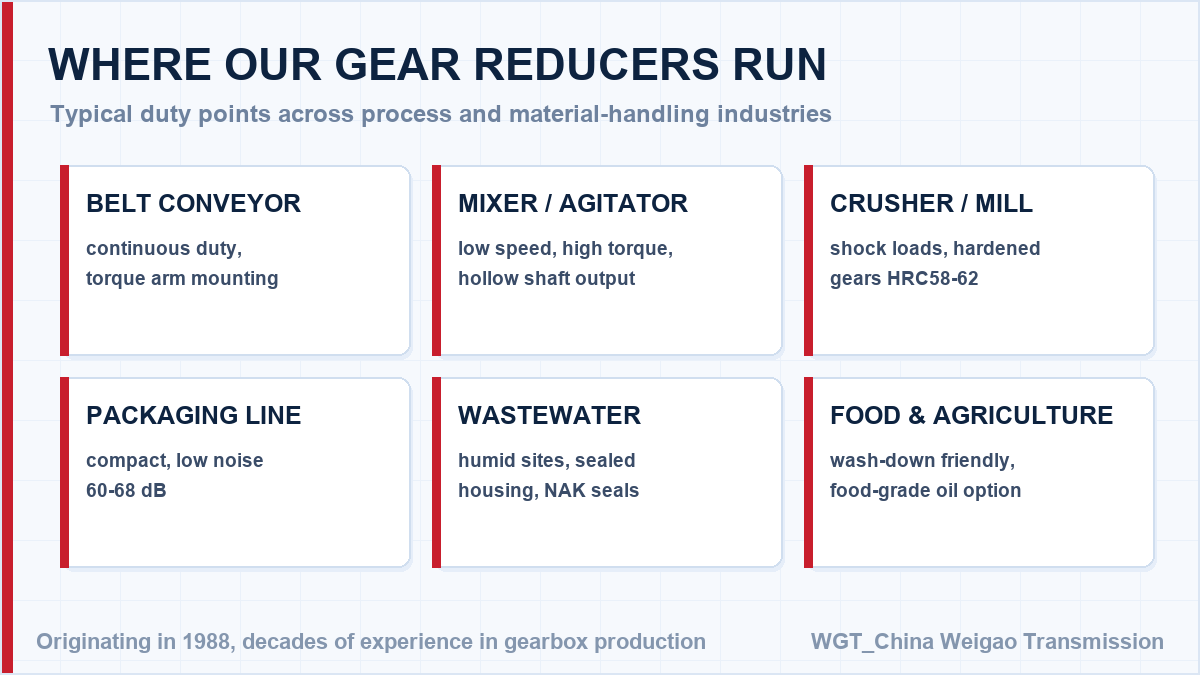
![where gear reducers are used in industry]()
Where these units are installed across industry.
Selection Example: Dye dissolving tank agitator at a textile dyeing mill
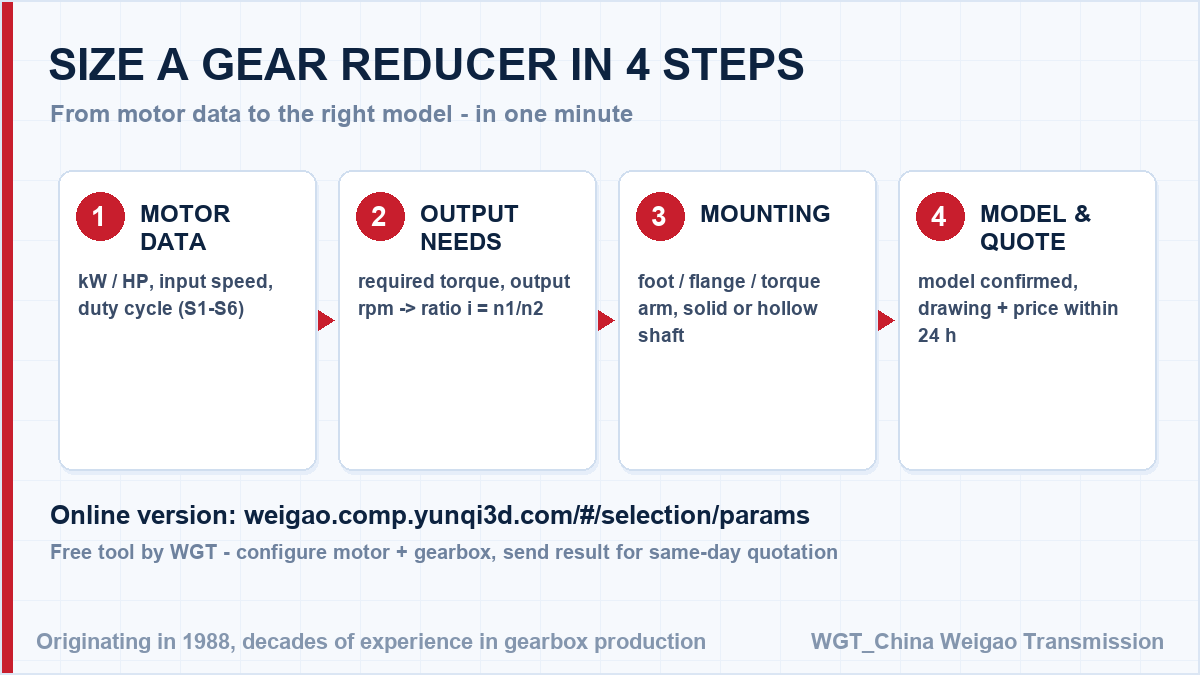
Take a 5.5 kW motor at 1440 rpm turning the dissolver impeller at 42 rpm. The ratio follows directly: 1440 / 42 = 34.3, so a ratio near i=34 comes from the three-stage vertical band, and the frame is sized on the viscosity of the strongest stock colour the recipe book allows rather than on the diluted working strength. In this case frame five hangs its reaction on a torque arm bolted to an existing beam, drives the agitator through a keyed solid output and a spacer coupling that can be checked under its guard, and carries seal protection against salt, alkali and dye powder in a steam-wet room. Once the ratio is fixed, check the required output torque against the rating table with the service factor applied - that is what decides the frame, not the ratio alone.
![gearbox selection guide: speed, torque, service factor]()
How a ratio and a frame size are determined, step by step.
Frame Sizes and Typical Duties
| Model | Centre distance | Output | Typical duty |
|---|
| M3PSF50 | size 50 | solid shaft, foot | conveyors, feeders |
| M3PSF60 | size 60 | solid shaft, foot | crushers, mixers |
| M3PSF70 | size 70 | solid shaft, foot | ball mills, shredders |
| M3PSF80 | size 80 | solid shaft, foot | kilns, heavy conveyors |
| M3PSF90 | size 90 | solid shaft, foot | mill and kiln drives |
| M3RSF50 | size 50 | solid shaft, foot, right-angle | inclined conveyors, elevators |
| M3RSF60 | size 60 | solid shaft, foot, right-angle | screw classifiers, feeders |
| M3RHF70 | size 70 | hollow shaft, foot, right-angle | agitators, drum drives |
| M3PHT80 | size 80 | hollow shaft, torque arm, parallel | shaft-mounted conveyors |
| M3RHT90 | size 90 | hollow shaft, torque arm, right-angle | heavy shaft-mounted drives |
The size number is the key dimension that steps up torque capacity through the range: 50 to 90 in horizontal builds, 10 to 90 in vertical builds. Gearing philosophy is shared across the family.
Custom Shafts and Ratios for OEM Builds
Non-standard interface? Engineers can size the unit themselves in the WGT Motor & Gearbox Online Selection System - input speed, torque and duty, get the model instantly.
Splined, extended or flanged output shafts and special ratios are quotable for OEM volumes. Tooling cost is amortised across the order, and the drawing approval cycle starts the day you ask. Looking for a gearbox for steel mill? Tell us the duty point and we will confirm the model in writing.
Common Questions from Buyers
How often should the oil be changed in heavy duty?
With mineral oil, plan an initial change after the running-in period and then roughly every 5,000 hours. Synthetic oil stretches the interval to around 10,000 hours. Hot environments, dust or frequent starts shorten the interval - we advise the schedule with the quotation.
Can the unit be rebuilt instead of replaced?
Yes. Bearings, seals and gear sets are available as spare internals, and the horizontally split housing allows inspection and reassembly on site. Many operators overhaul units during annual shutdowns instead of buying new.
What ambient and altitude limits apply?
The standard build suits -10 to +40 degrees C at altitudes below 1,000 m with the supplied oil grade. Colder sites get synthetic oil and heaters; high altitudes or hot climates may call for the next frame size or forced cooling.