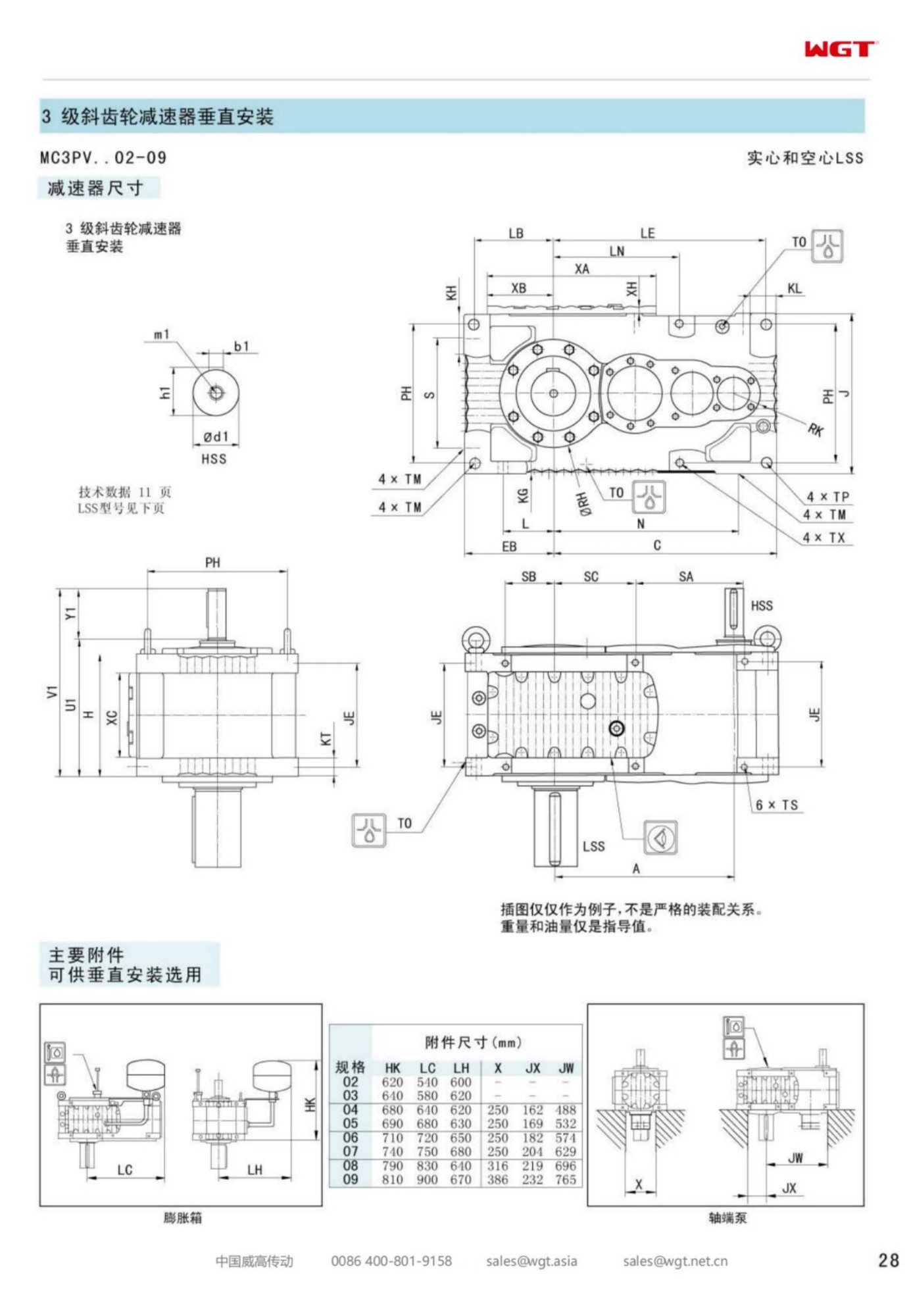
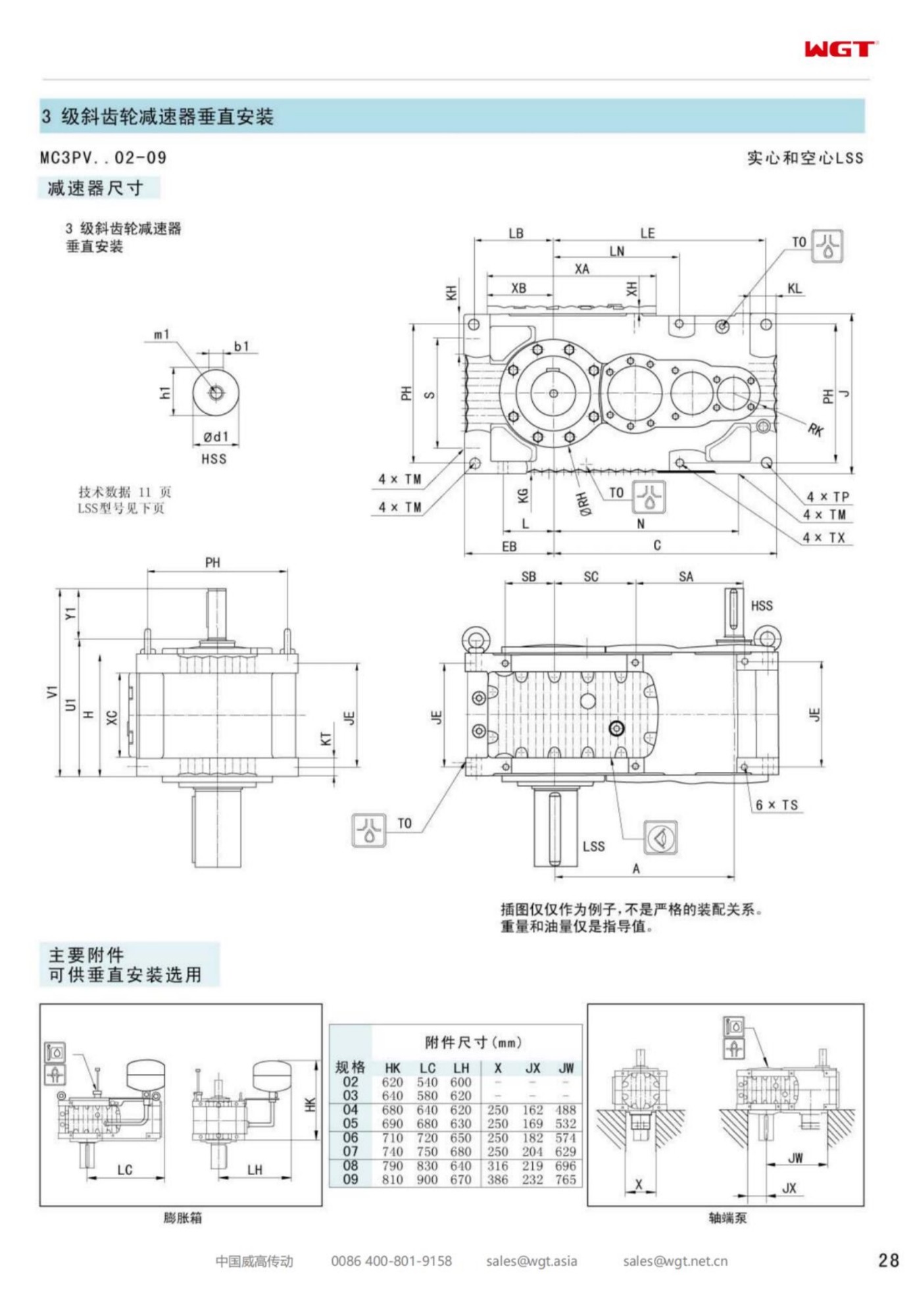
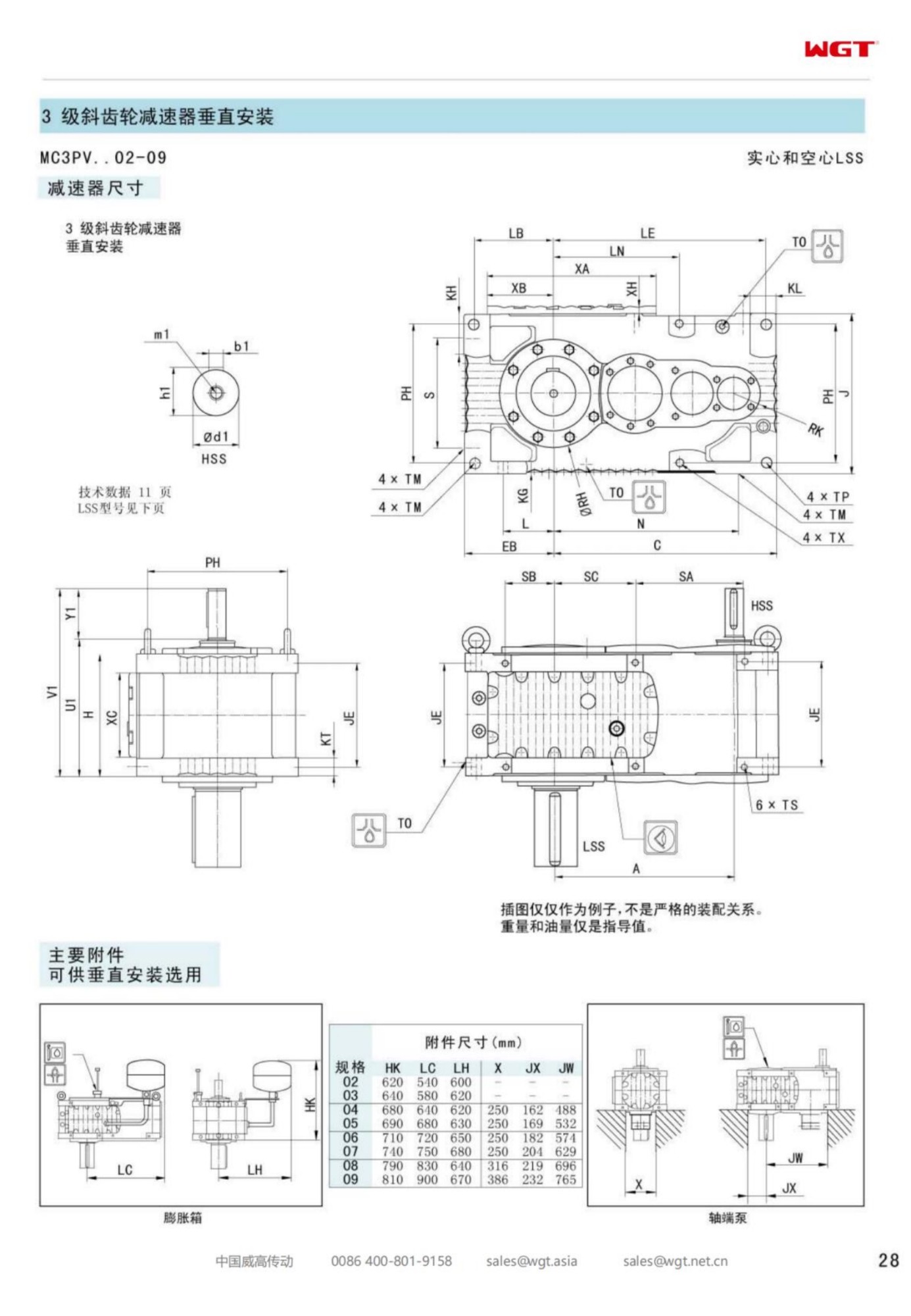
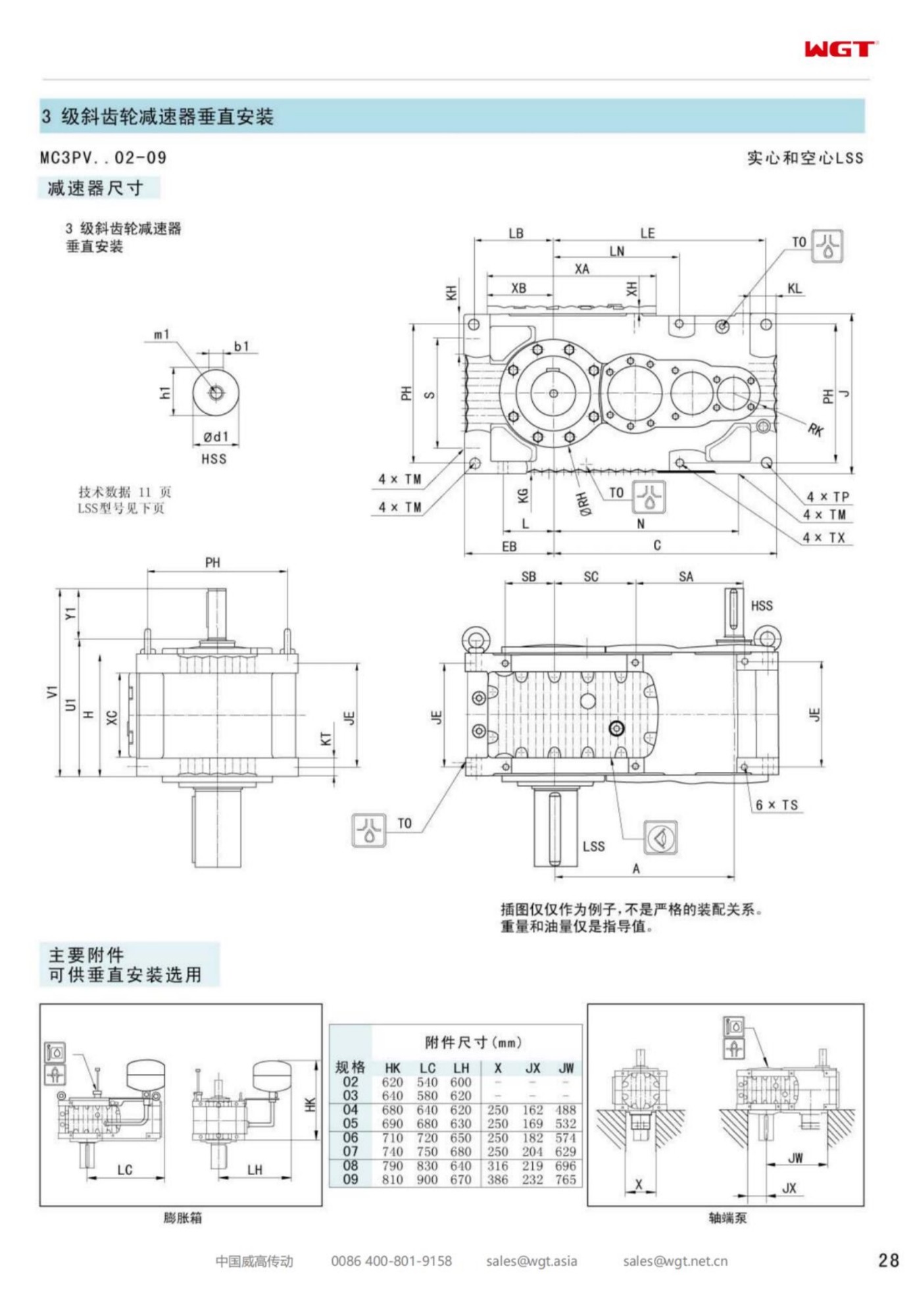
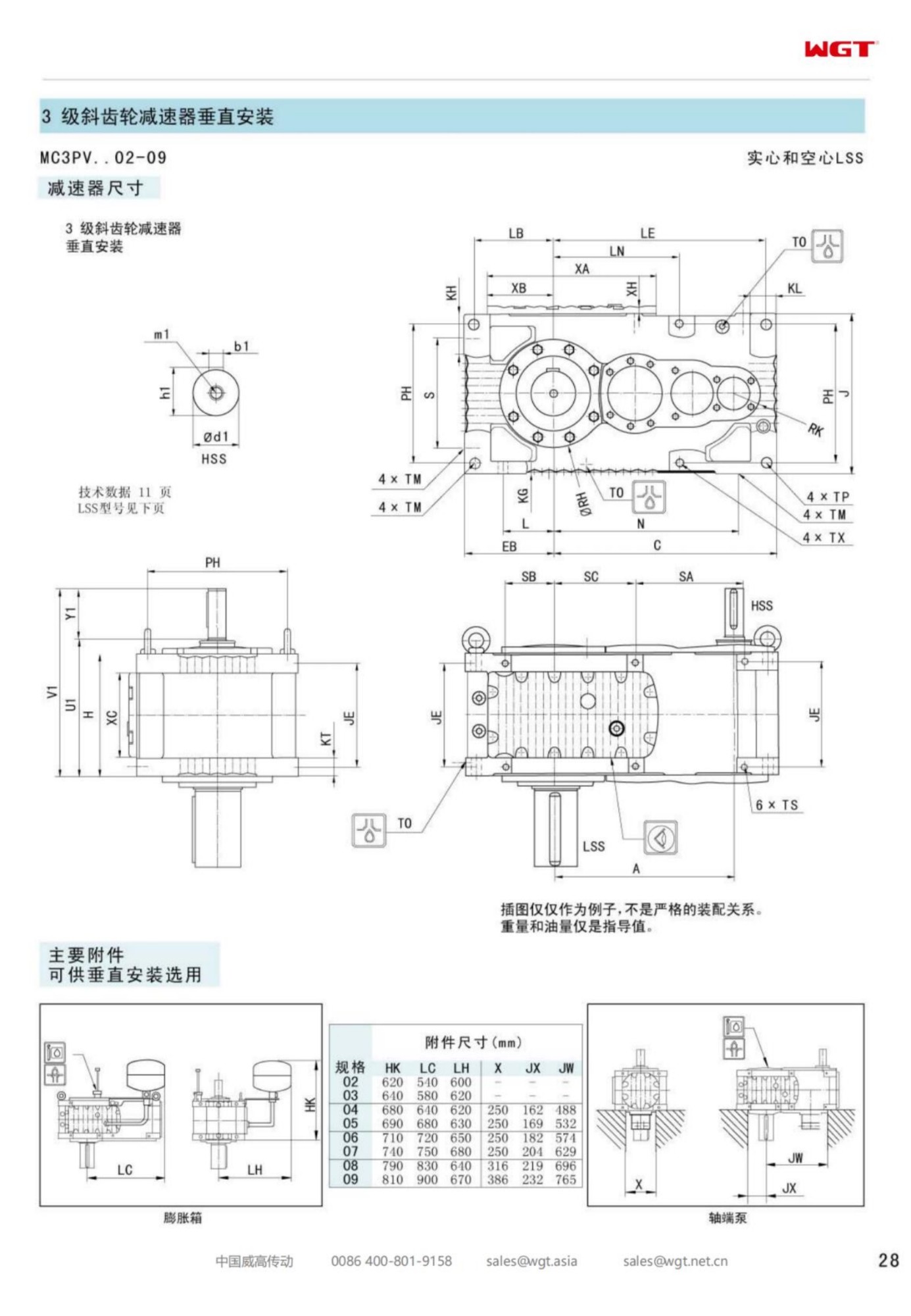
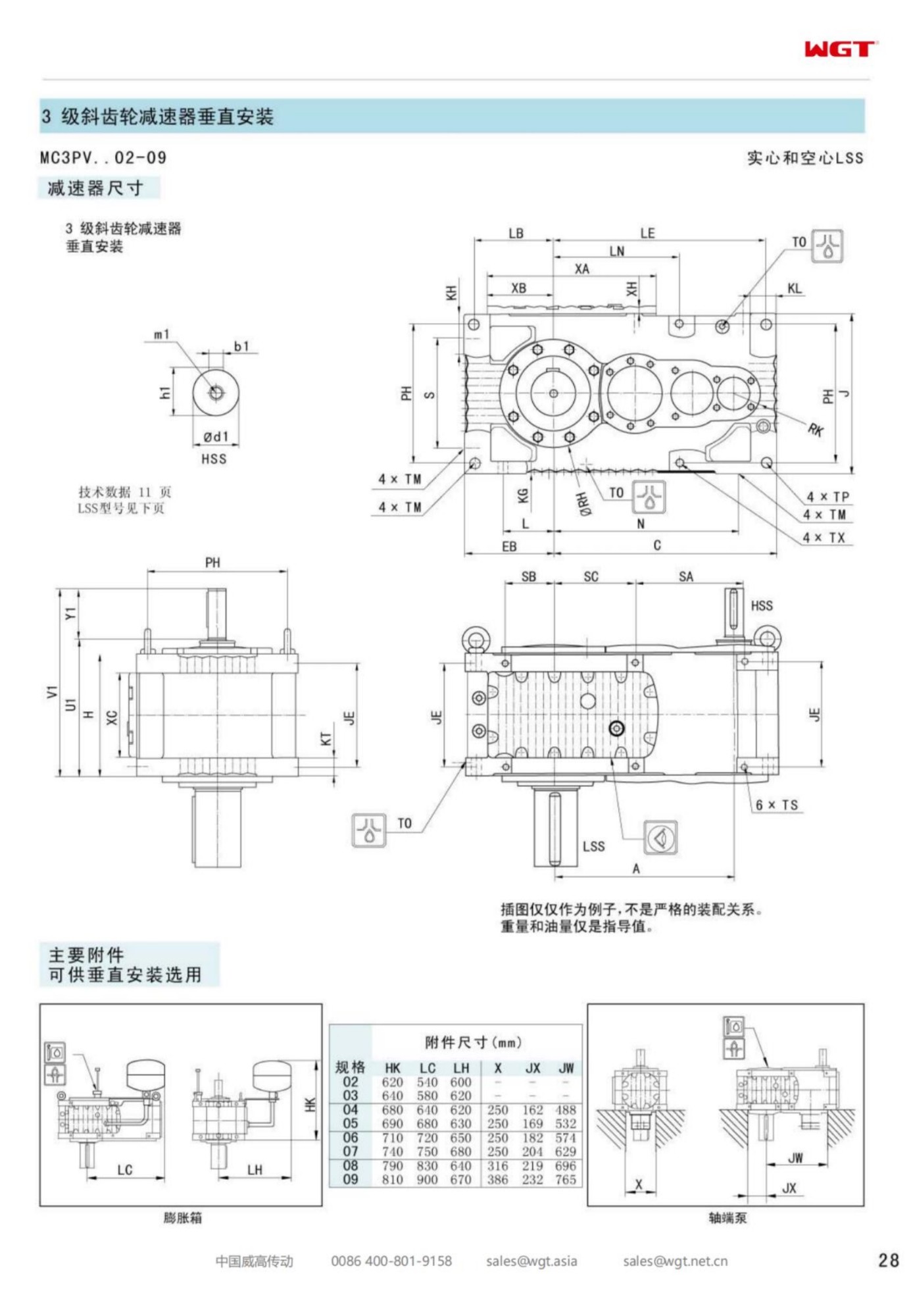
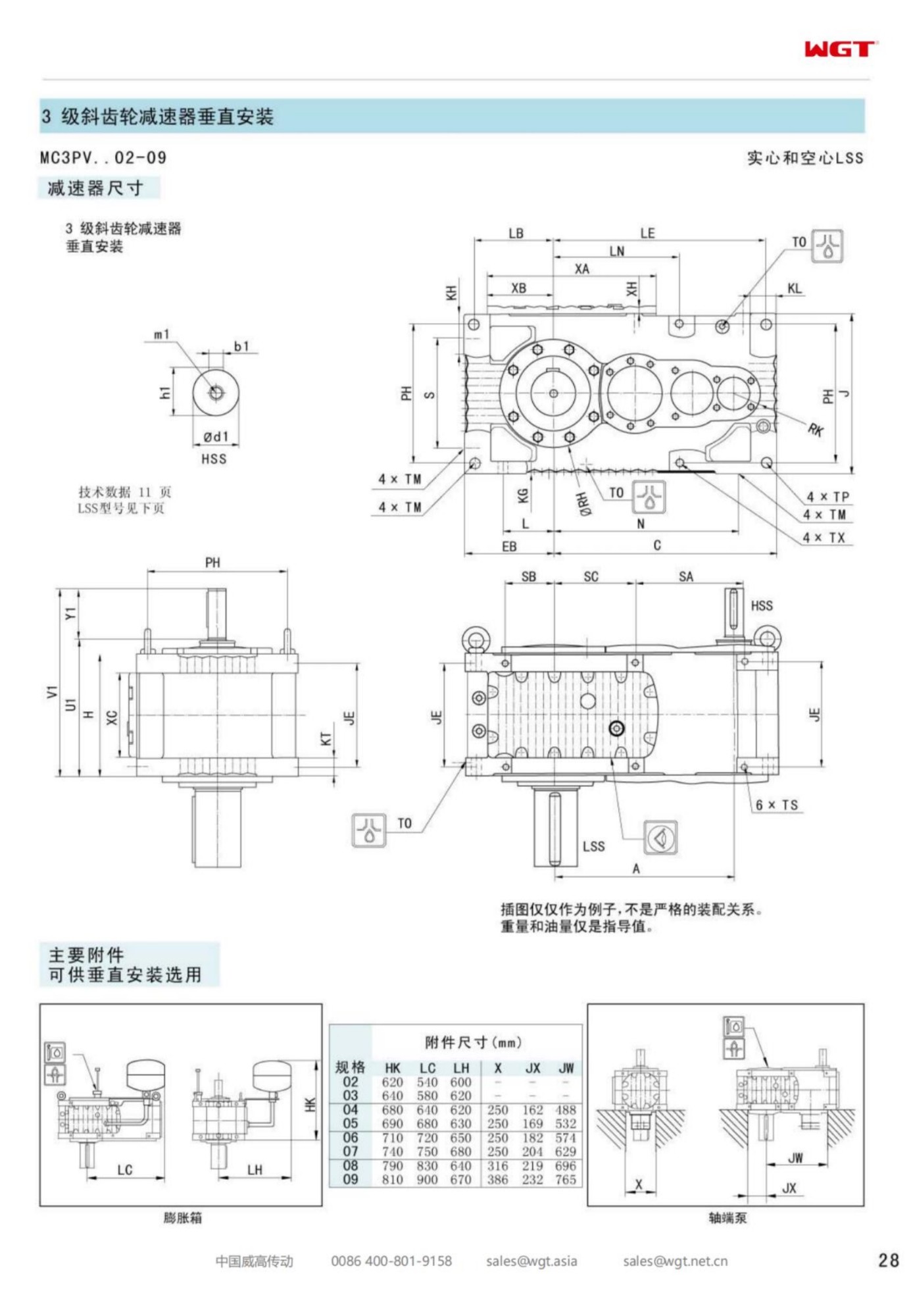
Alumina refineries digest bauxite in caustic at temperature and then spend a great deal of equipment washing the residue they cannot use. That residue is red mud, it settles hard, and the washers that recover the caustic from it are among the most heavily loaded slow drives in a refinery. The MC3PVHF08 vertical hollow shaft gearbox turns the rake in one of those washers: three helical stages in the largest upright case of the band, a hollow bore for the rake column, footed pads on the washer bridge.
What follows is the drive described from the bridge downward: the mud, the caustic, the torque the rake has to find on a bad day, and the specification that keeps a refinery honest.
Red Mud Settles Whether You Like It or Not
Red mud is the fines left after alumina has been taken out of bauxite, and it settles into a bed with a consistency that surprises people who have only met it as a slurry in a pipe. Left alone it compacts, and the deeper the bed the more the rake has to work to keep it moving toward the outlet.
A washer that stops for a day does not simply pause; it builds a bed that the rake has to break into on restart. That restart is the design case, and every sensible specification is written around it.
The Type String at the Top of the Band
Six characters, read from the family name to the frame number.
| MC | Industrial gear unit family built for continuous plant duty |
| 3 | Three helical reductions inside one upright case |
| P | Parallel-shaft layout, input and output on parallel axes |
| V | Vertical build, output axis pointing down into the vessel |
| H | Hollow output bore, the process shaft passes through it |
| F | Footed reaction pads, bolted to the vessel bridge or plate |
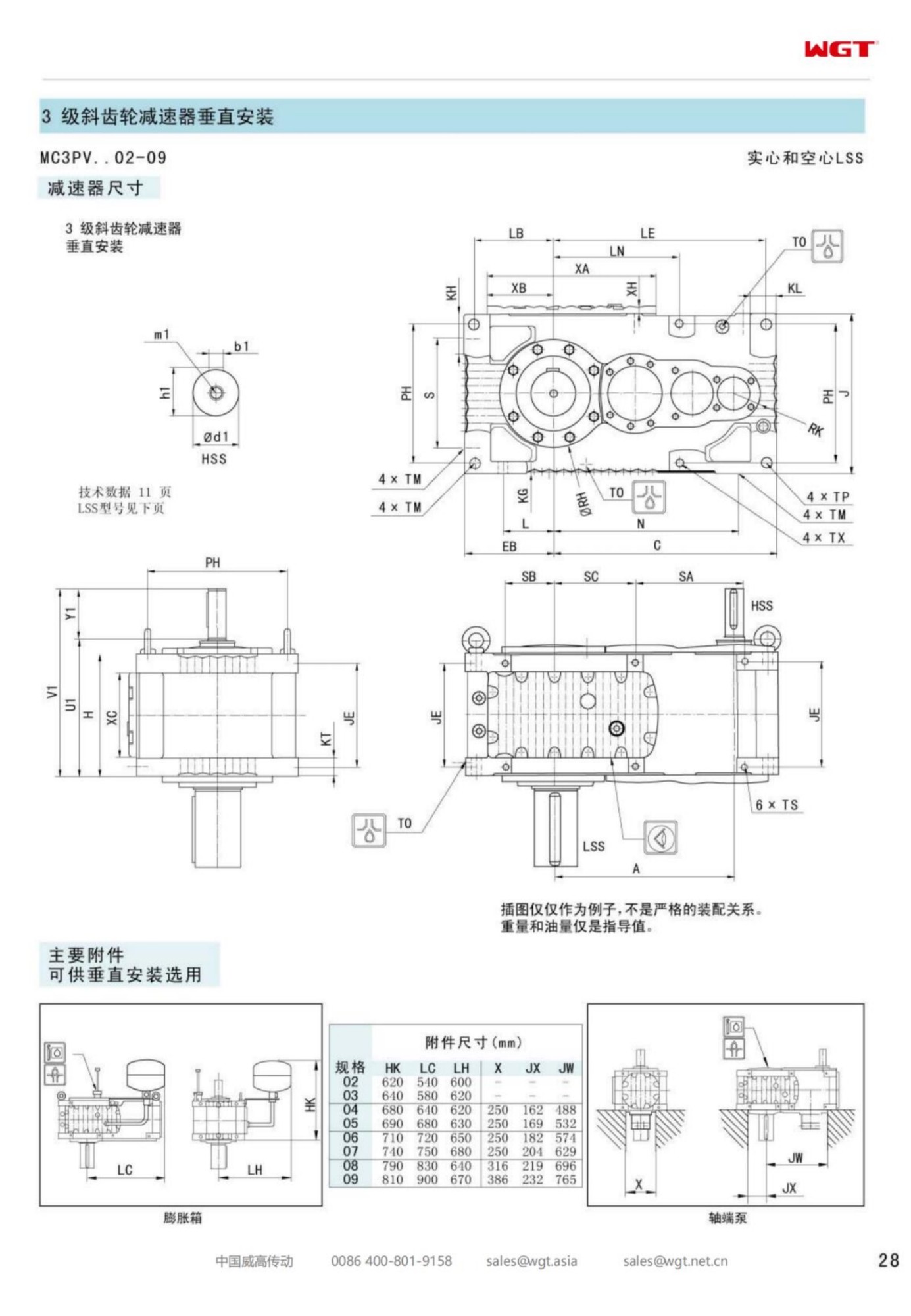
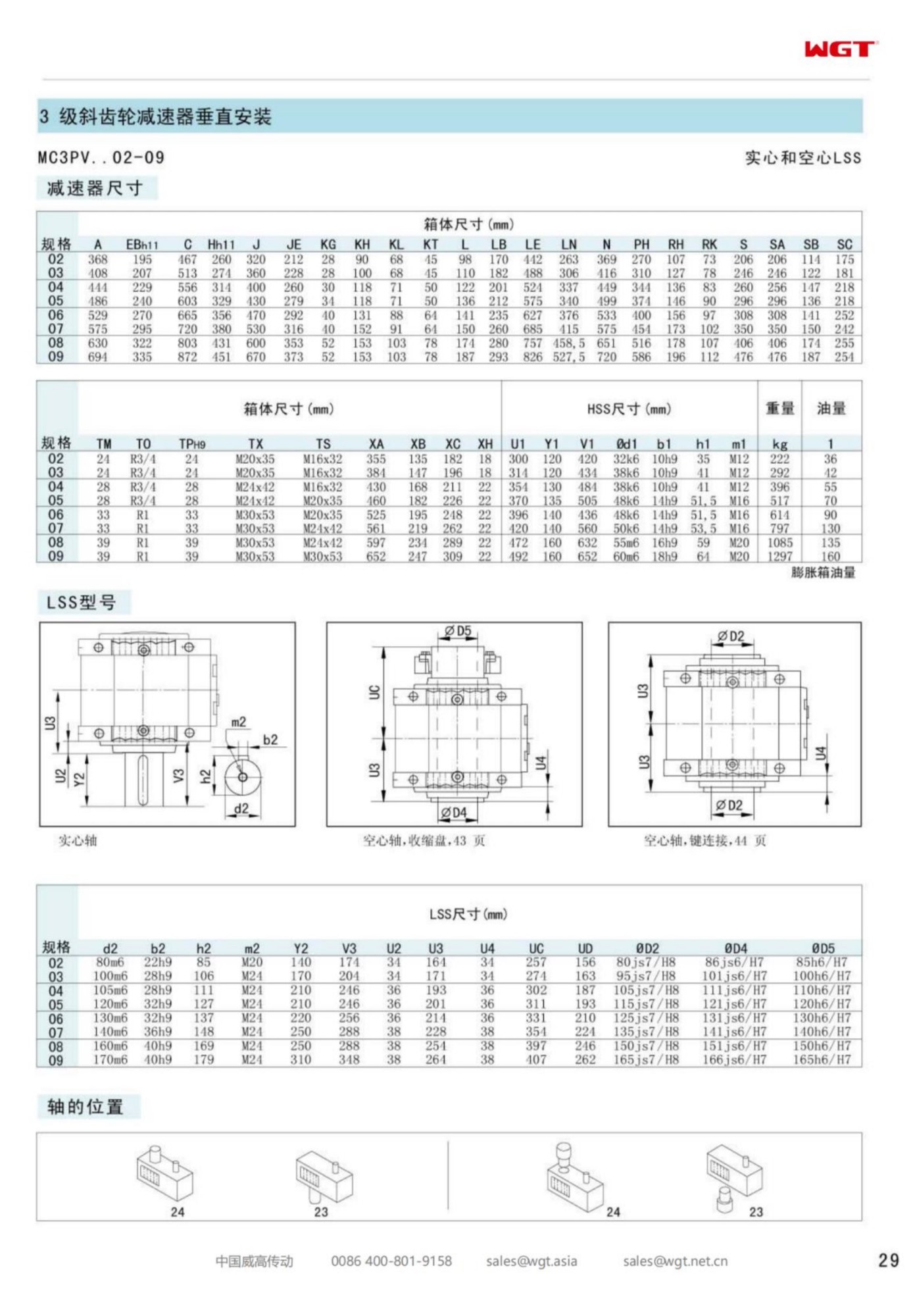
So: three-stage industrial unit, parallel shafts, vertical, hollow bore, footed pads, eighth frame - the largest upright case in this band.
A Large Case on a Washer Bridge
Washer bridges in an alumina plant are substantial structures because they carry a rake, a column, and the drive that turns both. Even so, the bridge is designed for a set of loads, and the gearbox has to be placed where those loads exist rather than where the layout would prefer.
Pad positions, bolt sizes and the stiffening under each pad belong in the exchange between the refinery's structural engineer and the gearbox supplier. A large case landed on unsupported plate will crack the plate before it cracks itself, and the resulting argument is always about who supplied the drawing.
Torque From a Rake Buried in Mud
The torque a rake needs is not one number. There is a running torque in a thin bed, a higher running torque in a thick one, and a break-out torque that exists only on the morning after a shutdown, when the arms are buried and the mud has set around them.
Selection should use the break-out figure with a service factor, and the drive should have a defined behaviour if the rake meets something it cannot move: a torque limiter, a shear element, or an agreed alarm point. A gearbox is a poor fuse.
Caustic Attack and Abrasive Scale
The liquor in a washer is hot caustic with dissolved alumina and a load of suspended solids, and the area above it collects a scale that sets like cement on any cool surface. That includes the underside of a bridge and the lower part of a gearbox case.
Scale is not only a corrosion problem; it is an abrasion problem when it flakes and falls. A case finish that resists caustic and a shape that does not trap scale are both cheaper than the annual cleaning they avoid.
Three Stages at the Slowest Outputs
Washer rakes turn at fractions of a revolution per minute, so the ratio is large and the output shaft is slow and heavily loaded. Three helical stages get there with a train that stays compact for its torque, and the case stays short enough to reach from the bridge walkway.
The alternative of a planetary stage would give a shorter, denser unit, and on the very largest washers that is what gets used. On the eighth frame the helical three-stage arrangement is still the sensible balance of height, weight and serviceability.
Bore, Rake Column and the Fit Between
The column passes through the bore and hangs its own weight plus the rake's into the drive. That load has to be carried by a thrust arrangement inside the case, not by the key alone, and the drawing has to say so.
The fit between bore and column is the detail that decides whether the assembly can be taken apart in five years. Too tight and the column will not come out; too loose and the key works in its seat until the seat is a slot.
Oil Volume, Heat and a Case in the Sun
The eighth frame holds a real volume of oil, and in a refinery in a hot climate the case can sit in direct sun on a bridge with no shade. Oil temperature then runs well above the ambient figure a temperate catalogue assumes.
An oil cooler, a sunshade, or a synthetic lubricant are the three answers, and the choice depends on how hot the site actually gets. It is worth measuring rather than guessing, because a cooler specified for the wrong load costs more than the oil it protects.
Seals Against Caustic Vapour and Steam
Washers in some circuits are held warm with live steam, and the freeboard above the liquor is a mixture of steam and caustic vapour. That mixture condenses on the column and on the seal area every time the vessel cools.
A purge connection between two seal stages, fed with clean dry air or grease, is the arrangement that keeps caustic out of a bearing housing. Where a plant will not run a purge, the seal change interval has to be planned rather than discovered.
Starting a Rake After a Long Shutdown
The restart is the moment everything is decided. A rake that has sat in a settled bed needs a torque several times its running figure, and the motor will draw locked-rotor current until the arms break free or something gives.
The practical defences are a torque limiter set above running load but below structural limits, a variable-speed start that lets the operator feel the load, and a written procedure that says what to do when the rake will not turn. All three are cheaper than a case cracked on a Sunday.
Bridge Steel and the Reaction Couple
A vertical drive reacts against its pads as a couple, not as a single force. That couple tries to lift one side of the case and press the other, and the bolts on the lifting side are the ones that fatigue if the pads are not flat and fully seated.
Machined pads, hardened washers and a checked flatness under each foot are small costs. A case that has been bolted down onto a weld bead will show it as a cracked foot within a campaign.
Frame Eight Closes the Bored Band
The eighth frame is the top of the vertical hollow-shaft band, and it exists for duties where the vessel is large, the rake is heavy, and the column has to pass straight through the drive.
Specified with the break-out torque written down and the bridge loads exchanged properly, it is the drive that lets a refinery wash its residue without giving the maintenance team a permanent item on the weekly list.
Red mud that sets around a rake overnight - where this frame is specified:
- Red mud washer rake drive at an alumina refinery
- Caustic wash thickener rake at a bauxite digestion plant
- Mud settler rake at an alumina residue washing train
- Clarifier rake at a hydrate wash circuit
- Residue thickener rake at an alumina refinery
- Settler rake drive at a bauxite residue filtration plant
Selection Example: Red mud washer rake drive at an alumina refinery
Take a 30 kW motor at 1480 rpm turning the washer rake at 4.5 rpm. The ratio follows directly: 1480 / 4.5 = 329, so a ratio near i=329 is drawn from the top of the three-stage vertical band, and the frame is confirmed against the break-out torque of a rake buried in a settled bed rather than against its running torque. In this case frame eight is the largest upright case in the band, lands on machined pads that spread the reaction couple across the washer bridge, and takes a rake column through a bore whose fit and thrust arrangement are agreed on the drawing. That is the whole calculation. If your duty involves heavy starting, frequent reversing or many stops per hour, tell us and we raise the service factor.
Which Frame Size Do You Need?
| Model | Centre distance | Output | Typical duty |
|---|
| M3PSF50 | size 50 | solid shaft, foot | conveyors, feeders |
| M3PSF60 | size 60 | solid shaft, foot | crushers, mixers |
| M3PSF70 | size 70 | solid shaft, foot | ball mills, shredders |
| M3PSF80 | size 80 | solid shaft, foot | kilns, heavy conveyors |
| M3PSF90 | size 90 | solid shaft, foot | mill and kiln drives |
| M3RSF50 | size 50 | solid shaft, foot, right-angle | inclined conveyors, elevators |
| M3RSF60 | size 60 | solid shaft, foot, right-angle | screw classifiers, feeders |
| M3RHF70 | size 70 | hollow shaft, foot, right-angle | agitators, drum drives |
| M3PHT80 | size 80 | hollow shaft, torque arm, parallel | shaft-mounted conveyors |
| M3RHT90 | size 90 | hollow shaft, torque arm, right-angle | heavy shaft-mounted drives |
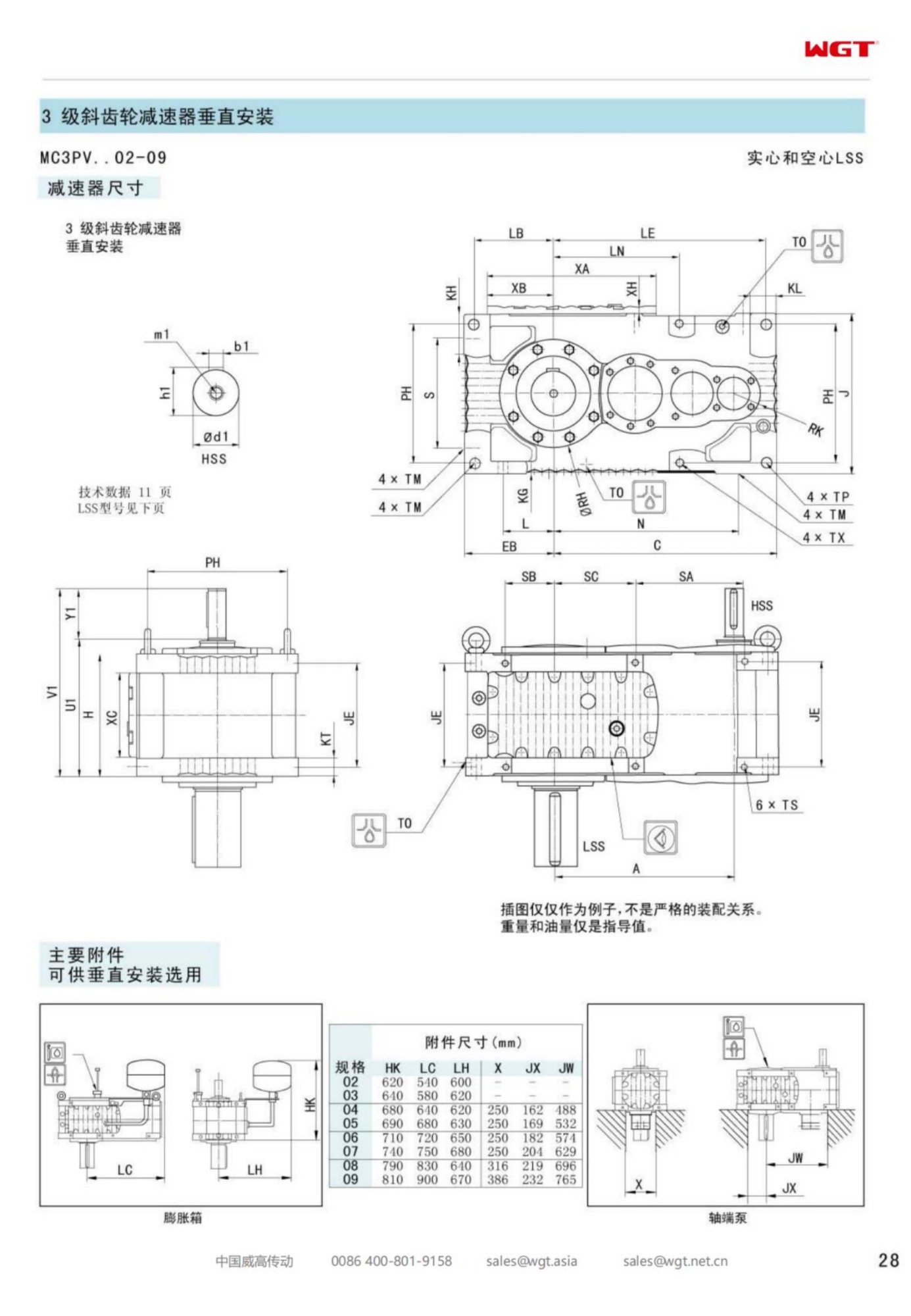
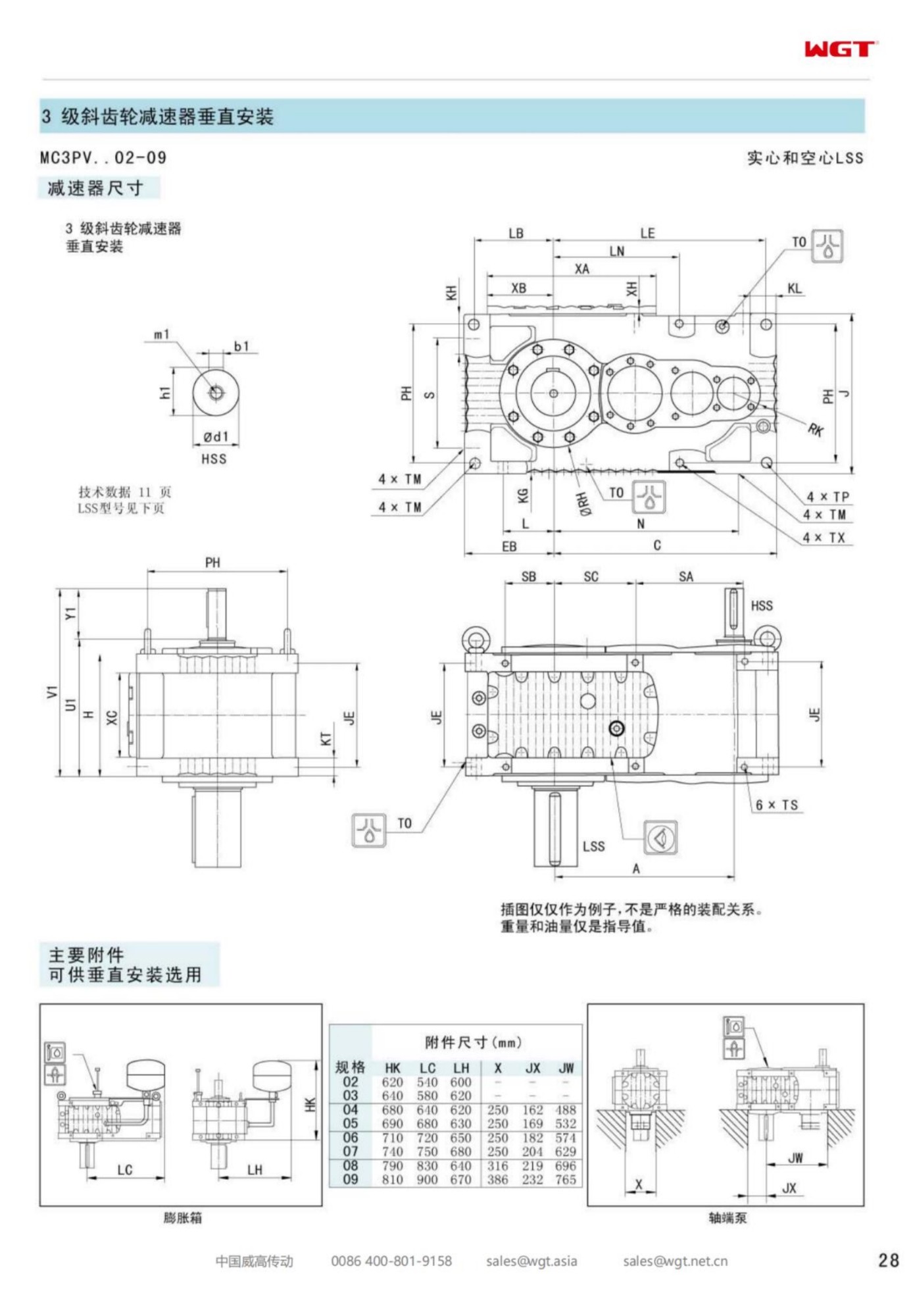
Foot-mounted frames are listed below; torque-arm (T), hollow-shaft (H) and vertical (V) variants are available across the size range. Ask for the outline drawing to check the interface before ordering.
Answers to Common Questions
Can I reuse my existing couplings and foundations?
Yes. Centre distances, shaft dimensions and flange bolt patterns follow the common industry standards, so couplings, guards and foundations do not have to be redesigned. Send the nameplate details and we confirm the equivalent frame in writing.
Can the reducer be used outdoors or in a washdown area?
Standard paint and NAK seals suit sheltered outdoor duty. For washdown or coastal sites specify the heavy-duty coating, FKM seals and stainless fasteners; for humid rooms we recommend the breather and oil-check routine in the manual.
What if the ratio I need falls between two catalogue steps?
Choose the next available step and adjust the driven speed, or ask us for a special pair of gears. Trimming the driven machine is normally cheaper than ordering a special ratio, and a slightly higher ratio never hurts the drive.
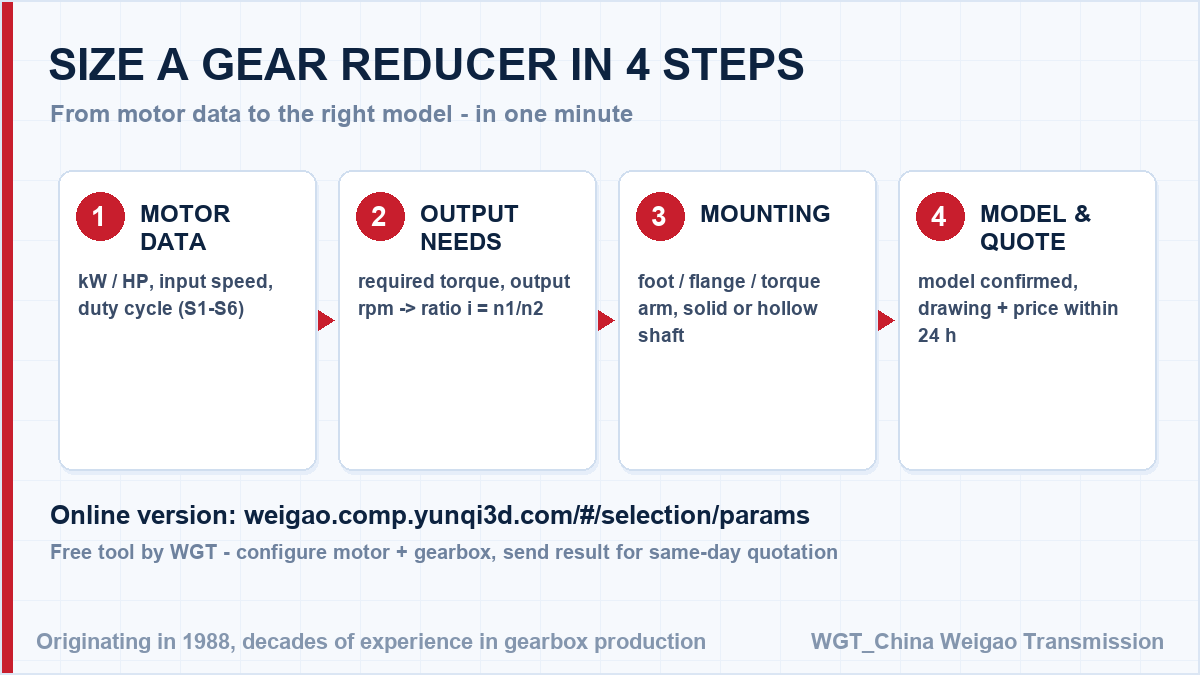
![gearbox sizing steps for engineers]()
Four steps from your application data to a firm model number.
Case Notes from the Field
Sugar mill bagasse conveyor
A sugar mill moves wet bagasse on conveyors driven by industrial gear units. High moisture, fibrous material and sticky residue are the daily conditions, and the sealed housings have kept lubricant clean between oil changes.
Slag handling crane
A steelworks drives the long-travel motion of a slag-handling crane with industrial gear units on torque arms. Heat radiation from the slag pot is handled by the increased clearance and standard high-temperature paint.
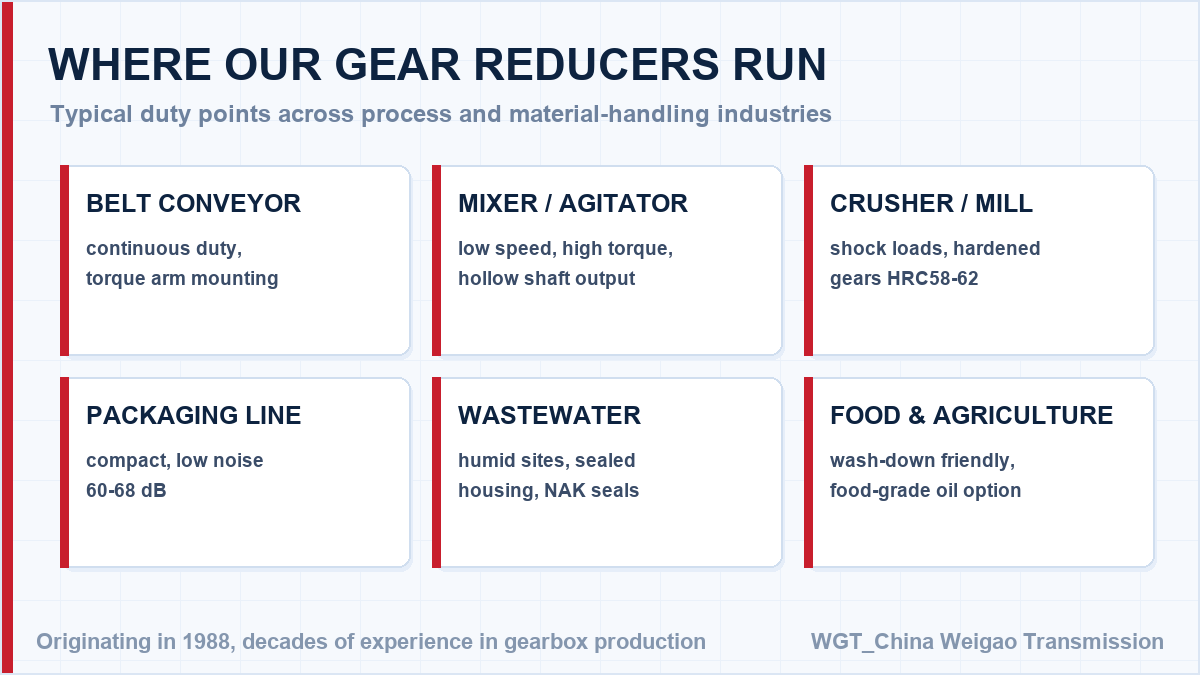
![industrial gear unit application overview]()
A cross-section of the installations we supply every month.
Engineering Support Before You Buy
Unsure about the frame size? Try the WGT Motor & Gearbox Online Selection System, then send the result sheet - we return a complete datasheet, drawing and price the same day.
Our selection engineers check every enquiry against the rating tables, including shock class and daily running hours. You get the calculation, not just a part number - at no charge and with no obligation. Looking for a gearbox for crusher? Tell us the duty point and we will confirm the model in writing.