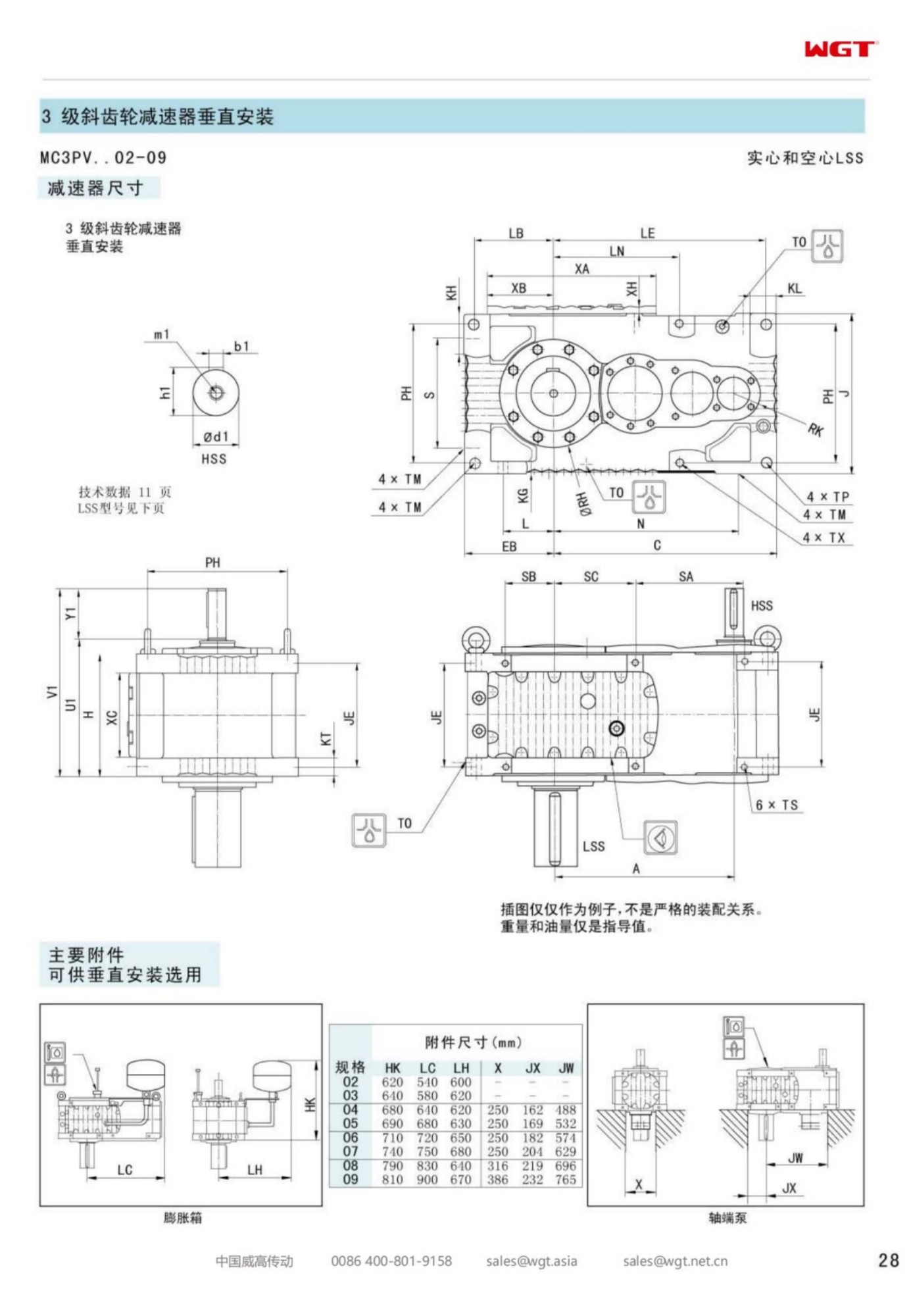
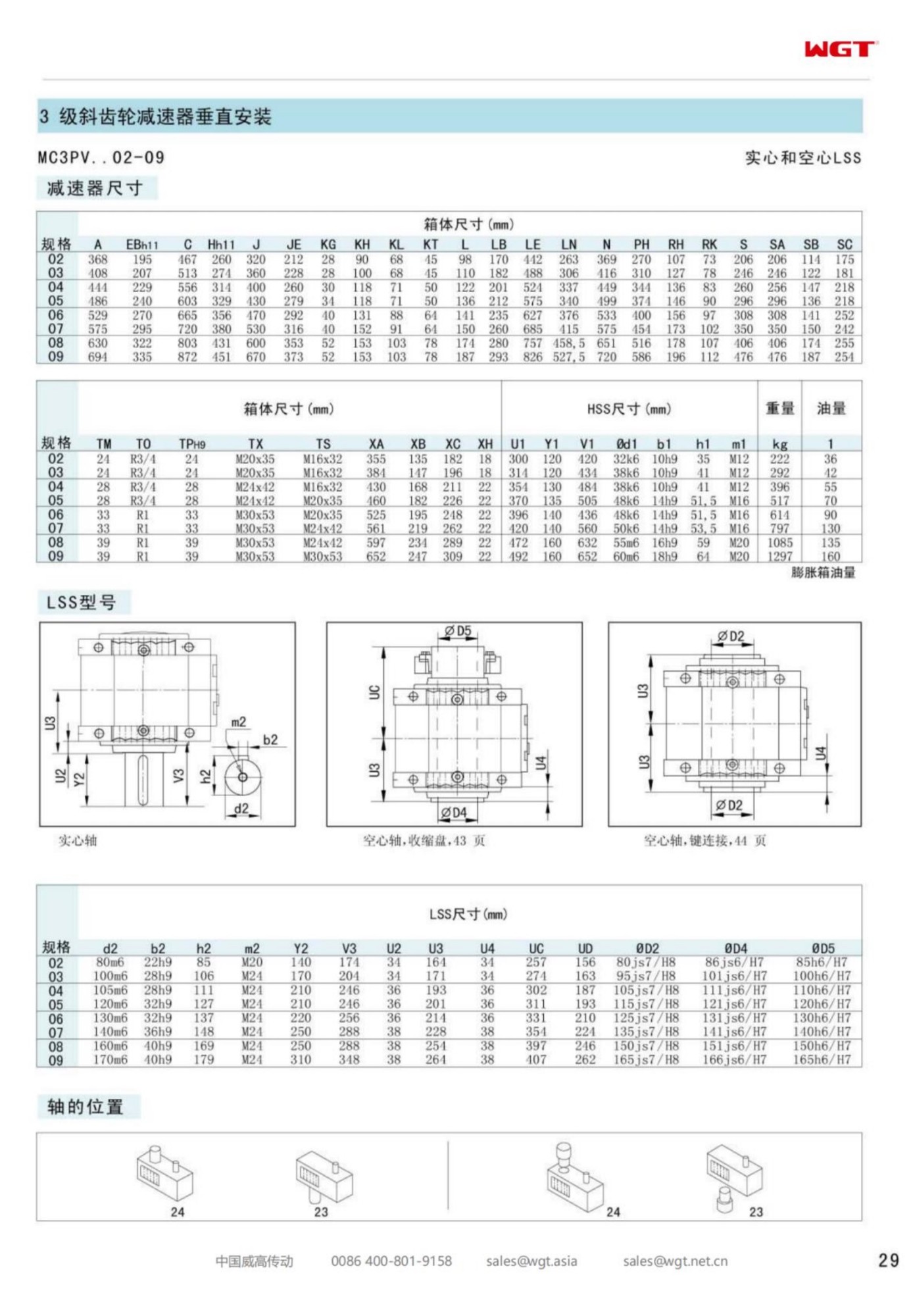
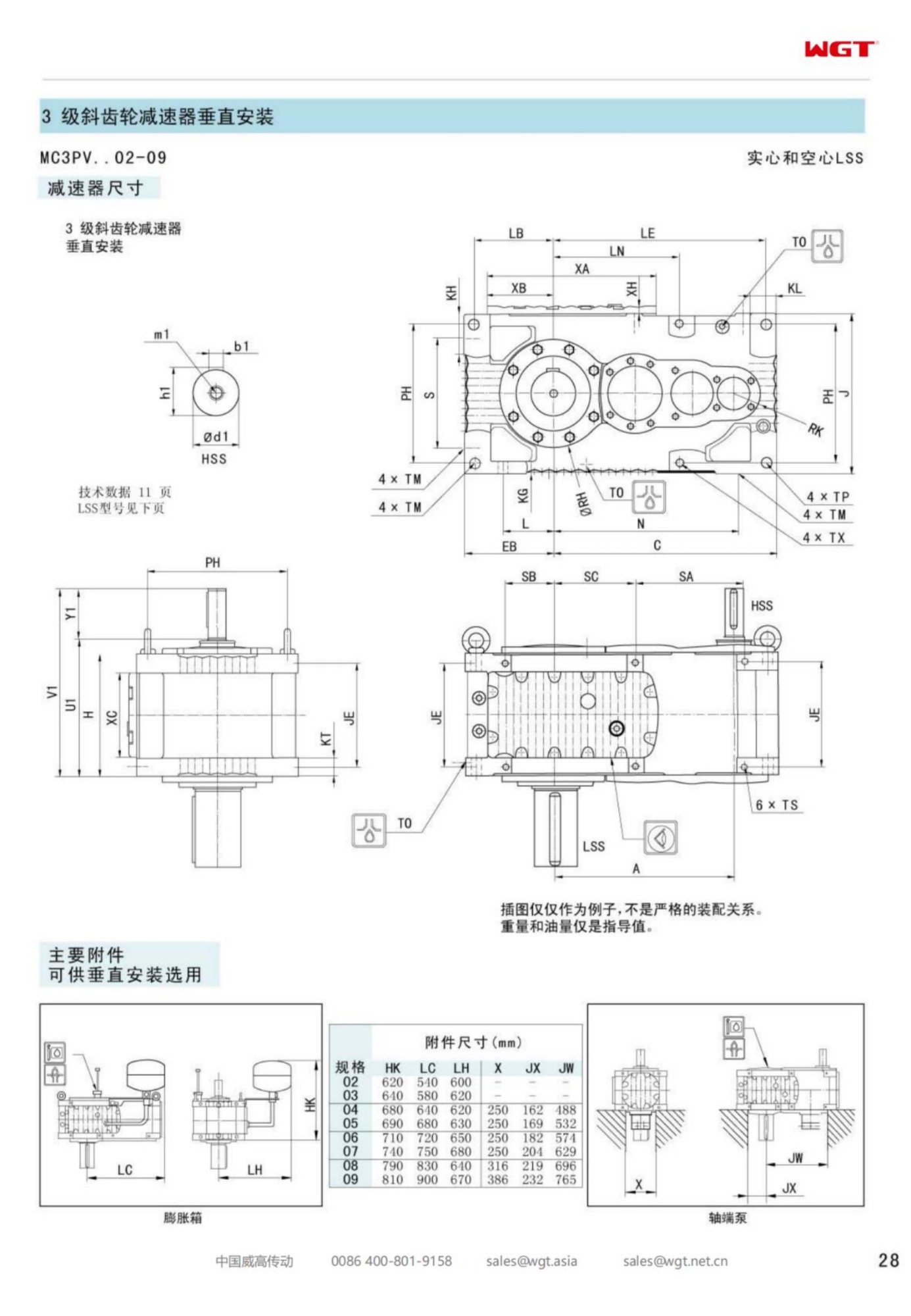
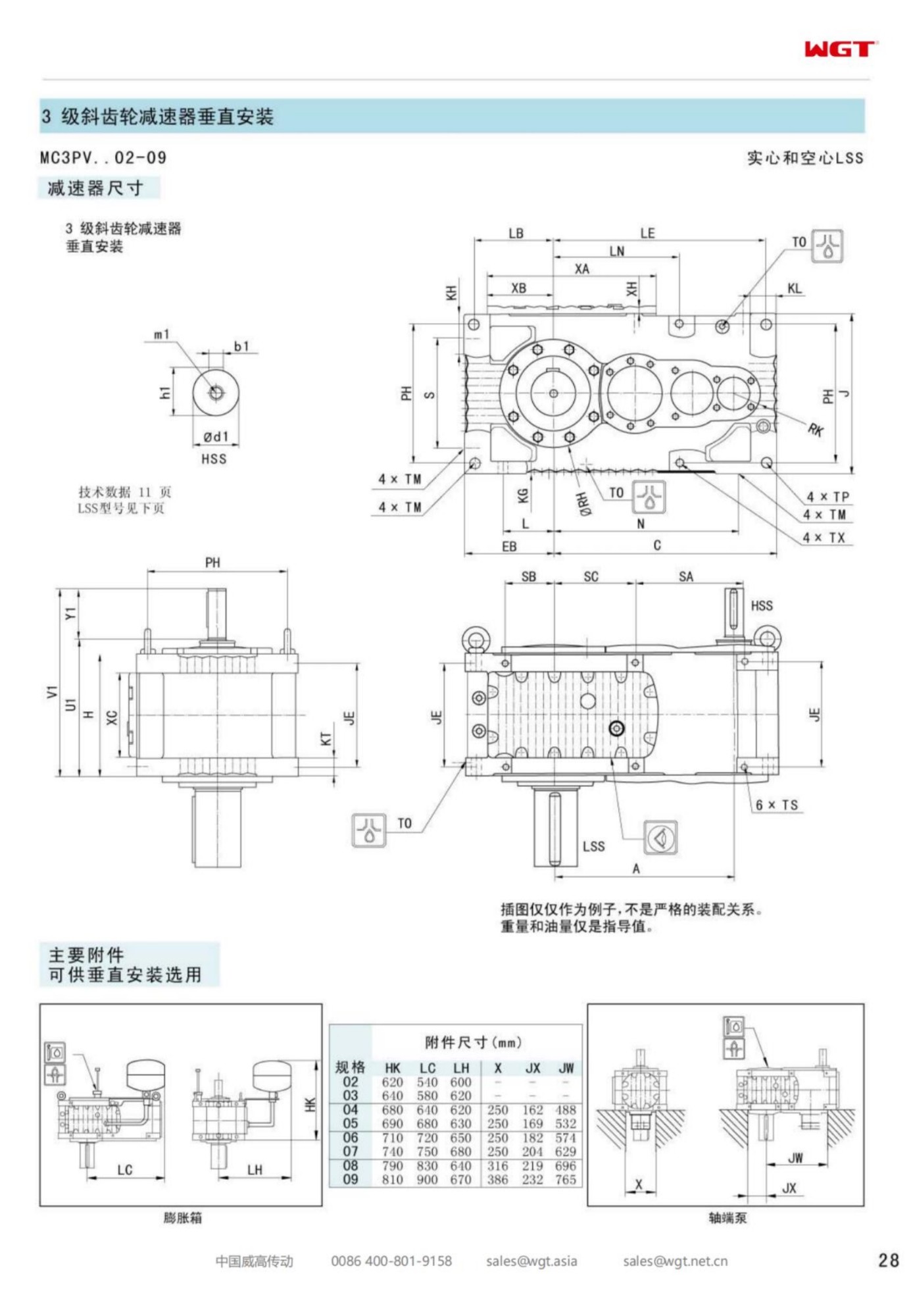
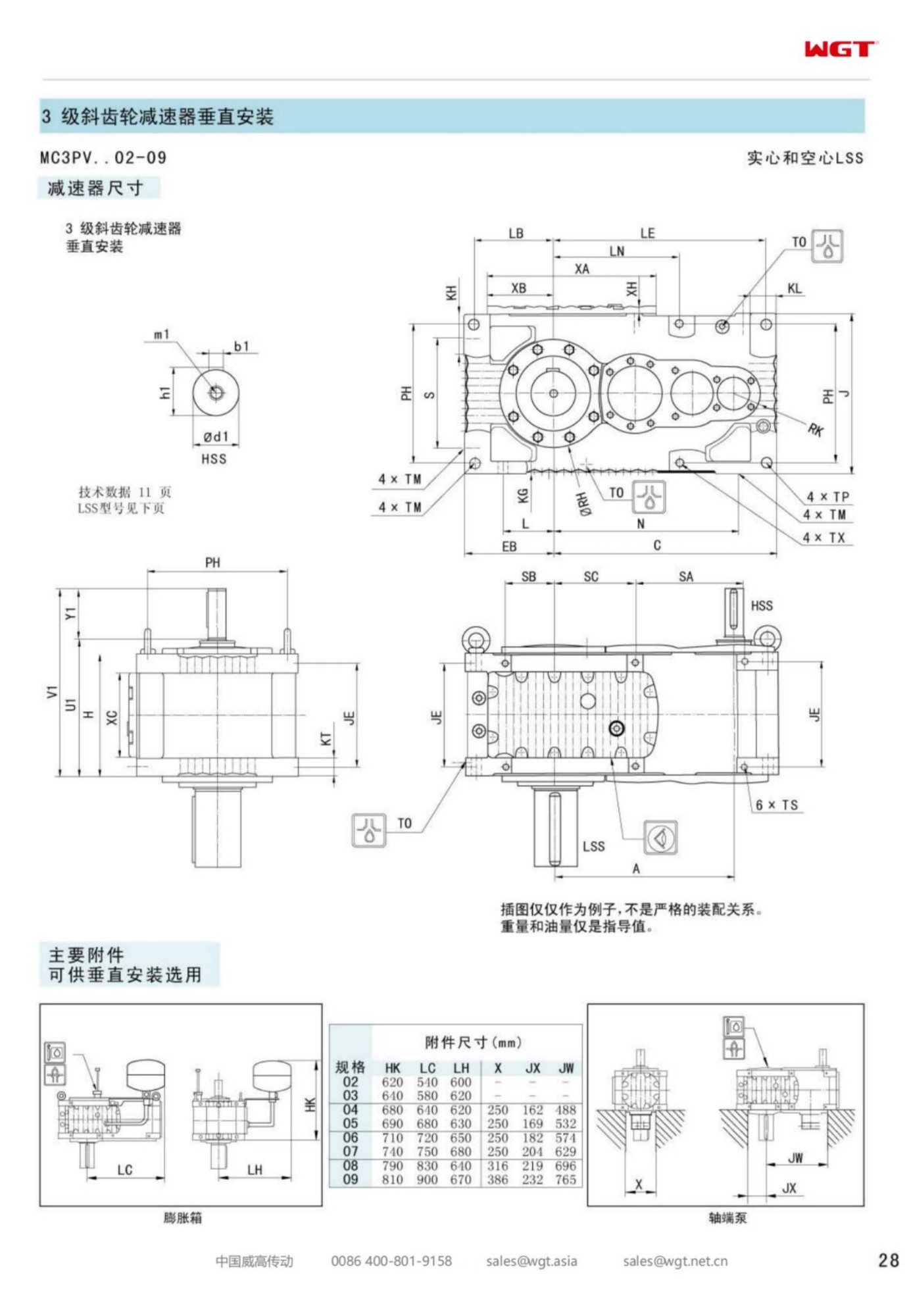
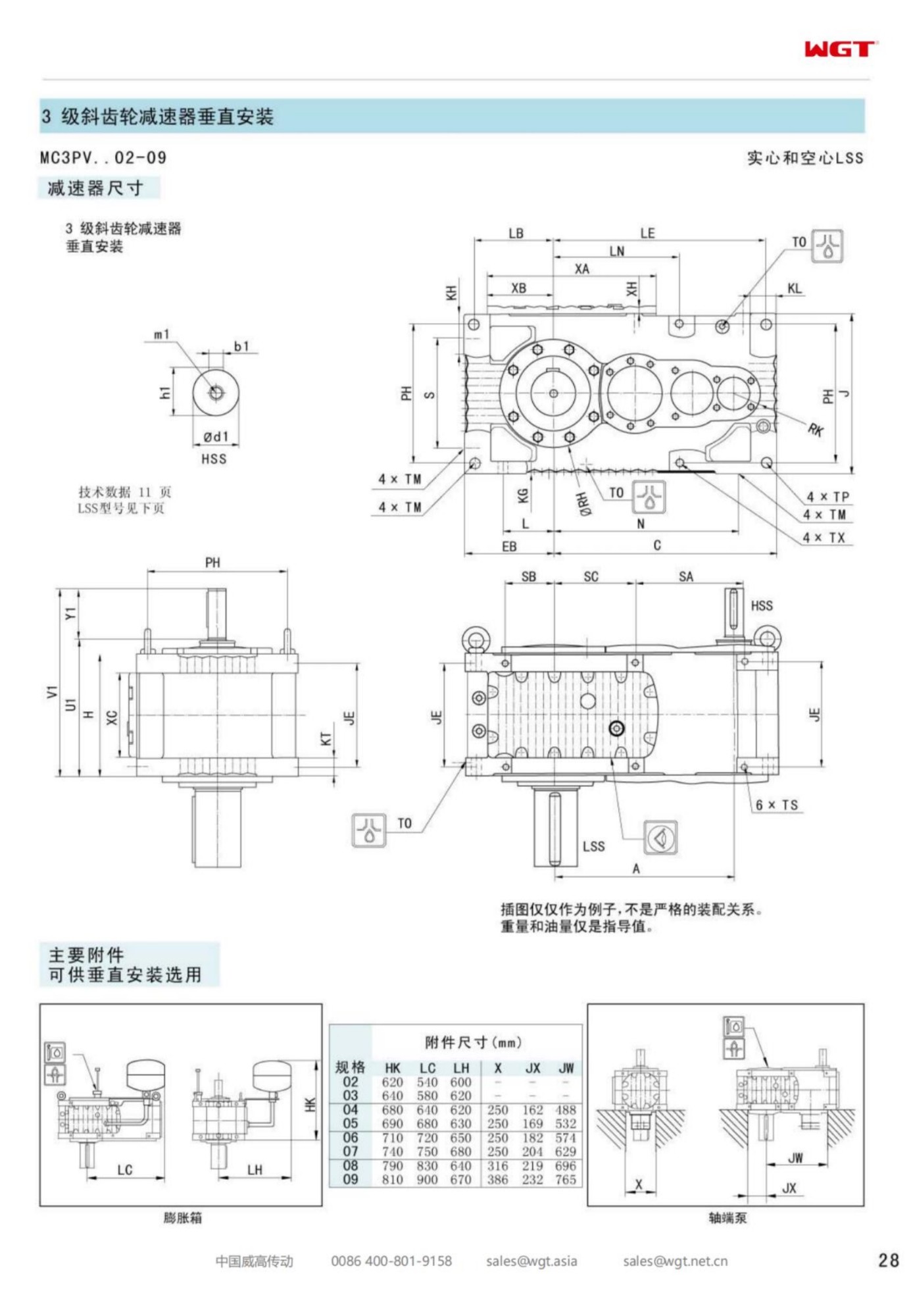
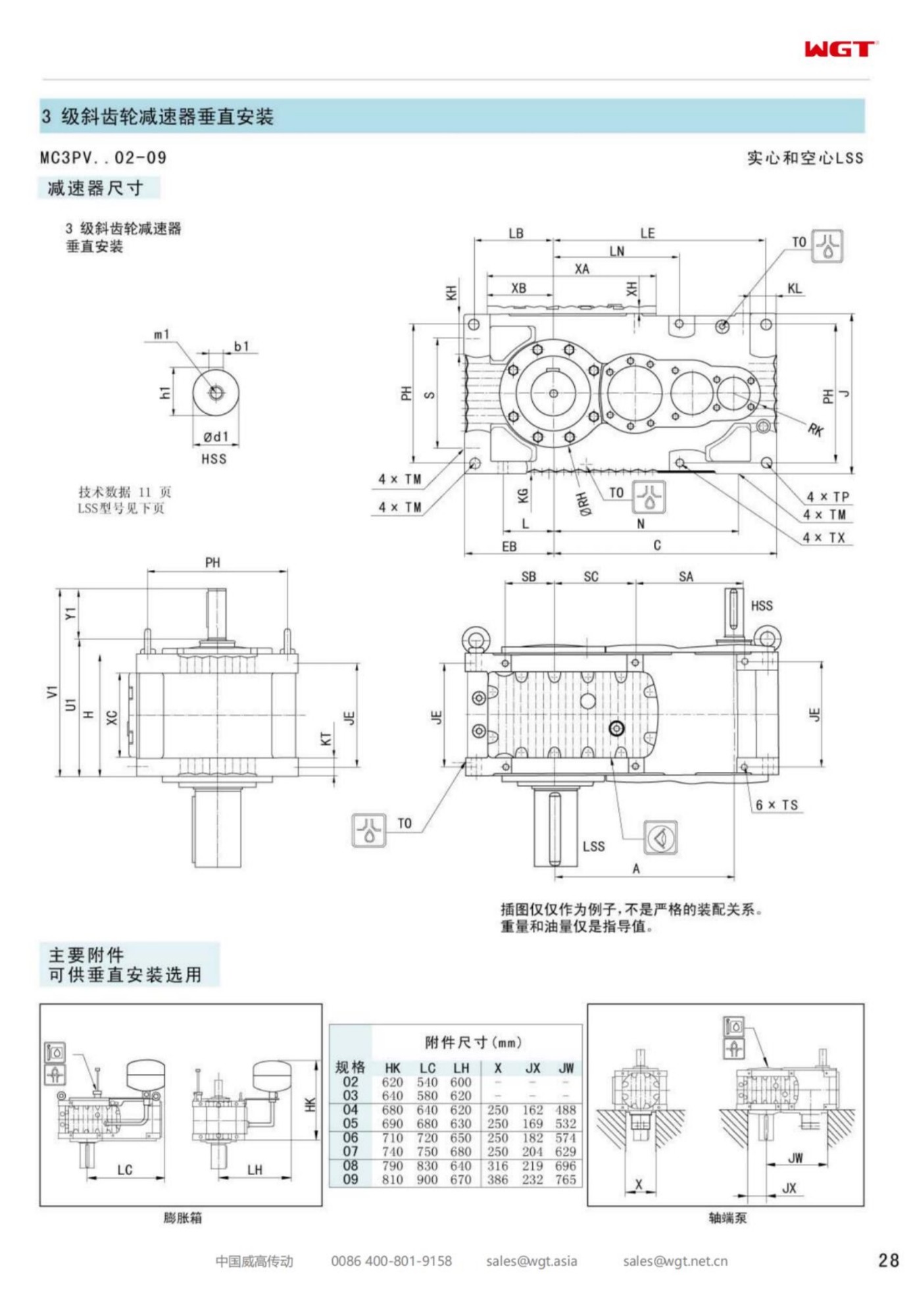
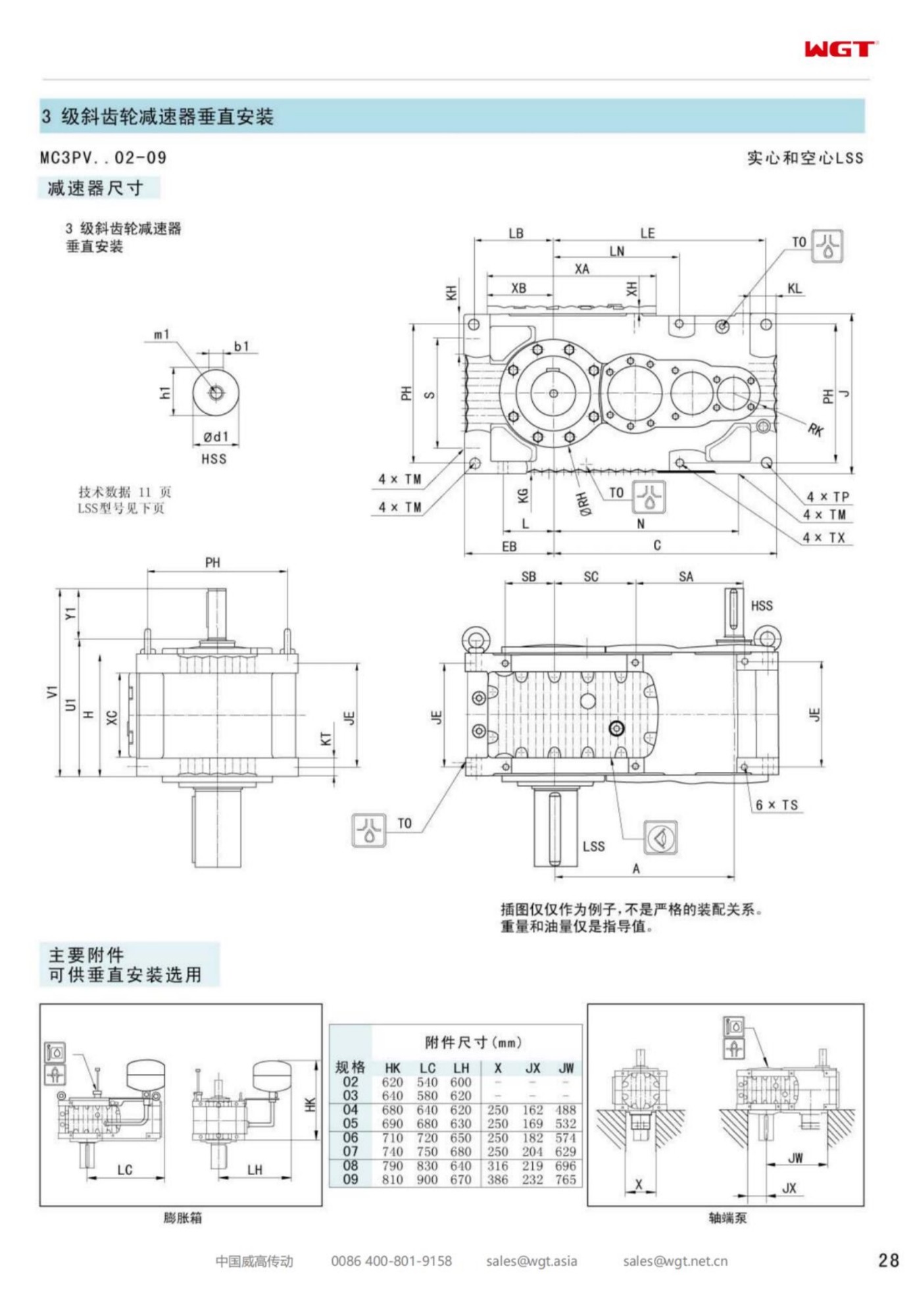
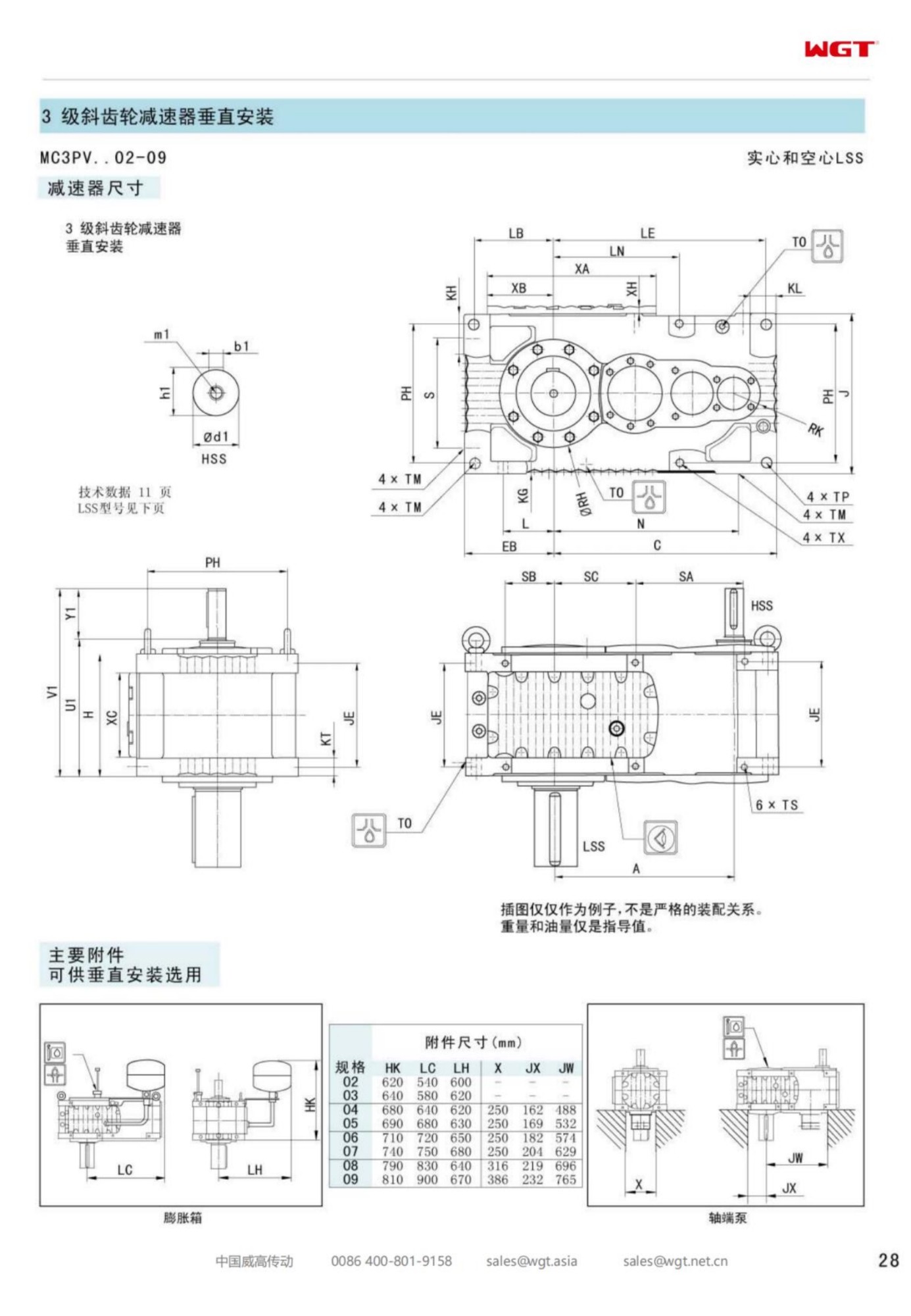
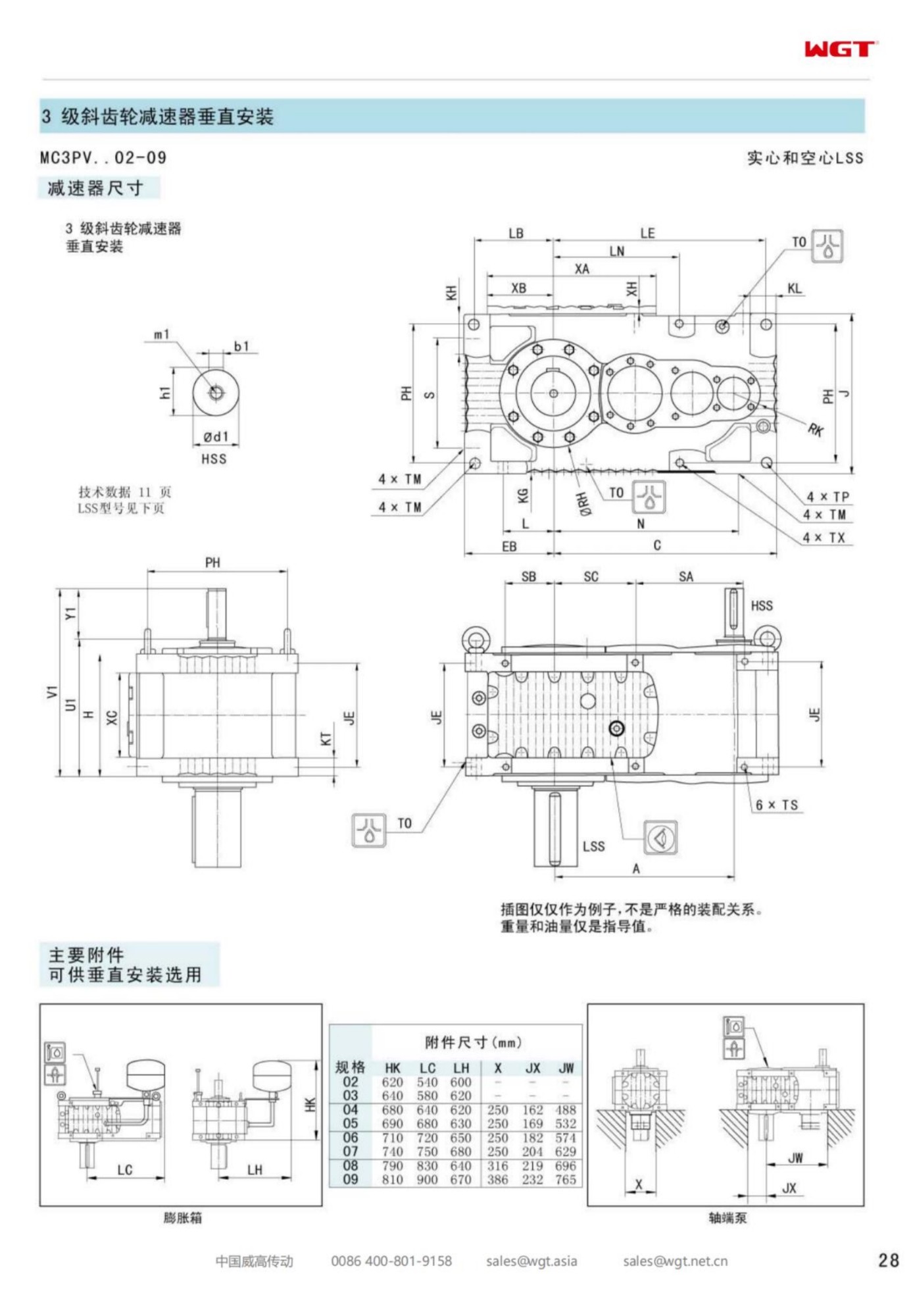
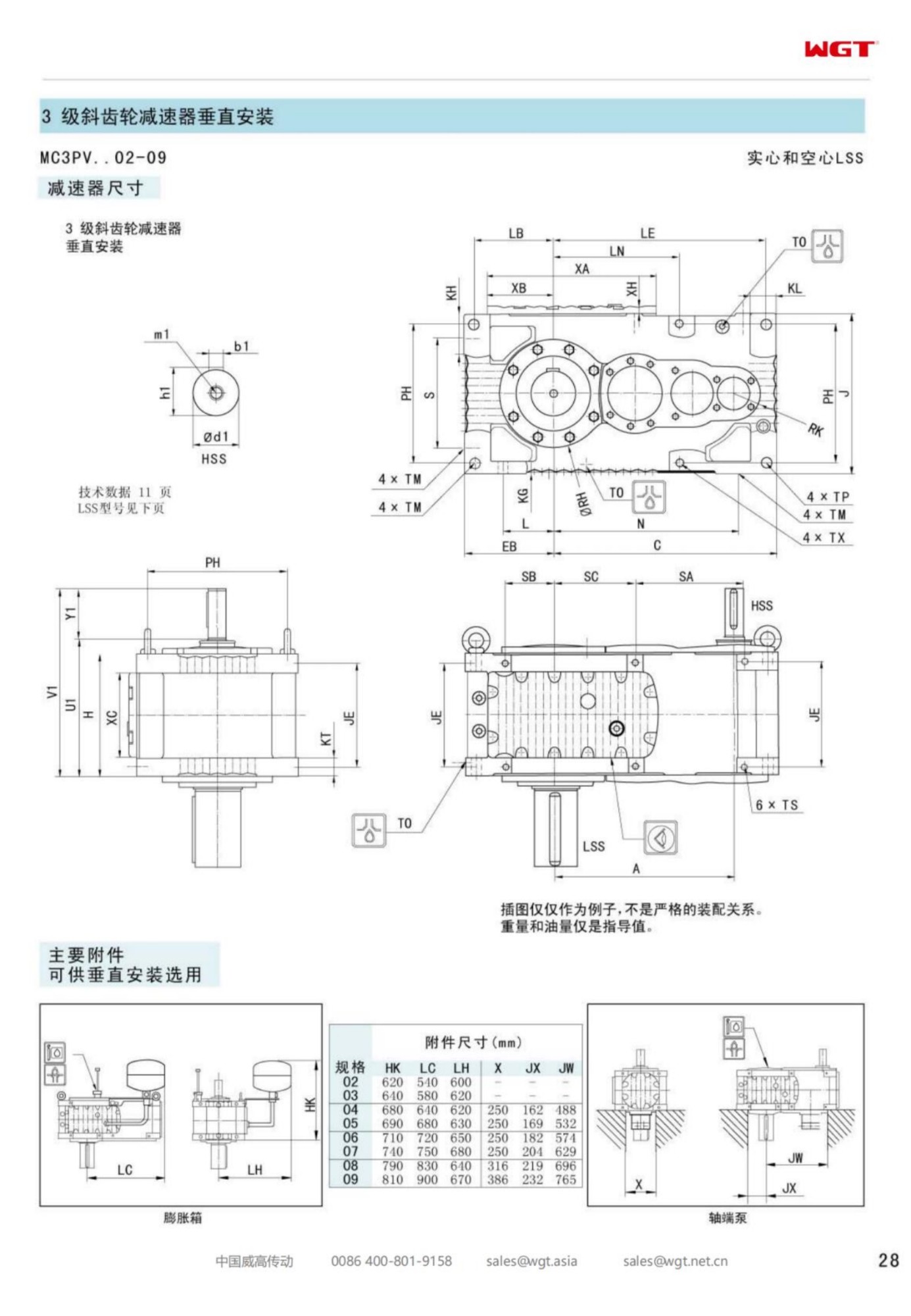
Before salt water can be split into chlorine and caustic in a membrane cell, it has to be clean enough that the membrane never sees what came in with the salt. That cleaning happens in a clarifier, where a slow rake drags settled solids toward a centre outlet while clear brine leaves over the rim. The MC3PVHF06 vertical hollow shaft gearbox turns that rake: three helical stages in an upright case standing on the clarifier bridge, a hollow bore through which the rake column passes, and footed pads bolted to the walkway steel.
These notes follow the drive as the brine circuit sees it: the sludge it has to move, the atmosphere it has to survive, and the figures a chlor-alkali team should put on the enquiry.
A Brine That Has To Come Out Clear
Dissolved salt carries everything the salt bed carried - calcium, magnesium, sulphate, and a fraction of fines that refuses to dissolve at all. Pre-treatment drops those out as a flocculated sludge, and the clarifier is where the drop-out is collected.
What the rake meets is not slurry in the ordinary sense. It is a soft, thixotropic bed that behaves like a liquid while it is being disturbed and like a paste the moment the rake pauses, which is exactly the behaviour that makes a slow, steady drive worth more than a fast one.
Six Characters on the Nameplate
The type string answers the mounting question before the drawings are opened.
| MC | Industrial gear unit family built for continuous plant duty |
| 3 | Three helical reductions inside one upright case |
| P | Parallel-shaft layout, input and output on parallel axes |
| V | Vertical build, output axis pointing down into the vessel |
| H | Hollow output bore, the process shaft passes through it |
| F | Footed reaction pads, bolted to the vessel bridge or plate |
Read in a line: three-stage industrial unit, parallel shafts, vertical, hollow bore, footed pads, sixth frame of the band.
Standing on the Clarifier Bridge
A clarifier bridge is a walkway first and a machine support second. It carries handrail loads, a person with a sampling can, and the occasional maintenance trolley, and it deflects a little under all of them.
Footed pads spread the drive's weight and its reaction couple across real bridge members rather than across plate. The mounting plan should show which members, because a pad landed between two stringers will find the plate and the plate will not enjoy it.
Sludge Load and a Paddle at Nine Turns
Rake speeds in a brine clarifier sit in single digits: the arm rotates slowly enough that the sludge is guided rather than thrown. At that speed the gearbox is doing nothing spectacular and everything important, holding a torque for hours with no cooling airflow of its own.
A drive chosen on motor nameplate power alone will be undersized for the one shift a year when the bed has thickened past design. The specification should carry a rake torque figure with the sludge density it was measured at.
Chlorine Traces and Caustic Mist
Nothing in a brine clarifier is meant to leak, and in a plant that runs properly nothing does. What exists anyway is the atmosphere: a faint chlorine trace near the cell house, caustic mist from neighbouring equipment, and permanent humidity over an open vessel.
Paint system, fastener material and breather position are the three places that atmosphere finds first. A breather drawing from the damp layer directly above the water line will pull moisture into the oil for years before anyone notices the oil has changed colour.
Three Stages for a Slow, Heavy Rake
A three-stage helical train divides a motor's speed down into single-digit output turns without asking any one mesh to carry an unreasonable load. Efficiency stays high because there is no sliding contact in the train, which matters on a drive that runs whenever the plant does.
It also keeps the case short. On a bridge with a handrail to clear and a walkway to keep open, a short upright case is easier to live with than a tall one, and the oil sump stays where the dipstick can reach it.
The Hollow Bore and the Rake Column
The hollow bore is the reason this build exists. The rake column passes straight through the output, is keyed or clamped at the top, and hangs into the vessel without a coupling in the load path.
What the bore buys is alignment that does not depend on a fitter. There is no spacer to shim, no two flanges to bring parallel, and no fresh alignment to check after a column is renewed. The bore dimension and the column tolerance are agreed at order stage and both are inspected against that agreement.
Oil Containment in an Upright Case
An upright case carries its oil differently from a horizontal one. The lower bearing sits in the sump, the upper bearing is fed by splash or by a small pump, and the level plug has to be read at the working attitude, not on a bench.
Breathers, dipsticks and drain points should all be reachable from the bridge without dismantling the handrail. A drive that needs a ladder and two people to check its oil will be checked less often than its duty deserves.
Sealing Against Brine Vapour
The output seal on a clarifier runs in vapour rather than in liquid, which sounds easier than it is. Vapour condenses on a cool shaft during a shutdown, runs back down, and carries salt with it; the salt then dries into a crust that works at the seal lip every time the drive restarts.
A purgeable or double-sealed arrangement is worth arguing for on any clarifier that stops and starts. Where the plant prefers a simple lip seal, a drain groove and a periodic wipe are the minimum housekeeping.
Sizing on Rake Torque, Not Motor Plate
The honest input to a clarifier selection is the torque needed to turn the rake through the thickest bed the plant will ever allow, multiplied by a service factor agreed with the process team, plus the torque needed to start a rake that has sat still.
Motor power then follows from that torque and the chosen output speed, not the other way round. A drive sized in the other direction usually reveals itself in the second year, when the bed thickens and the thermal relay starts to trip on a cold morning.
What a Chlor-Alkali Team Should Send
A useful enquiry carries the vessel diameter and depth, the rake arm geometry, the sludge density the plant designs for, the output speed wanted, the column diameter and its material, the bridge member the pads will land on, and the ambient conditions above the water line.
It also helps to know how the plant starts the rake: empty, with a settled bed, or only after the vessel has been drained and hosed. Each of those three answers changes the torque figure and therefore the frame.
Frame Six on the Brine Circuit
The sixth frame of the vertical band is the size that appears on mid-diameter clarifiers in chlor-alkali and water treatment plants, where the rake is heavy but the vessel is not yet large enough to demand the biggest case in the range.
Specified with the bore agreed against the real column and the pads landed on real steel, it is a drive that a plant can forget about between oil checks, which is the highest compliment a clarifier drive can earn.
Brine that has to leave a clarifier clear, over a rake that never stops:
- Brine clarifier rake drive at a chlor-alkali membrane plant
- Primary brine settler rake at a salt-based chemical works
- Brine sludge thickener rake at a chlorine plant
- Saturated brine holding tank rake at an electrolysis house
- Backwash water clarifier rake at a chlor-alkali site
- Salt dissolver clarifier rake at a chemical complex
Available Frames and Their Typical Duty
| Model | Centre distance | Output | Typical duty |
|---|
| M3PSF50 | size 50 | solid shaft, foot | conveyors, feeders |
| M3PSF60 | size 60 | solid shaft, foot | crushers, mixers |
| M3PSF70 | size 70 | solid shaft, foot | ball mills, shredders |
| M3PSF80 | size 80 | solid shaft, foot | kilns, heavy conveyors |
| M3PSF90 | size 90 | solid shaft, foot | mill and kiln drives |
| M3RSF50 | size 50 | solid shaft, foot, right-angle | inclined conveyors, elevators |
| M3RSF60 | size 60 | solid shaft, foot, right-angle | screw classifiers, feeders |
| M3RHF70 | size 70 | hollow shaft, foot, right-angle | agitators, drum drives |
| M3PHT80 | size 80 | hollow shaft, torque arm, parallel | shaft-mounted conveyors |
| M3RHT90 | size 90 | hollow shaft, torque arm, right-angle | heavy shaft-mounted drives |
Note that PSF and RSF frames of the same size share the mounting footprint; the R build simply inserts a bevel stage, so switching layout rarely forces a foundation change.
Questions and Answers
Can you manufacture a custom ratio or a special shaft?
Beyond the catalogue ratios we can quote special ratios and custom output shafts - splined, extended, special keyways or drilled - for OEM volumes. Tooling is amortised across the order, so unit cost falls as quantity rises.
Will the unit match my existing gearbox interface?
The series is manufactured to the standard centre distances, shaft dimensions and flange patterns of its frame family, so couplings, guards and foundations do not have to be redesigned. Send the nameplate details and we confirm the equivalent frame in writing.
What is the maximum overhung load on the output shaft?
The permissible overhung load depends on frame size, output speed and the distance from the shaft shoulder - all listed in the catalogue. If you drive a chain sprocket or V-belt pulley direct on the output shaft, send us the load and pitch diameter and we will confirm the limit.
Installation Examples
Coal handling conveyor
A power station coal-handling plant standardized on one industrial gear family for thirty drives. A single spare-part pool now covers the whole conveyor network, from transfer points to the bunker feed.
Dredger pump drive
A dredging contractor powers its slurry pump skid with an industrial gear unit built for shock loads. The dense abrasive mixture demands a rigid drive train, and ground gearing has kept backlash unchanged over multiple seasons.
![gear box application map for industry]()
From quarries to food plants - one right-angle drive concept.
Selection Example: Brine clarifier rake drive at a chlor-alkali plant
Take a 7.5 kW motor at 1450 rpm turning the rake arm at 9 rpm. The ratio follows directly: 1450 / 9 = 161, so a ratio near i=161 is taken from the three-stage vertical band, and the frame is argued on the break-out torque of a settled sludge bed rather than on the clean running rake. In this case frame six stands on the clarifier bridge with its pads landed on real members, passes the rake column through a dimensioned bore, and carries a purgeable output seal for brine vapour and dried salt. The ratio is the easy part. The service factor for the shock level is what makes the selection safe, and we check that for you at no charge.
![how to choose a speed reducer model]()
Ratio first, then torque, then frame size: the standard selection route.
Duty Data In, Firm Model Out
Three numbers decide it. The WGT Motor & Gearbox Online Selection System covers motor power, ratio and mounting on one screen - enter your numbers and see the model immediately.
Motor power and speed, required output speed and the driven-machine description fix the selection. Send them and the confirmed model, service factor and price come back in writing the same day. Looking for a gearbox for wastewater treatment? Tell us the duty point and we will confirm the model in writing.