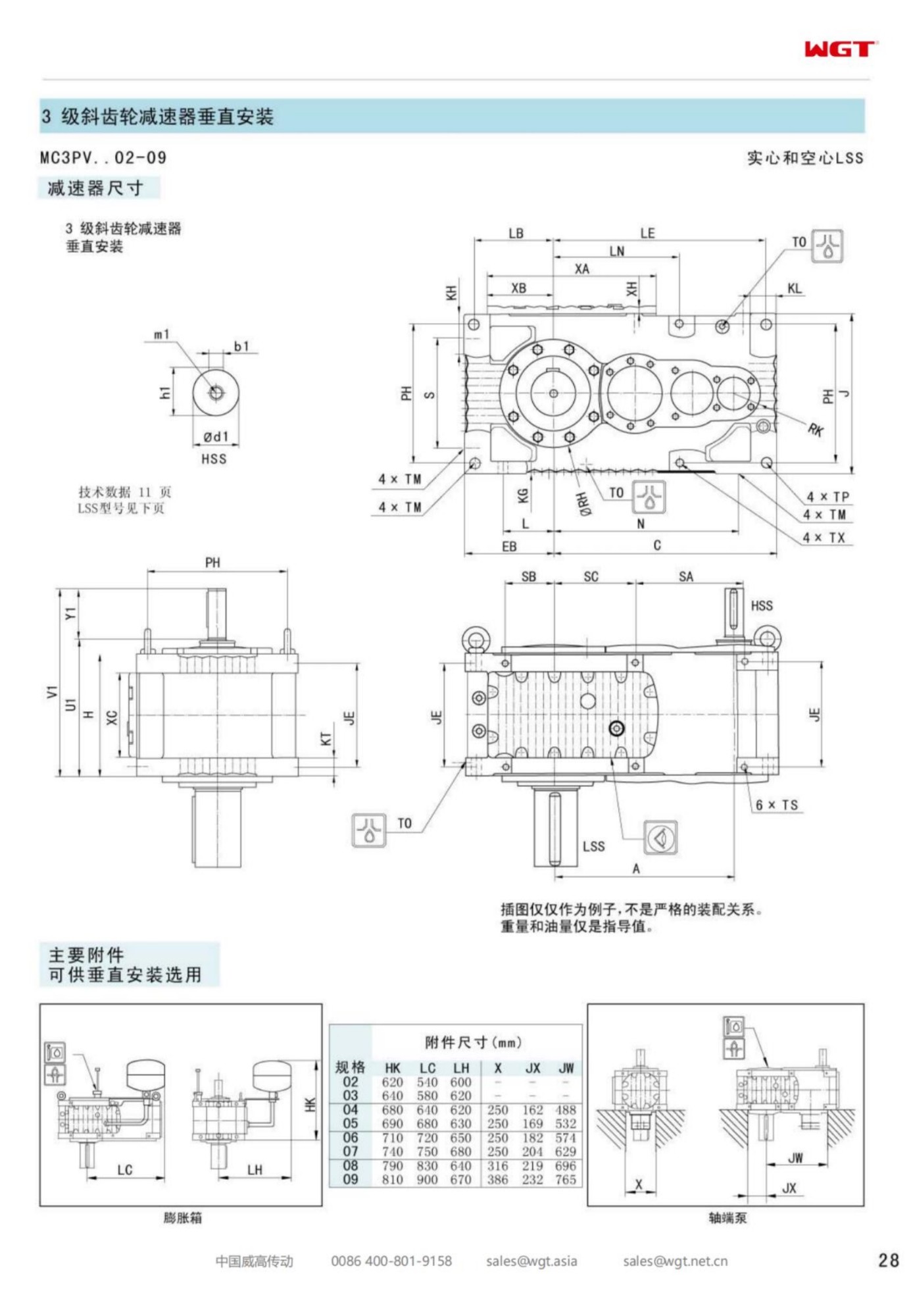
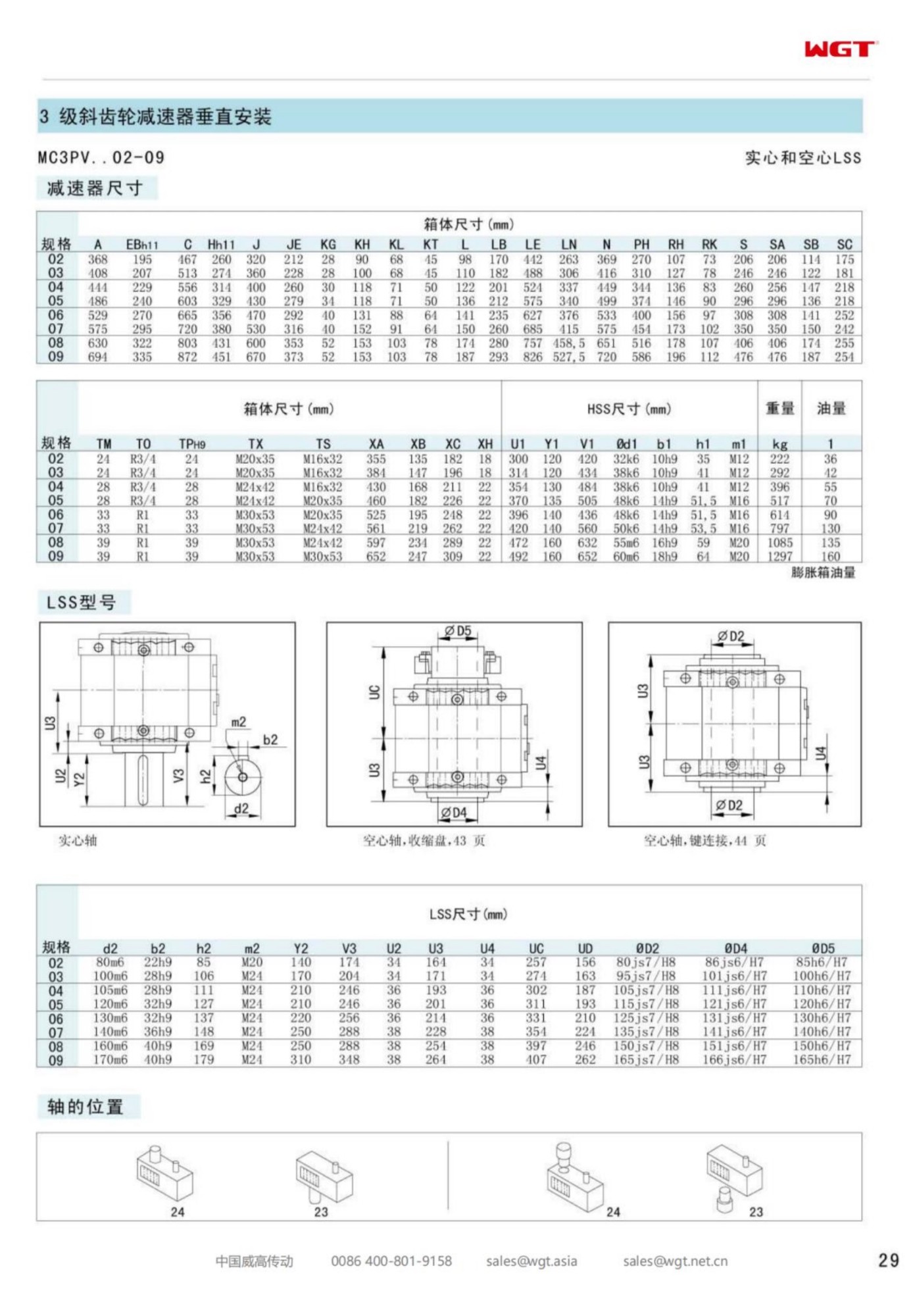
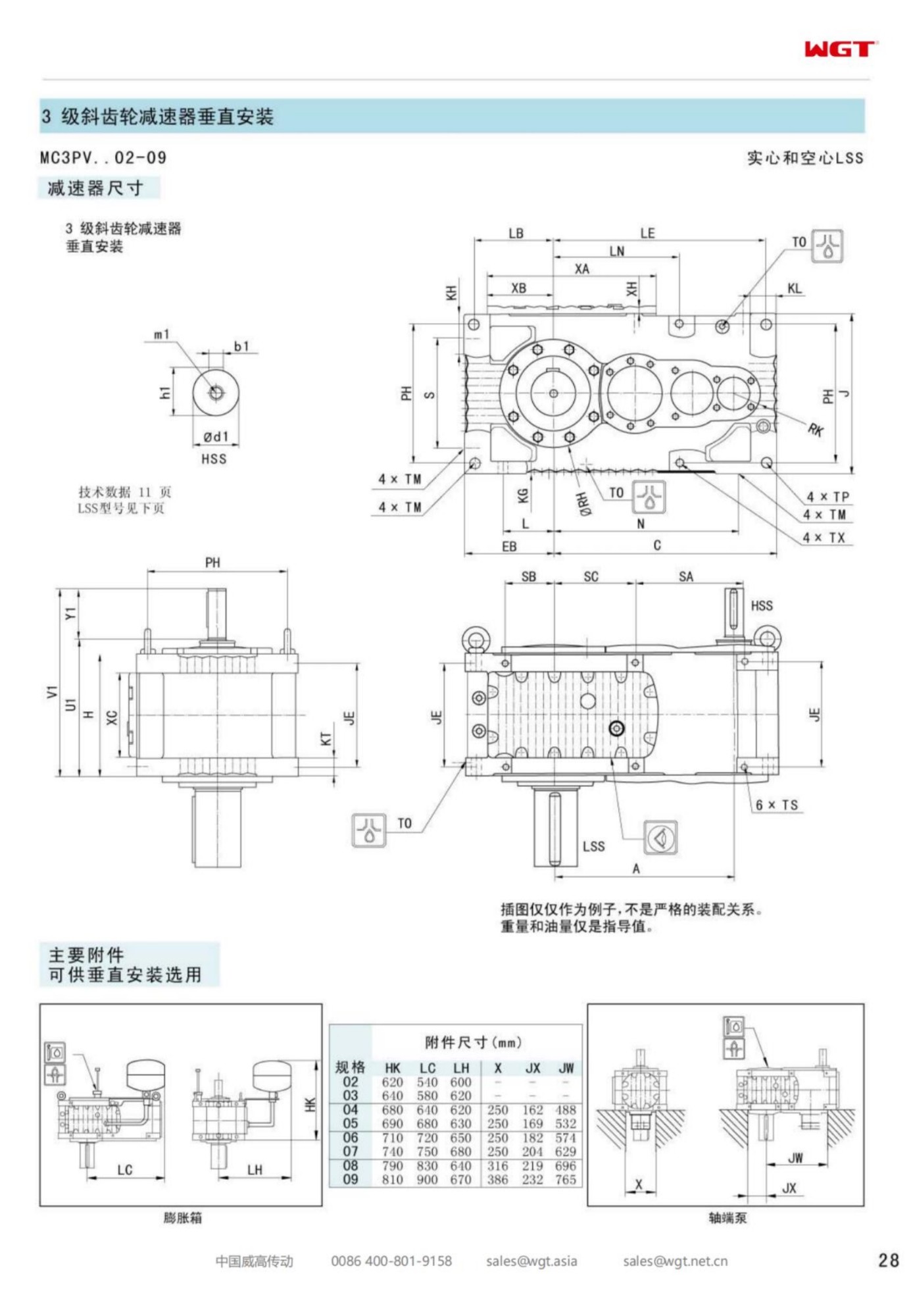
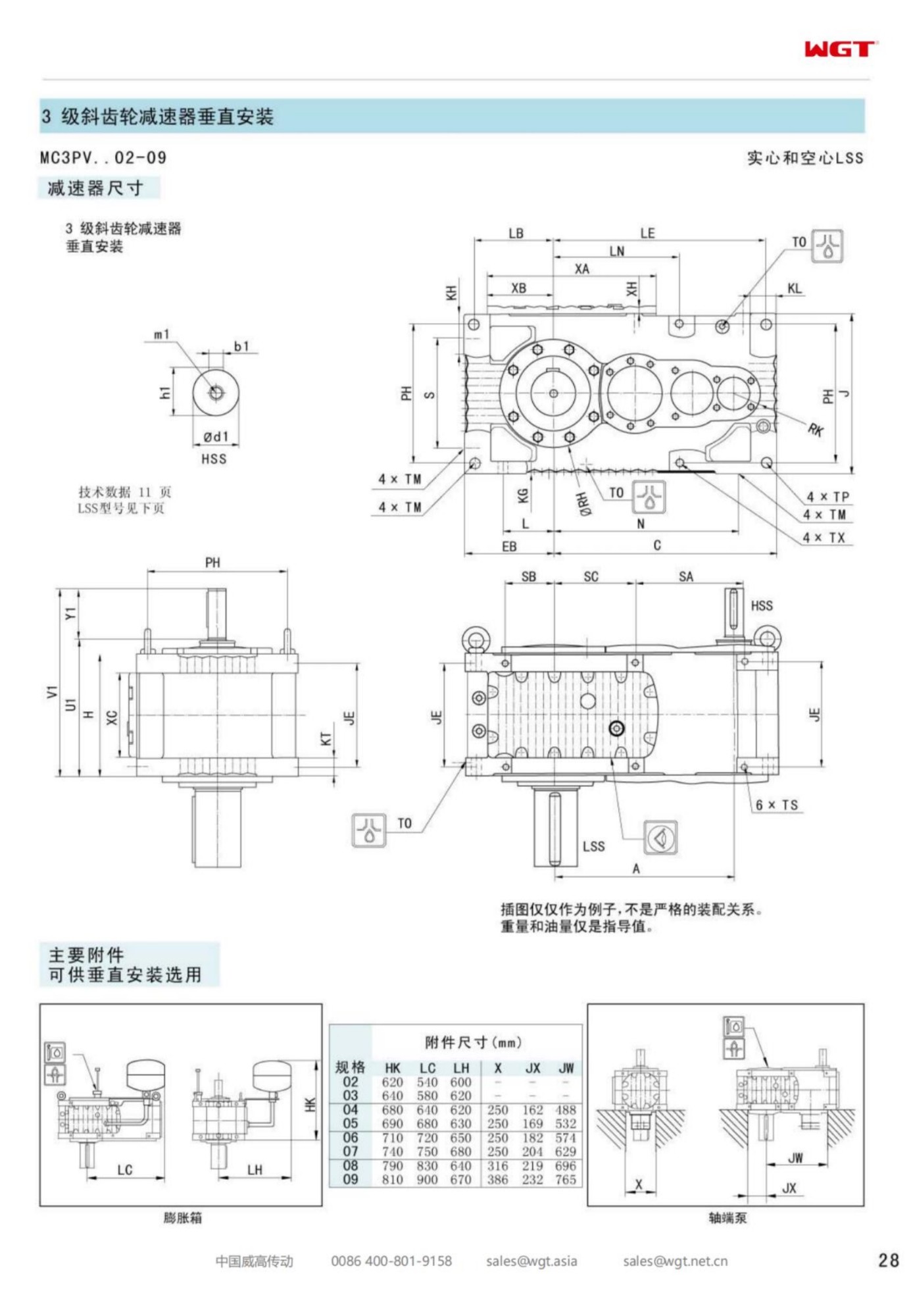
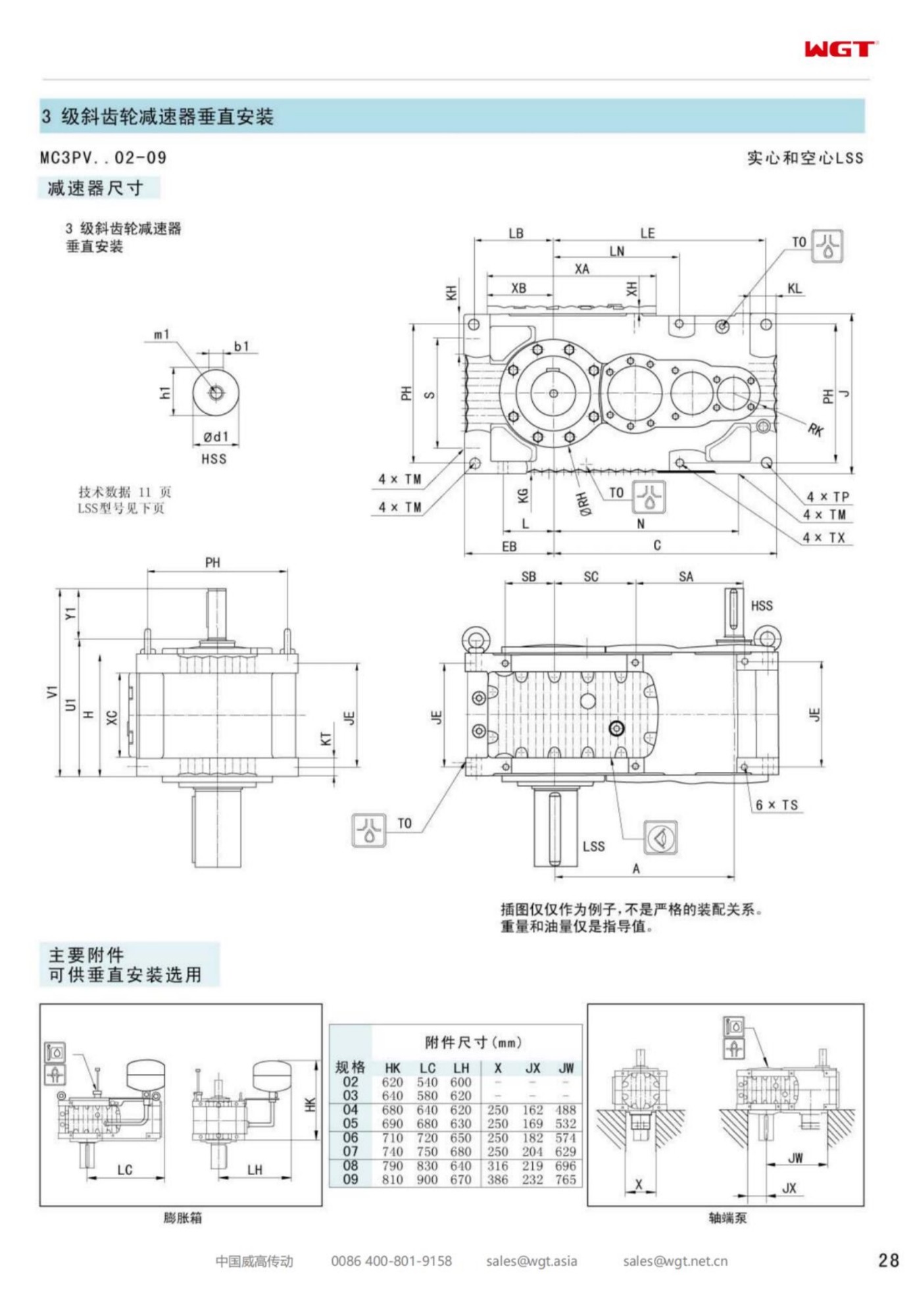
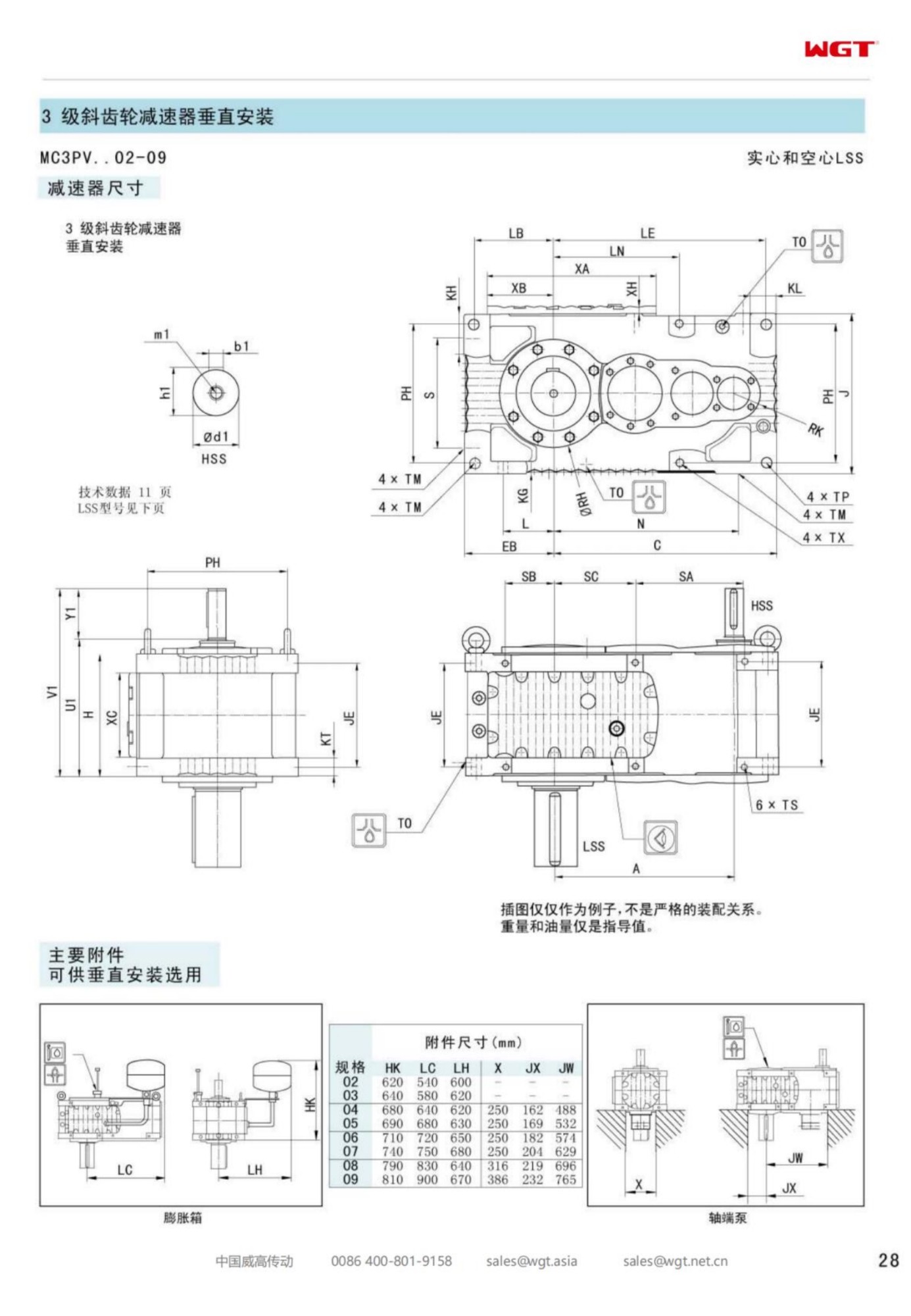
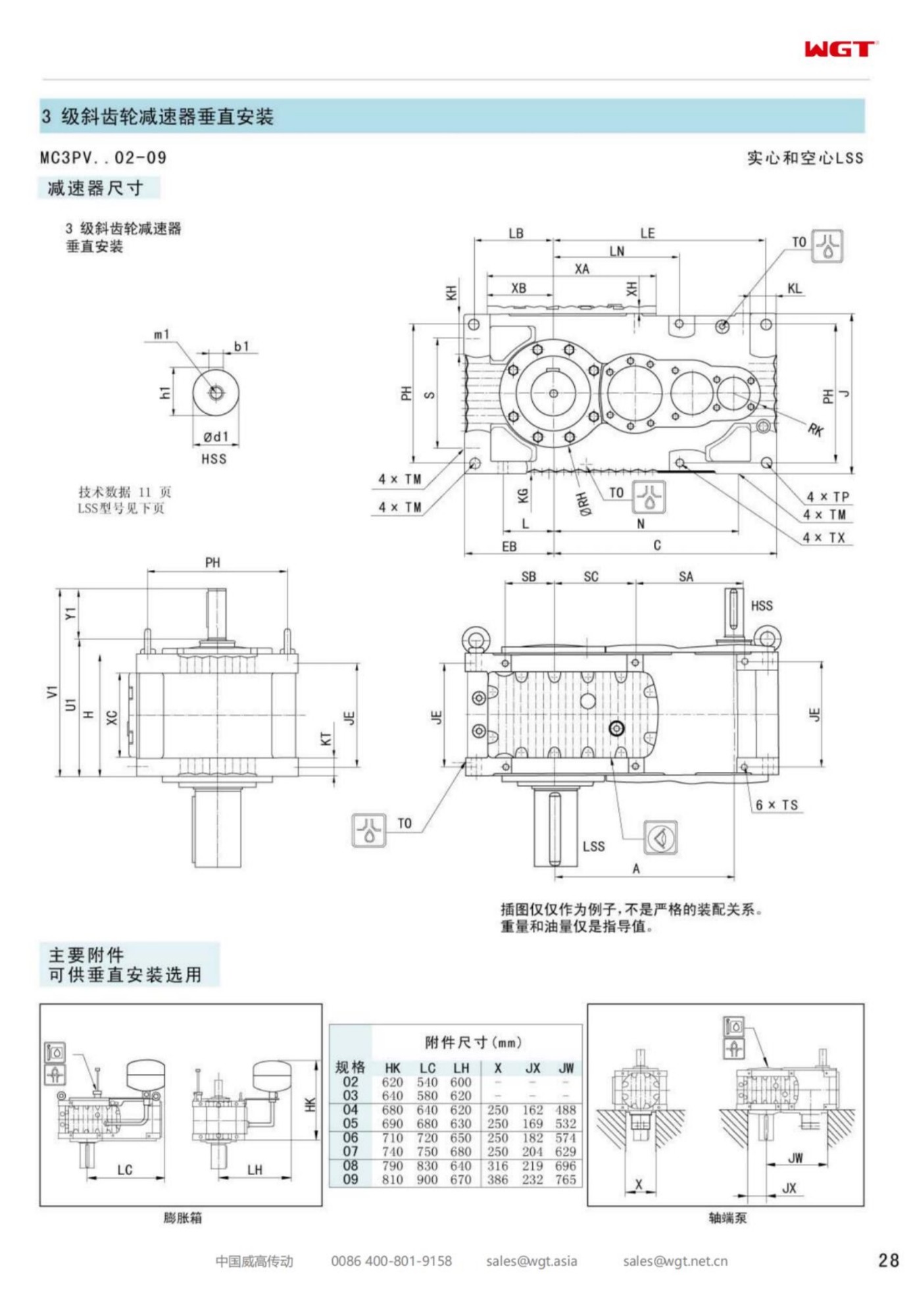
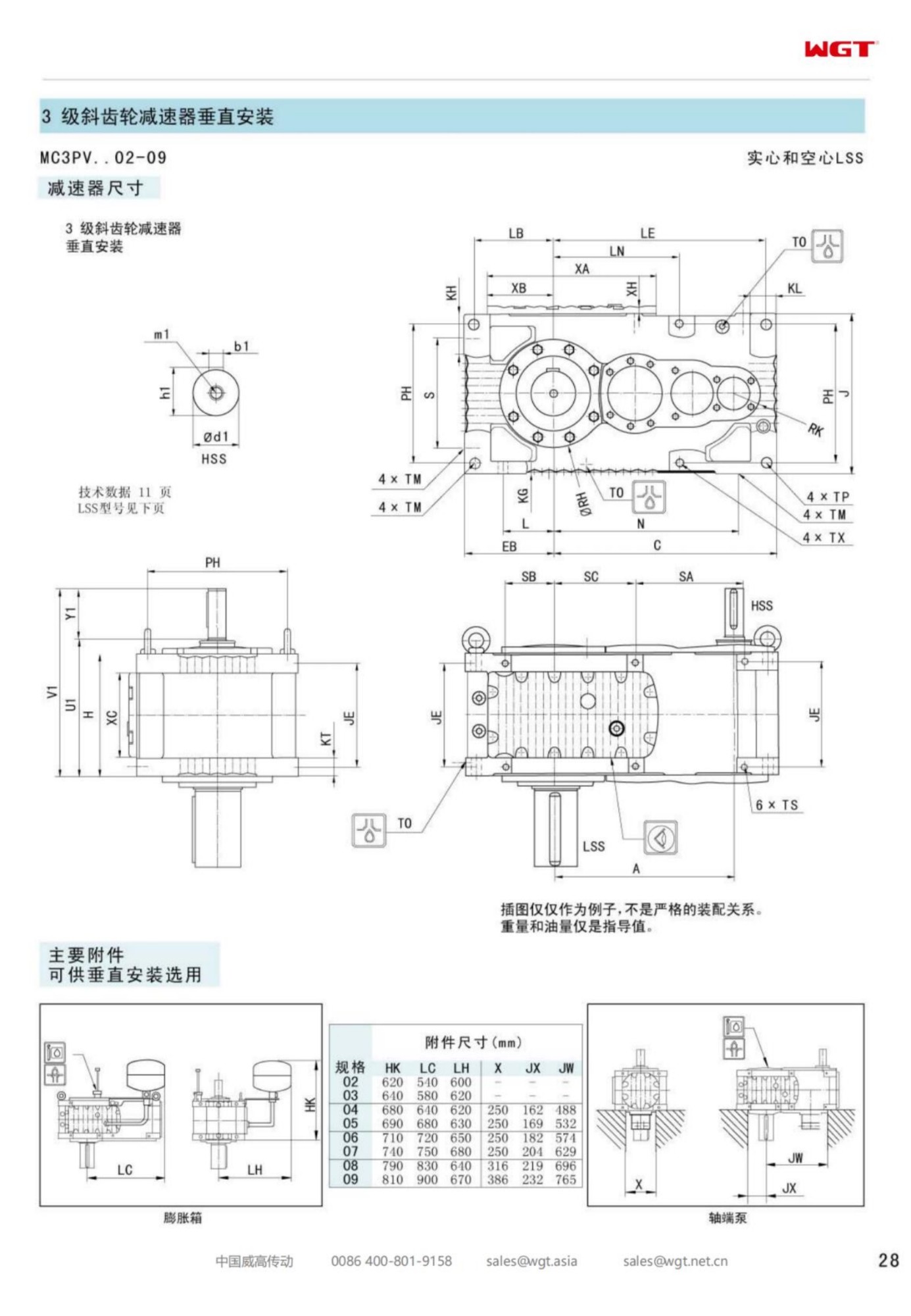
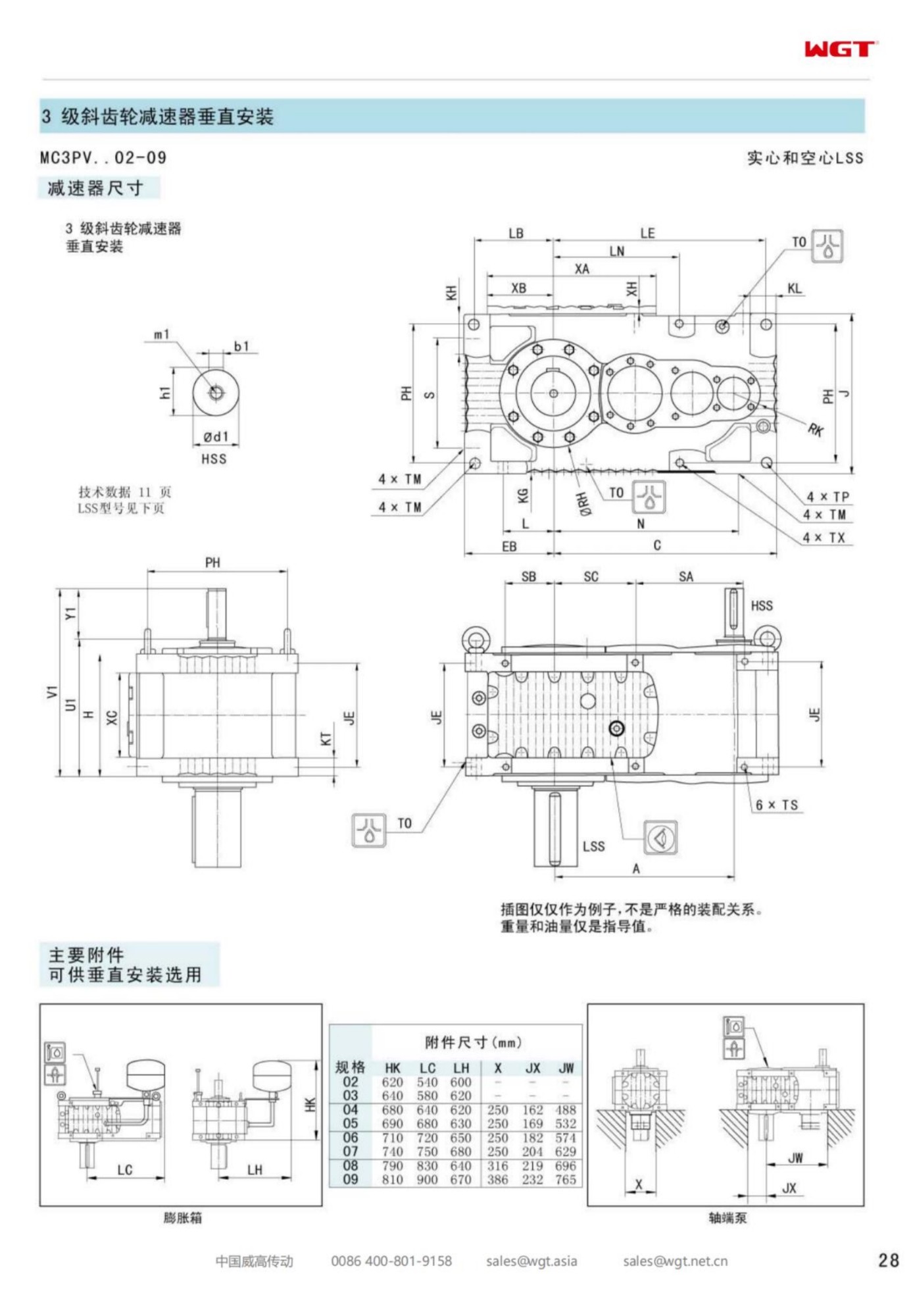
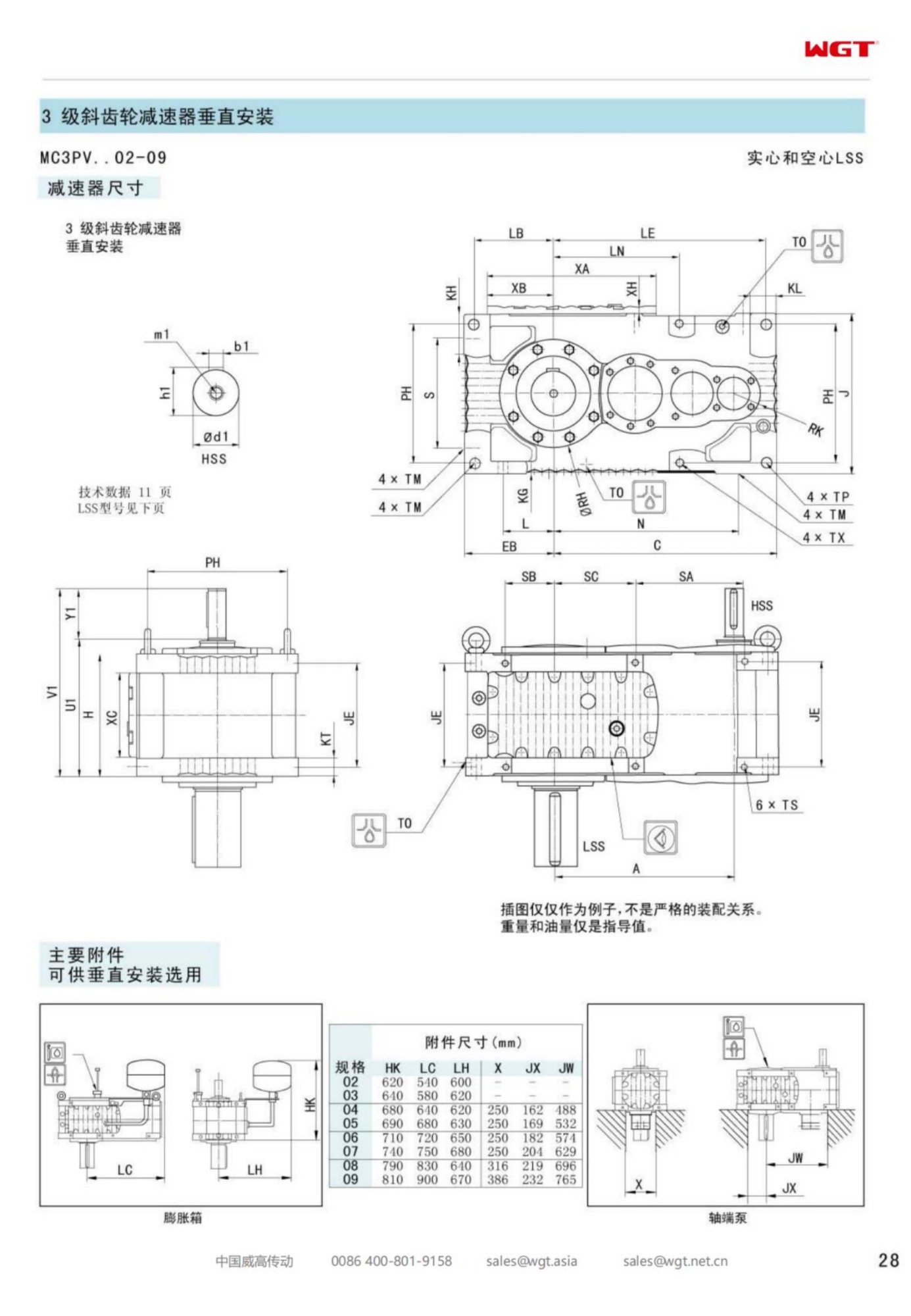
Flotation only works if the pulp has been conditioned first: reagents mixed into it long enough and hard enough that the surfaces the plant wants to float have actually been coated. That happens in a conditioning tank, and the agitator in that tank is the difference between a grade the plant can sell and a circuit that keeps re-treating its own tailings. The MC3PVST04 vertical solid shaft gearbox drives that agitator: three helical stages in an upright case, a keyed solid output coupled to the shaft, footed or torque-arm reaction according to the tank structure.
These notes follow the drive around a concentrator: the abrasion, the reagents, the vibration, and the figures a mill should put on an enquiry.
Conditioning Time Is Bought With Torque
Conditioning is a residence-time problem dressed as a mixing problem. The tank volume and the agitation together decide how long a particle spends in contact with the collector, and the agitation has to keep the full volume in motion rather than a polite swirl at the top.
That means the impeller is doing real work against a dense pulp, and the drive sees it as continuous torque at a speed the metallurgist has decided. Neither figure is negotiable once the circuit is commissioned.
The Code Read From Left to Right
The designation carries the mounting decision in six characters.
| MC | Industrial gear unit family built for continuous plant duty |
| 3 | Three helical reductions inside one upright case |
| P | Parallel-shaft layout, input and output on parallel axes |
| V | Vertical build, output axis pointing down into the tank |
| S | Solid output shaft, keyed and coupled to the agitator |
| T | Torque-arm reaction, no baseplate and no floor drilling |
Which reads: three-stage industrial unit, parallel shafts, vertical, solid output, torque-arm reaction, fourth frame of the band.
Where a Torque Arm Earns Its Place
Conditioning tanks in older concentrators are often steel tanks on a concrete ring, with a top plate that was never intended to carry a machine. A baseplate on that plate means drilling, stiffening and a structural conversation the mill would rather not have.
A torque arm moves the reaction into a beam or a column that already exists. The case hangs, the arm pulls, and the tank top carries nothing but its own weight and the fittings it was designed for.
Abrasion From Mill Discharge
Pulp arriving from a grinding circuit carries particles with sharp edges, because that is what a mill makes. The agitator runs in that pulp, and the tank walls, the impeller and the shaft all wear at a rate the mill measures in liner changes.
The gearbox is above the pulp and does not wear in the same way, but the seal area collects the fines that splash and settle. A protected seal entry and a drain that lets the fines out are what keep that wear away from the bearings.
A Coupled Shaft in a Slurry Bay
A solid output with a coupling gives the mill a drive it can uncouple and lift without disturbing the shaft. In a slurry bay where every job is done with a crane and a fitter on a ladder, that matters more than the elegance of a hollow bore.
The coupling needs a guard that survives the environment, and the alignment needs to be checked after any work on the tank. A mill that re-aligns after a shaft change and not after a tank repair will find the difference eventually.
Three Stages at Conditioner Speeds
Conditioners turn faster than thickener rakes and slower than mixers, which puts the ratio in a range where three helical stages are comfortable. The train stays compact, the case stays short, and the efficiency stays high enough that the motor does not have to be oversized.
A short case is also easier to protect. A drive that stands high above a tank top in a dusty bay collects dust on every horizontal surface and needs a taller access platform for its oil checks.
Reagents, Froth and Case Protection
Collectors, frothers and depressants are not usually aggressive to steel, but they are persistent, and a film of reagent on a warm case holds dust until the dust becomes a crust. Some circuits also run at a pH that makes the airborne mist mildly corrosive.
A finish that can be wiped, fasteners that do not stain, and a breather that draws from a clean height are the practical requirements. They are also the items most often left off a specification written in a hurry.
Oil Changes on a Concentrator Schedule
A concentrator runs its maintenance on a shutdown calendar, and a gearbox that needs an oil change between shutdowns will either be neglected or become an unplanned stop. The drive should be chosen so its drain interval fits the calendar rather than the other way round.
Oil volume, oil type and the temperature the case actually reaches all set that interval. A synthetic lubricant is often the cheapest way to stretch a drain from one shutdown to the next.
Vibration From an Unbalanced Pulp
A conditioner is not a precision machine. Coarse particles, uneven impeller wear and a pulp level that moves with the circuit all put a slow wobble into the shaft, and that wobble reaches the output bearing as a rotating load.
A steady bearing in the tank, a stiff shaft and a bearing arrangement designed for some bending are the three answers. A drive chosen only for torque will carry the load and still fail the bearing, and the failure will be blamed on the gearbox rather than on the shaft.
Sizing on Percent Solids
The same tank at twenty percent solids and at forty-five percent solids are two different machines. Power draw rises faster than the solids figure, and the torque at the shaft rises with it.
The enquiry should carry the design percent solids, the top size in the pulp, the specific gravity of the solids, and the impeller geometry. Sizing on the dilute case is how a conditioner ends up running at its thermal limit whenever the circuit pushes tonnage.
What a Concentrator Should Put on the Enquiry
Send the tank diameter and depth, the design percent solids and solids density, the impeller type and diameter, the output speed, the shaft length and diameter, the reagent scheme, and the structure available for the torque arm.
Add the ambient conditions in the bay - dust, humidity, and whether the drive will sit in sun or under a roof - because those decide the finish, the breather and the oil.
Frame Four in the Conditioning Row
The fourth frame of the vertical band covers the conditioning and reagent-contact tanks of a mid-size concentrator, where the pulp is abrasive, the duty is continuous and the maintenance window is short.
Bolted to a real member through its torque arm, with a coupling that can be reached and a seal that keeps fines out, it conditions pulp for years without adding itself to the mill's list of repeat failures.
Reagent contact time bought with torque in a conditioning tank:
- Flotation conditioner agitator at a base metal concentrator
- Reagent contact tank agitator at a copper flotation plant
- Pulp conditioning tank mixer ahead of rougher cells
- Collector mixing tank agitator at a zinc concentrator
- Regrind circuit conditioner agitator at a polymetallic mill
- Depressant contact tank agitator at a lead-zinc concentrator
The M3 Series at a Glance
| Model | Centre distance | Output | Typical duty |
|---|
| M3PSF50 | size 50 | solid shaft, foot | conveyors, feeders |
| M3PSF60 | size 60 | solid shaft, foot | crushers, mixers |
| M3PSF70 | size 70 | solid shaft, foot | ball mills, shredders |
| M3PSF80 | size 80 | solid shaft, foot | kilns, heavy conveyors |
| M3PSF90 | size 90 | solid shaft, foot | mill and kiln drives |
| M3RSF50 | size 50 | solid shaft, foot, right-angle | inclined conveyors, elevators |
| M3RSF60 | size 60 | solid shaft, foot, right-angle | screw classifiers, feeders |
| M3RHF70 | size 70 | hollow shaft, foot, right-angle | agitators, drum drives |
| M3PHT80 | size 80 | hollow shaft, torque arm, parallel | shaft-mounted conveyors |
| M3RHT90 | size 90 | hollow shaft, torque arm, right-angle | heavy shaft-mounted drives |
All frames in the table belong to one industrial family. P = helical parallel-shaft, R = bevel-helical right-angle; the low-speed shaft is solid (S) or hollow (H), mounted on feet (F) or a torque arm (T).
Selection Example: Flotation conditioner agitator at a base metal concentrator
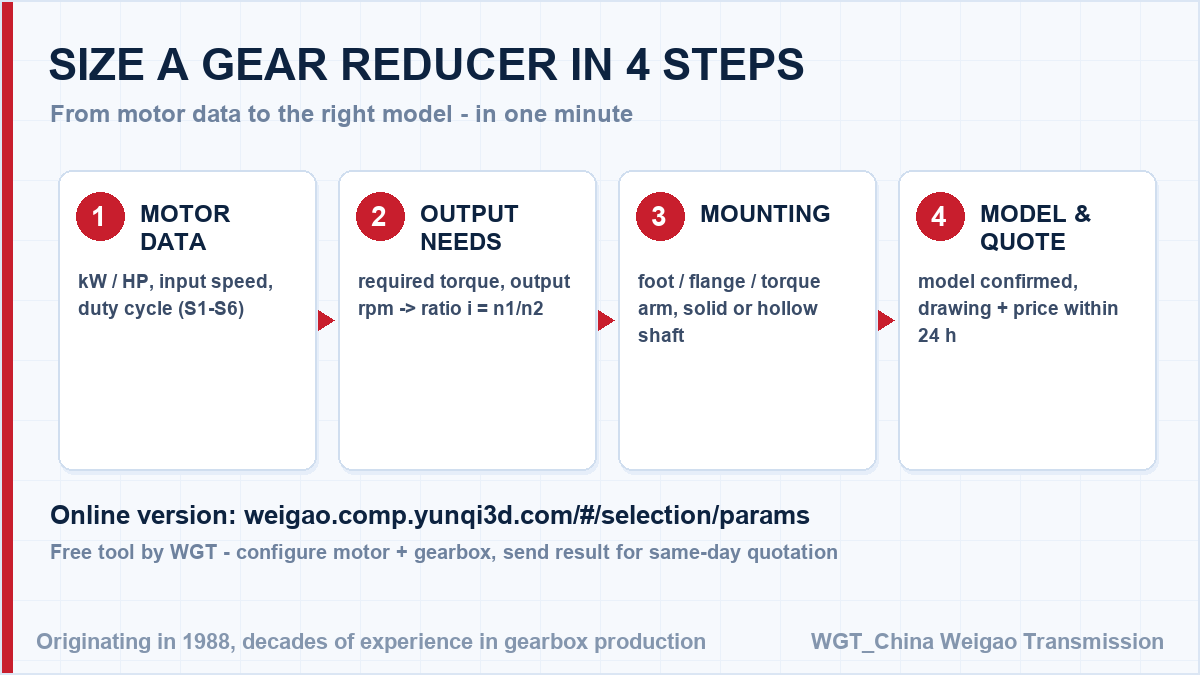
Take a 15 kW motor at 1475 rpm turning the conditioner impeller at 55 rpm. The ratio follows directly: 1475 / 55 = 26.8, so a ratio near i=27 comes from the three-stage vertical band, and the frame is sized on the design percent solids with a service factor rather than on the dilute pulp the circuit sees at start-up. In this case frame four takes its reaction through a torque arm into an existing beam, drives the shaft through a keyed solid output and a guarded coupling, and keeps fines out of the bearing housing with a protected seal entry and a drain. That single division gives the catalogue ratio; the service factor for your duty class is then applied to the torque, and the frame size follows.
![how to size a industrial helical gearbox in four steps]()
Sizing flow: motor speed, target output speed, torque, service factor.
Where This Series Works in Practice
Automatic car-wash line
A car-wash equipment builder fits hollow-shaft reducers to its conveyor chains. The compact frame hides inside the wash tunnel, and FKM seal options handle the constant moisture.
Textile dyeing drums
A dyeing machine maker uses speed reducers on its fabric-turning drums. Low vibration (under 20 microns) prevents streaks in the fabric, and the 94-96% efficiency keeps the heat load down in a warm workshop.
Technical Questions, Answered
How do I match the gear unit to my existing foundation?
Send the nameplate or the outline drawing of the unit being replaced. Frame dimensions follow the common industry dimension ladder, so foot holes, shaft heights and flange bolt circles normally match without redrilling foundations.
What ratio range does an industrial gear unit cover?
The range spans from low single-digit reductions to very high ratios by combining stage counts: two-stage builds for the lower band and up to five-stage builds for the highest reductions, with intermediate ratios available between catalogue steps on request.
![industrial helical gear reducer application fields]()
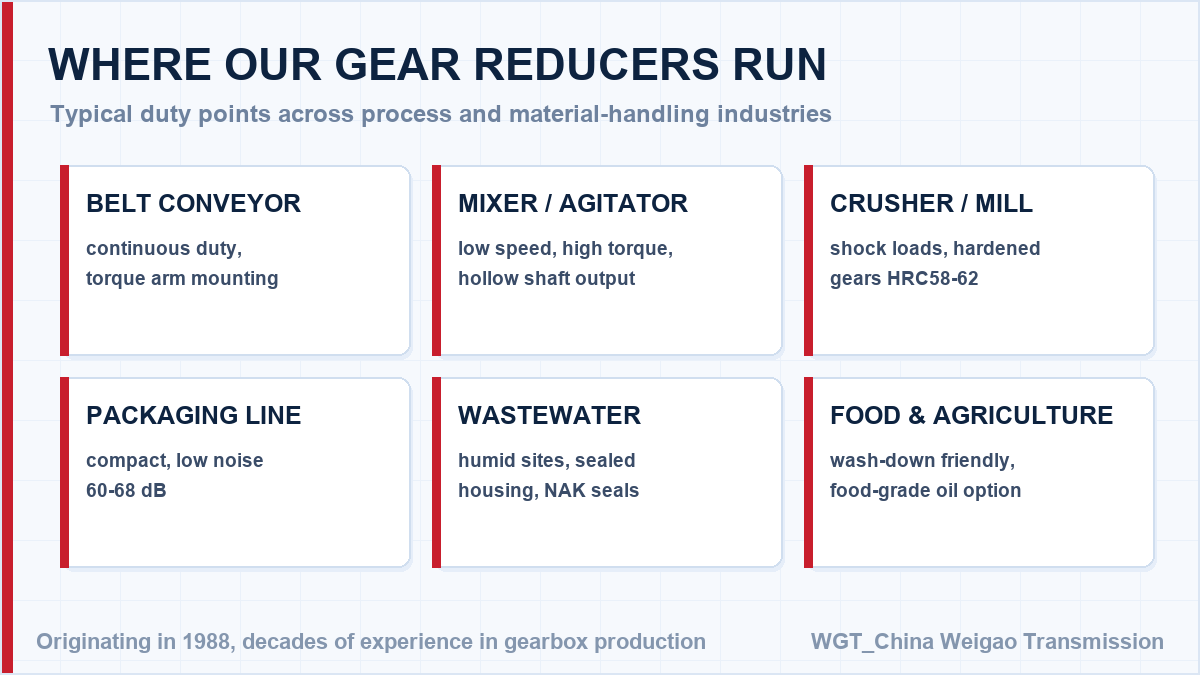
Common application areas for right-angle industrial helical drives.
From RFQ to Dispatch - One Account Manager
Tired of chasing suppliers? Skip the back-and-forth: configure your drive in the WGT Motor & Gearbox Online Selection System and send us the result for a same-day quotation.
One account manager follows your enquiry from selection to dispatch, with lead times and test dates confirmed in writing. Urgent unit needs and project volumes are handled on the same route. Looking for a gear motor for car wash system? Tell us the duty point and we will confirm the model in writing.