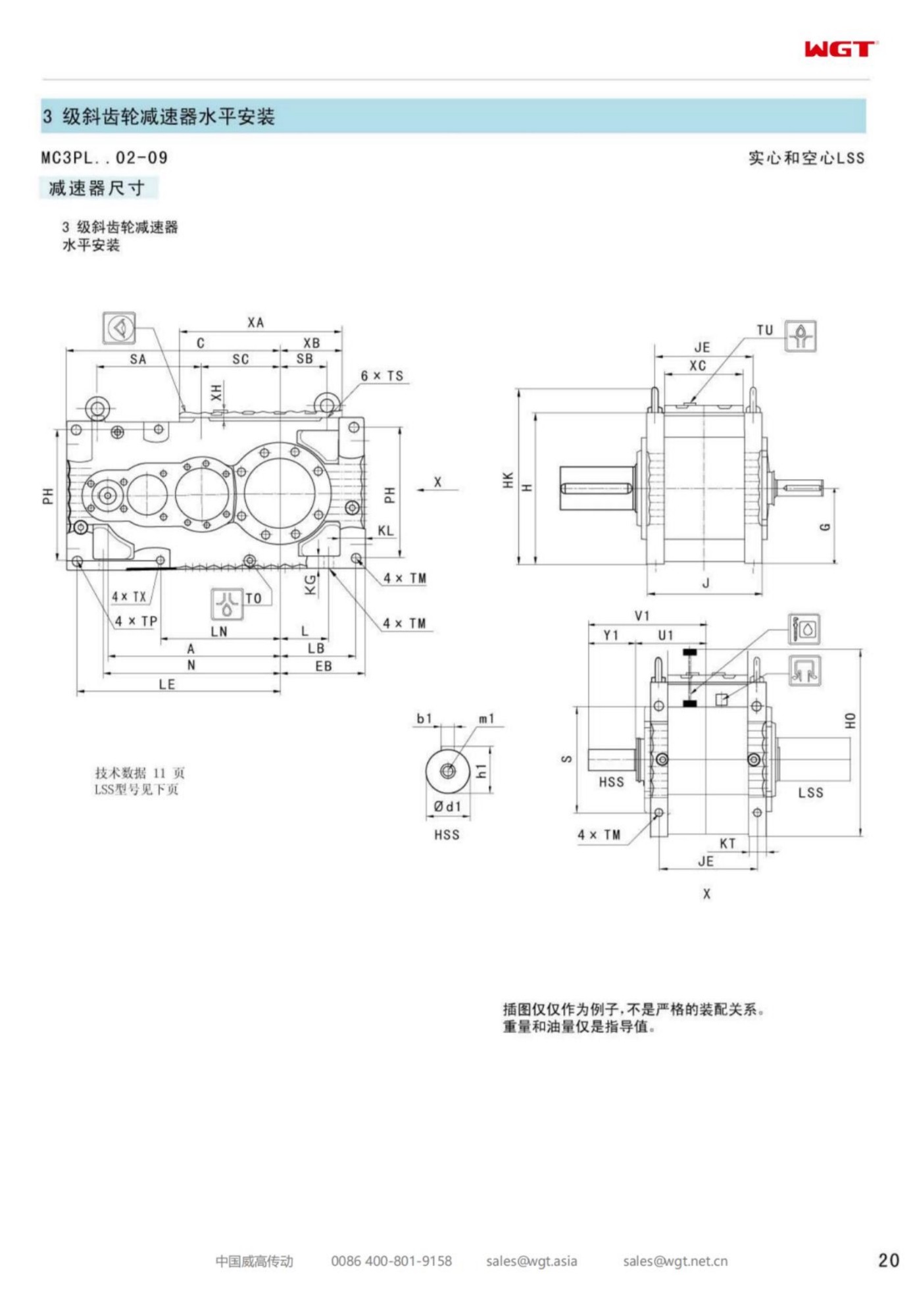
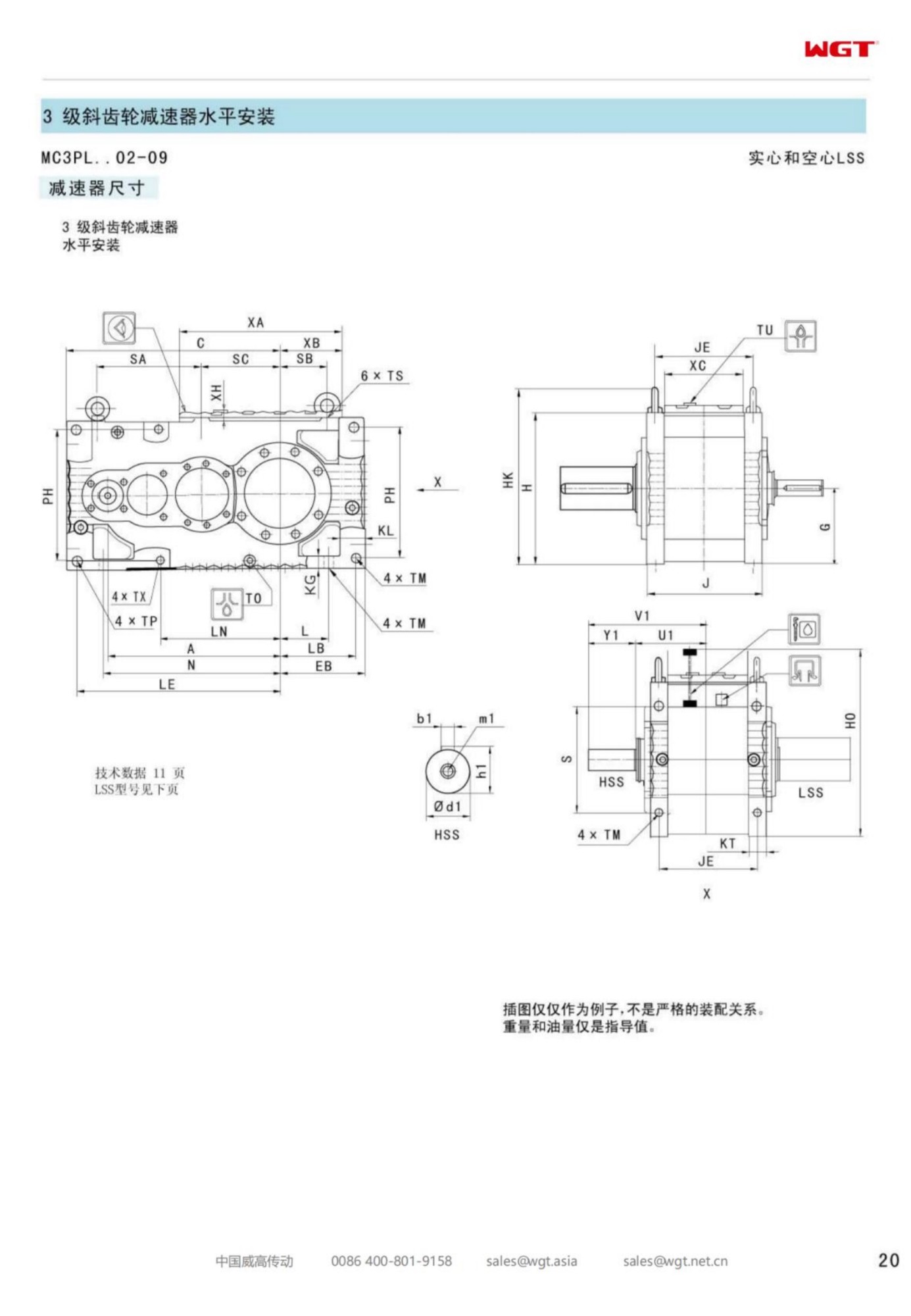
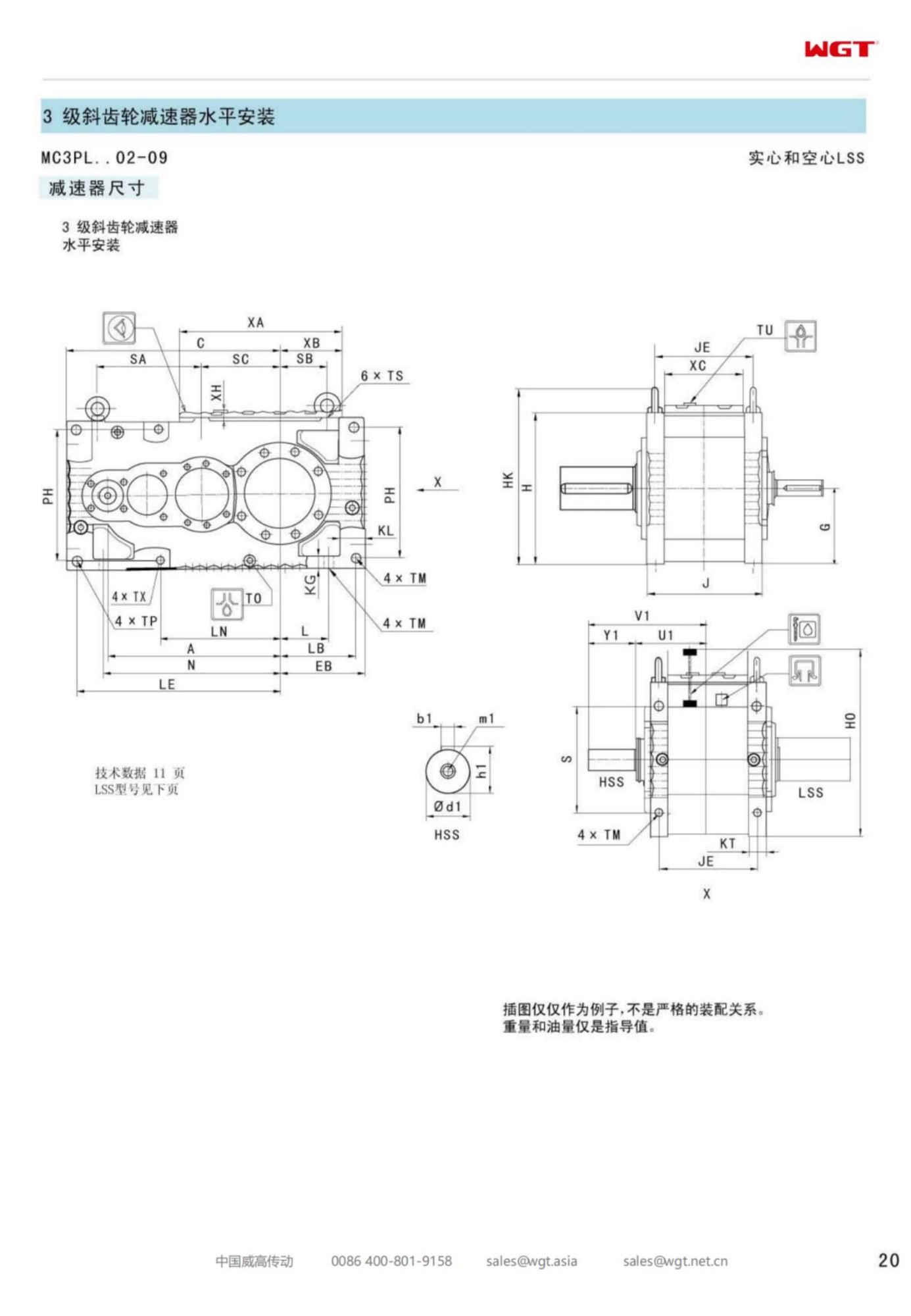
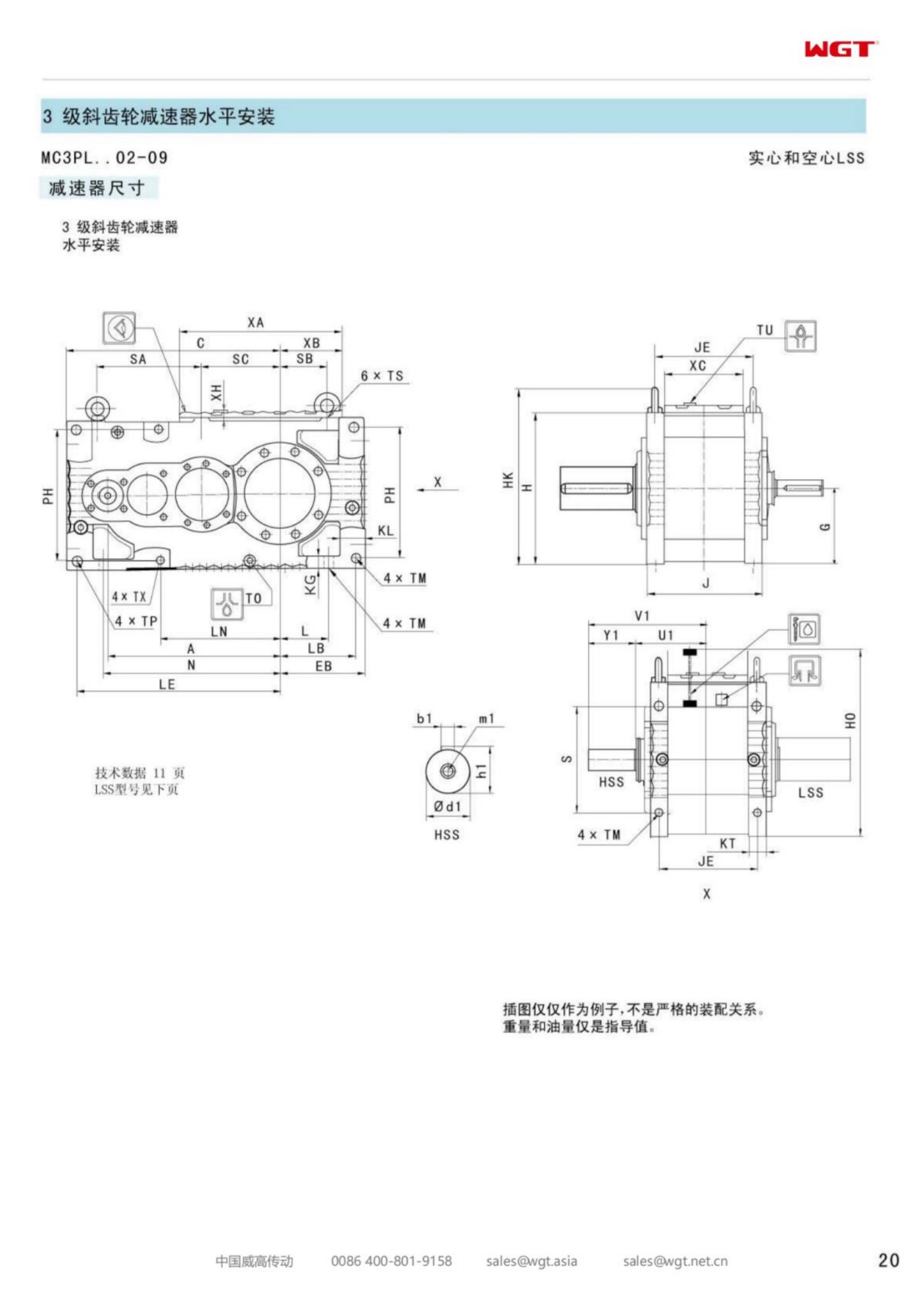
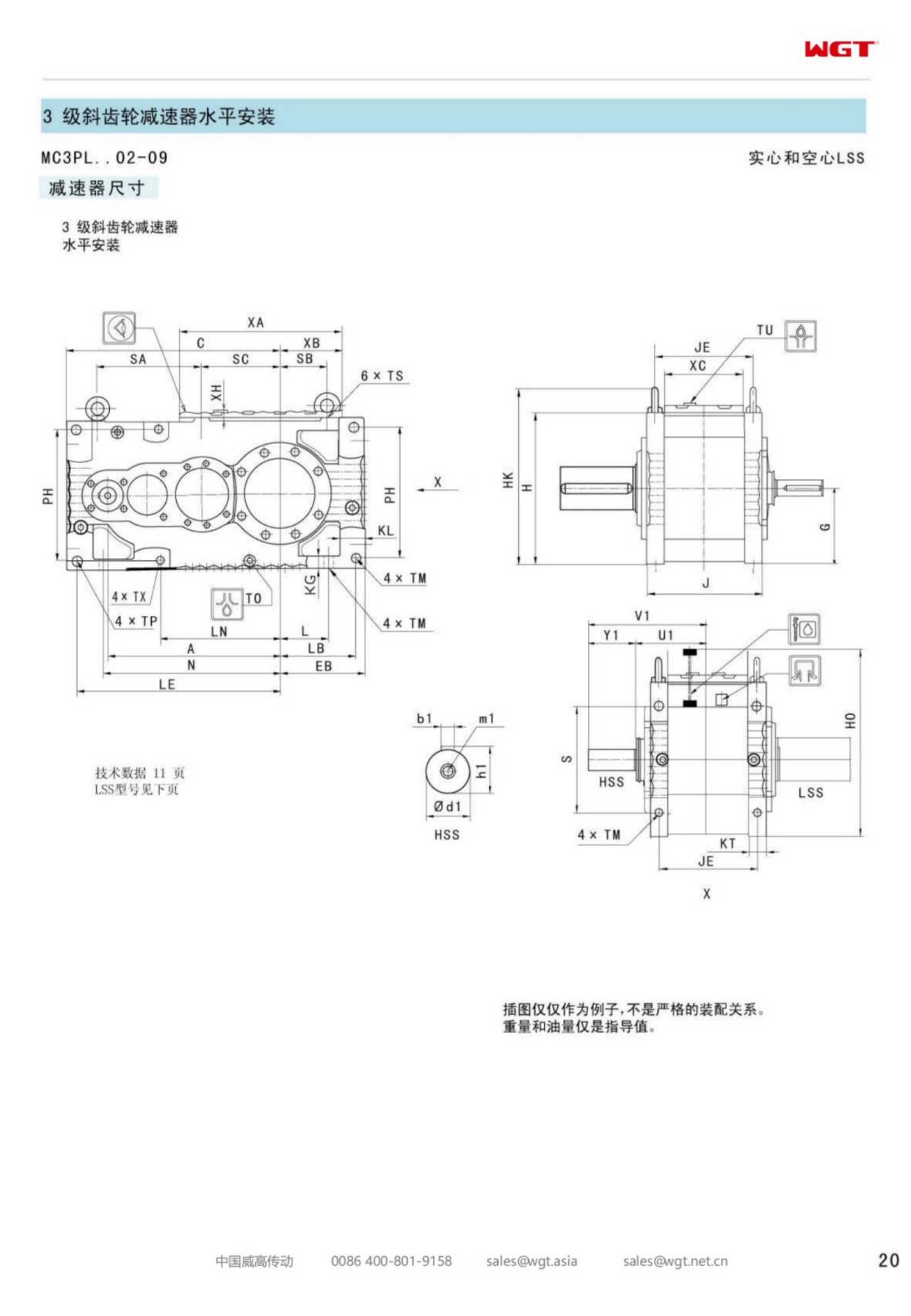
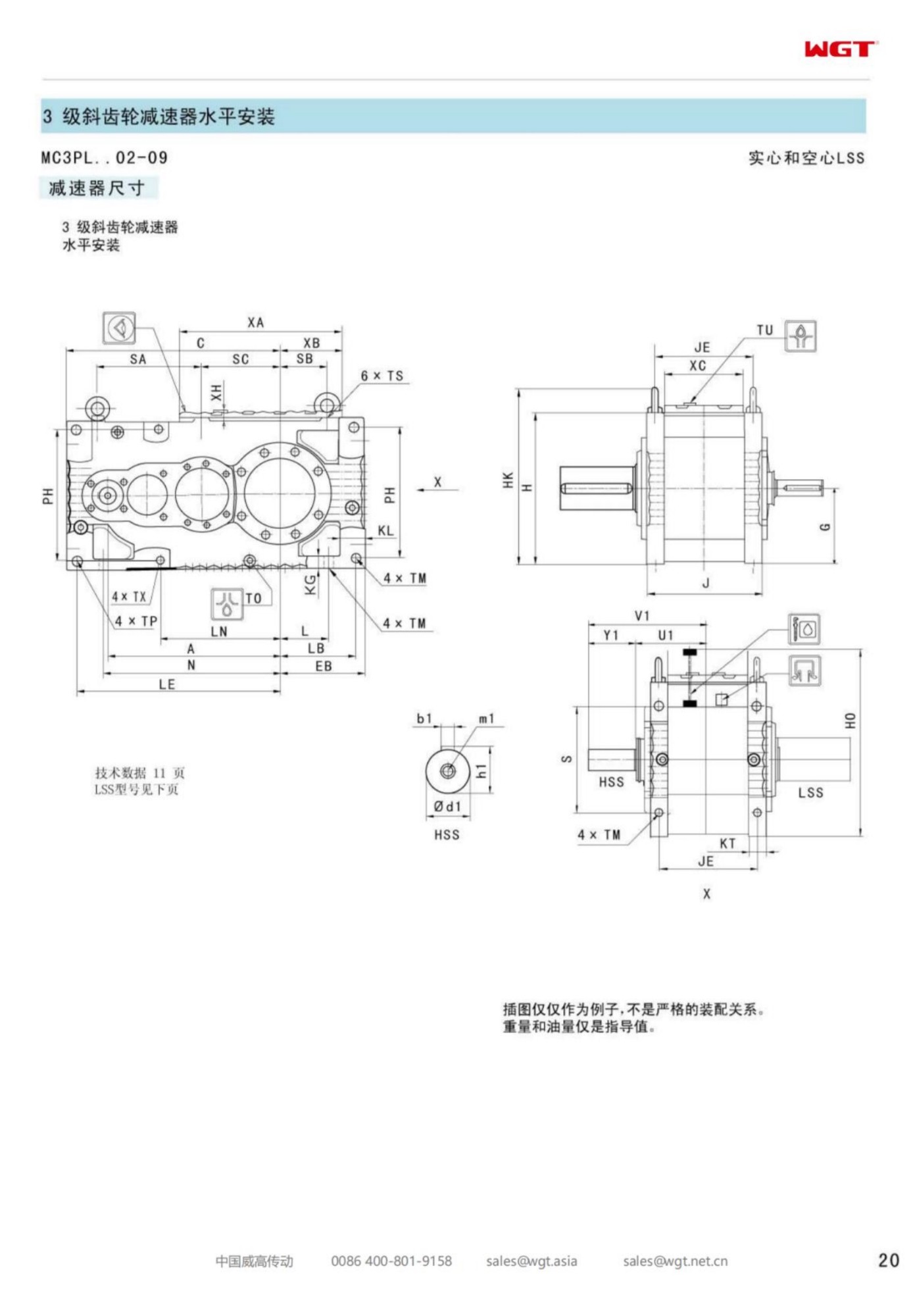
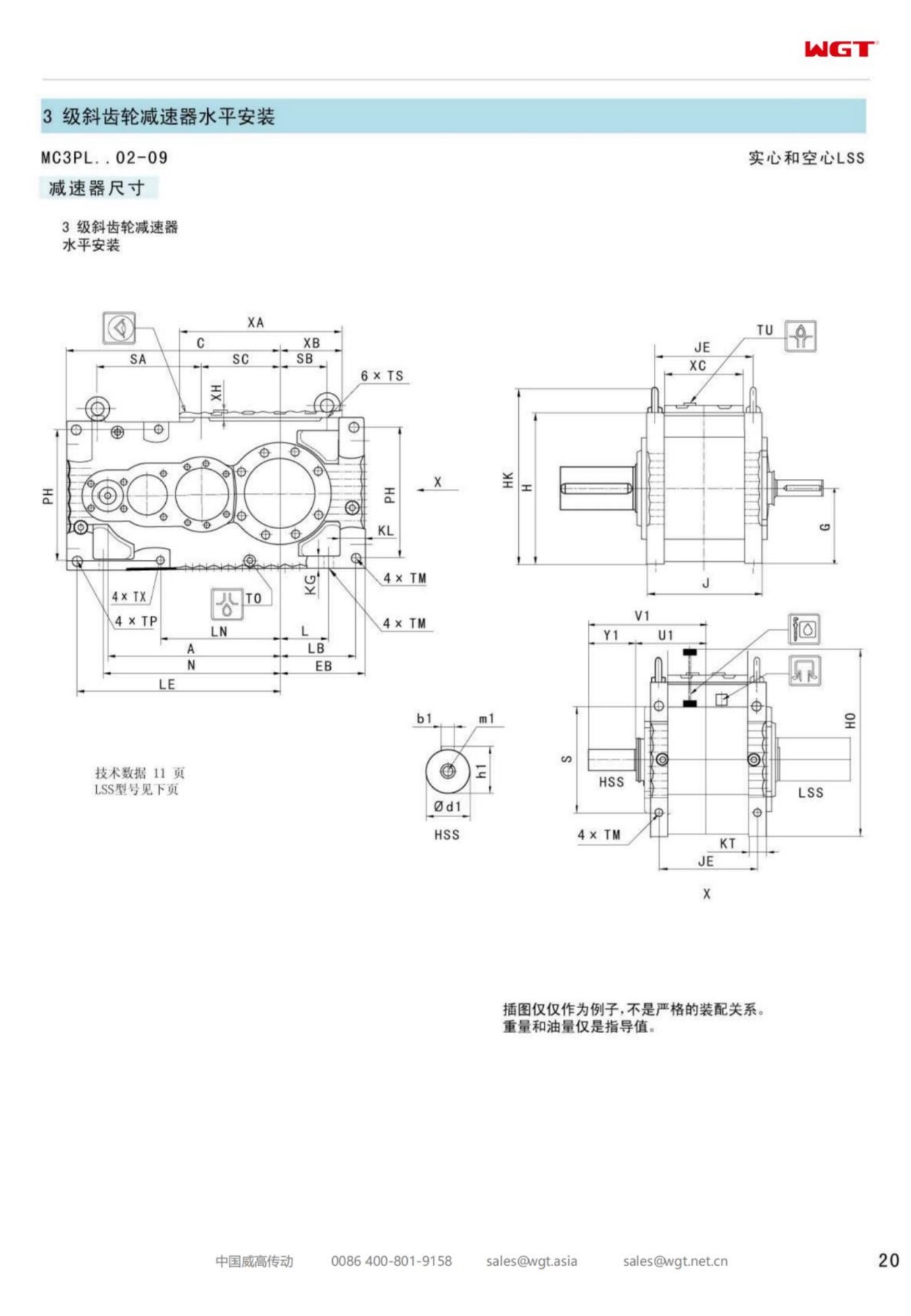
An apron feeder is the machine a quarry buys when it has stopped believing in gentle material. Lumps the size of the hopper gate, impact on every flight, dust that blinds everything it settles on - and a drive that must pull the whole mass forward at walking pace, on demand, all day. That duty lives at the heavy end of the three-stage band. The MC3RLHT08 right-angle hollow shaft gearbox is the frame that sits there: three reductions for the breakaway and the haul, a hollow bore straight onto the head shaft, and a torque arm braced against the feeder's own structure.
The notes below are for the people who specify and live with these feeders: why the worst minute decides the frame, what impact does to every part of the drive train, and how an enquiry should be written so the answer is a feeder that starts, not a feeder that is discussed.
The Feeder That Carries the Worst Minute
An apron feeder is never judged by its average hour. It is judged by the moment the blasting left a lump in the wrong place, the moment the drawdown pattern bridged, the moment the upstream crusher discharged everything at once. The drive that survives those minutes is the one the plant actually bought; the rest is arithmetic.
That is why the specification conversation starts with the worst case and works back to the nameplate, not the other way round. Every experienced plant has a story about the feeder that was sized on the tonnage sheet and met the pit on its first shift.
Reading the MC3RLHT08 String
The code settles the geometry questions before the layout meeting.
| MC | Industrial gear unit family for continuous plant duty |
| 3 | Three stages in the case - two helical reductions into a bevel set |
| R | Right-angle build, the motor set back from the feeder line |
| L | Level output axis along the feeder centreline |
| H | Hollow output bore keyed onto the feeder head shaft |
| T | Torque-arm bracket, reaction into the feeder structure |
| 08 | Eighth frame of the three-stage band, the heavy end |
Three stages put the torque where the feeder needs it, at a speed the pan line can live with, in a case that fits beside the hopper instead of under the whole plant.
Three Stages and the Breakaway Start
A stopped feeder restarts against everything the hopper can settle onto it: packed fines under the gate, bridged lumps above, and a pan line whose bearing friction has risen with the weather. The breakaway torque is routinely several times the running figure, and it is the number that actually sizes the drive.
Three reductions give the frame the low-speed torque to break that mass from a moderate motor, and give the electrical engineers a start they can stage - jog, soft start, then full pull. The result reads on the drawings as a smaller motor; it reads on the plant as a feeder that starts on the first attempt.
Lumps, Impact and the Shaft Train
Impact does not stay where it lands. A lump dropped on the pans travels through the chain, the head shaft and the drive train as a torque spike that every component sees in its own way: bearings as radial shock, gear teeth as a load reversal, the keyway as a quiet hammer blow that only announces itself at inspection.
The defence is designed margin plus honest maintenance: a service factor argued on the impact case, a key fit that is checked when the feeder is opened, and couplings upstream that can eat a spike instead of passing it on. The gearbox is the last part of that chain and should be specified as if the rest will one day fail.
Hollow Bore onto the Head Shaft
The hollow-bore mount puts the case where the coupling would have been and removes the alignment work that a dusty quarry is the worst place to do. It also makes the bore fit the whole of the torque story, which is why the shaft drawing matters more here than anywhere else in the plant.
Quarry head shafts are worked hard and dressed occasionally. Measure the shaft as it is, not as the original drawing says, and specify the key and fit against the measurement. The one afternoon spent measuring is repaid the first time the feeder is re-mounted after a shutdown.
Torque Arm Under Shock
The torque arm on an impact duty does not carry a steady reaction; it carries a sequence of blows, some of them in reverse when the load stalls against the running drive. Its anchors therefore see fatigue, and fatigue finds the first bad weld.
Land the stay on a primary structural member, square to the reaction, and spread the load with a plate designed for it. Inspect the bracket and its anchors at every major shutdown - not because they usually fail, but because when they do, the case swings on its bore and everything downstream learns about it at once.
Dust and the Blanket of Fines
Crushed limestone makes a dust that is fine, alkaline and everywhere. On a warm case it bakes into a crust; under a leaking grease nipple it makes a paste; inside a careless breather it makes its own grinding compound. The case exterior and the breather decide most of the story.
Specify a breather suited to dust, covers that seal, and a washdown or blowing-off position that the operators can actually reach. Then put the case on the housekeeping schedule by name. A feeder drive buried in its own product is a drive nobody inspected, not a drive nobody specified.
Bearings Built for Impact
The output bearings of an impact-duty drive live shorter lives than their catalogue cousins in a packaging hall, and the difference is entirely explained by the load spectrum. Sizing them on the mean load is the error; sizing them on the impact case with an honest duty cycle is the answer.
Record bearing temperatures monthly and keep the record. A trend that takes three months to develop is invisible on any single day, and it is the only early warning a quarry gets before the noise starts.
Speed Control and the Drawdown Pattern
Modern plants run apron feeders at variable speed to hold the crusher fed evenly, which turns the drive into a control element as well as a workhorse. Low-speed operation brings its own oil film and bearing questions, and the speed range belongs on the enquiry, not in the commissioning meeting.
State the minimum continuous speed, the duty at that speed, and how often the feeder starts. The frame, the oil and the cooling question all follow from those three lines - and they are cheap to write down.
Wear Parts and the Spares Philosophy
A quarry is where it is, and the feeder is what feeds everything else. The spares philosophy therefore writes itself: seal kits, breathers and fastener sets held on site; the gear stage treated as a planned overhaul, not a shelf item.
Agree the wear-parts list at order stage and label the shelf with the feeder's name. The plants that restart quickly after a seal failure are the plants whose spares shelf was planned by the person who specified the drive.
Writing the Enquiry for an Apron Feeder
The enquiry that gets this frame right describes the pit as it is: lump size and drop height, pan width and length, head shaft dimensions and condition, breakaway and running torque, speed range, dust, weather, and the structure available for the stay.
The reply should answer as a system: bore and key against the measured shaft, ratio and output speed across the control range, service factor argued on the impact and breakaway case, seals and breather for limestone dust, bearings sized on the duty cycle, and arm geometry drawn against the feeder frame. Then the feeder starts on the first shift and keeps starting.
A Frame Eight on the Hard Feed
Feeders are judged at the end of the pit's life, when the hoppers have been welded, the liners changed and the dust has settled everywhere the wind could carry it. The drives that come through are the ones whose bore fits were measured, whose anchors were inspected, and whose oil was changed on condition rather than on hope.
Frame eight carries its half with three stages that break away a settled mass and haul it at walking pace, a hollow bore that removes a coupling from the dust, and margin held for the lump nobody predicted. The pit carries the rest - and the pit never sends its best material first.
Oversized lumps, impact and a breakaway that decides the frame - three stages pull it:
- Apron feeder under a limestone quarry hopper
- Primary crushing station feed pan at a cement plant
- Reclaim feeder at a crushed stone stockpile
- Blended material drag pan feeder before the raw mill
- Clinker extraction pan at a cooler discharge
- Rip-rap and armour stone handling feeder at a port stockyard
Selection Example: Apron feeder under a limestone quarry hopper
Take a 37 kW motor at 1480 rpm turning the pan line at 7.5 rpm. The ratio follows directly: 1480 / 7.5 = 197, so a ratio near i=200 is selected from the three-stage right-angle band, and the service factor is set on the breakaway of a settled hopper and the lump impact case rather than on the mean feed rate. In this case frame eight breaks the hopper loose and hauls it at crawl speed on a bore keyed to the head shaft, with an arm braced against feeder steelwork and seals rated for limestone dust. That is the whole calculation. If your duty involves heavy starting, frequent reversing or many stops per hour, tell us and we raise the service factor.
Which Frame Size Do You Need?
| Model | Centre distance | Output | Typical duty |
|---|
| M3PSF50 | size 50 | solid shaft, foot | conveyors, feeders |
| M3PSF60 | size 60 | solid shaft, foot | crushers, mixers |
| M3PSF70 | size 70 | solid shaft, foot | ball mills, shredders |
| M3PSF80 | size 80 | solid shaft, foot | kilns, heavy conveyors |
| M3PSF90 | size 90 | solid shaft, foot | mill and kiln drives |
| M3RSF50 | size 50 | solid shaft, foot, right-angle | inclined conveyors, elevators |
| M3RSF60 | size 60 | solid shaft, foot, right-angle | screw classifiers, feeders |
| M3RHF70 | size 70 | hollow shaft, foot, right-angle | agitators, drum drives |
| M3PHT80 | size 80 | hollow shaft, torque arm, parallel | shaft-mounted conveyors |
| M3RHT90 | size 90 | hollow shaft, torque arm, right-angle | heavy shaft-mounted drives |
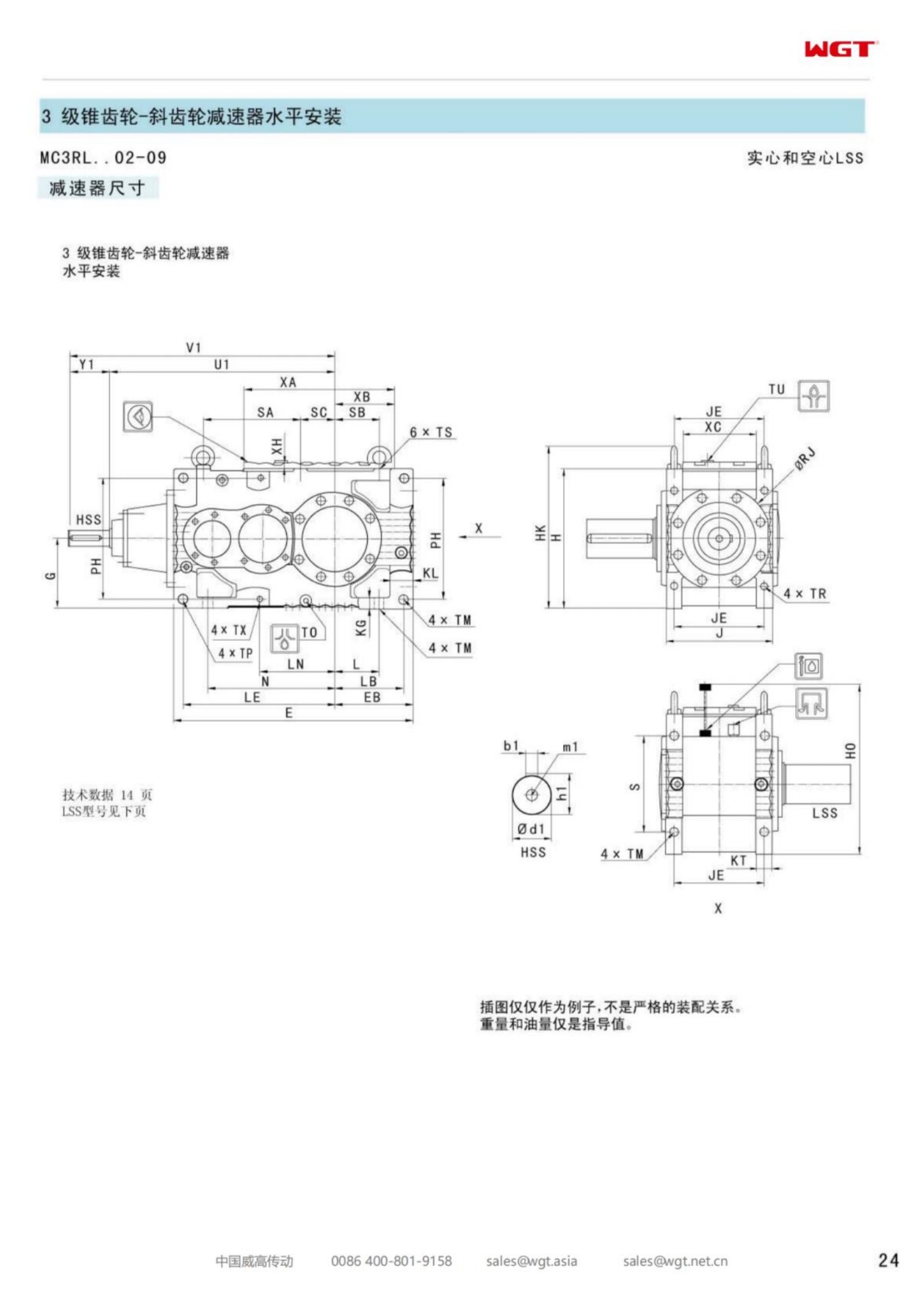
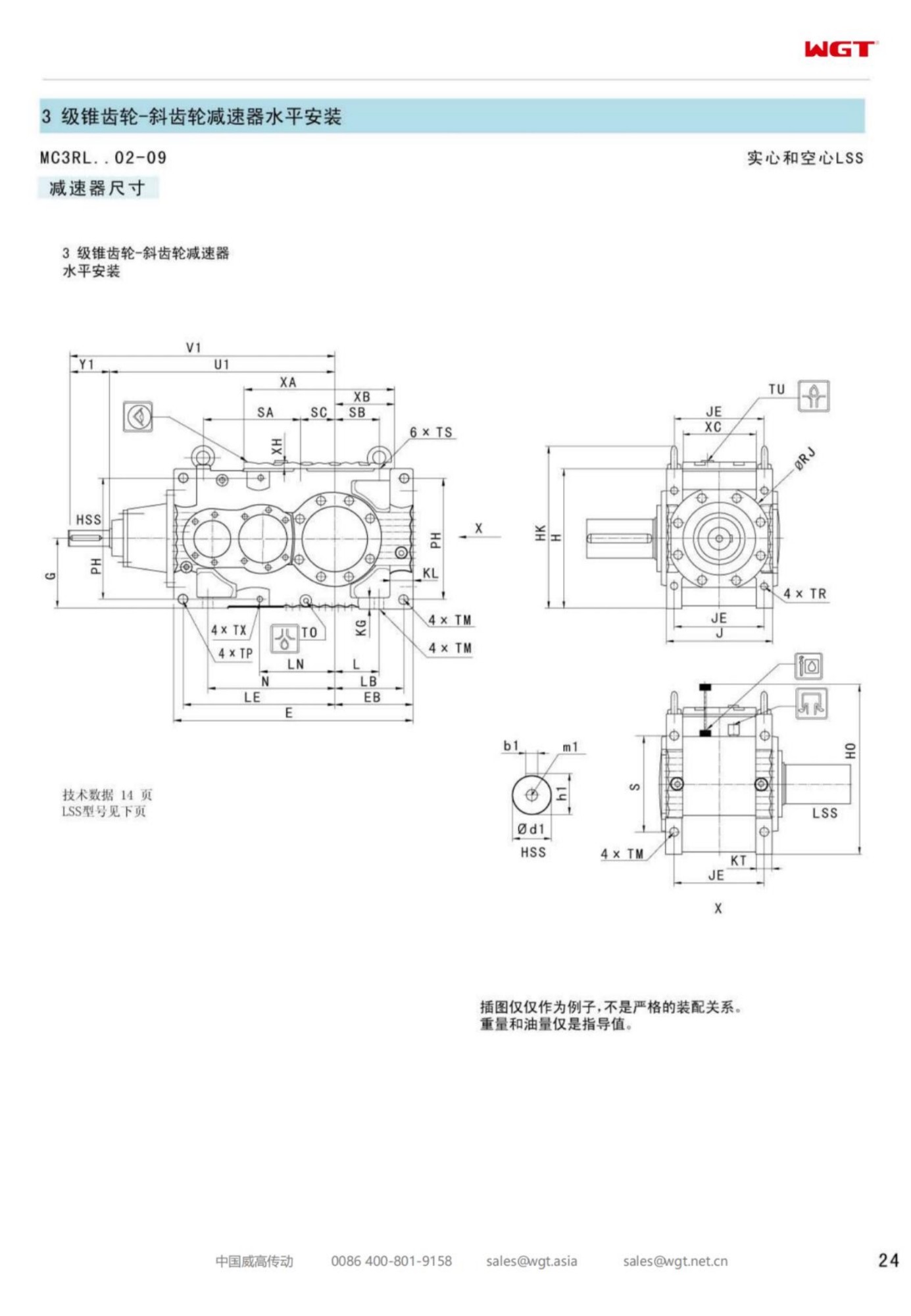
Foot-mounted frames are listed below; torque-arm (T), hollow-shaft (H) and vertical (V) variants are available across the size range. Ask for the outline drawing to check the interface before ordering.
Answers to Common Questions
How do I calculate the ratio I need?
Divide motor speed by the target output speed (i = n1/n2), then check the required torque against the rating table with your service factor. The online selector below does this automatically.
Can the reducer be supplied with a brake motor or an IEC motor flange?
Yes. We supply the reducer as a bare unit with an IEC standard input flange, and you can bolt on any IEC or NEMA motor - including a brake motor. The flange dimensions follow the common IEC pattern, so existing motors drop straight on.
What is the service factor and how is it applied?
The service factor is a multiplier applied to your required torque to cover shocks and duty class - typically 1.0 for uniform duty, 1.25 for moderate shocks, 1.5 or more for heavy shock loads. Send us the driven machine and duty and we will apply the correct factor.
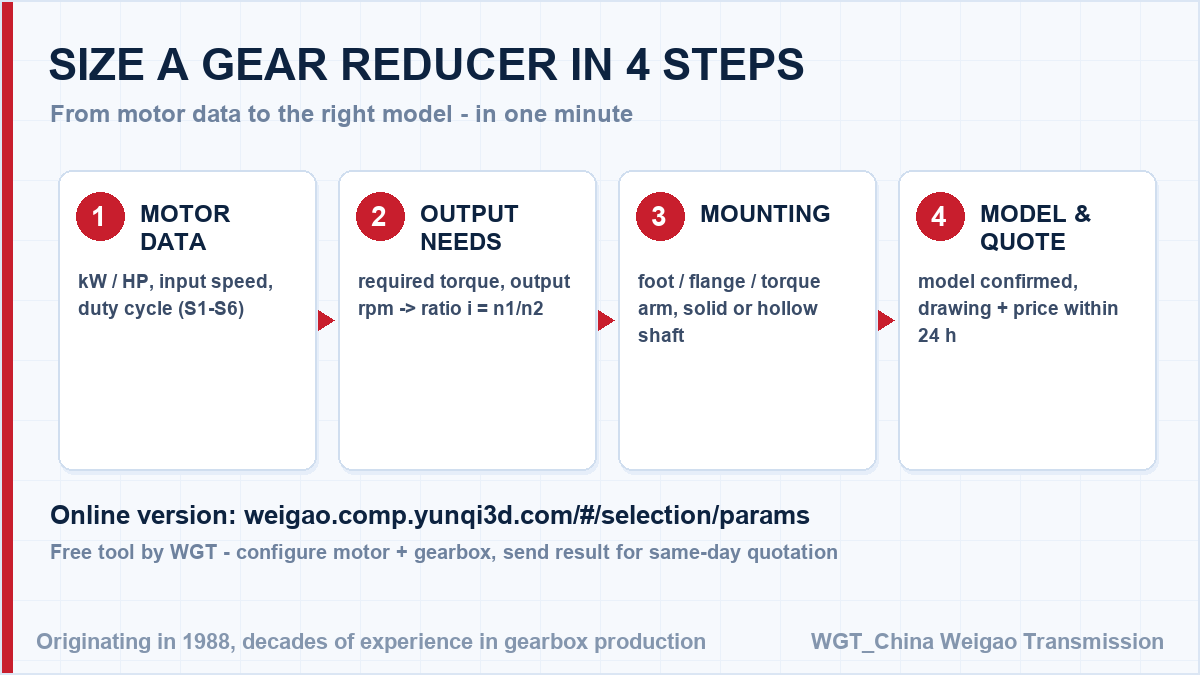
![gearbox sizing steps for engineers]()
Four steps from your application data to a firm model number.
Case Notes from the Field
Coal handling conveyor
A power station coal-handling plant standardized on one industrial gear family for thirty drives. A single spare-part pool now covers the whole conveyor network, from transfer points to the bunker feed.
Dredger pump drive
A dredging contractor powers its slurry pump skid with an industrial gear unit built for shock loads. The dense abrasive mixture demands a rigid drive train, and ground gearing has kept backlash unchanged over multiple seasons.
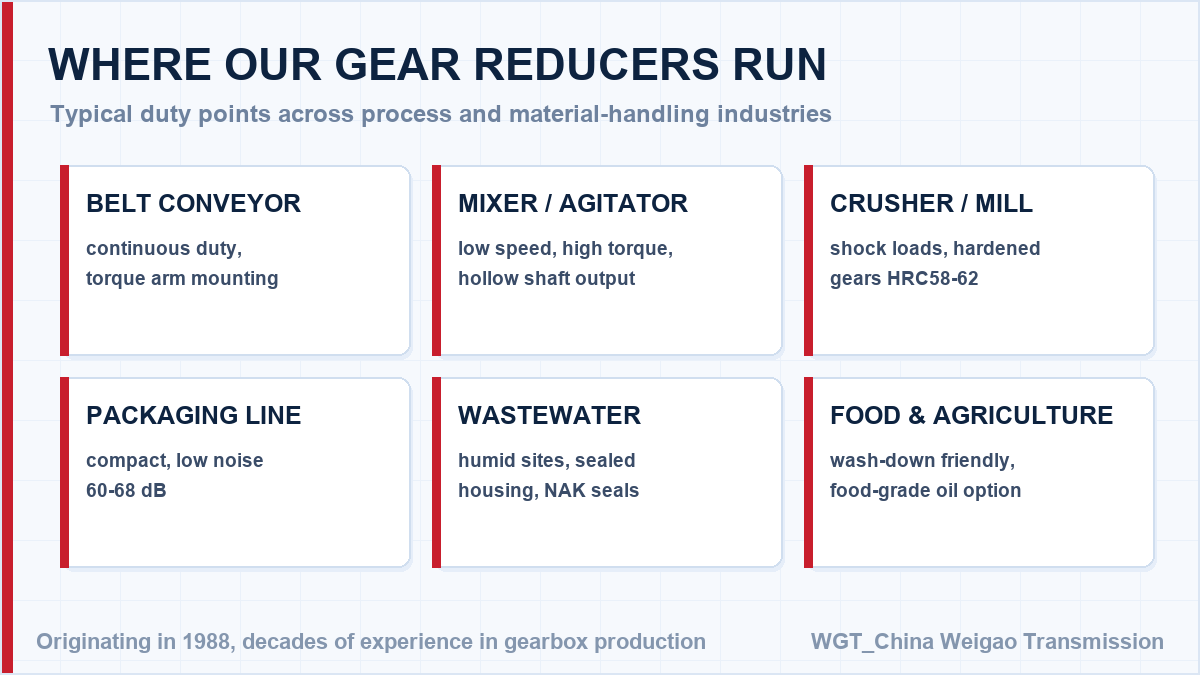
![industrial gear unit application overview]()
A cross-section of the installations we supply every month.
Framework Stock for Critical Spares
Can your plant afford downtime? Try the WGT Motor & Gearbox Online Selection System, then send the result sheet - we return a complete datasheet, drawing and price the same day.
For critical drives we can hold finished units or long-lead internals against a framework agreement, ready to dispatch when your shutdown starts. Ask for the spares-coverage proposal. Looking for a gearbox for packaging machine? Tell us the duty point and we will confirm the model in writing.