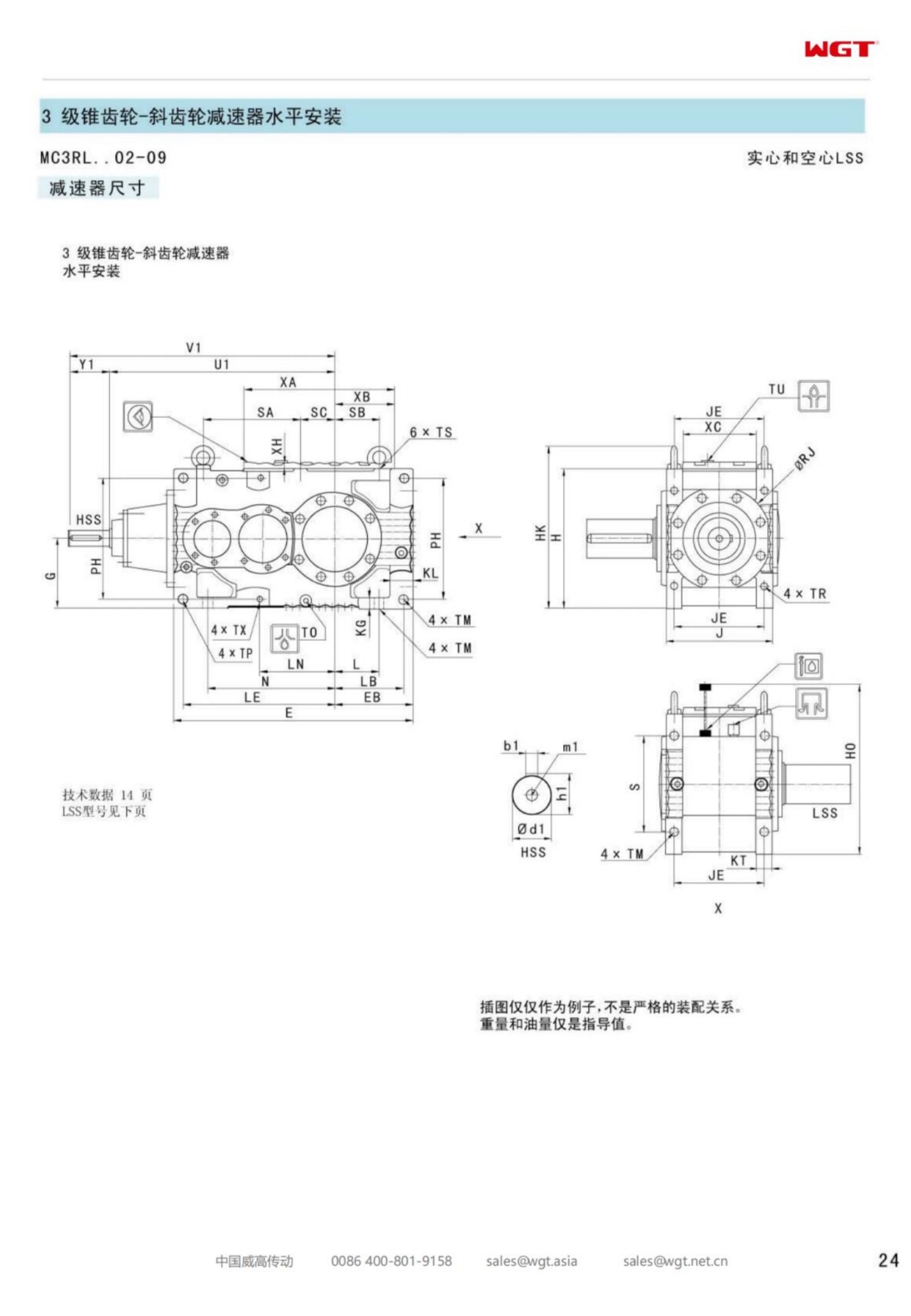
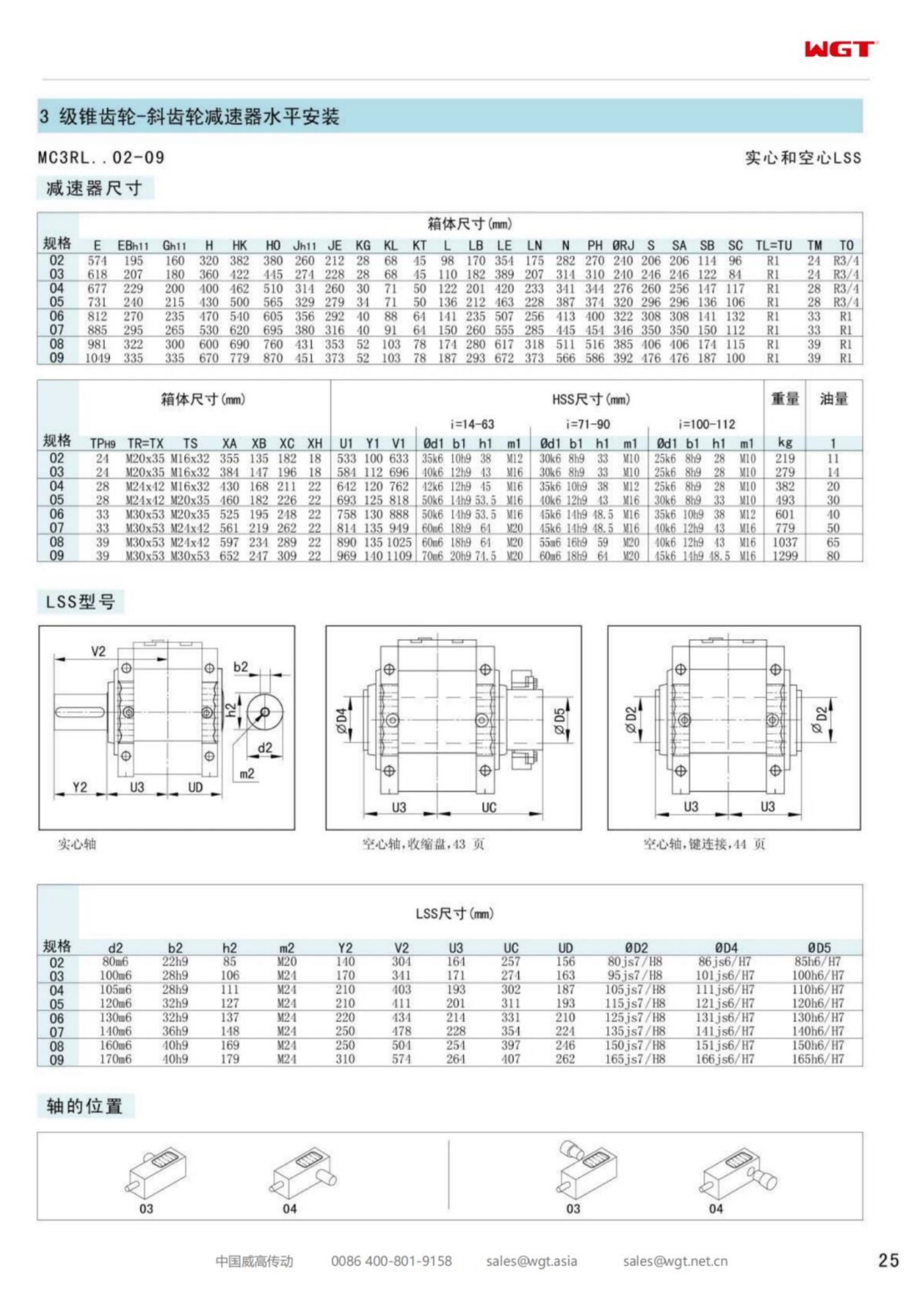
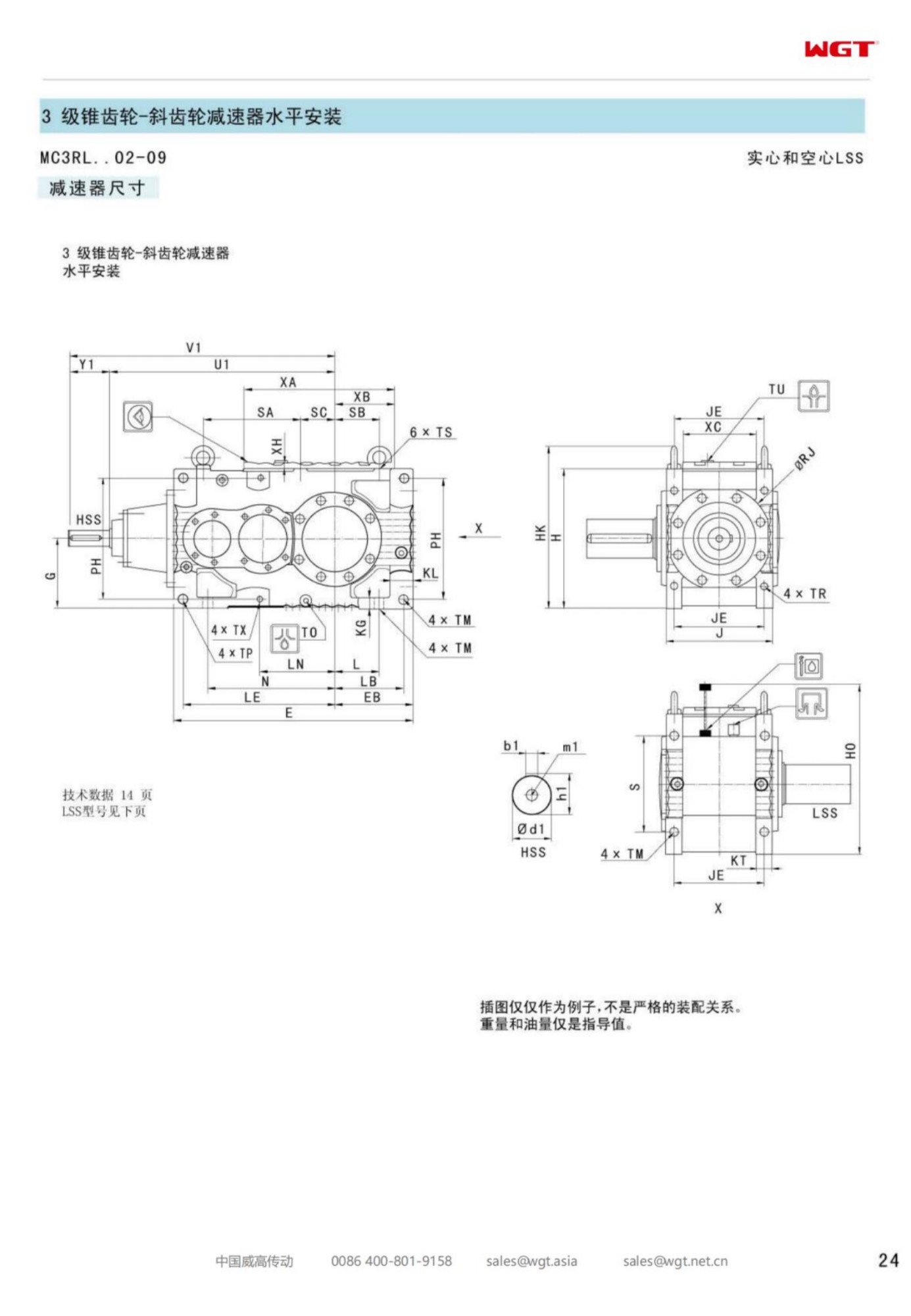
An underground potash mine is a hard place for reasons that have little to do with the load. The air is damp and salty, the drifts are low, and everything that can corrode is working overtime. Conveyors and transfer points run slowly under heavy loads in that atmosphere, and the drives that serve them need torque, a compact right-angle footprint and a case that shrugs off hygroscopic dust. The MC3RLHT07 right-angle hollow shaft gear unit is that frame: three stages for the slow haul, a hollow bore for the head shaft, and a torque arm that reaches into the mine's own structure.
These notes cover what salt dust does differently from other dust, why the drift changes the mounting conversation, and how an enquiry written underground differs from one written in a hall.
Salt Dust Underground
Potash dust is unlike most industrial dust because it is hygroscopic: it pulls moisture out of the mine air and turns from a powder into a brine film on every surface it settles on. A case that wears a salt blanket is not dusty; it is wet, at a concentration that eats paint, fasteners and anything unplated.
That changes the specification in one move. The enemy is not abrasion but corrosion, and the parts that fail first are threads, joints and the lip of the output bore - exactly the places where dissimilar metals and standing films meet.
Reading the MC3RLHT07 String
Read the code and the drift geometry is already half decided.
| MC | Industrial gear unit family for continuous plant duty |
| 3 | Three stages in the case - two helical reductions into a bevel set |
| R | Right-angle build, the motor set back along the drift wall |
| L | Level output axis along the conveyor line |
| H | Hollow output bore keyed onto the head shaft |
| T | Torque-arm bracket, reaction into the drift support |
| 07 | Seventh frame of the three-stage band |
Three stages turn a loaded belt at the slow speed long hauls want, and the right-angle input tucks the motor against the wall where the drift is narrowest and the traffic is clearest.
Three Stages Where Headroom Is Short
Drifts are sized for the mineral and the vehicles, not for the drives. Every centimetre of case height is negotiated with the roof and the services that already hang there. A three-stage unit delivers the slow-speed torque a long transfer needs without the length that a two-stage-plus-belt answer would demand, which is why the band keeps appearing underground.
The extra mesh adds heat in an atmosphere that does not move much air. Ventilation around the case, a breather that actually suits a damp atmosphere, and an oil grade confirmed for the real temperature are the three details that keep the extra stage boring, which is the highest compliment an underground drive earns.
Corrosion That Water Cannot Explain
Underground dampness is not rain; it is humidity that condenses wherever the rock is cooler than the air. Combined with salt film, it produces corrosion in places water never touches: inside the breather, under cover gaskets, on the fastener threads that hold the case to the plinth.
The specification that survives is specific: a paint system chosen for salt atmospheres, plated or stainless fasteners, a stainless breather, and joints that are sealed rather than stacked. Ask for them by name in the order; the catalogue default assumes a hall, and a level is not a hall.
Hollow Bore and the Tight Drift
Mounting on the head shaft through a hollow bore removes a coupling from a drift where there is no room to align one, and no crane to lift it into place. The bore-to-shaft fit then carries all of the torque, so the shaft surface and the key matter more than they would in a hall with options.
Measure the shaft before ordering - underground shafts have often been dressed, re-welded or re-turned over the years - and check the key seating at assembly. In a drift, the second visit with a file is paid for in lost production, not in workshop minutes.
Torque Arm into Rock and Steel Arches
The structure available for the arm stay underground is arch steel, roof bolts and the occasional genuine beam. The reaction from a loaded belt is large and reversing, and the stay must land on something that moves less than the belt does.
Land the stay square to the reaction on a primary arch or a designed bracket, spread the load rather than trusting single anchors, and inspect after the first big stall. Roof support moves as the face advances, and the arm is where that movement shows first.
Breathers, Condensation and the Shift Cycle
When the section stops for the shift change, the case cools and draws damp air in through the breather; when it starts again, the air warms and the moisture condenses on the coolest internal surface. Over months this cycles water into the oil of a case whose breather was chosen for a dry hall.
A breather specified for damp atmospheres, an oil drain on the walk-round, and an oil sample that watches water content are the practical answer. None is expensive, and all three belong on the order rather than on the repair.
Dust, Bearings and the Service Round
Every bearing on the unit lives in the same salt air as the case, and the ones at the output end sit closest to the belt's dust fallout. A service round that wipes the seal path, checks the breathers and records bearing temperatures will keep a unit honest for years; a service round that only changes oil will discover the rest at shutdown.
Spares belong in the same conversation. A level is far from the nearest supplier, so the seal kit, the breather and the fastener set are worth holding at the mine from the first day.
The Restart Under a Settled Load
A belt that stops with product on it restarts against a settled mass, and if the stop was unplanned the mass may have shifted and spilled. The breakaway torque is the worst number the drive sees, and underground it arrives at the moment the shift most needs the belt back.
Size the service factor on that start, and let the control philosophy - jog, soft start, staged clearance - do part of the work. A drive chosen on the running load alone will meet the settled start as a stranger.
Motor, Cable and the Drift Wall
The right-angle input is not only about torque; it is about the space the motor occupies. In a drift, the motor hangs where the cables and the walkway already are, and every extra length of motor or brake shows up as a negotiation with the services on the wall.
Confirm the input arrangement early - motor size, brake, encoder, cable entry direction - and check it against the drift profile rather than against a clean outline drawing. A unit that arrives with the cable box facing the rock is a unit that visits the workshop for its first birthday.
Writing the Enquiry from Underground
The enquiry that gets this frame right describes the level and the belt: drift height and width, shaft dimensions and condition, running and breakaway load, the salt and moisture in the air, the structure available for the stay, and the distance from the nearest workshop.
The reply should answer as a system: bore and key against the measured shaft, ratio and output speed, service factor argued on the settled start, corrosion package for salt air, breather and oil for a damp atmosphere, and arm geometry drawn against arch steel. Then the unit goes down the shaft once and stays there.
A Frame Seven Down the Levels
Mines are judged across campaigns, when the face has moved, the belt has been extended and the drift has settled into its long shape. The drives that last are the ones whose bores were measured, whose stays were checked after the moves, and whose oil was sampled for water before it carried any.
Frame seven carries its half with three stages that turn a loaded haul at drift speed, a hollow bore that spares a coupling where none fits, and a corrosion package written for the air that actually surrounds it. The levels carry the rest - and the levels never dry out.
Salt film, low drifts and a belt that restarts settled - three stages haul it:
- Head shaft drive on an underground potash transfer conveyor
- Panel belt drive at a deep-level salt mine
- Screw conveyor moving crushed potash to the skip loading point
- Stamler-type feeder breaker haulage duty in a low drift
- Bin discharge conveyor at the underground crushing station
- Ventilation door and bulkhead auxiliary drives in damp air
How Customers Use This Unit
Ship loader slew drive
A port terminal selected heavy-duty gear units for the travel drives of its ship loader. Salt-laden air is handled by the heavy-duty coating option, and spare seal kits are held on site for the annual service.
Sugarcane carrier drive
A sugar mill drives its cane carriers with industrial gear units sized for fully loaded starts. The generous torque margin covers cane jams, and the right-angle build keeps the motor clear of the carrier slat path.
What Engineers Ask Us
Can this unit mount on my existing installation without redesign?
Yes - the series is manufactured to the same centre distances, shafts and flange dimensions of the common industry frames, so couplings, guards and foundations stay untouched.
Which lubricating oil should be used?
GB L-CKC220~460 or Shell Omala 220~460 as supplied. Under normal duty the housing is lubricated for life; in hot or continuous-duty environments an oil change after the first 400 hours and then every 4000 hours is recommended.
Model Table: Frames, Shafts and Duty
| Model | Centre distance | Output | Typical duty |
|---|
| M3PSF50 | size 50 | solid shaft, foot | conveyors, feeders |
| M3PSF60 | size 60 | solid shaft, foot | crushers, mixers |
| M3PSF70 | size 70 | solid shaft, foot | ball mills, shredders |
| M3PSF80 | size 80 | solid shaft, foot | kilns, heavy conveyors |
| M3PSF90 | size 90 | solid shaft, foot | mill and kiln drives |
| M3RSF50 | size 50 | solid shaft, foot, right-angle | inclined conveyors, elevators |
| M3RSF60 | size 60 | solid shaft, foot, right-angle | screw classifiers, feeders |
| M3RHF70 | size 70 | hollow shaft, foot, right-angle | agitators, drum drives |
| M3PHT80 | size 80 | hollow shaft, torque arm, parallel | shaft-mounted conveyors |
| M3RHT90 | size 90 | hollow shaft, torque arm, right-angle | heavy shaft-mounted drives |
Larger size numbers mean higher torque capacity and larger shafts. Because interfaces follow the common industrial dimensions, a size-for-size change is the normal upgrade route for these industrial units.
Selection Example: Transfer conveyor head shaft in a potash mine
Take a 30 kW motor at 1475 rpm turning the belt at 9.5 rpm. The ratio follows directly: 1475 / 9.5 = 155, so a ratio near i=155 is taken from the three-stage right-angle band, and the frame is confirmed against the settled restart underground and the corrosion package the salt air demands rather than against the belt tonnage. In this case frame seven turns the haul from a drift-friendly case, hangs on the head shaft through a measured bore, and reacts into arch steel through a designed stay. Note that the ratio comes from speeds alone, while the frame size depends on torque and service factor - never size a unit on ratio only.
![industrial helical gearbox selection chart]()
A quick visual of the selection sequence for a industrial helical unit.
![M3 series gear reducer installation examples]()
Application coverage of the the M3 series.
Talk to the Factory, Not a Catalogue
Questions before ordering? Prefer to check the figures yourself? The WGT Motor & Gearbox Online Selection System gives you the model, torque margin and ratio before you ask us.
Our technical team works beside the assembly line. Describe the application in your own words and you get a straight answer - including when a different frame or series would serve you better. Looking for a reducer for woodworking machine? Tell us the duty point and we will confirm the model in writing.