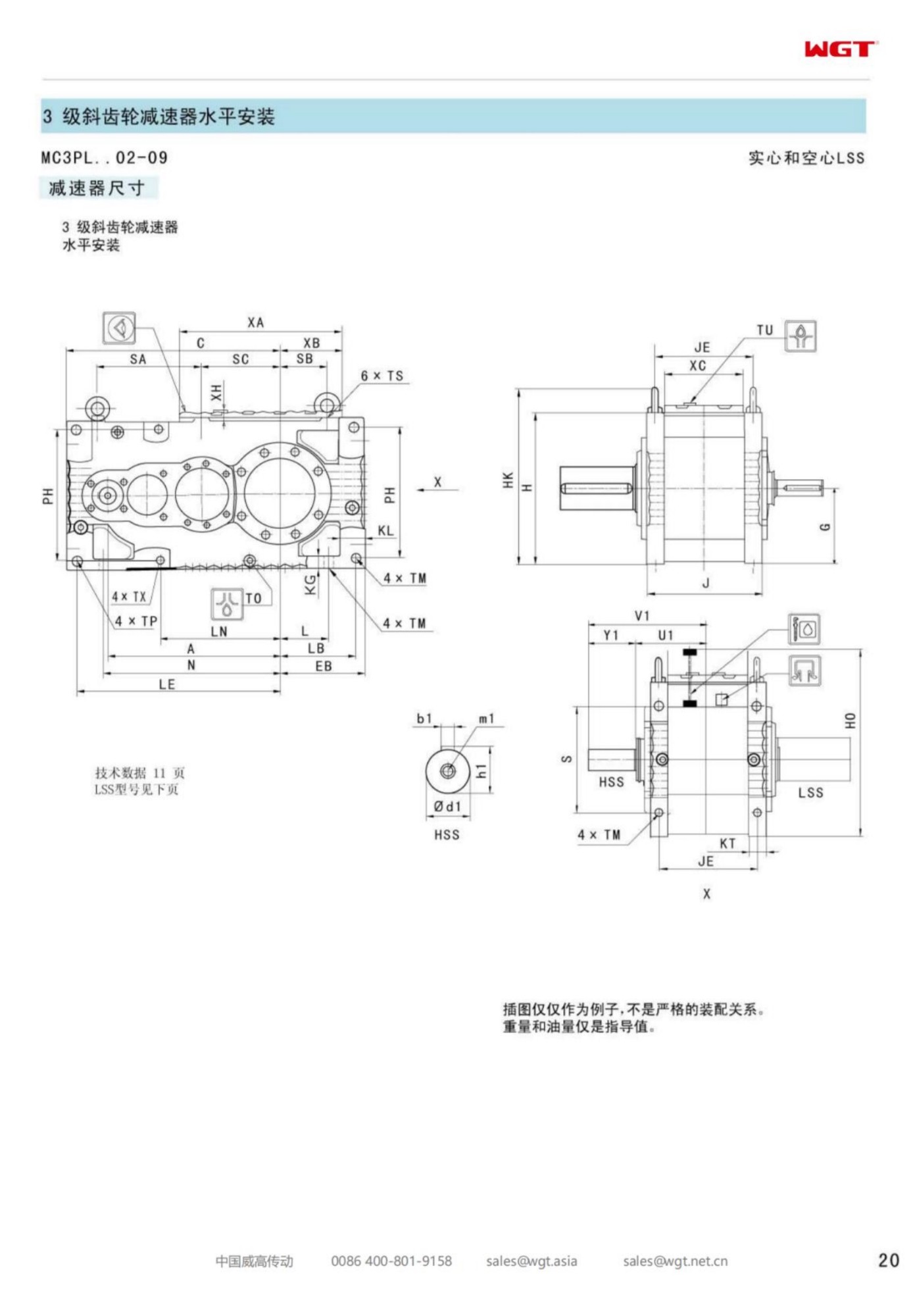
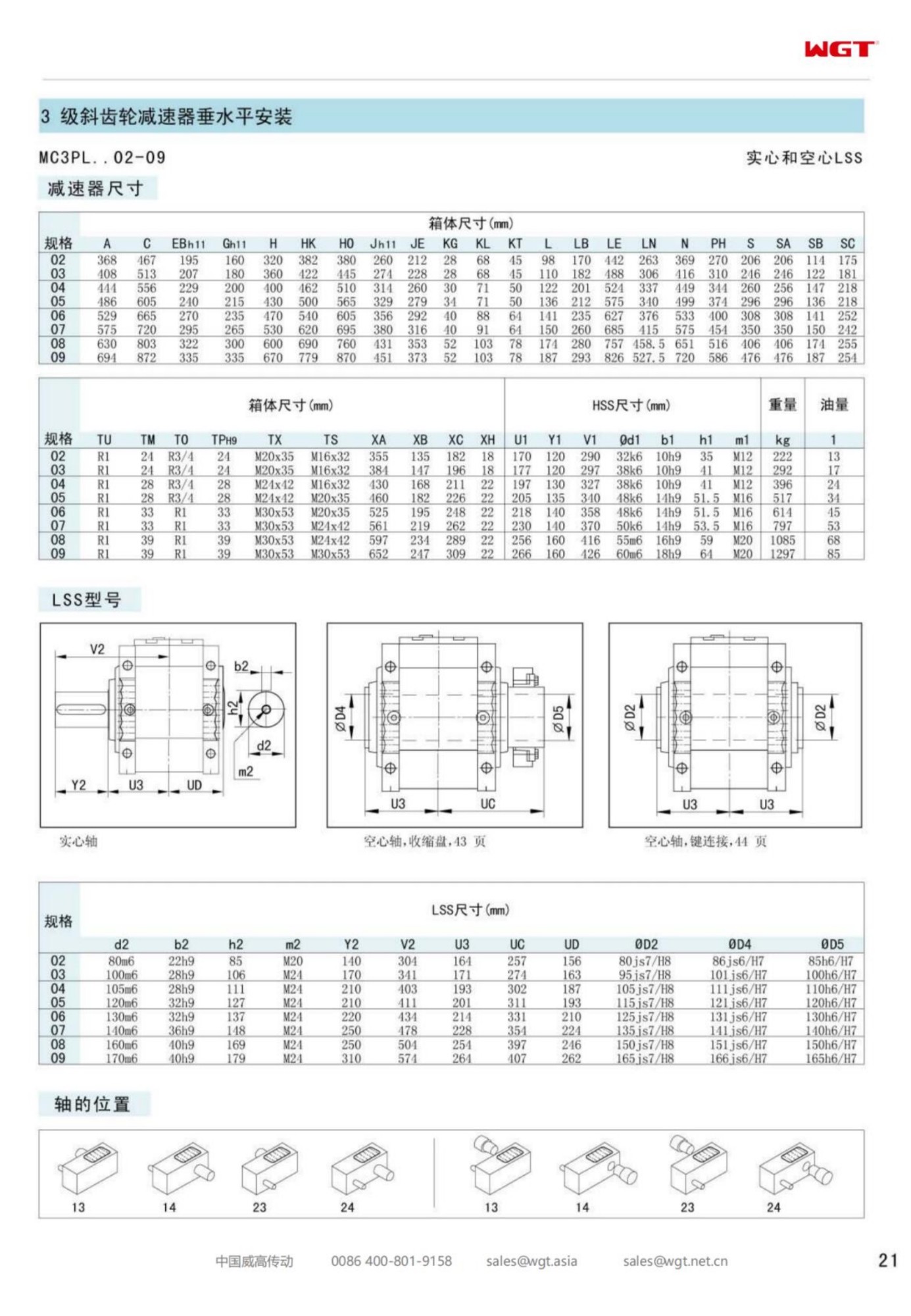
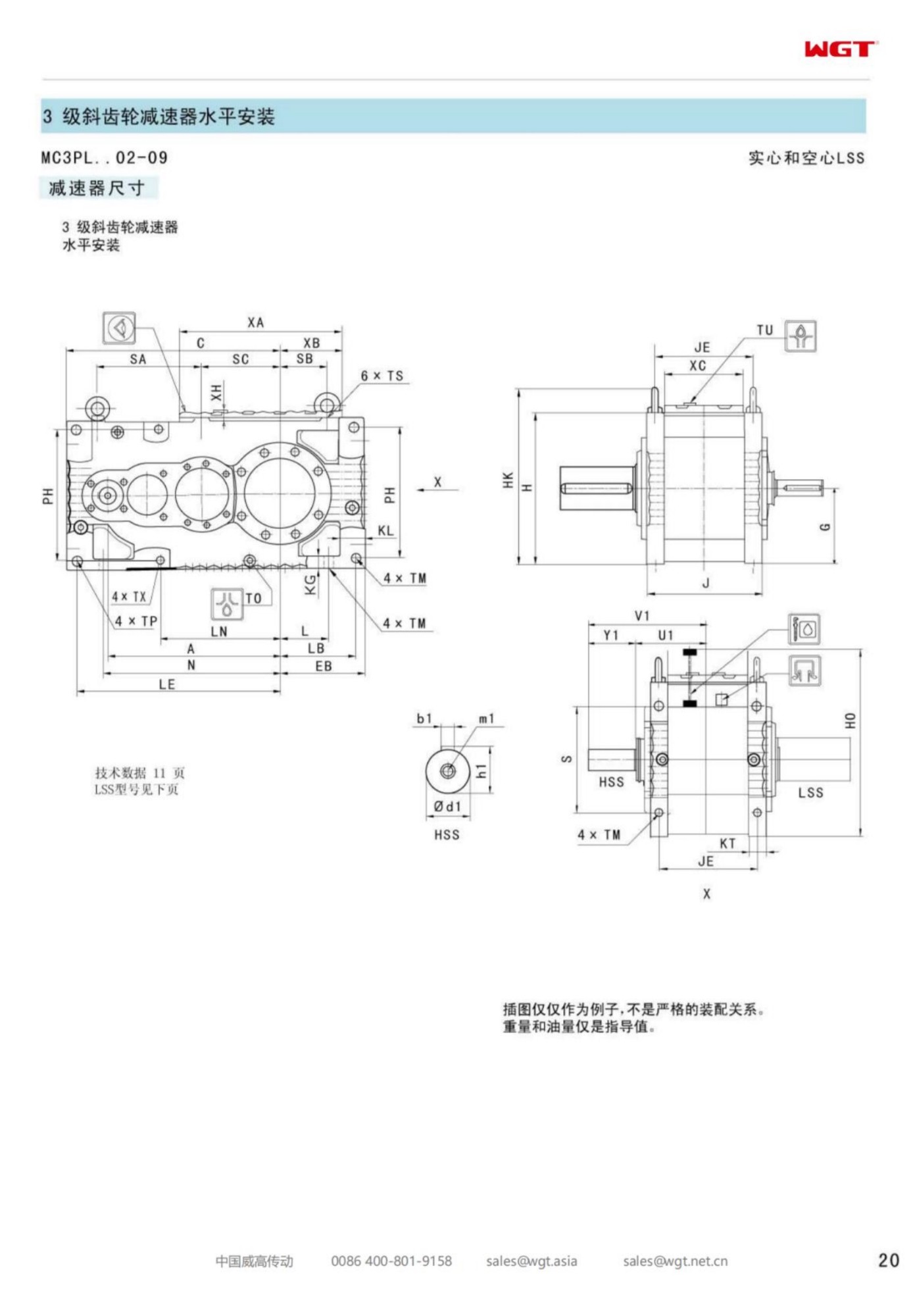
An overland conveyor is the quarry's decision to stop paying haul trucks to move the same hill twice. Once built, its main drive becomes the single point through which every tonne of saleable stone flows, and the selection question stops being about price and starts being about availability. The MC3PLHT07 three-stage parallel shaft gearbox is the frame many operators land on for that duty: three reductions, a hollow bore straight onto the head shaft, torque arm into the drive-station steel, and a motor line that runs along the conveyor - which is the only direction an overland corridor ever has space in.
The sections below are written from the operator's side of that decision: the code, the start, the weather, and the arithmetic that keeps the line paying.
A Kilometre of Belt Is an Availability Argument
Long conveyors earn their keep by running, and their economics fail on stopped hours, not on efficiency percentages. Everything about the drive selection therefore flows from one preference: the boring frame with margin, over the clever frame at the limit. Three stages with a published service factor beat a marginal two-stage build on the day the market asks for a record month.
The MC3PLHT07 Code, Field by Field
The designation answers the layout before the general arrangement is drawn.
| MC | Industrial gear unit family for continuous duty |
| 3 | Three stages of reduction inside one case |
| P | Parallel-shaft helical build, input and output in line |
| L | Level output axis along the conveyor centreline |
| H | Hollow output bore, keyed onto the head shaft |
| T | Torque-arm bracket, reaction into the drive station |
| 07 | Top end of the mid band, below the largest frames |
Shaft mounting is the quiet hero on a long line: the belt's own head shaft becomes the output bearing's neighbour, the low-speed coupling disappears from the spares list, and the alignment task shrinks to the motor coupling alone.
The Full-Load Start and Its Regime
An overland belt restarted after a trip is restarted with the whole kilometre loaded and standing. The breakaway figure for that moment - belt stretch, idler friction, material bedding - is the design case, and it passes through all three meshes together. Soft-start ramp or VSD control shapes the electrical side; the mechanical frame still needs the spike inside its rating.
Operators who log trip frequency already own the data that sizes the duty; the selection only asks for it.
Weather Is the Second Duty Cycle
Overland corridors cross open country. The drive station sees rain, dust, summer peak and winter freeze on the same steelwork. Oil grade and sump heating follow the local span; breather filtration follows the dust; the torque-arm pads and fastener grades follow the rain. None of these are upgrades - they are the standard specification written for an outdoor machine, and they cost the least when they are in the enquiry from the first line.
Torque Arm and the Drive Station
The drive station on a long line is a designed structure, and the torque arm belongs inside its load path from the first drawing: a primary member, a spreader pad, adjuster travel that covers tension without shimming, and isolation pads that survive being re-tightened in year five. The arm is small; the station's reaction into it is not.
Belt Tension, Take-Up and the Gearbox's View
A long belt's take-up does the tensioning, but the gearbox feels every change: tension moves shift the load the hollow bore and its keyway carry, and sloppy take-up discipline shows up first as keyway wear rather than as belt damage. A take-up that is set, logged and left alone is part of the gearbox specification whether the gearbox catalogue mentions it or not.
Dust, Spillage and the Case's Point of View
Crushed stone dust behaves like the ore dust at any load-out: abrasive, dry and tireless. The sealing plan is geometric - output seal out of the fall-out line, breather raised and filtered, labyrinth collar at the shaft exit - and it is written into the enquiry, because installation disciplines are invisible to a catalogue and obvious on a drawing.
Spillage Recovery and the Return Side
Whatever the loading chutes spill rides the return strand back toward the tail, and some of it drops at every idler between. The drive station, at the head end, is usually spared that rainfall - unless the cleaning regime lets the return side pile up and the scrapers stop scraping. Keeping the return strand disciplined is gearbox sealing policy executed by other means.
Energy and the Three-Stage Case
Every mesh in the train costs a little efficiency, and a long line pays that cost hourly. Three well-made stages keep each mesh near its best operating point, which is where the transmission's losses are smallest; the comparison that matters is not against a textbook but against the alternative build, where a two-stage case pushes its first wheel into a worse regime for every hour of the quarry's life.
What the Enquiry Carries
The overland drive enquiry that gets a single-round answer states: motor power and speed, output speed, loaded and empty breakaway assumptions, trip frequency, head shaft dimensions, rotation direction, ambient span with weather named, and the drive-station geometry. A dimensioned sketch plus one photograph of the existing or planned station finishes the conversation.
Service Around Production, Not Instead of It
The quarry does not stop for oil changes, so the oil changes fit between shifts. Everything about the unit's position at installation decides whether that is true: filler, drain, gauge and breather facing the access side, torque-arm bolts reachable, spares on the shelf. A hollow-bore unit's oil service touches nothing at the output, which is why it fits the shift-end window at all.
The Frame Seven Verdict on the Hill
Operators who chose this frame on availability arithmetic - start spike, weather span, sealing geometry, service windows - report the result that justifies the corridor in the first place: the line runs to the quarry's rhythm, and the drive appears in the accounts only as the cost of oil. On a kilometre of moving stone, that invisibility is the specification's whole point.
A kilometre of loaded belt and one trip from a dead stop - three stages take the spike:
- Overland conveyor main drive at a hard-rock quarry
- Long-distance crushed stone belt to the rail siding
- Aggregate trunk conveyor between pit and processing plant
- Overland line drive at a sand and gravel operation
- Hill-crossing conveyor between two quarry benches
- Main incline belt on the haul-road cut-off at an open-pit mine
Selection Example: Typical duty point
Say the customer needs a slow, steady output from a standard four-pole motor. Motor speed divided by the target output speed gives the ratio, rounded to the nearest available step, and the required torque with the service factor then fixes the frame size. Work through the same three steps - speed, output speed, torque - and the model number falls out; we verify it against the duty class before quoting.
![gear reducer ratio calculation steps]()
From duty point to model number - the same four steps every time.
Applications in Industry
Dust-extraction fan bank
An environmental-equipment plant uses reducers on the rotary valve feeders of its dust-extraction systems. Compact size, quiet running and food-grade oil options made the approval easy.
Steel mill run-out table
On the run-out table of a small steel mill, units handle the repeated starts and stops of hot billet handling. The 42CrMo output shafts tolerate the thermal cycling, and torque-arm mounting keeps the drive clear of the roller frames.
![gear reducer industries served - WGT]()
Industry map: the sectors where the M3 series is most common.
Buyer Questions and Answers
Which mounting positions can be used?
The unit can be installed in M1 to M6 positions - floor, wall or ceiling. The oil level plug is repositioned for the position you order, so state it up front and the unit is filled and labelled correctly at the works.
Can I reuse my existing couplings and foundations?
Yes. Centre distances, shaft dimensions and flange bolt patterns follow the common industry standards, so couplings, guards and foundations do not have to be redesigned. Send the nameplate details and we confirm the equivalent frame in writing.
M3 Series Model Overview
| Model | Centre distance | Output | Typical duty |
|---|
| M3PSF50 | size 50 | solid shaft, foot | conveyors, feeders |
| M3PSF60 | size 60 | solid shaft, foot | crushers, mixers |
| M3PSF70 | size 70 | solid shaft, foot | ball mills, shredders |
| M3PSF80 | size 80 | solid shaft, foot | kilns, heavy conveyors |
| M3PSF90 | size 90 | solid shaft, foot | mill and kiln drives |
| M3RSF50 | size 50 | solid shaft, foot, right-angle | inclined conveyors, elevators |
| M3RSF60 | size 60 | solid shaft, foot, right-angle | screw classifiers, feeders |
| M3RHF70 | size 70 | hollow shaft, foot, right-angle | agitators, drum drives |
| M3PHT80 | size 80 | hollow shaft, torque arm, parallel | shaft-mounted conveyors |
| M3RHT90 | size 90 | hollow shaft, torque arm, right-angle | heavy shaft-mounted drives |
The series is sized for continuous heavy duty rather than by motor power alone: the required torque with the service factor decides the frame, and the stage count (2 to 5) decides the ratio band.
Fast Quotation for OEM and Repeat Orders
Buying one unit or one hundred? Run your duty point through the WGT Motor & Gearbox Online Selection System first: it saves a round of emails and gets you to a firm price faster.
Single units ship on the same production route as batch orders, with no minimum-order surcharge. For OEM programmes we hold framework pricing and reserve capacity for your scheduled call-offs. Looking for a gear reducer for screw conveyor? Tell us the duty point and we will confirm the model in writing.