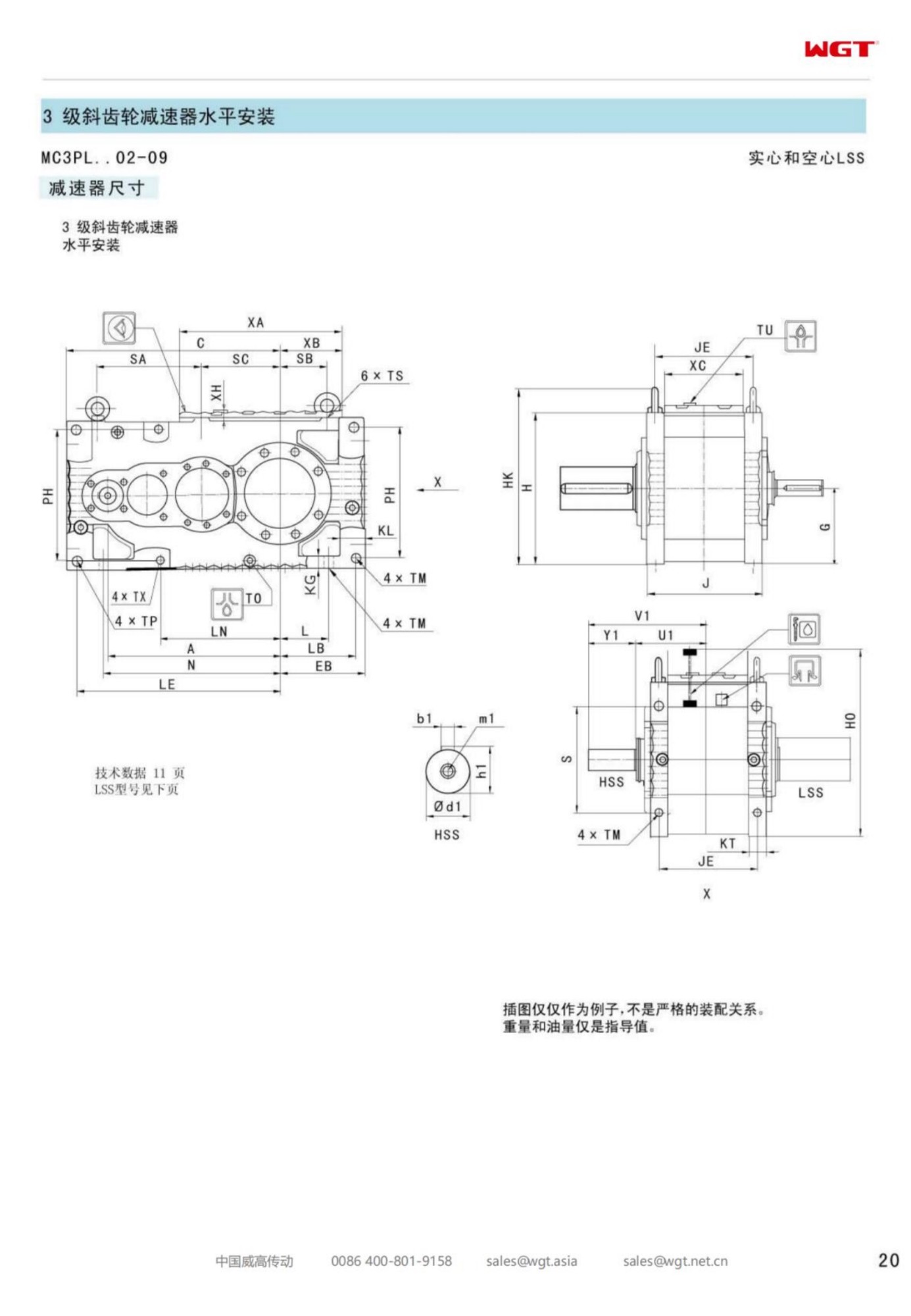
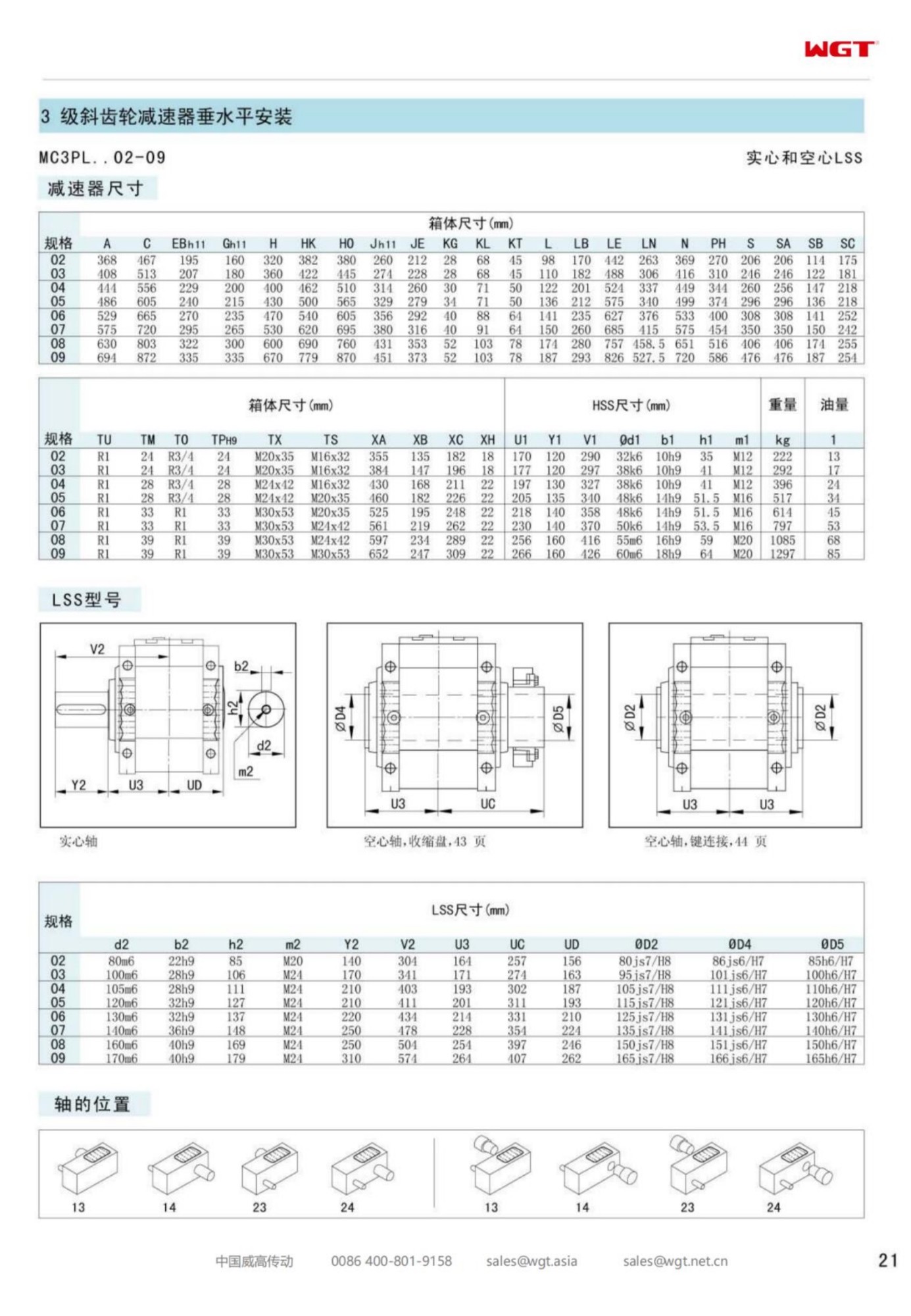
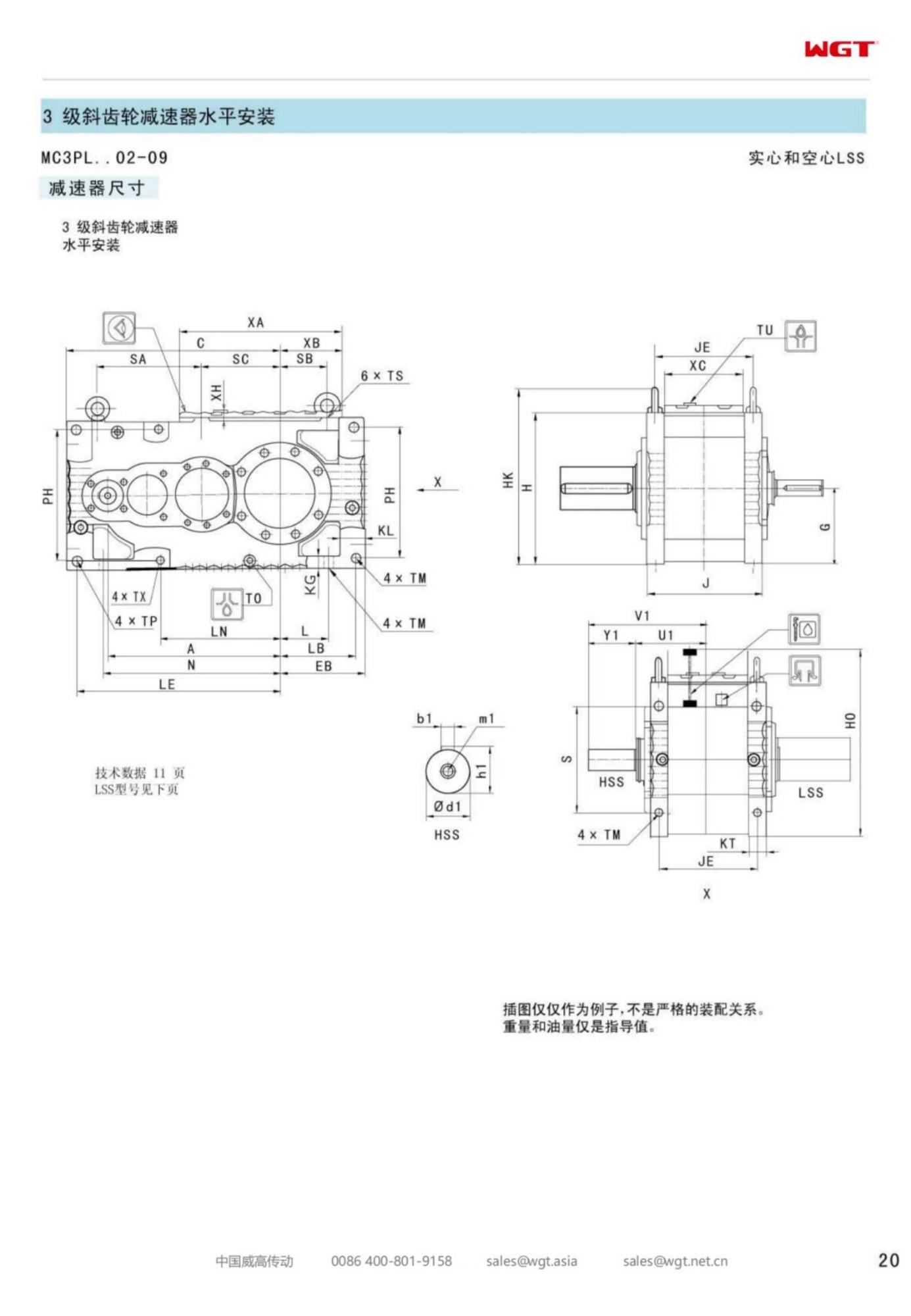
Grain leaves a terminal on a schedule written by ships, and ships do not reschedule for gearboxes. The loading line runs through the tower and the jetty conveyor at rates the vessel's port agent already cabled home, in air full of organic dust that is abrasive, combustible and permanently present. The drive that suits that line is boring in exactly the right way: the MC3PLHT06 three-stage parallel shaft gearbox - hollow bore on the head shaft, torque arm into the tower steel, motor in line with the belt, and three reductions that hold the rated tonnage hour after hour.
These notes are the terminal-side view of the selection: what the code fixes, why grain dust changes the electrical and mechanical conversation at the same time, and what the berth window does to every maintenance assumption.
The Berth Sets the Clock
A ship at berth is money with an anchor watch. The loading line therefore runs at its rated rate from the first grab to the last trim, and its drive is judged by a single number: tonnes per hour, sustained. There is no duty-cycle refuge in that arithmetic - the thermal case is the full campaign, and the frame must sink the heat of a twelve-hour shift in jetty air without leaning on a fan.
Reading MC3PLHT06 as a Terminal Engineer
Each letter is a layout decision already taken.
| MC | Heavy-duty industrial gear unit series |
| 3 | Three stages of reduction in the case |
| P | Parallel-shaft helical build, motor along the belt line |
| L | Level output axis into the head shaft |
| H | Hollow output bore, shaft-mounted without a coupling |
| T | Torque-arm bracket into the tower or jetty structure |
| 06 | Mid-large frame of the three-stage band |
The hollow bore does quiet double duty at a terminal: it removes the low-speed coupling from the dusty environment, and it makes the drive swappable within a berth window, because nothing at the output needs re-aligning - the head shaft is the datum.
Grain Dust: Abrasive, Combustible, Everywhere
Organic dust does two things at once. Mechanically it abrades, packs breathers and finds seal lips. Chemically it is combustible, which pulls the drive's surroundings into the hazardous-area conversation: enclosure ratings, earthing continuity and static bonding on everything near the belt line.
The gearbox itself is not the ignition source, but its breather, its motor and its cabling all inherit the atmosphere. Specifying the area classification in the enquiry is what keeps the electrical review from restarting the order.
Why Three Stages in the Tower
Terminal belts run slow to keep dust load down and spillage within the collection system's appetite. Slow from a standard motor means deep ratio; deep ratio in the tower means the case must stay narrow. Three stages deliver the ratio without the wide first wheel a two-stage build would need, and each mesh stays in its efficient band through the whole campaign.
The mid-large frame matches the tonnage at which most marine loading lines actually settle once the shipping cycle is known.
Starting, Stopping and the Shiploader Dance
Marine loading is a start-stop ballet: hatch changes, trim passes, surveyor holds. Each stop-start cycles the drive's electrical and mechanical budget, and the belt usually restarts loaded. The frame and its soft-start regime should be chosen together for that profile - not for the steady-state hour the brochure photographs.
Terminals that log restart counts per shift already have the data the selection needs; it is usually sitting in the PLC historian unused.
Torque Arm in Tower Steel
Tower structures are dense, and the torque arm's landing is a real design conversation: a primary member, a spreader pad, adjuster travel that covers belt tension without shimming. On the jetty conveyor the same rules apply with weather added - the pad faces rain, so the contact faces want protection before the first winter, not after.
Dust Collection and What It Asks the Drive
The extraction system keeps the atmosphere legal, but its ducts and pick-up points concentrate the fall-out they capture. A drive placed downstream of a pick-up inherits the dust the system missed. Asking for the duct layout at enquiry stage - one more line, one sketch - positions the gearbox where the air, not the dust, actually flows.
Hygiene and the Cleaning Regime
Grain terminals wash down and fumigate on schedules that do not consult the maintenance plan. The drive arrangement should assume both: surfaces that shed dust, a breather that survives a hose, seals that do not drink the fumigant. Positioning the unit with its service faces toward the walkway converts those regimes from risks into chores.
Corrosion Climate on the Jetty
Salt air reaches further inland than most layouts assume. Fastener grade, case coating and torque-arm pad isolation are cheap lines in an enquiry and expensive retrofits at the coast. The jetty conveyor especially should be specified with the marine air named outright - suppliers read named environments differently from generic ones.
Redundancy and the Second Line
Terminals with twin loading lines learn which line's drive was bought carelessly the first day one goes down and the whole cargo plan rides on the other. Identical spares policy, identical oil policy and identical torque-arm geometry across both lines turn a failure from a vessel delay into a shift note.
The Enquiry That Fits a Berth Window
The terminal enquiry that closes in one exchange states: motor power and speed, rated and peak tonnage, output speed, head shaft dimensions, restart profile, area classification, ambient including salt exposure, and the cleaning and fumigation regime. Each line is a question the vendor would otherwise send back - and each round trip is a week that the project did not have.
The Frame Six Verdict at the Jetty Head
Terminals that selected this frame on the campaign thermal case, the start-stop count and the dust truth report the outcome that matters commercially: the loading rate the shipping schedule was written around is the loading rate the line delivers, shift after shift. A gearbox that keeps a berth promise is not a component; it is the terminal's handshake with the charter.
A berth clock, combustible dust and a restart every hatch - three stages hold the rate:
- Shiploading belt at a grain export terminal
- Jetty conveyor feeding the shiploader at a port terminal
- Tower belt between silo extractor and loading head
- Grain transfer conveyor at an inland river terminal
- Barge loading line at a grain elevator annex
- Standby loading belt on a twin-line berth
Questions We Hear Most Often
What is the maximum overhung load on the output shaft?
The permissible overhung load depends on frame size, output speed and the distance from the shaft shoulder - all listed in the catalogue. If you drive a chain sprocket or V-belt pulley direct on the output shaft, send us the load and pitch diameter and we will confirm the limit.
Do you offer a version with an integrated gear motor?
We can supply the unit as a complete gear motor with an IEC motor bolted on and tested as one assembly. That saves you the alignment and coupling work, and the whole assembly carries the same one-year warranty.
How do I know when the unit needs maintenance?
Beyond routine oil checks, watch for oil weeping at the seals, unusual noise or vibration, and any rise in housing temperature. A seal kit is inexpensive; catching a weeping seal early avoids damage to the bearings and gears.
Choosing the Right Frame Size
| Model | Centre distance | Output | Typical duty |
|---|
| M3PSF50 | size 50 | solid shaft, foot | conveyors, feeders |
| M3PSF60 | size 60 | solid shaft, foot | crushers, mixers |
| M3PSF70 | size 70 | solid shaft, foot | ball mills, shredders |
| M3PSF80 | size 80 | solid shaft, foot | kilns, heavy conveyors |
| M3PSF90 | size 90 | solid shaft, foot | mill and kiln drives |
| M3RSF50 | size 50 | solid shaft, foot, right-angle | inclined conveyors, elevators |
| M3RSF60 | size 60 | solid shaft, foot, right-angle | screw classifiers, feeders |
| M3RHF70 | size 70 | hollow shaft, foot, right-angle | agitators, drum drives |
| M3PHT80 | size 80 | hollow shaft, torque arm, parallel | shaft-mounted conveyors |
| M3RHT90 | size 90 | hollow shaft, torque arm, right-angle | heavy shaft-mounted drives |
One family, two layouts. Choose P for a coaxial-in / parallel-out drive train, R when the motor must turn 90 degrees; then pick the shaft type and mounting style that the machine interface needs.
Selection Example: Typical duty point
A quick worked example using this frame: Motor speed divided by the target output speed gives the ratio, rounded to the nearest available step, and the required torque with the service factor then fixes the frame size. It always comes down to those three figures. Send them over and we confirm the frame, ratio and service factor in writing.
![online gearbox selection system workflow]()
Selection workflow used by our engineers for every quotation.
Real-World Duty Points
Grain terminal elevators
A grain terminal powers its bucket elevators with gear reducers. The anti-run-back option holds the loaded buckets during power cuts, and standard interface dimensions meant the old foundations were reused as they were.
Pallet lift in a warehouse
A logistics integrator selected units for pallet lifts. The hollow output bore carries the lift screw directly, and one year of three-shift operation has passed without a single seal replacement.
![right angle gearbox duty points overview]()
An overview of the duty points this series is built for.
Your Selection, Cross-Checked by an Engineer
Send the numbers, get the model. Use the WGT Motor & Gearbox Online Selection System to turn your motor data into a model number, and we will quote that exact unit within the day.
Every enquiry is checked by an engineer against the rating tables before it is quoted, so the unit we recommend carries a real torque margin - not just a catalogue guess. Spare-unit and OEM volumes are both welcome. Looking for a gearbox for belt conveyor? Tell us the duty point and we will confirm the model in writing.