During crushing season a sugar mill never stops, and neither does its bagasse. Half the cane that enters the mill leaves it as wet, stringy fibre that has to be carried uphill to the boilers on belts that wrap, pack and abrade in air that is permanently humid. It is a duty that punishes anything delicate and rewards anything simple: which is why the drive many mills standardise on is the MC3PLHT04 three-stage parallel shaft gearbox - hollow bore onto the head shaft, torque arm to the structure, three reductions, and no low-speed coupling for fibre to find.
What follows is the mill-side view of that selection: where the code fits the application, what wet fibre does to a drive train, and how an enquiry written during the season's quiet week saves a noisy one later.
Season Load That Never Lets Up
A mill runs its crushing season flat out for months. Bagasse belts do not enjoy weekend relief or shift-change idles; the boiler demand is continuous and the fibre flow follows the mills upstream without buffering. Thermal rating therefore means continuous rating at tropical ambient, and service factor means season-length, not sample-length.
Frames selected on laboratory duty cycles always discover the difference in November, when the season is young and the oil is already dark.
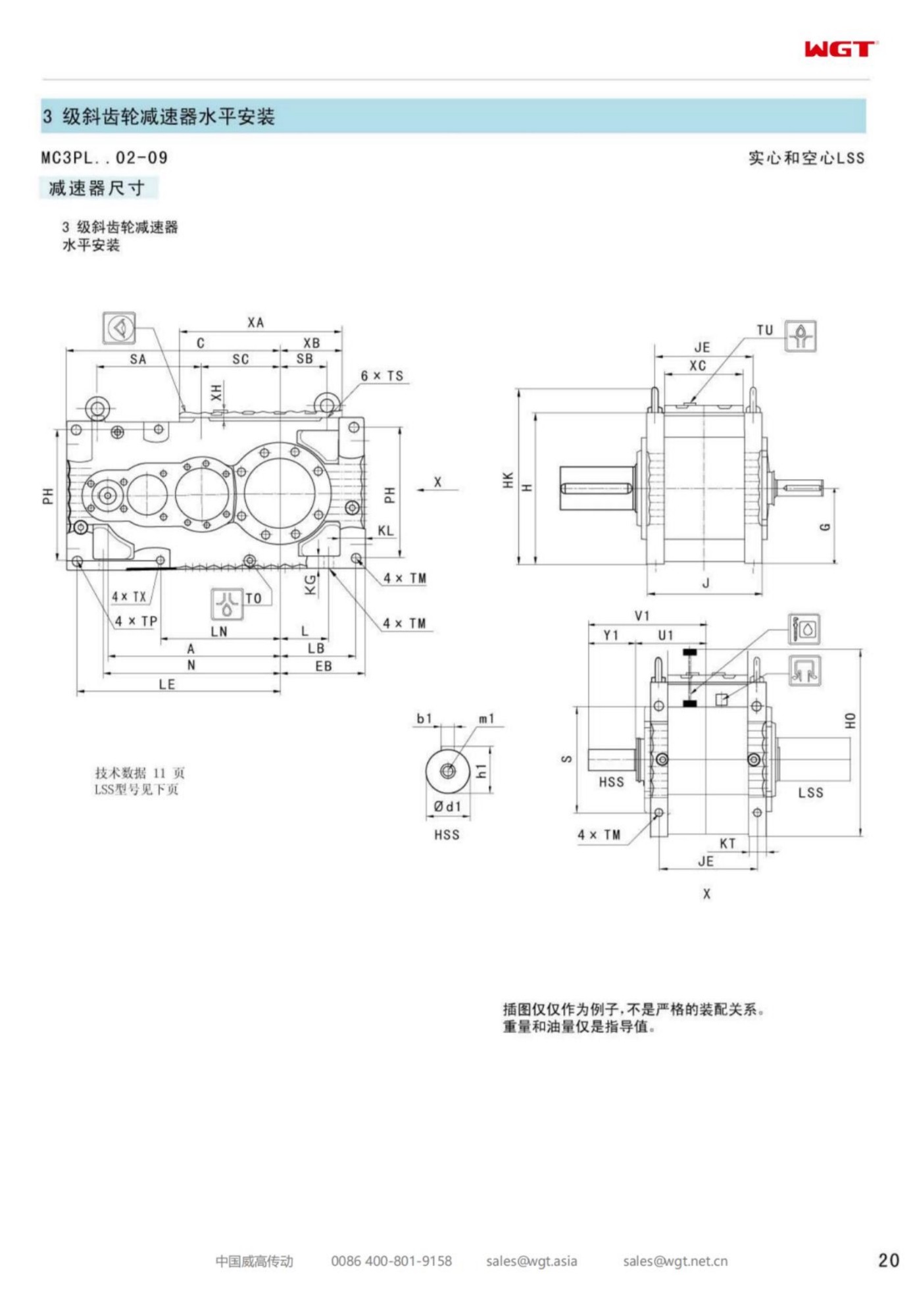
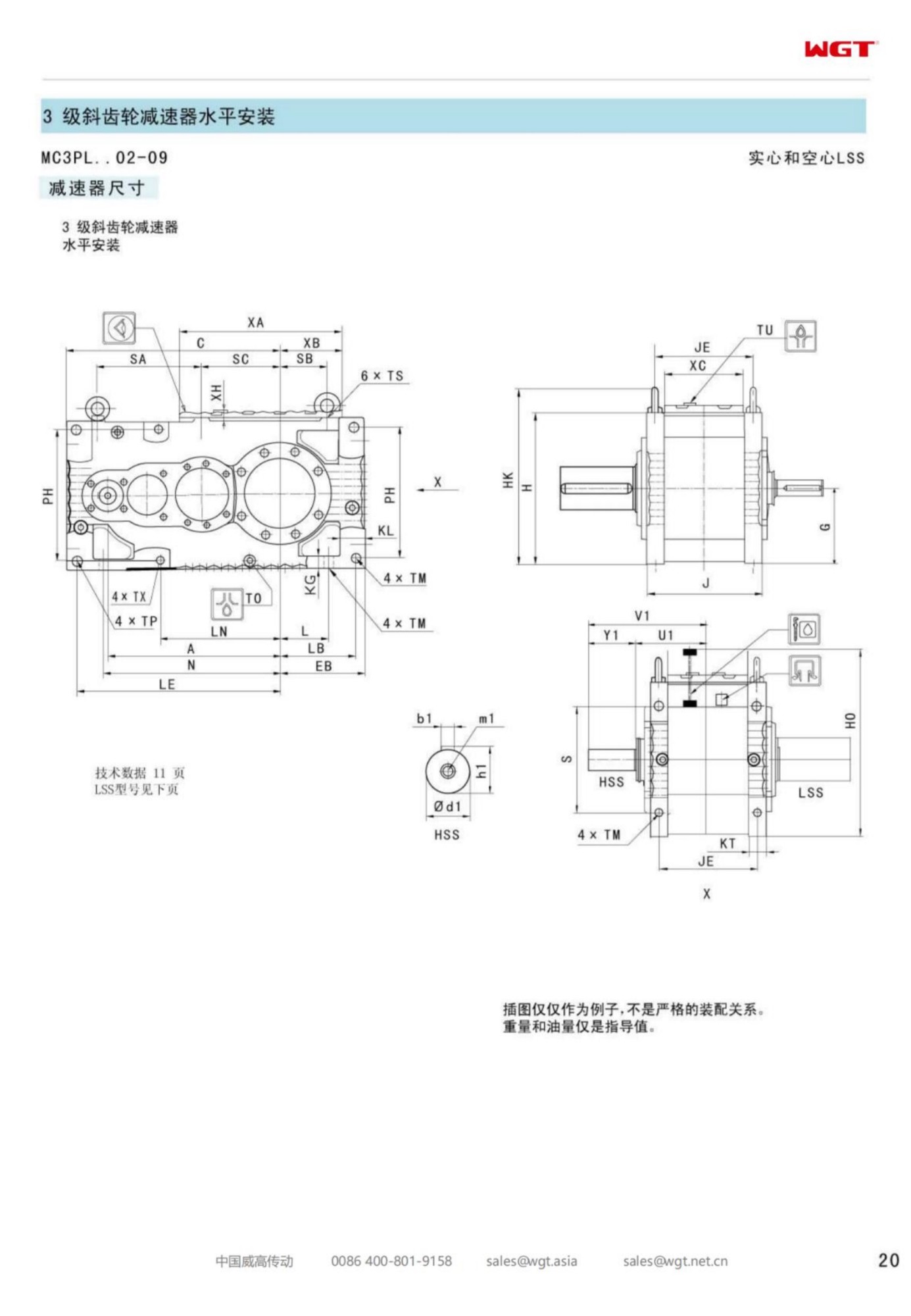
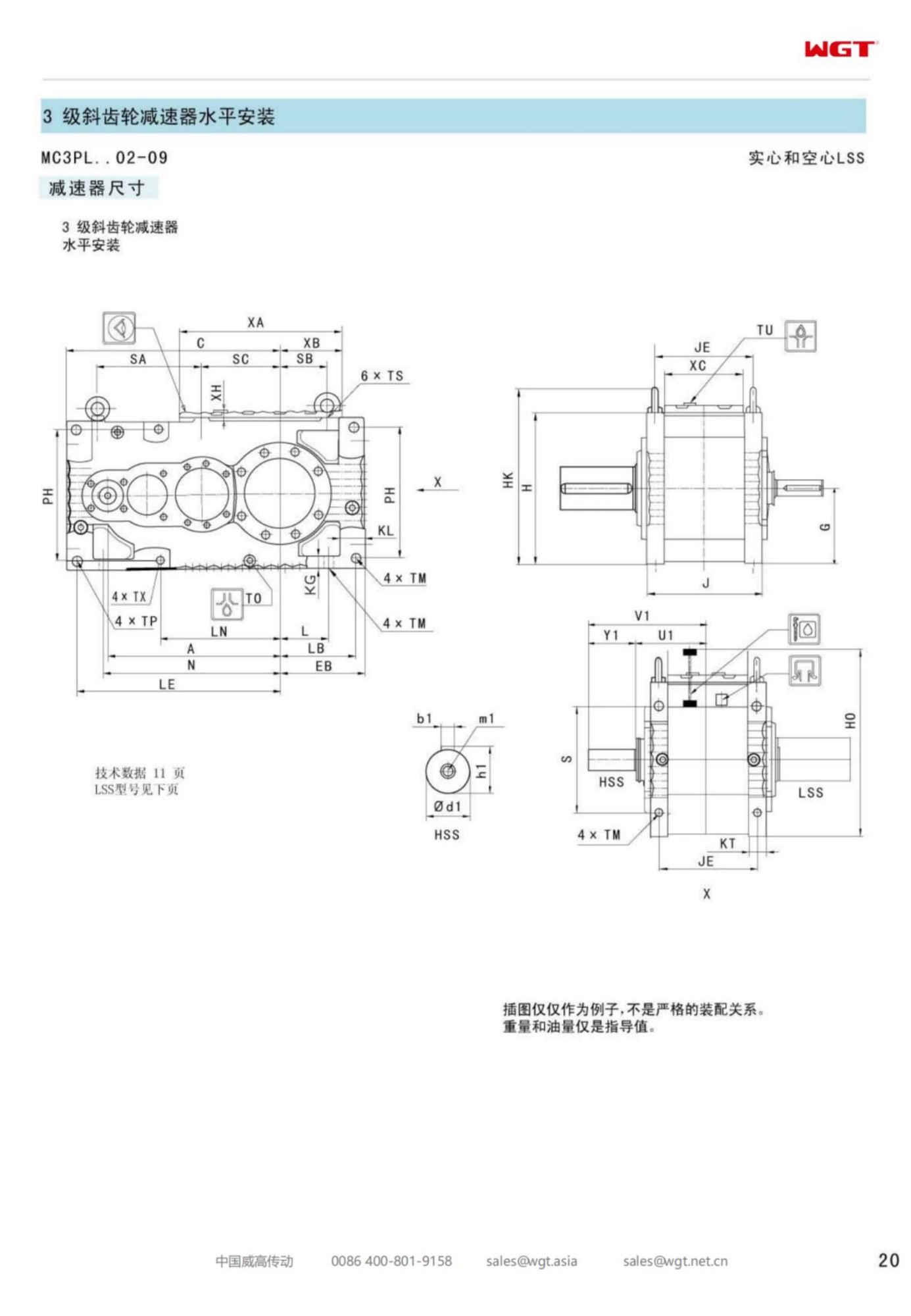
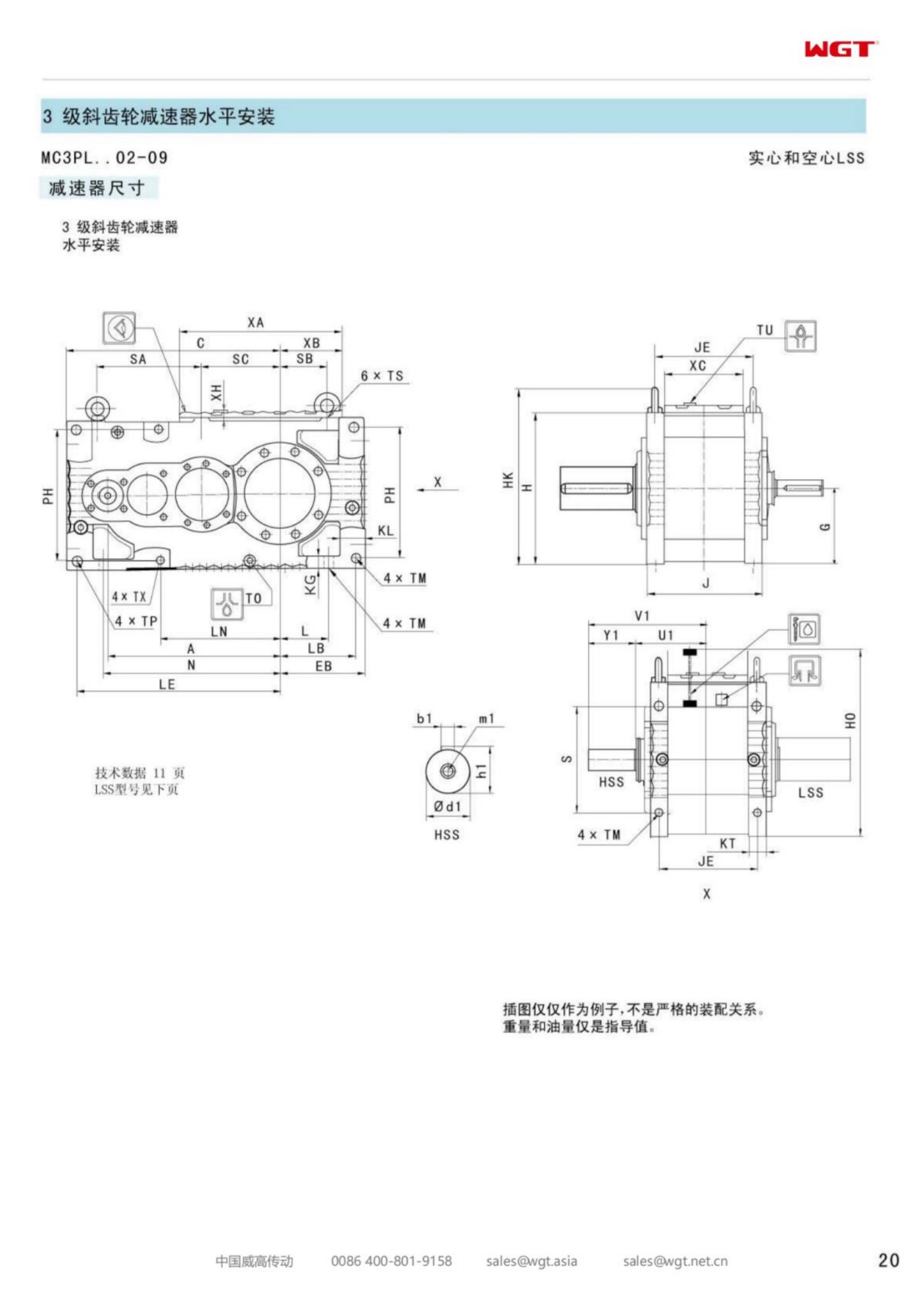
The MC3PLHT04 Code and What It Buys
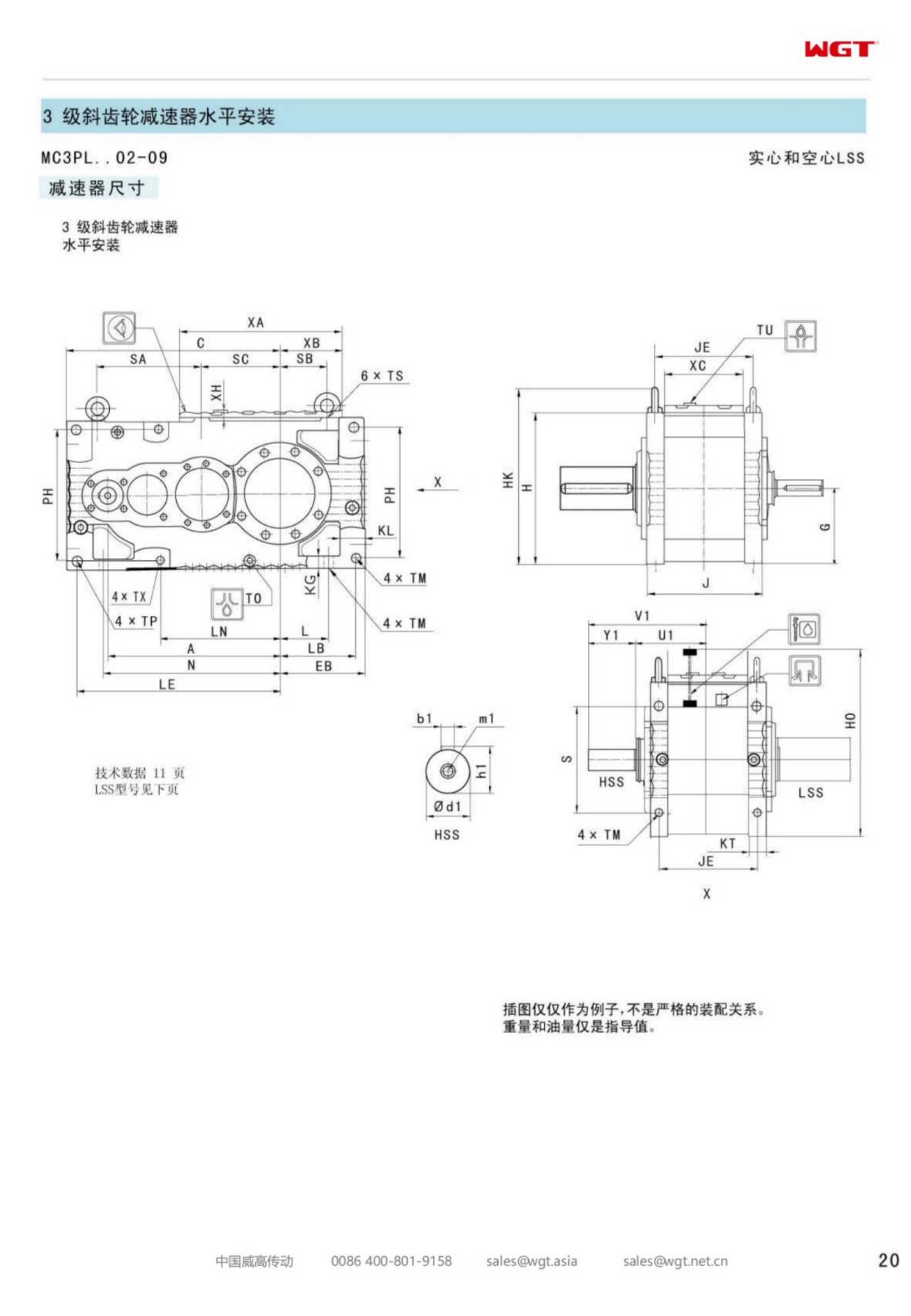
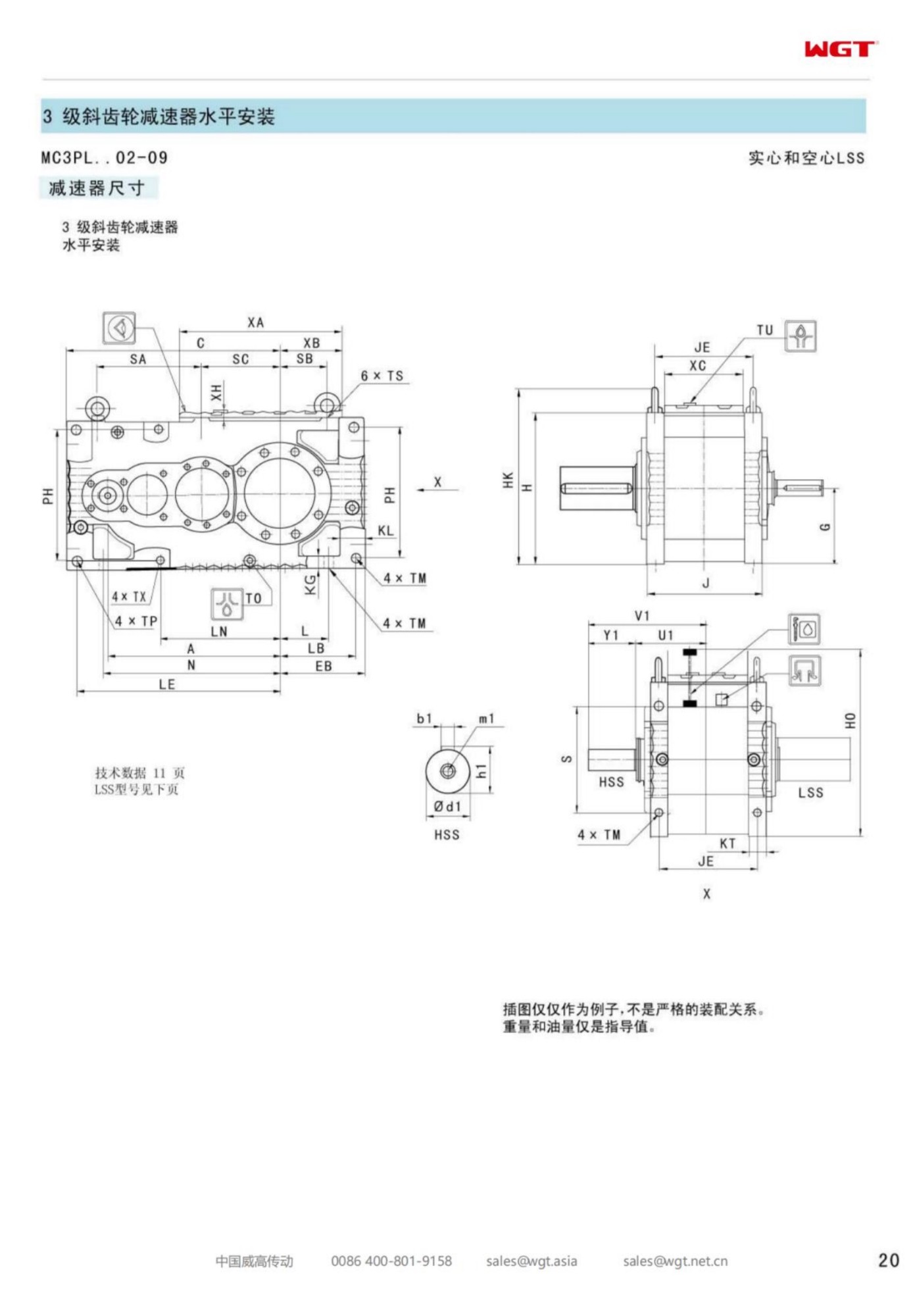
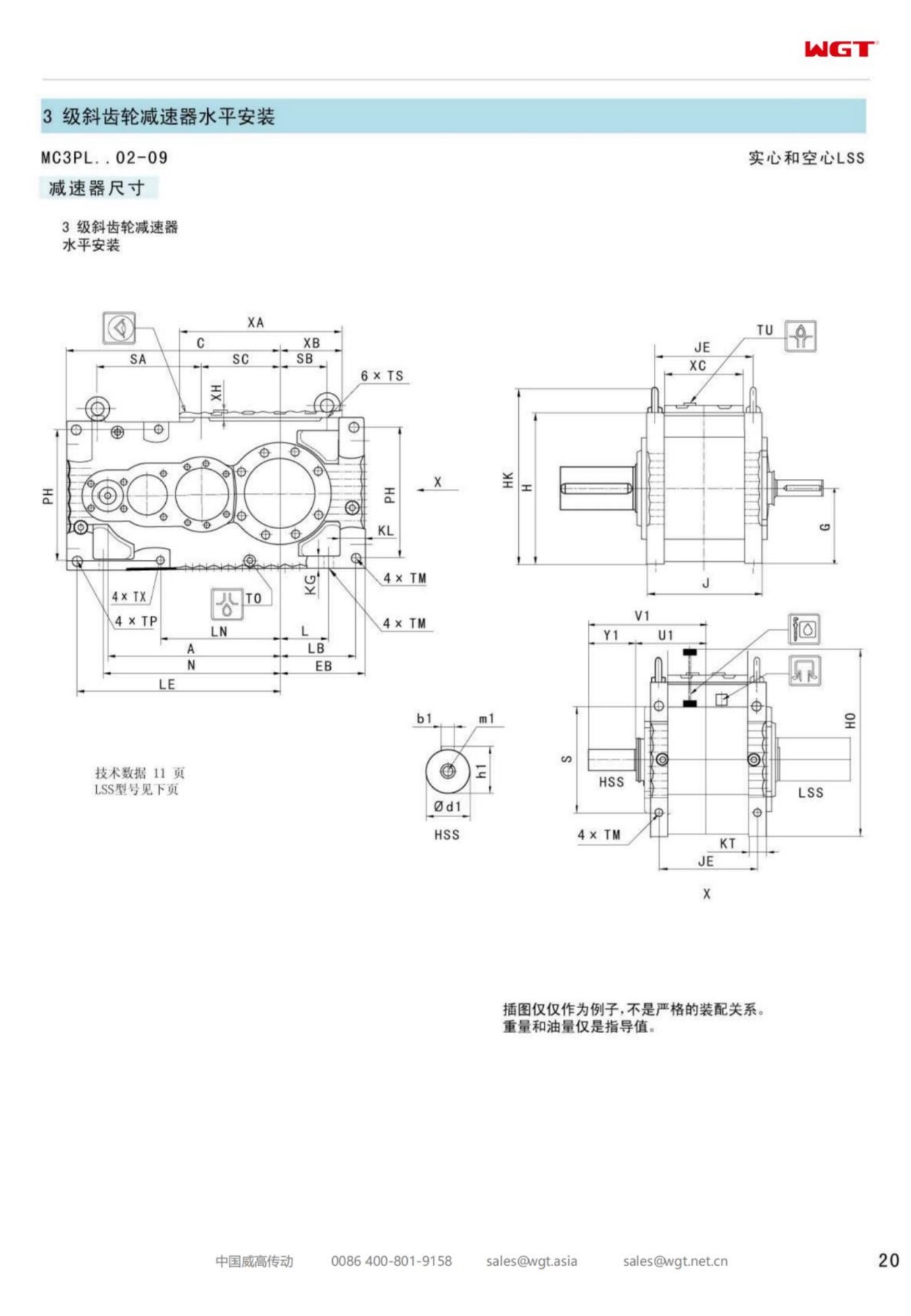
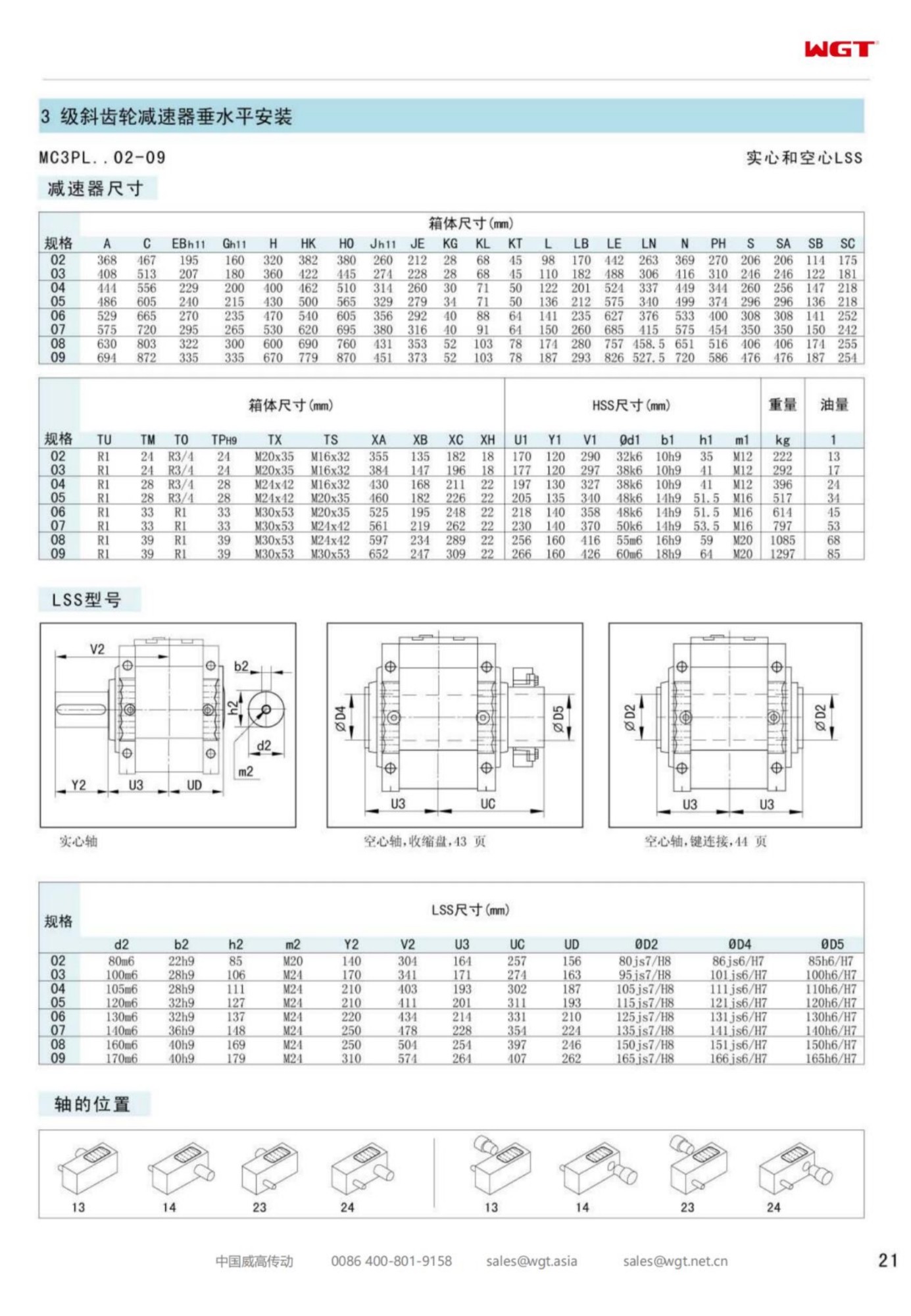
The designation compresses the whole arrangement into seven characters.
| MC | Industrial gear unit series for plant-scale duty |
| 3 | Three stages of reduction in the case |
| P | Parallel-shaft helical layout, motor in line with the belt |
| L | Level output axis along the conveyor centreline |
| H | Hollow output bore, keyed straight onto the head shaft |
| T | Torque-arm bracket into the mill steelwork |
| 04 | Mid-small frame of the three-stage band |
For bagasse duty the hollow bore earns its keep twice: no coupling for fibre wads to attack, and a head-shaft swap during the brief maintenance window is measured in hours, not days.
Wet Fibre Finds Every Gap
Bagasse is nature's test kit for sealing. Short fibres ride on any upward airflow, settle into every recess, and wick moisture behind them. A gearbox in that atmosphere needs its output seal sheltered from direct fibre fall-out, its breather elevated and filtered, and its case surfaces smooth enough to shed accumulation with a wash-down hose.
Mills that add a simple sheet-metal drip shield above the drive end report seal life extending by seasons, not months - a shield costs less than one unscheduled stop.
Why Three Stages on an Uphill Belt
Bagasse belts climb. The fibre leaves the mills wet and heavy, and the boiler house sits higher than the mill floor for fire reasons. That combination - steep incline, continuous flow, slow belt - needs a deep ratio delivered at real torque. Two stages would force a bulky first wheel; three stages keep the case compact between the belt line and the walkway, with each mesh working in its efficient band.
The compactness matters on retrofits especially: old mill drives rarely leave generous space, and the parallel layout feeds the motor back along the belt where legacy pulleys never objected.
Corrosion: Humidity Is the Real Enemy
It is not the sugar that corrodes, it is the air. Permanent humidity, wash-down water and occasional juice splash make the mill a light-chemical environment. Case protection, fastener grade and the breather's position all follow from that reading - and so does the paint system on the torque arm, which rusts from the contact face outward if isolated pads are skipped.
Specifying these at order time is a paragraph; retrofitting them is a season of patching.
Torque Arm on Mill Steelwork
Mill structures around bagasse belts are usually heavy, hot-rolled and honest - good news for a torque arm. The bracket wants a flat pad on a primary member, slotted adjustment for tension setting, and protection at the contact faces so the arm can be re-tightened seasons later without the bolt holes having rusted into oblongs.
A thin stainless plate between arm pad and steel face is the cheapest corrosion insurance in the whole installation.
Starting After a Stop-Fill
When a bagasse belt stops, the fibre on it does not slide anywhere - it beds down, packs between the idlers, and greets the restart as a consolidated mass. The breakaway spike on restart is the design case, and three stages must carry it through every mesh simultaneously.
Mills handle this either with soft-start control or with a frame selected above the spike. The second option survives power dips and control faults alike, which is why the mills with the oldest drives tend to be the ones that sized generously once.
Feed Chute Position and the Load It Delivers
Where the chute drops fibre onto the belt decides the torque profile the drive sees. A chute centered too far back loads the belt gradually; a chute that dumps its flow onto the head end asks the gearbox to accept full tonnage in half the belt length - and the same hourly rate becomes a nastier instantaneous load.
Moving a chute is a mechanical day's work; re-selecting a gearbox is a capital exercise. When the chute position is fixed, say so in the enquiry and let the frame absorb it.
Wash-Down Discipline
Between seasons the belts get washed, and so does everything under them. A gearbox positioned with its drain plug facing the floor and its filler facing the sky invites both problems to be solved by gravity in the wrong order. Positioning the unit at installation - filler, drain, level gauge and breather all facing the access side - turns wash-down from a threat into a routine.
What the Season-Week Enquiry Contains
The enquiry that gets answered once, correctly, carries: motor power and speed, required output speed, head shaft diameter and keyway, direction of rotation, worst-case start, ambient and humidity honesty, and the wash-down regime. A photo of the existing drive end settles the mounting geometry questions before they are asked.
Spares Strategy for a Six-Month Sprint
The season is the wrong time to learn the oil grade or the seal part number. Mills that keep the unit's consumables on the shelf before crushing starts - oil, breathers, output seals, torque-arm bolts - spend their maintenance windows maintaining. The rest spend them telephoning.
The Frame Four Verdict in the Boiler House
Bagasse duty does not forgive, but it does not complicate either: steady load, hostile air, hard restarts, brief windows. A three-stage parallel unit with a hollow bore and an honest torque arm matches that list point for point. Mills that bought the frame on that logic report the outcome every maintenance engineer wants: the drive is discussed at the season review, never during the season.
Wet fibre, season-length loads and a breakaway that packs between the idlers - three stages pull through:
- Bagasse conveyor from the mills to the boiler house
- Wet bagasse incline belt at a sugar mill
- Mud and fibre transfer belt at the mill house floor
- Bagasse reclaim conveyor feeding the boiler feeders
- Final-year bagasse storage belt
- Press mud disposal conveyor at the effluent side
Field Applications
Stone quarry conveyor
A stone quarry runs reducers on its primary conveyor. Shock loads from oversized rock are absorbed by the case-hardened gears (surface HRC58-62), and after two years of continuous duty the units still run within their original 68 dB noise spec.
Flour mill screw conveyors
A flour mill standardised on gear reducers for its screw conveyor network. One spare-part pool now covers fifteen drives, and the smooth helical input stage keeps noise low in the packing hall.
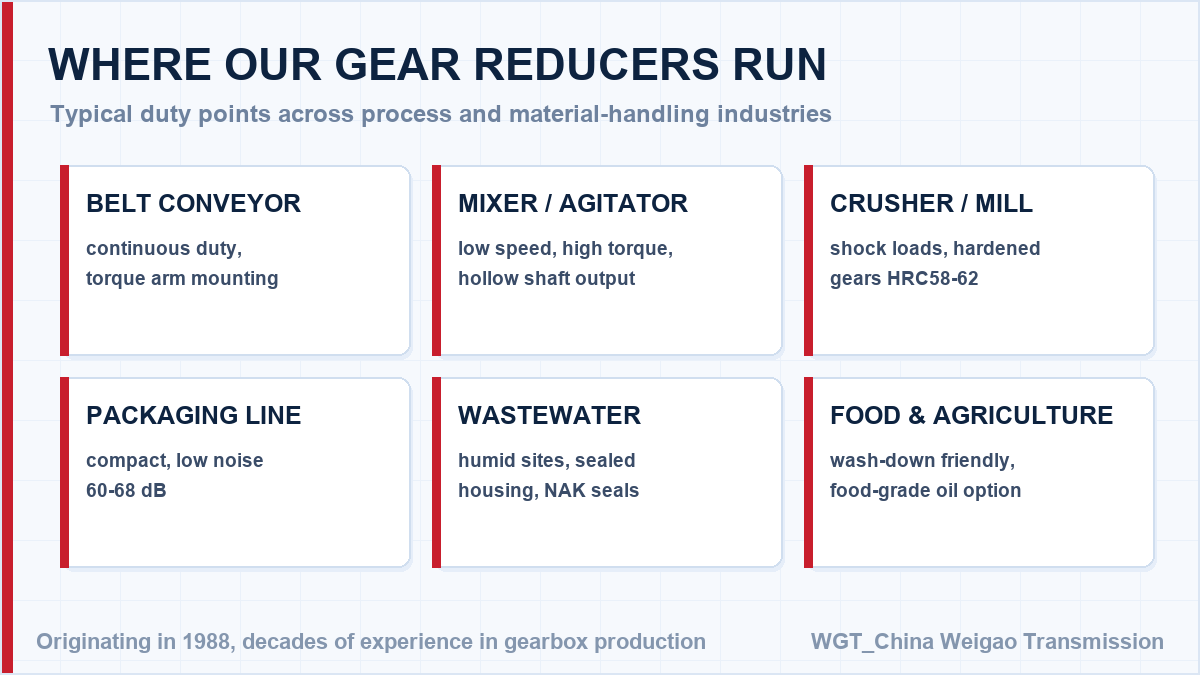
![where gear reducers are used in industry]()
Where these units are installed across industry.
Selection Example: Typical duty point
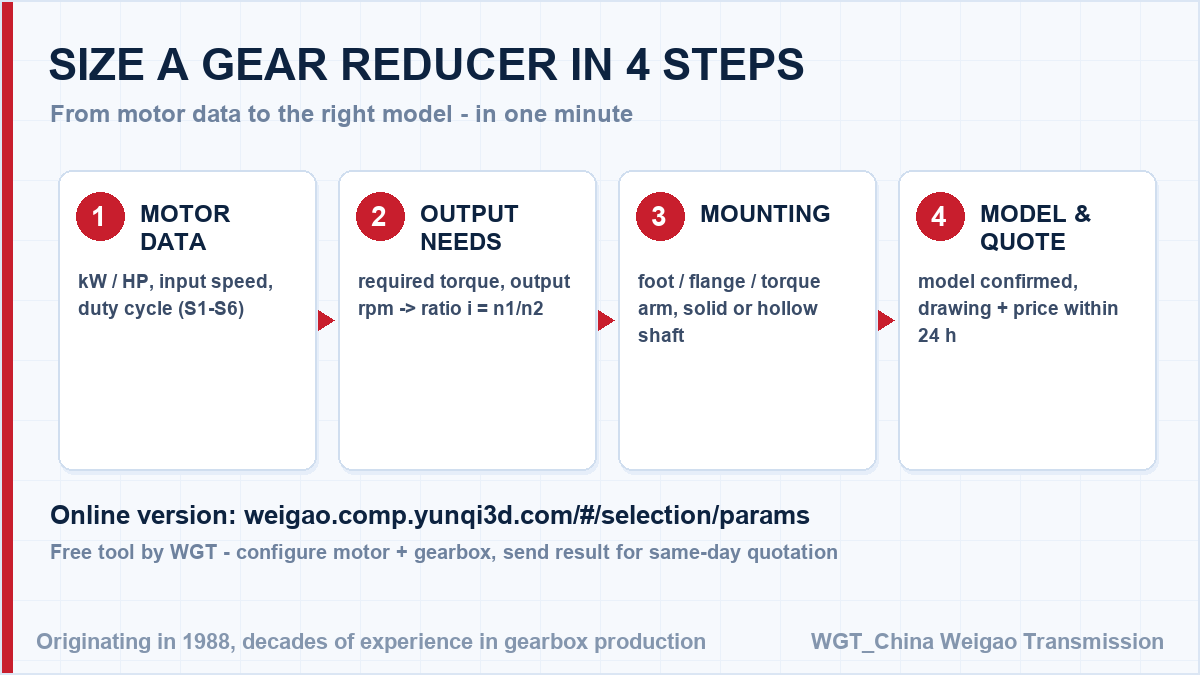
Worked example for this frame - the motor runs at four-pole speed and the machine needs a slow output. Motor speed divided by the target output speed gives the ratio, rounded to the nearest available step, and the required torque with the service factor then fixes the frame size. Once the ratio is fixed, check the required output torque against the rating table with the service factor applied - that is what decides the frame, not the ratio alone.
![gearbox selection guide: speed, torque, service factor]()
How a ratio and a frame size are determined, step by step.
Frame Sizes and Typical Duties
| Model | Centre distance | Output | Typical duty |
|---|
| M3PSF50 | size 50 | solid shaft, foot | conveyors, feeders |
| M3PSF60 | size 60 | solid shaft, foot | crushers, mixers |
| M3PSF70 | size 70 | solid shaft, foot | ball mills, shredders |
| M3PSF80 | size 80 | solid shaft, foot | kilns, heavy conveyors |
| M3PSF90 | size 90 | solid shaft, foot | mill and kiln drives |
| M3RSF50 | size 50 | solid shaft, foot, right-angle | inclined conveyors, elevators |
| M3RSF60 | size 60 | solid shaft, foot, right-angle | screw classifiers, feeders |
| M3RHF70 | size 70 | hollow shaft, foot, right-angle | agitators, drum drives |
| M3PHT80 | size 80 | hollow shaft, torque arm, parallel | shaft-mounted conveyors |
| M3RHT90 | size 90 | hollow shaft, torque arm, right-angle | heavy shaft-mounted drives |
The size number is the key dimension that steps up torque capacity through the range: 50 to 90 in horizontal builds, 10 to 90 in vertical builds. Gearing philosophy is shared across the family.
From Duty Point to Delivery in One Working Day
Stop guessing the ratio. Engineers can size the unit themselves in the WGT Motor & Gearbox Online Selection System - input speed, torque and duty, get the model instantly.
Tell us what the machine does and how hard it works; we calculate the ratio, apply the service factor and send back the drawing and quotation within one working day, including sea-freight and air-freight options. Looking for a gearbox for agricultural machine? Tell us the duty point and we will confirm the model in writing.
Common Questions from Buyers
What paint finish and corrosion protection is applied?
Housings are shot-blasted and finished with a two-component industrial paint in RAL colours, giving good protection for indoor and sheltered outdoor duty. For aggressive or coastal sites, ask for the heavy-duty coating option.
Do you supply spare parts such as seals and bearings?
Seal kits, bearings, output shafts and covers are available from stock or on short lead time. We keep the drawings for every unit we ship, so a replacement part ten years from now is still traceable to your original order.
How is each unit tested before shipment?
Every unit is run in on the bench before packing. Noise, temperature rise and backlash are recorded and the test sheet travels with the shipment, so you can file it with your incoming-inspection records.