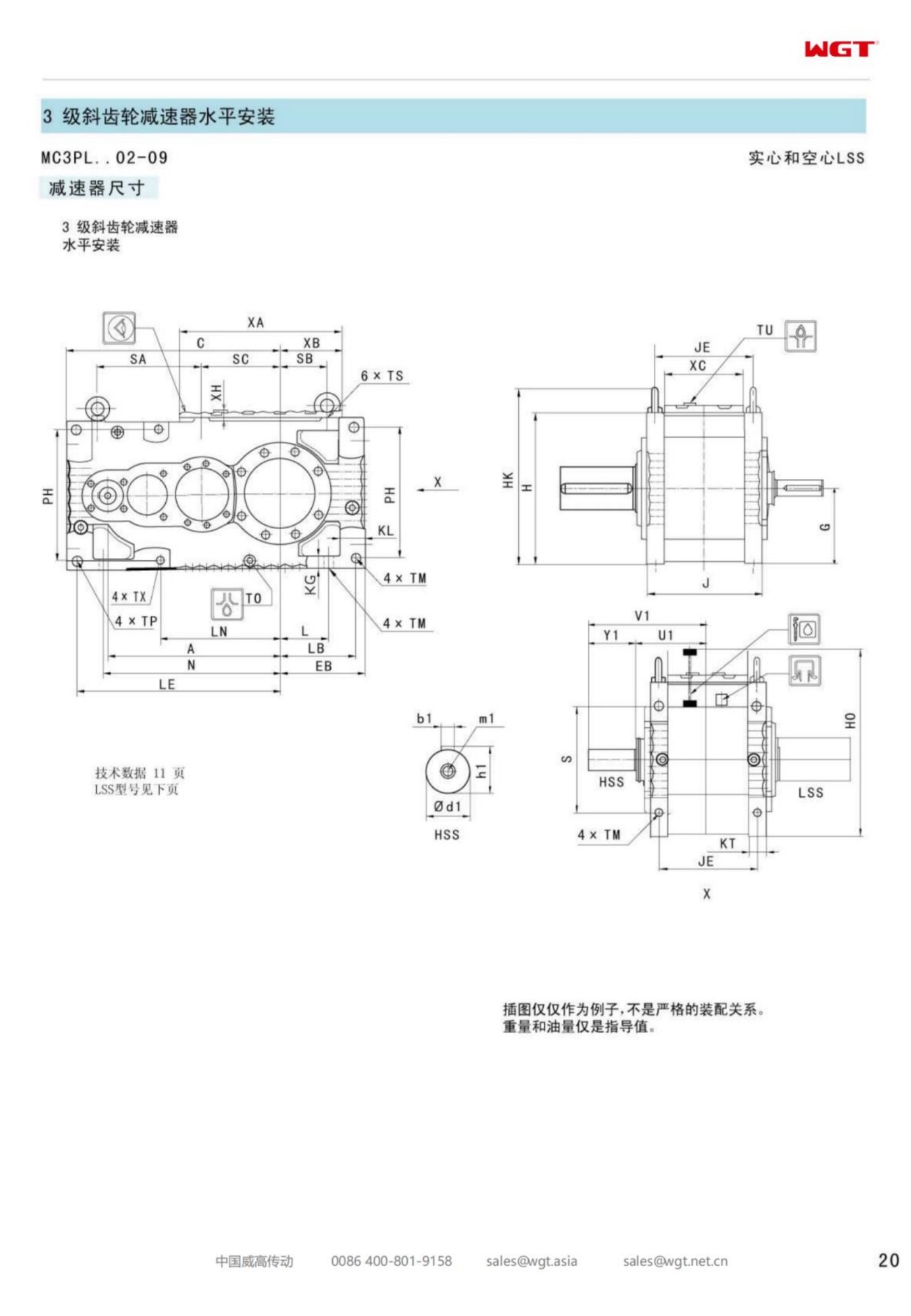
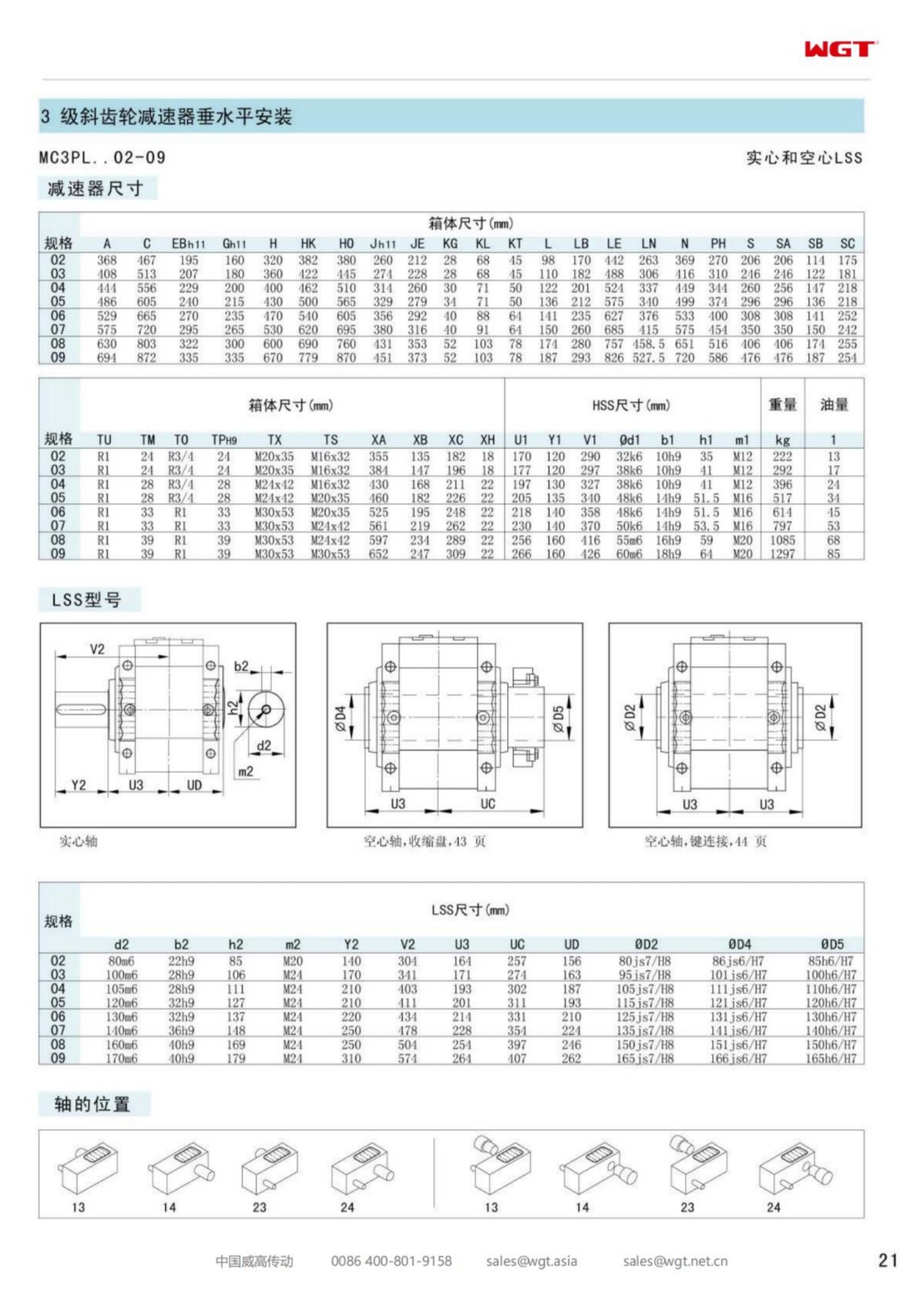
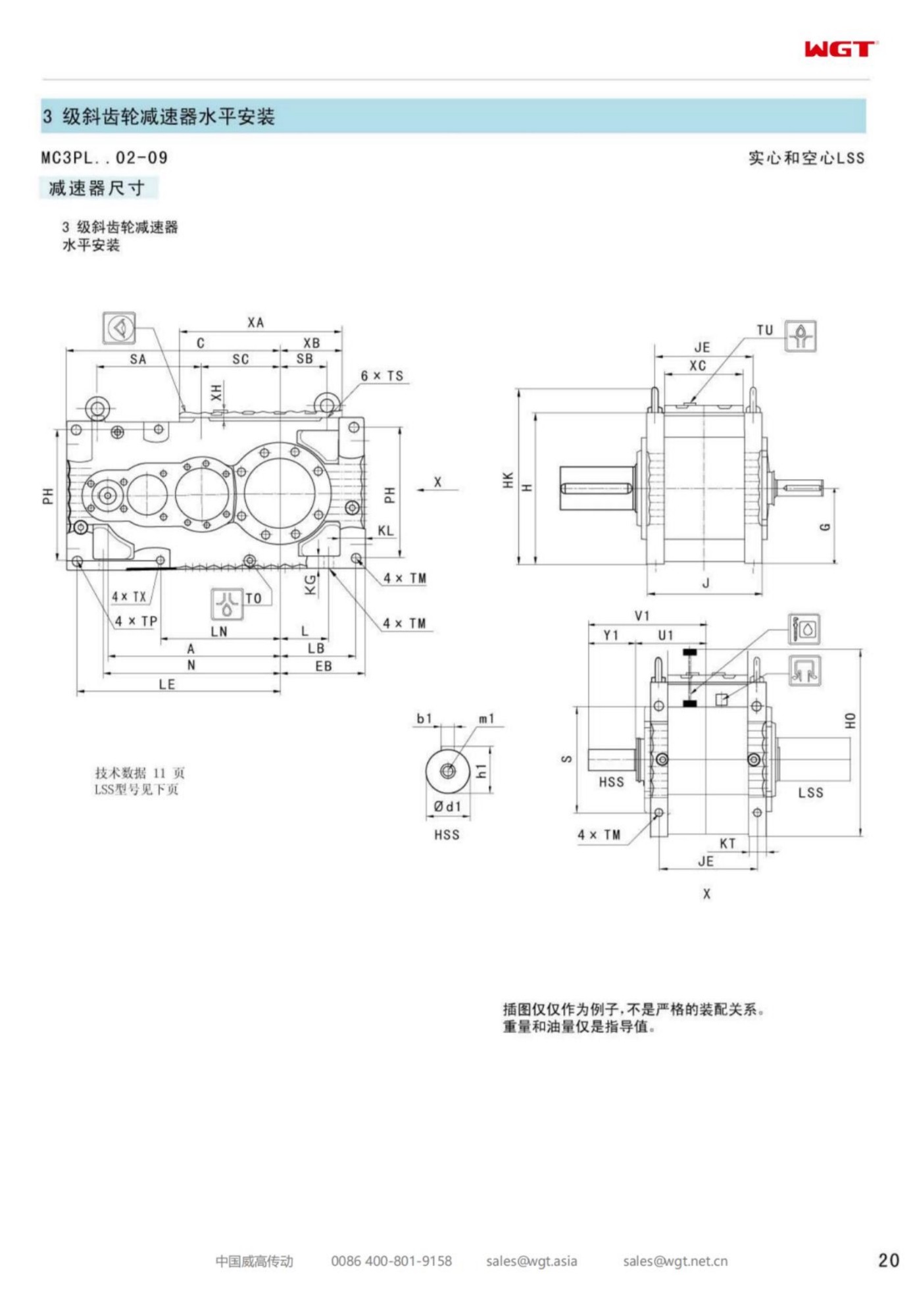
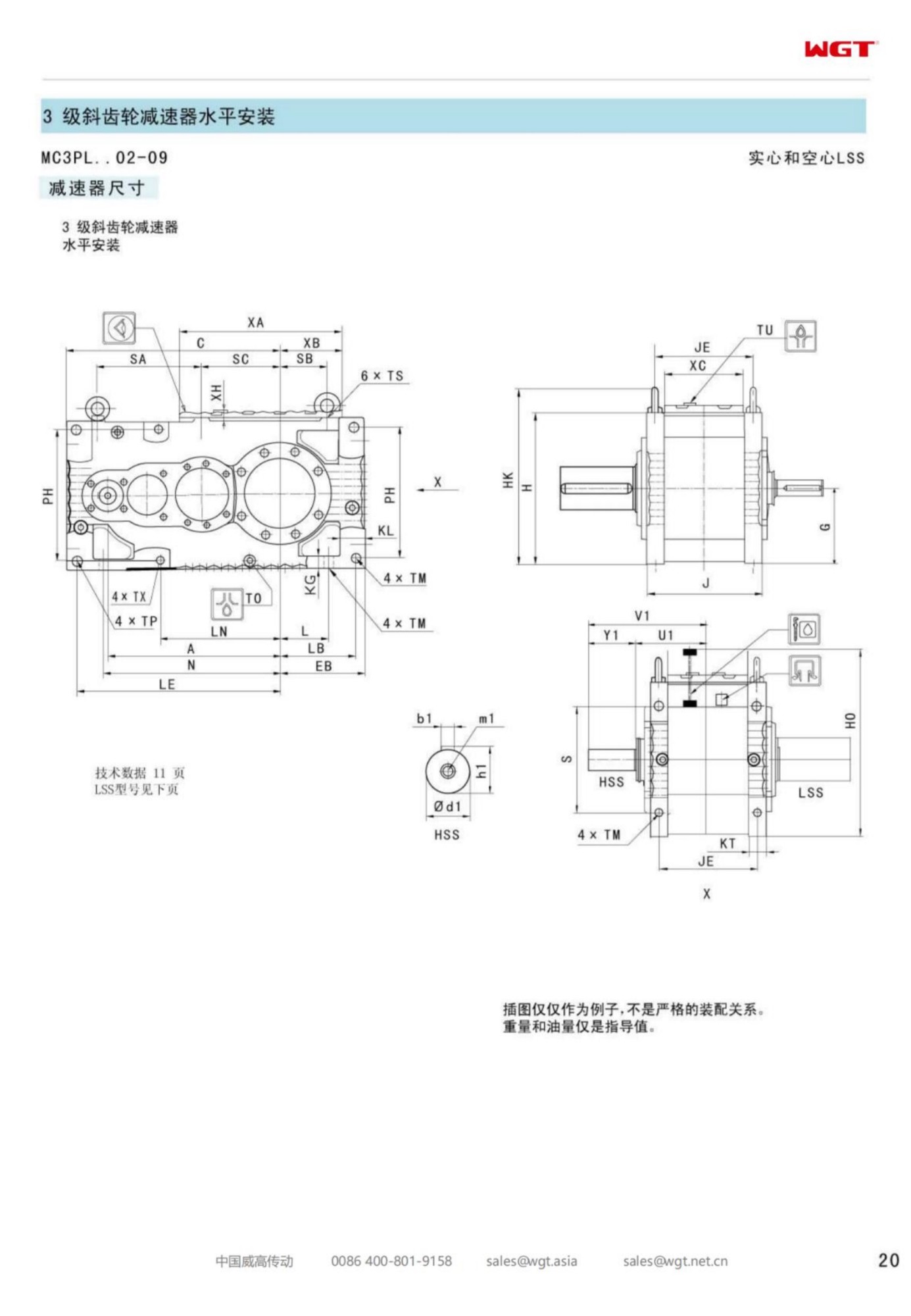
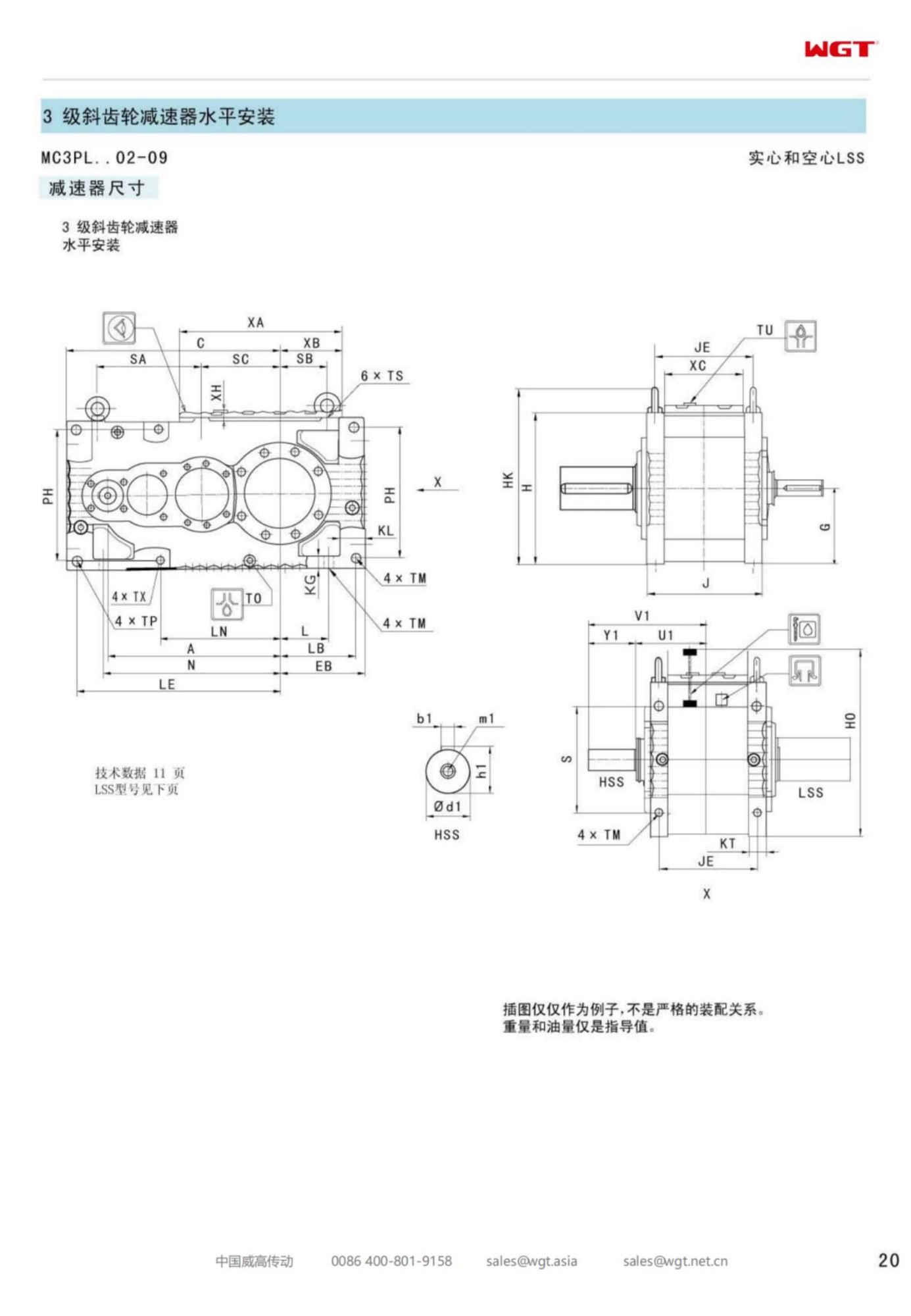
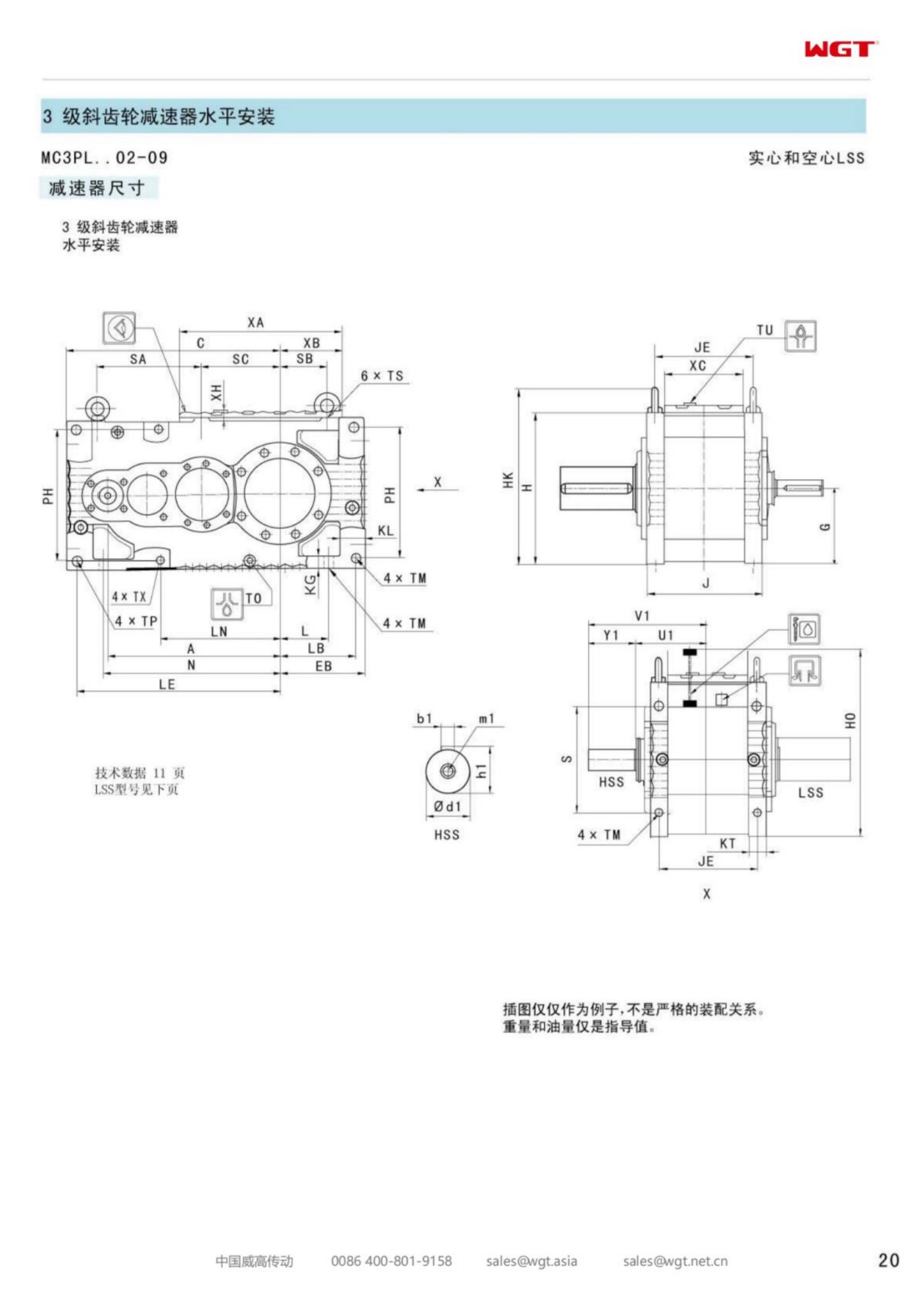
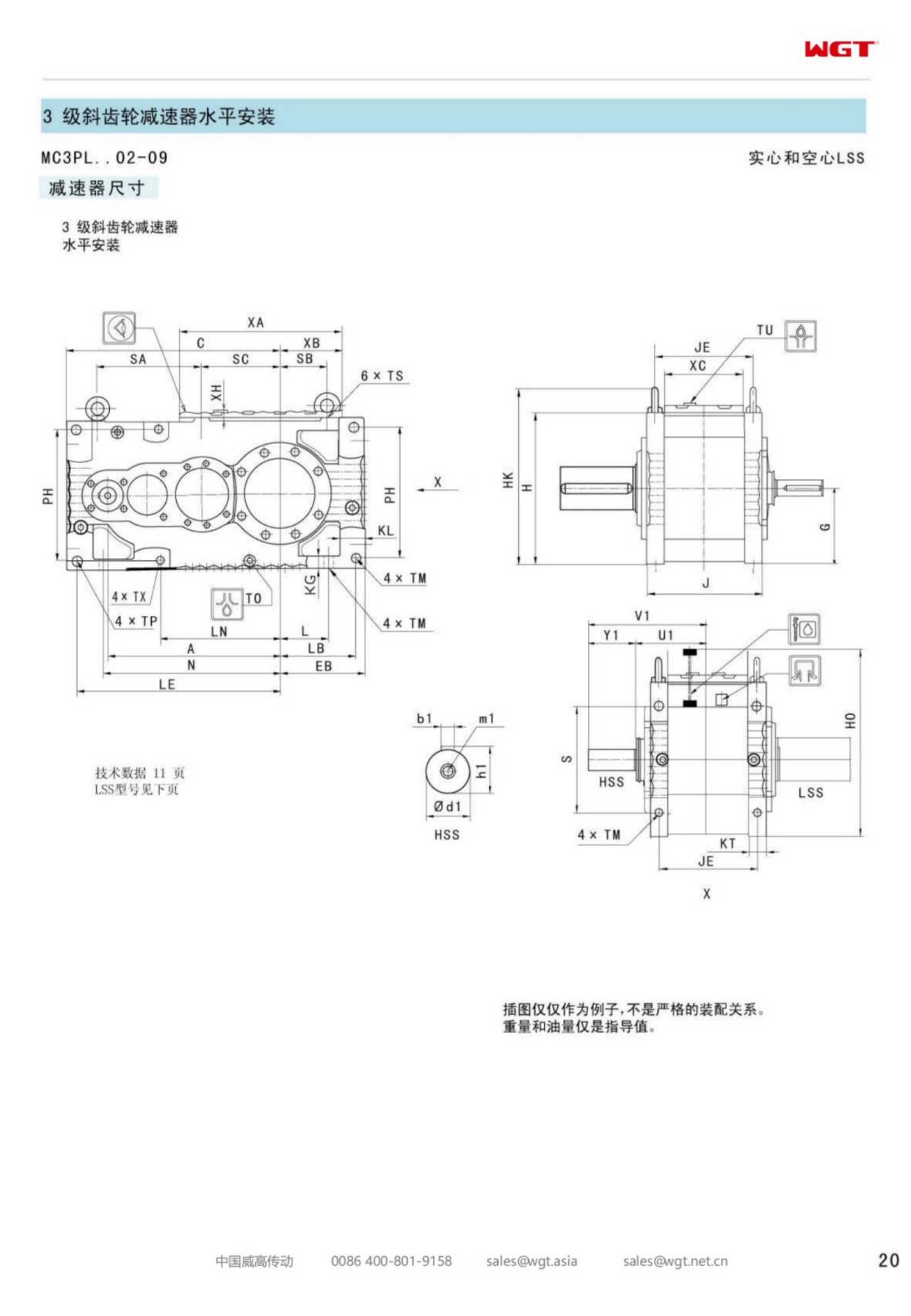
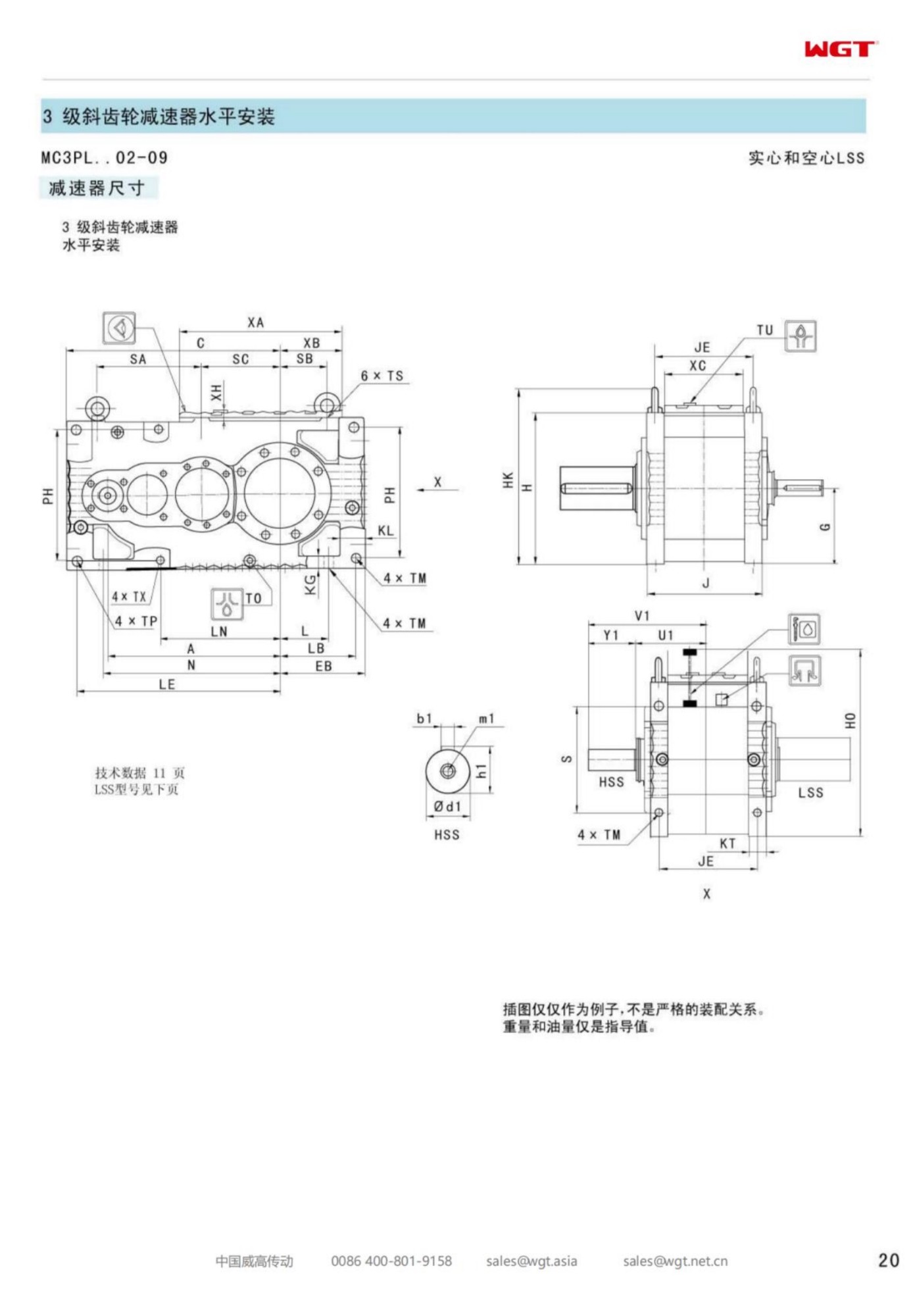
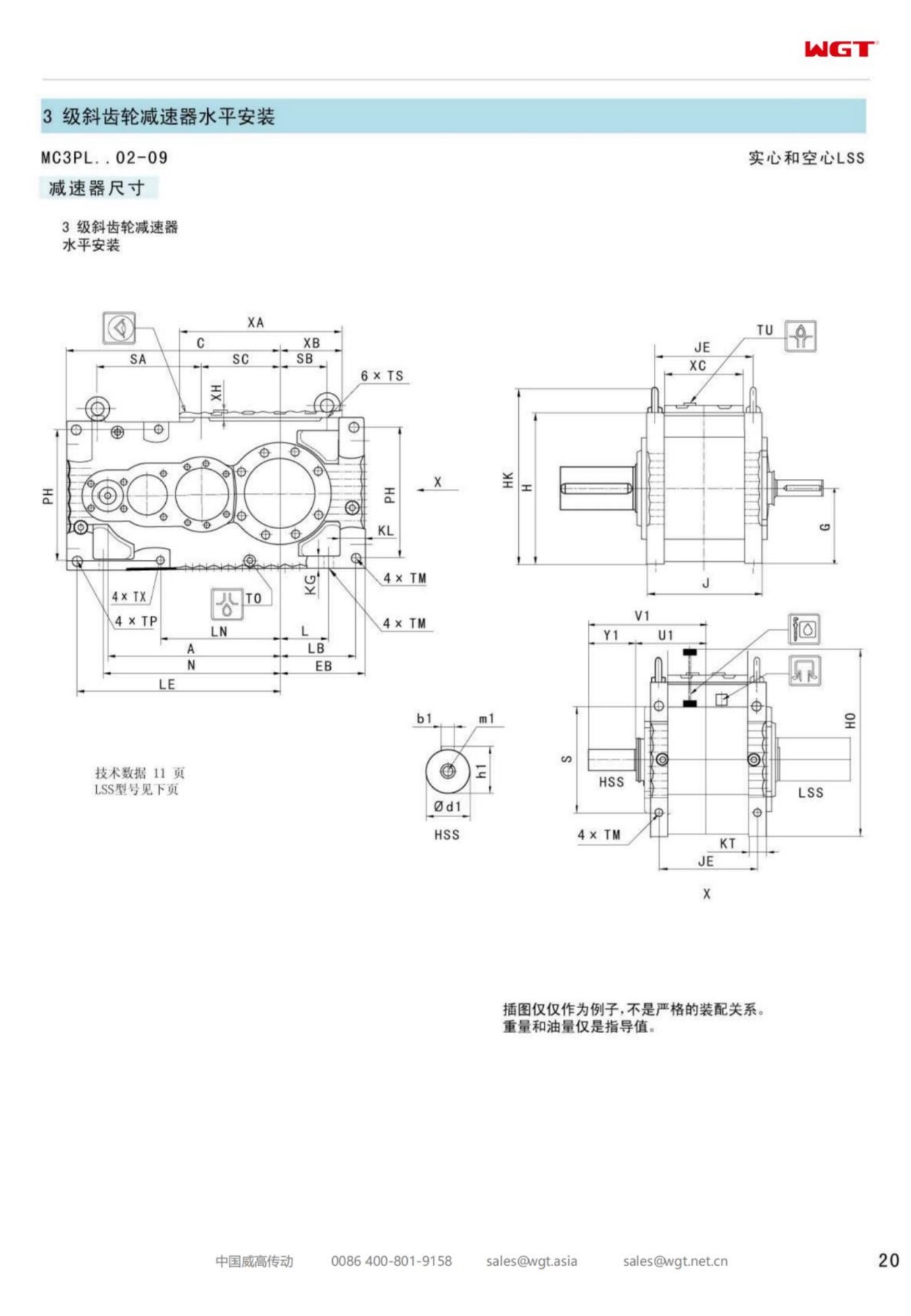
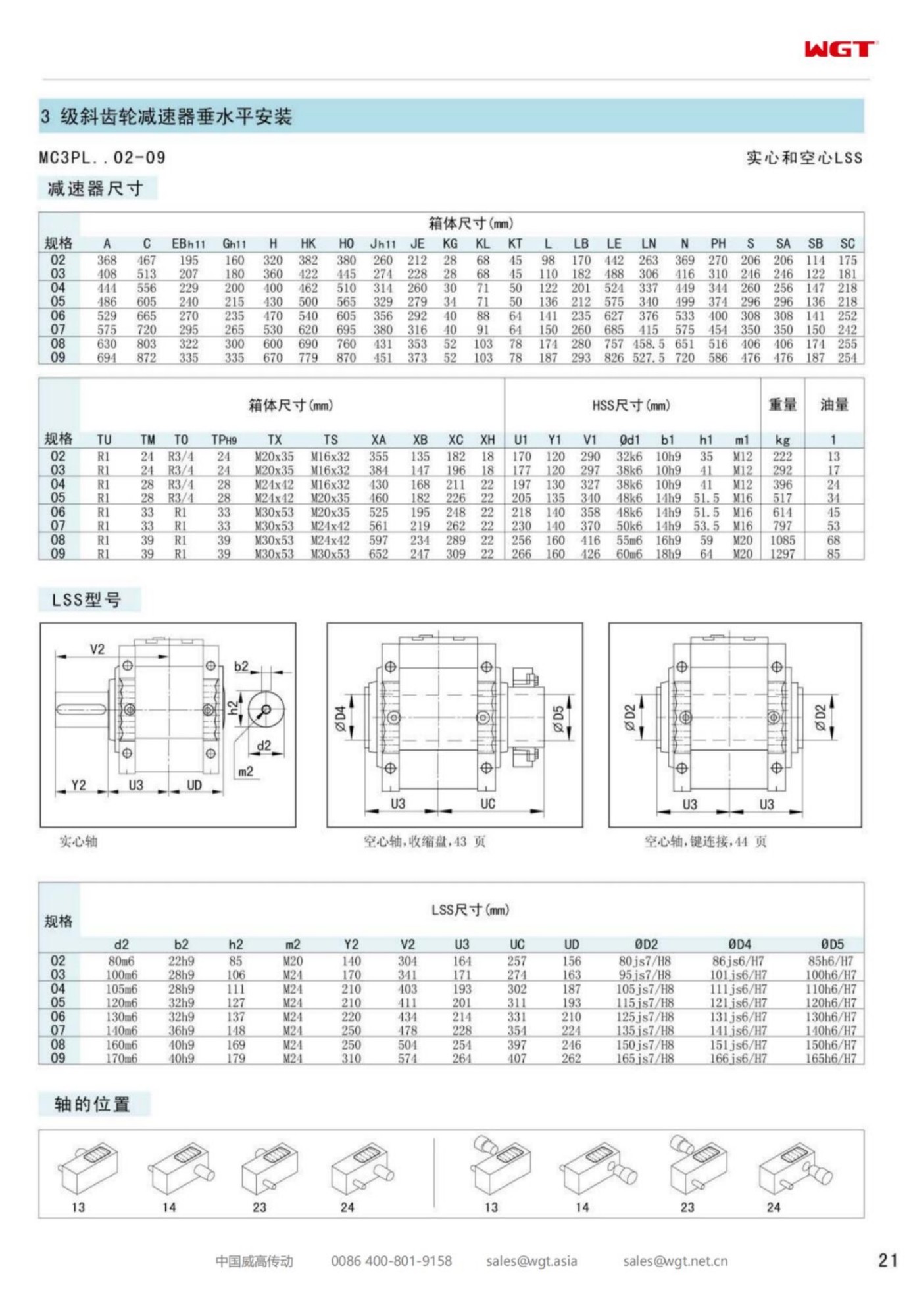
Mashing is the quietest violent process in a brewery. Grain and water meet at temperature, enzymes go to work, and a rake turns the bed slowly for an hour or more while the vessel sits under steam and then under a hose. The MC3PLHF08 three-stage parallel shaft gearbox drives that rake: a foot-mounted case on the brewhouse platform, a hollow bore over the rake shaft, and three helical stages turning motor speed down to a stir that must not tear the bed.
What follows covers the code, the mounting logic on a wet platform, and the enquiry content that lets a brewhouse drive be specified once and forgotten.
Mashing Wants a Slow, Steady Stir
The rake exists to keep temperature even, not to agitate. Turn it too fast and the bed compacts, the filter bed suffers and the run-off slows for the rest of the brew. Turn it unevenly and the temperature stratifies. The drive's real job is constancy: the same slow rotation, hour after hour, with no surge at the moment the grist lands.
Decoding MC3PLHF08
The code answers the layout questions in order.
| MC | Industrial gear unit family for continuous plant duty |
| 3 | Three stages of reduction in one housing |
| P | Parallel-shaft helical gearing, coaxial input and output |
| L | Level output axis into the rake shaft |
| H | Hollow output bore over the mash rake shaft |
| F | Foot mounting on the brewhouse platform |
| 08 | Eighth frame of the three-stage band |
So: three reductions, parallel shafts, level axis, hollow output, foot plate, eighth frame. A brewer reading that string knows where the drive sits and how it attaches before any drawing arrives.
A Bore Over the Mash Rake Shaft
The rake shaft comes up through the vessel bottom or in through the tun wall, depending on the brewhouse, and in both cases it is the part nobody wants to disturb. A hollow output takes that shaft directly, so the drive can be lifted off for service without breaking a coupling that was aligned on a wet platform in the first place.
Foot Mount on a Brewhouse Platform
Brewhouse platforms are stainless, crowded and often wet. A foot-mounted case sits on a pad that the fabricator can put exactly where the drawing shows, and it leaves the space around the shaft clear for the rake bearing and its seal. The plate must be flat and the shims stainless-compatible, because a mild-steel shim pack on a washdown deck rusts into a wedge within a year.
Steam, Detergent and a Washdown Shift
A brewhouse is cleaned with caustic, rinsed with hot water and steamed, sometimes all in the same hour. The drive's external surfaces have to tolerate that cycle: a finish that resists caustic, a breather that will not drink rinse water, and covers that keep their gaskets after the tenth opening. This is a specification conversation, and it belongs in the first message rather than in the first complaint.
Viscous Mash and Rising Torque
Mash thickens as conversion proceeds and the rake's resistance climbs with it. Add a grist that is finer than the last delivery and the same recipe asks for more torque than the last brew did. Sizing therefore starts from the thickest mash the brewhouse can produce, not from an average gravity, and the service factor carries the day-to-day variation in malt.
Hygiene Rules and the Gearbox Surface
Anything mounted in a food area will be inspected as though it were food equipment, even when it is not. Smooth covers, no exposed pockets that hold grain dust, drain plugs that can be reached with a brush, and a paint system that does not flake into the vessel are the practical requirements. A drive that is easy to clean gets cleaned, and a clean drive is the one that lasts.
Three Stages at Mash Temperature
Rake speeds are slow and ratios are deep, which is three-stage territory. Three meshes keep the case short enough to fit under the platform handrail, and the smooth output is kinder to the rake bearing than a two-stage train running at its ratio limit would be.
Mounting Beside a Lauter Tun
Most brewhouses put the mash tun and the lauter tun side by side with a walkway between them, and the drive usually lands on the walkway side because that is where the maintenance access is. Saying so on the enquiry - which side, how much clearance, where the guard can go - avoids a unit that arrives facing the wrong way in a room with no space to turn it.
Working the Ratio From the Rake Speed
The brewhouse knows its rake speed from the recipe and its motor speed from the electrical standard, so the ratio is arithmetic. Torque comes from the thickest mash the vessel will hold, with the service factor set by how variable the malt supply is. Both figures are available before the order, which is why a brewhouse enquiry can be answered with one frame.
The Enquiry a Brewery Should Send
Send the rake shaft diameter and keyway, the rake speed, the vessel volume and the thickest mash the brewhouse will run, the motor frame and speed, the cleaning chemistry and the ambient conditions on the platform. A photograph of the mounting pad and the shaft entry completes it. With that, the drive arrives with a mounting arrangement that matches the room.
Frame Eight on a Brewhouse Floor
Frame eight is the size that suits the brewhouses turning out a full brew schedule: enough case to hold a thick mash at low speed all day, enough bore for a rake shaft with a proper key, and a foot plate that fits a platform built for people rather than for machinery. It is the upper middle of the band, and it is where most production brewhouses land.
A rake that must turn slowly for an hour without surging - three stages keep it even:
- Mash tun rake drive in a craft brewhouse
- Mash mixer on a production brewhouse floor
- Lauter tun rake mechanism beside the mash vessel
- Cereal cooker agitator in a brewery
- Mash conditioning vessel in a distillery
- Wort kettle stirrer on a small brewhouse
Questions We Hear Most Often
What warranty and documentation come with the gearbox?
A one-year warranty covers material and workmanship. Each unit ships with a test record (noise, temperature rise, backlash), a dimension drawing and an installation manual.
How do I calculate the ratio I need?
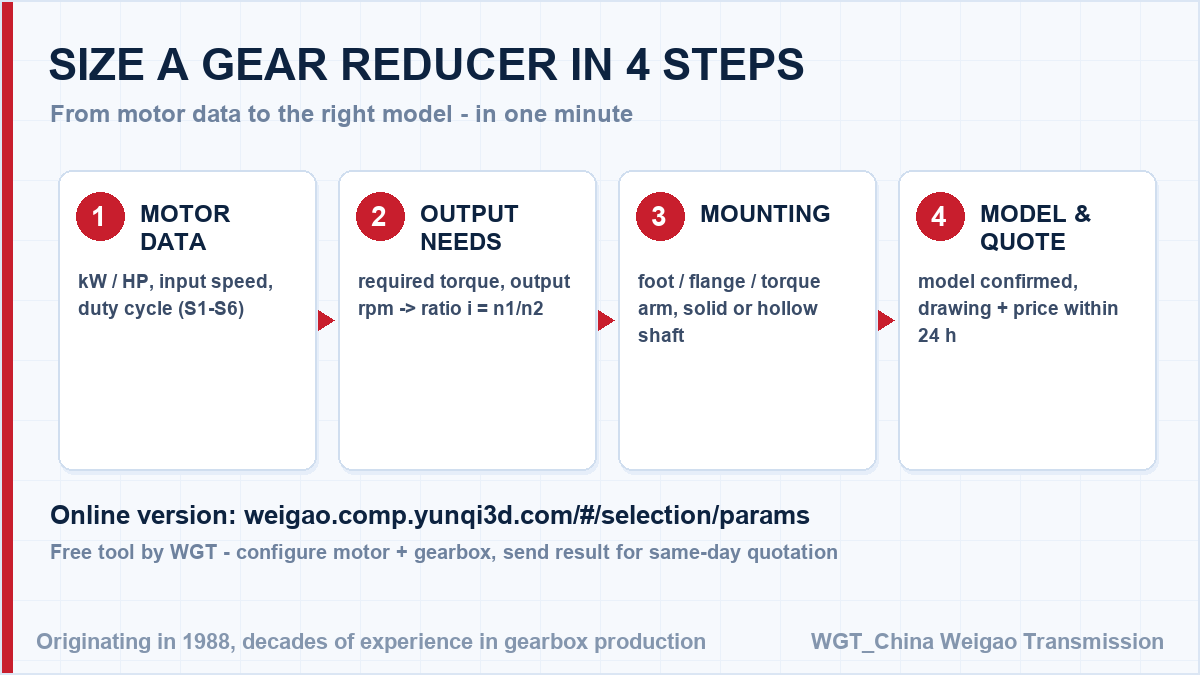
Divide motor speed by the target output speed (i = n1/n2), then check the required torque against the rating table with your service factor. The online selector below does this automatically.
Can the reducer be supplied with a brake motor or an IEC motor flange?
Yes. We supply the reducer as a bare unit with an IEC standard input flange, and you can bolt on any IEC or NEMA motor - including a brake motor. The flange dimensions follow the common IEC pattern, so existing motors drop straight on.
Choosing the Right Frame Size
| Model | Centre distance | Output | Typical duty |
|---|
| M3PSF50 | size 50 | solid shaft, foot | conveyors, feeders |
| M3PSF60 | size 60 | solid shaft, foot | crushers, mixers |
| M3PSF70 | size 70 | solid shaft, foot | ball mills, shredders |
| M3PSF80 | size 80 | solid shaft, foot | kilns, heavy conveyors |
| M3PSF90 | size 90 | solid shaft, foot | mill and kiln drives |
| M3RSF50 | size 50 | solid shaft, foot, right-angle | inclined conveyors, elevators |
| M3RSF60 | size 60 | solid shaft, foot, right-angle | screw classifiers, feeders |
| M3RHF70 | size 70 | hollow shaft, foot, right-angle | agitators, drum drives |
| M3PHT80 | size 80 | hollow shaft, torque arm, parallel | shaft-mounted conveyors |
| M3RHT90 | size 90 | hollow shaft, torque arm, right-angle | heavy shaft-mounted drives |
One family, two layouts. Choose P for a coaxial-in / parallel-out drive train, R when the motor must turn 90 degrees; then pick the shaft type and mounting style that the machine interface needs.
Selection Example: Mash tun rake drive in a craft brewhouse
Take a 7.5 kW motor at 1450 rpm turning the rake at 19 rpm. The ratio follows directly: 1450 / 19 = 76, so a ratio near i=76 is drawn from the three-stage parallel band, and the service factor is argued on the thickest mash the tun will hold rather than on an average gravity. In this case frame eight stirs the bed from a foot plate on the brewhouse platform, takes the rake shaft through a bore, and carries a finish and gasket set that survive caustic and rinse water. It always comes down to those three figures. Send them over and we confirm the frame, ratio and service factor in writing.
![online gearbox selection system workflow]()
Selection workflow used by our engineers for every quotation.
Real-World Duty Points
Overland conveyor system
A mining company drives a two-kilometre overland conveyor with heavy-duty helical gear units at the head station. Continuous 24-hour duty, frequent starts under full load and minimal maintenance windows were all part of the specification.
Cement plant bucket elevator
A cement works renewed the gear units on its bucket elevators during a kiln shutdown. The new units bolted onto the old foundations without modification, and the elevator was back in service within the planned window.
![right angle gearbox duty points overview]()
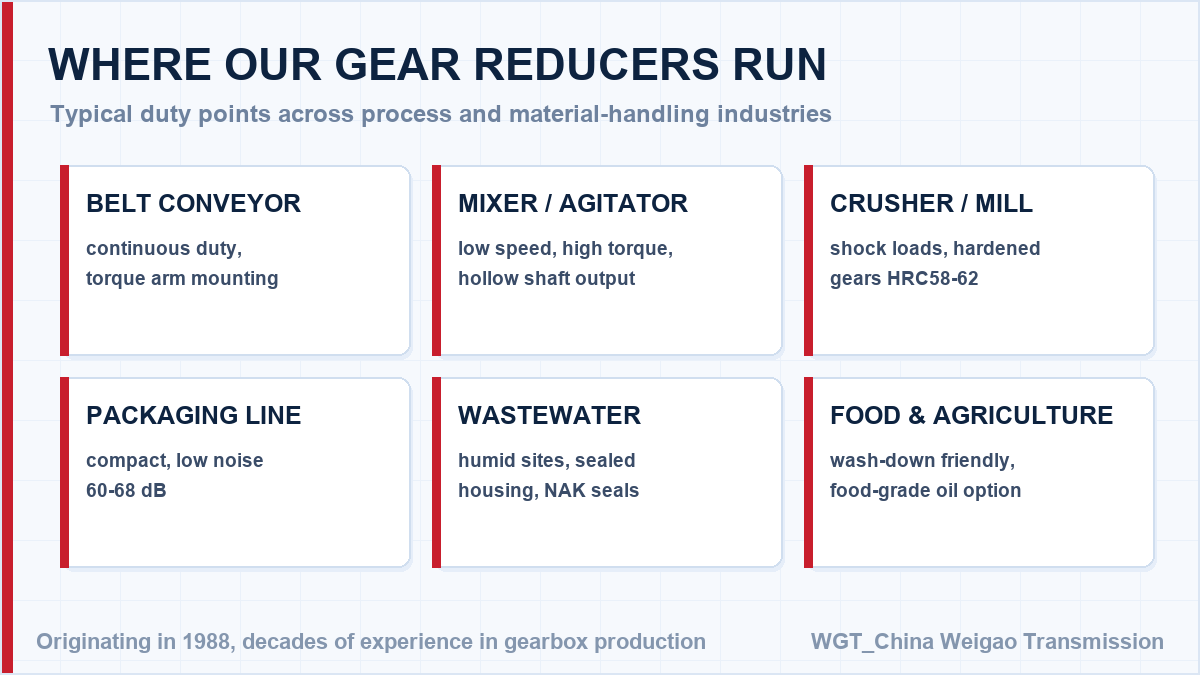
An overview of the duty points this series is built for.
OEM Framework Pricing and Reserved Capacity
Building machines in series? Use the WGT Motor & Gearbox Online Selection System to turn your motor data into a model number, and we will quote that exact unit within the day.
For OEM programmes we hold framework prices and reserve production slots for scheduled call-offs, so your line never waits on a gearbox. Ask for the framework terms with your first enquiry. Looking for a gearbox for steel mill? Tell us the duty point and we will confirm the model in writing.