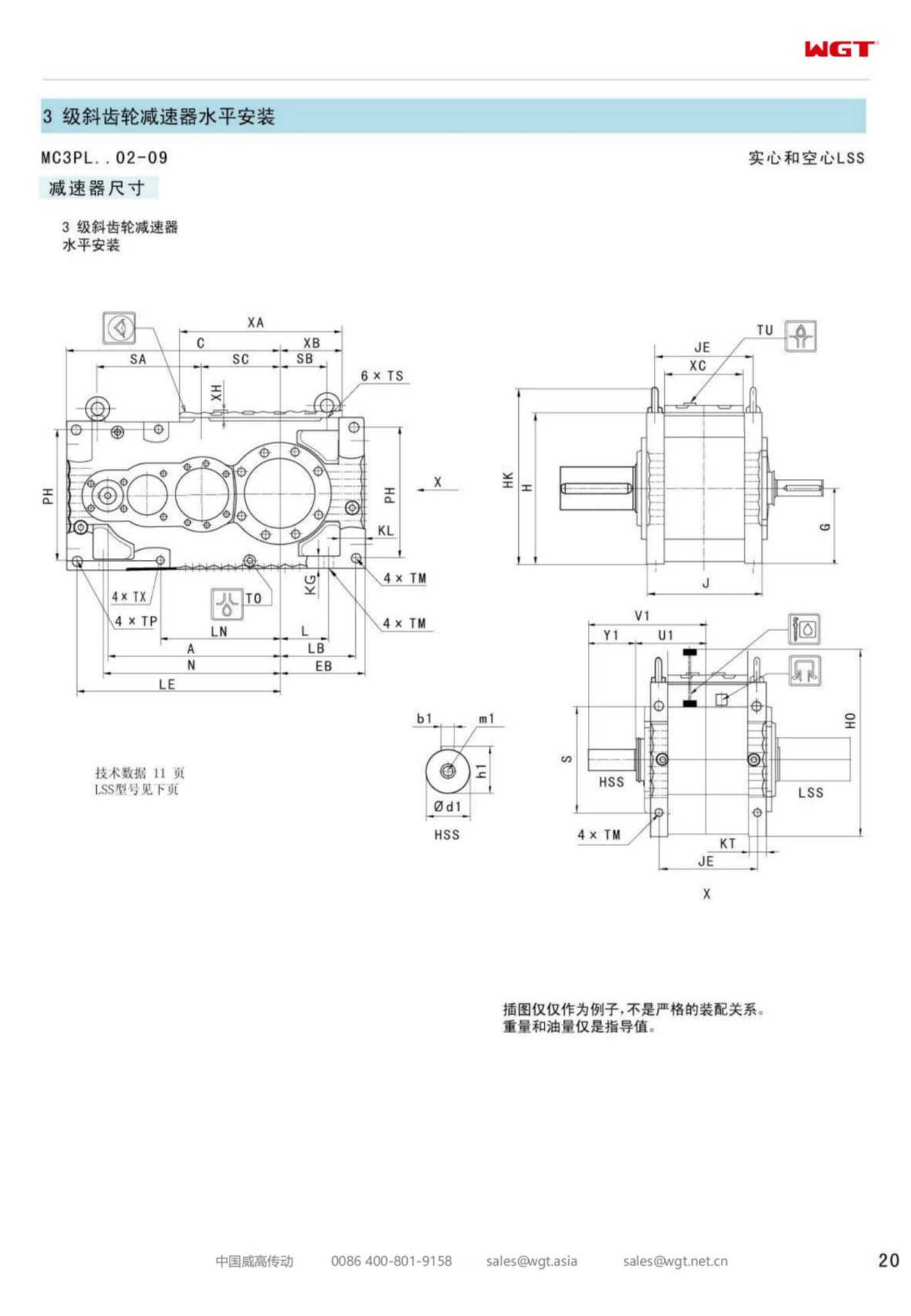
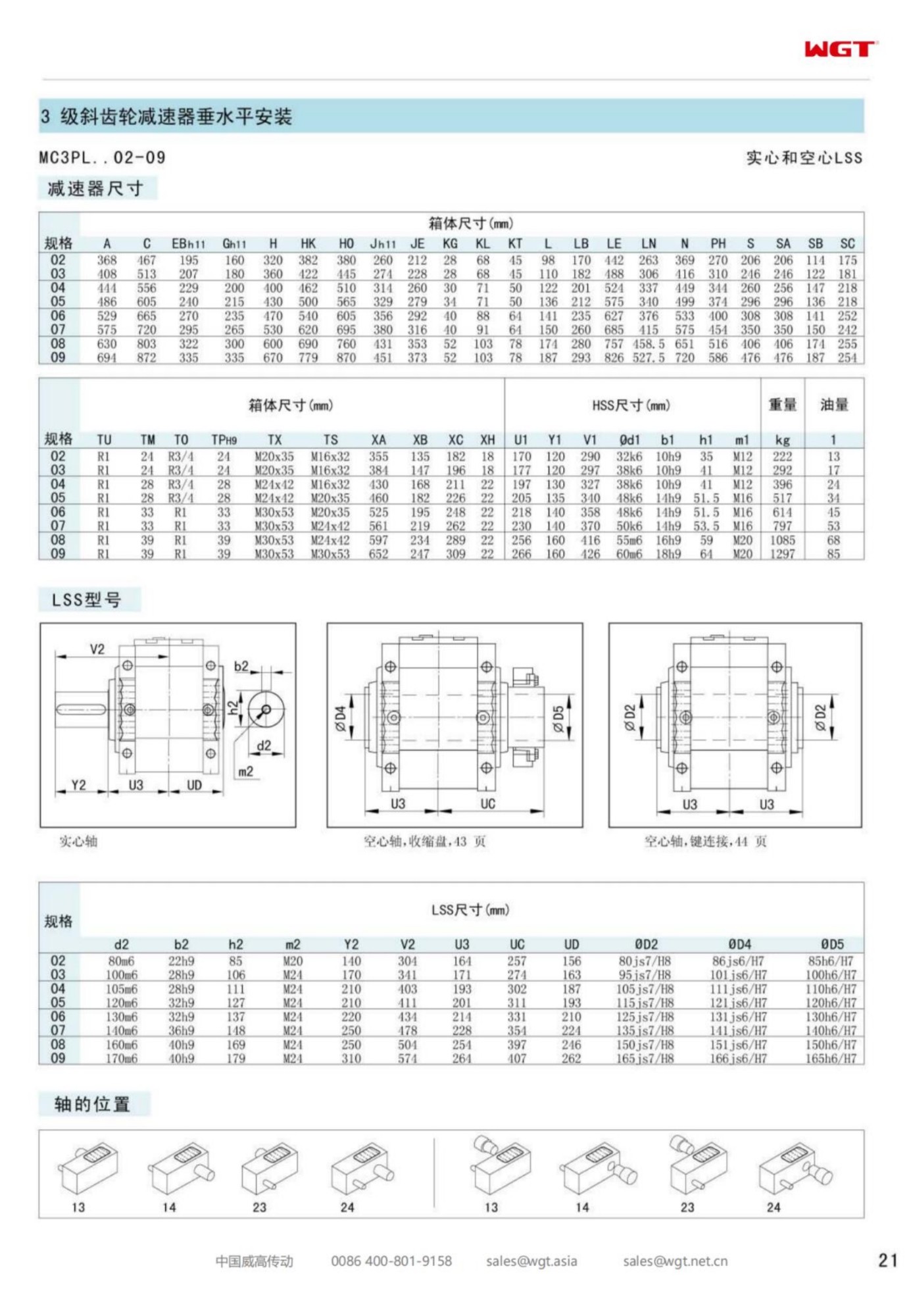
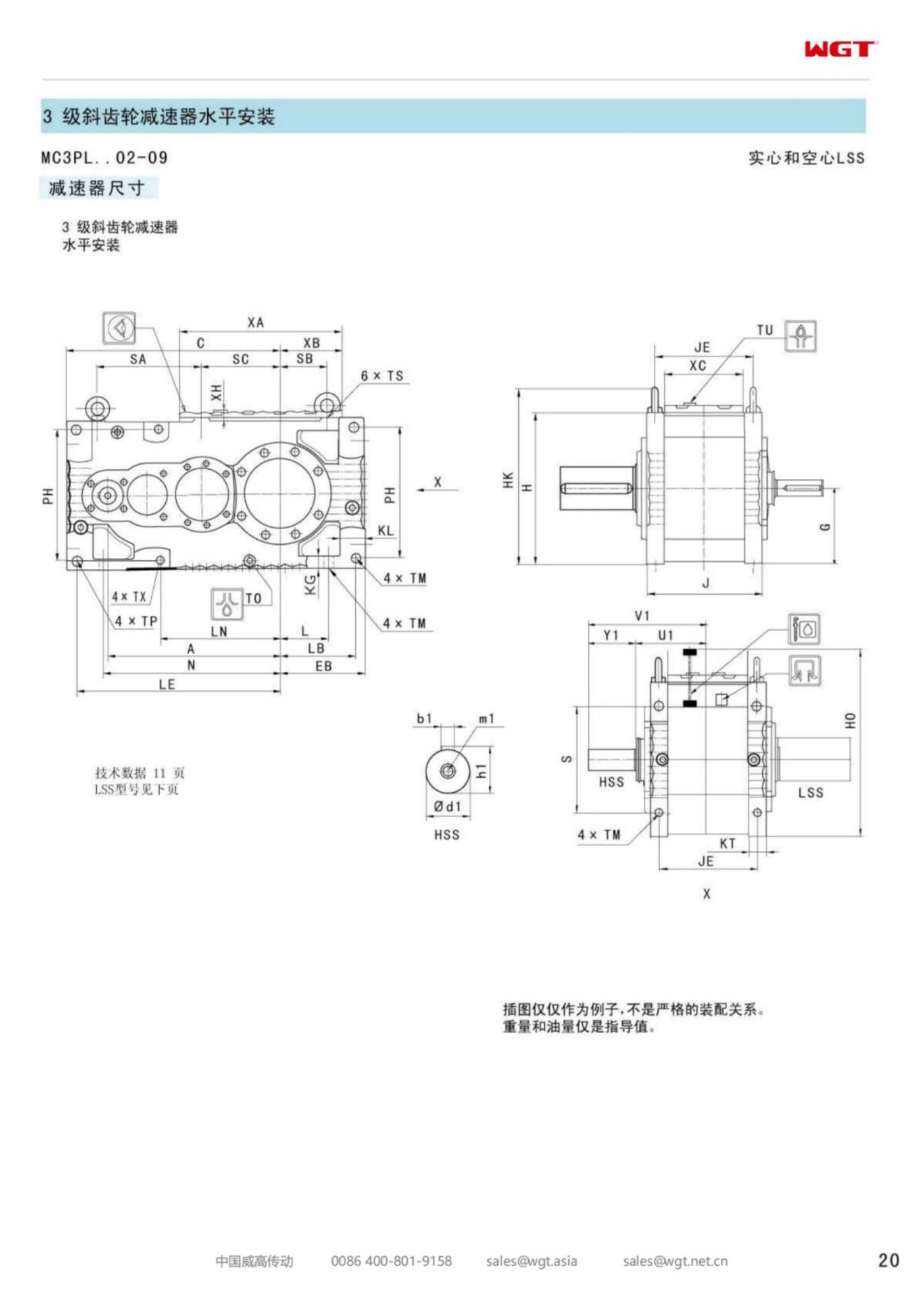
Washed salt leaves a plant wet, warm and lightly crusted, and the belt that carries it out of the washer runs through an air stream that eats paint for a living. The MC3PLHF06 three-stage parallel shaft gearbox sits at the head of that belt: a foot-mounted case, a hollow output bore riding the pulley shaft, and three helical stages holding motor speed down to the pace a wash line needs.
What follows sets out the designation, the reason the bore and the foot plate travel together on a wet line, and the detail a refinery buyer puts in the first message so the quotation is complete.
Salt Washing Is a Corrosion Problem Before It Is a Drive Problem
Brine film, saturated humidity and wash water on the floor make a salt refinery a hard place for anything cast and painted. A drive that survives there is not the one with the highest torque rating but the one whose finish, breather position and seal arrangement were chosen for a wet hall rather than for a dry one. Torque capacity is the easy part of the specification; staying clean is the hard part.
The MC3PLHF06 String Explained
Every letter in the code closes off a design question.
| MC | Industrial gear unit family for continuous plant duty |
| 3 | Three stages of reduction in one housing |
| P | Parallel-shaft helical gearing, coaxial input and output |
| L | Level output axis into the pulley shaft |
| H | Hollow output bore over the belt head shaft |
| F | Foot mounting on the plinth beside the head pulley |
| 06 | Sixth frame of the three-stage band |
Read as one sentence: an industrial unit of the third family, three reductions inside a single housing, parallel shafts in line, a level output axis, a hollow bore presented to the machine shaft, and a foot plate that carries the reaction into the floor.
A Through Bore Over the Wash Belt Head Shaft
On a wash line the head pulley shaft is the one part nobody wants to uncouple. It carries the take-up position, it sits above a wet drip tray, and every hour spent aligning a coupling there is an hour the line is not making salt. A bore lets the pulley shaft pass straight through the output, so the drive hangs on the shaft it turns and the only alignment left is the height of the foot plate.
Foot Mounting Beside a Wet Belt
Foot mounting puts the reaction torque into a plinth instead of into the belt structure. Refineries usually have that plinth already, cast into the floor beside the head pulley, and it is a more honest anchor than a bracket welded onto a frame that was designed to hold a pulley and nothing else. The requirements are a flat pad, shims that do not crush, and bolts that can be reached with the guard in place.
Brine, Humidity and the Case Finish
Two coats of a general-purpose paint will not hold on a salt floor. The finish has to be specified, not assumed: a surface preparation grade suitable for the hall, a paint system that tolerates chloride, and touch-up material left with the plant so a scratched cover gets repaired the same week instead of the same year. Lifting lugs and inspection covers deserve the same treatment, because they are the parts a fitter handles.
Wet Salt Loads on the Pulley
Wet salt is heavier than it looks and it sticks to a belt in patches, so the load on the pulley arrives unevenly rather than smoothly. Sizing starts from the packed condition with the belt fully loaded and the discharge partly restricted, because that is the moment the drive either pulls through or stalls. The service factor is where that judgement is recorded.
Seals That Face Wash Water Daily
Where hoses are used on the floor, a bare lip seal in the spray path is a short-lived component. A protected arrangement, a breather that cannot swallow water, and a drain position that follows the plant's own cleaning routine turn a monthly nuisance into a yearly check. None of it is exotic; all of it has to be asked for on the enquiry.
Three Stages Under a Slow Belt
Wash belts run slowly, which puts the reduction deep into the three-stage band. Spreading the ratio over three meshes keeps the case compact enough to sit beside the pulley instead of above the walkway, and it turns the output smoothly enough that wet salt is not shaken off the belt at the transfer point.
Guarding and the Walkway Around a Wet Drive
A wet hall is also a hall where people walk. The guard has to cover the bore end and the shaft key without trapping water against the case, and the inspection points should face the walkway the plant actually uses rather than the one drawn on the layout. A drive that can be checked from the aisle gets checked.
Sizing From the Wash Rate
The line's rated wash tonnage and the belt speed set the pulley speed, and the pulley diameter then fixes the output speed before a catalogue is opened. Motor speed divided by that figure gives the ratio; the packed-belt torque with a service factor gives the frame. Doing the arithmetic first means the quotation comes back with one frame, not three alternatives.
The Enquiry That Gets a Salt Plant Quote Right
The first message should carry the head shaft diameter and keyway, the belt speed and width, the motor frame and speed, the ambient temperature and the chloride level the hall is known for, plus the plant's wash-down practice. A photograph of the plinth and the shaft entry settles the rest. With those lines the unit arrives ready to hang, and nobody spends a shift measuring a shaft.
Why the Mid Band Fits a Refinery Line
Refinery wash belts are neither small nor extreme: a metre or so wide, running all shift, loaded with wet product and washed at the end of it. That is the middle of the three-stage band, where the case has enough mass to sink continuous duty and the bore is large enough for a pulley shaft with a real keyway in it. Frame six is the size most wash lines land on once the arithmetic is done honestly.
Brine, wash water and a wet belt that never quite dries - three stages hold the line:
- Washed salt conveyor at a vacuum refinery
- Wet salt transfer belt out of a washer
- Salt grading line infeed conveyor
- Brine-drained product belt to the centrifuge
- Salt load-out conveyor at a food-grade plant
- Crusted product belt under a wash station
Field Applications
Cold-store conveyor
A cold-store operator uses reducers on freezer-room conveyors. Low-temperature synthetic oil and moisture-resistant seals keep the units running below -20 deg C ambient.
Bakery spiral cooler
A bakery equipment builder fits units to spiral cooler drives. The compact right-angle layout fits under the spiral cage, and food-grade lubrication was specified for the hygienic area.
![where gear reducers are used in industry]()
Where these units are installed across industry.
Selection Example: Washed salt conveyor at a vacuum refinery
Take an 11 kW motor at 1470 rpm turning the head pulley at 15 rpm. The ratio follows directly: 1470 / 15 = 98, so a ratio near i=98 is taken from the three-stage parallel band, and the frame is confirmed against a packed belt of wet salt rather than against the nominal wash rate. In this case frame six runs the wash line from a case on the plinth beside the head pulley, carries the pulley shaft through a bore, and specifies its finish and breather for chloride air. Once the ratio is fixed, check the required output torque against the rating table with the service factor applied - that is what decides the frame, not the ratio alone.
![gearbox selection guide: speed, torque, service factor]()
How a ratio and a frame size are determined, step by step.
Frame Sizes and Typical Duties
| Model | Centre distance | Output | Typical duty |
|---|
| M3PSF50 | size 50 | solid shaft, foot | conveyors, feeders |
| M3PSF60 | size 60 | solid shaft, foot | crushers, mixers |
| M3PSF70 | size 70 | solid shaft, foot | ball mills, shredders |
| M3PSF80 | size 80 | solid shaft, foot | kilns, heavy conveyors |
| M3PSF90 | size 90 | solid shaft, foot | mill and kiln drives |
| M3RSF50 | size 50 | solid shaft, foot, right-angle | inclined conveyors, elevators |
| M3RSF60 | size 60 | solid shaft, foot, right-angle | screw classifiers, feeders |
| M3RHF70 | size 70 | hollow shaft, foot, right-angle | agitators, drum drives |
| M3PHT80 | size 80 | hollow shaft, torque arm, parallel | shaft-mounted conveyors |
| M3RHT90 | size 90 | hollow shaft, torque arm, right-angle | heavy shaft-mounted drives |
The size number is the key dimension that steps up torque capacity through the range: 50 to 90 in horizontal builds, 10 to 90 in vertical builds. Gearing philosophy is shared across the family.
Shutdown Planned? Order Ahead of the Window
Beat the shutdown window. Engineers can size the unit themselves in the WGT Motor & Gearbox Online Selection System - input speed, torque and duty, get the model instantly.
For planned maintenance windows we reserve production capacity and ship the unit ahead of the shutdown date, so the swap takes hours instead of days. Tell us the window and we work back from it. Looking for a gearbox for packaging machine? Tell us the duty point and we will confirm the model in writing.
Common Questions from Buyers
How is the unit transported and lifted on site?
Units ship in export wooden crates with lifting points on the housing clearly marked. On site, lift only from these points with the specified slings - lifting from shafts or covers is expressly forbidden in the manual.
What tooth quality and grinding finish do you apply?
Gearing is case-hardened and profile-ground to international accuracy grades, with crowning and end relief applied to avoid edge loading. This is what keeps noise and vibration stable over years of continuous duty.
Can existing motors, couplings and guards be reused?
In most upgrade projects yes: because input and output interfaces follow the common industry dimensions, the existing motor, coupling and guard usually bolt straight on. Send the old nameplate and we confirm before you order.