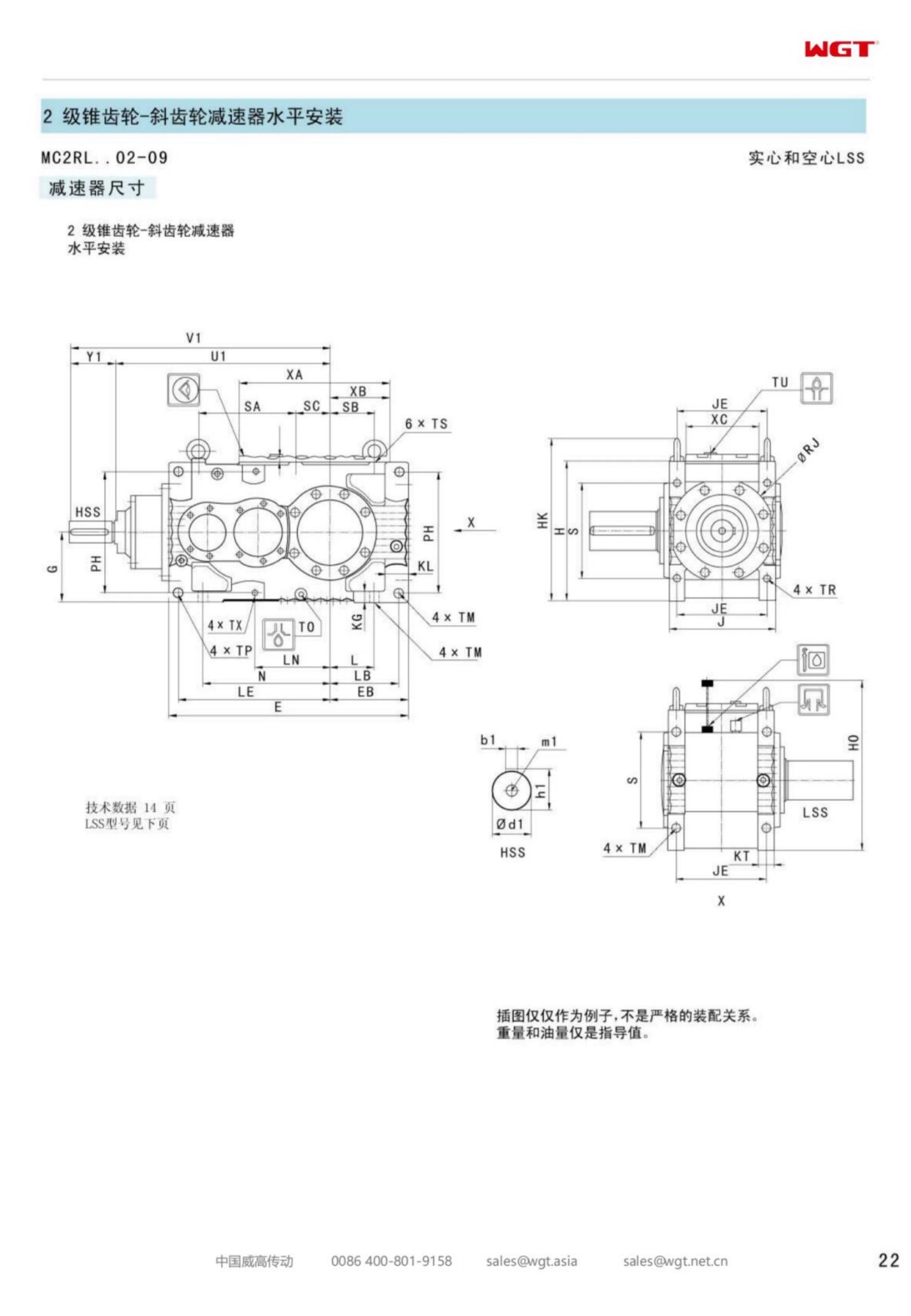
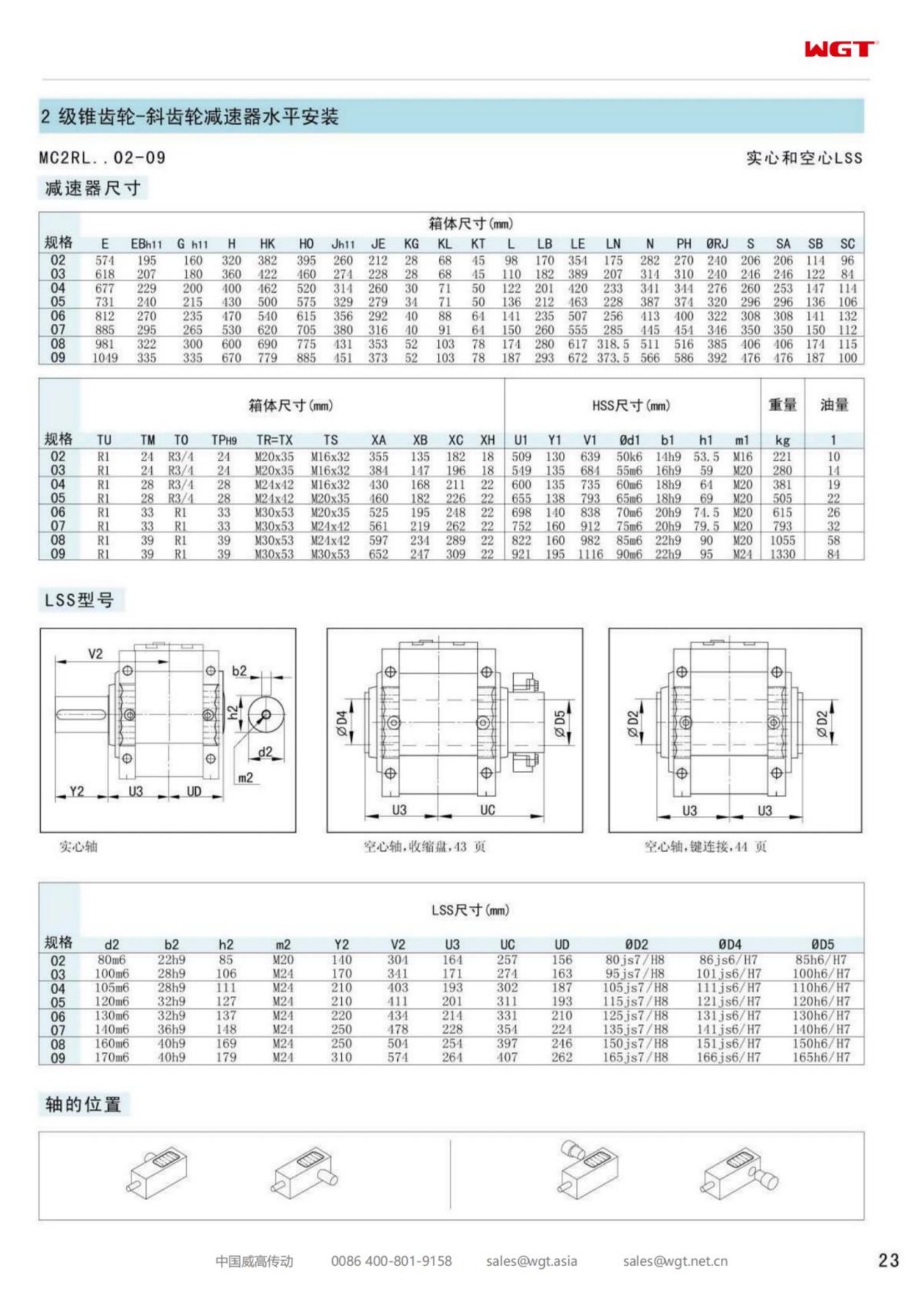
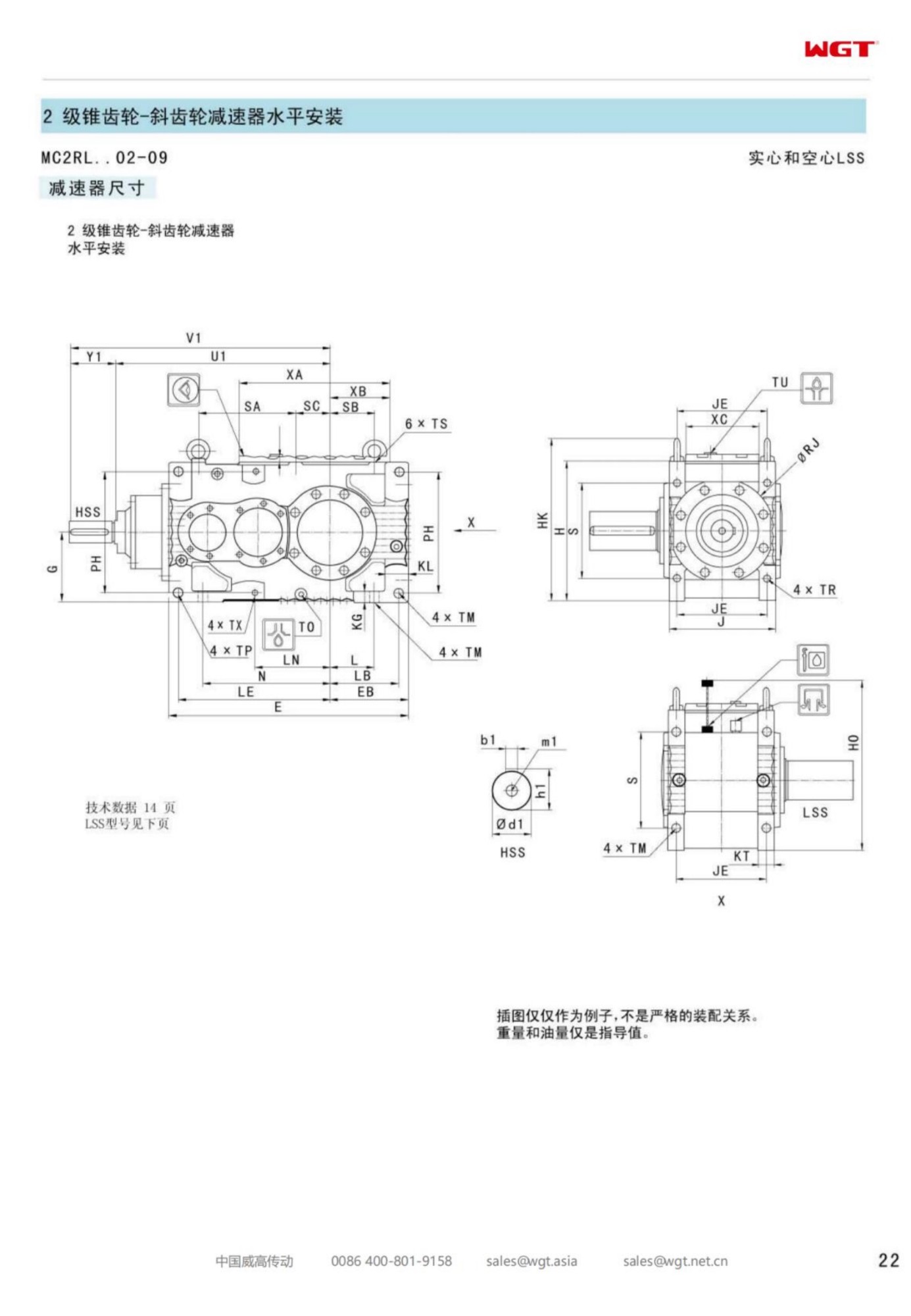
An asphalt plant is a heat exchanger with a conveyor attached. Cold aggregate comes in wet, leaves the dryer hot enough to boil off the moisture, and then runs across screens and belt transfers that live in the same hot, dusty air. The MC2RLHT06 right-angle hollow shaft gearbox is the frame quoted for that stretch of the line, where the motor has to sit across the run and the driven shaft is already carrying a head pulley.
What follows is written for plant engineers and the people who keep a mixing tower fed: how heat reaches places the layout drawing never mentioned, why bitumen vapour and aggregate dust want different answers, how a torque arm behaves on a chassis that moves between jobs, and what belongs on the enquiry sheet before a frame is confirmed.
Hot Stone on a Steel Frame
Aggregate leaves the dryer at a temperature that would cook a gearbox placed too close, and it arrives on a belt that radiates that heat back at the drive for as long as the batch runs. The case warms from both sides, the oil thins earlier than the ambient figure suggests, and the first symptom is usually a seal that starts to weep at the low point.
The honest way to specify it is to measure at the drive position, not at the tower door: air temperature beside the case, radiant heat from the belt, and the dwell time between batches. Those three numbers decide oil grade, seal material and whether a heat shield is worth the sheet metal - a far cheaper line item than a rebuilt unit in July.
Reading the MC2RLHT06 String
The type code answers the questions a plant fitter asks on the first walk-round of a new tower.
| MC | Industrial gear unit family for continuous plant duty |
| 2 | Two stages in the case - a helical set working into a bevel set |
| R | Right-angle build, the motor set across the conveyor run |
| L | Level output axis, lying parallel to the walkway |
| H | Hollow output bore keyed straight onto the head shaft |
| T | Torque-arm bracket, reaction taken into an adjustable stay |
| 06 | Sixth frame, upper middle of the bore ladder |
The letters settle geometry. The order still has to settle duty: how hot the return run comes back, how much fines the transfers drop, whether the plant is skid-mounted, how many cold starts the season brings, and what structure the arm can reach.
Frame Six at the Burner End
Frame six is the size that turns up where the tonnage is real but the plant is still portable: the transfer off the dryer discharge, the slat conveyor into the hot-stone elevator, the return belt from the screens. Torque is moderate, hours are long, and the drive usually sits in the worst air on site.
It answers with gearing that holds speed without fuss, a case stiff enough to keep the bevel pattern under a pulsing belt pull, and a bore sized for the shaft the pulley actually has. On a line that batches rather than runs flat out, that combination buys years of quiet work.
Bitumen Vapour and the Seal Question
Vapour finds its way into places dust cannot, and it does not leave politely. Around the mixer and the hot-stone elevator the air carries a light hydrocarbon load that softens some elastomers and dries others; the seal that was adequate on a quarry belt will harden here within a season.
The answer is a seal material chosen for the exposure and a breather that filters rather than breathes raw air. Nitrile covers many of these positions at modest cost; where the vapour is heavier, a fluoroelastomer lip is the cheaper purchase over five years. Either way the specification should name the exposure, not leave it to the spares catalogue.
Aggregate Dust and the Breather Line
Fines settle on every horizontal surface and creep into every gap that opens. The breather is the first casualty: once the cap clogs, the case pressurises on warm-up, pushes oil past the seals, and the leak is blamed on the seal rather than the vent.
Route the breather away from the dust plume, fit a filter type that can be cleaned on the walk-round, and put it on the maintenance list as an item with a date against it. Plants that do this change a breather each year and a set of seals every fifth; plants that do not change seals yearly and a bearing set besides.
Cold Feed Starts and Winter Mornings
A winter start loads the drive harder than the running batch does. Grease in the pulley bearings is stiff, the belt is tight from contraction, and the aggregate in the hopper may have frozen into lumps that arrive as a shock rather than a stream.
Two measures carry most of the risk: an oil grade that still flows at the coldest morning the site sees, and a starting arrangement that lets the belt come up to speed before the feed gate opens. Add a walk-round that turns the head pulley by hand before the first start of the day, and the drive meets the season on its own terms.
The Torque Arm on a Portable Plant
On a fixed tower the arm can be pinned to anything; on a skid it has to reach structure that travels with the plant and was never sized for a gearbox. The stay becomes a design item: length, angle, and the plate it lands on.
A hollow-bore unit reacts against the arm, so that stay takes the full reaction torque with a pulse on top of it. Welding a bracket to a light chassis member is how cracks begin. Better to pick a member that was designed to carry load, keep the stay as close to perpendicular as the layout allows, and check the pin and bush as wear items on the seasonal service.
Screen Deck and the Return Run
The screens sort hot stone into fractions, and every fraction has its own take-away belt. Those belts start and stop with the batch, run short, and take a beating from stone that arrives at temperature rather than at ambient.
Short, frequently started belts want a frame chosen on starts per hour and on the worst lump the deck can pass, not on average tonnage. A frame six with margin held against the lump case will still be there when the deck is re-strung; a frame chosen on the average will be the reason the deck is re-strung early.
Wash-Down, Solvent and Paint
Asphalt plants get cleaned with things that were never in the paint specification. Release agents, diesel, and the occasional solvent splash find the case, the fasteners and the arm pins, and they strip a single-coat finish in a season.
Name the cleaning practice on the enquiry. A two-coat system with a primer that tolerates hydrocarbons costs little at the order stage and saves the repaint that otherwise arrives mid-season, when the tower is needed and the weather is not cooperating.
Oil Change Windows in a Seasonal Plant
A plant that runs ten months and idles two has an oil story that the hour meter cannot tell. Condensation collects during the idle weeks, acidity climbs, and the first batches of the new season run on oil that is already tired.
Sample before the shutdown rather than after the restart, change on condition where the sampling habit exists, and always after a long idle if the case breathes damp air. A litre of oil and an hour of labour is the cheapest insurance in the whole drive train.
Writing the Enquiry for an Asphalt Drive
The enquiry that gets the right frame describes the line rather than the load: head shaft diameter, keyway and seat length; belt width, speed and centres; the hottest return temperature measured at the drive; dust loading by transfer point; cleaning agents in use; skid or fixed mounting; starts per shift; the member available for the stay.
The reply should answer as a system: bore and key against the drawing, ratio and belt speed, service factor argued on the lump and cold-start case, seals and breather named for vapour and fines, arm geometry drawn against the steelwork, and paint chosen for the wash-down. One page out, one page back, and the drive arrives as part of the plant.
A Frame Six Across the Paving Season
The report card is written in October: a trend line that stayed flat through the summer, a breather that was cleaned on schedule, arm pins with grease in them and no ovality, and a belt that tracked because the bore was hung on a true shaft.
None of that is luck. It is a frame sized on the worst hour, a mounting that respected the steelwork, and a maintenance routine that treated a vent cap as important. Do those three things and the gearbox becomes the part of the tower nobody talks about.
Hot stone, bitumen vapour and fines on every ledge - frame six keeps the tower fed:
- Dryer discharge belt at a batch asphalt mixing plant
- Hot-stone elevator feed conveyor on a mixing tower
- Screen return belt carrying oversize back to the dryer
- Slat conveyor under the hot aggregate bins
- RAP feed conveyor on a recycling drum line
- Mobile plant transfer belt on a skid-mounted chassis
Selection Example: Hot-stone transfer off a dryer discharge
Take a 30 kW motor at 1475 rpm turning the discharge belt at 42 rpm. The ratio follows directly: 1475 / 42 = 35.1, so a ratio near i=35 is taken from the two-stage right-angle band, and the frame is confirmed against the radiant heat measured at the drive position plus the lump case that arrives on a winter start, not against the tower door reading. In this case frame six holds asphalt duty on a bore keyed to the head shaft, a torque arm pinned to a skid member, and seals and paint chosen for bitumen vapour and aggregate fines. That is the whole calculation. If your duty involves heavy starting, frequent reversing or many stops per hour, tell us and we raise the service factor.
Which Frame Size Do You Need?
| Model | Centre distance | Output | Typical duty |
|---|
| M3PSF50 | size 50 | solid shaft, foot | conveyors, feeders |
| M3PSF60 | size 60 | solid shaft, foot | crushers, mixers |
| M3PSF70 | size 70 | solid shaft, foot | ball mills, shredders |
| M3PSF80 | size 80 | solid shaft, foot | kilns, heavy conveyors |
| M3PSF90 | size 90 | solid shaft, foot | mill and kiln drives |
| M3RSF50 | size 50 | solid shaft, foot, right-angle | inclined conveyors, elevators |
| M3RSF60 | size 60 | solid shaft, foot, right-angle | screw classifiers, feeders |
| M3RHF70 | size 70 | hollow shaft, foot, right-angle | agitators, drum drives |
| M3PHT80 | size 80 | hollow shaft, torque arm, parallel | shaft-mounted conveyors |
| M3RHT90 | size 90 | hollow shaft, torque arm, right-angle | heavy shaft-mounted drives |
Foot-mounted frames are listed below; torque-arm (T), hollow-shaft (H) and vertical (V) variants are available across the size range. Ask for the outline drawing to check the interface before ordering.
Answers to Common Questions
Do you offer a version with an integrated gear motor?
We can supply the unit as a complete gear motor with an IEC motor bolted on and tested as one assembly. That saves you the alignment and coupling work, and the whole assembly carries the same one-year warranty.
How do I know when the unit needs maintenance?
Beyond routine oil checks, watch for oil weeping at the seals, unusual noise or vibration, and any rise in housing temperature. A seal kit is inexpensive; catching a weeping seal early avoids damage to the bearings and gears.
Which mounting positions can be used?
The unit can be installed in M1 to M6 positions - floor, wall or ceiling. The oil level plug is repositioned for the position you order, so state it up front and the unit is filled and labelled correctly at the works.
![gearbox sizing steps for engineers]()
Four steps from your application data to a firm model number.
Case Notes from the Field
Mining slurry pump drive
At a mineral processing site, hollow-shaft reducers drive slurry pump agitators. The hollow bore takes the pump shaft with no coupling, so a pump change-out no longer means re-aligning a separate drive.
Palm oil mill fruit elevator
A palm oil mill powers its fruit elevator with reducers. The humid, oily atmosphere is handled by FKM seals, and the compact frame fits between the steriliser and the threshing drum.
![industrial gear unit application overview]()
A cross-section of the installations we supply every month.
Engineering Support Before You Buy
Unsure about the frame size? Try the WGT Motor & Gearbox Online Selection System, then send the result sheet - we return a complete datasheet, drawing and price the same day.
Our selection engineers check every enquiry against the rating tables, including shock class and daily running hours. You get the calculation, not just a part number - at no charge and with no obligation. Looking for a gearbox for agricultural machine? Tell us the duty point and we will confirm the model in writing.