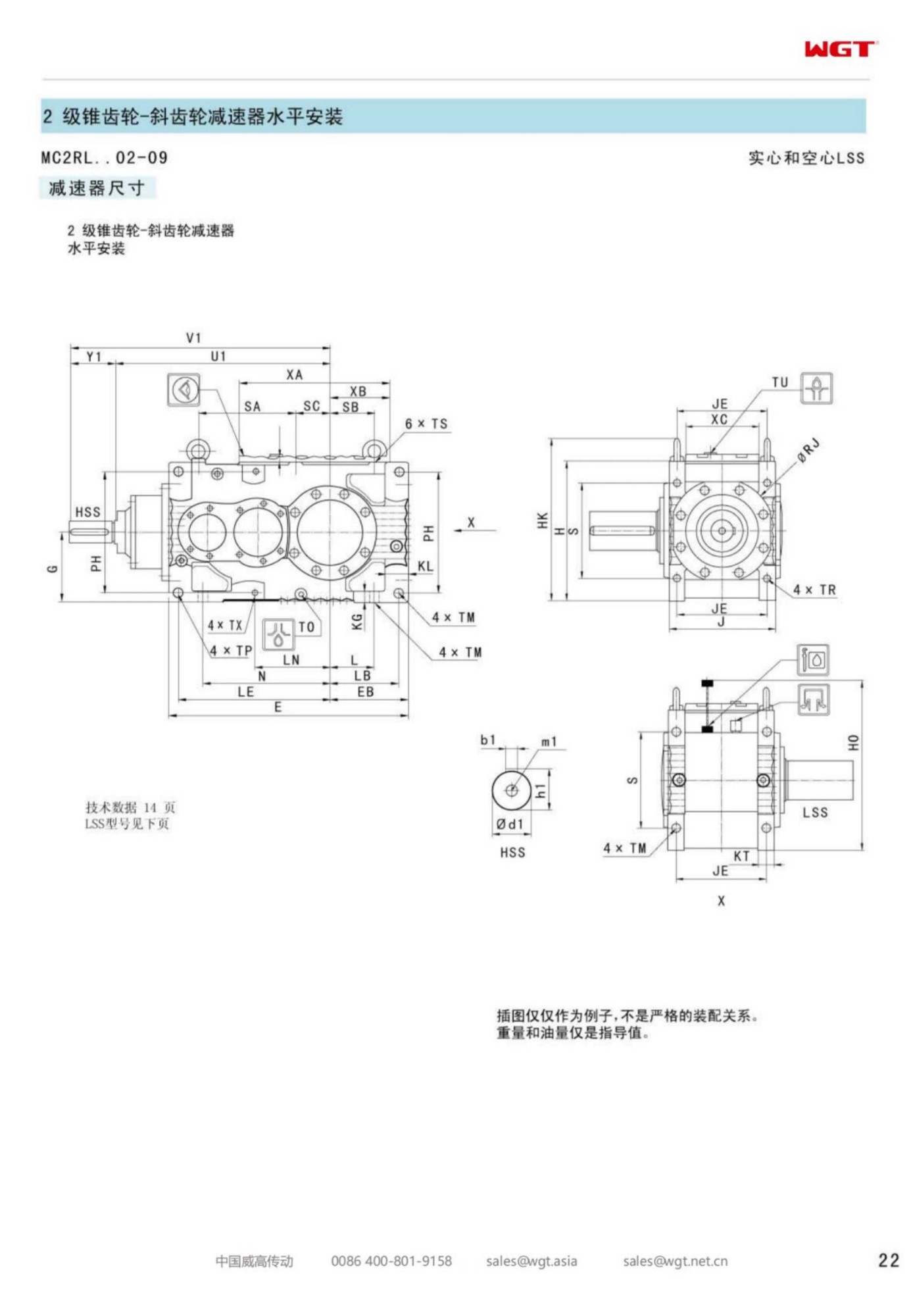
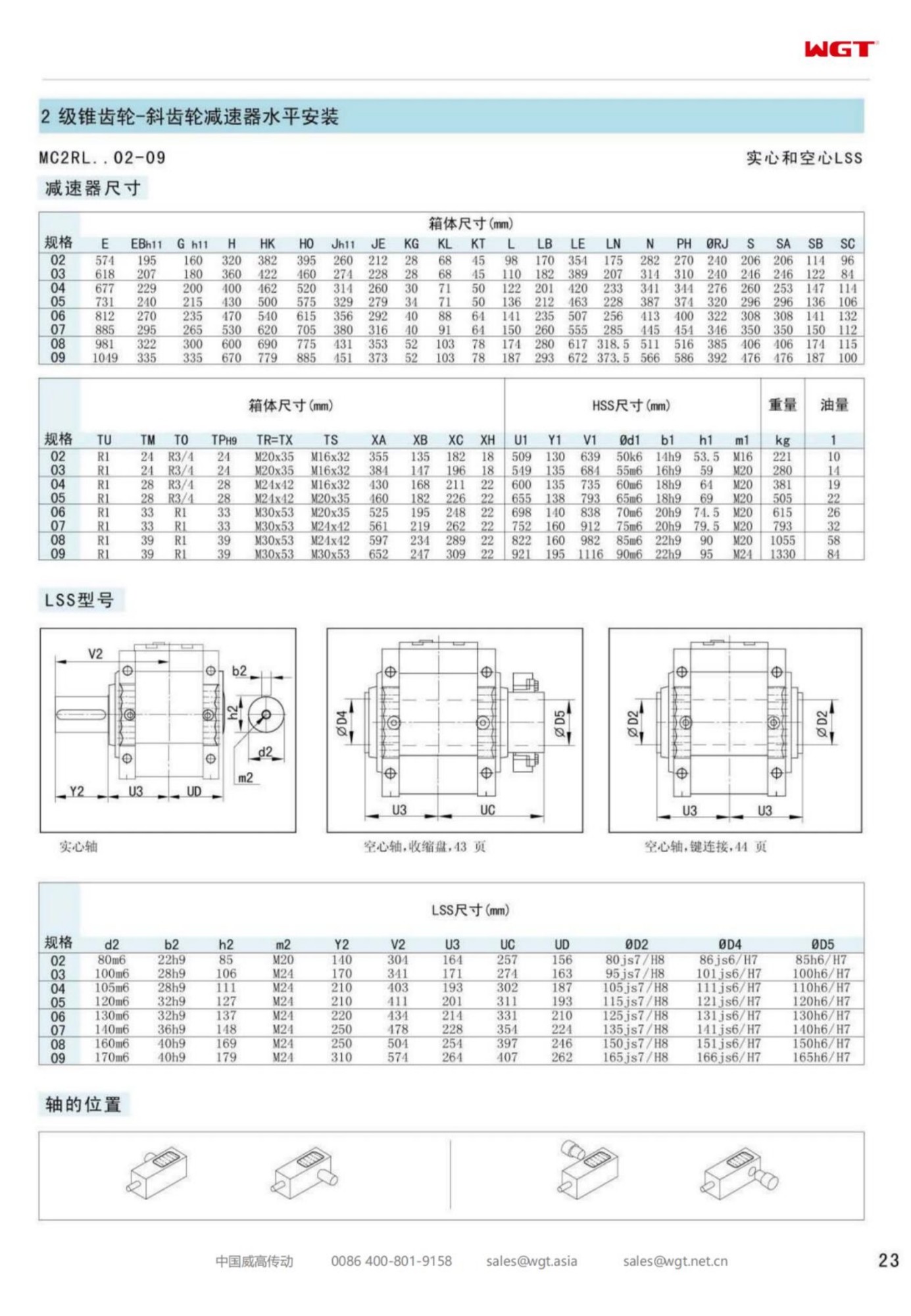
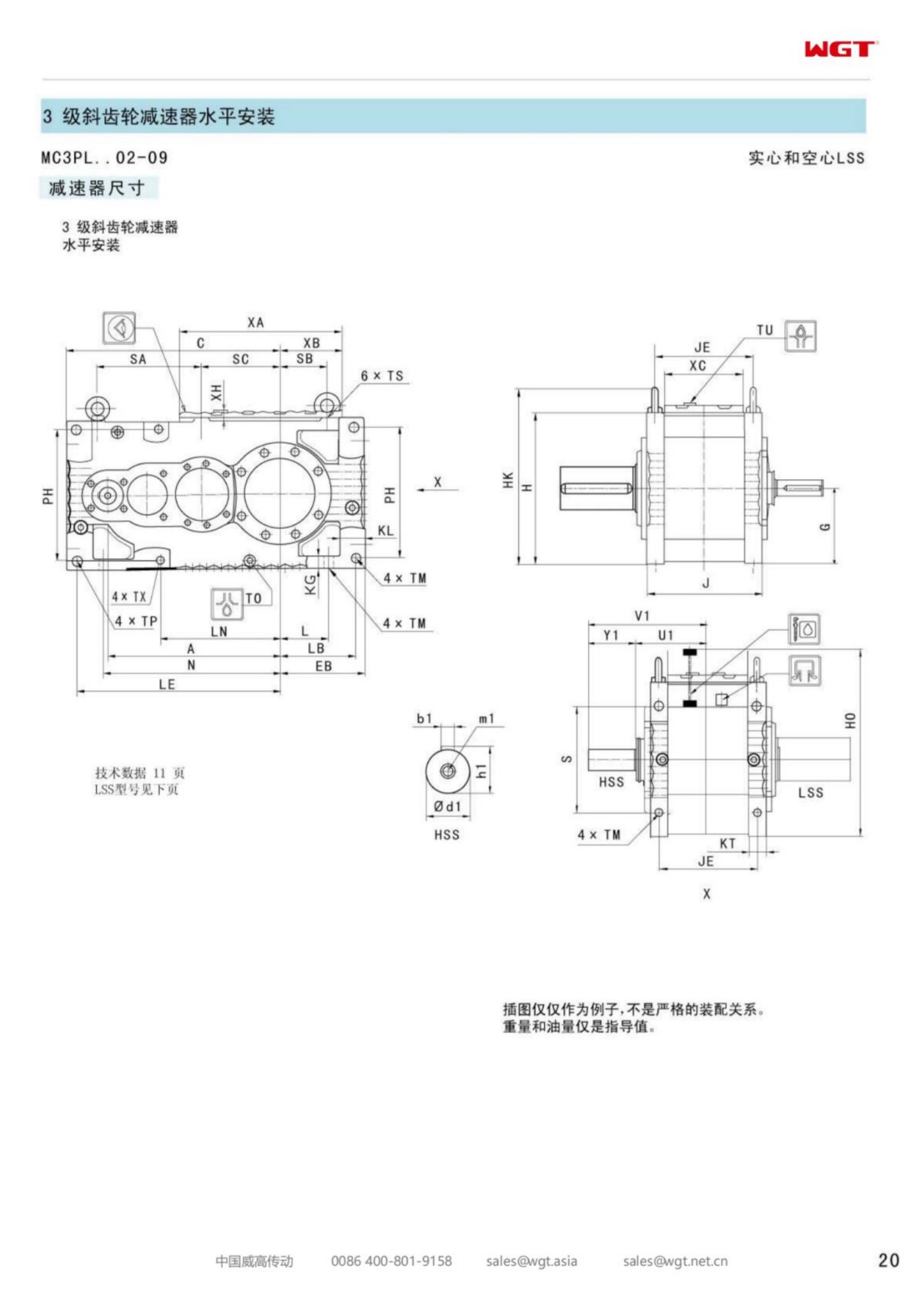
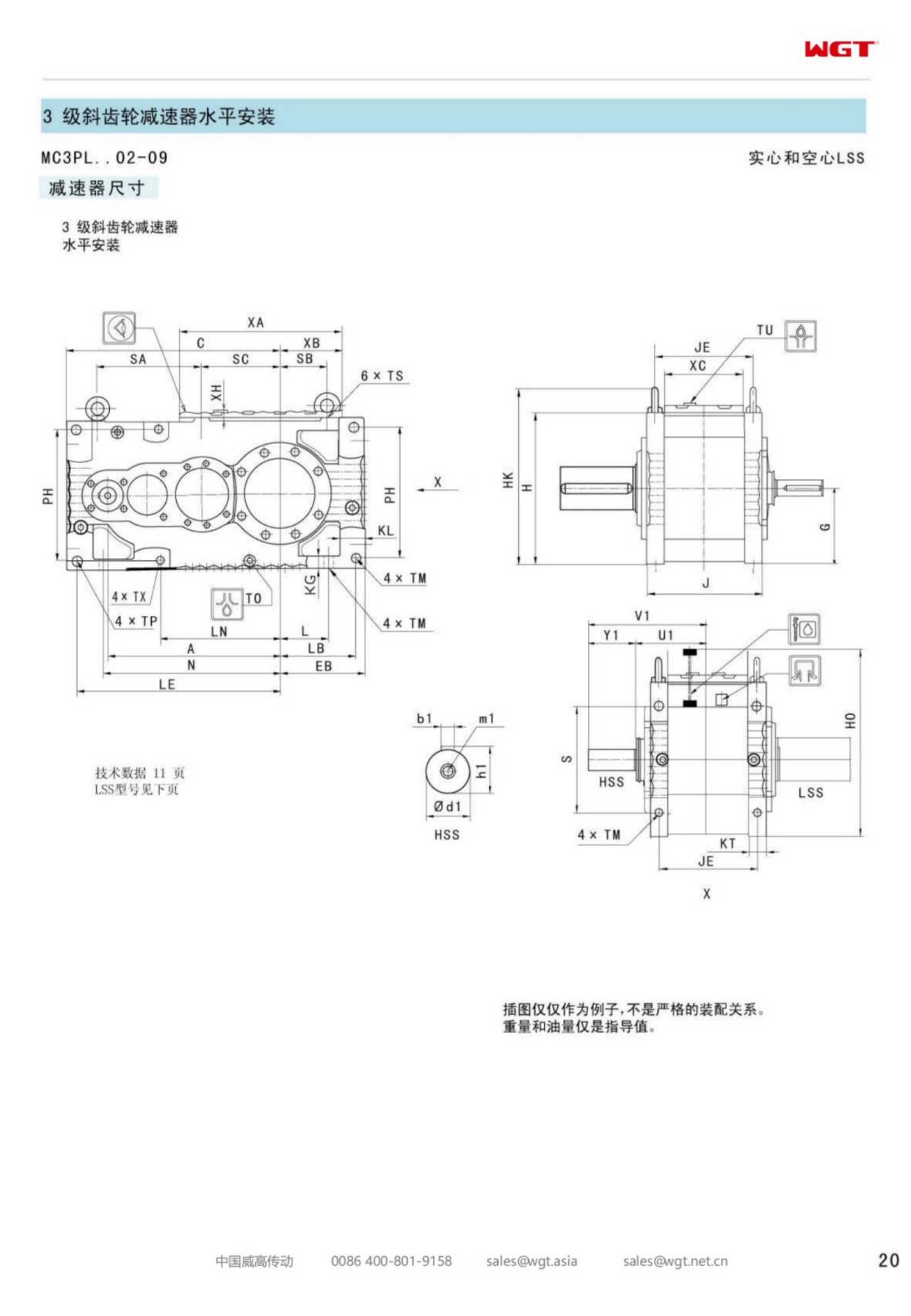
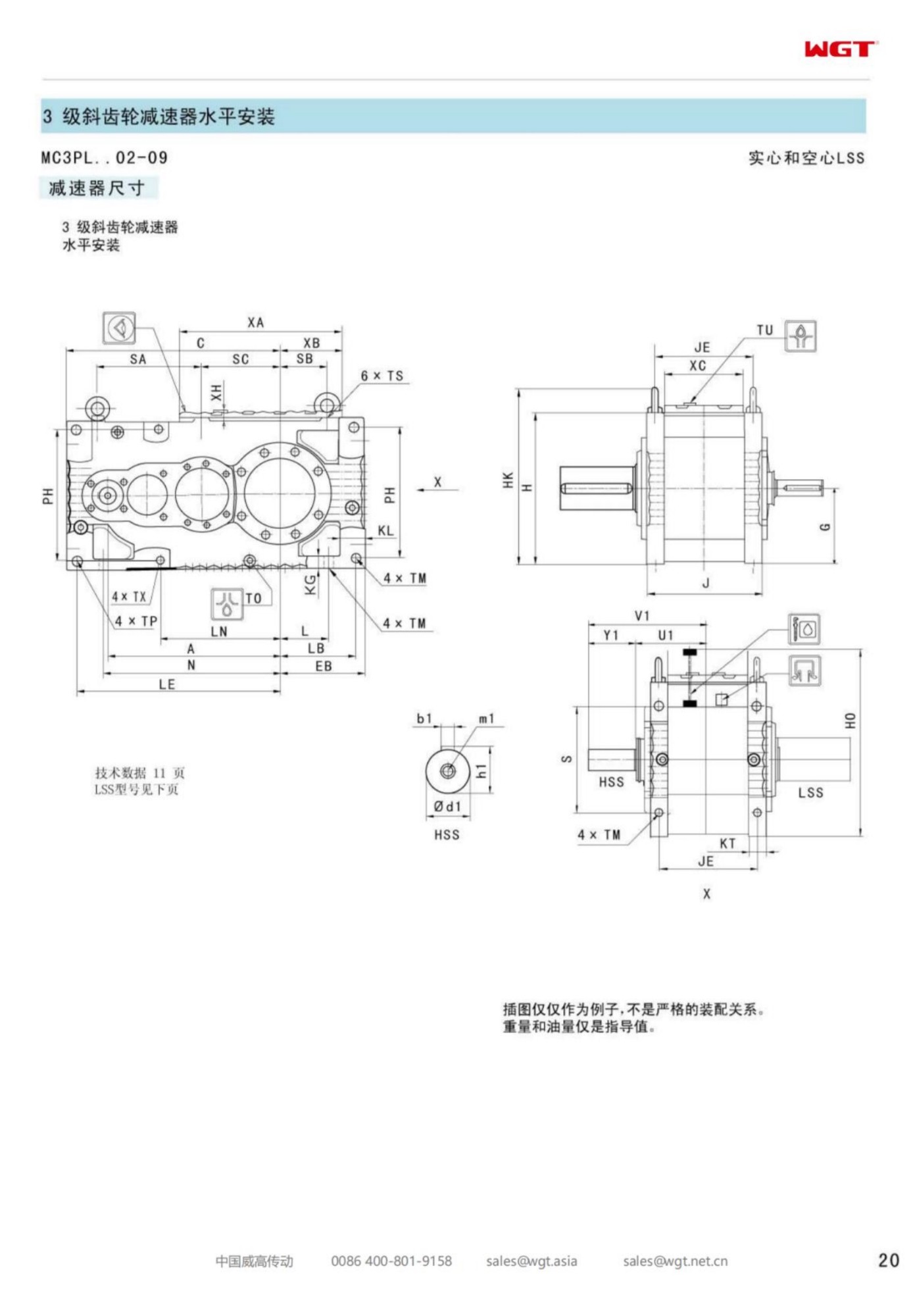
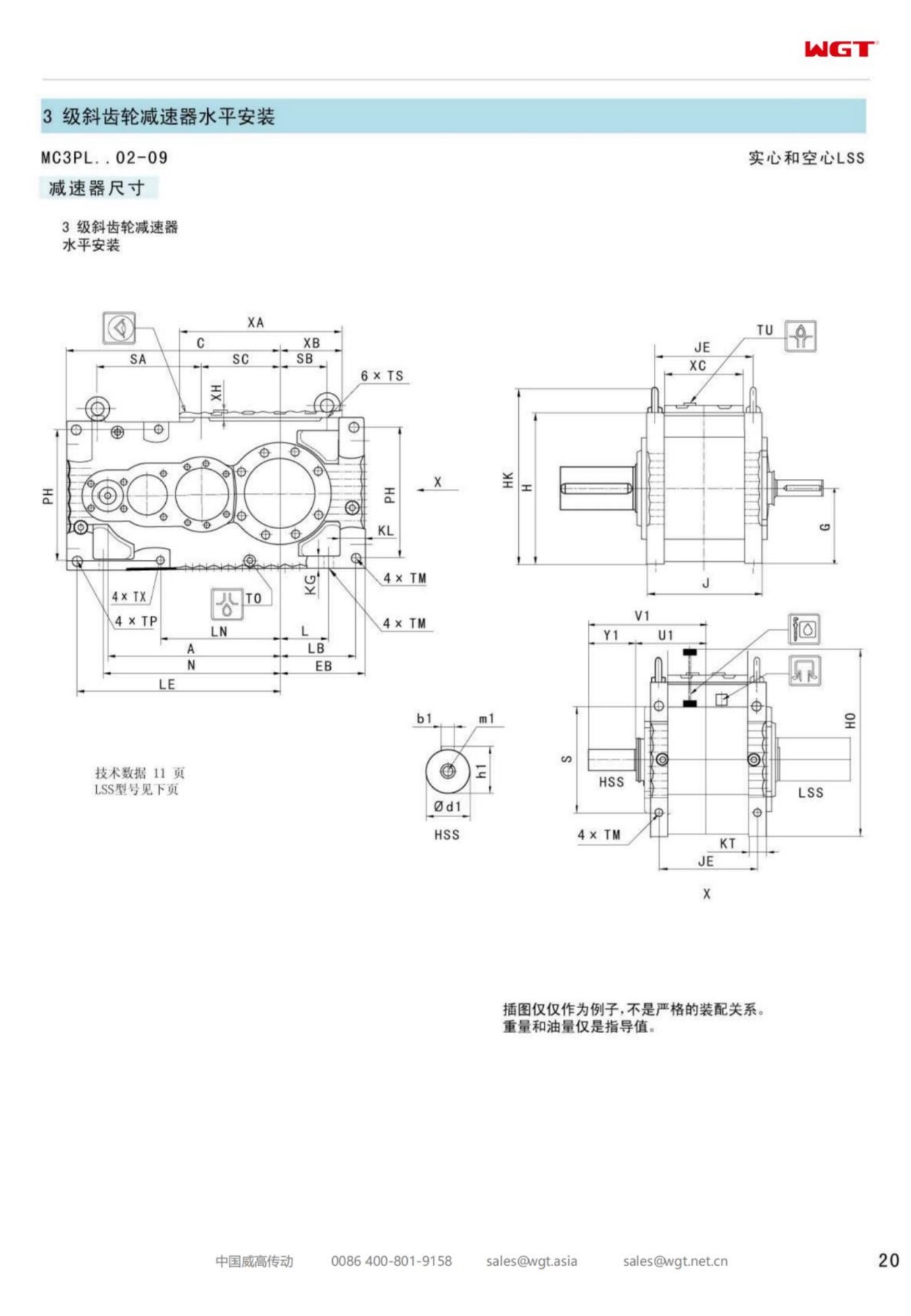
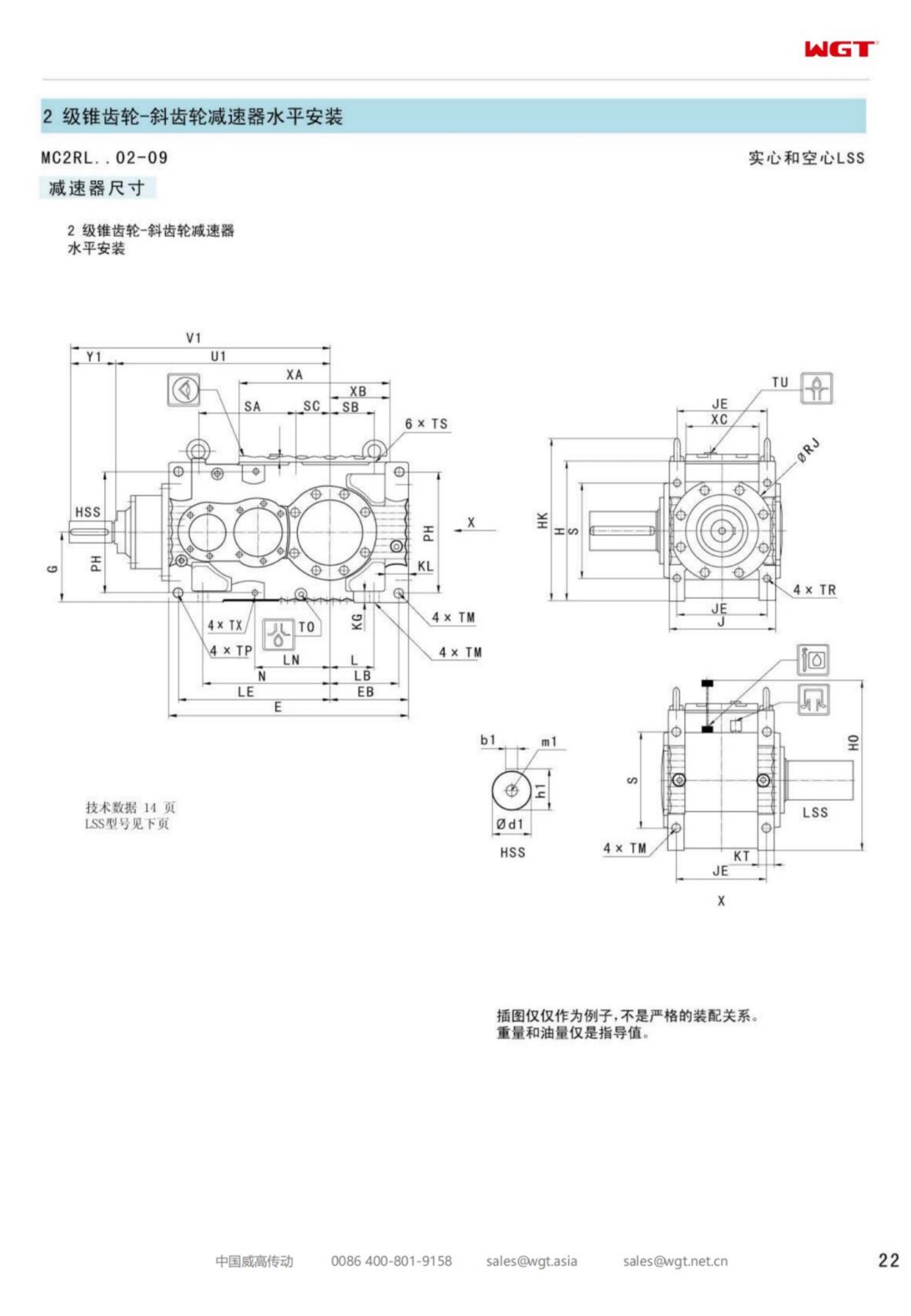
A materials recovery facility makes a promise its feedstock never intended to keep: that mixed municipal waste will arrive in a shape the sorting line can handle. It does not. Loads swing between light and dense, clean and filthy, loose and wrapped, and the conveyors that feed the pick lines inherit every one of those swings. The MC2RLHT05 right-angle hollow shaft gear unit is the frame this family quotes for that duty: infeed belts, pick-line conveyors and the screening feeds that keep the plant's promises possible.
This page is written for the operators and plant engineers who run such lines: why a load that never repeats still deserves a written specification, what stringy wrap does to a trapped flight, how glass grit and leachate attack the seals, and where the torque-arm mounting earns its place on a floor that was never designed for foundations. It closes with the enquiry sheet that turns a good frame into the right one.
Mixed Waste and a Load That Never Repeats
Every other conveyor in industry carries something its designer can name. A sorting line carries a city's week: furniture timber on Monday, wet garden waste after a storm, cardboard by the tonne before the holidays. The drive sees all of it as torque, and none of it as a stable number.
The honest answer is a specification written around the range, not the average. Declaring the feed mix, its density extremes and the worst jam the hall remembers lets the frame be chosen with margin held against the surprise rather than the mean. A frame sized on the average load spends its life meeting everything else.
Reading the MC2RLHT05 String
The type code looks dense, but each position answers a question the line designer asked when the sorting floor was first drawn.
| MC | Industrial gear unit family rated for round-the-clock plant duty |
| 2 | Two reduction stages, a helical pair driving a bevel pair |
| R | Right-angle arrangement, the motor turned across the belt |
| L | Level build, the output shaft parallel to the hall floor |
| H | Hollow output bore, keyed directly onto the head shaft |
| T | Torque-arm bracket, reaction fed to structure through a stay |
| 05 | Fifth frame, a step up from the mid rung of the ladder |
The string fixes the shape; the order must fix the duty. Feed mix and density range, the start-stop rhythm of the infeed, wrap and jam policy, glass and grit exposure, the stay geometry the hall allows, and the shaft details at the head - these decide seals, paint, oil grade and bracket design long before the power figure does.
Frame Five on the Sorting Floor
Frame five sits where the line stops metering and starts moving: the main infeed belt that takes the tipped load, the conveyor feeding the screen, the pick line that sets the pace for the whole hall. The torque is heavier than the small conveyors see, and the hours follow the tipping schedule rather than any production plan.
The frame answers with gearing that turns belt speed under a load that swings, bearings chosen for the shock of an infeed ramp, and an oil volume that shrugs off the stop-start rhythm of a tipping floor. It is a patient frame for a building that never receives the same day twice.
Infeed Ramps and the Start-Stop Cycle
Sorting lines run to the tipping schedule: the infeed starts with the loader, stops when the feed runs out, and restarts with the ramp still part-loaded. Each start puts the gearing to work before the oil film has fully recovered, and a ramp that is fed by a shovel delivers its load in slabs rather than a curtain.
Start frequency and restart practice belong in the enquiry as numbers, not adjectives. How many starts per hour, whether the belt clears before restart, and what the controls do on a torque spike - these decide whether the frame carries its duty calmly or spends its margin early. The controls, as much as the gearbox, write the duty cycle.
Stringy Wrap and the Trapped Flight
Films, cords and textiles are the sorting line's quiet saboteurs. They wrap round idlers, bridge across flights and drag behind the head until a whole section runs loaded with trapped material. The gearbox receives all of it as a torque ripple that grows until someone walks the line and cuts it free.
The drive can be specified for the reality: margin reserved for the wrapped condition, a frame that tolerates the stall a trapped flight delivers, and an operations habit of walking the return side on a schedule. Lines that treat wrap as a maintenance item keep their drives cool; lines that treat it as yesterday's problem meet it as a jam report.
Glass Grit and the Seal Line
Broken glass reaches every corner of a recovery hall, and on the conveyor it becomes grit that rides wherever dust would. A seal lip running in glass powder wears on a schedule nobody can see, and the first sign is often an oil sample with brightness in it that should not be there.
The defence is layered at order time: a dust lip ahead of the main seal so the lip itself never runs in grit, a filtered breather that keeps the case from drinking the hall's air, and grease points that actually get greased. Seals chosen for the grit arrive as an order line; seals chosen for the brochure arrive as a bearing set.
Taking the Reaction into the Structure
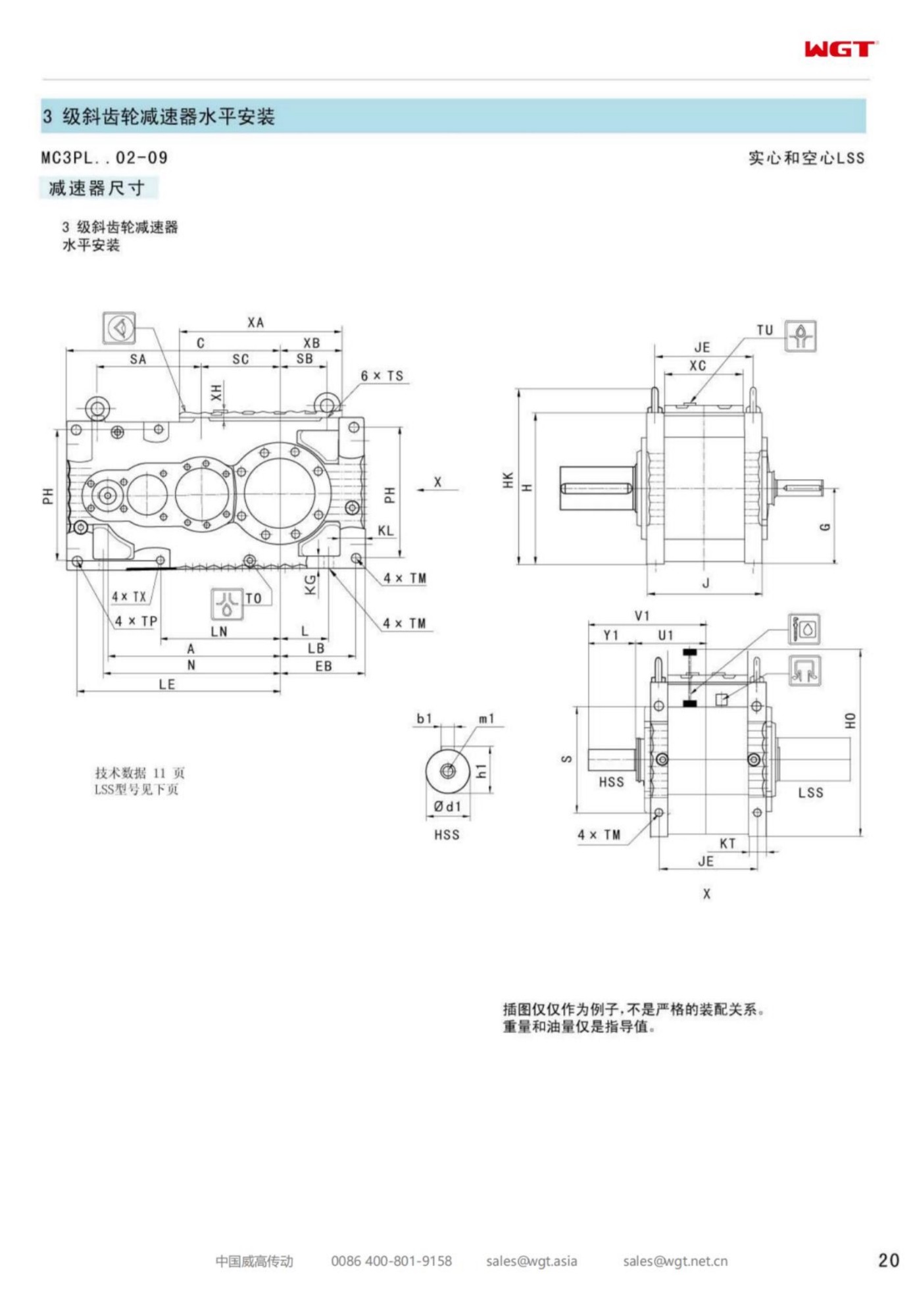
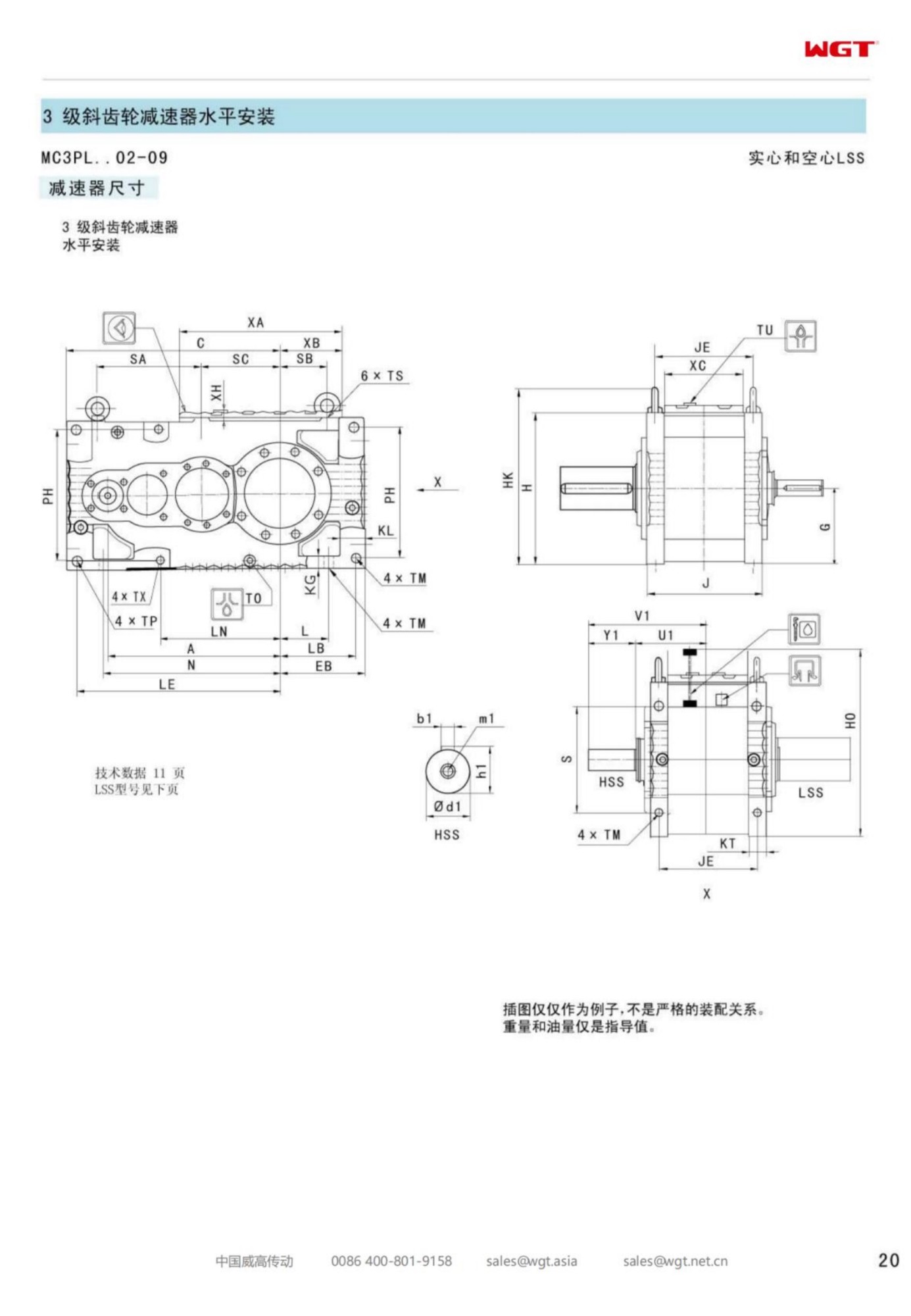
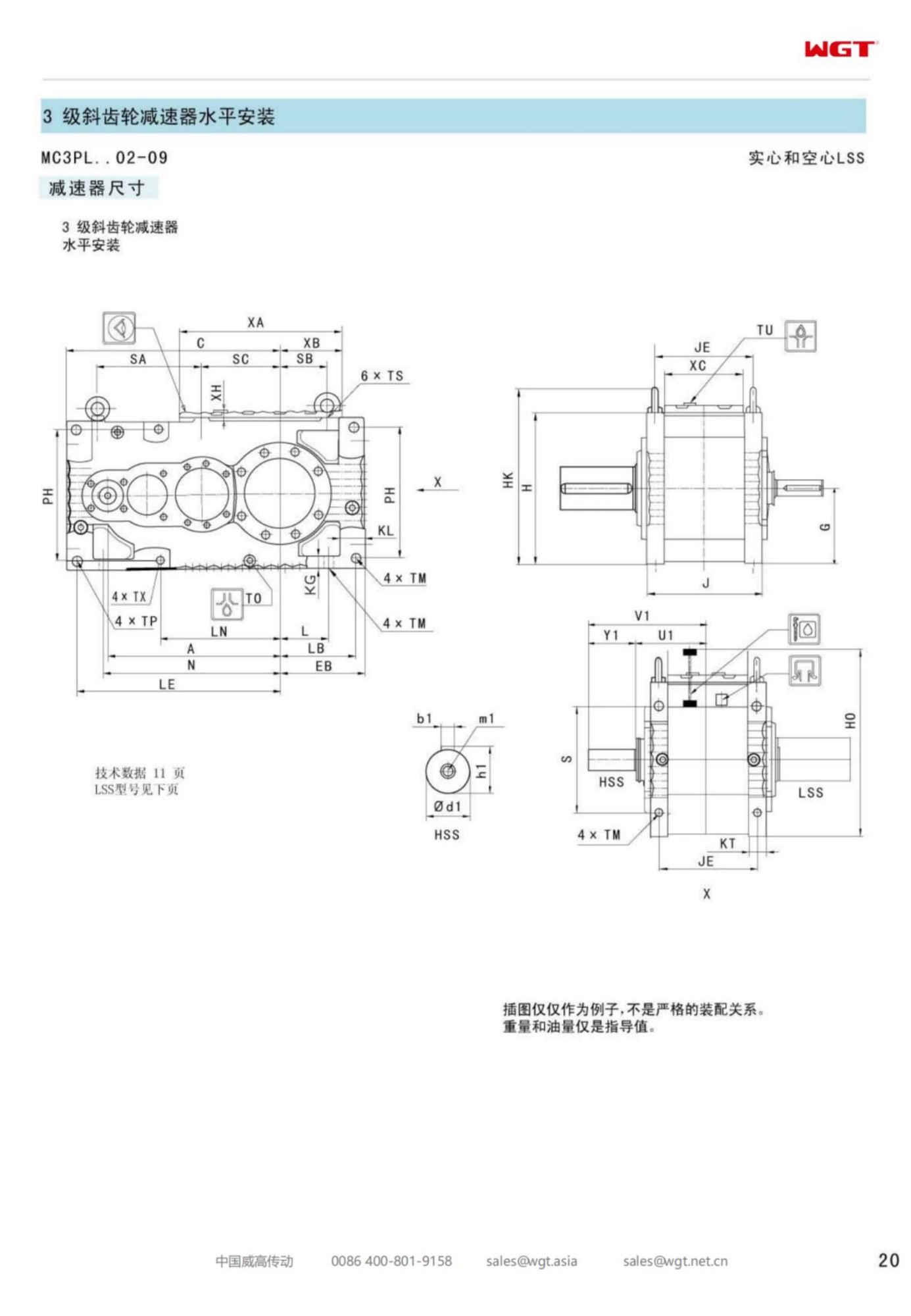
Sorting halls are sheds with equipment in them, and the conveyor drives were usually the last thing drawn. The torque-arm build suits that reality: the unit hangs on the head shaft by its bore, and the arm hands the reaction to a stay pinned back to whatever structure the layout offers.
The details decide whether the arrangement stays quiet. The stay angle should be kept shallow enough that adjustment does not multiply pin loads; the pins want bushings and a grease point that fits the shift's routine; and the structure receiving the reaction should be checked for a stall, since a jam loads the bracket far beyond running torque. Arms treated as part of the design never make the vibration report.
Odour, Leachate and the Case Surface
Mixed waste is wet, and what leaches from it is mildly acidic and determined. A case in the splash path of that liquid gets a chemistry lesson every day, and a coating that survives it has to be chosen for it, not hoped for.
The specification is one line long and saves seasons of argument: name the exposure, and let the paint system, fastener finish and seal material be picked against it. A case that wipes down clean on the shift stays presentable for the plant tour; a case that flakes in the splash zone turns every contract renewal into a conversation about housekeeping.
Weekend Shutdown and Wet Air
A hall that cools over the weekend breathes moisture onto every cold surface, and a gearbox that ran warm until Saturday noon is the coldest sealed sump in the building by Sunday night. The breather inhales cooling air, the sump draws a vacuum, and water arrives where oil was.
The countermeasures are small and cheap: a breather that filters and dries what the case inhales, oil graded for the coldest start the site records, and a sample routine that catches the milky look before bearings do. Sites that restart Monday on an oil check rarely meet the problem twice.
Monitoring Along an Automated Line
Modern sorting lines are instrumented end to end, and the conveyor drives sit inside that instrumentation whether they were invited or not. A baseline recorded in the first week turns every drive into a trend line, and the dust-and-damp environment that hides visual damage cannot hide a moving signature.
Frame five behaves well in that company: steady gearing, seals that keep the grit out of the grease, and a monthly reading that catches the slow clearance loss a jam would otherwise reveal all at once. Drives treated as monitored items become planned items; drives treated as invisible become stops.
Writing the Enquiry for a Sorting Drive
The enquiry that gets this frame right describes the hall, not just the load: head shaft diameter, keyway and seat length; conveyor type, width and speed; the feed mix and its density extremes; starts per hour and restart practice at the controls; wrap and jam policy; glass and grit exposure; leachate contact; shift pattern and weekend shutdown; and the structure available for the arm bracket.
The reply should answer as a system: bore and keyway against the drawing, ratio and belt speed, service factor defended against the wrapped and stalled conditions rather than the average tonnage, seals and breather named for grit and damp, paint and fasteners for the leachate, and arm geometry confirmed against the stay the hall allows. One page there, one page back, and the drive arrives as part of the line instead of an afterthought.
A Frame Five Through the Contract Term
The report card on a sorting drive is written at the contract renewal: a trend line that never moved, an oil sample with no water in it, arm pins with grease in them and no play, and a jam log whose stops were all cleared at the conveyor, not inside the gearbox. Frames that earn the card were hung on measured shafts, pinned to checked structure, and sized for the load that never repeats.
Frame five carries its half with steady gearing, grit-tolerant seals and margin held against the surprise. The operator's half is the walk, the trend line and the honest enquiry. Sites that pay both halves run the contract out on the same drives - which, in a business where uptime is the whole product, is the quietest kind of profit.
Mixed waste, stringy wrap and a load that never repeats - frame five keeps the sorting line fed:
- Main infeed belt at a municipal waste sorting hall
- Pick-line conveyor over a manual sorting cabin
- Screen feed conveyor ahead of the trommel line
- Glass breaker discharge conveyor after the screening stage
- Refuse-derived fuel preparation line conveyor
- Baling press infeed conveyor at a materials recovery facility
How Customers Use This Unit
Cement plant clinker belt
A cement plant drives its clinker transport belt with reducers in dusty, high-ambient conditions. Sealed housings and a 40 deg C maximum temperature rise let the units sit close to the kiln without extra cooling.
Paper mill pulp agitator
A paper mill uses reducers on pulp chest agitators. Continuous 24-hour duty is handled by lifetime lubrication, and the low backlash keeps the agitator steady when the stock consistency changes.
What Engineers Ask Us
Can you manufacture a custom ratio or a special shaft?
Beyond the catalogue ratios we can quote special ratios and custom output shafts - splined, extended, special keyways or drilled - for OEM volumes. Tooling is amortised across the order, so unit cost falls as quantity rises.
Will the unit match my existing gearbox interface?
The series is manufactured to the standard centre distances, shaft dimensions and flange patterns of its frame family, so couplings, guards and foundations do not have to be redesigned. Send the nameplate details and we confirm the equivalent frame in writing.
Model Table: Frames, Shafts and Duty
| Model | Centre distance | Output | Typical duty |
|---|
| M3PSF50 | size 50 | solid shaft, foot | conveyors, feeders |
| M3PSF60 | size 60 | solid shaft, foot | crushers, mixers |
| M3PSF70 | size 70 | solid shaft, foot | ball mills, shredders |
| M3PSF80 | size 80 | solid shaft, foot | kilns, heavy conveyors |
| M3PSF90 | size 90 | solid shaft, foot | mill and kiln drives |
| M3RSF50 | size 50 | solid shaft, foot, right-angle | inclined conveyors, elevators |
| M3RSF60 | size 60 | solid shaft, foot, right-angle | screw classifiers, feeders |
| M3RHF70 | size 70 | hollow shaft, foot, right-angle | agitators, drum drives |
| M3PHT80 | size 80 | hollow shaft, torque arm, parallel | shaft-mounted conveyors |
| M3RHT90 | size 90 | hollow shaft, torque arm, right-angle | heavy shaft-mounted drives |
Larger size numbers mean higher torque capacity and larger shafts. Because interfaces follow the common industrial dimensions, a size-for-size change is the normal upgrade route for these industrial units.
Selection Example: Main infeed belt at a municipal waste sorting hall
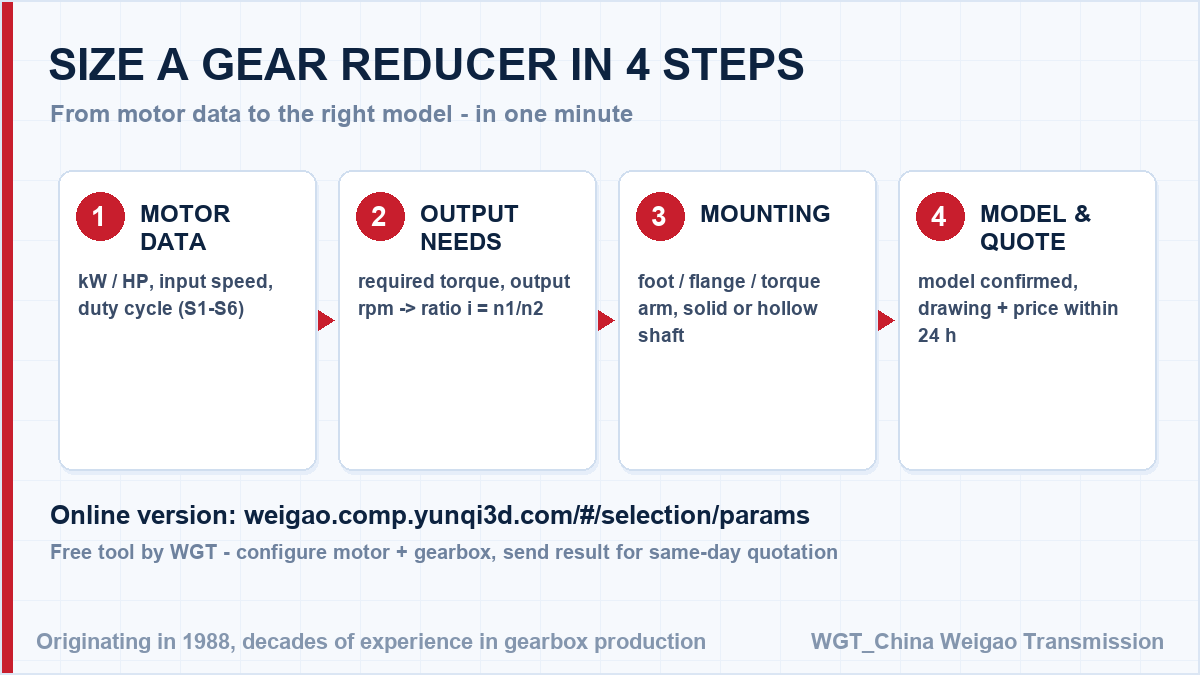
Take a 37 kW motor at 1475 rpm turning the infeed belt at 31 rpm. The ratio follows directly: 1475 / 31 = 47.6, so a ratio near i=48 is selected from the two-stage right-angle band, and the frame is confirmed against the wrapped-flight stall and the part-loaded ramp restart rather than the average tonnage, since the feed mix never arrives the same way twice. In this case frame five holds sorting-floor duty with margin reserved for wrap and jams, a torque arm reacting into hall steelwork, and seals and paint specified for glass grit and leachate. Note that the ratio comes from speeds alone, while the frame size depends on torque and service factor - never size a unit on ratio only.
![industrial helical gearbox selection chart]()
A quick visual of the selection sequence for a industrial helical unit.
![M3 series gear reducer installation examples]()
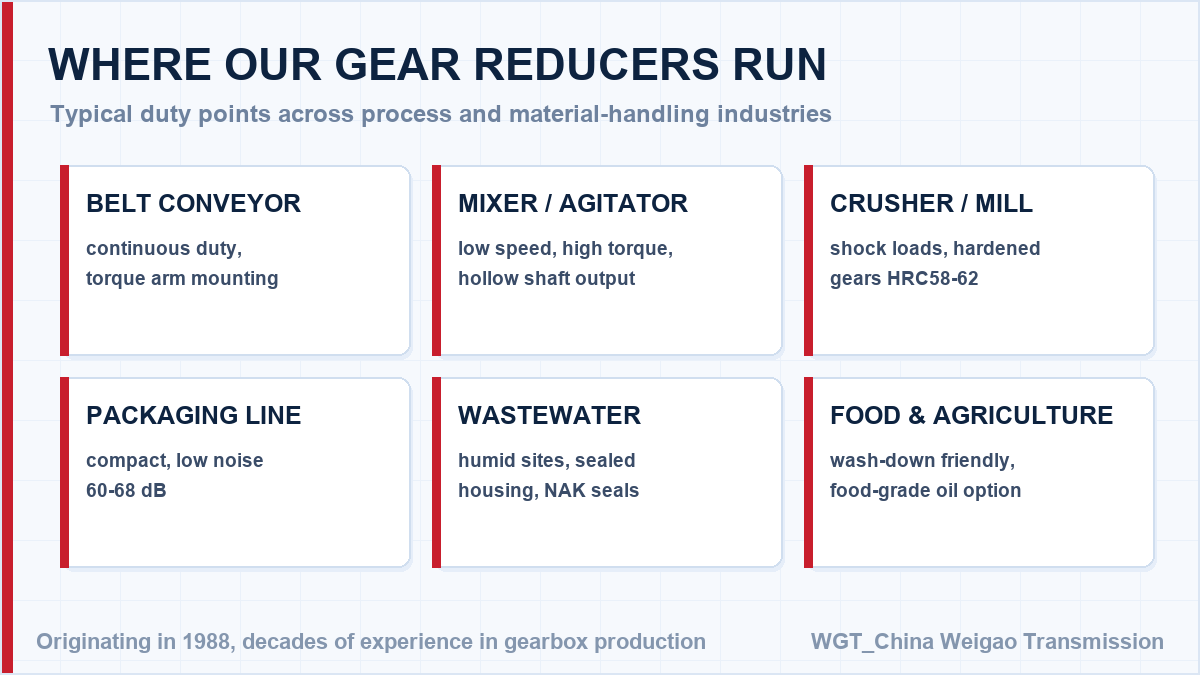
Application coverage of the the M3 series.
Shutdown Planned? Order Ahead of the Window
Beat the shutdown window. Prefer to check the figures yourself? The WGT Motor & Gearbox Online Selection System gives you the model, torque margin and ratio before you ask us.
For planned maintenance windows we reserve production capacity and ship the unit ahead of the shutdown date, so the swap takes hours instead of days. Tell us the window and we work back from it. Looking for a gear reducer for textile machinery? Tell us the duty point and we will confirm the model in writing.