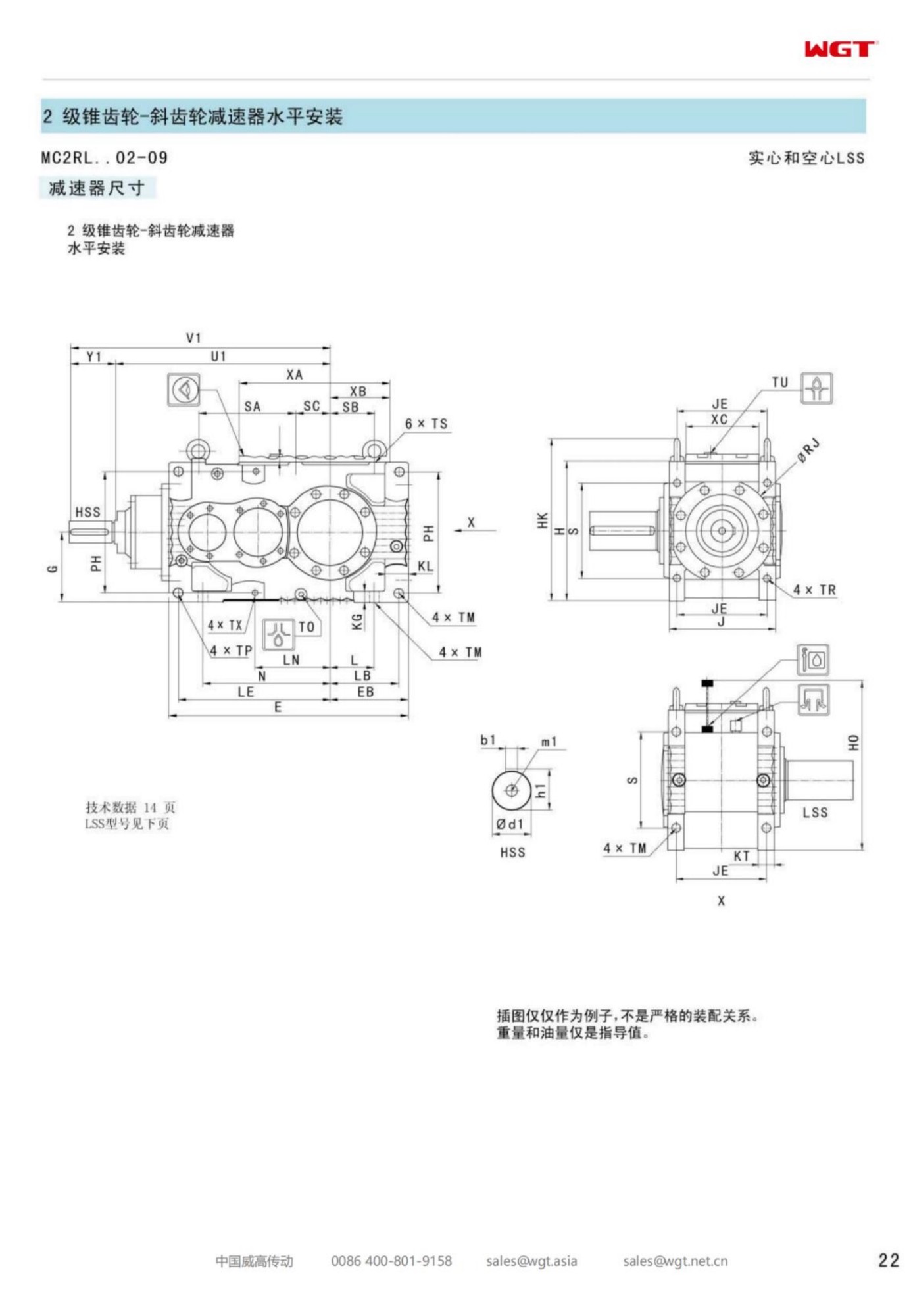
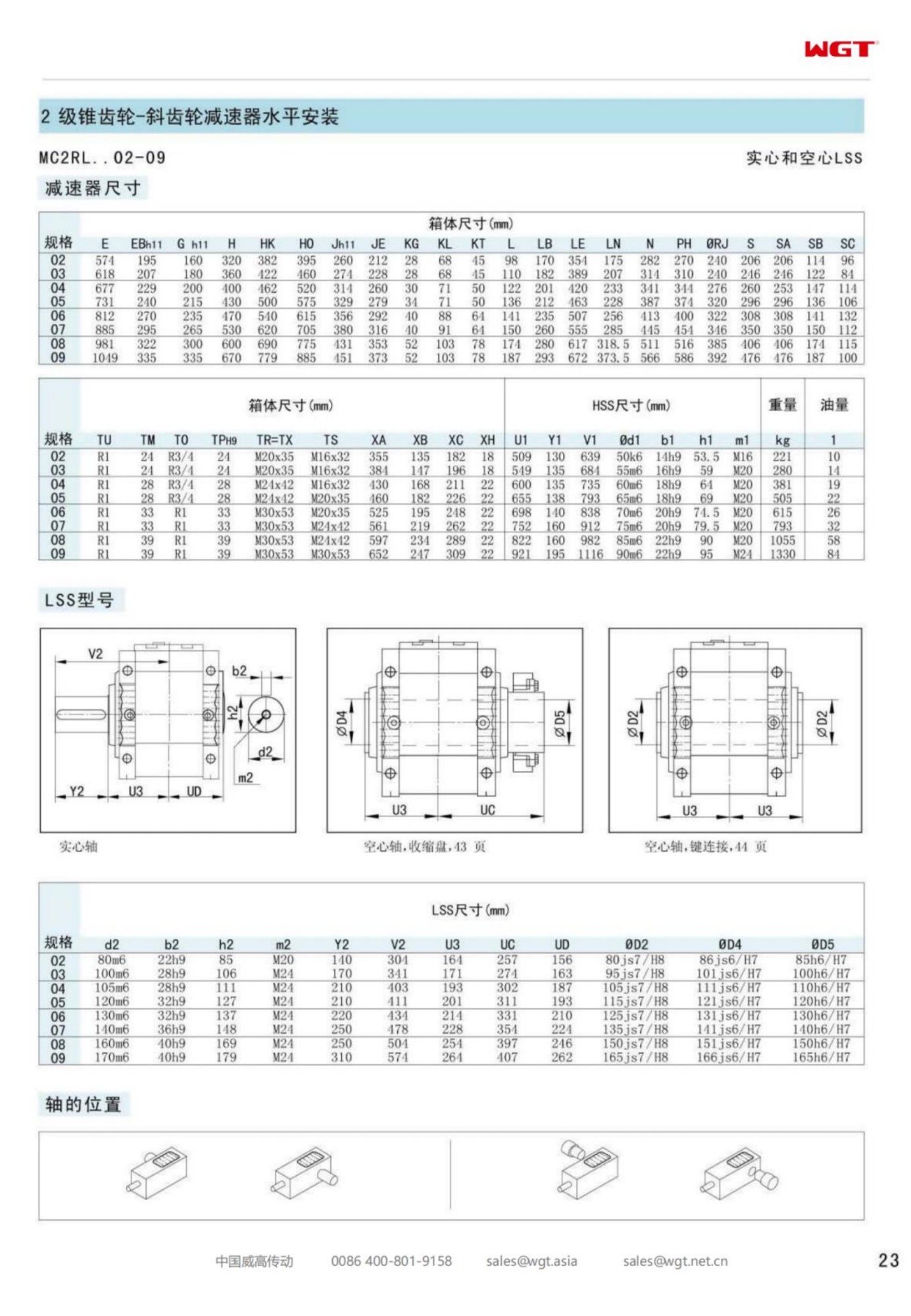
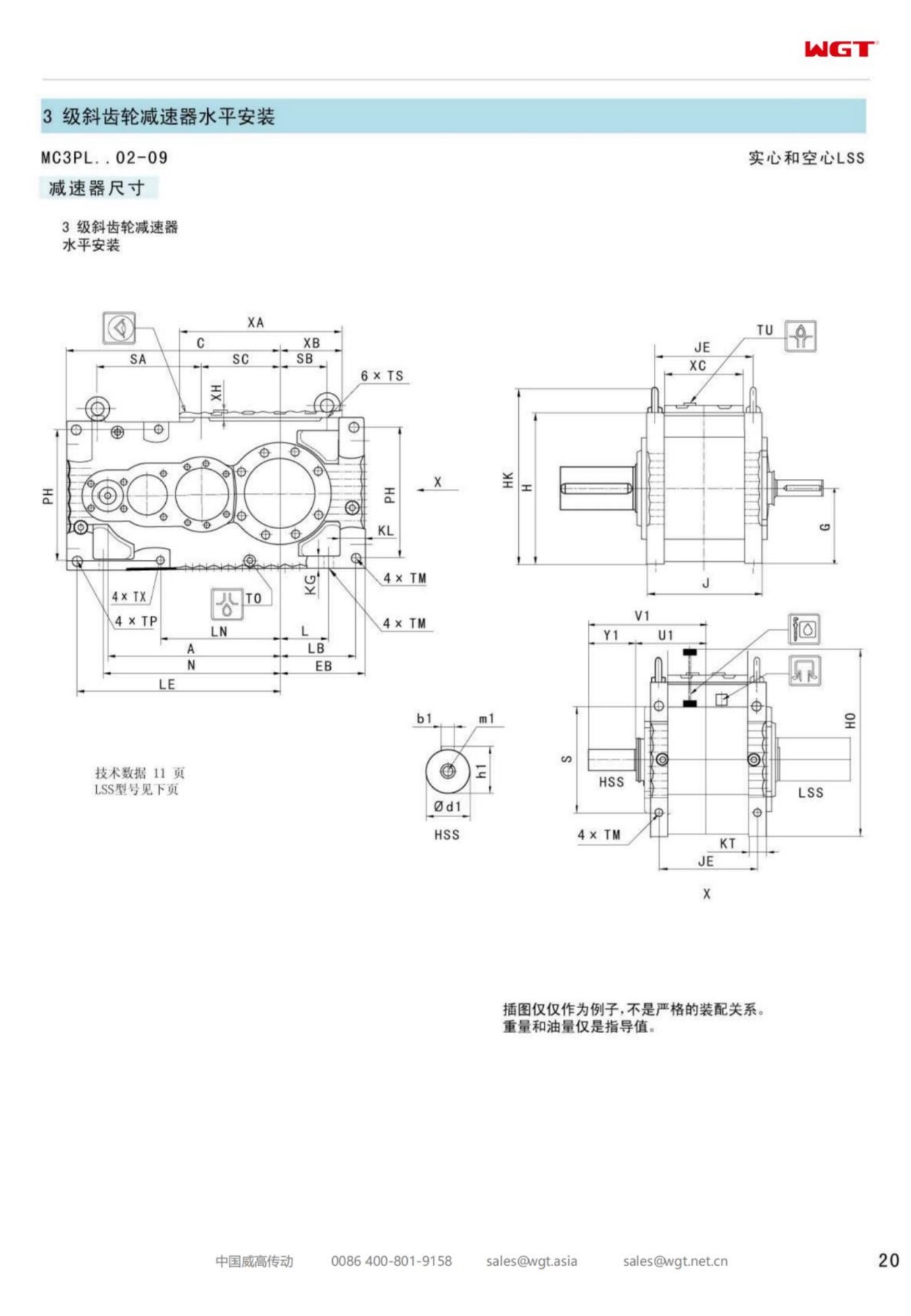
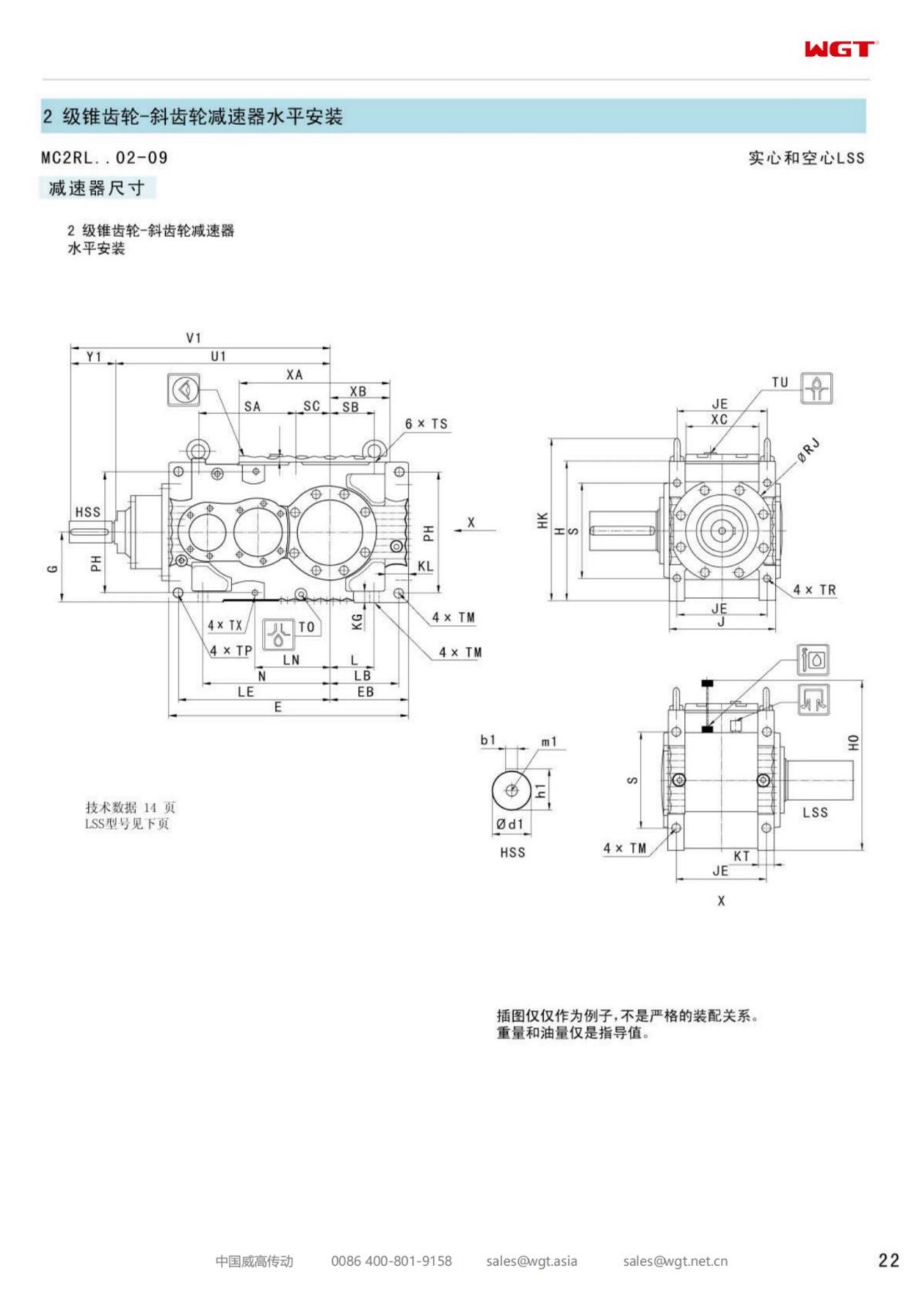
A machine line makes two products: the parts on the drawings and the swarf that comes off them. The first earns the money; the second has to leave the building continuously or it stops the first. The MC2RLHT03 right-angle hollow shaft gear unit is the frame this family quotes for that housekeeping duty: hinged chip conveyors under machining centres, drag flights running to the centrifuge, and the coolant return screws that keep the floor dry between them.
This page covers what a swarf line really asks of its drives: coolant mist on a warm case, hogging bursts from the machines above, the jam that packed chips eventually deliver, and why the torque-arm mounting suits a line built from machine frames rather than foundations. It is written for the plant engineers who keep twenty spindles cutting at once.
Coolant Mist and the Case Surface
Soluble oil does not stay in the machine sump. It leaves as mist on every warm surface near the cut, and a gearbox case is the warmest slow-moving object in the line. Mist settles, holds grinding dust, and slowly turns a clean case into a lacquered one that inspection lamps love and seals do not.
Neither fact is fatal, but both are cumulative. A case surface specified for wipe-down, seal lips matched to oil-mist exposure, and a breather placed outside the mist plume turn the environment from an attack into a maintenance line item. Lines that wipe cases on the weekly walk keep their paint and their bearings; lines that wait until the audit do the same work with the machine already complaining.
Reading the MC2RLHT03 String
Every position in the type code answers a question the line designer asked when the conveyor was first drawn under the machines.
| MC | Industrial gear unit family rated for round-the-clock plant duty |
| 2 | Two reduction stages, a helical pair working with a bevel pair |
| R | Right-angle arrangement, the motor set across the conveyor run |
| L | Level build, output shaft lying parallel to the shop floor |
| H | Hollow output bore, keyed directly onto the conveyor head shaft |
| T | Torque-arm bracket, reaction fed to structure through a stay |
| 03 | Third frame, a step up the bore ladder from the lightest rung |
The string fixes the shape; the order must fix the duty. Chip type and packing behaviour, coolant chemistry, the hogging profile of the machines, stall and jam policy, the stay geometry the frames allow, and the shaft details at the head - these decide seals, paint, oil grade and bracket design long before the power figure does.
Frame Three Along the Machine Line
Frame three sits where chip conveyors stop being accessories and start being process equipment: the main hinged belt under a bank of machining centres, the drag flight feeding the swarf centrifuge, the long return screw that serves half a shop. The torque is moderate, the hours are not - a line that cuts five days a week asks the conveyor to match it.
The frame answers with steady gearing at conveyor speed, bearings chosen for the shock a hinged belt delivers at every hinge, and an oil volume that shrugs off the stop-start rhythm of a production schedule. It is a quiet frame in a noisy building, which is exactly what a housekeeping drive should be.
Hogging Bursts and the Jam That Was Coming
A machining centre taking a heavy cut delivers chips in surges; a roughing cycle delivers them in buckets. The conveyor sees this as a torque trace with teeth, and the trace is nothing like the average the conveyor was sold on. Worse, chips pack: a wet stringy mass bridges at the chute, the hinge drags a packed bed, and the drive meets stall torque that no smooth-running figure predicts.
Two declarations keep this honest. First, the surge profile - which machines feed the conveyor and what their roughing cycles actually remove. Second, the jam policy - whether the controls stop on torque, reverse to clear, or leave it to an operator with a bar. A frame specified against the jam starts its life with the margin already reserved; one specified against the average spends its life discovering the difference.
Hinge Wear and the Ripple It Hands Back
A hinged belt conveyor ages in public. Hinges wear, plates warp where hot chips ran, and the flight that once passed smoothly under the head begins to knock its way round. The gearbox receives all of it as a ripple that grows with the belt's age, and a trend line recorded from commissioning separates belt wear from bearing wear at a glance.
The practical habit is a conveyor walk with ears open: listen at the head for the knock, watch the discharge for chips riding the hinge, and note when the ripple last grew. Drive bearings blamed for a conveyor's tired hinge have started more than one unnecessary overhaul; a trend line ends those arguments before the order is written.
Pinning the Arm to Machine Frames
Machine lines are built from machine frames, plinths and cable trays, not from foundations. A footed gearbox beside a machining centre needs a pad nobody poured. The torque-arm build solves the geometry: the unit hangs on the conveyor head shaft, and the arm hands its reaction to a stay pinned back to whatever structure the layout offers.
The details decide whether the arrangement stays quiet. The stay angle should be kept shallow enough that adjustment does not multiply pin loads; the pins want bushings and a grease point that fits the shift's routine; and the structure receiving the reaction should be checked for a stall, since a jam loads the bracket far beyond running torque. Lines that treat the arm as part of the machine design never hear it; lines that treat it as an afterthought find it in the vibration report.
Night Stops, Chill and Condensation
A shop that cools overnight breathes moisture onto every cold surface, and a gearbox that ran hot until the last cycle is the coldest thing with a sealed sump on the line. The breather inhales cooling air, the sump draws a vacuum, and water arrives where oil was.
The countermeasures are small and cheap: a breather that filters and dries what the case inhales, an oil grade chosen for the coldest start the shop records, and a sample routine that catches the milky look before bearings do. Shops that run three shifts rarely meet the problem; shops that run one shift and shut down on Fridays meet it every weekend.
Access Today and the Fitter Next Year
Conveyor drives on machine lines get installed last, into the space nobody else wanted. The case ends up beside a coolant tank, under a cable tray, behind a guard that was sized before the drive was drawn. Two years later the oil change becomes a two-person job and the seal set waits for the annual shutdown nobody planned.
The layout conversation belongs in the order. Confirm which side the filler and dipstick sit, that the breather can be reached without removing guarding, and that the arm pin has a grease point a grease gun can actually reach. A frame that is easy to service gets serviced; the specification should say so out loud.
Bearings Beside Twenty Spindles
Vibration analysis lives on machine lines, and a chip conveyor drive sits inside the survey whether it was invited or not. That is good news: the baseline recorded in the first week turns the drive into another trend line, and the dust-and-mist environment that hides visual damage cannot hide a moving signature.
Seal quality decides how flat the line stays. A dust lip ahead of the main lip keeps grinding grit out of the grease, a filtered breather keeps the case from drinking the atmosphere, and a monthly reading catches the slow clearance loss that a packed-chip jam would otherwise reveal all at once. Bearings treated as monitored items become planned items; bearings treated as invisible become stops.
Swarf as Revenue and the Recovery Loop
In a busy shop the swarf is not waste; it is a commodity with a price, and the recovery loop - centrifuge, briquette press, skip to the merchant - runs as a small process line of its own. The conveyors feeding it inherit a second duty: they run when the shop runs, and they stop costing money the moment they stop turning.
Frame three sits comfortably in that loop. Its torque band covers the briquette press infeed as well as the main belt, and the same mounting arrangement repeats along the route without new foundations. A recovery line built from one family of frames keeps spares shallow and fitters confident - a small advantage that compounds across every shift.
Writing the Enquiry for a Swarf-Line Drive
The enquiry that gets this frame right describes the line, not just the load: head shaft diameter, keyway and seat length; conveyor type, width and speed; the machines feeding it and their roughing cycles; chip material, form and packing behaviour; coolant chemistry and mist exposure; jam policy at the controls; shift pattern and weekend shutdown; and the structure available for the arm bracket.
The reply should answer as a system: bore and keyway against the drawing, ratio and conveyor speed, service factor defended against the packed-bed stall rather than the average tonnage, seals and breather named for mist and grit, paint and fasteners for the coolant atmosphere, and arm geometry confirmed against the stay the frames allow. One page there, one page back, and the drive arrives as part of the line instead of a bolted-on apology.
A Frame Three Through a Five-Day Week
The report card on a swarf drive is written at the year-end survey: a vibration trend that never moved, an oil sample with no water in it, arm pins with grease in them and no play in them, and a jam log whose stops were all cleared at the conveyor, not inside the gearbox. Frames that earn the card were hung on measured shafts, pinned to checked structure, and sized for the jam that was always coming.
Frame three carries its half with steady gearing, mist-tolerant seals and margins held in reserve for the surge. The shop's half is the walk, the trend line and the honest enquiry. Shops that pay both halves run the line for years on the same drives - which, in a building where every minute of spindle time is money, is the quietest kind of profit.
Coolant mist, packed chips and shifts that never idle - frame three keeps swarf moving:
- Hinged steel belt chip conveyor under a machining centre line
- Drag flight conveyor carrying swarf to a centrifuge
- Coolant return screw running along a transfer line
- Chip shredder infeed conveyor at a large machine shop
- Swarf discharge belt from a grinding and honing cell
- Turnings briquette press infeed conveyor in the recovery bay
Selection Example: Hinged chip conveyor under a machining centre line
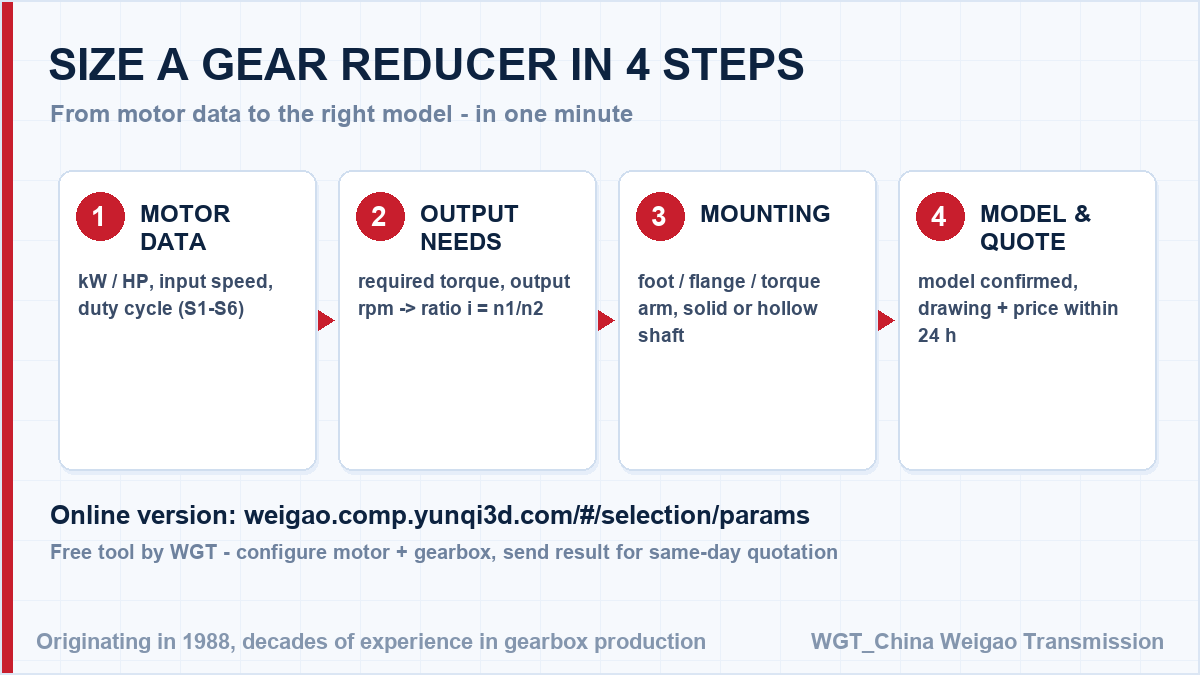
Take an 18.5 kW motor at 1466 rpm turning the drag flight shaft at 37 rpm. The ratio follows directly: 1466 / 37 = 39.6, so a ratio near i=40 is selected from the two-stage right-angle band, and the frame is confirmed against the packed-bed jam torque as well as the running load, since a stall under packed swarf is a when rather than an if. In this case frame three holds swarf duty with margin reserved for jam starts, a torque arm reacting into the machine frame, and seals and paint specified for coolant mist and soluble oil. Work through the same three steps - speed, output speed, torque - and the model number falls out; we verify it against the duty class before quoting.
![gear reducer ratio calculation steps]()
From duty point to model number - the same four steps every time.
Applications in Industry
Grain terminal elevators
A grain terminal powers its bucket elevators with gear reducers. The anti-run-back option holds the loaded buckets during power cuts, and standard interface dimensions meant the old foundations were reused as they were.
Pallet lift in a warehouse
A logistics integrator selected units for pallet lifts. The hollow output bore carries the lift screw directly, and one year of three-shift operation has passed without a single seal replacement.
![gear reducer industries served - WGT]()
Industry map: the sectors where the M3 series is most common.
Buyer Questions and Answers
Can I get a CAD drawing or 3D model for my design review?
Yes. Send us the model and ratio and we provide a 2D dimension drawing and a 3D STEP model for your review, usually the same working day. Drawings follow the layout of the original series so they drop into your existing assembly.
What is the recommended oil change interval?
The housing is lubricated for life under normal duty and normal ambient. In hot, humid or continuous service, change the oil after the first 400 running hours and then every 4000 hours, or once a year, whichever comes first.
M3 Series Model Overview
| Model | Centre distance | Output | Typical duty |
|---|
| M3PSF50 | size 50 | solid shaft, foot | conveyors, feeders |
| M3PSF60 | size 60 | solid shaft, foot | crushers, mixers |
| M3PSF70 | size 70 | solid shaft, foot | ball mills, shredders |
| M3PSF80 | size 80 | solid shaft, foot | kilns, heavy conveyors |
| M3PSF90 | size 90 | solid shaft, foot | mill and kiln drives |
| M3RSF50 | size 50 | solid shaft, foot, right-angle | inclined conveyors, elevators |
| M3RSF60 | size 60 | solid shaft, foot, right-angle | screw classifiers, feeders |
| M3RHF70 | size 70 | hollow shaft, foot, right-angle | agitators, drum drives |
| M3PHT80 | size 80 | hollow shaft, torque arm, parallel | shaft-mounted conveyors |
| M3RHT90 | size 90 | hollow shaft, torque arm, right-angle | heavy shaft-mounted drives |
The series is sized for continuous heavy duty rather than by motor power alone: the required torque with the service factor decides the frame, and the stage count (2 to 5) decides the ratio band.
Send the Nameplate - Get the Equivalent Frame
Matching an existing installation? Run your duty point through the WGT Motor & Gearbox Online Selection System first: it saves a round of emails and gets you to a firm price faster.
Photograph the nameplate or note the model and ratio. We identify the equivalent frame, confirm the torque margin and return a quotation with the outline drawing - usually within one working day. Looking for a gear motor for car wash system? Tell us the duty point and we will confirm the model in writing.