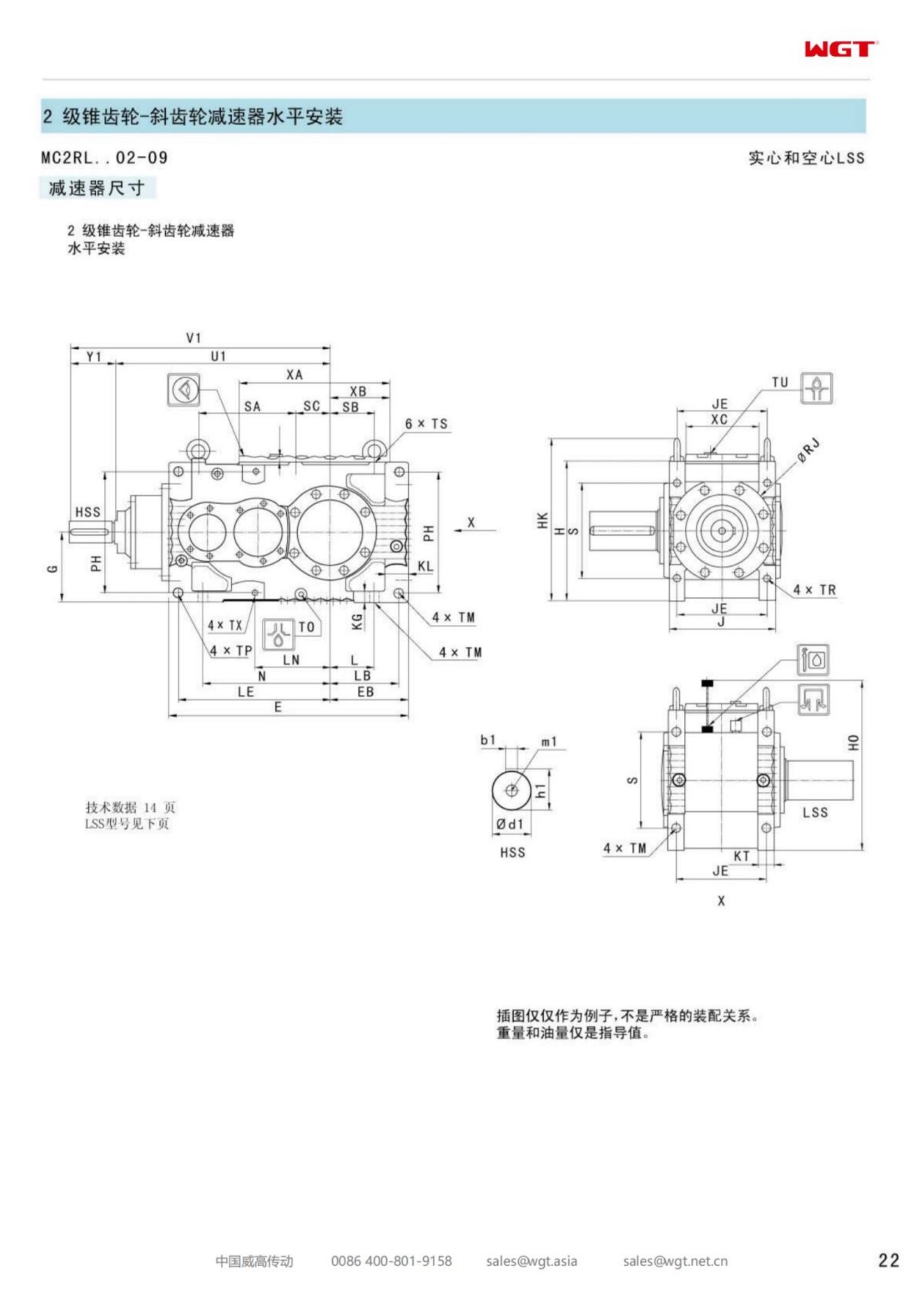
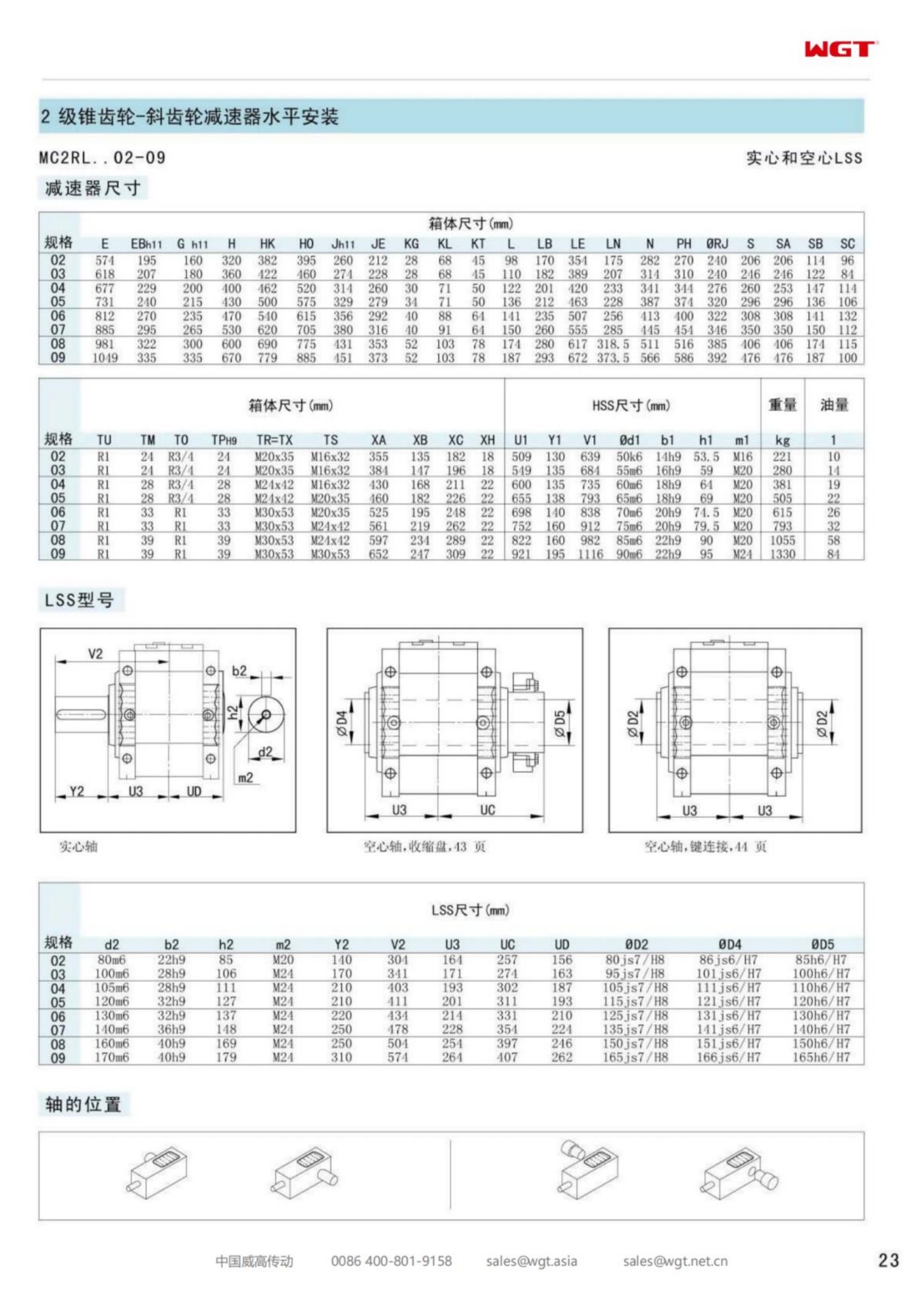
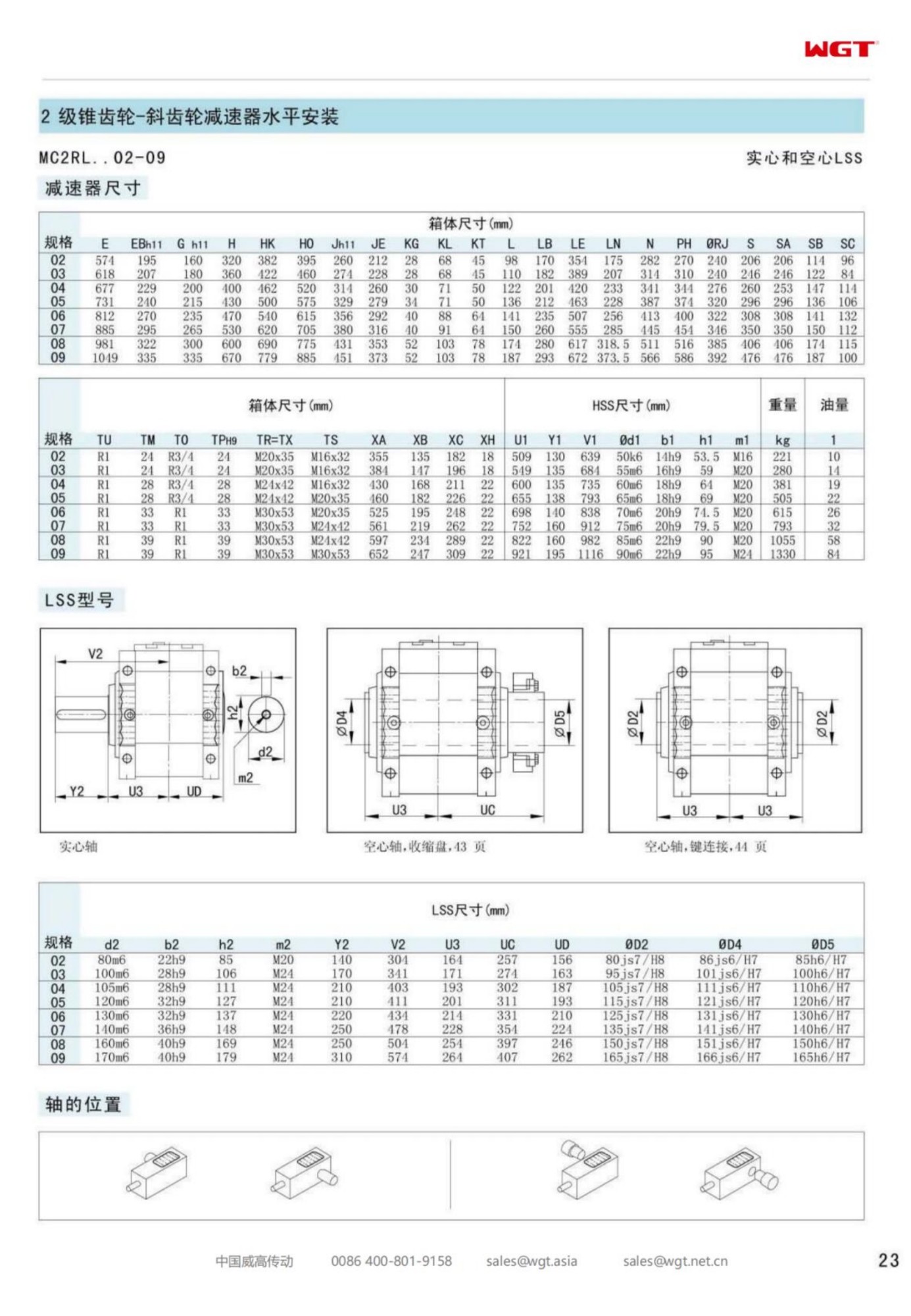
Glass is made in a building that is permanently warm and permanently abrasive. Batch - sand, soda ash, limestone, dolomite - arrives as powder that finds every seal, cullet returns as broken glass that arrives in surges, and the furnace at the end of the line radiates heat that a gearbox feels on its case rather than in its oil. The MC2RLHF09 right-angle hollow shaft gear unit is the frame this family quotes for that floor: mixer discharge belts, cullet return runs and the charger conveyors that keep a furnace fed for years without a cold stop.
This page covers what a batch house really asks of its drives: radiant heat at the case, abrasive batch dust, cullet shock loads, soda ash and moisture, the campaign life between hot repairs, and the enquiry that keeps a furnace fed through all of it. It is written for plant engineers and the fitters who keep the line running.
Radiant Heat at the Batch House
A batch house is not a hot process in the way a furnace is, but it sits close enough to one that its drives run warmer than the ambient reading suggests. Radiation from the doghouse and the charger, warm air rising along the furnace side of the building, and a roof that holds heat in summer add up to a case temperature well above the shop floor figure.
That matters because oil life and seal life both track case temperature. A drive running twenty degrees warmer than the design assumption ages its oil roughly twice as fast, and the error compounds quietly over a campaign that lasts years. The order should declare the case temperature the site expects to measure, not the ambient it hopes for.
Reading the MC2RLHF09 String
The type code compresses the geometry, and on a batch-house drive every letter answers a question the furnace will eventually ask.
| MC | Industrial gear unit family built for continuous plant duty |
| 2 | Two gear stages, one helical pair and one bevel pair in a right-angle case |
| R | Right-angle layout, motor clear of the charger and mixer frames |
| L | Horizontal build, output axis parallel to the ground |
| H | Hollow output bore, keyed onto the mixer or charger shaft |
| F | Footed housing with reaction pads against the batch-house steel |
| 09 | Ninth frame, the head of this hollow-bore ladder |
The string fixes the shape; the order must carry the building. Batch recipe and abrasiveness, cullet percentage and how it is returned, the radiant environment, the campaign length between hot repairs, the wash-down practice, and the shaft dimensions at the mixer or charger - these decide seals, paint, oil grade and bore far more than the tonnage does.
Frame Nine Beside the Furnace
Frame nine heads the hollow-bore ladder. It is quoted where the shaft is large, the duty is relentless and the penalty for a stop is measured in cold glass: charger conveyors, mixer discharge belts and the cullet runs that feed a furnace from the cold end of the plant.
What the frame buys is margin. Slow gearing that turns a big shaft without multiplying speed, bearings sized for a loaded belt on a hot gallery, and a case with enough oil volume to hold its temperature through a summer afternoon. At this size, margin is not a sales word - it is the difference between a campaign and a repair.
Batch Dust Is Not Ordinary Dust
Batch is mostly sand, and sand at speed is a cutting tool. Add soda ash, which is hygroscopic and mildly alkaline, and dolomite, which is abrasive in a different way, and the dust around a batch house becomes a mixture that attacks seals mechanically and paint chemically at the same time.
The practical answer sits in three places: a dust lip ahead of the main seal so the lip itself never runs on grit, a filtered breather so the case does not inhale what the building breathes, and a paint system chosen for alkaline dust rather than for appearance. Batch houses that wipe case tops on the shift walk keep their paint; those that wait for the annual clean buy paint and seals instead.
Cullet Return and the Shock of Broken Glass
Cullet does not arrive politely. It comes back from the cold end in surges, mixed sizes, sometimes still warm, and it hits a belt or a chute as a mass rather than as a stream. For the drive, each surge is a short, sharp torque event that looks nothing like the steady running load and much more like the duty a crusher sees.
Two things help and both belong in the order: the cullet ratio the recipe actually runs and the way the return is metered into the feed, plus a service factor that acknowledges surges as routine. A frame sized for the smooth part of the cycle spends its life being surprised by the part that was never smooth.
Soda Ash, Moisture and the Corrosion Bet
Soda ash pulls water out of the air, and where it settles on a warm case it holds that water against paint. The result is not dramatic corrosion but a slow lifting at every scratch, and a paint line that fails first exactly where hands and tools have touched it.
Corrosion on a batch-house drive is managed at order time: a coating system specified for alkaline dust and humid warmth, fasteners in a grade that survives the same atmosphere, seal materials matched to the chemistry, and a housekeeping routine that clears spillage before it draws moisture. Touch-up done the week a blemish shows costs minutes; touch-up deferred to the next hot repair costs a case.
Campaign Life Between Hot Repairs
A glass furnace runs for years without a cold stop, and the batch house runs with it. That sets the real maintenance rhythm: inspection and small work during planned hot repairs, everything else deferred, and no tolerance for a drive that needs attention on its own schedule.
Frame nine is built for that rhythm - oil capacity sized for continuous duty in a warm building, bearings chosen for their rated life at campaign hours, and a design that treats an unplanned stop as abnormal. Plants that come through a campaign cleanly are the ones that spent the previous hot repair finishing a list rather than starting one.
Bore Fit on a Mixer or Charger Shaft
On a hollow-bore mounting, the fit is the alignment. A mixer or charger shaft is a long, working member that carries its own bearings and its own loads, so the bore has to match the shaft it actually meets: diameter and keyway at the seat, seat length against the case spigot, and the shaft's own alignment checked before the unit goes on.
Records belong in the plant file - what was measured, where the clearance sat, which shims went in, what torque the clamping ring saw. Three years later, when the unit comes off during a hot repair, that record is the difference between a planned day and a week of guessing.
Heat Paths and the Oil Sump Beside the Furnace
Heat reaches a batch-house gearbox three ways: radiation from the furnace side, conduction along a shaft that has been inside a hot zone, and the ordinary work of the gearing itself. The sump collects all three, and a drive that runs hot for a campaign runs its oil to the end of its life sooner than the calendar says.
Level, colour and temperature taken at the same mark on the same walk tell the story. Samples drawn at the hot repair and mid-campaign, changes made with the same grade from a sealed drum, and the magnet read at every change. A sump treated as an instrument argues the next frame's specification better than any brochure can.
Segregation, Dust Control and Housekeeping
Most of the dust that reaches a drive never needed to leave the process. Transfer points without skirts, chutes that discharge off-centre, bins drawn down too far, and conveyor cover sheets left off after maintenance all throw batch into the air where it settles on whatever is warm.
Containment is cheaper than protection. Skirts and seals at the transfer, extraction sized for the actual dust load, covers refitted the same shift they come off, and a walk that clears spillage rather than reporting it - these keep a gearbox's seals doing seal work instead of grinding work. Batch houses that contain their dust also tend to keep their drives.
Writing the Enquiry for a Batch-House Drive
The enquiry that gets this frame right states the recipe plainly: shaft diameter, keyway and seat length at the mixer or charger; output speed; required torque and the surge pattern the cullet return produces; batch composition and abrasiveness; cullet ratio and return method; case temperature expected in summer; wash-down practice; and the campaign hours between hot repairs.
The reply should answer as a system: bore and keyway against the drawing, ratio and speed at the shaft, service factor defended against the cullet surge, seals and breather named for batch dust, paint and fasteners for alkaline humidity, oil graded for the case temperature the building actually reaches. One page there, one page back, and the frame that arrives before the next hot repair is specified for glass as it really is - hot, abrasive and unforgiving.
A Frame Nine Through a Furnace Campaign
The verdict on a batch-house drive is written at the hot repair, when the case is wiped, the oil is sampled and the tooth pattern finally gets its look. Frames that come through clean were hung on measured shafts, kept free of settled batch by a walk that never skipped, and sized against the cullet surge rather than the running average.
Frame nine carries its share with slow-turning margin, seals and paint picked for alkaline dust, and a thermal allowance for a building that is warm by design. The plant's share is the containment, the walk and the honest enquiry. Plants that pay both halves start every campaign with the same drives they ended the last one with - and that continuity is worth more than any purchase price.
Radiant heat, abrasive batch and cullet surges - frame nine keeps the furnace fed:
- Batch mixer discharge conveyor feeding the furnace charger
- Cullet return conveyor from the cold end to the batch house
- Charger conveyor serving a float glass furnace
- Dolomite and limestone handling belt at a container glass plant
- Frit transfer conveyor at a glass frit plant
- Soda ash feed screw drive in a batch weighing house
Model Range and Centre Distances
| Model | Centre distance | Output | Typical duty |
|---|
| M3PSF50 | size 50 | solid shaft, foot | conveyors, feeders |
| M3PSF60 | size 60 | solid shaft, foot | crushers, mixers |
| M3PSF70 | size 70 | solid shaft, foot | ball mills, shredders |
| M3PSF80 | size 80 | solid shaft, foot | kilns, heavy conveyors |
| M3PSF90 | size 90 | solid shaft, foot | mill and kiln drives |
| M3RSF50 | size 50 | solid shaft, foot, right-angle | inclined conveyors, elevators |
| M3RSF60 | size 60 | solid shaft, foot, right-angle | screw classifiers, feeders |
| M3RHF70 | size 70 | hollow shaft, foot, right-angle | agitators, drum drives |
| M3PHT80 | size 80 | hollow shaft, torque arm, parallel | shaft-mounted conveyors |
| M3RHT90 | size 90 | hollow shaft, torque arm, right-angle | heavy shaft-mounted drives |
Frame sizes in this series follow a widely used industrial dimension ladder: foundations, couplings and guards of the existing installation are reused as they are.
Proven Installations
Stone quarry conveyor
A stone quarry runs reducers on its primary conveyor. Shock loads from oversized rock are absorbed by the case-hardened gears (surface HRC58-62), and after two years of continuous duty the units still run within their original 68 dB noise spec.
Flour mill screw conveyors
A flour mill standardised on gear reducers for its screw conveyor network. One spare-part pool now covers fifteen drives, and the smooth helical input stage keeps noise low in the packing hall.
![gearbox applications in quarry food and water plants]()
Conveyor, mixer, crusher and wastewater duties share the same gear family.
Selection Example: Batch mixer discharge belt feeding a glass furnace charger
Take a 45 kW motor at 1480 rpm turning the charger shaft at 26 rpm. The ratio follows directly: 1480 / 26 = 56.9, so a ratio near i=57 is selected from the two-stage right-angle band, and the frame is confirmed against the cullet surge and the case temperature beside the furnace rather than the average batch rate, with the radiant environment declared beside the ratio. In this case frame nine holds batch-house duty with a thermal allowance for radiant heat, seals and paint chosen for alkaline abrasive dust, and margin sized for cullet surges arriving as a mass. Motor speed over target speed gives the ratio; the driven machine decides the service factor, and the two together decide the model.
![industrial gear unit sizing procedure diagram]()
The four inputs the online selector asks for.
Request the Datasheet and Dimension Drawing
Need documentation for approval? Work out the ratio, torque and frame size yourself with the WGT Motor & Gearbox Online Selection System, then send the result - we confirm it in writing.
We issue complete technical files on request: dimension drawing, rating table, test record format and material certificates, in English and ready for your engineering or purchasing approval package. Looking for a reducer for woodworking machine? Tell us the duty point and we will confirm the model in writing.
FAQ: Selection, Mounting and Maintenance
What are the delivery lead times and shipping terms?
Standard lead time is 5-10 weeks ex-works, with popular ratios often available sooner. We quote EXW, FOB NINGBO / SHANGHAI or CIF, and urgent units can be air-freighted within 72 hours of payment.
What materials are used for the gears and shafts?
Gears are 20CrMnTi alloy steel, case-carburised to HRC58-62 over a tough HRC33-40 core. Input and output shafts are 42CrMo, quenched and tempered to HRC25-30. The housing is cast iron at HBS190-240.