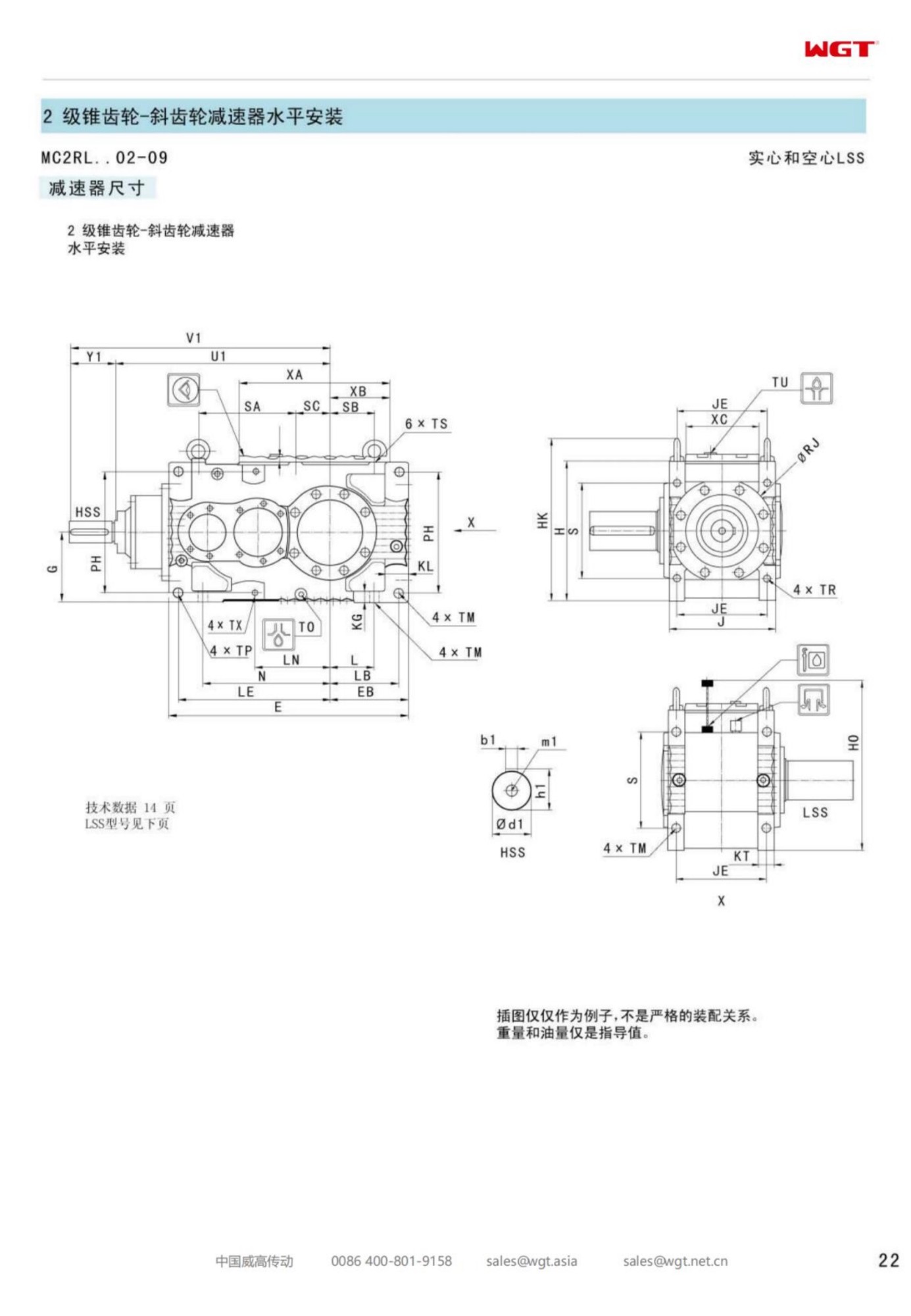
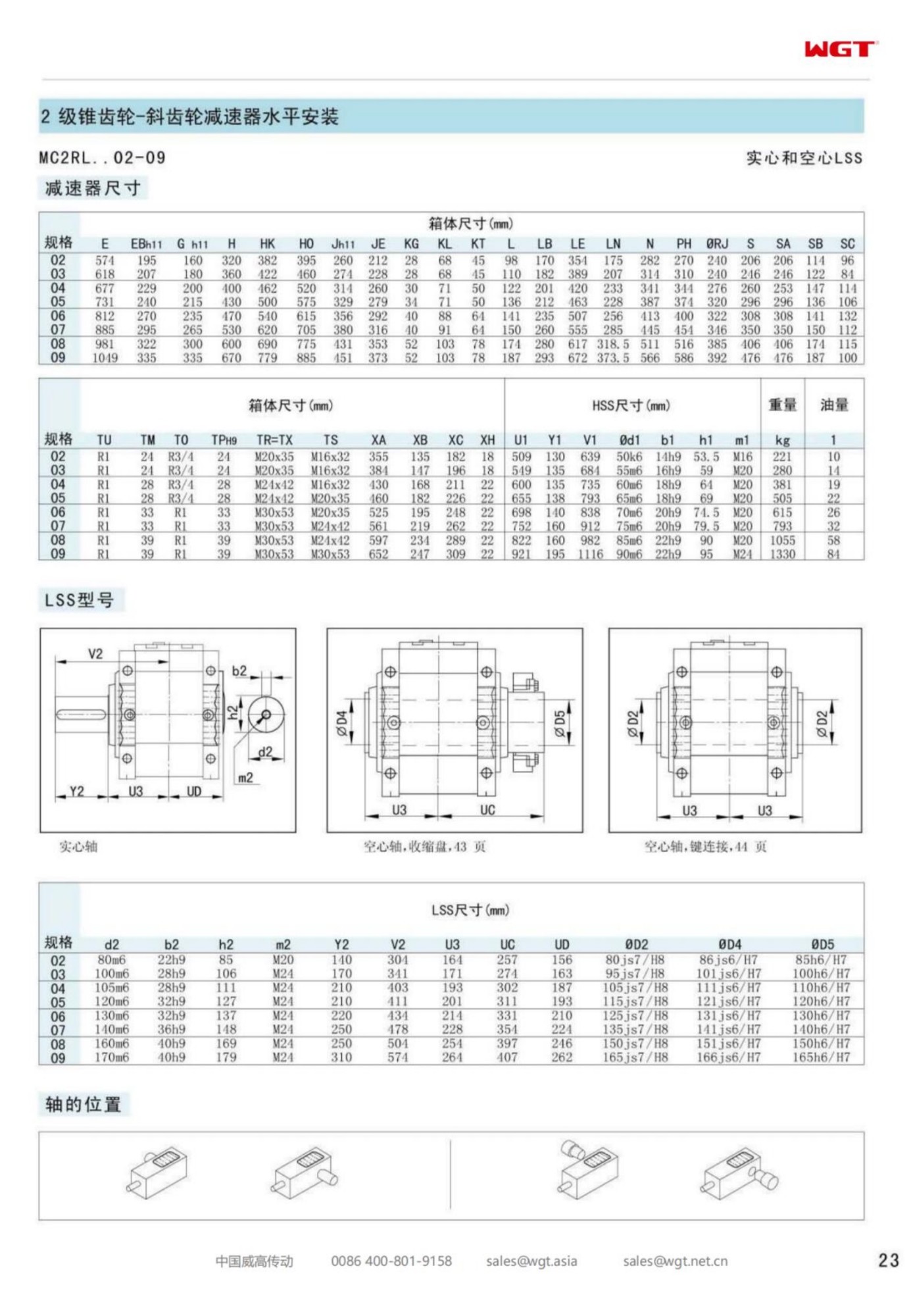
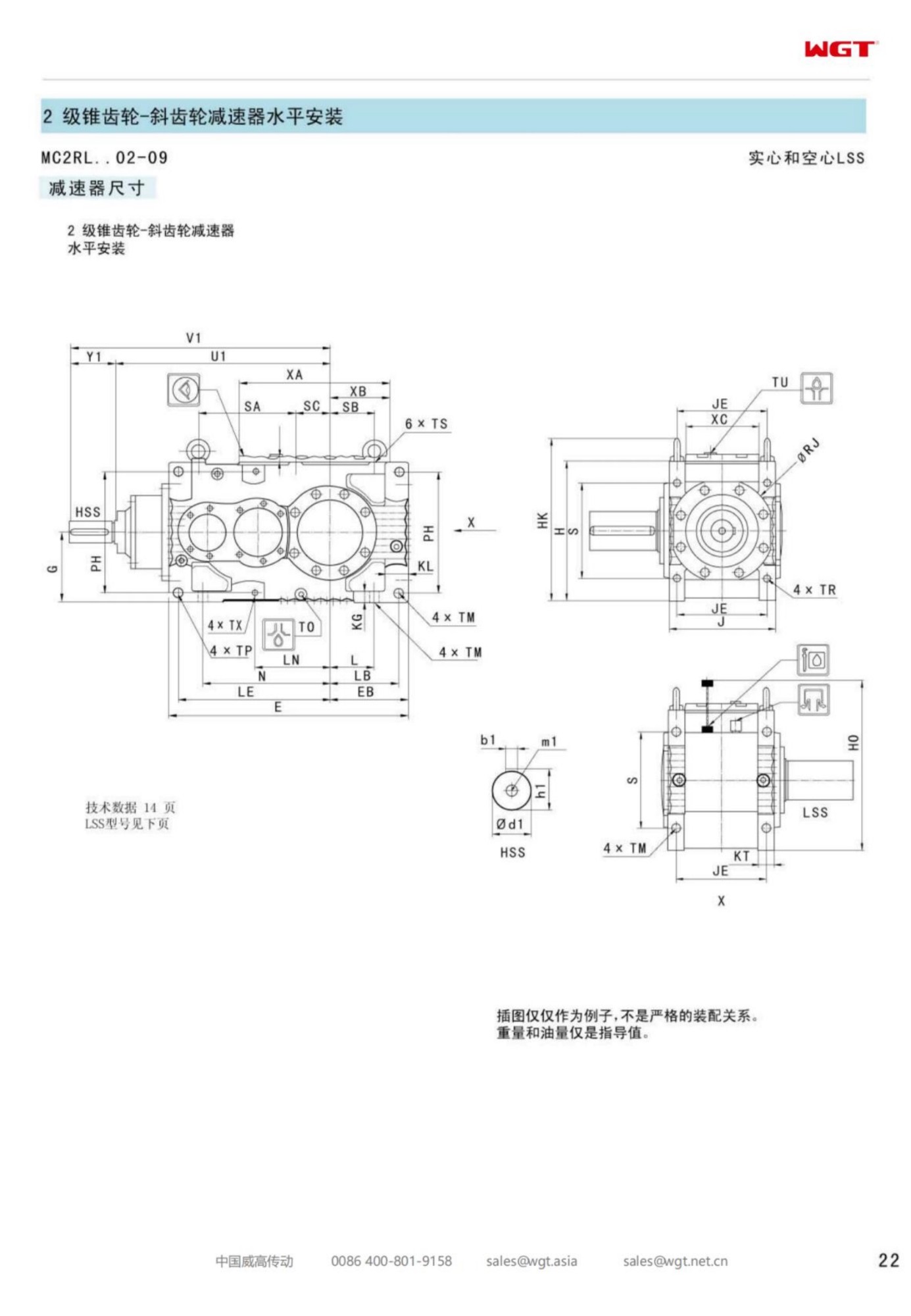
Some conveyors are a building; some are a landscape. A long overland belt between a remote mine and its plant crosses valleys and ridges, runs where no town supplies a fitter, and - where the route descends - returns power to the electrical system instead of only consuming it. The MC2RLHF07 right-angle hollow shaft gear unit is the frame this family quotes for that world: the heaviest hollow-bore duty in the rung ladder, hung on a head shaft that may be hours from the nearest workshop.
This page covers what a remote overland drive really asks of its gearbox: length and tension, decline sections and regenerated power, braking heat, starting a loaded kilometre, and the service autonomy a remote site must build for itself. It ends with the enquiry that turns a difficult drive into a dependable one.
Frame Seven on the Long Overland Run
Frame seven heads this family's hollow-bore range. It is quoted where the head shaft is large, the belt is long, and the daily tonnage is serious: overland runs from pit to plant, stockyard feed conveyors, and the long galleries that tie a mine complex together. Everything smaller in the range shares its logic; nothing smaller shares its margins.
What the frame buys is authority at the shaft. Slow, wide-torque gearing, a bore sized for the big head shafts these belts use, and bearings rated for the pull of a loaded kilometre. On a drive this far from help, that authority is not a luxury - it is the reason the belt runs tomorrow.
Reading the MC2RLHF07 String
The type code compresses the geometry, and at this size every letter has consequences measured in tonnes.
| MC | Industrial gear unit family built for continuous plant duty |
| 2 | Two gear stages, one helical pair and one bevel pair in a right-angle case |
| R | Right-angle layout, motor at ninety degrees to the belt axis |
| L | Horizontal build, output axis parallel to the ground |
| H | Hollow output bore, keyed onto the head shaft of the overland run |
| F | Footed housing with reaction pads against the drive-station steel |
| 07 | Seventh frame, the head of the hollow-bore range |
The string fixes the shape; the order must carry the route. Belt length, lift or fall along it, peak and steady tonnage, the start profile the controls intend, the climate band along the whole line, and - critically - the service reality: who attends this drive, how often, with what tools. A remote drive specified like a plant drive is specified wrongly in every particular that matters.
Length, Tension and the Drive Station
Long belts store tension along their whole run, and the drive station is where that tension turns into torque. Every start, stop and load change arrives at the gearbox as a wave that has travelled the belt's length, and the frame feels both the steady pull and the surge behind it.
The engineering response is joint: the belt design sets the tension the drive sees, the steelwork carries it, and the gearbox converts it - so the enquiry should name all three. A frame hung against real structural steel with the belt's tension curve declared runs its bearings cool and its bolts quiet. One specified against a power figure alone discovers the rest of the story at the first emergency stop.
Decline Sections and Power That Comes Back
Where the route falls, the load drives the belt. A loaded decline returns energy to the system, the motor becomes a generator, and the mechanical train runs in a state no flat conveyor ever sees: torque direction reversed, gear teeth loaded on their opposite flanks, and the drive train held in check by whatever braking scheme the design chose.
This is not a fault condition - it is the duty. But it changes what the order must say: the fraction of the route that declines, the tonnage that makes regeneration continuous rather than occasional, and the electrical plan for the returned power. A gearbox told the truth about decline is built, braked and monitored for it; a gearbox sold as a flat-run unit on a falling route spends its life surprising everyone.
Braking Heat and Where It Goes
Stopping a loaded decline belt means absorbing the energy the load keeps offering. Emergency stops, power trips and controlled holds all convert that energy to heat somewhere - in brake discs, in the motor, or back into the grid - and the mechanical drive sits at the centre of every event.
The specification question is where the heat lands and how often. Controlled ramps that spread the absorption, brake sizing against the worst believable stop, and a rule that repeated trips are investigated rather than reset - these keep the gearbox a bystander to braking events instead of their victim. Sites that log their stops buy their next drive with better numbers, and their first drive lasts longer.
Starting a Loaded Kilometre
The hardest moment in an overland drive's week is the restart after a trip: a fully loaded belt, stretch and sag along every metre, and a motor asked to bring the whole moving mass up to speed without whipping the route. The gearbox sees that start as a long, deep torque pulse - different in character from a shock spike and harder on press-fits and bolted joints.
Soft starting is not an accessory on a run like this; it is part of the mechanical design. Ramped starts that let the tension wave settle, controlled acceleration curves agreed between electrical and mechanical engineering, and a frame whose service factor acknowledges that the loaded restart is a routine event, not an emergency. Gearboxes live longest on belts whose starts are boring.
Remote Sites and Service Autonomy
A plant drive breaks down into a workshop down the corridor. A remote overland drive breaks down into a plan. Who climbs to the drive station, from how far, with what spares and lifting gear - these questions decide whether a seal change is a day's work or a fortnight's negotiation with weather and logistics.
Service autonomy is built, not improvised: a drive station with room to work, lifting points and access designed before the frame arrives, an oil handling plan for top-ups and changes on site, and consumables held at the mine rather than ordered after the failure. The best remote drives are the ones whose crews never need heroics, because the site already planned for the ordinary failures.
Spares, Tools and the Shelf That Matters
Remote duty rewrites the spares question. A plant can order a seal overnight; a mountain site waits on roads, weather and flights. The shelf that matters is short but strict: seal sets, breathers, the special tools the design actually needs, fasteners in the right grade, and oil in enough volume for one full change held clean and sealed.
The list is written from the drive's own documentation, not from optimism, and audited each year against what was actually used. Remote sites that run this discipline measure downtime in shifts; sites that run hope measure it in weeks. The gearbox itself has no opinion - but the shelf decides how long its worst day lasts.
Monitoring a Drive Nobody Passes Daily
On a plant floor, a person walks past the gearbox every shift and hears trouble before instruments do. On a remote overland run, nobody walks past - so the drive must speak through instruments: sump temperature, vibration at the bearings, oil condition, motor current signature, and the belt's own monitoring feeding the same log.
What matters is the baseline, captured when the drive was new and healthy, and the discipline of reading trends rather than alarms alone. A temperature that climbs a degree a month says more than an alarm says the day it fails. Remote drives survive on slow, boring trend lines - and those lines only exist where someone agreed, at order time, which instruments would be fitted and read.
Weather, Altitude and the Open Route
An overland drive station stands in the weather its whole life, often at altitude where UV, temperature swing and thin air all compound. Ice, wind-blown dust, driving rain and summer heat each take their turn on the case, and altitude asks the motor for derating while asking the oil for a wider viscosity band.
The order should carry the route's worst weather, not its average: heater arrangements where oil can chill, breathers and seals specified for dust driven sideways, paint for UV and altitude, and the electrical gear rated honestly for the site's air. A drive station designed for the mountain it stands on is unremarkable for decades; one designed for the valley is a story every winter.
Writing the Enquiry for a Remote Conveyor
The enquiry that gets this frame right reads like a route description: shaft diameter, keyway and seat length at the head shaft; belt length, lift and decline profile; steady and peak tonnage; the start and stop plan with its electrical scheme; the climate and altitude along the route; the service reality - who, how often, with what; and the reaction steel at the drive station.
The reply should answer as a system: bore and keyway against the drawing, ratio and speed at the pulley, service factor argued from the loaded restart rather than the average load, braking and regeneration addressed by name, oil and heaters for the worst month, and the monitoring package listed instrument by instrument. That exchange is the difference between a drive and a liability - and it costs one page of honesty.
A Frame Seven Through Its First Contract
The report card on a remote overland drive is written over years of boring shifts: starts that never whip the belt, stops that never cook a brake, trends that drift by fractions, and crews who visit the drive station with tools rather than concern. Frames that earn that report card were sized against the loaded restart, told the truth about decline, and given a shelf, a plan and a baseline before they needed any of them.
Frame seven carries its share with slow-turning authority and margins sized for the route's worst hour. The site's share is the plan: the spares, the walk, the trend review and the honest enquiry. Mines that pay both halves run their landscape of a conveyor the way a plant runs its corridor - quietly, and without drama, which is the whole point of a drive nobody can easily reach.
A kilometre of belt, a decline that returns power and no town nearby - frame seven runs the remote overland:
- Decline overland conveyor from an open-pit mine to the processing plant
- Long-distance troughed belt crossing two kilometres of remote terrain
- Concentrate haul conveyor at a highland copper mine
- Regenerative decline section feeding a stockpile stacker
- Overland conveyor at a subarctic mining operation
- Plant feed conveyor on a site with no resident maintenance crew
The M3 Series at a Glance
| Model | Centre distance | Output | Typical duty |
|---|
| M3PSF50 | size 50 | solid shaft, foot | conveyors, feeders |
| M3PSF60 | size 60 | solid shaft, foot | crushers, mixers |
| M3PSF70 | size 70 | solid shaft, foot | ball mills, shredders |
| M3PSF80 | size 80 | solid shaft, foot | kilns, heavy conveyors |
| M3PSF90 | size 90 | solid shaft, foot | mill and kiln drives |
| M3RSF50 | size 50 | solid shaft, foot, right-angle | inclined conveyors, elevators |
| M3RSF60 | size 60 | solid shaft, foot, right-angle | screw classifiers, feeders |
| M3RHF70 | size 70 | hollow shaft, foot, right-angle | agitators, drum drives |
| M3PHT80 | size 80 | hollow shaft, torque arm, parallel | shaft-mounted conveyors |
| M3RHT90 | size 90 | hollow shaft, torque arm, right-angle | heavy shaft-mounted drives |
All frames in the table belong to one industrial family. P = helical parallel-shaft, R = bevel-helical right-angle; the low-speed shaft is solid (S) or hollow (H), mounted on feet (F) or a torque arm (T).
Selection Example: Decline overland conveyor drive at a remote mine
Take a 90 kW motor at 1485 rpm turning the pulley shaft at 55 rpm. The ratio follows directly: 1485 / 55 = 27.0, so a ratio near i=27 is selected from the two-stage right-angle band, and the frame is confirmed against the loaded restart and the regenerative decline section rather than the average tonnage, with the braking scheme written into the same order line. In this case frame seven holds the remote overland duty with margins sized for the worst hour on the route, a bore keyed to the big head shaft, and a monitoring and spares plan agreed before the frame ships. That single division gives the catalogue ratio; the service factor for your duty class is then applied to the torque, and the frame size follows.
![how to size a industrial helical gearbox in four steps]()
Sizing flow: motor speed, target output speed, torque, service factor.
Where This Series Works in Practice
Sugar mill bagasse conveyor
A sugar mill moves wet bagasse on conveyors driven by industrial gear units. High moisture, fibrous material and sticky residue are the daily conditions, and the sealed housings have kept lubricant clean between oil changes.
Slag handling crane
A steelworks drives the long-travel motion of a slag-handling crane with industrial gear units on torque arms. Heat radiation from the slag pot is handled by the increased clearance and standard high-temperature paint.
Technical Questions, Answered
Which lubricating oil should be used?
GB L-CKC220~460 or Shell Omala 220~460 as supplied. Under normal duty the housing is lubricated for life; in hot or continuous-duty environments an oil change after the first 400 hours and then every 4000 hours is recommended.
What warranty and documentation come with the gearbox?
A one-year warranty covers material and workmanship. Each unit ships with a test record (noise, temperature rise, backlash), a dimension drawing and an installation manual.
![industrial helical gear reducer application fields]()
Common application areas for right-angle industrial helical drives.
Design Review, Datasheet and Price - Same Day
Planning a new machine? Skip the back-and-forth: configure your drive in the WGT Motor & Gearbox Online Selection System and send us the result for a same-day quotation.
Send the interface drawing or the frame dimensions you need to match, and we return a 2D drawing and 3D STEP model with the quotation, so your design review is not held up waiting on the supplier. Looking for a gear reducer for food processing machine? Tell us the duty point and we will confirm the model in writing.