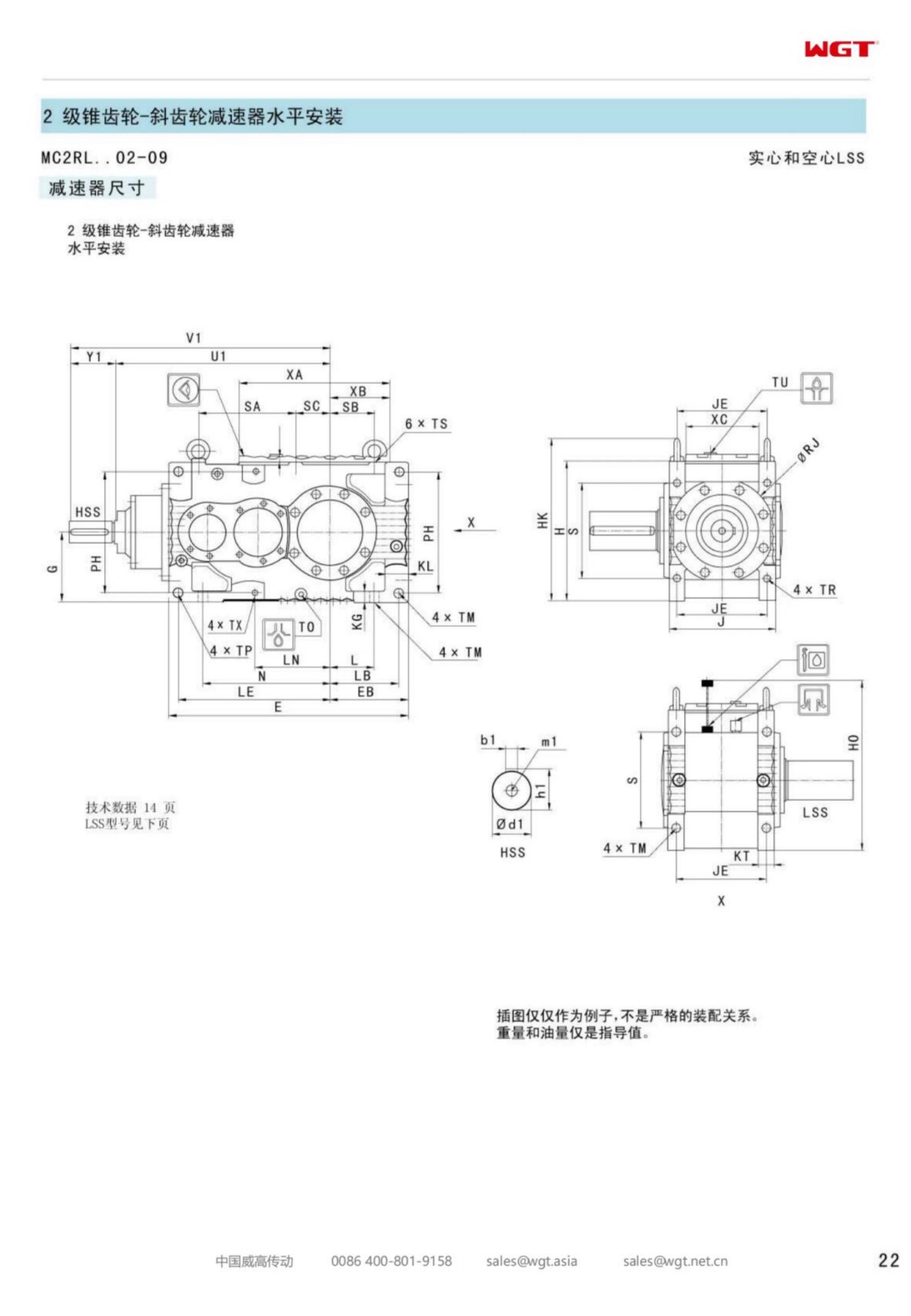
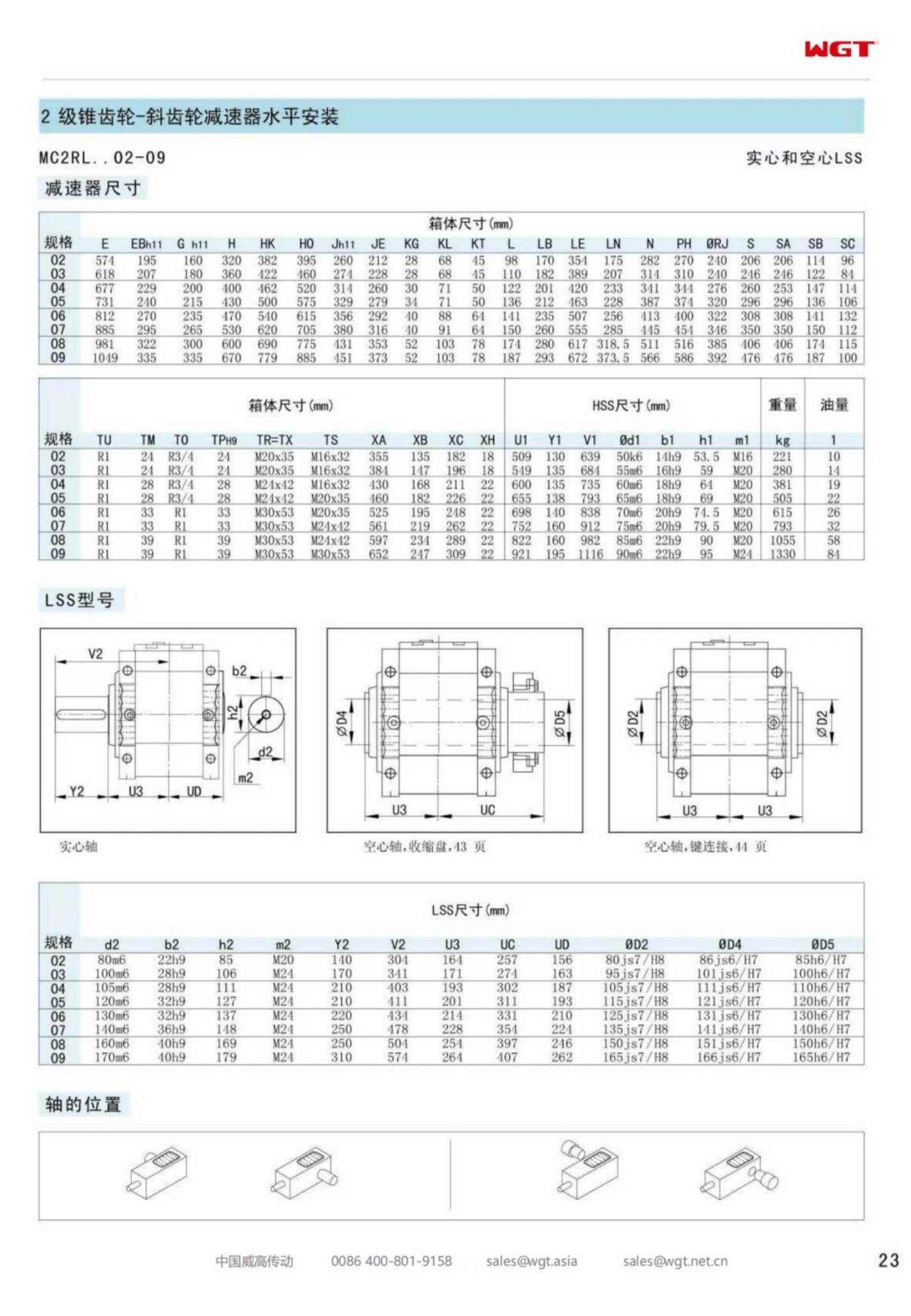
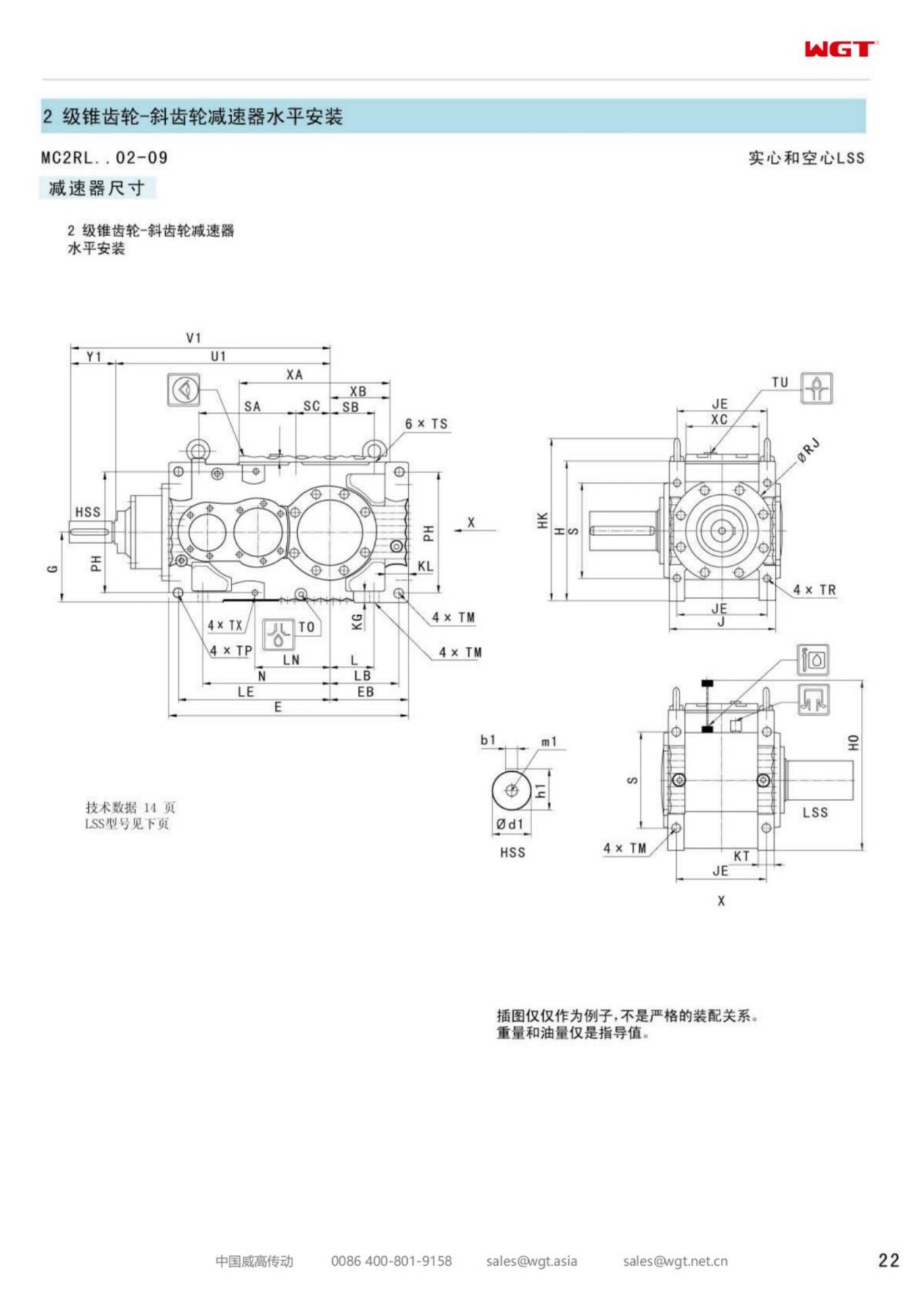
Every quarry runs on transfer belts, and the drive that turns each one inherits the worst of the site: stone that arrives angry from the crusher, dust that grinds rather than settles, and steelwork that stands in the weather all year. The MC2RLHF04 right-angle hollow shaft gearbox is the frame this family quotes for the middle of that world - big enough for a loaded transfer belt, still small enough to slide onto the shaft and hang off a bracket instead of demanding a plinth.
This page is for the people who keep those belts turning: how a frame four right-angle unit is read, why shock loads rather than steady torque decide its service margin, what coarse mineral dust does that flour never could, and how an outdoor frame spends a year of seasons. It ends with the enquiry sheet that gets the right answers before the drive ships, not after it stalls.
Frame Four on the Quarry Transfer Line
Frame four sits at the point where a quarry stops buying drives one at a time. Transfer belts between the screen house and the stockpiles, the gallery belt that climbs to the loading bunker, and the reclaim belts under the piles all fall into this band - similar duties, different hours, and a maintenance team that wants one frame it can standardise.
The load here is deceptively modest on paper and nothing like modest in practice. A belt that runs fine all morning can meet a slab of tramp steel in the afternoon, and the drive sees that event as a torque spike measured in multiples, not percentages. Frame four is sized for the morning and margined for the afternoon.
Reading the MC2RLHF04 String
The type code compresses the whole geometry into a few characters, and each one has a consequence on site.
| MC | Industrial gear unit family built for continuous plant duty |
| 2 | Two gear stages, one helical pair and one bevel pair in a right-angle case |
| R | Right-angle layout, motor at ninety degrees to the belt axis |
| L | Horizontal build, output axis parallel to the ground |
| H | Hollow output bore, the head shaft passes straight through |
| F | Footed housing with reaction pads against the support steel |
| 04 | Fourth frame, the middle band of the transfer-belt range |
The string fixes the shape; the order fixes everything the quarry knows and the catalogue cannot. Shaft diameter and keyway at the seat, the worst start profile the line produces, the dust loading measured rather than guessed, and the coldest week the site actually experiences. Those four answers turn a catalogue number into a specified drive.
Shock Loads and Tramp Iron
A transfer belt under a screen deck lives a harder life than its rating suggests. Rock wedged under a scraper, a liner plate coming loose, steel left in the feed by mistake - each passes into the drive as a spike that lasts a second and repeats without warning. Gearing survives spikes; what wears is everything that backs them up: keys, shrink discs, bolted joints and the reaction bracket.
The defence is margin with a memory. A service factor chosen against the worst event the site records, not the average one; a key and keyway inspected when a big event is known to have happened; and a rule that every stall or belt jam gets a two-minute look at the drive before the restart. Plants that log their shock events buy their next drive with better numbers than plants that log breakdowns.
Coarse Dust Is a Different Abrasive
Fine powders cake; crushed stone grinds. A dust lip that handles flour may pass granite fines that then ride the oil film at the seal lip like a lap. The same dust on the case top sheds water, holds moisture against the paint, and turns every gasket face into a grinding paste the first time it is disturbed wet.
Specification answers are unglamorous and cheap: a hardened or Ceramic-coated seal land where the dust is coarse, a labyrinth or filtered breather instead of an open vent, paint specifications written for the actual dust chemistry, and a wash habit that keeps the case top clean enough to read. None of it is visible from the road; all of it shows up in the seal bill after five years.
An Outdoor Frame Through the Seasons
An outdoor drive sees four different problems on the same unit. Summer heat asks the sump to shed load with the sun on the case. Autumn brings rain driven into every joint. Winter asks for cold-start torque from thick oil. Spring growth finds every gap to root into or block. A drive specified for one season is specified for none.
The specification that survives all four is mostly positioning and routine: the case sited where air moves, the breather above the wash line, drains and breathers oriented for the prevailing rain, and a seasonal checklist that swaps attention from cooling to oil viscosity as the year turns. One page of calendar beats a cabinet of spare seals.
The Bigger Sump and What It Buys
Frame four carries a larger oil volume than the smaller rungs, and that oil is doing more than lubricating. It is the heat sink that flattens a spike-and-recover duty, the buffer that keeps a hot afternoon from compounding into a hot bearing, and the reserve that lets a small leak announce itself as a level change instead of a failure.
The return on that volume is collected by discipline: level checked at the mark when cold, samples drawn on the interval the duty earns rather than the calendar suggests, the drain magnet read at every change, and top-ups made with the same grade from a sealed container. A sump treated as an instrument tells the plant what the drive is living through between visits.
Inclined Belts, Holdback and Reaction Steel
Most quarry transfer belts incline, and an inclined belt that stops becomes a reversed load - the stored energy of the load column tries to run the drive backwards. A holdback or an electrical braking scheme is therefore not an accessory but a design decision, taken at order time, against the actual incline and the worst start-stop pattern the operation produces.
The same seriousness applies to the reaction path. A shaft-mounted unit on an inclined drive carries its torque into a bracket, and that bracket works against the belt's pull as well as the drive's torque. Welded to a real structural member, sized for the occasional stall, and checked on the same walk as the oil level - the bracket is half the drive, and it usually costs nothing because it is steel the site already owns, used properly.
Motors, Soft Starts and the Electrical Bay
A loaded transfer belt asks its motor for breakaway torque before a revolution turns, and the electrical bay decides how gently that request is made. Across-the-line starting works and hammers; a soft starter or inverter ramps the load and spares the gearset the worst of the spike. On a quarry supply, voltage dip during starting is also a neighbour problem, and soft starting is often the polite answer to it.
Where an inverter runs the belt at varying speed, the classic traps are known and cheap to avoid: a motor that cools poorly at low speed needs either a size margin or a bounded speed range, screened motor cables with proper gland earthing keep the electronics honest, and the minimum-speed setting should keep the oil circulation alive. The gearbox does not care which scheme is chosen; it only feels the difference.
Winter Mornings and Cold Oil
The hardest minute of a quarry drive's year is the first minute of a cold morning. Oil that poured yesterday is semi-fluid now, the belt is loaded from the shift before, and the motor is at full torque into a gearbox that is not yet lubricating at its best. One cold start is nothing; four hundred of them a winter is a wear mechanism.
Three habits take the edge off: an oil grade chosen for the lowest temperature the site records, not the average; a start sequence that lifts the load where the process allows; and a short warm run before full loading on the coldest days. Sites that treat the first start of the day as a procedure keep the same drive for decades; sites that treat it as routine buy bearings.
Wear Points an Operator Can Watch
The parts that wear on this duty are all visible to a person standing still for two minutes. The output seal under the head shaft, where dust collects and a weep shows as a damp line. The reaction bracket, where a fresh crack in the paint means movement the design did not plan. The breather, where a crust means the case has been breathing dust. And the oil level, which falls before anything else complains.
A quarry that puts those four points on a weekly walk - ticked, noted, no report - catches most failures while they are still a line on a checklist. The unit itself is rugged far beyond its paperwork; the paperwork is what the walk protects.
Writing the Enquiry for a Quarry Drive
A useful enquiry for this frame fits on one page and reads like a confession of the site's worst day: head shaft diameter, keyway and seat length measured at the shaft; belt speed and pulley diameter; running power and the worst recorded start or stall; hours per day and starts per shift; the dust and its chemistry; the ambient band across the year; and the reaction steel available for the bracket.
The reply should mirror it: bore and keyway against the drawing, ratio and speed at the pulley, service factor justified by the start profile rather than quoted, oil grade for the coldest month, holdback if the incline demands one, and the dust package named part by part. An exchange like that takes a day and saves the crane lift that happens when a drive arrives undersized for the afternoon rather than the morning.
A Frame Four Through Its First Year of Stone
The honest verdict on a quarry drive is written in its first year: one winter of starts, one summer of heat, a handful of shock events nobody ordered, and the oil records that tell the truth about all of it. The units that come through clean were fitted to a true shaft, pushed against real steel, breathered for the dust they actually breathe, and started gently enough that the gearing never noticed the worst morning.
Frame four carries its share of that bargain with a larger sump, a margin sized for spikes, and seals chosen for stone rather than flour. The plant's share is the calendar, the walk, and the one-page enquiry written honestly. Quarries that pay both halves keep their transfer belts turning and their spare parts shelf boring - which is exactly what a drive is for.
Tramp iron, coarse dust and steelwork that lives outdoors - frame four is the quarry transfer rung:
- Transfer conveyor drive under a primary screen deck at a hard rock quarry
- Overland belt tail drive on a crushed stone transfer run
- Reclaim tunnel conveyor under a gravel stockpile
- Inclined gallery belt feeding a rail or barge loading bunker
- Radial stacker feed conveyor at an aggregate terminal
- Scalping line discharge belt at a demolition recycling plant
Selection Example: Transfer conveyor drive under a quarry screen deck
Take a 30 kW motor at 1475 rpm turning the transfer shaft at 42 rpm. The ratio follows directly: 1475 / 42 = 35.1, so a ratio near i=35 comes out of the two-stage right-angle band, and the frame is confirmed against the worst start and stall profile the line records rather than the running torque alone, with the holdback decision and the reaction bracket written into the same order line. In this case frame four carries quarry duty on a bigger oil sump that flattens shock events, seals chosen for coarse abrasive dust instead of flour, and a service margin set by the tramp story the site can actually tell. That is the whole calculation. If your duty involves heavy starting, frequent reversing or many stops per hour, tell us and we raise the service factor.
Which Frame Size Do You Need?
| Model | Centre distance | Output | Typical duty |
|---|
| M3PSF50 | size 50 | solid shaft, foot | conveyors, feeders |
| M3PSF60 | size 60 | solid shaft, foot | crushers, mixers |
| M3PSF70 | size 70 | solid shaft, foot | ball mills, shredders |
| M3PSF80 | size 80 | solid shaft, foot | kilns, heavy conveyors |
| M3PSF90 | size 90 | solid shaft, foot | mill and kiln drives |
| M3RSF50 | size 50 | solid shaft, foot, right-angle | inclined conveyors, elevators |
| M3RSF60 | size 60 | solid shaft, foot, right-angle | screw classifiers, feeders |
| M3RHF70 | size 70 | hollow shaft, foot, right-angle | agitators, drum drives |
| M3PHT80 | size 80 | hollow shaft, torque arm, parallel | shaft-mounted conveyors |
| M3RHT90 | size 90 | hollow shaft, torque arm, right-angle | heavy shaft-mounted drives |
Foot-mounted frames are listed below; torque-arm (T), hollow-shaft (H) and vertical (V) variants are available across the size range. Ask for the outline drawing to check the interface before ordering.
Answers to Common Questions
How is the gear unit protected against dust and moisture?
Housings are gasket-sealed with labyrinth or lip seals at both shafts as standard. Dusty plants, washdown areas and outdoor installations are covered by coating and sealing options specified together with the order.
What inspection access does the housing provide?
The horizontally split housing opens along the shaft centreline, so gearing and bearings can be examined without removing the unit from its foundation. Covers give access to the oil galleries and bearing seats during service.
Can you supply vertical-shaft versions?
Yes. Vertical builds of the same industrial family cover the smaller size band and are common on vertical mixers, agitators and clarifier drives. State the orientation when ordering so oil levels and breathers are set correctly.
![gearbox sizing steps for engineers]()
Four steps from your application data to a firm model number.
Case Notes from the Field
Ship loader slew drive
A port terminal selected heavy-duty gear units for the travel drives of its ship loader. Salt-laden air is handled by the heavy-duty coating option, and spare seal kits are held on site for the annual service.
Sugarcane carrier drive
A sugar mill drives its cane carriers with industrial gear units sized for fully loaded starts. The generous torque margin covers cane jams, and the right-angle build keeps the motor clear of the carrier slat path.
![industrial gear unit application overview]()
A cross-section of the installations we supply every month.
Tell Us the Torque, We Confirm the Model
Not sure where to start? Try the WGT Motor & Gearbox Online Selection System, then send the result sheet - we return a complete datasheet, drawing and price the same day.
A photo of the nameplate, the motor power and the output speed you need are enough to start. We confirm the frame size, ratio and mounting style and return a written quotation the same day. Looking for a gearbox for mixer and agitator? Tell us the duty point and we will confirm the model in writing.