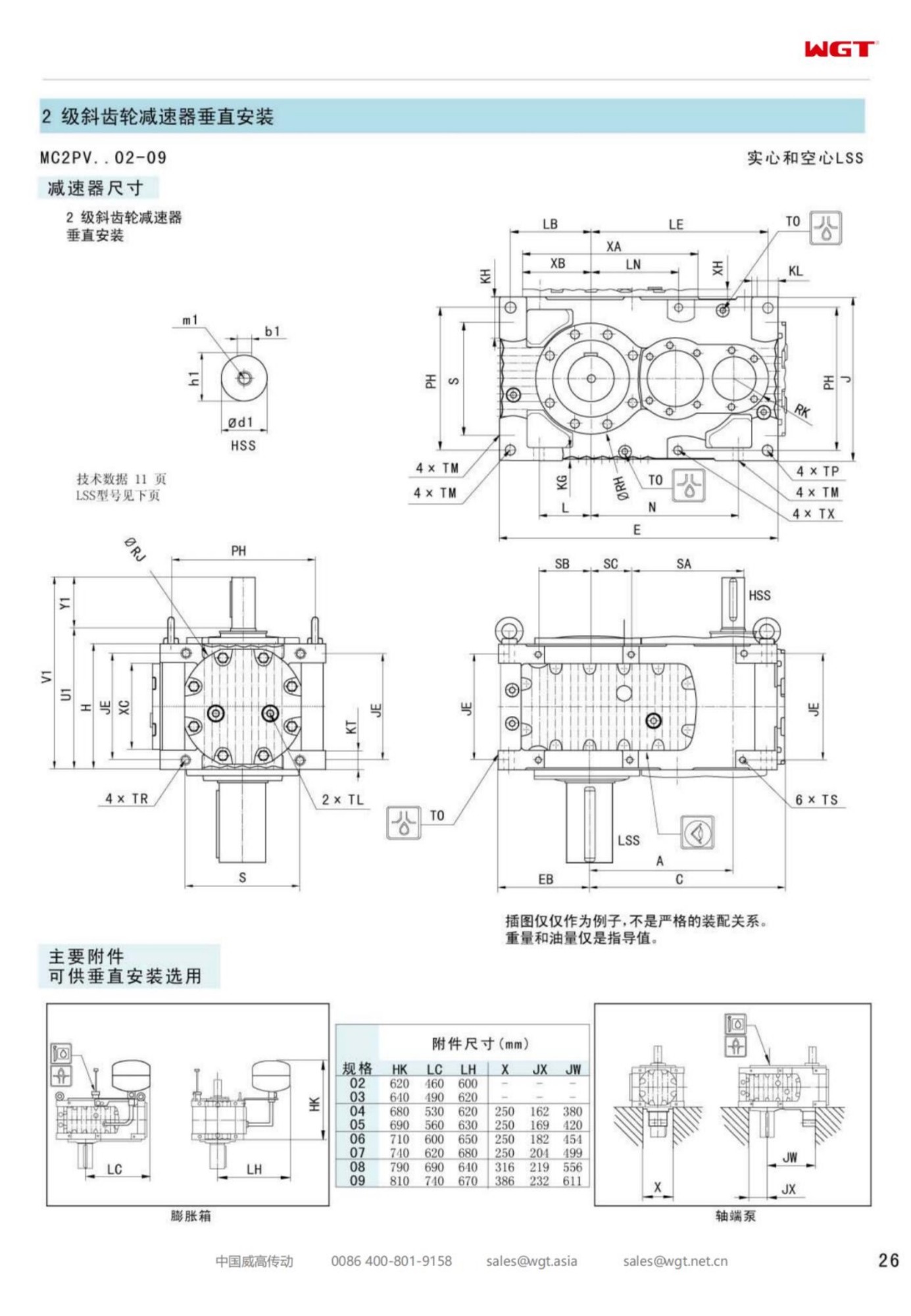
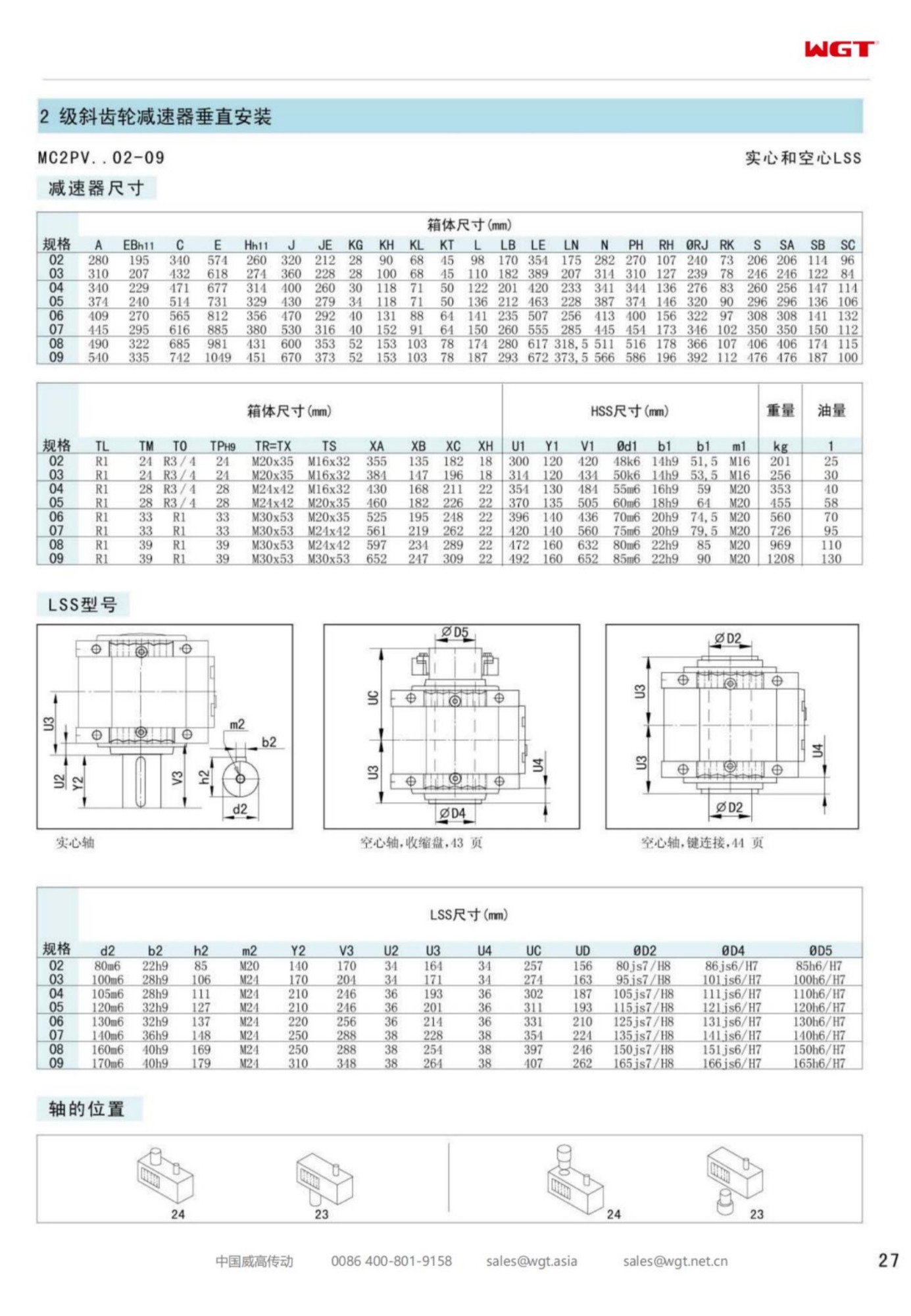
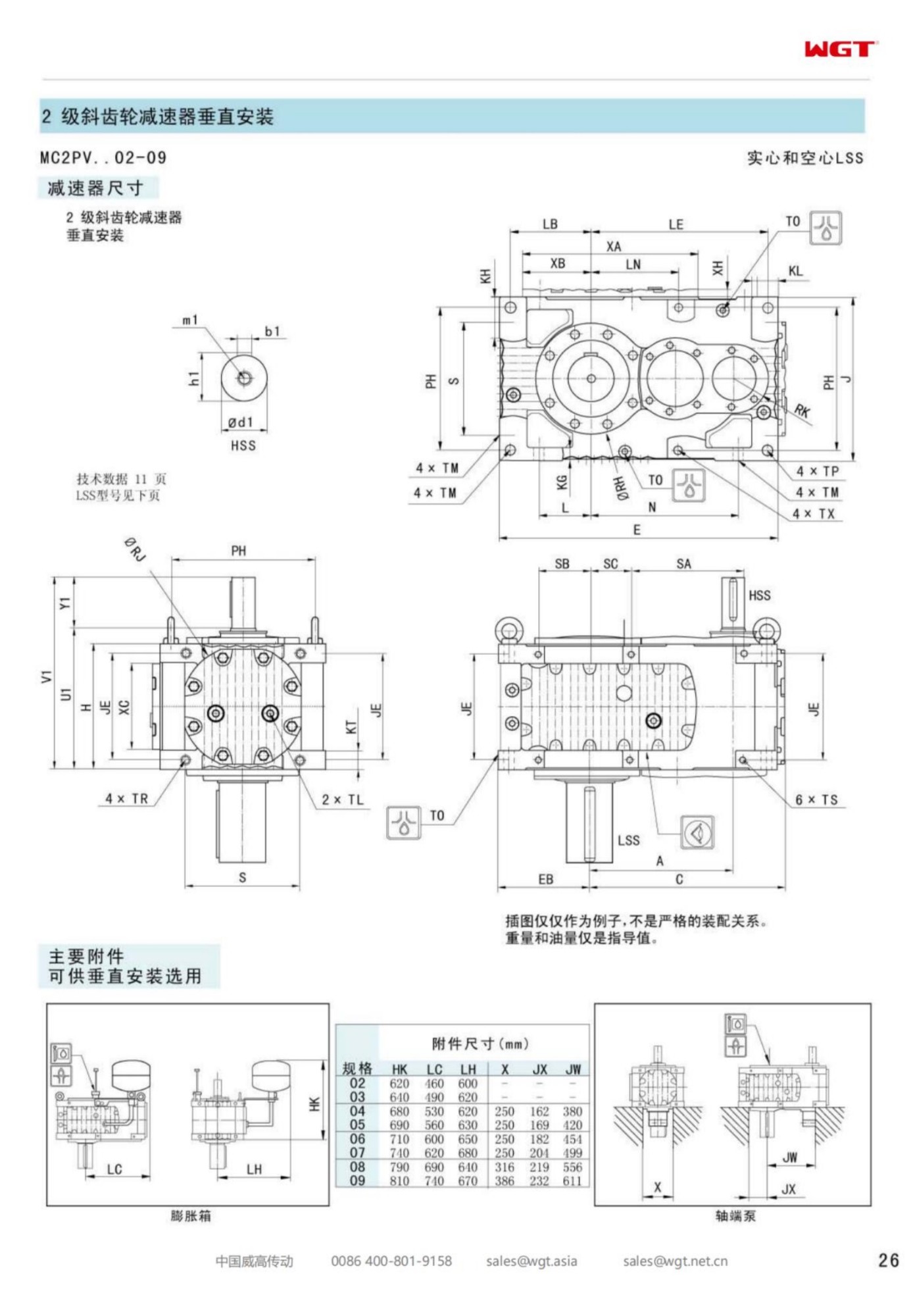
Every product band has a top frame, and the top frame is where projects go when the vessel is large, the campaign is long and the torque number has stopped being arguable. The MC2PVHF09 vertical hollow shaft gear unit sits at the ceiling of this family: the same hanging construction, quoted for the biggest tanks and the heaviest bridges the line serves.
This page is about buying and running a drive at the top of the band: what a large vessel asks of the bridge above it, why high-inertia starts change the control conversation, how heat and oil behave at full torque, and what a spares and monitoring plan looks like when the unit behind the drive is too important to gamble.
Frame Nine and the Top of the Band
Frame nine is not a bigger version of frame eight so much as a different kind of purchase. The tanks it hangs over are capital items; the drives under them are bought once and expected to outlive several process campaigns. The torque tier is the entry ticket - the real questions are structural, thermal and logistical.
Projects reach this frame honestly or by surprise. Honestly: a new vessel line designed around it from the first drawing. By surprise: a mid-band frame found marginal during commissioning and swapped upward under time pressure. The first path is cheaper by every measure that matters, which is why this page spends its words on what to decide early.
Decoding MC2PVHF09
The type string fixes the geometry at the top of the range.
| MC | Industrial gear unit family built for continuous plant duty |
| 2 | Two helical reductions inside one upright case |
| P | Parallel-shaft layout, input and output on parallel axes |
| V | Vertical build, output axis pointing down into the vessel |
| H | Hollow output bore, the process shaft passes through it |
| F | Footed reaction pads bolted to the vessel bridge or deck |
| 09 | Ninth frame, the largest tier quoted in this vertical band |
Read as an order document, the string carries the torque ceiling and the hanging construction. What it cannot carry is the project context - bridge design, starting method, monitoring expectations, spares philosophy - and at this tier those items are the specification. The frame that wins on paper and loses on the bridge is a classic of this size class.
Big Bridges and the Load Above
A top-frame drive reacts its torque through pads bolted to a bridge that may span several metres of open vessel. The bridge is part of the driveline: its stiffness sets the natural frequency the agitator lives with, its deflection under weight tilts the bore, and its weld details decide whether vibration finds a home. Structural-mechanical coordination is not a courtesy here - it is the design.
The buyers who avoid the classic failures send the bridge drawing with the enquiry and ask for the reaction loads in writing. Pads are then positioned over primary members, shimming is planned instead of improvised, and the torque reaction has a steel path that was designed for it. The cost of this coordination is an afternoon; the cost of skipping it is a bridge that hums at campaign speed for twenty years.
High-Inertia Starts and Soft Control
A large agitator is a long rotating mass, and starting it is a torque event the drive train feels from the output backwards. Across-the-line starts dump the full inertia peak into gear teeth that were sized for running duty; soft starters and variable speed control spread the event over seconds and change the mechanical conversation completely.
At this tier the starting method belongs in the order. Declared up front, the gearset is checked against the real starting torque, the motor is sized for the ramp rather than the nameplate, and the electrical side gets its conversation at design time. Discovered later, the same facts arrive as a failed first start - usually on the most attended commissioning day of the project.
Torque, Heat and Real Duty
Continuous duty at frame nine torque runs warm by physics, not by fault. The thermal rating - how much power the case can dissipate in the actual hall, not on a test floor - becomes a selection criterion alongside the mechanical number. A unit mechanically oversized and thermally marginal is the most common mis-buy in this size class.
The specification that gets this right states the ambient, the vessel temperature influence, the expected duty cycle and the cooling options on the table: fins kept clean, a larger case, forced cooling, or synthetic oil chosen for the film it holds at temperature. Mills and plants that check the thermal column first buy once; the ones that read only the mechanical column buy twice.
Output-Side Hardware at the Top
At this torque everything attached to the output deserves its own line: the bore fit and its keyway, the thrust and bending loads a long agitator shaft delivers, the steady bearing below, and the guards around hardware that can store real energy. The interface drawing - shaft, key, tolerances, runout - is the document that makes these conversations precise, and it should be exchanged before the order, not with the crates on site.
Plants that formalise the interface get drives that drop onto prepared steel and run; plants that leave the interface to site improvisation spend their commissioning week machining, shimming and explaining. The drawing costs nothing. Its absence is the most expensive document that was never made.
Condition Monitoring Worth Buying
A drive of this importance justifies instruments, but the useful set is small and specific: temperature on the sump and the output bearing, a vibration point on the case with a baseline recorded at commissioning, and a log where oil samples and readings accumulate. More channels than that tend to become wallpaper; fewer than that leave the crew diagnosing from noise.
The value is in the trend, not the alarm. A sump that climbs a degree a quarter, a vibration order that grows after each impeller cleaning, an oil sample whose iron count steps at the same interval each campaign - each pattern is legible years in advance to a plant that keeps the numbers, and invisible to one that does not.
Lifting, Installation and First Alignment
Frame nine hardware is heavy enough that installation is a lifting plan before it is a mechanical one: certified gear, a route from the lorry to the bridge, anchor points, and a crew briefed on where hands do not go. The hanging construction then makes the sequence simple - mount, fit the process shaft, torque the pads, verify plumb - but simple is not the same as casual.
The first alignment is the one that lasts. Plumb checked against the shaft, pads seated without forced stress, fasteners torqued to the written figure and marked, and the whole record photographed into the asset file. Drives installed this way rarely meet a maintenance crew in year one; drives installed loose meet them early and often.
Oil and Heat Management at Full Torque
At the top of the band the oil programme is the health programme. Level against the mark on a fixed calendar, samples on the interval, breather elements as consumables, and cooling surfaces kept clean by whoever cleans the hall - each item small, each one a vote on whether the bearings see clean film for twenty years.
Where duty runs the sump warm, the options are declared rather than endured: synthetic grade, forced cooling, or a duty review with the factory. The failure pattern when heat is ignored is slow and quiet - a bearing that runs warmer each campaign until the trend line says what the noise confirms later. The entire chain was visible in the first sample nobody pulled.
Spares for a Single Critical Drive
When one drive carries one vessel, the spares philosophy is insurance, and it should be written as such: seal sets and breather elements on the shelf, bearings and gaskets priced and agreed with a lead time, coating touch-up matched to the case, and the lifting gear inspected on the same calendar as the turnaround it serves.
The companion habit is the unit card - what was done, what was measured, what is due - updated at every window. A critical drive with a card and a shelf is a planned asset; the same drive without them is a gamble with the plant's most expensive downtime as the stake.
From Enquiry to Acceptance
A frame nine enquiry reads like a small project brief: shaft and interface drawing, torque and duty, starting method, bridge details, ambient and thermal expectations, monitoring wants, and the acceptance tests the plant expects - running temperature, vibration, noise, sealing. The reply worth holding a factory to answers each line, shows the thermal column beside the mechanical one, and offers a documented acceptance run.
Acceptance is where the purchase becomes an asset. A recorded first-run baseline - temperatures, vibration, oil condition - filed with the interface drawing and the torque marks becomes the reference every later trend is read against. Drives that begin their lives with a file run differently for the next twenty years, in the same sense that bridges built to drawings stand differently from bridges built to hope.
A Frame Nine Working Life
The frame nine units that anchor a plant for decades share a biography: chosen with the bridge in the conversation, started softly by design, kept cool on purpose, watched through four numbers that never stopped being written down, and serviced on a turnaround calendar that treated them as the assets they are. None of those chapters is dramatic. Together they are the whole story.
The torque at the top of the band is the factory's contribution and it arrives with the crates. Everything else - the file, the baseline, the shelf, the card - is the plant's contribution, and it is the part that decides whether this frame is remembered as a purchase or as the drive that never once stopped the vessel above it. In a hall where downtime is measured in campaigns, the second remembering is the one worth buying.
The largest vessels, the heaviest bridges and the longest campaigns - frame nine tops the band:
- Anchor agitation in a large adhesive reactor vessel
- Soda liquor storage agitation at a pulp mill recovery island
- Sulphonation batch reactor drive at a surfactants plant
- Titanium dioxide slurry holding tank at a pigment plant
- Latex storage tank agitation at a synthetic rubber plant
- Bitumen blending tank agitation at a road-products terminal
Selection Example: Anchor agitation in a large reactor vessel at an adhesives plant
Take a 75 kW motor at 1490 rpm turning the reactor agitator at 22 rpm. The ratio follows directly: 1490 / 22 = 67.7, so a ratio near i=68 is selected from the two-stage band, and the frame is confirmed against the bridge drawing and the starting method as much as the running torque, with soft control spreading the inertia peak that an across-the-line start would drop into the gearset. In this case frame nine is bought once and documented like an asset - reaction loads written against the bridge steel, an acceptance baseline recorded at first run, and spares on the shelf before the first turnaround needs them. Work through the same three steps - speed, output speed, torque - and the model number falls out; we verify it against the duty class before quoting.
![gear reducer ratio calculation steps]()
From duty point to model number - the same four steps every time.
Applications in Industry
Airport baggage conveyor
An airport baggage-handling integrator uses reducers on check-in conveyors. Thousands of start-stop cycles a day are absorbed without overheating, and the low noise level matters in a public terminal.
Quarry primary crusher
A quarry operator fits industrial gear units on its primary jaw crusher feeders. The shock of rock dumped straight from the haul truck is covered by the service factor, and the cast-iron housing shrugs off years of dust and vibration.
![gear reducer industries served - WGT]()
Industry map: the sectors where the M3 series is most common.
Buyer Questions and Answers
What is the difference between foot and torque-arm mounting?
Foot mounting bolts the housing to a foundation and suits most fixed installations. A torque-arm lets the housing swing on the driven shaft, so no base frame is needed - common on shaft-mounted conveyors where the reaction rod absorbs the torque.
Should I choose a solid or hollow output shaft?
A solid shaft with a keyed coupling is the flexible, conventional choice. A hollow shaft takes the driven shaft directly with a key or shrink disc, removing one coupling and one alignment step; it is preferred where space or alignment access is limited.
M3 Series Model Overview
| Model | Centre distance | Output | Typical duty |
|---|
| M3PSF50 | size 50 | solid shaft, foot | conveyors, feeders |
| M3PSF60 | size 60 | solid shaft, foot | crushers, mixers |
| M3PSF70 | size 70 | solid shaft, foot | ball mills, shredders |
| M3PSF80 | size 80 | solid shaft, foot | kilns, heavy conveyors |
| M3PSF90 | size 90 | solid shaft, foot | mill and kiln drives |
| M3RSF50 | size 50 | solid shaft, foot, right-angle | inclined conveyors, elevators |
| M3RSF60 | size 60 | solid shaft, foot, right-angle | screw classifiers, feeders |
| M3RHF70 | size 70 | hollow shaft, foot, right-angle | agitators, drum drives |
| M3PHT80 | size 80 | hollow shaft, torque arm, parallel | shaft-mounted conveyors |
| M3RHT90 | size 90 | hollow shaft, torque arm, right-angle | heavy shaft-mounted drives |
The series is sized for continuous heavy duty rather than by motor power alone: the required torque with the service factor decides the frame, and the stage count (2 to 5) decides the ratio band.
Get Your Drawing and Quotation within 24 Hours
Ready to size your drive? Run your duty point through the WGT Motor & Gearbox Online Selection System first: it saves a round of emails and gets you to a firm price faster.
Or simply send your motor data (kW, speed, duty) and driven-machine details through the inquiry button - we reply with a completed datasheet, dimension drawing and factory price the same working day. Looking for a speed reducer for cement plant? Tell us the duty point and we will confirm the model in writing.