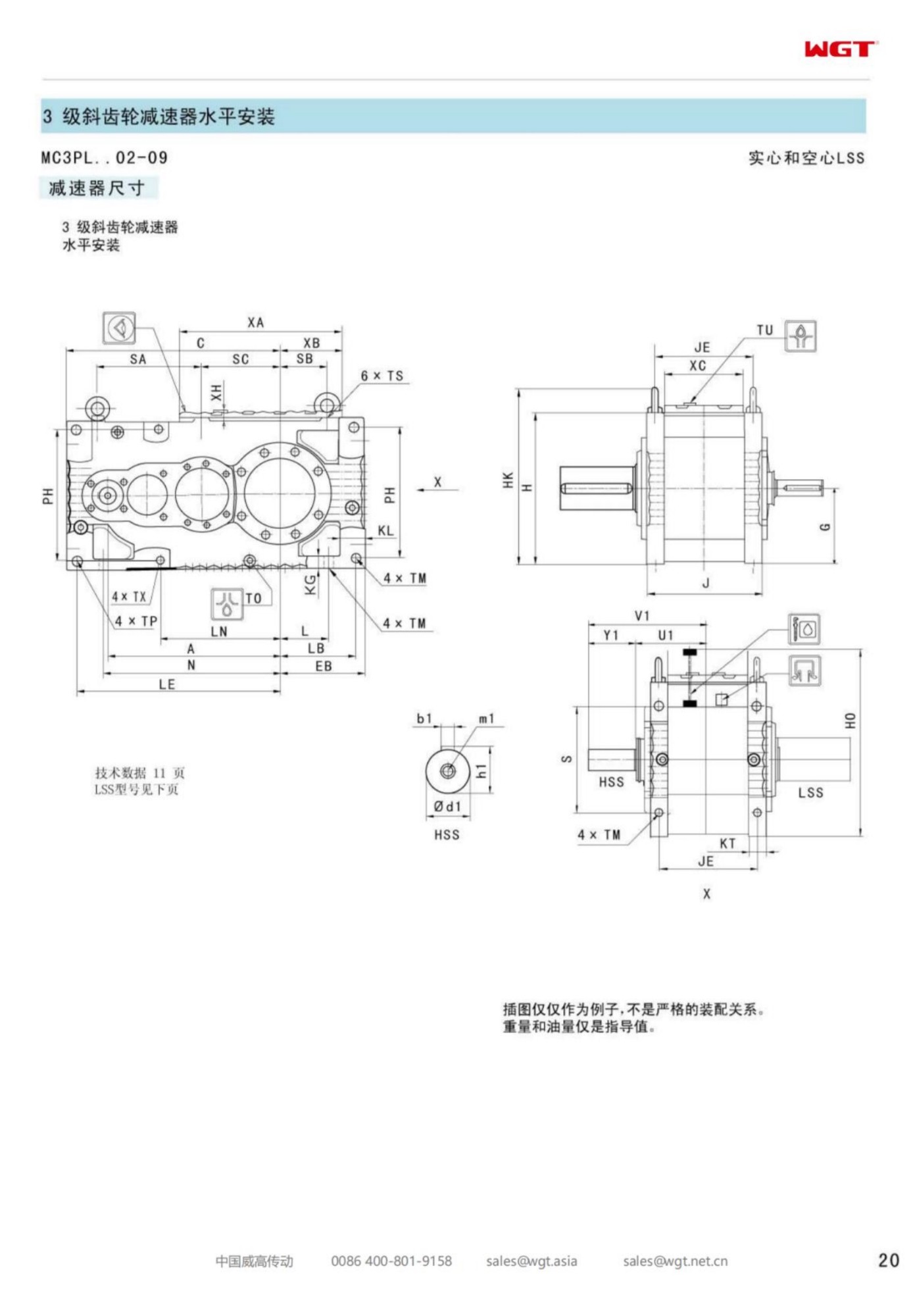
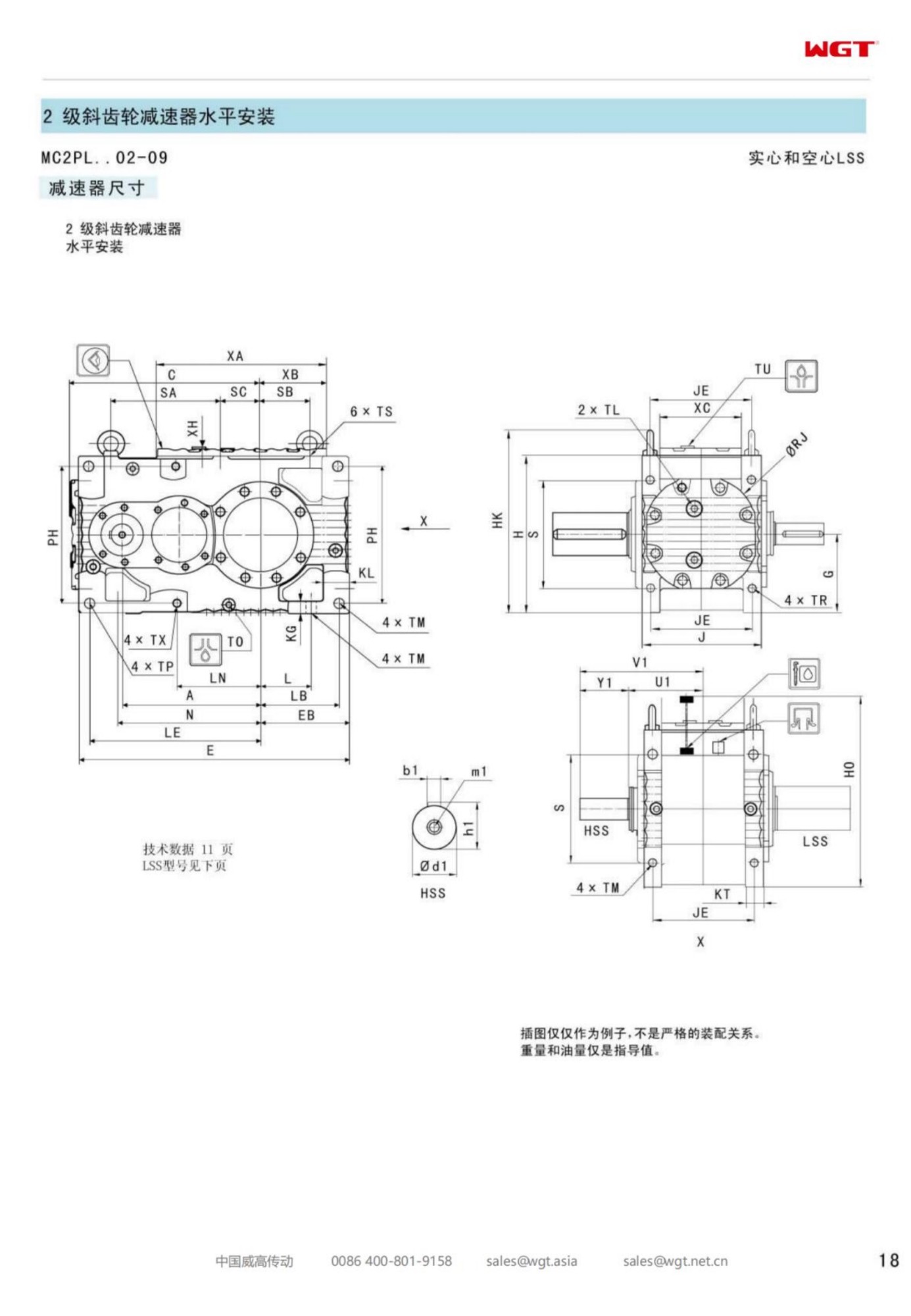
The MC2PLSF05 two-stage helical gear unit is the frame plants move to when the duty outgrows the 04: longer conveyors, wider screws, mixers and heavy feeders that run continuously and need a casting that treats peak loads as routine rather than as exceptions. The layout is unchanged - parallel stages in one plane, footed base, motor alongside - but everything inside is scaled to carry more, for longer, at the same shaft height logic that keeps these units easy to mount between stringers.
The 05 Frame and Where It Sits
In practice the 05 earns its place in two kinds of plant. The first is the processing site where conveyors and feeders run around the clock, and every point of thermal margin turns into months of extra oil and seal life. The second is the duty that is simply hard: start-up against a loaded belt, occasional jams, torque spikes from sticky material. On both, the 05 runs well inside its rating where a smaller frame would live at its edge, and that difference is what maintenance teams eventually notice as fewer warm bearings and quieter meshes.
The footprint still grows modestly frame to frame, so many plants use the 05 as their standard for the heavy end of the plant and the 03 or 04 for the light end, sharing one set of oils, seals and inspection routines across both.
Letters That Turn Into Order Lines
| M | Industrial multi-stage gear unit family |
| C2 | Compact two-stage parallel-shaft series |
| P | Parallel arrangement - input and output in one plane |
| L | Long-centre build, motor seated alongside the case |
| S | Solid ground output shaft, parallel key |
| F | Foot-mounted housing on a plinth |
| 05 | Frame size, the heavier end of the compact line |
Every letter maps to something the workshop touches: output hand, key width, breather position, seal grade. Quoting the marking together with the duty sheet keeps the order conversation at order level - where changes are free - instead of at commissioning, where they are not.
Sizing for Start-Up Peaks and Jam Loads
Continuous torque is the number most people size to, but on bulk handling duty the peaks write the story. A belt started under full load, a screw bridged with wet material, a mixer restarted after a power dip - each of these asks the gear set for several times its running torque for a few seconds. The honest sizing method is to state those conditions on the enquiry, not to bury them: the factory can then select the frame and the service factor deliberately, and the unit neither stalls on Monday morning nor wastes energy carrying a frame twice the size the duty needs.
Ratio selection follows the same outward-in logic as the rest of the series - fix the process speed first, then choose the reduction that parks the motor in its efficient band - and because the ratio is built to order, there is no cost penalty for being precise.
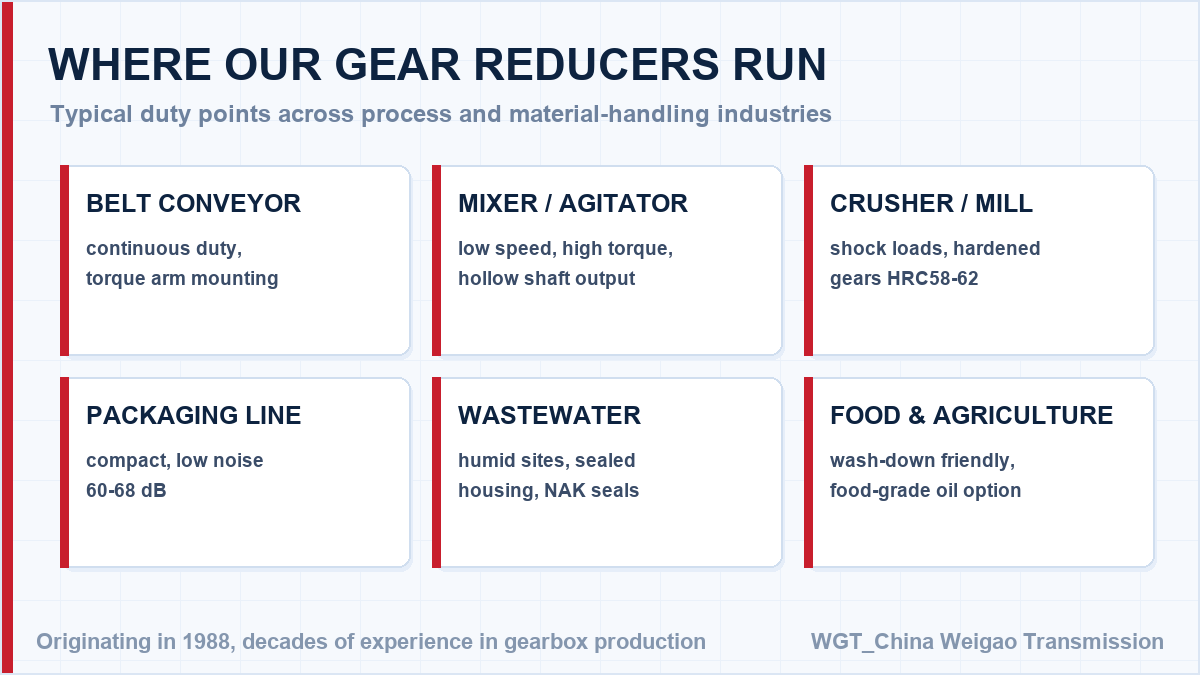
Working positions this construction is specified into: Kiln and cooler auxiliary drives on long rotary lines Heavy scraper and chain conveyor duty in steelworks yards Thickener rakes and flocculation plant feed pumps Bagasse and chip reclaim conveyors at sugar and pulp mills Wagon tippler and dust extraction fan drives High-sided bin discharge and weigh feeder drives in minerals plants
Bolting Down and Bar-Over Checks
The 05's feet carry real torque reaction, so the plinth deserves the same seriousness as the unit. Pads cleaned and checked flat, shims under individual feet until the case reads level, and hold-down bolts pulled in a criss-cross sequence to their torque figure. Before the motor is ever energised, the unit is barred over by hand through one full revolution: a tight spot at one angle almost always means a packing fault under a foot or a coupling misalignment, and finding it with a bar costs minutes instead of a temperature gun and a shutdown a week later.
Temperature, Breathers and Long Intervals
Once running, the useful habit is to log sump temperature after the first full shift of real load, always measured the same way at the same spot. A stable reading well below the alarm band confirms the sizing; a number that keeps creeping points either at a duty that has outgrown the frame or at a breather choked with dust - both cheap findings if caught early. Oil changes follow the duty calendar, with the first change early to clear running-in wear, and later intervals shortened on hot or dusty sites. The deeper sump on the 05 slows the temperature climb, which is precisely why the frame suits continuous duty.
What a Complete Enquiry Carries
Six entries close out a 05 enquiry: absorbed torque or power, output speed, running pattern, output direction and shaft extensions, coupling details on both shafts, and site environment - dust, washdown, ambient heat. Add a photograph of the old nameplate and the historical questions disappear. Plants that file that packet against the drive record can reorder a matched unit years later from a single message, which is the practical argument for writing the duty down carefully the first time.
How Customers Use This Unit
Asphalt plant aggregate feeder
An asphalt plant powers its aggregate feeders with reducers in outdoor, dusty conditions. The cast-iron housing and standard paint finish have come through several winters without refurbishment.
Fertiliser granulator drum
A fertiliser producer drives granulator drums with gear units. The slow, high-torque rotation needed to tumble the granules is a natural fit, and the torque-arm option avoids a heavy base frame.
What Engineers Ask Us
How do I choose between a helical-worm and a helical-bevel gearbox?
For a right-angle drive at a moderate ratio and the lowest cost per unit, a helical-worm unit is normally the better buy. When the ratio is low and efficiency is the priority, a helical-bevel (K series) unit wins - it holds 96% and above at any ratio, while the worm stage loses a little efficiency as the ratio grows.
What mounting positions (M1 to M6) are available?
The this series supports M1 to M6 mounting positions, so the unit can be installed on its base, wall or ceiling. The oil level plug is repositioned accordingly; state the position when ordering so the unit is filled and labelled correctly.
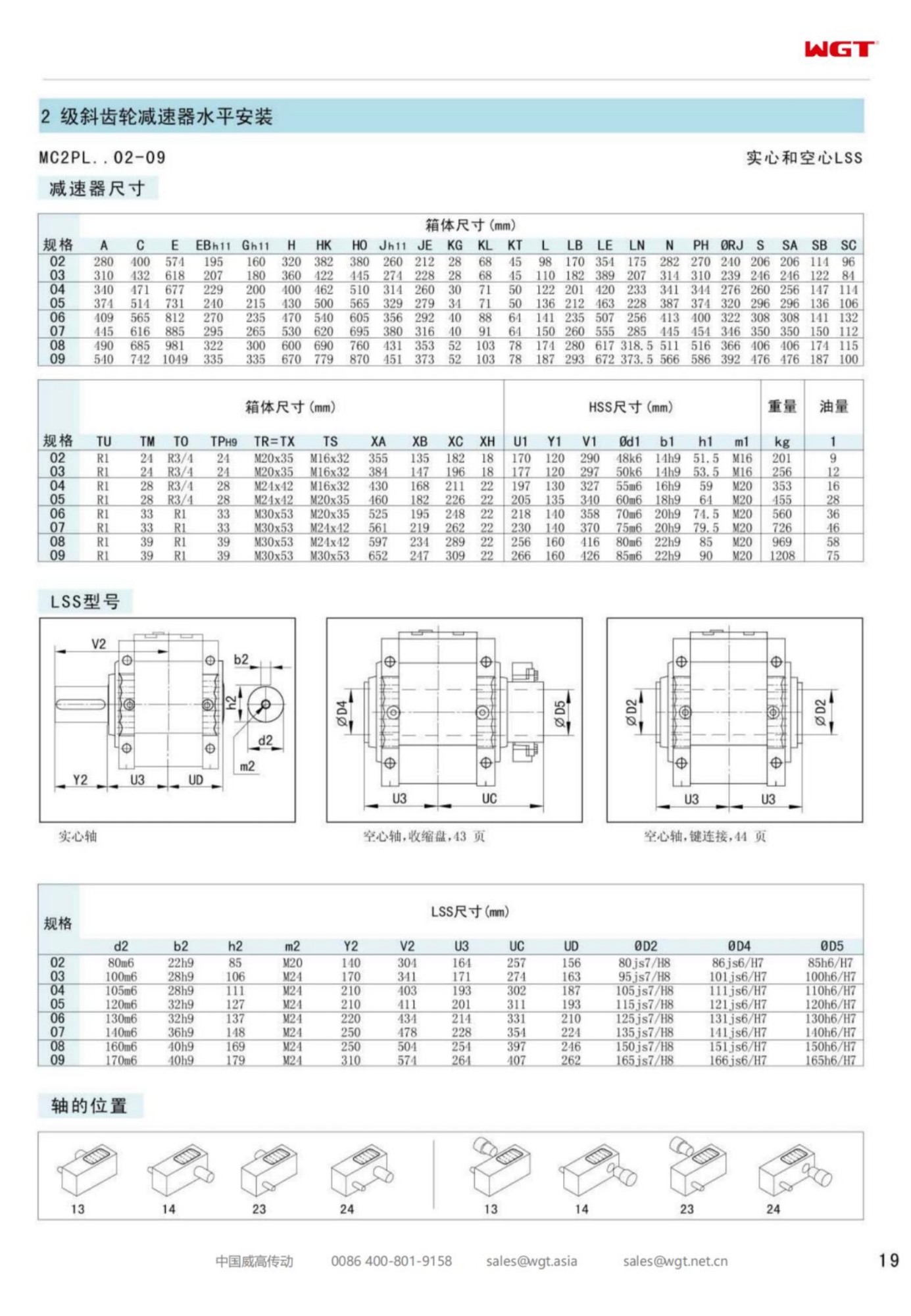
Model Table: Frames, Shafts and Duty
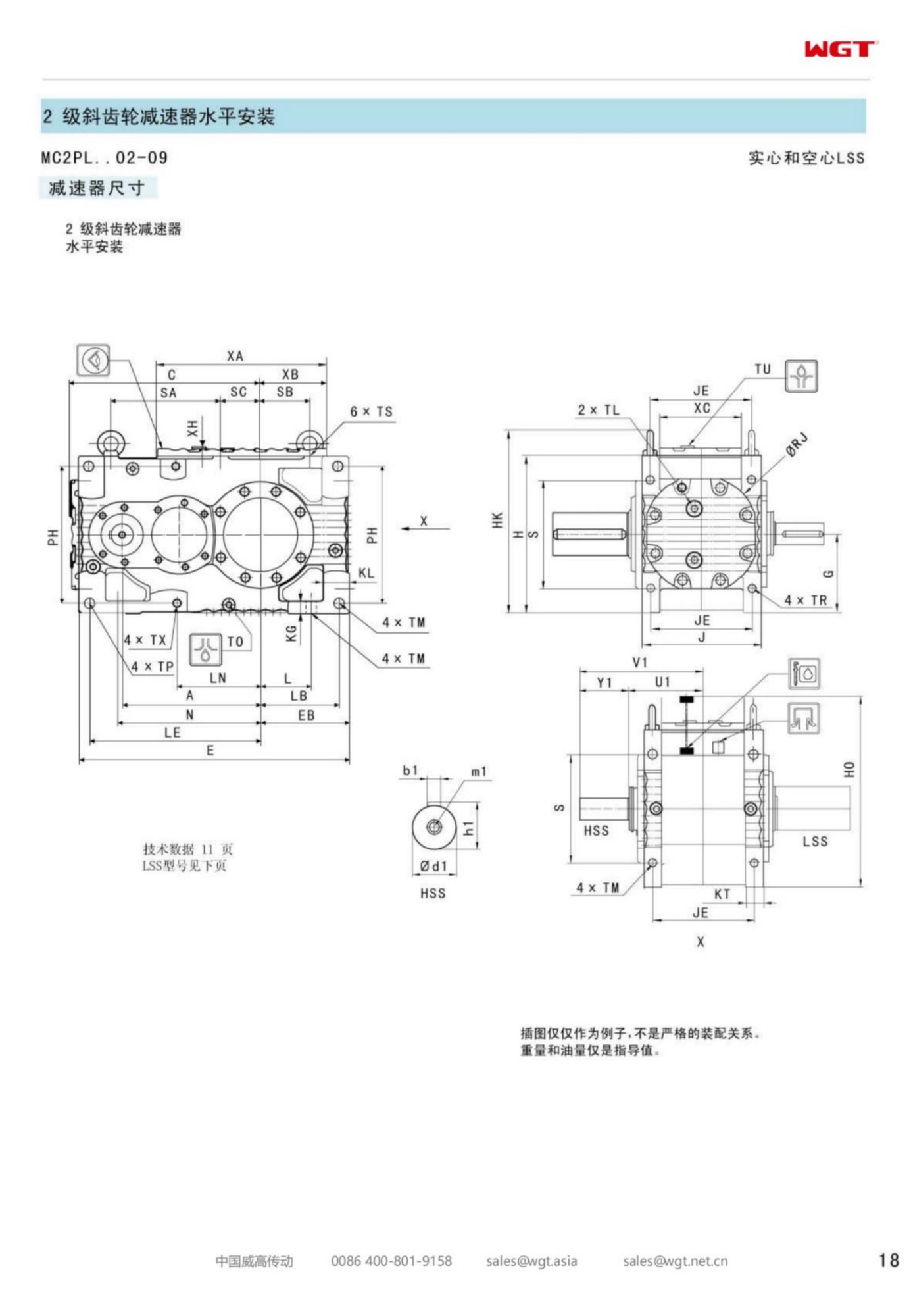
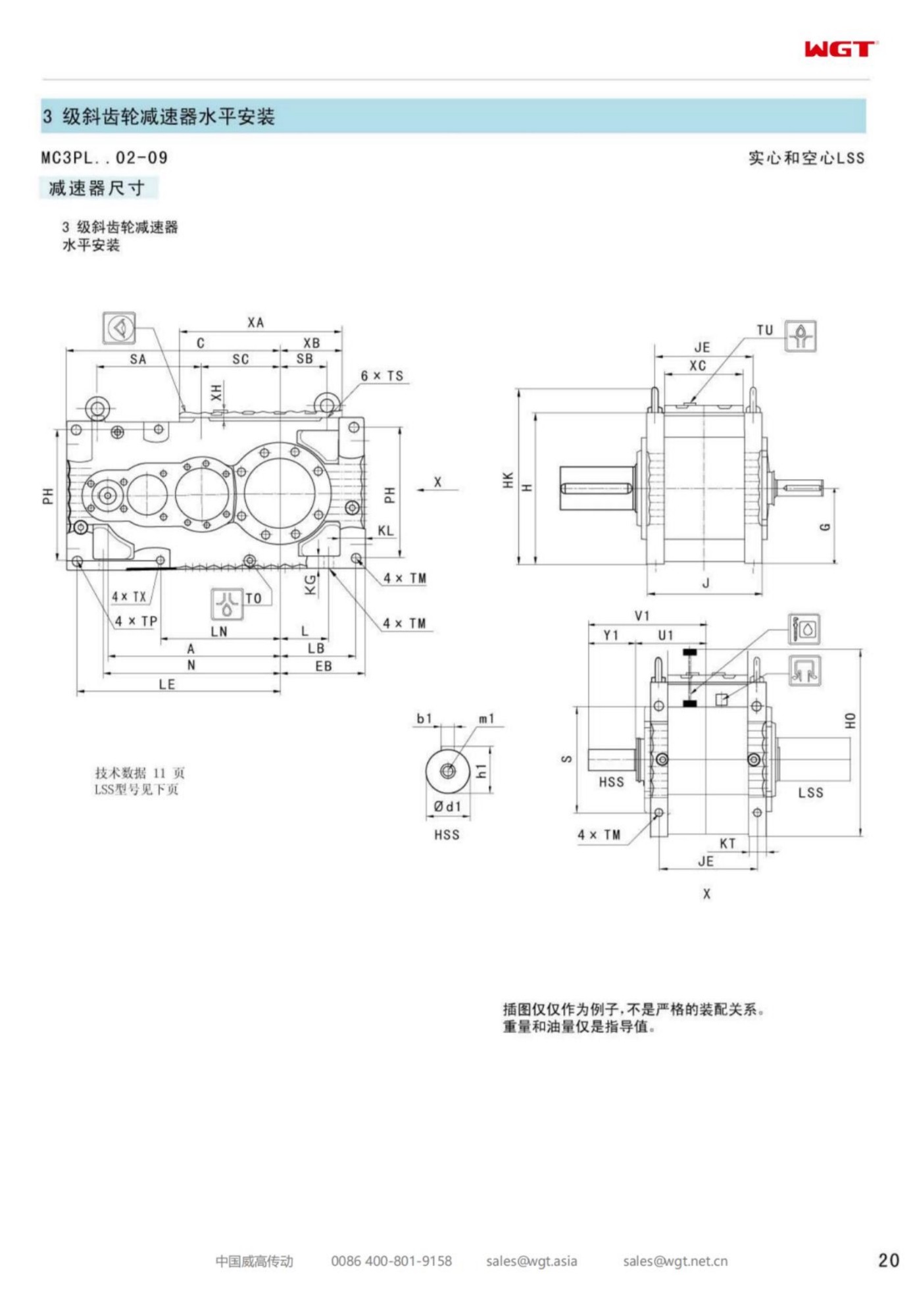
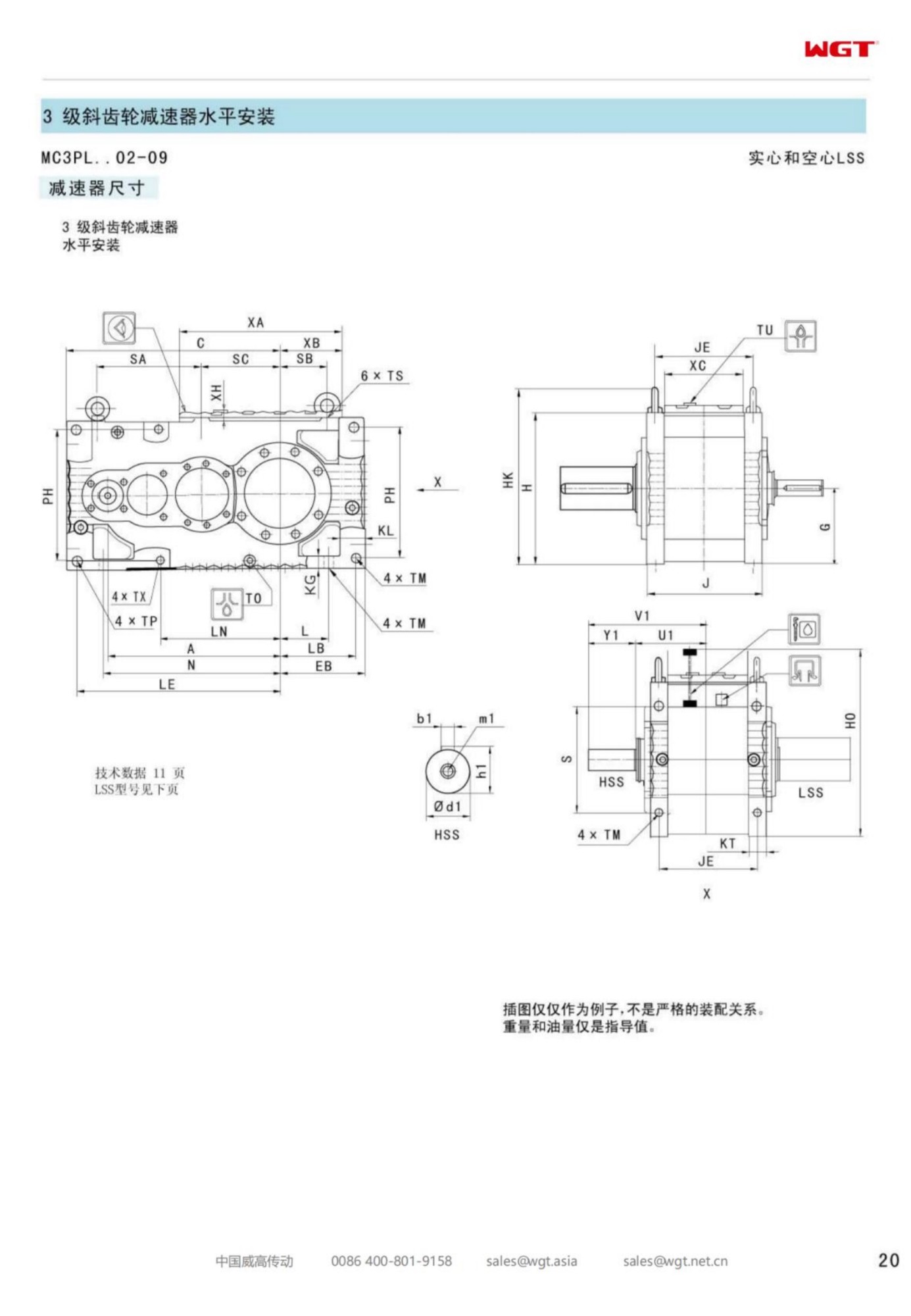
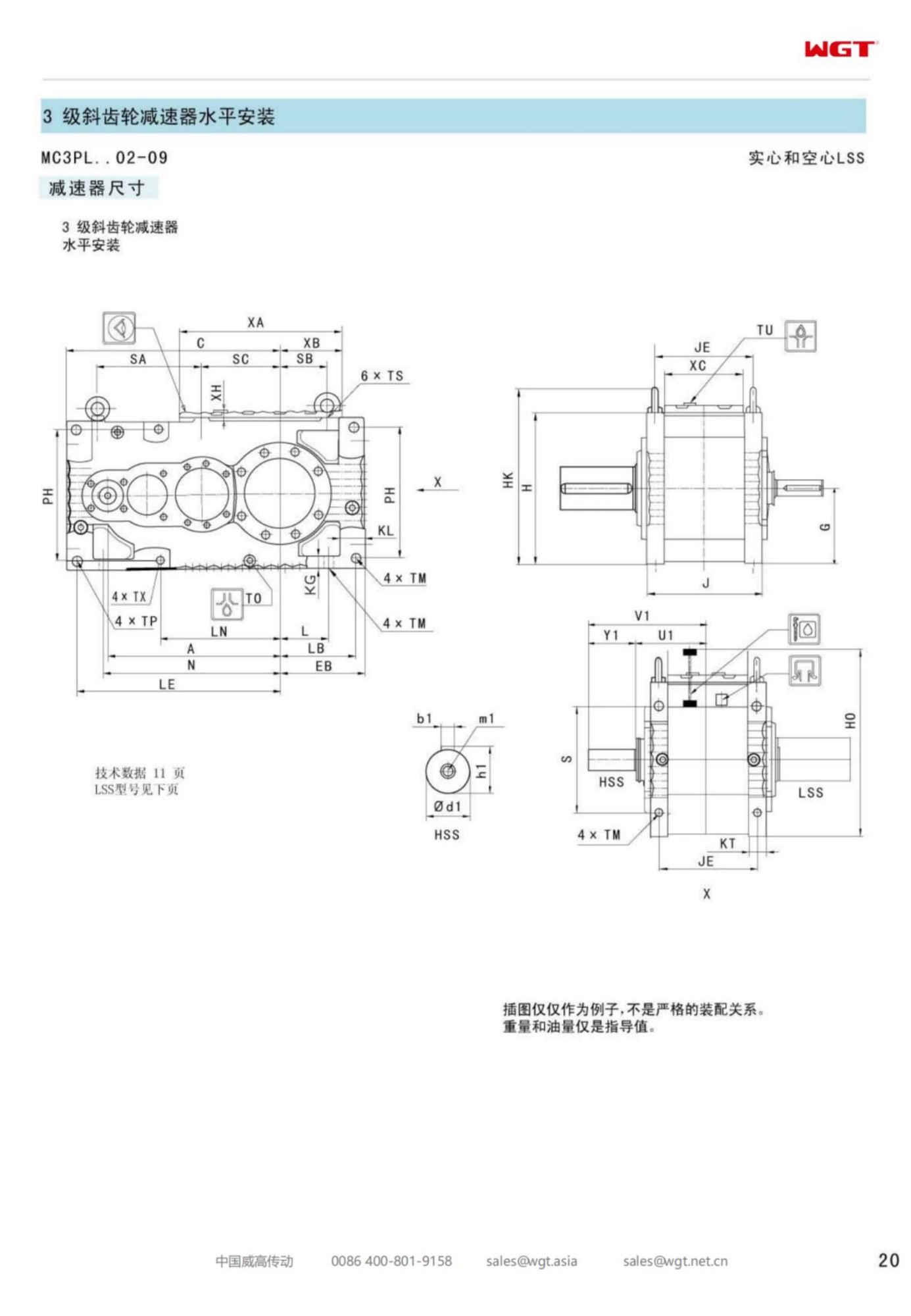
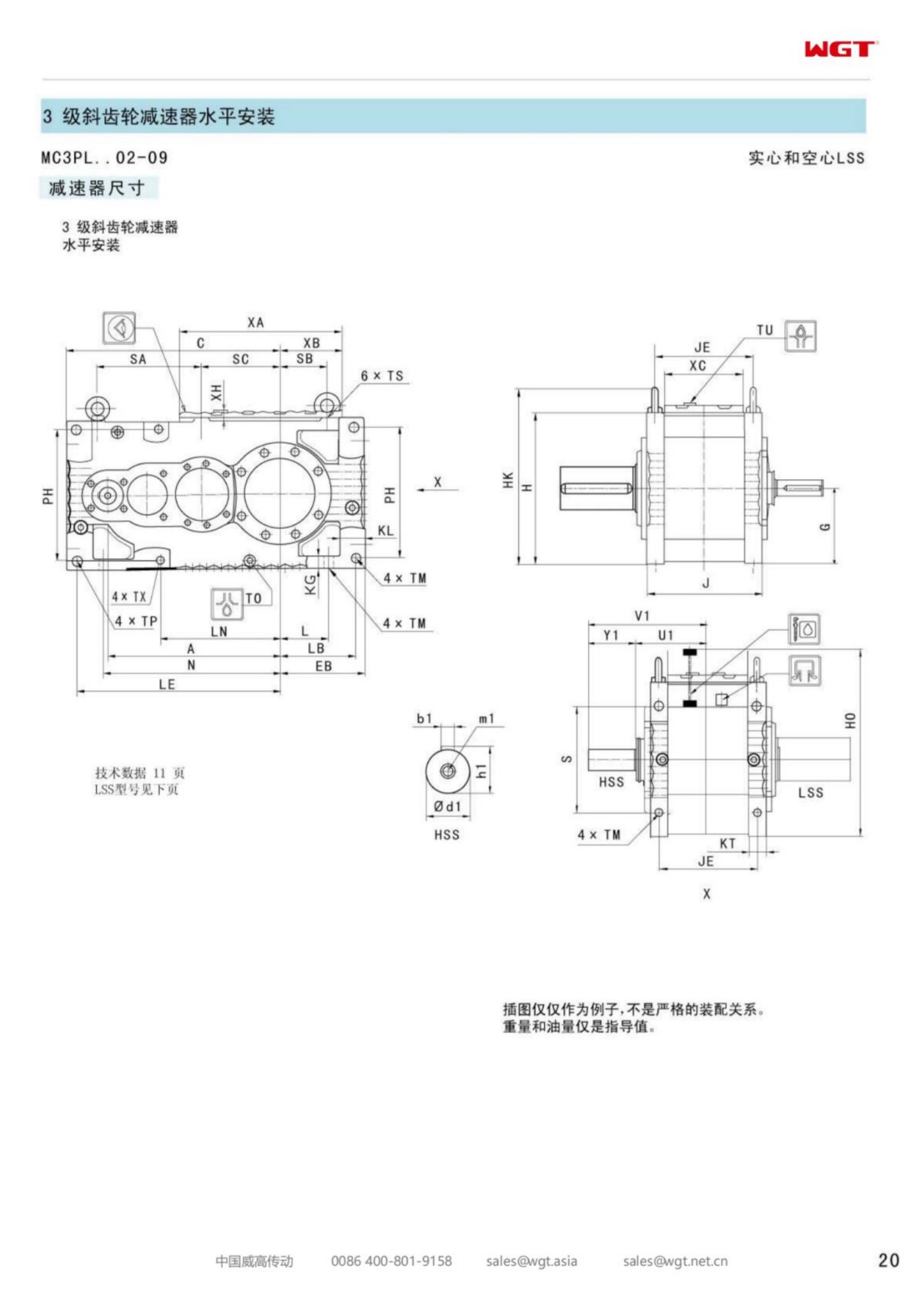
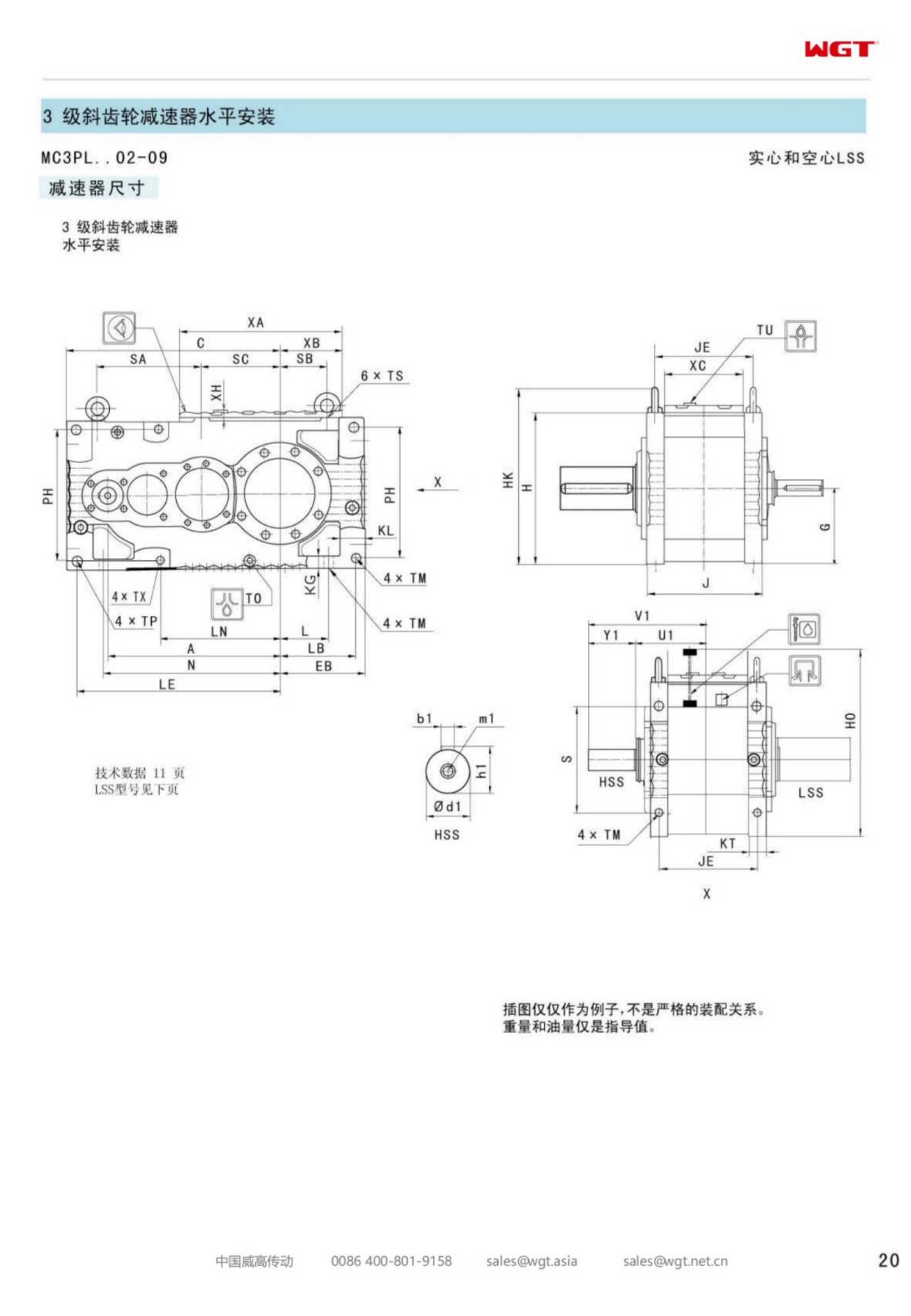
The range is built to common industrial interface dimensions, which is why so many customers reuse their existing foundations rather than redesigning the drive. Drawings are issued on request for every frame.
Selection Example: Paddle mixer shaft on continuous duty
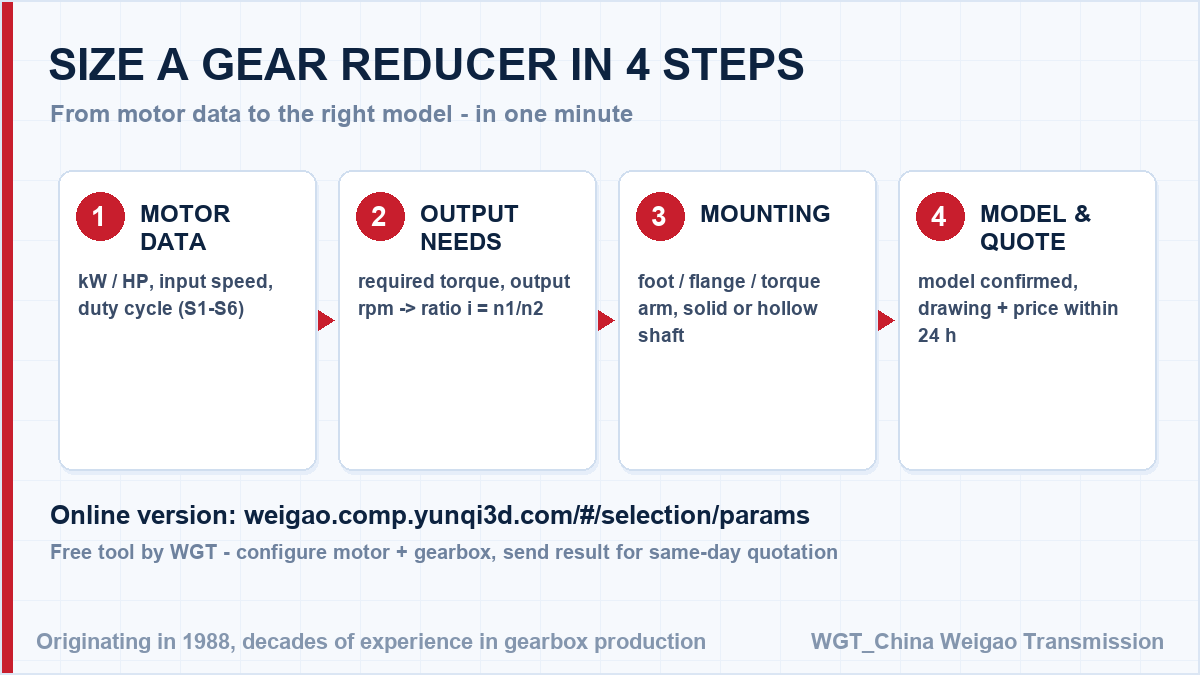
Take a 965 rpm six-pole motor driving the mixer paddle shaft at 14 rpm. The ratio follows directly: 965 / 14 = 68.9, so a ratio near i=70 is selected and start-up torque against a loaded bowl is stated on the enquiry so the frame margin is chosen deliberately. In this case the deeper case and wider shaft of the 05 absorb the restart peaks that sticky material produces without living at the thermal edge. Note that the ratio comes from speeds alone, while the frame size depends on torque and service factor - never size a unit on ratio only.
![helical worm gearbox selection chart]()
A quick visual of the selection sequence for a helical-worm unit.
![S series gear reducer installation examples]()
Application coverage of the SF and SA series.
Gearbox Selection Support from the Factory Floor
Talk to the people who build it. Prefer to check the figures yourself? The WGT Motor & Gearbox Online Selection System gives you the model, torque margin and ratio before you ask us.
Our technical team sits beside the assembly line, not in a call centre. Describe the application in your own words - we will tell you honestly whether this series is right, or point you to a better frame or a different series. Looking for a gear reducer for screw conveyor? Tell us the duty point and we will confirm the model in writing.