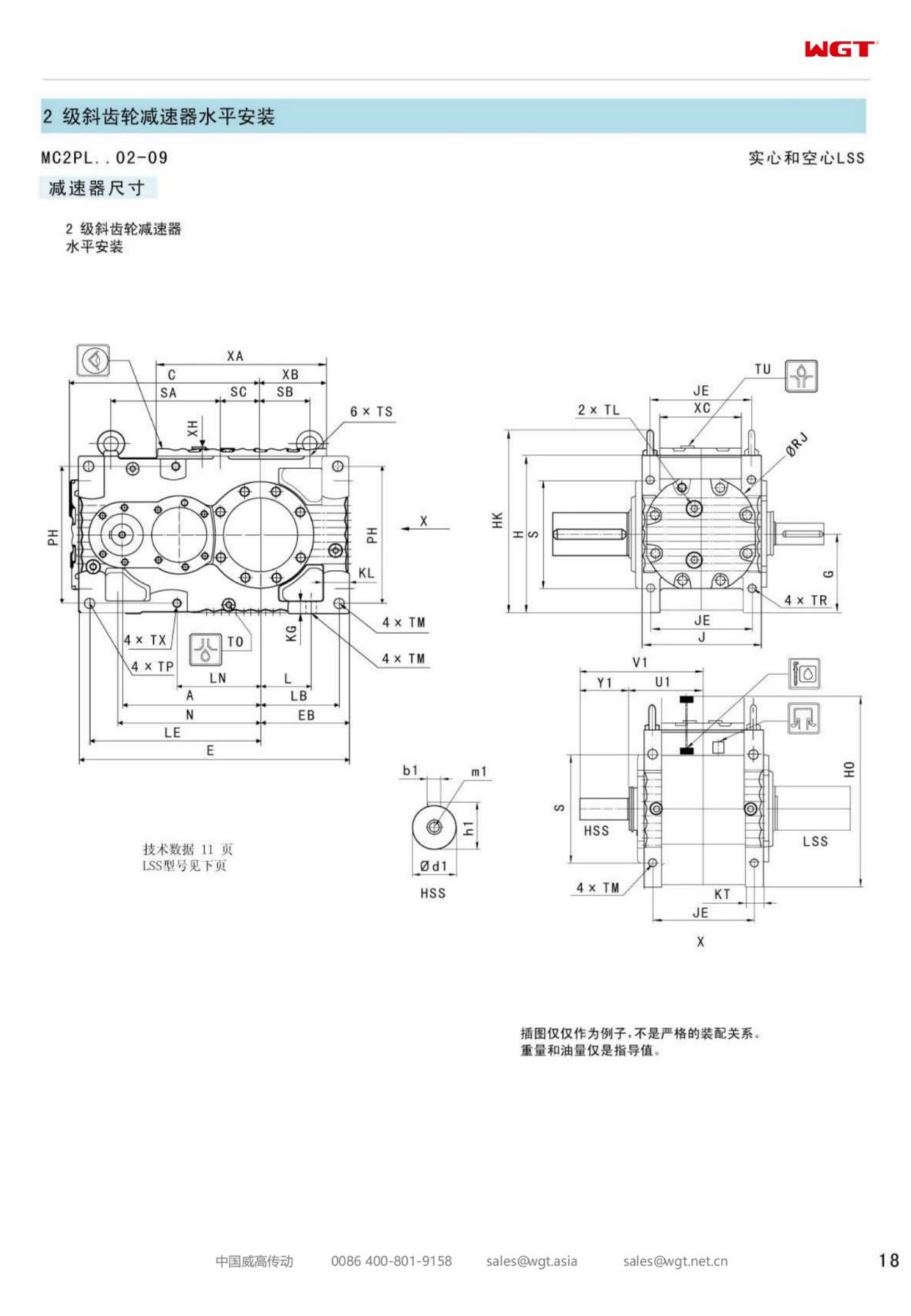
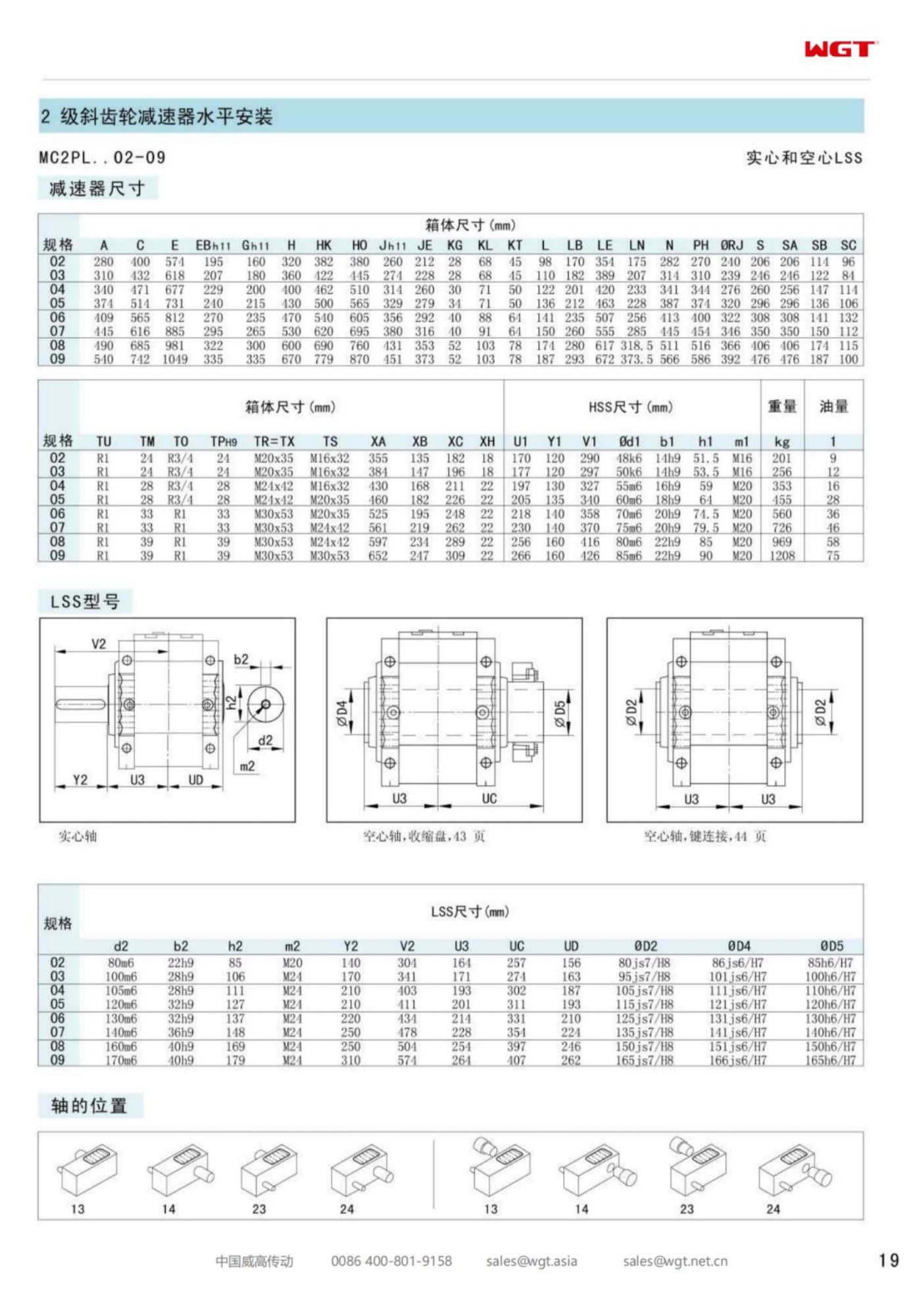
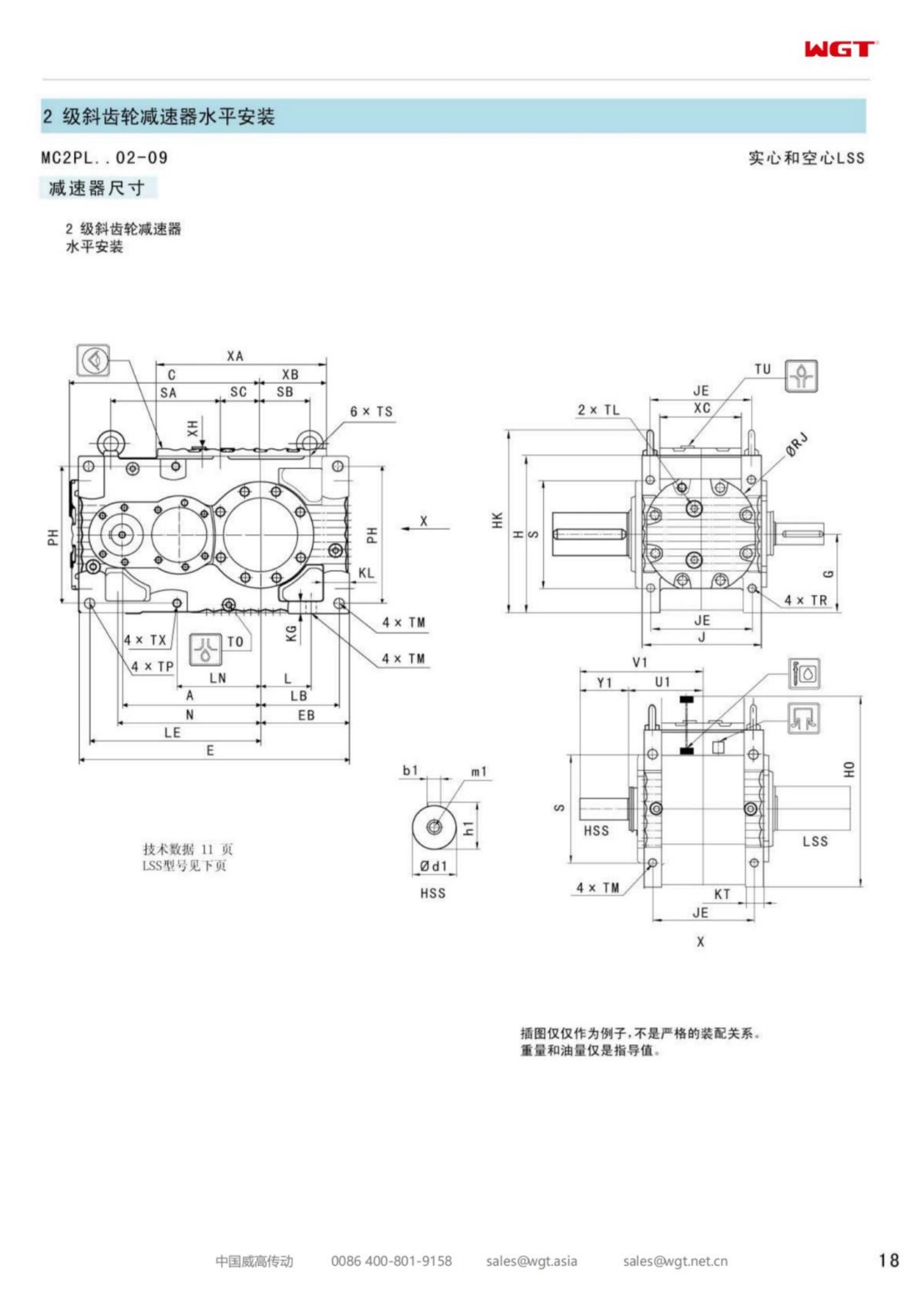
When a plant decides to push more tonnage through a line, the argument usually happens about the machine at the centre of the flow. But the drive hanging on that machine's shaft has to live with the decision, and it is the part most often left out of the meeting. The MC2PLHT04 shaft-mounted gearbox is the frame in this band that comes back onto the table when a conveyor, a screw or a drag chain is asked to run faster or fuller than the drawing it was bought against allowed for.
The arithmetic is unforgiving. Power demand rises with throughput, but torque at the driven shaft is what the gear teeth actually see, and the extra starts a faster schedule adds load the mesh from zero every time. A frame that had a comfortable factor last year can be quietly marginal this year without anything appearing to be wrong - until a case starts running warm at the end of a shift and somebody opens the logbook.
When Throughput Goes Up, the Drive Gets Rechosen
The honest way to approach an upgrade is to treat the drive as new. The old unit served a duty that no longer exists. Belt speed is up, or the material got heavier, or a second shift was added to a machine that used to idle every afternoon. Each of those changes the three numbers a selection is built on: torque at the shaft, cycles per hour and hours per day. A frame chosen for the old numbers is not a conservative choice for the new ones - it is simply a frame chosen for a different plant.
There is a temptation to read the old frame's rating, add ten per cent and place the order. That habit survives until the first summer of the new schedule, when a case that used to run lukewarm starts marking its paint and the oil sample comes back with more wear metal than the laboratory expected. Rechoosing the frame properly costs one enquiry. Finding out at the bearing costs a shutdown.
Decoding MC2PLHT04
The type string reads the same way it does across the family, and the fourth frame digit is the part that matters most in an upgrade conversation.
| MC | Industrial gear unit family built for continuous plant service |
| 2 | Two helical reductions carried in a single gear plane |
| P | Parallel-shaft arrangement, input and output shafts parallel |
| L | Level build with both shafts horizontal in one case |
| H | Hollow output bore that slips over the driven shaft |
| T | Torque arm anchoring, no feet and no foundation required |
| 04 | Fourth frame of the band: the step up most rate increases land on |
What the string does not carry is the duty history of the position it is going into. That travels with the enquiry in words: what the machine did before, what it is being asked to do now, and what the worst moment of the new schedule looks like. A supplier who receives that history returns a frame with a factor that means something; a supplier who receives only a motor rating returns a guess with a delivery date.
Upgrading Around the Shaft You Already Have
The strongest argument for staying shaft-mounted through an upgrade is the installation window. A footed unit rechosen for a higher rating often brings a new bedplate, a new coupling and a realignment programme with it - civil work in a gallery that was not built to be opened. A shaft-mounted frame of the next size up slides onto the same shaft, bolts its arm to the bracket the previous drive already used, and asks for nothing else. The whole change fits inside a weekend shutdown instead of a maintenance week.
That economy has conditions, and they are all checkable from a drawing. The driven shaft was sized for the machine, not for whichever gearbox happened to hang on it, so the new frame's bore and key must match what is actually there. The bracket that carried the old arm now receives a larger reaction. And the guarding that fitted the old case needs redrawing before the new one arrives, not after. None of it is difficult; all of it is cheaper on paper than on site.
Checking an Old Shaft Before It Carries a New Frame
A shaft that has run for years deserves a proper look before it is asked to carry a bigger case. Measure the diameter at three positions and two planes along the length the bore will cover, because service rarely leaves a shaft round or straight. Check the keyway for the burrs a decade of removals leaves behind, check the key itself for length and fit, and confirm there is enough plain shaft beyond the bore for the retaining hardware and, ideally, for withdrawal.
Where the shaft measures at the low side of its tolerance the fit will hold torque on the key but rock under reversing load, and reversing load is exactly what a faster, stopper schedule delivers more of. A machined sleeve, a light build-up or a slightly smaller-bore frame with a sleeve arrangement are all ordinary answers - but they are decisions to make while the enquiry is open. Discovering a slack fit at installation turns a planned weekend into a fortnight of improvisation.
What Frame Four Adds to the Torque Arm
Going up a frame is not only a matter of stronger teeth. The case is heavier, the oil volume larger, the bearings wider and the reaction at the arm bigger in proportion. The arm itself and its bushings step up with the frame, which is why the existing bracket deserves a fresh look: a plate that was adequate for the small frame's reaction may flex under the new one, and the flex will present itself at the gear case as vibration nobody can tune out.
The practical checks are short. Confirm the bracket was built to take a torque rather than just to hang a guard. Fit the arm so its bushings sit at mid-travel with the machine at rest, leaving room for the small angular movement the shaft makes under load. And stiffen rather than thicken where the structure looks doubtful - a gusset welded in an afternoon costs less than every conversation that begins with the words it started after we sped the belt up.
The New Ratio and Where It Comes From
An upgrade changes the ratio as often as it changes the frame. Belt speed up means pulley speed up, which means the reduction between motor and shaft comes down; the new figure is simply motor speed divided by the target output speed, and it should be stated as a target rather than inherited from the old nameplate. Two-stage helical units cover a wide band, but the honest question is whether the new ratio sits comfortably in it or at its edge.
A ratio near the edge of the band is not a rejection - it is a conversation. Margin on the ratio affects tooth loads; margin on the frame affects bearing life, oil temperature and how quietly the unit runs its second year. Sending the enquiry with both the old and new duty figures lets the selection be made against the change rather than against a single snapshot, and that difference is where most successful upgrades are actually decided.
Starting, Stopping and Runback After a Speed-Up
Faster lines stop harder and start more often, and a shaft-mounted drive has no coupling to soften any of it. Starts per hour go into the factor arithmetic directly: every start loads the mesh from zero, and a schedule that doubles the starts has quietly doubled a part of the duty the old selection never saw. The loaded start matters more still - a belt begun full after a weekend asks for a multiple of its running torque, and the material's willingness to set while the line stands decides how large that multiple is.
Inclined machines add a third question that rate increases make sharper: what happens when the drive stops. A loaded conveyor rolling back drives the gear train from the output side, and the answer is either a holdback in the drive or a braking arrangement on the shaft, both of which are far cheaper to specify with the frame than to retrofit after the first rollback. Say in the enquiry whether the machine can back-drive under load. It is one line, and it decides hardware that takes weeks to arrive.
Duties That Land on Frame Four
Frame four tends to arrive with an old drawing attached and a new tonnage figure written on it:
- Belt conveyor drive re-rated for higher tonnage at a crushed-stone quarry
- Screw conveyor in a fertiliser plant loading bay after a rate increase
- Kiln feed belt at a lime works converted from batch to continuous feeding
- Drag chain conveyor at a grain terminal with a second shift added
- Ash conveyor under a biomass boiler after a fuel switch
- Packing line infeed belt sped up to match a new filler
The common thread is that every one of these positions was working before the upgrade and has to keep working through it. That is why frame four is chosen by people who already know the machine: the history of the position - what failed, what ran hot, what the logbook says - is worth more than any catalogue column, and it belongs in the enquiry with the new figures.
Ordering an Upgrade in One Enquiry
An upgrade enquiry carries two states of the same machine, and writing both down prevents most of the correspondence that follows. The old duty: power, speed, ratio, frame, years in service and anything the logbook records. The new duty: target output speed, the machine's new load pattern, starts per hour, the worst starting condition in words, and the hours per day the faster schedule implies. Add the driven shaft's measured diameter, key and plain length, the bracket drawing, and whether the machine can run back under load.
Posted complete, that enquiry comes back as a frame, a ratio and a factor with reasons attached - and often as one or two questions that reveal the upgrade has a consequence nobody at the plant had costed. Each round trip a spec avoids is a week the shutdown does not need. The unit is a frame size. The conversation around it is the whole upgrade.
Oil, Heat and Shifts That Got Longer
A frame running a higher duty than its predecessor holds more heat in the same gallery, and a second or third shift gives that heat fewer hours to drain away. Thermal rating is checked against the ambient the drive actually sees, not the workshop standard - a conveyor in a cladded gallery in summer runs well above any brochure figure. Where the numbers come back close to the line, the remedies are ordinary: the breather moved off the hot face, airflow across the case, a synthetic grade held in sealed containers, or a slightly larger sump specified with the frame.
The logbook matters more after an upgrade than at any other time. Take the case temperature in the first loaded week, again at a month, and put the readings next to each other. A rising trend caught in week three is a breather position and an oil grade. The same trend discovered in the second year, with wear metal in the sample and paint already marked, is a bearing. Twelve numbers written down early buy that difference.
Installing the New Frame in a Short Shutdown Window
The installation plan for an upgrade is written before the old unit comes off, because the window is only as long as the weakest step in it. Confirm the withdrawal path: enough plain shaft beyond the bore to draw the old case back, a pulling thread or plate if the position has never been opened, and space for the chain block to work. Have the new frame's bore, key and retaining hardware checked against the shaft measurements while the old unit is still turning - not after it is on the floor.
On the day, the sequence is short: support the old unit's weight, release the arm, draw the case back, slide the new one on with the bore protected, fit the key and the retaining hardware, torque the arm bracket to its figures and check rotation against the machine before the guard goes back. Fill to the level plug for the installed attitude with the breather at the high point. An afternoon of that, done in the order written, is what a shaft-mounted upgrade was bought for.
The First Week After the Speed-Up
A new frame on an old shaft has one thing to prove: that the installation matched the drawing. Rotation direction, oil level at the plug for the real attitude, arm bushings at mid-travel and free, guard clear of the arm's sweep, no fretting dust at the bore after the first loaded hours. Then the numbers: temperature after the first shift, again at a day and at a week; oil level with any top-up noted; noise described in words at the usual load.
Two weeks of that record settles the upgrade. The trend either plateaus where it should, or it says something early enough to answer cheaply. And the same notebook becomes the baseline for everything that follows - because a frame chosen for a new duty should run like a new machine, and the only way to know that it does is to have written down what a new machine sounds like on its first day.
Questions We Hear Most Often
What payment terms do you accept?
We normally work on 30% deposit and 70% against the bill-of-lading copy for sea freight, or 100% before dispatch for small orders. Other terms can be discussed for framework or repeat business.
Can you manufacture a custom ratio or a special shaft?
Beyond the catalogue ratios we can quote special ratios and custom output shafts - splined, extended, special keyways or drilled - for OEM volumes. Tooling is amortised across the order, so unit cost falls as quantity rises.
Will the unit match my existing gearbox interface?
The series is manufactured to the standard centre distances, shaft dimensions and flange patterns of its frame family, so couplings, guards and foundations do not have to be redesigned. Send the nameplate details and we confirm the equivalent frame in writing.
Choosing the Right Frame Size
| Model | Centre distance | Output | Typical duty |
|---|
| M3PSF50 | size 50 | solid shaft, foot | conveyors, feeders |
| M3PSF60 | size 60 | solid shaft, foot | crushers, mixers |
| M3PSF70 | size 70 | solid shaft, foot | ball mills, shredders |
| M3PSF80 | size 80 | solid shaft, foot | kilns, heavy conveyors |
| M3PSF90 | size 90 | solid shaft, foot | mill and kiln drives |
| M3RSF50 | size 50 | solid shaft, foot, right-angle | inclined conveyors, elevators |
| M3RSF60 | size 60 | solid shaft, foot, right-angle | screw classifiers, feeders |
| M3RHF70 | size 70 | hollow shaft, foot, right-angle | agitators, drum drives |
| M3PHT80 | size 80 | hollow shaft, torque arm, parallel | shaft-mounted conveyors |
| M3RHT90 | size 90 | hollow shaft, torque arm, right-angle | heavy shaft-mounted drives |
One family, two layouts. Choose P for a coaxial-in / parallel-out drive train, R when the motor must turn 90 degrees; then pick the shaft type and mounting style that the machine interface needs.
Selection Example: Belt conveyor drive re-rated for higher tonnage at a crushed-stone quarry
Take a 30 kW motor at 1470 rpm turning the belt at 39 rpm. The ratio follows directly: 1470 / 39 = 37.7, so a ratio near i=38 is drawn from the two-stage band, and the frame is re-checked against the new running torque and the extra starts the faster schedule adds. In this case frame four takes the re-rated duty without touching the head shaft or the gantry, and the torque arm bolts back to the bracket the previous drive already used. It always comes down to those three figures. Send them over and we confirm the frame, ratio and service factor in writing.
![online gearbox selection system workflow]()
Selection workflow used by our engineers for every quotation.
Real-World Duty Points
Asphalt plant aggregate feeder
An asphalt plant powers its aggregate feeders with reducers in outdoor, dusty conditions. The cast-iron housing and standard paint finish have come through several winters without refurbishment.
Fertiliser granulator drum
A fertiliser producer drives granulator drums with gear units. The slow, high-torque rotation needed to tumble the granules is a natural fit, and the torque-arm option avoids a heavy base frame.
![right angle gearbox duty points overview]()
An overview of the duty points this series is built for.
Your Selection, Cross-Checked by an Engineer
Send the numbers, get the model. Use the WGT Motor & Gearbox Online Selection System to turn your motor data into a model number, and we will quote that exact unit within the day.
Every enquiry is checked by an engineer against the rating tables before it is quoted, so the unit we recommend carries a real torque margin - not just a catalogue guess. Spare-unit and OEM volumes are both welcome. Looking for a gearbox for crusher? Tell us the duty point and we will confirm the model in writing.